Monday, September 08, 2025


Subsea Cable Cuts in Red Sea Increase Data Delays

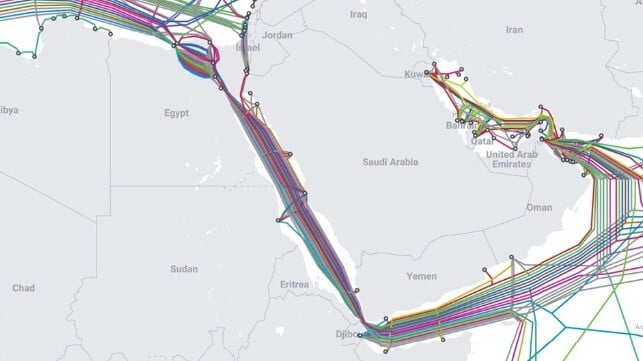
The Red Sea corridor has one of the highest densities of subsea comms cables in the world (TeleGeography / CC BY SA 4.0)

Published Sep 7, 2025 10:58 PM by The Maritime Executive


On Saturday, Microsoft confirmed that undersea cable cuts in the Red Sea may have increased delays for customers of its Azure cloud platform. Users with data passing through the Mideast - whether locally, in Asia or in Europe - temporarily experienced higher latency. 

In an update Sunday, the company said that the issues were resolved, and that its team was working to manage the effects of the situation by rerouting traffic through other channels. It cautioned that permanent repairs to the subsea links could be longer in coming. 

"Undersea fiber cuts can take time to repair, as such we will continuously monitor, rebalance, and optimize routing," the software giant said.

Internet traffic monitor NetBlocks reported that the disruption was located in the Red Sea, and the Pakistan Telecommunication Company narrowed the location to waters off the coast of Jeddah - roughly 400 nautical miles northwest of Houthi-controlled areas of western Yemen, the region of highest maritime security concern in the Red Sea. 

Accidental cable cuts happen routinely around the world, and private-sector commercial cable repair companies run a steady business dispatching cable ships to make repairs. The cuts attract more attention when they occur in areas of high geopolitical tension. Repeated cuts in the Taiwan Strait and the Baltic have resulted in vessel arrests and criminal charges for ship captains who are suspected of severing lines with their anchors - but proving intentional sabotage is difficult when the act of cutting a cable also occurs by accident, with frequency. 

The most recent cable damage incident in the Red Sea occurred in early 2024. Three cables were severed in February 2024, likely cut by the dragging anchor of the stricken bulker Rubymar. The ship drifted for weeks - abandoned and unassisted - after Houthi fighters hit it with an antiship missile.

90 percent of all international data traffic passes through subsea cables, and they are essential to the smooth functioning of commerce. That makes them a tempting target for saboteurs and spies: the cables are remote, difficult to monitor, and largely unprotected, especially in deep waters where they lie unburied on the bottom. Multiple nation-states are known to possess sophisticated capabilities for tampering with, cutting or destroying subsea cables - but in shallower waters, a dragged anchor is all that is needed.


80 Years After WWII Ended, a Deadly Legacy Remains in the Pacific

U.S. History and Heritage Command

Published Sep 7, 2025 10:17 PM by The Conversation


[By Stacey Pizzino and Bryan G. Fry]

On September 2, 1945, the second world war ended when Japan officially surrendered. Today, on the 80th anniversary, the physical legacy of the conflict remains etched into land and sea.

Nowhere is this more evident than in the Pacific. There, fierce battles left behind sunken warships, aircraft and unexploded bombs. These remnants are not only historical artifacts but toxic time capsules.

They leak fuel, heavy metals and other hazardous substances into fragile ecosystems, threatening biodiversity and, potentially, human health.

This problem is a reminder of the enduring environmental harms of conflict. Toxic remnants of war can damage ecosystems and communities long after the fighting stops.
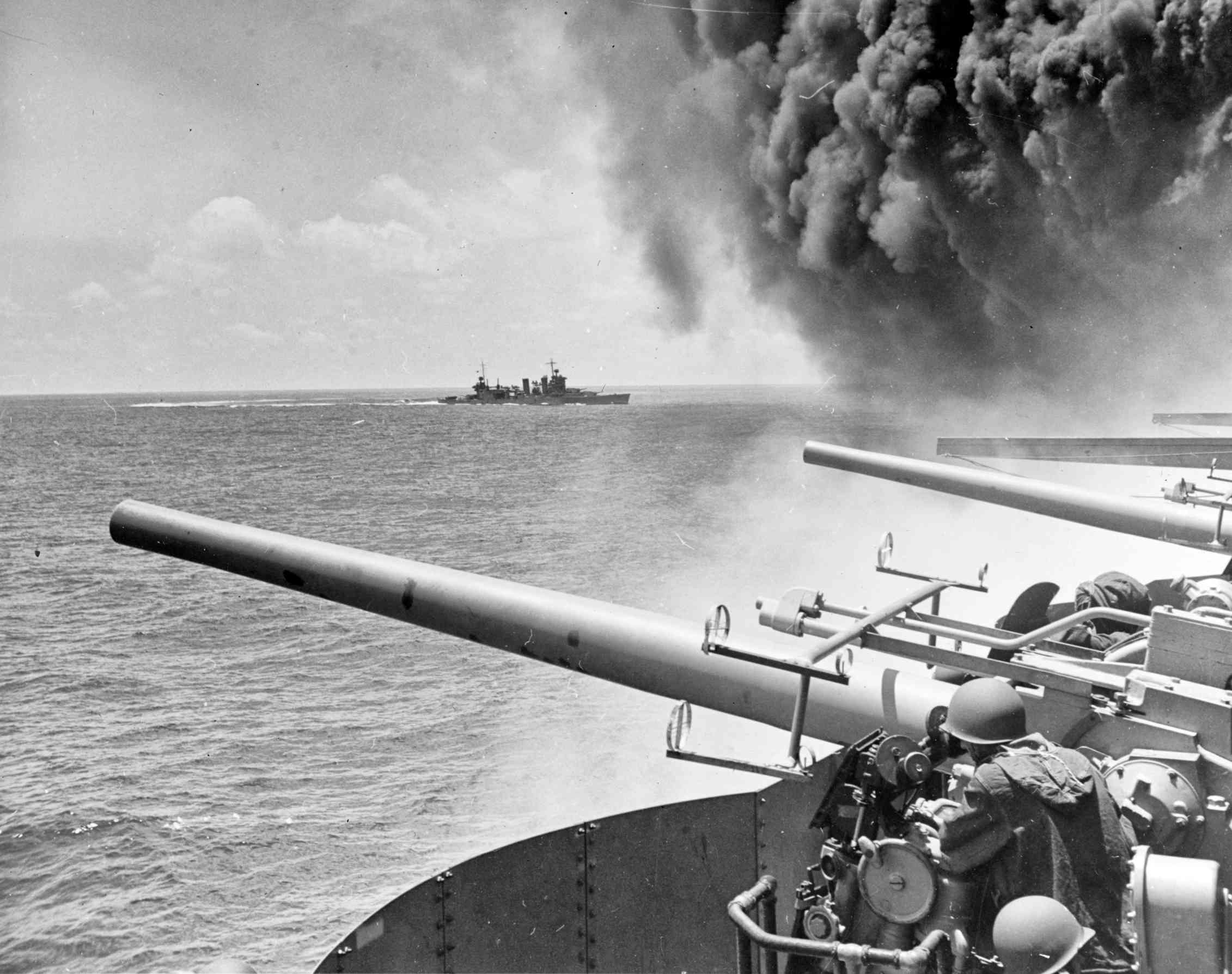
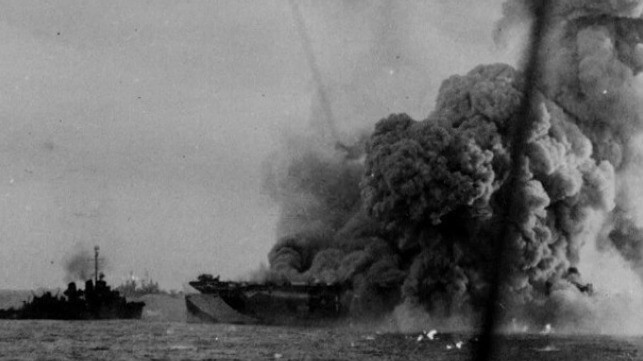
The USS Astoria steams by USS Yorktown after the carrier was hit by three Japanese bombs in the Battle of Midway on June 4, 1942 (US Navy)

The Pacific as a dumping ground

World War II in the Pacific involved four years of conflict between Japan and Allied forces. The war began in the region in December 1941 when Japan attacked a United States naval base at Pearl Harbour, Hawaii.

The Pacific conflict included the Battle of the Coral Sea, the Battle of Midway and the Guadalcanal campaign in the Solomon Islands.

Pacific islands became staging grounds for battles. Weapons were stockpiled and hazardous material discarded. Ships and aircraft were sunk. When the war ended, much of this material was simply left behind.

Among the remains are an estimated 3,800 wrecks still lying on the Pacific Ocean floor.

An environmental hazard

As remnants of war degrade, they often leach toxic pollutants into nearby waters and soils. These can build up in marine life, enter the food chain and pose serious risks to both biodiversity.

At Palau, a WWII Japanese ship sank in Koror Harbour and became known as the Helmet Wreck. It contains Japanese depth charges leaking acid into surrounding waters.

Researchers have shown the long-term environmental impacts in the Baltic Sea of unexploded WWII ordnance – bombs, shells and grenades that failed to detonate. An estimated 3000kg of dissolved ammunition chemicals have been found.

Coral reefs and mangroves, which are vital for coastal protection, are especially vulnerable to both chemical exposure and physical damage.

For example, researchers examined the effects off Puerto Rico of unexploded ordnance. They found nearby sea animals contained potentially toxic compounds leaking from the ordnance, which meant the substances had entered the food web.

Remnants of war, such as this unexploded ordnance on a beach in the Solomon Islands, can pollute the surrounding area. Chris Teasdale, Author provided (no reuse)

Human communities on high alert

Unexploded ordnance continues to endanger communities. Just last year, for example, more than 200 bombs were found buried beneath a school in the Solomon Islands.

In places such as Palau, Papua New Guinea and the Solomon Islands, these dangers are unearthed regularly. They can be found by farmers working their land, children playing or fisherman working.

Buried bombs, sunken ships and downed aircraft often contain fuel and heavy metals. This includes lead and cadmium which can interfere with the body’s hormone system and cause serious health issues.

Research into the human health impacts of war remains is limited – especially in the Pacific. But existing studies suggest exposure is linked to serious consequences.

For example, parental exposure to wartime contaminants has been linked to birth defects in Gaza and Vietnam.

And a study of Britsh Army ammunition technicians released earlier this year found significantly higher rates of bladder cancer than the general population. This suggests occupational exposure to explosive compounds may pose long-term health risks.

Climate change is increasing the risk

As Earth’s climate warms, extreme weather events are worsening and seas are rising. This is exacerbating the dangers posed by wartime remnants.

For example Cyclone Pam, in March 2015, exposed unexploded WWII ordnance in Kiribati and Tuvalu. Further investigations revealed remnants including high explosive projectiles, mortars and 5,300 rounds of ammunition.

In 2020, a visiting fisherman found an unexploded bomb near Lord Howe Island. Then-Environment Minister Sussan Ley suggested the device may have been shifted by a cyclone or ocean currents.

Similarly, floods and landslides can move these hazards over significant distances, increasing uncertainty around their locations and complicating clearance efforts.

Rising sea levels are threatening to breach one of the Pacific’s most toxic legacies – the Runit Dome in the Marshall Islands. This concrete structure was built in the late 1970s to contain radioactive waste from US nuclear testing decades earlier.

Research shows extreme storms could increase radioactive sediments in the area to up to 84 times higher than normal. There are also concerns cracks in the dome’s surface could lead to contamination of surrounding waters.

In this 1978 photo from Runit Island, military personnel in protective clothing watch as concrete and soil is used to cover up a crater left by the US after it conducted nuclear tests decades earlier. Department of Defense/US Army

Reflecting on war’s toxic legacy

Despite the risks to people and health in the Pacific, remediation has been slow. The 80th anniversary of WWII offers an opportunity to reflect on the toxic legacy of war – and to act.

The scale of the problem demands coordinated, well-funded action. The work should not just remove dangerous materials, but restore damaged ecosystems and monitor long-term health impacts.

Some support has been offered. It includes Operation Render Safe, a program to remove war remnants led by the Australian Defence Force. But more is needed.

Regional partners – including Australia, New Zealand, Japan and the United States – have a chance to lead. This means investing in environmental cleanup, supporting affected communities and acknowledging historical responsibility.

It also means listening to Pacific voices, who have long called for greater attention to the war’s toxic legacy. Their knowledge, resilience and lived experience must be central to any response.

Stacey Pizzino is a Lecturer at the School of Public Health, The University of Queensland.

Bryan G. Fry is a Professor of Toxicology, School of the Environment, The University of Queensland.

This article appears courtesy of The Conversation and can be found in its original form here

The Conversation

The opinions expressed herein are the author's and not necessarily those of The Maritime Executive.


 

Five Dead in Collision Between Migrant Boat and Turkish Coast Guard Vessel

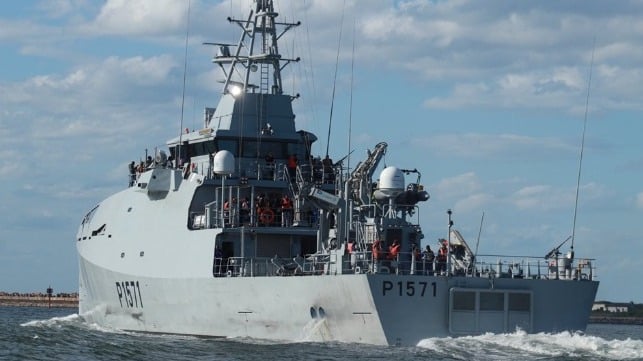
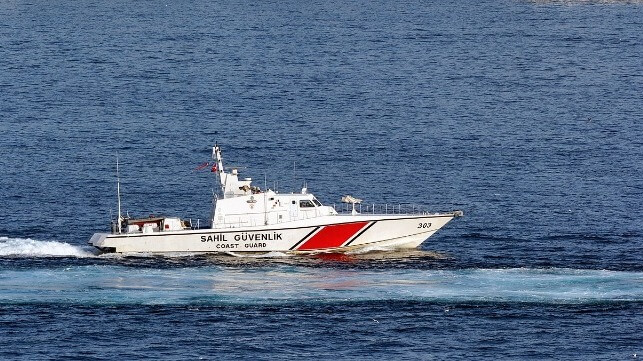
Turkish patrol vessel
File image courtesy Turkish Coast Guard

Published Sep 7, 2025 7:39 PM by The Maritime Executive


On Sunday, a migrant vessel collided with a Turkish coast guard vessel at high speed off the coast of Turkey, killing five people and wounding one more. 

The collision occurred off Ayvalik on Turkey's Aegean coast, near the island of Lesvos. According to the governorate of the Balikesir region, there were 34 people aboard the boat, including the operator, and all aboard went into the water. Five bodies were recovered during the ensuing search and rescue mission, and one injured individual was taken to a hospital for treatment.

The Turkish Coast Guard periodically rescues or interdicts migrants off the coast of Ayvalik, which is just eight nautical miles (at the narrowest point) from Greek soil, where migrants have access to EU asylum claim opportunities. In December, the Turkish Coast Guard rescued 57 irregular migrants in four inflatable boats in the area; in that instance, the survivors alleged that they had been pushed across the boundary line by the Hellenic Coast Guard, a sensitive contention often raised by human rights NGOs and hotly disputed by Greece.  

Migration on the Aegean route is less intensive than it once was, but it remains risky for those who take it. According to the Daily Sabah, two migrants were found dead last week on the beaches of Rhodes, opposite the Turkish port of Marmaris and another popular destination for migrants seeking a better life. 


G20 Summit Forces S. Africa to Cancel Naval Drills with China and Russia

South African patrol vessel
Courtesy South African National Defence Force

Published Sep 7, 2025 10:08 PM by The Maritime Executive


Last week, South Africa announced postponing a key naval exercise with China and Russia slated for November. This has been interpreted as a move to avoid the exercise coinciding with the G20 summit, scheduled in South Africa in the same month. U.S. Vice President JD Vance is expected to attend the summit. In the past few months, South Africa has been in the crosshairs of U.S. President Trump, stemming from policy differences. Last month, South African exports to the U.S. were slapped with a 30% tariff rate.

South Africa's Department of Defense explained that the decision to postpone the exercise was in view of the activities related to South Africa’s G20 Presidency. “The postponement is to ensure that the exercises do not impact on the logistical, security and other arrangements associated with South Africa’s G20 Presidency,” said Siphiwe Dlamini, DoD Head of Communication. South Africa took over G20 leadership in December last year and will be handing over to U.S. in November.

According to some defense analysts, it would have been baffling for South Africa to host a trilateral naval exercise with China and Russia alongside the G20 summit. The exercise (EX MOSI) is in third iteration and takes place every two years between the BRICS partners. South Africa said new dates for the postponed exercise will be announced, without mentioning specific timelines.

This year, the exercise was planned off South African waters in the Western Cape. While BRICS (Brazil, Russia, India, China and South Africa) alliance has focused on economic cooperation, the scope appears to be expanding to include defense. Last week, a briefing meeting for a proposed BRICS combined maritime exercise was held in Cape Town, South Africa.

The meeting brought together military leaders from BRICS partner countries, including Iran. Speaking to the press after the meeting, Captain Hassan Maghsoodloo, Commander of the First Naval District of Islamic Republic of Iran Navy, confirmed his combat naval units are likely to participate in the drill.

South Africa maintains that military exercises are an opportunity to strengthen its multilateral and bilateral relations. In the past few years, South Africa has participated in joint military exercises with countries such as Brazil, Germany, China and France. However, South Africa and the U.S. last month agreed to cancel the Shared Accord military exercise, which was planned in Free State province. “Unfortunately, South Africa’s Ministry of Defense and Veterans presented requirements deemed inconsistent with the agreements between our governments that U.S. DoD could not support,” said a diplomatic note from the U.S. Embassy in South Africa.


Venezuela Deploys Iranian Missile Boats to Fend Off U.S. Navy

Peykaap
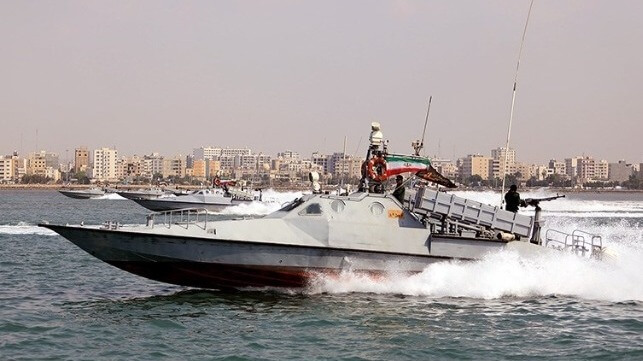
An Iranian Peykaap fast attack boat (Tasnim News / CC BY SA 4.0)

Published Sep 7, 2025 4:44 PM by The Maritime Executive


In response to a concentration in the southern Caribbean of a substantial US Navy force, the Venezuelan Navy has reportedly deployed some of the Peykaap III Fast Attack Craft that Iran supplied it with several years ago.

One of three Venezuelan Peykaap Fast Attack Craft seen on the dockside at the Agustín Armario Naval Base in Puerto Cabello (https://x.com/i/status/1964133901049221184)

In April 2021, the Iranian Navy (Nedaja) logistics vessel IRINS Makran (K441) left Bandar Abbas, escorted by the Moudge Class frigate IRINS Sarhand (F74). Iranian official sources suggested that the flotilla was heading for Venezuela. Clearly visible on the deck of IRINS Makran as she left port were seven Peykaap fast patrol craft, a North Korean-derived type with a crew of three normally operated by the IRGC Navy where it is known sometimes as the Zolfaghar.

The flotilla rounded the Cape of Good Hope but was then spotted by the Danish Navy with the Peykaap fast patrol craft still on deck, en route to the Russian Navy 325th anniversary in St. Petersburg. It was not clear whether the Makran returned to Bandar Abbas with the Peykaaps still on board. But at some point, the boats were delivered to Venezuela, because the boats were on show during a naval parade in Venezuela in July 2023.

IRINS Makran seen in Bandar Abbas Naval Harbor before its departure, with Peykaap Fast Attack Craft on deck

The Peykaaps in both Iranian and Venezuelan service are fitted with two launching tubes for Nasr anti-ship missiles, an Iranian-manufactured copy of the Chinese C-704 missile which has autonomous terminal guidance combining a TV-homing seeker and millimeter-wave radar. The export version of the Nasr-1 is known as the CM-90. The system has a range of 90 kilometers. Hezbollah used Nasr-1 to attack the Beit Lid military base in northern Israel on October 17, 2024. The Khowsar shorter-range missile from the same Eagle Strike missile family, known in Chinese service as the C-701, was used by Hezbollah to attack INS Hanit (503) off Lebanon in July 2006. Both Khowsar and Nasr-1s can be fired from the same missile boxes. Surprisingly, neither of these two types of missiles have yet been identified in use by the Houthis.

The Nasr-1/CM-90 is unlikely to pose a significant threat to US Navy warships, which will nonetheless need to be at general quarters when in zone. The Arleigh Burke-class Aegis guided missile destroyer USS Jason Dunham (DDG-109) and its sister ships have overlapping anti-missile systems, such as Sea Sparrow and Phalanx, to deal with both medium and close-range anti-missile systems.

However, the US naval force commander will have other options for neutralizing the threat well before the Peykaaps could get within Nasr-1 range. The Venezuelans have more potent weaponry available in the form of 100-kilometer range Kh-31A (AS-17 Krypton) anti-ship missiles; these can be fired from Venezuela’s remaining Su-30MK2V Flanker fighters, from a batch of 24 delivered by Russia in 2008.


Turbines Installed for France’s Pilot Deep Water Floating Wind Project

floating deep water wind turbines France
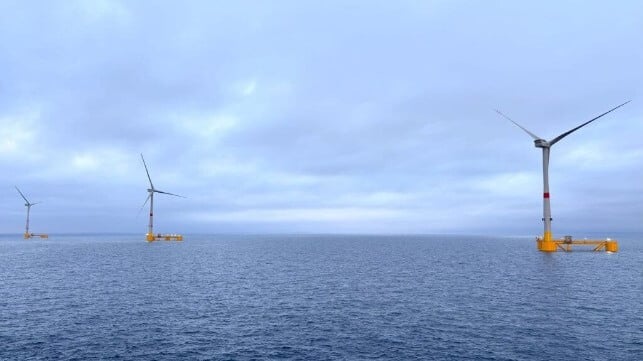
The three floating wind turbines are installed in water depths up to approximately 230 feet as a pilot for the technology (Ocean Winds)

Published Sep 5, 2025 6:01 PM by The Maritime Executive


Ocean Winds reports it has successfully completed the third and final turbine installation of its Éoliennes Flottantes du Golfe du Lion (EFGL) project located in southeast France along the Mediterranean. Developed as a pilot project in partnership with Banque des Territoires, EFGL is now the first floating offshore wind farm in the Occitanie region to complete its offshore turbine installation phase.

The company highlights that the project marks a major step for floating wind on a global scale. With three 10 MW turbines installed on floating foundations, EFGL demonstrates the viability of floating offshore wind in deeper waters, unlocking high-wind areas previously out of reach. 

The success of EFGL, the company says, demonstrates floating wind’s readiness to scale, both in France and internationally, contributing to the global acceleration of offshore wind energy. 

Assembled at Port-La Nouvelle, the turbines were towed 16 km (10 miles) offshore. The turbines are now ready for the final stage of cable and grid connection works done by RTE, before starting to deliver clean energy to approximately 50,000 inhabitants each year. The water depth ranges between 68 and 70 meters (220 to 230 feet).

“EFGL is not only a first for France but a global benchmark for floating offshore wind,” said Marc Hirt, Country Manager France for Ocean Winds. “It showcases the industrial maturity, precision, and collaboration needed to bring floating wind to commercial scale.”

Ocean Winds, an international offshore wind energy company created by EDP Renewables and ENGIE, is at the forefront of the development of floating wind turbines. The company has five years of operating its 25 MW WindFloat Atlantic project in Portugal. It said the successful installation of EFGL paves the way for larger developments, including the Eoliennes Flottantes d’Occitanie (EFLO), a 250 MW floating offshore wind project awarded to OW and Banque des Territoires in late 2024.  


Freighter Goes Aground in Northwest Passage

Thamesborg

Published Sep 7, 2025 7:12 PM by The Maritime Executive


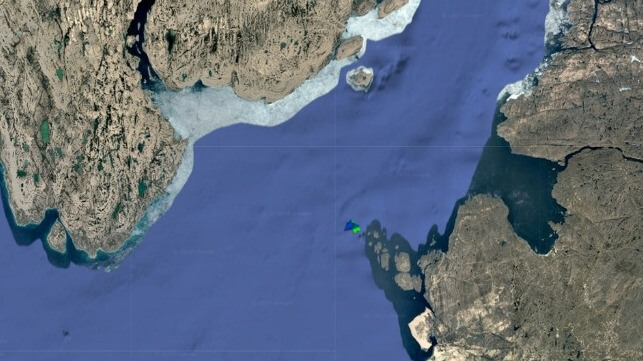
A freighter has gone aground in the remote reaches of Canada's Northwest Passage, at a location in the southern half of the Central Canadian Archipelago.

According to local outlet Cabin Radio, the freighter Thamesborg was en route from China to Quebec when it grounded in Franklin Strait, just southeast of Prince of Wales Island. The central section of the Northwest Passage has two options - a northern route, often blocked by ice, and a southern route, which passes between Victoria Island and the mainland. Franklin Strait is one of the options for accessing this route. 

At 800 miles northeast of Yellowknife, Franklin Passage is exceptionally remote. A grounding in the distant waters of the Northwest Passage has been among the top concerns of Canadian SAR planners for years. Luckily, the operator of the Thamesborg reports that there has been no pollution due to the grounding, and the crew are all safe, according to Cabin Radio. 

AIS data provided by Pole Star Global shows that Thamesborg is aground on a shallow pinnacle on the southwest side of the strait. She is accompanied by two Canadian Coast Guard vessels, an unnamed CCG patrol vessel and the icebreaking buoy tender Sir Wilfred Laurier. Though intermittent cloud cover makes analysis difficult, satellite data from JPSS / RAMBB appears to show no ice in the area of the grounding. 

The Northwest Passage is known for the twin risks of shallow water and ice, and is prone to clogging with drifting floes even during the short shipping season. Many transits (including modern cruises) are done in smaller, shallower-draft vessels.

The largest vessel ever to transit the passage was the 1969 voyage of the 115,000 dwt tanker SS Manhattan, with extensive icebreaker support. The vessel made the transit in ballast both ways, at less than her full laden draft of 52 feet. The effort was not successfully repeated due to ice. 


Canada to Boost Ship Recycling Capacity on the West Coast

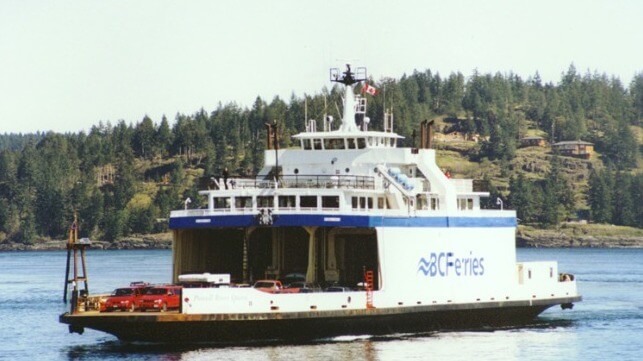
Powell River Queen
The car ferry Powell River Queen is among the many vessels slated for scrapping on BC's coast (BC Ferries)

Published Sep 7, 2025 11:54 PM by The Maritime Executive


Canada is working to increase its ship recycling capacity on the West Coast in order to accommodate an influx of end-of-life vessels in the near future. The Royal Canadian Navy is expected to retire several of its warships starting this fall. B.C. Ferries has also announced a major fleet renewal effort, which will see the company retire some of its older vessels. In July, B.C. Ferries said that it is looking to have its vessels recycled in British Columbia.

Owing to this rising demand, Gord Johns, the MP (member of parliament) for the Courtenay-Alberni area in British Columbia, is eyeing the deep-sea port of Alberni as a suitable location to establish a green ship recycling facility.

“The Alberni Valley is uniquely positioned to attract the infrastructure and business investment needed for ship recycling and dry dock facilities,” said Johns. “With federal nation-building investments on the horizon, increased defense spending, and growing demand for world-class vessel recycling, the timing could not be more critical.”

To spearhead the ship recycling operation in Port Alberni, politicians in central Vancouver Island have formed a leadership group to collect inputs from local people. Some of the targeted stakeholders include First Nations, Transport Canada, local businesses and unions as well as environmental organizations. In addition, the leadership group will look into the financing aspects of the project. The group met for the first time on Friday.

“We need a strong regulatory environment to keep this type of industry on our coast,” said Josie Osborne, member of legislative assembly for Mid Island-Pacific Rim.

 European carmakers clash over emission targets ahead of Brussels meeting


Over 150 executives from Europe's electric car (EV) sector have urged the EU to maintain its 2035 zero-emission target for cars and vans, countering earlier claims by traditional car manufacturers that the target was "unfeasible". European Commission President Ursula von der Leyen is due to hold talks with automotive industry leaders on Friday.


Issued on: 08/09/2025 - RFI


While the EU slapped 35% tariffs on imports of EV cars from China in October 2024, China's BYD has escaped the tariffs by exporting from its factory in Thailand. REUTERS - Chalinee Thirasupa

In a letter sent to Brussels on Monday, 150 EV executives, including bosses from Volvo Cars and Polestar, warned that any delay to the 2035 target would hand a competitive advantage to global rivals – particularly Chinese manufacturers – and undermine investor confidence in Europe's green transition.

"Weakening targets now would send a signal that Europe can be talked out of its own commitments," said Michael Lohscheller, Polestar's chief executive, in a statement. "That would not only harm the climate. It would harm Europe's ability to compete."

As part of its fight against climate change, the EU requires carmakers to progressively cut carbon emissions produced by new vehicles sold in the bloc, or face steep fines.

In March, the European Commission yielded to pressure from European automakers to give them three years, rather than one, to meet the carbon emission targets.

Two weeks ago, the heads of the European automobile manufacturers' and automotive suppliers' associations sent a letter to Commission President Ursula von der Leyen stressing that a 100 percent reduction in emissions for cars by 2035 was "no longer feasible".

That letter was signed by Mercedes-Benz CEO Ola Kaellenius – a significant endorsement from one of Europe's automotive giants.

EU car industry must speed up electric sales or face billions in fines


Emissions targets on track


On 12 September, Von der Leyen is set to discuss the future of the automative sector with industry players as they face increased competition from Chinese rivals and US tariffs.

A study by transport research and campaign group T&E, published Monday, showed that all European carmakers, except for Mercedes-Benz, are on track to meet the emission targets for 2025-2027. The German luxury manufacturer would need to pool its emissions with Volvo Cars and Polestar to avoid fines, the report said.

It forecast battery electric vehicle sales would surpass a 30 percent share of the EU car market in 2027 from 18 percent this year.

Demand for EVs across Europe has slowed, with consumers increasingly opting for cheaper Chinese-made imports.

Meanwhile, Stellantis CEO Antonio Filosa has called for greater flexibility in the transition to electric vehicles, urging the EU to support hybrid technologies as an interim solution.

"A European policy that encourages the replacement of older cars with new cars and a wider choice of powertrains would have a greater impact on global CO₂ emissions," he argued.


Crash or rescue: European carmakers look to EU for salvation

Euronews illustration
Copyright Euronews

By Stefan Grobe
Published on 

The current crisis affecting the European automotive industry is an acute threat to Europe’s economic future. Will a summit between the auto sector and Ursula von der Leyen on Friday provide a life-line?

Europe's car industry is “in mortal danger”, EU industry chief Stéphane Séjourné said a few months back, not mincing his words.

Stuttering sales, high energy prices, growing global competition and an uncertain regulatory and trade environment have plunged the sector into a spiralling crisis.

“There is a risk that the future map of the global car industry will be drawn without Europe,” Séjourné said back in April.

To tackle the sector’s most pressing challenges, EU Commission President Ursula von der Leyen will host the top car executives in Brussels on Friday.

It’s the third and last crisis meeting of its kind this year, part of what the Commission has billed the “Strategic Dialogue on the Future of the Automotive Industry”.

The meeting is scheduled for three hours – but will it create new momentum for the industry?

Last spring, the EU launched an Industrial Action Plan which includes funds for battery producers, most notably through the €1.8 billion Battery Booster and an additional billion euros allocated for battery research and development under the Horizon Europe programme.

But such initiatives have failed to change the overall gloomy outlook.

“The sense of urgency has not gone away,” Sigrid de Vries, director general of the European Automobile Manufacturers’ Association (ACEA) told Euronews. “We need more actio

The carmakers are particularly frustrated over a lack of a pragmatic policy plan for the industry’s transformation, as expressed in a recent open letter to Ursula von der Leyen by the presidents of ACEA and the European Association of Automotive Suppliers (CLEPA), Ola Källenius and Matthias Zink.

Europe’s transformation plan “must move beyond idealism to acknowledge current industrial and geopolitical realities”, they wrote.

According to the industry representatives, lower energy costs for charging, more purchase subsidies and tax reductions and especially a more even distribution of charging infrastructure are needed to make switching to electric vehicles an obvious choice for a critical mass of European consumers and businesses.

EV market in Europe stagnating

Right now, the market share of battery-electric vehicles in Europe stagnates at around 15% - not enough for a breakthrough of a technology considered all-decisive for the future.

There is a considerable hesitation of many European consumers to buy an electric vehicle because there are still not enough charging stations in Europe, 75% of which are located in only three countries: the Netherlands, France and Germany.

Across the EU, only about 880,000 public charging points are currently available.

But according to estimates from ACEA, 8.8 million charging points will be needed by 2030 – that’s just five years from now.

To achieve this, 1.5 million chargers would have to be installed every year, almost ten times the current rate of growth.

Seeing more economic and legal trouble on the horizon, the car industry wants a review of current CO2 regulations.

“Meeting the rigid car and van CO2 targets for 2030 and 2035 is, in today’s world, no longer feasible,” as the presidents of ACEA and CLEPA wrote to Ursula von der Leyen.

Instead, they demand flexibility and pragmatism regarding drivetrain technologies (aka: the ban of combustion engines) as a crucial rescue rope for the embattled industry.

After all, “you cannot force people into a particular kind of car”, Sigrid de Vries said.

For years, electrification has been the key strategy deployed globally by the industry to produce zero emission vehicles, responding to a key quest of policymakers.

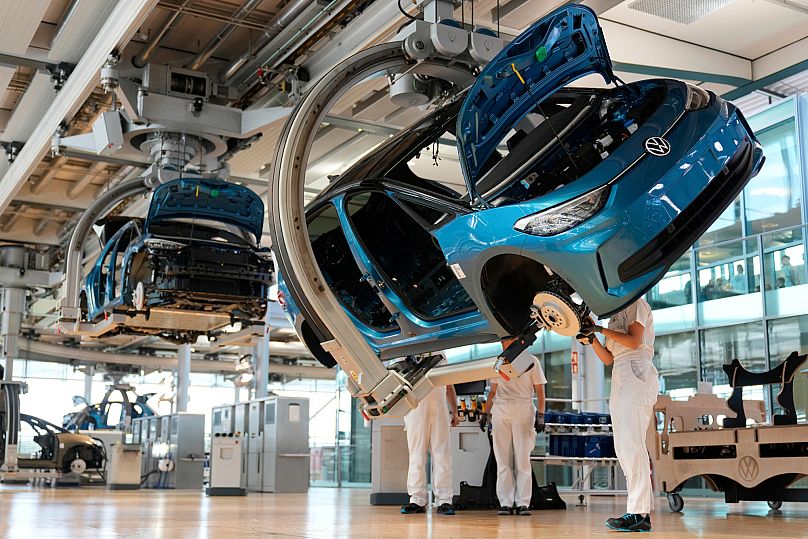
Employees of the German car manufacturer Volkswagen assemble an ID.3 electric car at the transparent factory in Dresden, Germany Copyright 2025 The Associated Press. All rights reserved

These vehicles are also becoming ever more connected and able to exchange information with other cars and roadside infrastructure, tending to become high-performance “computers on wheels”, increasingly dependent on chips and software.

As a consequence, new companies from the battery and tech sectors have entered the automotive market and leapfrogged traditional carmakers.

And here is where most European companies are still lagging behind their Asian rivals in electric car innovation. In 2024, only one electric car made in the EU was among the world’s Top Ten, the Volkswagen ID.3.

In this context, due to its quasi-control of the global battery production and low labour costs, China has risen as the electric vehicle manufacturing hub with Chinese cars becoming increasingly competitive.

And the People’s Republic remains by far the biggest global market.

Last year, according to Germany Trade & Invest, more than 32 million vehicles were sold in China, half of them electric (11 million in the European Union and 15 million in the United States).

At the IAA Mobility industry show in Munich this week, the largest in the world, the number of participating Chinese companies has increased by 40% to the highest level ever.

China's dominance and US tariffs

The growing Chinese dominance together with Donald Trump’s tariffs on European cars put Europe’s automotive industry under heavy pressure to adapt quickly to the new environment and develop industrial resilience to counter China, as the Report on EU competitiveness by the former Italian PM and ECB president Draghi pointed out.

Other experts advocate more cooperation with the Chinese.

“We need closer ties with China, not distancing ourselves. It would be stupid not to cooperate with the Chinese, as they hold all the cards,” Ferdinand Dudenhöffer, an economist and director of the Center Automotive Research (CAR) in Germany told Euronews.

“For this we need political support. What we don’t need is China-bashing.”

What is at stake is nothing less than the survival of the European car industry, widely regarded as the industrial backbone of the European economy, supporting more than 13 million direct and indirect jobs (more than 6% of total EU employment) and contributing roughly one trillion euro to the EU’s gross domestic product.

In Germany, Sweden and some eastern European countries, the car industry accounts for more than 10% of the manufacturing workforce.

So, when Germany, Europe’s biggest economy, lost 50,000 jobs in the car sector last year alone, the shockwaves were felt everywhere.

The country is home to some of the most famous carmakers in history, yet their survival is not guaranteed forever.

Just look at the United Kingdom whose car industry was once dominant, but today only has one 100% British brand left, the family-owned Morgan that makes hand-built sport cars.

“Every job lost, every factory shut down will not come back,” Dudenhöffer said.

“So, if the car industry struggles and declines, the general economic perspectives in Europe could be devastating for years to come.”