Monday, September 08, 2025


Corporate reports miss the mark on ocean health


Stanford University


Key Takeaways:

  • Amid growing scrutiny from policymakers and financiers on how corporations report their climate- and nature-related impacts, a new paper summarizes industrial impacts on the ocean and compares them with what leading companies in the ocean economy disclose.

  • The work shows corporations disclose little about their ocean-specific impacts, especially on biodiversity and ecosystems, and rarely set targets for reducing them.

  • These insights can help improve reporting frameworks with ocean-specific needs, allowing investors better understand their risks and incentivizing companies to change their practices. 


Covering nearly three-quarters of the planet, the ocean may seem vast, yet it is rapidly becoming a crowded space. While it was initially slower to develop than land-based industries, the ocean economy is now surging thanks to new technologies. Companies and governments are vying for food, raw materials, energy, and geopolitical influence. In just two decades, shipping has grown fivefold and now carries 80% of global trade by volume; offshore wind has expanded more than 500 times; and nearly one million kilometers of seabed fiber-optic cables transmit 99% of international communications. 

“Humanity has relied on the ocean for millennia, yet today’s scale and diversity of use are unprecedented,” said Jean-Baptiste Jouffray, a Wallenberg postdoctoral fellow at Stanford University’s Center for Ocean Solutions and the Stanford-based Natural Capital Project, and lead author of a paper out today in Nature Sustainability. “While this offers opportunities for human wellbeing, it also poses severe risks to ecosystems and the communities that depend on them.” A simple example: one new invasive species is introduced in a new part of the ocean every three days, in many cases taking over local ecosystems and fisheries and having far-reaching consequences.  

In the new paper, Jouffray and his collaborators produced a typology of observed ocean impacts, summarizing and categorizing impacts from eight core sectors of the ocean economy: cruise tourism, marine equipment and construction, offshore oil and gas, offshore wind, port activities, seafood, shipbuilding and repair, and container shipping. They then analyzed annual and sustainability reports from the top 10 companies in each sector for the years 2018 - 2020 to see what impacts are being reported, how they are measured, and what targets (if any) are set.

The findings reveal crucial gaps in the current reporting of corporate impacts on marine ecosystems, and establish an important baseline for future comparisons. Companies focus almost exclusively on energy use and greenhouse gas emissions, with few measurements of more ocean-specific impacts such as habitat destruction, overfishing, underwater noise, or the spread of invasive species (see Figure 1). Where reporting does occur, companies use a wide range of indicators, hindering comparability and suggesting a lack of consensus on what should be reported. Notably, less than one-third of the companies reported indicators for biodiversity-related impacts, and none of these indicators were used by more than two companies.

How reporting can translate into regulatory and financial responses 

Why go to all this effort? Once climate or nature-related information is made public, investors and lenders may find investments are too risky because of their potential impacts on other sectors or on their reputations. “In theory, the more information companies disclose about their operations, the better you can influence their behavior. But that requires someone to act on that information. Transparency alone is a necessary, but far from sufficient, basis for corporate accountability,” said Jouffray.  

A number of voluntary climate and nature reporting frameworks, such as the Taskforce for Nature-Related Financial Disclosures, the World Benchmarking Alliance, and the CDP (formerly the Carbon Disclosure Project), are actively working to incorporate ocean impacts. Meanwhile, several stock exchanges now expect listed companies to disclose information on their climate impacts. Over time, such transparency could become standard, much as financial reporting is today. 

Filling gaps in data and policy

The researchers have already shared their work with these reporting organizations in an effort to build consensus around which indicators to focus on. Their analysis also clarifies where there are gaps in what is being measured, and where researchers could play a bigger role in providing baseline information – for instance, when it comes to the introduction of invasive species. Eventually, some of these data may be produced by third-party monitoring systems, much as Global Fishing Watch tracks fishing vessel activity via satellite, since current reports are based on what companies choose to publish. 

The investors are up next 

The research team is turning next to identifying the financiers of these key ocean economy companies, hoping they can help create the right incentives for better corporate disclosure and practices. “There has been a lot of interest in the role the financial sector could play to influence ocean conservation and sustainable use, so we really want to test that idea,” said John Virdin, director of the Ocean Policy Program at the Nicholas Institute for Energy, Environment and Sustainability and a co-author of the paper. “Now that we have a baseline of the ocean impacts that companies report, we’re curious to know: if this reporting is improved, would financiers act on that information? Would it change investment decisions in the ocean economy? These are questions we are turning to now.” 


This work was funded by the Knut and Alice Wallenberg Foundation (2021.0343), the Packard Foundation (2022-73546), and the Walton Family Foundation (00104857).

Jouffray is also affiliated with the King Center on Global Development at Stanford and the Stockholm Resilience Centre at Stockholm University. Virdin is also affiliated with Duke’s Nicholas School of the Environment. Other co-authors are Jan Bebbington of the Pentland Centre for Sustainability in Business at Lancaster University; Robert Blasiak of the Stockholm Resilience Centre at Stockholm University; Andrea Dunchus and Dan Vermeer with the Duke University Fuqua School of Business; Marta Lo Presti, Jeremy Pare, Juan Pablo Quintero and Regan Rosenthal with the Duke University Nicholas School of the Environment; Daniel Prosi with the European University Institute, Department of Economics; and Piera Tortora with the Organisation for Economic Co-operation and Development.

Ocean warming puts vital marine microbe Prochlorococcus at risk


University of Washington
Cruise tracks 

image: 

The lines on the map are cruise tracks, overlaying temperature. The water in yellow areas hovers around 86 degrees while the temperature at the poles is closer to 32. Researchers cataloged Prochlorococcus abundance using SeaFlow continuous flow cytometry along the path of the lines.

view more 

Credit: François Ribalet/University of Washington


Among the tiniest living things in the ocean are a group of single celled microbes called Prochlorococcus. They are cyanobacteria, also known as blue-green algae, and they supply nutrients for animals all the way up the food chain. Over 75% of surface waters teem with Prochlorococcus, but as ocean temperatures rise, researchers fear that the water might be getting too warm to support the population.

Prochlorococcus is the most abundant photosynthesizing organism in the ocean, accounting for 5% of global photosynthesis. Because Prochlorococcus thrive in the tropics, researchers predicted that they would adapt well to global warming. Instead, a new study finds that Prochlorococcus prefers water between 66 and 86 degrees and doesn’t tolerate water much warmer. Climate models predict that subtropical and tropical ocean temperatures will exceed that threshold in the next 75 years.

“For a long time, scientists thought Prochlorococcus was going to do great in the future, but in the warmest regions, they aren’t doing that well, which means that there is going to be less carbon — less food — for the rest of the marine food web,” said François Ribalet, a University of Washington research associate professor of oceanography, who led the study.

Their results were published in Nature Microbiology on Sept. 8.

In the past 10 years, Ribalet and colleagues have embarked on close to 100 research cruises to study Prochlorococcus. His team has analyzed approximately 800 billion Prochlorococcus-sized cells across 150,000 miles around the world to figure out how they are doing and whether they can adapt.

“I had really basic questions,” Ribalet said. “Are they happy when it's warm? Or are they not happy when it's warm?” Most of the data comes from cells grown in culture, in a lab setting, but Ribalet wanted to observe them in their natural ocean environment. Using a continuous flow cytometer — called SeaFlow — they fired a laser through the water to measure cell type and size. They then built a statistical model to monitor cell growth in real time, without disturbing the microbes.

Results showed that the rate of cell division varies with latitude, possibly due to the amount of nutrients available, sunlight or temperature. The researchers ruled out nutrient levels and sunlight before zeroing in on temperature. Prochlorococcus multiply most efficiently in water that is between 66 and 84 degrees, but above 86, rates of cell division plummeted, falling to just one-third of the rate observed at 66 degrees. Cell abundance followed the same trend.

In the ocean, mixing transports most nutrients to the surface from the deep. This occurs more slowly in warm water, and surface waters in the warmest regions of the ocean are nutrient-scarce. Cyanobacteria are one of the few microbes that have adapted to live in these conditions.

“Offshore in the tropics, the water is this bright beautiful blue because there’s very little in it, aside from Prochlorococcus,” Ribalet said. The microbes can survive in these areas because they require very little food, being so small. Their activity supports most of the marine food chain, from small aquatic herbivores to whales.

Over millions of years, Prochlorococcus has perfected the ability to do more with less, shedding genes it didn’t need and keeping only what was essential for life in nutrient-poor tropical waters. This strategy paid off spectacularly, but now, with oceans warming faster than ever before, Prochlorococcus is constrained by its genome. It can’t retrieve stress response genes discarded long ago.

“Their burnout temperature is much lower than we thought it was,” Ribalet said. The previous models assumed that the cells would continue dividing at a rate that they can’t sustain because they lack the cellular machinery to cope with heat stress.

Prochlorococcus is one of two cyanobacteria that dominate tropical and subtropical waters. The other, Synechococcus, is larger, with a less streamlined genome. The researchers found that although Synechococcus can tolerate warmer water, it needs more nutrients to survive. Should Prochlorococcus numbers dwindle, Synechococcus could help fill the gap, but it isn’t clear what the impact of this would be on the food chain.

“If Synechococcus takes over, it’s not a given that other organisms will be able to interact with it the same way they have interacted with Prochlorococcus for millions of years,” Ribalet said.

Climate projections estimate ocean temperatures based on greenhouse gas emission trends. In this study, the researchers tested how Prochlorococcus might fare in moderate- and high-warming scenarios. In the tropics, modest warming could reduce Prochlorococcus productivity by 17%, but more advanced warming would decimate it by 51%. Globally, the moderate scenario produced a 10% decline while warmer forecasts reduced Prochlorococcus by 37%.

“Their geographic range is going to expand toward the poles, to the north and south,” Ribalet said. “They are not going to disappear, but their habitat will shift.” That shift, he added, could have dramatic implications for subtropical and tropical ecosystems.

Still, the researchers acknowledge the limitations of their study. They couldn’t study every cell or sample every body of water. Their measurements are based on pooled samples, which could mask the presence of a heat-tolerant strain.

“This is the simplest explanation for the data that we have now,” Ribalet said. “If new evidence of heat tolerant strains emerges, we’d welcome that discovery. It would offer hope for these critical organisms.”

Co-authors include E. Virginia Armbrust, a UW professor of oceanography; Stephanie Dutkiewicz, a senior research scientist in the Center for Sustainability Science and Strategy at MIT; and Erwan Monier, co-director of the Climate Adaptation Research Center and an associate professor in the Department of Land, Air and Water Resources at UC Davis.

This research was funded by the Simons Foundation and other government, foundation and industry funders of the MIT Center for Sustainability Science and Strategy.

For more information, contact Ribalet at ribalet@uw.edu.


This image, captured by an electron microscope, displays individual Prochlorococcus cells. Each blob is a microbe, measuring just 500 nanometers in diameter. For reference, the width of a single human hair is around 100,000 nanometers.

Credit

Natalie Kellogg/University of Washington

Sunset from the research vessel Thomas G. Thompson, which housed the SeaFlow flow cytometer during data collection cruises.

The crew at work during a research cruise aboard the Thomas G. Thompson. The device on the left collects water samples from different depths. The SeaFlow flow cytometer was also aboard, but not pictured here.


Flying lifesavers: Drones could soon respond to cardiac arrests


University of Warwick research brings drone-delivered defibrillators closer to reality in the UK


University of Warwick

Drone Photo 1 

image: 

Photo of the drone defbrilator 

view more 

Credit: University of Warwick


In the UK there are more than 40,000 out-of-hospital cardiac arrests (OHCA) annually, but fewer than 10% of people survive. Early CPR (cardiopulmonary resuscitation) and use of an Automated External Defibrillator (AED) to restart the heart can at least double the chance of survival. AEDs are safe for the public to use, even without training, but it can be difficult for bystanders to locate and retrieve one quickly during an emergency. 
 

Researchers at the University of Warwick teamed up with the Welsh Ambulance Services University NHS Trust and autonomous drone specialists SkyBound for a National Institute for Health and Care Research (NIHR) study to test the feasibility of drone-delivered AEDs.  


They tested using drones to fly defibrillators in response to 999 calls as part of emergency simulations in a remote countryside location where ambulance crews would usually be delayed in reaching by road. 


Chief Investigator Dr Christopher Smith, University of Warwick, said: “Ambulance services work as swiftly as possible to get to patients who have suffered cardiac arrests. However, it can sometimes be difficult to get there quickly. AEDs can be used by members of the public before the ambulance gets there, but this rarely happens. We’ve built a drone system to deliver defibrillators to people having cardiac arrest which could help save lives. 


“We have successfully demonstrated that drones can safely fly long distances with a defibrillator attached and maintain real-time communications with emergency services during the 999 call. We are in a position where we could operationalise this system and use it for real emergencies across the UK soon.” 


In the study, the researchers designed a system to deliver an AED attached by a winch to a DJI M300 drone following a 999 call. Skybound’s automated drone software activated and controlled the drone’s flight. The AED was lowered to a member of the public to help them carry out resuscitation on a CPR mannequin, all while receiving instructions from ambulance service call handlers. 


The study, which recruited 11 participants, involved assessing real-time communications between the drone pilot, call handler and public bystander. Experts observed how those taking part behaved and interacted with each other. They also timed how quickly the mock cardiac arrest patient would be reached. 


Steve Holt, who survived two cardiac arrests in remote Northern England beauty spots, says research into using drones to deliver Automated External Defibrillator (AEDs) to cardiac arrest patients may help to save lives. 

The 74-year-old retired surgeon collapsed on a walking holiday in the Lake District with his 43-year-old son Mark in 2019 in a remote country pub near Coniston. Mark began CPR and used the defibrillator located outside the pub, but bad weather thwarted an air ambulance, so it took 25 minutes before paramedics arrived by road. 

Mark, now a patient representative on the current NIHR study, sees the great potential of delivering defibrillators by drones and feels that it would be welcomed by people. He added: “While I was resuscitating dad it felt like an eternity waiting for help. Ambulances can be delayed, especially when trying to get to remote areas like those we were in.  But in the future a call handler may be able to explain that help is on the way with a drone which can arrive much quicker. 

“Without clinical research, healthcare advances would not come to fruition. It has been a privilege to be involved with the NIHR and the University of Warwick’s work. 

Study findings show the technology is very promising. Drone start-up procedures were quick. It took 2.18 minutes from emergency call to drone take-off. The drone flew autonomously and safely, with good links to the ambulance service and effective real-time communication. Participants reacted positively to drone delivery of the AED.  


However, there were delays once the drone had arrived on scene. It took a further 4.35 minutes after the drone had arrived before a shock was given to the simulated patient using the AED. Hands-off CPR time was 2.32 minutes, but only 0.16 minutes of this was spent retrieving the AED.  


Researchers concluded that bystanders interacted well with the drone but struggled using the AED, showing that bystanders and call-handlers need more support to use drone-delivered AEDs for this to be effective. The next stage will involve funding larger studies to test the technology and evaluate whether it can be used in the NHS. 

Professor Mike Lewis, NIHR Scientific Director for Innovation, said: “Cardiac arrest, as the Secretary of State highlighted, is one of the biggest killers, claiming tens of thousands of people’s lives a year. In an emergency situation, time is of the essence and it’s crucial that bystanders can help before ambulance crews arrive. 

“That’s why it’s so exciting this innovative study is investigating if enabling emergency services can harness drones to deliver defibrillators to help improve survival. This demonstrates how health and care research can deliver high tech solutions to improve health and care services, and powers the country’s life sciences sector and technical advantage.” 


ENDS 

Notes to Editors: 

The paper “The use of drone-delivered Automated External Defibrillators in the emergency response for out-of-hospital cardiac arrest. A simulation study” is published in Resuscitation Plus. DOI: 10.1016/j.resplu.2025.101045 

For more information, please contact: 

University of Warwick Press Office on +44(0)7880 175403 or Matt.Higgs@warwick.ac.uk 

 NIHR Press Office on 020 4587 7470 or pressoffice@nihr.ac.uk. 

Funding: 

The study was funded by NIHR’s Research for Patient Benefit (RfPB) Programme

Health and Care Research Wales also provided NHS Excess Treatment Costs (ETC) for the drone.  


Additional Quotes: 

Carl Powell, Clinical Lead (Acute Care) at the Welsh Ambulance Service, said: “In a cardiac arrest, every second counts. We will always send an ambulance as quickly as possible, but starting chest compressions and delivering an electric shock with a defibrillator in the meantime could mean the difference between life and death. 

“We’re grateful to NIHR and others for funding this research, which has demonstrated that the technology shows a great amount of promise. 

“We’ll continue to work with partners to further explore and test how drone-delivered defibrillators could be harnessed by the NHS.” 

Gemma Alcock, CEO of SkyBound, said: “This collaboration represents a significant step forward in leveraging technology to potentially save lives, particularly in remote areas where access to defibrillators can be challenging. 

Mark Holy (left) and Steve Holt (right)

Drone defibrillator

Drone control centre


Person with defibrillator

Credit

University of Warwick


Why the East Antarctic interior is warming faster and earlier than its coastal areas


First long-term study on the East Antarctic interior ice sheet region reveals the Indian Ocean mechanism driving this change


Nagoya University

Relay Station, an unmanned weather station in the interior of East Antarctica 

image: 

Relay Station, an unmanned weather station in the interior of East Antarctica. Unmanned stations are designed to survive Antarctic temperatures below -70°C and have revealed the main cause of warming in East Antarctica’s interior.

view more 

Credit: Naoyuki Kurita, Nagoya University


Scientists have confirmed that East Antarctica's interior is warming faster than its coastal areas and identified the cause. A 30-year study, published in Nature Communications and led by Nagoya University’s Naoyuki Kurita, has traced this warming to increased warm air flow triggered by temperature changes in the Southern Indian Ocean. Previously considered an observation "blind spot," East Antarctica contains most of the world’s glacial ice. This newly identified warming mechanism indicates that current predictions may underestimate the rate of future Antarctic ice loss.  

Collecting data in Earth’s most extreme environment 

Antarctica, the world’s coldest, driest, and windiest continent, contains about 70% of Earth’s freshwater frozen in its massive ice sheets. Climate change in the region has been studied using data from manned stations located mostly in coastal areas. However, the Antarctic interior has only four manned stations, with long-term climate data available for just two: Amundsen-Scott Station (South Pole) and Vostok Station (East Antarctic Interior). Therefore, the actual state of climate change in the vast interior remained largely undocumented. 

The research group collected observation data from three unmanned weather stations in East Antarctica where observations have continued since the 1990s: Dome Fuji Station, Relay Station, and Mizuho Station. They created a monthly average temperature dataset spanning 30 years, from 1993 to 2022. 

Annual average temperature changes showed that all three locations experienced temperature increases at a rate of 0.45-0.72°C per decade, faster than the global average. The researchers analyzed meteorological and oceanic data and traced this temperature rise to changes in the Southern Indian Ocean that alter atmospheric circulation patterns and transport warm air toward Antarctica’s interior. 

Current climate models do not capture this warming process, so future projections of temperature for Antarctica may be underestimated. “While interior regions show rapid warming, coastal stations have not yet experienced statistically significant warming trends,” Professor Naoyuki Kurita from the Institute for Space-Earth Environmental Research at Nagoya University said. “However, the intensified warm air flow over 30 years suggests that detectable warming and surface melting could reach coastal areas like Syowa Station soon.” 

The Southern Indian Ocean-East Antarctica climate connection 

Ocean fronts—areas where warm and cold ocean waters meet—create sharp temperature boundaries in the Southern Indian Ocean. Because global warming heats ocean waters unevenly, it intensifies these temperature differences: stronger oceanic fronts lead to more storm activity and atmospheric changes that create a "dipole" pattern, with low pressure systems in mid-latitudes and high pressure over Antarctica. The high-pressure system over Antarctica pulls warm air southward and carries it deep into the continent. 

Now, for the first time, scientists have comprehensive weather station data demonstrating that East Antarctica's interior is warming faster than its coasts and have identified the major cause of this change. The study provides important insights into how quickly the world's largest ice reservoir will respond to continued global warming. 

Paper informtion:

Naoyuki Kurita, David H. Bromwich, Takao Kameda, Hideaki Motoyama, Naohiko Hirasawa, David E. Mikolajczyk, Linda M. Keller & Matthew A. Lazzara. (2025) Summer warming in the East Antarctic interior triggered by southern Indian Ocean warming. Nature Communications 16, 6764. https://doi.org/10.1038/s41467-025-61919-3 

Map of Antarctica and the East Antarctic study region 

(a) Map of Antarctica and (b) the East Antarctic study region showing interior stations that provided the main climate data (Dome Fuji, Relay, and Mizuho Stations). Coastal stations (Syowa and Mawson Stations) were used to demonstrate the interior-coastal warming difference. East Antarctica's Indian Ocean sector refers to the part of East Antarctica that faces the Indian Ocean. 

Credit

Kurita et al., 2025


A specialized tracked transport vehicle crossing East Antarctica's ice sheet to reach remote interior research stations.

Professor Naoyuki Kurita at Dome Fuji Station, East Antarctica, where weather instruments collect climate data year-round.

Credit

Naoyuki Kurita, Nagoya University


Op-Ed: Worried About China's Rise? Beijing's Ambitions are Mostly Regional

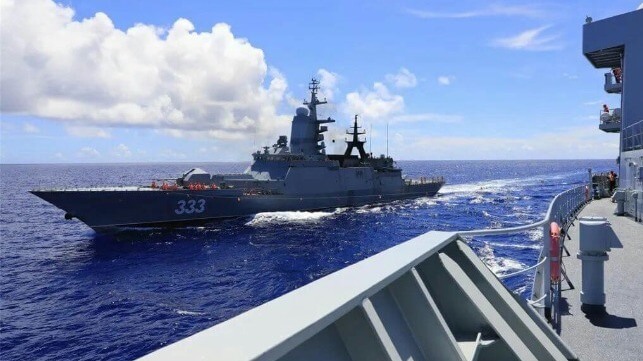
PLA Navy
File image courtesy PLA Navy

Published Sep 7, 2025 7:59 PM by The Lowy Interpreter


[By Sam Roggeveen]

Australia’s former prime minister Tony Abbott wrote in the Wall Street Journal recently that “a world dominated by Beijing would resemble China, with the silencing of dissent, the confiscation of wealth, and the brutal exercise of power.” It’s a dark but plausible vision, given Beijing’s treatment of its minorities, its sometimes-violent repression of dissent, the constant surveillance of its people, and its suppression of free speech. If China ever achieved world domination, it could certainly exercise its power the way Abbott describes.

However, what’s left out is a credible account of how China can achieve world domination in the first place. To believe in Abbott’s vision and muster the energy to resist Beijing, we first need to be convinced that there is a realistic path from the world we are in today to the prospect he is warning about.

Three other great powers – India, Russia and Japan – live in the same neighborhood as China and have a vital interest in ensuring that Beijing’s ambitions are permanently frustrated.

This remains a weak point in the more hawkish assessments about China’s ambitions, a lack of detail about how Beijing gets to world domination. One example (you can find others here) is a warning by Hal Brands from Johns Hopkins University, who argues that China threatens America’s way of government and could encourage its slide into autocracy:

If China were someday able to dominate East Asia after American retrenchment, it might gain the power to coerce the United States economically and diplomatically, even if it could never invade militarily. The proliferation of Chinese influence in regions around the world could gradually give Beijing powerful geopolitical and geo-economic advantages, rendering the United States insecure even within its hemispheric fortress. In the meantime, the international economic friction created by protectionism and chaos would drag down American growth, which could exacerbate social and political conflicts at home. And if democracy receded overseas and powerful autocracies advanced, autocratic voices within the United States might be empowered – as indeed happened in the 1930s.

Note the “ifs”, “coulds” and “mights” sprinkled throughout this passage – it takes a series of leaps to imagine a world in which China is so powerful that it can undermine American democracy. But note also that Brands acknowledges the unlikelihood of China ever being able to threaten the continental United States with overwhelming military force. The United States is too big, too powerful, and too far away to ever be vulnerable to Chinese invasion.

Expansive accounts of Chinese capabilities and intentions are not only light on detail, they also draw attention from more plausible and near-term concerns. As I have written in Foreign Policy this week, the military parade staged in Beijing unveiled new weapons systems that appear mostly to be dedicated to tasks in China’s near abroad rather than for a global military posture.

True, the People’s Liberation Army has developed a host of new capabilities to project military power far from home, as Australia discovered in February when a naval flotilla circumnavigated the continent. But the Beijing parade suggests that building a military to rival the United States as a global expeditionary force is far from Beijing’s top priority. Its real focus is to be powerful in the near neighborhood.

That’s bad news for Taiwan, and it is compounded by new assessments such as this one, featured in the latest issue of the journal International Security, arguing that the military balance between the United States and China has shifted so markedly in Beijing’s favor that it is becoming difficult to see how Washington could defend Taiwan.

It will also make life much more difficult for Southeast Asian countries on China’s periphery. China’s military weight, alongside the attraction of its huge economy, will incentivize the weaker countries of mainland Southeast Asia to preemptively bow to Beijing’s preferences. Indeed, we can already see the makings of a Chinese sphere of influence in Cambodia and Laos. Recent Lowy Institute research shows that China is now the leading partner for both countries in joint military exercises and other kinds of defense diplomacy.

Beyond its immediate neighbors, it is difficult to see how China could exercise dominance regionally, let alone globally. And that’s not just because of the United States; indeed, even in a post-American Asia, Chinese dominance seems a long shot. For one thing, China is surrounded by countries with which it has territorial disputes. Furthermore, much of modern Asia is founded on the struggle against colonialism and foreign domination. And finally, three other great powers – India, Russia and Japan – live in the same neighborhood as China and have a vital interest in ensuring that Beijing’s ambitions are permanently frustrated. For all these reasons, it is difficult to see the region meekly acquiescing to Chinese dominance.

In an era of receding US primacy in Asia, it is tempting to assume that the pendulum will swing to the other extreme. Real life is likely to be more complicated – and competitive – than that.

Sam Roggeveen is Program Director of the Lowy Institute’s International Security Program. He is the author of The Echidna Strategy: Australia’s Search for Power and Peace, published by La Trobe University Press in 2023.

This article appears courtesy of The Lowy Interpreter and may be found in its original form here

The opinions expressed herein are the author's and not necessarily those of The Maritime Executive.


IMO-Led Initiative Boosts Naval Cooperation in Western Indian Ocean

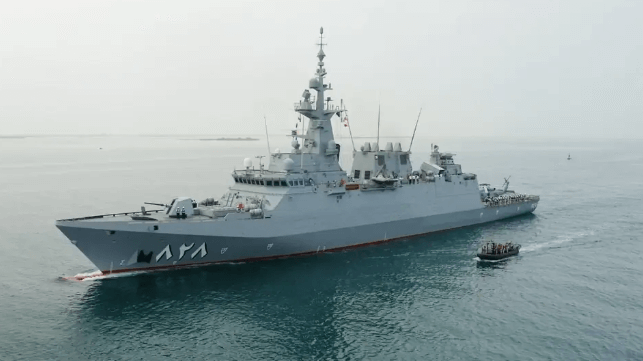
Saudi warship
The Royal Saudi Navy is among the treaty's participants (USN file image)

Published Sep 7, 2025 11:07 PM by The Maritime Executive


As the Houthis escalate aggression against merchant shipping in the Red Sea, regional navies have renewed their efforts to build operational coordination. Last week, the IMO-led Djibouti Code of Conduct/Jeddah amendment (DCoC/JA) launched a new working group with the aim to streamline naval cooperation in the region. DCoC/JA includes 21 member states in the Western Indian Ocean and the Gulf of Aden. While the region hosts several international naval task forces including EUNAVFOR Atalanta and the Combined Maritime Forces (CMF), participation of the regional navies has been limited.

Currently, the existing regional naval cooperation framework is under the Indian Ocean Commission (IOC), an intergovernmental body based in Mauritius and representing interests of five western Indian Ocean island countries. Under the IOC’s maritime security framework, there are two regional centers, which have helped coordinate regional responses to maritime threats in the Western Indian Ocean. The first one is the Regional Maritime Information Fusion Center (RMIFC) based in Madagascar. The other one is the Regional Coordination of Operations Center (RCOC) in Seychelles.

With the new working group, DCOC/JA hopes to scale the operations of these centers. “Remember that the countries served by the IOC regional centers are also members of the DCoC/JA. Therefore, the new working group will expand the mandate and allow for bigger operations extending to southern Red Sea,” said Kiruja Micheni, DCoC/JA Project Manager.

In addition, Kiruja noted that the international navies operating in the region are unable to prosecute suspects engaging in illegal maritime activities. For this reason, the enhanced regional approach seeks to have a legal finish for maritime crimes. Besides, the efforts of the international navies can only go so far without synergies with the regional partners in the Western Indian Ocean. 

Following the successful launch of the working group, Kenya and South Africa offered to lead fundraising efforts at the IMO (International Maritime Organization). The working group is scheduled to start holding regional naval exercises in the next three years.

This regional initiative comes at a time when maritime threats in the Western Indian Ocean are rising. It is almost 700 days into the ongoing Red Sea crisis, and arms trafficking has been reported to be on the rise in waters in the Gulf of Aden. Early this year, security agencies confirmed strengthening of relations between Al-Shabaab militia group in Somalia and Houthis in Yemen. If left unchecked, this has potential to further destabilize merchant shipping in the region. So far, the U.S Africa Command (AFRICOM) has conducted dozens of airstrikes in Somalia, mainly targeting the hideouts of ISIS-Somalia fighters in the Puntland region.