Friday, September 19, 2025


Mali appeals order to free detained Barrick staff – report


Loulo-Gounkoto complex. (Image by Barrick Gold).

Malian prosecutors have appealed a judge’s order to release four employees of Barrick Mining (NYSE: B) on bail, extending the legal uncertainty around the Canadian miner’s operations in the country, Bloomberg reported on Thursday.

The employees — including a regional manager detained late last year — will remain in jail until the Court of Appeal reviews the prosecution’s case, according to people familiar with the matter. The judge had set bail at 50 billion CFA francs (about $90.3 million), an unusually high sum, one of the people said.

The arrests in November 2024 were tied to allegations of money laundering, terrorism financing and tax-related offenses. Barrick has denied the claims, saying the detentions are part of escalating pressure from Mali’s military-led government over the company’s operations at its flagship Loulo-Gounkoto gold complex, once its largest mine in Africa.

Mounting tensions

The dispute traces back to Mali’s 2023 mining code, which increased government royalties and equity stakes in joint ventures. While other operators such as Allied Gold and B2Gold reached agreements with the junta, Barrick resisted.

In 2024, the government demanded a larger share of profits from the Loulo-Gounkoto complex. As Barrick pushed back, Mali escalated the pressure by jailing four executives, blocking exports from the mine, and seizing bullion.

Barrick responded by seeking international arbitration late last year, and in January 2025 shut down the mine entirely.

In June 2025, Malian authorities moved to place Loulo-Gounkoto under state control by appointing a provisional administrator for six months.

The standoff has had major financial repercussions. Last month, Barrick announced a more than $1 billion writedown on its Malian operations, reducing the carrying value of its 80% stake in Loulo-Gounkoto. The complex previously contributed about 15% of Barrick’s total gold output, leaving a significant gap in its production portfolio.

The crisis deepened further when Hilaire Diarra, formerly general manager of Barrick’s Tongon mine in Ivory Coast and a key negotiator with Mali, switched sides. In late August, Diarra was appointed as a special adviser to Mali’s president Assimi Goïta.

Barrick shares slipped 0.5% in morning trading Thursday in New York, giving the company a market capitalization of about $50.2 billion.

Glencore said to hold talks for sale of key Congo copper mine

Sanctioned Israeli billionaire Dan Gertler also receives a 2.5% royalty 


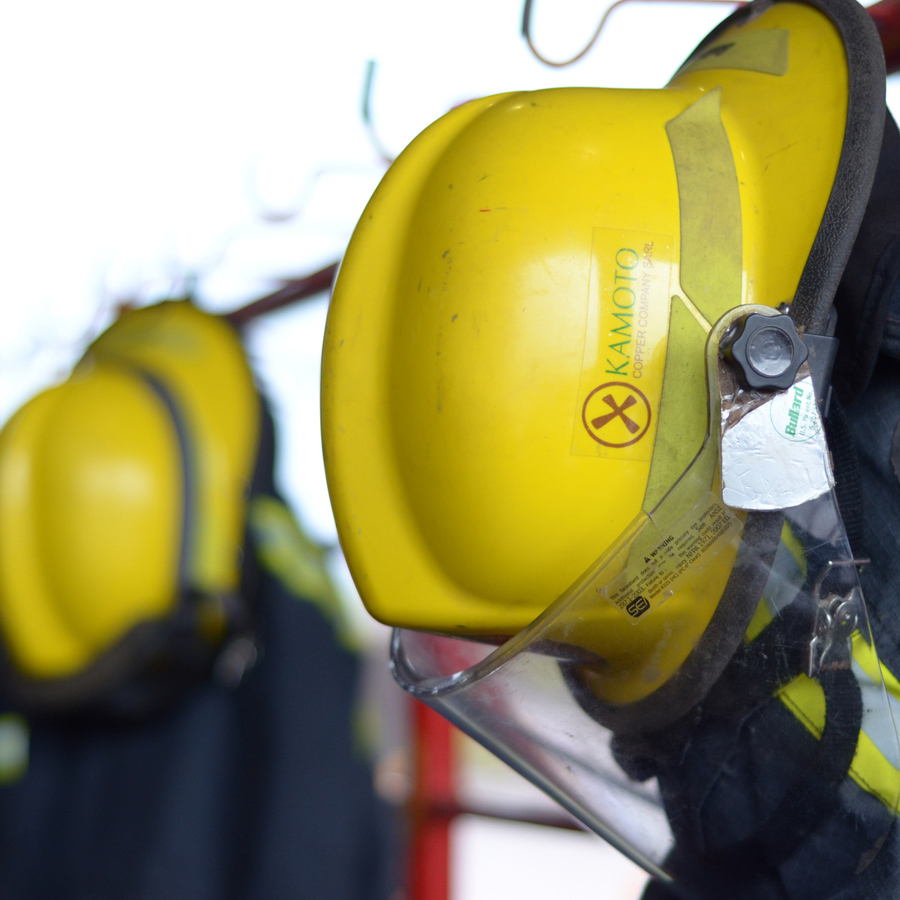
Kamoto Copper Company Fire Station, Kolwezi, DRC. Image: Glencore

Glencore Plc has been holding talks about selling a stake in its biggest African copper mine, in the clearest sign yet that the commodity trader is open to relinquishing control of one of its flagship assets.

The Kamoto Copper Co. controls a major copper and cobalt project in the Democratic Republic of Congo, which has long been touted by Glencore as one of its key drivers of growth. Yet the mines have been dogged by operational setbacks, a collapse in cobalt prices, and an ongoing dispute with the Congolese government over royalties.

Glencore is the only western miner operating major cobalt mines in Congo, with most of the country’s output coming from assets controlled by Chinese companies and Kazakhstan’s Eurasian Resources Group. While overproduction has weighed on prices for the battery metal, the US has been moving to lock in long-term supplies and build strategic reserves as a backstop for its defense industry.

KCC’s poor performance has frustrated some investors in recent years, but Glencore still sees potential in the asset as it looks to reverse a decline in copper output.

The mining and trading company has long said that all of its assets would be for sale at the right price, and at the end of last year it was approached by Orion Resource Partners with a proposal for the New York fund to buy the Congolese operation through its joint venture with Abu Dhabi’s ADQ, according to people familiar with the situation, who asked not to be identified because the talks are private.

Glencore said at the time it had rejected an unsolicited offer, without naming the buyer. But in recent months, it has stepped up its efforts to find a buyer for the mine and has held talks with potential bidders, including Orion, the people said. A potential sale has been discussed as part of ongoing talks over a minerals and infrastructure partnership between the US and Congo, according to the people.

While Glencore has not run an official sales process, it has informally let other companies — such as Rio Tinto Group — know that it’s open to selling a controlling stake, some of the people said. There is no guarantee the talks will result in a deal, they added.

Spokespeople for Glencore, Orion and Rio declined to comment.

Congo is the world’s second-biggest source of copper and accounts for about 75% of global production of cobalt, which is a key material in batteries, jet-engine alloys and high-strength magnets. The US is hoping a metals and infrastructure partnership with the central African nation will help secure key minerals and reduce China’s control over the industry.

The US International Development Finance Corp. is currently in discussions to establish a fund to invest in mining with New York-based Orion, Bloomberg reported Tuesday. The Trump administration has made it a priority to shore up access to critical minerals such as copper, cobalt and rare earths. The logic behind the potential collaboration between the DFC and Orion is widespread anxiety about supply.

The DFC could be involved in the KCC deal, possibly through the planned venture with Orion, according to three of the people.

A senior official in the US State Department declined to comment on any potential sale, but said it is committed to facilitating increased US investment in the DRC, and furthering strategic cooperation with African partners in the critical minerals sector.

Royalties dispute

KCC, which produced 191,000 tons of copper and 27,000 tons of cobalt in 2024, has struggled to reach full capacity and has been embroiled in a long-running dispute with Congolese authorities over billions of dollars in taxes and royalties. The future of the offtake contracts for the mine’s output — which currently help underpin Glencore’s trading operation — are a key point of discussion with prospective buyers, some of the people said.

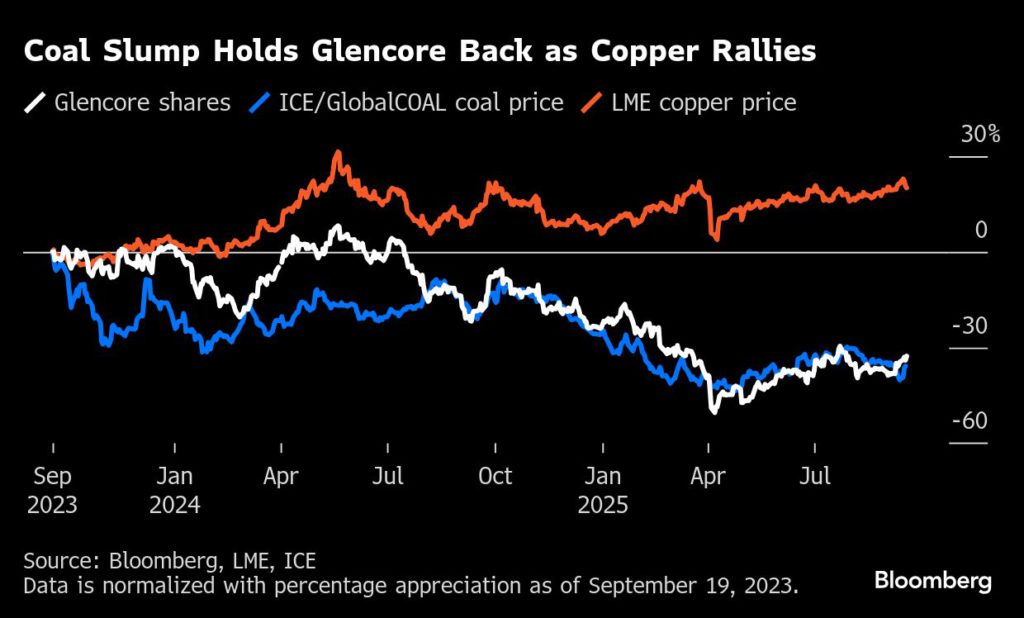
The talks come at a pivotal time for Glencore. Its high dependence on coal — which has slumped in value — along with falling copper production and a crisis in metal processing and refining has seen its shares fall almost 20% in the past year.


Swiss-based Glencore holds 70% of KCC, with the remaining shares belonging to Gecamines and the Congolese state. Sanctioned Israeli billionaire Dan Gertler also receives a 2.5% royalty on net revenues from KCC, which has complicated the US-Congo talks, according to the people.

Western investors have been reluctant to invest in Congo in part because of concerns about dealing with a sanctioned individual, they said. Gertler also collects a similar royalty from Glencore’s Mutanda mine and ERG’s Metalkol copper and cobalt projects.

He has in principle agreed to a plan — first formulated under the Biden administration — to sell the royalties, which could be worth hundreds of millions of dollars, divest from Congo, and participate in an audit. The US in turn would provide a license that would conditionally lift the sanctions, which were implemented in 2017 for allegedly amassing a “fortune through hundreds of millions of dollars’ worth of opaque and corrupt mining and oil deals” in Congo.

Gertler has never been charged with a crime and has always denied any wrongdoing.

It’s possible Glencore would keep a stake in KCC large enough to keep paying Gertler the royalties, so any buyer would not be paying a sanctioned individual directly, according to one of the people.

Another option would see Gertler paid a lump sum for his royalties, which would then likely revert to state-owned Gecamines. A third proposal would see Gertler hand over the royalties to Gecamines for nothing, according to two people with knowledge of the talks.

Representatives for Gertler and Congo’s mining ministry did not respond to requests for comment. Gecamines declined to comment.

(By Michael J. Kavanagh, Thomas Biesheuvel and Jack Farchy)
THE HEGEMON FLEXS ITS FIST 

US lawmaker wants Trump to restrict Chinese flights over rare earths access


Rare earth magnet speakers being assembled. Stock image.

The chair of a US House of Representatives committee on China on Thursday called on the Trump administration to restrict or suspend Chinese airline landing rights in the US unless Beijing restores full access to rare earths and magnets.

Representative John Moolenaar, a Republican, also said the US should review export control policies governing the sale of commercial aircraft, parts and maintenance services to China.

“These steps would send a clear message to Beijing that it cannot choke off critical supplies to our defense industries without consequences to its own strategic sectors,” Moolenaar said.

Rare earths are a group of 17 elements used in products from lasers and military equipment to magnets found in electric vehicles, wind turbines and consumer electronics. China is sensitive about rare earths and its control over supply, adding several rare earth items and magnets to its export restriction list in April in retaliation for US tariff hikes.

US airlines are flying only a percentage of flights to China they are allowed to operate given persistent low demand between the two nations.

Reports suggest China is considering buying as many as 500 Boeing airplanes as part of trade talks with the US.

On Wednesday, the US Transportation Department approved another six-month extension that allowed United Airlines, American Airlines and Delta Air Lines to fly just 48 total flights weekly to China out of 119 approved. Chinese carriers fly an equivalent number to the US.

A group representing the US carriers declined to comment. The Chinese Embassy in Washington did not immediately comment.

Last year, major US airlines and aviation unions successfully urged former President Joe Biden’s administration to pause approvals of additional flights between China and the US, citing ongoing “anti-competitive policies of the Chinese government.”

Flights between China and the US were a point of contention during the Covid-19 pandemic.

(By David Shepardson; Editing by Leslie Adler and David Gregorio)


China cuts subsidy for state firms buying Russian copper, nickel

\

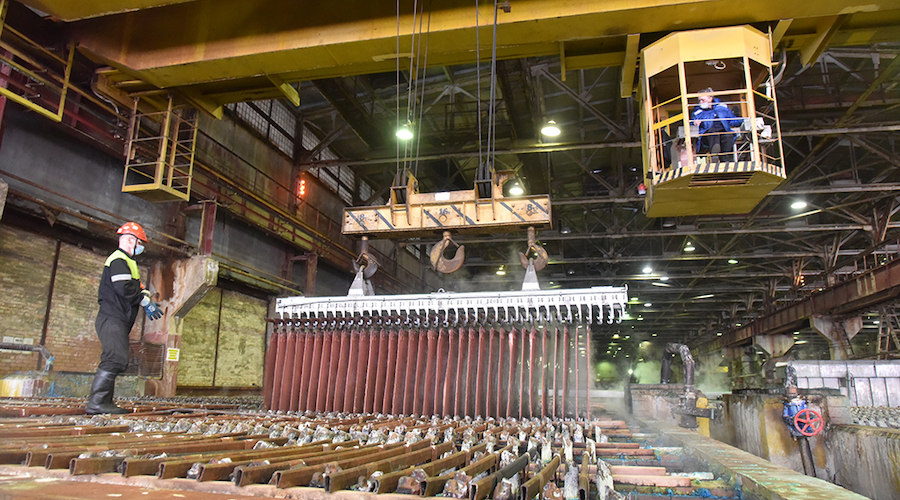
Nornickel copper production. (Reference image by Nornickel).

China suspended an unofficial subsidy for copper and nickel imports from countries including Russia, which has become more dependent on purchases by its Asian neighbor since western nations imposed sanctions after the invasion of Ukraine.

For years, Chinese state-owned enterprises could receive a rebate on purchases of copper and nickel from Iran, Mongolia and Russia. The size of the rebate was either a small percentage of the metal’s value, or a fixed amount, depending on market conditions.

The rebate has been removed in the latest tenders, which could make Russian metal less competitive, according to people familiar with the matter. However, the withdrawal of the subsidy is unlikely to substantially impact Russia’s massive metal flows, given Moscow’s reliance on Chinese buying, the people said, asking not to be identified because the matter is private.

The reason for the policy change isn’t clear, but the decision was made before President Vladimir Putin’s four-day visit to China in early September, the people said. During that trip, China’s President Xi Jinping cemented political and economic ties with Putin, including paving the way for increased Russian gas imports.

China’s Ministry of Finance did not respond to a request for comment.

Russian metals exports to China have surged since the Kremlin sent troops into Ukraine in 2022, resulting in international sanctions and trade restrictions. While some of the country’s biggest producers are not sanctioned by the US and its allies, new Russian supplies can no longer be delivered to the London Metal Exchange and the Chicago Mercantile Exchange and are subject to some trade restrictions.

Moscow’s growing dependence on China was evident in the first five months of 2025. Russian copper sales advanced 66%, while nickel imports more than doubled, according to Trade Data Monitor, which sources information from China’s customs office.

The abolition of the rebates comes as the nickel market remained oversupplied, with growth in Indonesian output fueled by Chinese investors. Copper trade flows this year have been skewed by massive shipments to the US in anticipation of tariffs, leaving inventories relatively low in the rest of the world.

(By Julian Luk)

CRIMINAL CAPITALI$M

Vale lost $38 million amid Brazil mining corruption case

Capanema mine (Image: Vale)

A Brazilian court said that iron ore producer Vale SA lost 200 million reais ($38 million) after disadvantages in government decisions amid a corruption and money laundering scheme.

The court decision showed that Aiga Mineracao in 2023 acquired the rights to minerals in an area of the Capanema mine, but misappropriated a pile of Vale’s tailings that could have been recovered and generated profit. Officials at the mining sector’s regulator — known as ANM — including a director arrested amid a police probe, are accused of favoring Aiga over Vale, according to the court decision.

Vale didn’t immediately respond to a request for comment. Aiga couldn’t be reached for comment by Bloomberg News.

Brazil’s federal police have uncovered a criminal organization operating in the mining sector to defraud environmental licenses by paying bribes to public officials, according to a statement on Wednesday. The court decision cited some of the police findings.

Vale is one of the world’s largest iron ore suppliers.

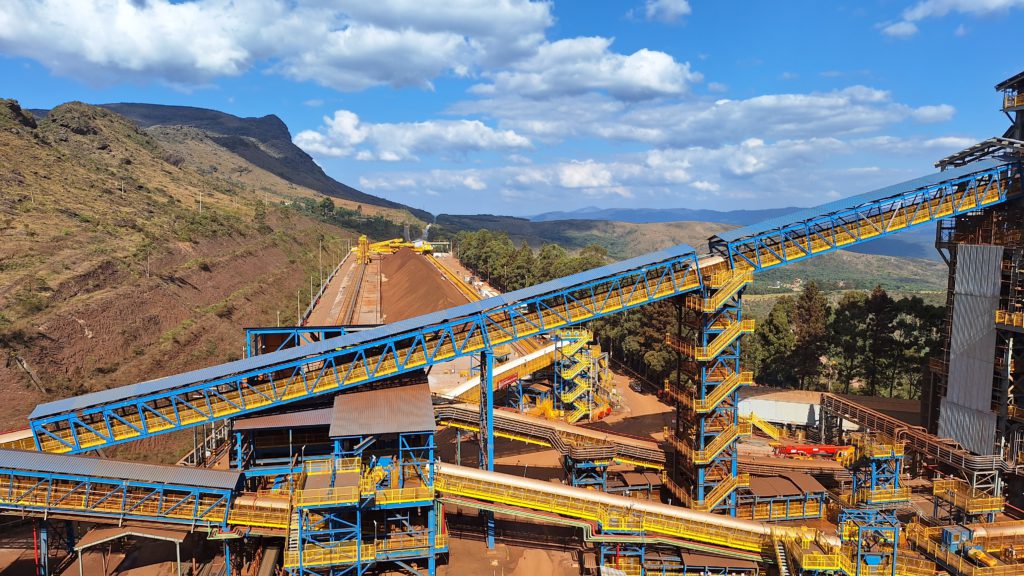
Vale just recently resumed operations at Capanema mine, an expansion project that will add 15 million tons a year and is key to the company’s goal of producing 340 million to 360 million tons next year. The Rio de Janeiro-based miner is also investing to produce more iron ore by reusing tailings and waste rock. Vale estimates 10% of its output could come from circular mining by 2030, mostly from Minas Gerais.

(By Mariana Durao)

Singapore reviewing short seller claim against Vedanta


Stock image.

The Singapore Police Force is reviewing a complaint by short seller Viceroy Research that natural resources conglomerate Vedanta Ltd improperly funded its 2024 dividend, documents viewed by Reuters show.

Vedanta Ltd told Reuters it had paid all dividends in full compliance with applicable laws, calling Viceroy’s allegations “baseless”.

“We maintain that the allegations in the short seller’s dubious ‘reports’ are malicious and ill-informed, and the company unequivocally rejects them,” the company said.

It added that no SPF investigation was under way and it had not been contacted by Singapore police. Vedanta previously rejected separate earlier accusations made by Viceroy in July.

The SPF declined to comment on the matter when contacted by Reuters.

Allegations of boosted dividends

India-based Vedanta Ltd specializes in the exploration, extraction and processing of minerals, along with oil and gas.

In an August 7 letter to the SPF, seen by Reuters, US-based Viceroy alleged the company propped up its dividend by using a $900 million loan from Oaktree Capital Management.

Viceroy said Vedanta Ltd, which is valued at roughly $20 billion, used the loan and accounting tricks to make its reserves look bigger on paper and make a payout to investors that was not backed by real cash earnings. It later repaid the loan and reversed write-offs through entities domiciled in Singapore.

Viceroy stated that its conclusions are primarily drawn from publicly available reports, forensic analyses of Vedanta Ltd’s filings and site visits to its assets.

In an email seen by Reuters, the SPF replied to Viceroy’s complaint, assigning it a reference number indicating it was reviewing the matter.

UK-based Vedanta Resources owns 56% of Vedanta Ltd, while the rest is held by institutional shareholders.

In July, Viceroy published a report saying it had taken a short position against the debt of Vedanta Resources, alleging that the British firm was “systematically draining” its Indian unit, which Vedanta Ltd disputed.

It also alleged that Vedanta Ltd’s dividend policy serves its parent’s financing needs, not its own cash flow, adding that billions of dollars in disputed expenses were hidden off its balance sheet.

A spokesperson for the Indian firm said at the time that the report was “a malicious combination of selective misinformation and baseless allegations.”

Vedanta Ltd has been under pressure since India’s government objected to a demerger plan into four separate entities launched by chairman Anil Agarwal in 2023, after an unsuccessful attempt to take the group private three years earlier.

As part of the plan, Vedanta Resources said last year it would focus on cutting its debt pile, bringing net debt down by $1.2 billion to $11.1 billion in fiscal 2025.

(By Clara Denina and Florence Tan; Editing by Veronica Brown and Joe Bavier)


Switzerland probes trader over alleged sanctioned Russian gold dealings


Stock image.

Swiss-based metal trader Open Mineral is being investigated by Switzerland’s State Secretariat for Economic Affairs (SECO) and Zug police for alleged dealings with sanctioned Russian gold, two sources with knowledge of the matter said.

Sanctions on Russian gold were imposed by Switzerland in August 2022, aligning it with the European Union’s sanctions which included gold, after Russia invaded Ukraine in 2022.

“We are fully cooperating with the authorities and welcome this development as we hope it will speed up the resolution. Business is ongoing as usual,” Open Mineral said in response to a Reuters request for comment.

A SECO spokesperson told Reuters that SECO and Zug police conducted a house search in the canton of Zug on September 11.

“The measure was carried out in connection with an ongoing administrative criminal proceeding by SECO. The proceeding currently targets two individuals as well as persons unknown,” SECO’s media spokesperson said.

SECO declined to name the two individuals and did not say if the search was in relation to the investigation into Open Mineral.

“The subject of the investigation is the potential violations of Article 9 of the Federal Act on the Implementation of International Sanctions…in connection with the Ordinance on Measures related to the Situation in Ukraine,” SECO said.

Article 9 provides the legal basis for criminal prosecution of individuals or entities that breach Swiss sanctions laws whether deliberately or negligently.

“SECO is not providing any further comment on the ongoing proceedings at this time,” SECO said. “All accused persons are presumed innocent until the proceedings are legally concluded.”

(By Pratima Desai and Polina Devitt; Editing by Jane Merriman)


Cobalt’s EV battery comeback as prices nearly double


Stock image.

A surge in supply from the Congo, responsible for 80% of the world’s cobalt output, coupled with tepid demand from the electric vehicle market, saw cobalt prices sink to historic lows at the start of 2025.

Copper production in the DRC, with a big chunk owned by Chinese companies, was rising fast – leading to a near 40% jump in the country’s co-product cobalt output in 2024, but in February the country announced a four month ban on exports, extending it again in June.

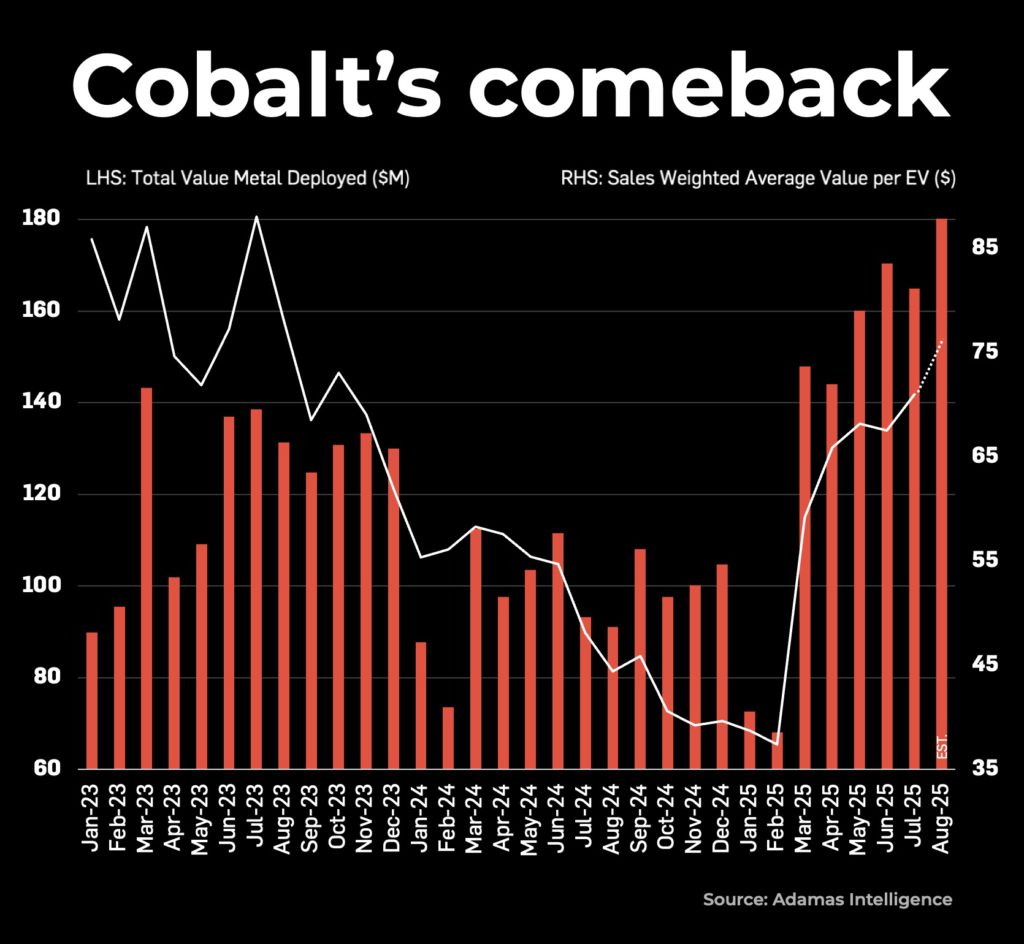
The price of cobalt sulphate entering the EV battery supply chain in China duly responded and is now trading over 90% higher than at the start of the year averaging $6,947 a tonne in August (still nowhere near the 2022 peak of $19,000 per tonne).

Cobalt consumption in EV batteries overtook other sources of demand like aerospace several years ago and the impact of the DRC strategy has been swift.  The latest data from Toronto-based research consultants Adamas Intelligence tracking EV battery metal deployment in over 120 countries paired with monthly prices shows the cobalt market springing back to life.

The size of the battery cobalt market in August totalled an estimated $180.1 million, the highest since December 2022, lifting the value of sales weighted average cobalt contained in tandem. The average value of the cobalt contained in EV batteries is back up above $70 per vehicle, up from less than $40 at the start of the year.

In total, installed tonnage of nickel, cobalt and manganese now represent more than half the value of the battery metal basket that came to $1.28 billion in August. That’s despite the accelerating adoption of LFP (lithium iron phosphate) battery chemistries over NCM (nickel-cobalt-manganese).

Cobalt use is also being impacted by the move towards high nickel cathodes with chemistries with less than 10% cobalt content now dominant globally.

The value of terminal nickel, cobalt and manganese tonnes deployed in EVs, including plug-in and conventional hybrids, sold around the world from January through August this year totalled $4.93 billion. 

Keeping in mind that the installed tonnage does not take into account any losses during processing, chemical conversion or battery production scrap (often well into double digit percentages), so required tonnes and revenues are meaningfully higher at the mine mouth.

Output in the Congo from CMOC, the world’s top producer of cobalt, has been rising while number two producer Glencore warned last month that a significant portion of its cobalt output may remain unsold by the end of 2025.

The impact on the market and pricing – should Kinshasa ease restrictions – and when the stockpiled cobalt begins to re-enter the supply chain, remains to be seen.

The US Defense Department is not waiting for that eventuality, however, and has issued a tender (the first time since 1990) for the supply of 7,500 tonnes over five years.

Helpful, but nowhere near enough to mop up supply should Congo decide to reopen the floodgates.

For a fuller analysis of the EV battery metals market check out the October issue of The Northern Miner print and digital editions.

* Frik Els is Editor at Large for MINING.COM and Head of Adamas Inside, providing news and analysis based on Adamas Intelligence data.


US invests $1.4M in Zambian mine expansion to rival China


Flotation plant at Kazozu mine. (Image courtesy of Metalex Africa.)

The United States is ramping up efforts to secure critical minerals outside China’s control, backing the expansion of a copper and cobalt facility in Zambia.

The US Trade and Development Agency (USTDA) awarded on Thursday a $1.4-million grant to Metalex Africa, a subsidiary of US-based Metalex Commodities, to finance a feasibility study for expanding the company’s Kazozu mine in Zambia’s North-Western province. 

The study will assess whether the mine can produce up to 25,000 additional metric tonnes of copper and cobalt concentrates annually.

USTDA officials said the initiative is designed to link Metalex with American buyers while opening opportunities for US companies to supply equipment, materials, and expertise for the expansion.

“USTDA’s partnership with Metalex will help ensure that US industries can reliably access the inputs they need to remain secure, competitive, and prepared to meet the challenges of the future,” acting director Thomas R. Hardy said in a statement.

“By leveraging US technology and expertise, this project will help expand Zambia’s mining sector, advancing responsible resource development to benefit both our nations.”

Metalex chief executive Ayo Sopitan called the grant a milestone, saying it would help expand resources, define project phases, and establish the feasibility of scaling up the Kazozu operation. The project is a joint venture with Zambian company Terra Metals.

Weakening China’s lead

The investment aligns with Washington’s broader strategy to build the Lobito Corridor, a US-backed transport and trade network linking Angola, Zambia, and the Democratic Republic of Congo (DRC). 

The corridor centres on a 1,700-kilometre railway from Angola’s Atlantic port of Lobito to the DRC’s mining hub of Kolwezi, with an extension planned into Zambia’s Copperbelt province.

The US has framed the corridor as a strategic alternative to Chinese-backed infrastructure across Africa. China maintains dominance in the region’s mining sector, including near-total control of processing and refining capacity. It continues to expand its presence, most recently through JCHX Mining’s acquisition of an 80% stake in Zambia’s Lubambe copper mine.

Washington’s support goes beyond USTDA. During Joe Biden’s presidency, the US International Development Finance Corporation committed about $550 million to railway and port upgrades, while the Millennium Challenge Corporation is funding rural road and agriculture improvements in Zambia. 

US-based KoBold Metals, backed by investors including Bill Gates and Jeff Bezos, has also pledged to make its Mingomba copper and cobalt project an anchor for the Lobito railway.

The combined push highlights the Trump administration’s relentless efforts to loosen China’s hold on the global mineral supply chain while boosting the nation’s own industrial resilience.