Sunday, September 28, 2025

By Attacking Anti-Fascism, Trump Defends Fascism as a Good Thing

While there was little doubt before as to where Trump stood on democracy and human decency, he has made it clear with his decision to designate Antifa a “terrorist” organization that he and his coterie are clearly on the side of fascism.
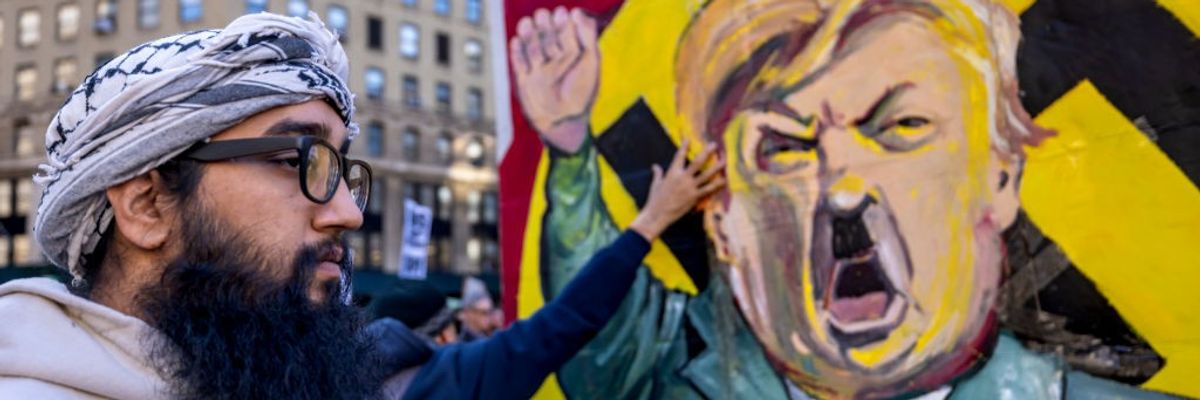


A protestor stands in front of an image of Trump dressed as Hitler during a protest in Foley Square demanding the release of Mahmoud Khalil, a Palestinian student activist and recent Columbia graduate.
(Photo by Michael Nigro/Pacific Press/LightRocket via Getty Images)


C.J. Polychroniou
Sep 27, 2025
Common Dreams


Trump’s executive order designating Antifa a “domestic terrorist organization” has spurred widespread interest in the anti-fascist movement. Of course, it is well understood that Antifa is not a single organization but an umbrella term for loosely affiliated groups of activists scattered across the United States and parts of Europe that confront and combat fascism and racism. Antifa, however, is more of an idea than an actual organization, so Trump’s order calling on US authorities to act against “any person claiming to act on behalf of Antifa, or for which Antifa or any person claiming to act on behalf of Antifa provided material support” isn’t simply idiotic and unconstitutional but says a great deal about where the “beloved leader” stands on free speech and fascism itself.

Simply put, by vilifying anti-fascist struggles, Trump is defending fascism as a good thing. So is his “comrade-in-arms” Viktor Orbán who has also proposed taking similar action in Hungary while his Minister of Foreign Affairs and Trade Péter Szijjártó has gone even further by urging the European Union to follow Donald Trump’s lead and designate Antifa a terrorist organization.


Trump Antifa Order Seen as a Weapon to Attack Left-Wing Speech, Protests
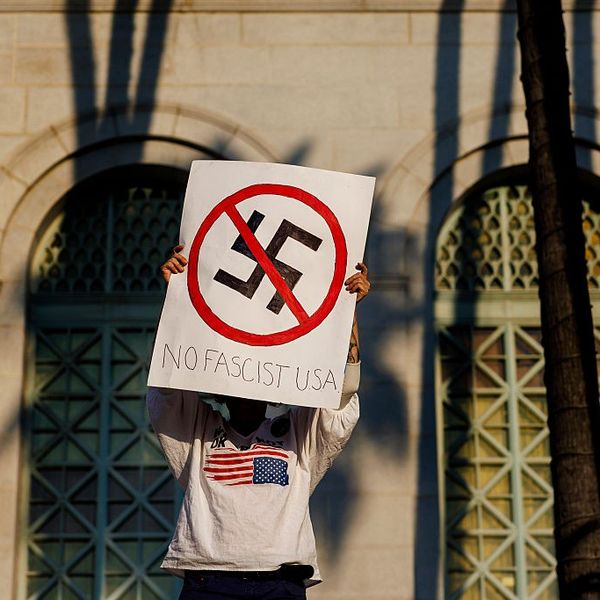


‘There Is No Antifa Organization,’ But Trump Still Wants to Designate It a ‘Major Terrorist’ Group


In the age of right-wing authoritarianism and proto-fascist strongmen, it is understandable that Trump and Orban wish to ban anti-fascist struggles. Relying on repression to consolidate power is an obligatory measure for all authoritarian regimes. Netanyahu might be the next unhinged leader to take action against Antifa. Anti-fascists in Israel have long been the target of far-right Israeli extremists; moreover, there have been voices inside the country saying that “only an anti-fascist front” can stop Israel’s slide toward fascism. That’s dangerous talk in the current political climate in Israel.

Donald Trump, Viktor Orbán, and Benjamin Netanyahu are central figures in the global far-right movement. Indeed, the holy trinity of neofascism is represented today by Israel, Hungary, and the United States. Far-right movements and parties are on the rise worldwide, and they are expanding beyond national borders, “engaging in cross-border networking to export their ideologies worldwide,” according to Thomas Greven from Freie Universität Berlin. What unites them are anti-immigrant politics, anti-leftism, traditional family values, Islamophobia, anti-LGBTQ, and rejection of the ideals and values of Western European Enlightenment.

Donald Trump, Viktor Orbán, and Benjamin Netanyahu are central figures in the global far-right movement. Indeed, the holy trinity of neofascism is represented today by Israel, Hungary, and the United States.

Far-right movements and neofascist parties believe that cultural hegemony is as important as political influence. Hence the attack on “woke” culture, gender ideology, and secularism. Of course, the far right is not a monolith, but there are lots of overlaps among the far-right’s varied movements. However, in the pursuit of creating an ultranationalistic state and building a homogeneous society, crushing the forces of the left becomes nothing short of an urgent political necessity for far-right movements and neofascist parties because of their awareness that especially the so-called “radical left” represents the only real political resistance to their dystopian vision.

Whether there are parallels between the state of liberal democracies today and that of the 1930s is tricky business. Nonetheless, today’s left could learn vital lessons by studying the antifascist struggles of the 1930s and 1940s. For the main task today is, again, defeating the forces of reaction, most powerfully represented by an idiotic bully and wannabe dictator in Washington, DC, an autocrat in Budapest, and the “butcher of Gaza” in Jerusalem.

For starters, the left needs to be united and thus avoid infighting. Liberals must also be seen as potential allies in the fight against right-wing authoritarianism and “proto-fascism.” The ability of the Nazis in Germany to overpower the opposition prior to Hitler’s rise to power surely relied on a sustained campaign of terror against the labor movement, communists, and anti-fascist activists while the state looked the other way, but it was also due to the fact that the left was fractured while the right united behind Hitler. The left was also divided in Italy while the fascists marched through towns beating and killing hundreds of labor leaders, socialists, and communists. Sadly enough, a similar phenomenon was encountered in Spain, with the left struggling to unite both before and during the Spanish Civil War.

Nonetheless, the anti-fascist struggles of the pre-war period remain of paramount importance and have in fact shaped the left of today, as Joseph Fronczak has argued in his book Everything Is Possible: Antifascism and the Left in the Age of Fascism. The first antifascist organization was the Arditi del Popolo (People’s Shock Troops) in Italy, formed in 1921 by various militants (anarchists, left socialists, communists, and Republicans) who saw that the Socialist Party was either incapable or unwilling to take the fight to the fascists. Working-class defense organizations existed in Italy both before and after World War I, but the emergence of the Arditi del Popolo was driven by the urgent need to “defend the persons and institutions of the working class from fascist squadrism by openly confronting fascism on the same terrain of violence chosen by the Mussolini movement,” as the Italian scholar Antonio Sonnessa has pointed out.

The ultimate organized resistance to Italian fascism took place in August 1922 in the city of Parma when the Arditi del Popolo and their allies Formazioni di difesa proletaria (Proletarian Defense Formations), outnumbered and outgunned, repelled and totally humiliated thousands of fascists. This event represented a rare moment of unity among the different strands of the Italian left, although the fascists may not have been repelled if it wasn’t for the valiant support provided by the working-class people of Parma. As Guido Picelli, the head of the Arditi del Popolo of Parma later recalled:
Working-class people took to the streets—as bold as the waters of a river which is bursting its banks. With their shovels, pick-axes, iron bars and all sorts of tools, they helped the Arditi del Popolo to dig up the cobblestones and tram tracks, to dig trenches, and to erect barricades using carts, benches, timber, iron girders and anything else they could get their hands on. Men, women, old people, young people from all parties and from no party at all were all there, united in a single iron will: resist and fight.

Nevertheless, the main parties of the left went on afterwards to abandon the Arditi del Popolo and Mussolini was in power just ten weeks after his horde of fascist thugs were defeated in Parma.

In 1932, the German Communist Party (KPD) launched Antifaschistische Aktion (Antifascist Action), but the antifa movement failed to create antifascist unity as the KPD’s ideology and strategy was formed by Stalinism which had branded the German Social Democratic Party (SPD) as “social fascists.” That said, the SPD also had nothing but contempt and even hatred for the KPD and the party’s ideology, structure, and political culture, as Donna Harsch has argued in her path-breaking work German Social Democracy and the Rise of Nazism, left it incapable of taking on the Nazis and helping to avert the collapse of the Weimar Republic. In this sense, as David Karvala, one of the spokespeople of Unity Against Fascism and Racism Catalonia, has stressed, “The disastrous failure of the anti-fascist action strategy should serve as a warning to activists who want to stop fascism today.”

On October 4, 1936, an estimated 300,000 Londoners, socialists, trade unionists, communists, Jews (who had been told by the Jewish Chronicle to stay home), and Irish dockworkers, blocked a march through the East End of London, home to the city’s largest Jewish community, organized by Oswald Mosley’s British Union of Fascists (BUF). As the British historian and author Martin Gilbert wrote, the BUFs’ “aim was to intimidate the local Jewish community and the local anti-Fascist working class.” The antifascist protesters erected barricades against the fascist march and engaged in hand-to-hand fighting with Mosley’s thugs and their police escorts in what became known as the Battle of Cable Street. Undoubtedly, the Battle of Cable Street was a major anti-fascist victory, but it also shows that a call to action against fascism, which is rooted in violence and intimidation, cannot be confined to passive demonstrations. When the march of fascism becomes an actual threat, “it has to be physically challenged.”

But let us not remain in the distant past. In early August 2024, a fascist pogrom was defeated in Bristol, England, when thousands of people, young and old, came together to counter an anti-immigration rally and to show that Bristol will not tolerate fascism.

Since then, there have been many other anti-fascist protests and demonstrations all across Europe and the United States, especially as the far right now feels empowered by Trump’s return to the White House and makes no bones about the fact that it is racist and sees neofascism as a political necessity in today’s world. This was all in display in London, for example, just a couple of weeks ago, in the protest organized by far-right activist Tommy Robinson and in which scores of police officers were injured while Elon Musk spoke to the fascists over a video link and urged them to use violence.

While there was little doubt before as to where Trump stood on democracy and human decency, he has made it clear with his decision to designate Antifa a “terrorist” organization that he and his coterie are clearly on the side of fascism. But if they really believe that antifascism is now dead, they are in for a rude awakening.


Our work is licensed under Creative Commons (CC BY-NC-ND 3.0). Feel free to republish and share widely.


C.J. Polychroniou is a political economist/political scientist who has taught and worked in numerous universities and research centers in Europe and the United States. His latest books are The Precipice: Neoliberalism, the Pandemic and the Urgent Need for Social Change (A collection of interviews with Noam Chomsky; Haymarket Books, 2021), and Economics and the Left: Interviews with Progressive Economists (Verso, 2021).
Full Bio >
10 Ways Der Führer Donald Has Already Shut Down the Federal Government

As an official government shutdown looms, here is a brief tour through the wreckage wrought by Trump so far.


Demonstrators rally against US President Donald Trump, Tesla CEO Elon Musk, and their recent policies in Trafalgar Square on April 5, 2025 in London, England.
(Photo by Alishia Abodunde/Getty Images)

Ralph Nader
Sep 28, 2025
Common Dreams

The media is reporting on the approaching government shutdown on September 30, due to an impasse between the two congressional parties. US President Donald Trump is threatening more mass firings of federal workers should this occur.

Der Führer Donald has already shut down vital government programs since he ascended to his elected dictatorship on January 20. The shutdowns of critical agencies, lifesaving programs, and law enforcement are uniformly illegal and constitute impeachable offenses. Under the Constitution, only Congress can terminate or limit many of the programs axed by the rampaging Monarch.


Federal Workers Union Denounces Trump’s Threat of ‘Illegal Mass Firings’ Amid Shutdown Fight


Trump Cancels Government Shutdown Talks in Ludicrous and Lie-Filled Rant Against ‘Radical Left’

Here is a brief tour through the wreckage wrought by Trump, Elon Musk, and Trump’s lawless maniac, the clenched-jawed Russell Vought, director of Trump’s Office of Management and Budget.Trump has illegally and impeachably closed the Agency for International Development, fast winding down critical humanitarian aid—medicine, food, clean water, etc.—to millions of impoverished families in poor countries abroad. Tens of thousands have already perished, according to aid officials.

He has illegally and impeachably paralyzed the protector of consumers—the Consumer Financial Protection Bureau—that returned many billions of dollars to consumers from corporate rip-off schemes, mostly from the finance companies. Throwing corporate law and order out the window, Trump is setting records for being soft on corporate crime—ending dozens of underway prosecutions of companies by the Justice Department.
He has illegally and impeachably closed the cabinet-level Department of Education, throwing student aid programs and the status of existing loans into dark holes of chaos.
Across other federal agencies, Trump has closed down crucial scientific programs designed to understand and alert the people to mega storms and wildfires, infectious diseases, looming pandemics abroad, and expand basic research in medical science for the public’s health.

With his toady Environmental Protection Agency Administrator, Lee Zeldin, Trump is chopping our protection against deadly toxic air, water, and soil pollution into pieces. He is closing down the EPA’s celebrated scientific research section; firing people everywhere; and declaring that the EPA has no authority to deal with the oil, gas, and coal fossil fuel emissions causing global warming. Crazily, he has blocked lower-priced solar energy and wind power projects, calling windmills “ugly.” This is just deranged.

Federal Emergency Management Agency employees have signed a desperate petition to Trump to stop strip-mining the agency, stop slowing its emergency response time, and restore the staff pushed out during the Department of Government Efficiency lawlessness. For their courage, Trump fired or suspended many of these hurricane, flood, and wildfire rescuers, as he does for civil servants who sign other letters and petitions because they report they are unable to perform their work because of his actions. He has weakened an already weak Occupational Safety and Health Administration and further jeopardized the health and safety of Americans in their workplace.

Trump has reduced successful programs such as Meals on Wheels America, Head Start, and aims to get rid of the Job Corps and AmeriCorps. Again, illegally defying congressional mandates.
Trump, who eats well, is cutting food stamps for millions of poor Americans. This is hurting desperate families and supplying farmers.

Earlier, Trump got through Congress a law that will cause over 10 million people to lose their Medicaid; nearly 5 million could lose healthcare coverage soon when the elimination of subsidies causes prices to skyrocket under Obamacare scheduled by the end of this year. These serious deprivations, sure to cost lives, are what the congressional Democrats are insisting be reversed before they go along with the omnibus government funding bill. GOP leaders, Speaker Mike Johnson (R-La.) and Senate Majority Leader John Thune (R-S.D.), are resisting. Of course, they have good health insurance paid for by taxpayers.
Trump has shut down diplomacy abroad, replacing it with threats, violence, fantasies, and boastful rhetoric. The skills of the Foreign Service in the State Department are frozen under the arrogant Secretary of State, Netanyahu toady, Marco Rubio.

Many of the above-noted cuts in programs are to pay for more tax cuts to the under-taxed super rich and profit-glutted corporations. Note that Trump is NOT cutting hundreds of billions of dollars annually in corporate welfare—subsidies, handouts, giveaways, and bailouts. Nor is he going after huge fraud on the government in programs such as Medicare, Medicaid, and military procurement. Trump is willing to overlook avaricious, entrenched corporate vendors and contractors bilking Uncle Sam.

Cracking down on corporate fraud and abuse would risk his own enormous self-enrichment schemes, would end his misuse of the office of the presidency and limit his use of the White House as business headquarters. Trump, regardless of his deeply phony “populism,” has always been a hardcore corporatist!

Trump, who is egomaniacal, ignorant, and often deranged with his daily blatant lies against reality, is a world-class, cunning personality. He secures the abject loyalty of his major appointees by nominating either totally inexperienced, incompetent people to run agencies and departments or turncoats who, once defiant, become obeisant.

The former are relishing their sudden unmerited upward mobility and are not about to make waves. The latter, like Vice President JD Vance and Secretary of Health and Human Services Robert F.Kennedy Jr., feel they are under suspicion and double down on goosestepping with their boss. Neither recruitment category is likely to produce any whistleblowers. That’s how cunning Trump is with his widely criticized nominations.

Stay tuned. Let’s see how effective the Democratic Party’s polemics are to counter Trump, already blaming the Democrats for the Republican Party’s government shutdown. The Democrats can start by driving the point home to the American people about the terrible impacts Trump’s present government closures will quickly have on their health, safety, and livelihoods.

Our work is licensed under Creative Commons (CC BY-NC-ND 3.0). Feel free to republish and share widely.


Ralph Nader is a consumer advocate and the author of "The Seventeen Solutions: Bold Ideas for Our American Future" (2012). His new book is, "Wrecking America: How Trump's Lies and Lawbreaking Betray All" (2020, co-authored with Mark Green).
Full Bio >

LATAM BLOG: Friends till the end? Trump's costly loyalty to Latin America's strongmen

LATAM BLOG: Friends till the end? Trump's costly loyalty to Latin America's strongmen
Trump may genuinely believe that ideological friends will be friends "right till the end.” But in the unforgiving world of international economics, bills come due regardless of personal affection.
By Marco Cacciati September 28, 2025

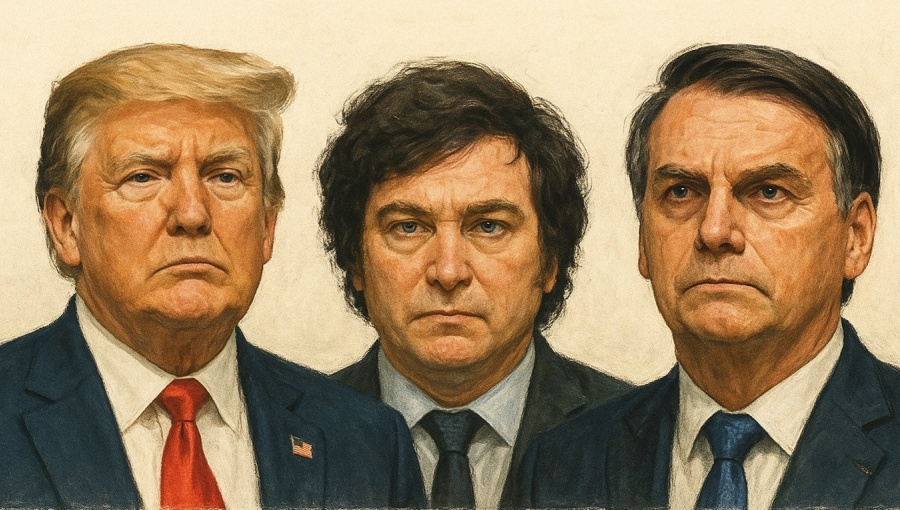
As the US administration shifts its focus away from Europe and Asia (though for how long remains anyone’s guess) back to its Monroe Doctrine backyard, South America's two largest economies find themselves on opposite sides of Donald Trump's ideological ledger. Argentina basks in the glow of unprecedented American financial support, whilst Brazil weathers punitive tariffs imposed purely to protest the prosecution of the president's political ally. The disparity betrays a troubling truth: Washington's Latin America policy has devolved into a personality contest, where economic logic takes a back seat to political theatre.

Just as Argentine authorities burned through $1bn in reserves within 48 hours defending the peso from politically-driven turmoil, Treasury Secretary Scott Bessent last week announced America would deploy "all options on the table", including a proposed $20bn currency swap and direct purchases of sovereign bonds, to prop up what he called a "systemically important ally." Meanwhile, Brazil faces 50% tariffs on its exports to America – from beef to coffee – despite running a consistent trade deficit with the United States. The stated reason? Retaliation for Brazil's Supreme Court convicting former president Jair Bolsonaro on charges of attempting a coup d'état.

Perhaps unsurprisingly, Trump's approach echoes a certain rock-ballad romanticism: the belief that ideological friends will be friends “right till the end,” holding out hands when all hope is lost. But international relations rarely follow the script of stadium anthems. Banking on personal chemistry to override economic realities is a dangerous gambit. And while warmongering against Venezuela, an oil-rich failed state under leftist autocracy, plays well across the US political spectrum, Trump's contradictory posturing towards Brazil and Argentina presents a harder sell. How does one explain bailing out Buenos Aires and punishing Brasília, when both policies harm American wallets?

The Bolsonaro factor

Trump's intervention on behalf of his “mini-me of the Tropics”, whom he apparently believes is suffering a witch hunt at the hands of leftist judges, represents an extraordinary breach of diplomatic protocol. In fact, the Brazilian judiciary's methodical prosecution of Bolsonaro and seven co-conspirators, including generals and cabinet ministers, consecrated the nation's institutional maturity. For the first time in Brazil's history, a failed coup has been tried in civilian courts rather than swept aside. The 27-year sentence handed down in September sent an unmistakable message: democratic institutions will no longer tolerate attempts to subvert the popular will.

But far from being impressed by this textbook application of democracy, Trump has responded with economic warfare, deploying tariffs as a cudgel to interfere with Brazil's judicial process. The irony is rich: these measures harm American consumers more than Brazilian producers. From January to July, Brazil exported 199.7 thousand tons of beef to America – around 23% of the US’ total beef imports – underlining the country's crucial role in feeding American consumers whilst the domestic beef industry stumbles due to drought and cyclical herd decline. The bottom line is, Trump's tariffs threaten to inflate grocery bills for his red-meat-loving base.

Brazil, for its part, has responded with equanimity. Foreign Trade Secretary Tatiana Prazeres announced plans to accelerate diversification efforts, prioritising markets in Mexico, Canada and India whilst deepening ties with China and other BRICS partners. The episode merely reinforces a trend already well underway: the US share of Brazilian exports has steadily declined as Latin America’s biggest market pivots towards Asia and Europe.

The economic illogic becomes even more apparent when considering America's actual trade relationship with Brazil. Despite Trump's claims to the contrary, official data show America runs a consistent surplus with the world's fourth-largest democracy. The tariffs appear driven in large part by Jair Bolsonaro's son Eduardo's relentless lobbying in Washington, combined with Trump's personal sympathy for a fellow strongman who, like him, refused to accept electoral defeat and inspired a violent mob of supporters to storm government buildings.

Milei's moment

Argentina presents the inverse scenario. President Javier Milei, the self-styled anarcho-libertarian who consults his dead dogs through a medium, has become Trump's favourite Latin American leader. The mutual admiration society reached peak absurdity when Trump adopted the slogan "Make Argentina Great Again" and offered what he termed his "full endorsement" for Milei's 2027 re-election campaign.

To be fair, Milei has delivered impressive early results. Annual inflation has plummeted from over 200% when he took office in December 2023 to 39.4% by June. He achieved a fiscal turnaround of five percentage points of GDP in just two months—a feat economists describe as previously unthinkable in Argentina. Monthly inflation has remained below 2% for four consecutive periods, whilst the government has maintained primary surpluses.

Yet these achievements came through brutal recession and wage compression, with many workers and pensioners experiencing declining purchasing power compared to early 2023. Milei's party suffered a devastating defeat in Buenos Aires provincial elections in September, whilst his sister – and political mistress – Karina faces corruption allegations. Legislative rebellions have successfully overturned presidential vetoes on spending measures, sparking capital flight, investor distress and a run on the peso.

This is where American support becomes crucial – and controversial. Bessent's promise of a $20bn swap line and bond purchases amounts to a massive bet on Milei's political survival. Yet the Treasury Secretary hedged carefully, stating that "immediately after the election, we will start working with the Argentine government on its principal repayments", suggesting Washington wants to see October's midterm results before opening the cheque book.

Senator Elizabeth Warren has already fired warning shots, lambasting plans "to use significant emergency funds to inflate the value of a foreign government's currency" whilst "cutting health care for millions of Americans at home."

But opposition crosses party lines. Republican Senator Chuck Grassley complained that America would “bail out Argentina while they take American soybean producers' biggest market,” adding that “family farmers should be top of mind” in any negotiations.

The criticism resonates because it highlights an uncomfortable truth: Trump is simultaneously harming two key constituencies, using taxpayer money to bail out Argentine bondholders whilst his Brazilian tariffs drive up prices for American consumers

The China conundrum

Both relationships are complicated by Beijing's growing foothold in South America. Despite fierce campaign rhetoric about distancing from China, Milei quietly renewed a $5bn currency swap with the People's Bank of China. Trade with Beijing has actually expanded under his administration, with volumes doubling in some categories. Brazil has gone even further, accelerating its pivot towards the Asian superpower and other BRICS partners in response to American tariffs − a relationship Chinese Foreign Minister Wang Yi now calls “the best in history.”

The contradictions deepened last week when Argentina's emergency tax holiday for grain exports backfired spectacularly on American interests. Buenos Aires had eliminated its 26% soybean levy to encourage farmers to liquidate much-needed dollar holdings, but the move triggered such intensive Chinese buying that Argentina hit its $7bn sales threshold in just three days. The buying frenzy redirected Chinese demand away from American suppliers already struggling with retaliatory tariffs, prompting Bessent to hastily announce that Washington was “working with the Argentine government to end the tax holiday.” Having reached its revenue target whilst heeding Washington's grievances, the Milei administration promptly reinstated the levies.

Trump has thus achieved the opposite of his intentions: his ideologically rooted policies are pushing both countries closer to Beijing, undermining his administration's stated goal of reducing Chinese influence in Latin America.

Electoral arithmetic

The sustainability of both approaches faces imminent tests. Argentina's October midterms will determine whether Milei can secure the legislative majority needed for his ambitious reform agenda. Current projections suggest his La Libertad Avanza party will struggle to overcome the combined opposition of Peronists emboldened by recent provincial victories.

In Brazil, meanwhile, Trump's intervention has paradoxically boosted President Luiz Inácio Lula da Silva's flagging popularity ahead of next year's election. The tariffs have united even moderate conservative Brazilians against perceived American bullying. Tarcísio de Freitas, São Paulo's governor and the emerging centre-right presidential candidate, has distanced himself from both Bolsonaro and his American patron.

When hope is lost

How long can ideology trump economics? Market realities suggest not very long. Reuters reports that Trump's recent softening stance towards Lula, a prelude to a possible meeting in the coming weeks, may have been prompted by warnings from American agribusiness about the impact of Brazilian beef tariffs on domestic prices. The president who promised to protect American workers can hardly afford to be blamed for inflating their grocery bills.

Similarly, Argentina's fundamental vulnerabilities persist despite American promises. The country maintains an $18bn currency swap with China and carries a renegotiated IMF programme requiring strict conditionality, with peak exposure to the fund expected to reach some $58bn by 2026. Government bond yields remain between 16% and 26%: levels that effectively lock it out of international capital markets. Even massive American support may prove insufficient if October's elections confirm legislative gridlock.

The deeper question is whether Washington can afford to conduct Latin America policy as an ideological beauty contest. China stands ready to fill any vacuum left by American caprice, offering infrastructure investment without political strings attached. European and Asian partners offer enticing alternatives to countries tired of Washington's mood swings. Most importantly, the region's voters have repeatedly shown they prioritise economic stability over ideological purity – the very reason why Milei triumphed in 2023 over the free-spending Peronists whose interventionist policies had plunged Argentina into yet another crisis.

But that pragmatism cuts both ways. Bessent’s dollars and IMF praise may not save Milei from the harsh judgment of Argentines next month, as many face declining living standards from his sweeping austerity measures. In Brazil, voters are distancing themselves from the toxic far-right narrative embodied by Bolsonaro and amplified by Trump's intervention. The likely result? Both countries gravitating towards the centre, whether through Tarcísio de Freitas in Brazil or, ironically, a Peronist revival in Argentina led by Axel Kicillof. Despite his disastrous tenure as Kirchner's finance minister, Kicillof has successfully rebranded himself as the pragmatic governor of Buenos Aires province. Voters, it seems, have remarkably short memories when desperation sets in.

Ultimately, Trump's erratic interventionism reveals the poverty of treating complex economies as simple morality plays. Brazil's democracy deserves respect for prosecuting an attempted coup, not punishment for following the rule of law. Argentina's pro-market reforms merit conditional support based on economic fundamentals, not personal chemistry between presidents. Until the MAGA administration learns to separate personality from policy, it risks accelerating America's loss of influence in its own backyard to more pragmatic rivals.

Trump may genuinely believe that political friends will be friends "right till the end.” But in the unforgiving world of international economics, bills come due regardless of personal affection. When American consumers face higher prices and Argentine reforms falter despite American largesse, ideological bromance will provide cold comfort. Reality, as always, will have the last word.

Marco Cacciati is the regional editor for Latin America at bne Intellinews.


Armenia’s Pashinyan sets out EU membership goal in UN speech

Armenia’s Pashinyan sets out EU membership goal in UN speech
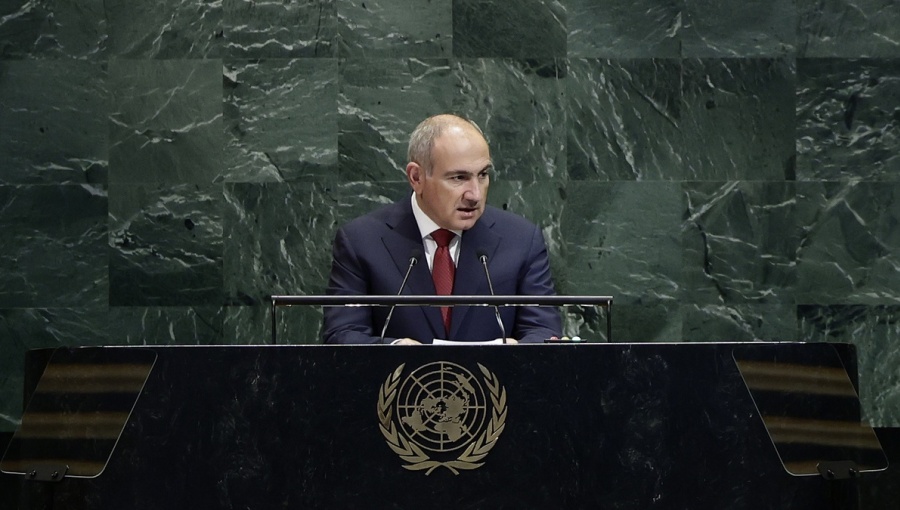
Armenian Prime Minister Nikol Pashinyan addressed world leaders on September 27. / primeminister.am
By bne IntelliNews September 28, 2025

Armenian Prime Minister Nikol Pashinyan told world leaders on September 27 that his government has formally set the country on a path toward joining the European Union, framing the bid as a democratic choice, while also highlighting a landmark peace agreement with Azerbaijan.

Armenia has already adopted legislation on the launch of its EU accession process, although it has not yet made a formal membership application. The shift comes after a deterioration in Yerevan’s relations with Moscow in recent years. 

“In March of this year, the National Assembly of the Republic of Armenia adopted the law On the initiation of the process of Armenia's membership in the European Union, which is of great importance for our agenda,” Pashinyan said in an address to the 80th session of the UN General Assembly in New York. “This law is not only an expression of our unprecedentedly high level of relations with the European Union, but also a direct testament to our commitment to democratic values.”

Pashinyan stressed that the process was as much about strengthening domestic institutions as securing a place in the 27-member bloc. “We want to be institutionally and substantively compliant with EU standards. Without compliance with these standards, it is impossible to become an EU member,” he said. “When Armenia objectively complies with the standards of the European Union, we have two options from this point: either we will be accepted as an EU member, or we will not be accepted. If they accept it, that's fine. If they don't, we will have solved a very important problem: Armenia will be a country that meets modern, advanced standards.”

The prime minister said that the drive to join the EU was rooted in the “People's, non-violent, Velvet Revolution” of 2018, which swept his government to power. “Our aspiration to comply with European Union standards is not a matter of geopolitical, but of democratic choice,” he said.

Looking ahead to domestic reforms, Pashinyan promised a nationwide referendum on a new constitution after Armenia’s next parliamentary elections. “In order to make our achievements in the field of democracy more institutional and pro-people, we intend to take the next step in the near future: after receiving the people's mandate once again in the 2026 parliamentary elections, we will initiate a nationwide referendum to adopt a new constitution,” he told the assembly.

Pashinyan also hailed the recent breakthrough in long-running tensions with neighbouring Azerbaijan. He spoke of the declaration signed in Washington on August 8 in the presence of US President Donald Trump and Azerbaijani President Ilham Aliyev.

“That declaration stated that Armenia and Azerbaijan recognise the need to chart a path to a bright future, not predetermined by the conflict of the past,” Pashinyan said, quoting the document. “This reality, which is not and should never be subject to revision, paves the way for closing the page of hostility between our two peoples. We resolutely reject and exclude any attempt at revenge, now and in the future.”

The two sides reaffirmed commitments to open transportation links, including “unhindered communication between the main part of the Republic of Azerbaijan and the Nakhichevan Autonomous Republic through the territory of the Republic of Armenia, with mutual benefits for the Republic of Armenia in terms of international and domestic communications,” he said.

Pashinyan credited France and the European Union for earlier mediation efforts, recalling that at a 2022 European Political Community summit in Prague, Armenia and Azerbaijan first agreed to recognise each other’s territorial integrity. He extended invitations to heads of state and government to attend the bloc’s next summit in Yerevan in May 2026, calling the gathering “an important platform for European political dialogue.”

Despite the Westward pivot, Armenia’s continues to work with Russia, particularly in the energy sector. Just days before his UN address, he met President Vladimir Putin in Moscow and confirmed plans to extend the life of Armenia’s sole nuclear power plant, Metsamor, to 2036 with Russian assistance.

“We are closely cooperating with the Russian Federation and are working to extend the operation period of the Armenian NPP until 2036,” he said earlier this week, noting discussions with state nuclear agency Rosatom on new reactor technology. The Soviet-built facility currently provides about 30% of Armenia’s electricity.

Yerevan is aiming for EU accession at a time when the geopolitical balance in the South Caucasus is shifting. Russia’s influence in the region is waning, as Moscow’s resources are focussed on the war in Ukraine, along with diplomatic rifts with both Baku and Yerevan. Conversely, the US role as peacemaker between Armenia and Azerbaijan is expected to herald greater involvement for Washington in the region. 

Croatian PM angrily rejects Hungarian accusations of war profiteering

Croatian PM angrily rejects Hungarian accusations of war profiteering
Prime Minister Andrej Plenkovic says Croatia is a "good and honest neighbour". / vlada.gov.hr
By bne IntelliNews September 27, 2025

Croatian Prime Minister Andrej Plenković on September 26 sharply dismissed accusations by Hungary’s foreign minister that Zagreb is exploiting the war in Ukraine for profit, insisting Croatia is a reliable neighbour and a key supplier of energy to central Europe.

Hungarian Foreign Minister Péter Szijjártó accused Croatia’s state-run Adriatic oil pipeline operator JANAF of failing to transport sufficient oil to Hungary and alleged that Croatia was profiting from disruptions in Russian supplies.

“I indignantly reject the false theses of the Hungarian Foreign Minister that Croatia is a war profiteer,” Plenković told reporters in Zagreb, a government statement said. “Quite the opposite: Croatia is a good and honest neighbour that puts its capacities in the service of regional energy security.”

Plenković countered that JANAF has the capacity to transport up to 15mn tonnes of oil a year to refineries in Hungary and Slovakia, both owned by Hungarian energy group MOL. “All testing shows JANAF can meet these needs with complete confidence,” he said.

The prime minister highlighted recent investments to strengthen Croatia’s position as an energy transit country, including €560mn in new gas pipelines led by state-owned PlinaCro and a doubling of capacity at the LNG terminal in Omišalj on the northern island of Krk to 6.1 billion cubic metres of gas per year.

“With these capacities Croatia can fully supply its own needs and help meet the energy requirements of our neighbours,” Plenković said, adding that Serbia already receives around 90% of its oil imports through JANAF.

He argued that Hungary, not Croatia, is benefiting from cheaper Russian energy. “A profiteer can be called someone who is currently getting cheaper oil and gas from Russia,” he said. “Hungary has repeatedly claimed it lacks an alternative route, but it has been proven that a completely safe alternative exists.”

Croatian Foreign Minister Gordan Grlić Radman echoed Plenković’s remarks during a visit to Houston, Texas, where he promoted greater transatlantic energy cooperation. “We firmly reject the unfounded accusations of the Hungarian foreign minister,” he said. “Croatia stands out as a natural and strategic energy hub for Central Europe – providing secure, diverse and efficient access to energy supply routes.”

Grlić Radman underlined that Croatia’s location at the crossroads of the Mediterranean and Central Europe, combined with modern port infrastructure, makes it a dependable partner for regional energy supply and distribution.

JANAF also rejected Szijjártó’s allegations, calling them “malicious, false and hypocritical” in a separate statement.

Relations between the two EU members have occasionally been strained over energy policy since Russia’s invasion of Ukraine. Croatia has sought to end its dependence on Russian oil and gas, banning Russian crude imports from 2022 and investing heavily in alternative supply routes, while Hungary has continued to buy Russian energy citing cost and security concerns.

Plenković reiterated that Croatia’s pricing for oil transit is in line with European Union norms and depends on contract length and volume, not political considerations. “The prices we offer are comparable to all EU levels,” he said.

“We are the good guy here,” the prime minister added.


Significance Of The Saudi Arabia-Pakistan Defence Pact – Analysis

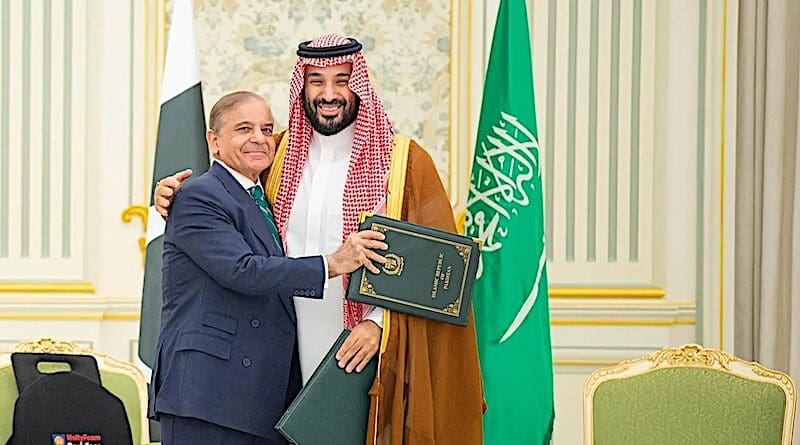
Pakistan's Prime Minister Shehbaz Sharif with Saudi Arabia's Crown Prince Mohammed bin Salman. Photo Credit: SPA


By 

At a time when the US President Donald Trump has rattled the world by launching a tariff war against its major trade partners, including allies, a recent development in the Asian theatre has engaged security analysts looking for an answer as the ramification of the development is huge.


On 17 September 2025, during Pakistan Prime Minister Shehbaz Sharif’s visit to Riyadh, Saudi Arabia and Pakistan, signed a Strategic Mutual Defense Agreement in Riyadh. The most striking aspect of the pact is that Pakistan is the only nuclear-armed Muslim majority country and a key clause of the pact declares that “any aggression against either country shall be considered an aggression against both”.

This expression has rattled policy makers in many Asian nations as the language is strong and echoes collective-defense pledges like NATO’s Article 5. Some analysts however opine that it largely codifies an existing strategic partnership rather than marking a radical new commitment. Their argument is premised on the fact that Pakistani forces have been present in Saudi Arabia for decades in training, advisory, and security roles. The present number of forces totals around 1,500 to 2,000. This shows that the two countries have enjoyed close military ties since the 1960s. Based on an understanding between the two states, Pakistan first deployed troops to protect Saudi frontiers during regional conflicts. It seems that over 8,000 to 10,000 military personnel of Saudi Arabia have benefitted from training by Pakistani forces over the years. This would mean that the pact signed on 17 September formalises a deep alliance that has historical roots.  

If this was the informal arrangement for decades, what was the provocation at this point of time to accord legitimacy and formalise a relationship that is now subject to various interpretations? The new interpretations are based on the timing as the pact was signed days after Israel’s bombing of Qatar and amid doubts over US security guarantees to the Gulf monarchies. It hints a shifting regional order and the pact been designed to that effect. In the changed security situation when Israel is engaged in war in Gaza and Iran-backed Houthis flexing their military power, coupled with Trump’s inward-looking policies, Saudi Arabia seems to be hedging its bets and building a cosy relationship with Pakistan, which is too happy to be perceived as a security provider in the region.   

As mentioned earlier, the key clause of the pact declaring that “any aggression against either country shall be considered an aggression against both” is worrying from India’s perspective. In a NATO-like arrangement, the pact commits each side to respond to threats to the other. Both shall now establish permanent coordination mechanisms, including a joint military committee, intelligence-sharing arrangements, and expanded training programmes.

Conversely, Pakistan has too benefitted from Saudi Arabia by way of financial assistance to its nuclear programme. So, this mutually beneficial relationship has remained in place for decades. Irrespective of the fact that Saudi Arabia would be willing to enrich uranium in order to make a nuclear bomb, Saudi Crown Prince Mohammed bin Salman (known as MBS) is confident to procure one such arsenal from Pakistan when needed. This demonstrates that while the new agreement does not spell out whether Pakistan’s nuclear capabilities extend to Saudi defence, the remarks made by Pakistan’s Defence Minister Khawaja Asif that Saudi Arabia could access Pakistan’s nuclear capabilities shows that Saudi Arabia remains under Pakistan’s nuclear umbrella. This could also mean that Saudi Arabia would be willing to accord a larger role for Pakistan in the Persian Gulf. 


Here, the agreement and its content need to be assessed in the wake of Israeli’s attack on Qatar, which was clearly a provocation to formalise the ongoing defence cooperation between Pakistan and Saudi Arabia. This too underscores the changing security environment in the Gulf in recent times. It also needs to be remembered that Qatar is home to the Al-Udeid airbase, the largest US military base in West Asia. MBS could have thought that if such a heavily defended ally came under Israeli attack without consequences, its trust on the US security guarantees could have considerably eroded, which is why he felt formalising a defence pact with the nuclear-armed Pakistan was a preferable option. 

Viewed dispassionately, one might sympathise with MBS why he inked the pact with Pakistan. Saudi Arabia could not have overlooked the fact that the US could not deter Iran’s allies from attacking Saudi oil installations in 2019. Saudi Arabia also possibly was convinced that the US was no longer a reliable ally as the US started losing interest in getting involved in conflicts in West Asia and started shifting its strategic focus to East Asia. The Gaza war and the Houthis were the latest provocations and both developments deepened the insecurity of Gulf kingdoms.

The Saudi Prince was appalled that the Houthis in Yemen had expanded their military capabilities and their missile and drone strikes had disrupted Saudi oil facilities and shipping in the Red Sea. The existing ceasefire between Saudi Arabia and the Houthis does not still give adequate confidence to the former as the Houthis still remain a force in Yemen and control; almost half of the country, including its capital Sanaa. The Saudi Prince may have therefore seen Pakistan, a Muslim-majority country and a nucleared-armed one, as a better bet to be friend with. The past Pakistani security services to the kingdom and the continuing financial support it needs to stabilise its battered economy were other propelling considerations.

However, Pakistan gambling in getting embroiled in the complex security matrix could cost it dearly. Willy-nilly it has allowed itself to be dragged into Saudi Arabia’s regional rivalries with Iran or into conflict with Yemen. As regards Saudi Arabia, by becoming cosy with Pakistan, its future could get messy if a conflict flares up between India and Pakistan. Saudi could be seen as building castles in the air by inking a security pact with Pakistan as its core vulnerabilities are unlikely to wither away. The possibility of Iranian missile strikes or Houthi drones are unlikely to disappear anytime soon. Moreover, while America’s reliability shall remain under doubts, Israel’s role in destabilising the region is unlikely to be altered soon. 

Impact of the Pact on India

India has reason to worry on the Saudi-Pak pact because it has invested heavily in its relations with Riyadh, deepened energy ties, expanded trade, and secured cooperation on counter-terrorism. The future of roughly 2.6 million Indian diaspora working in the kingdom could be impacted, denting the remittances back home. Indian policy makers face the challenge to navigate through the turbulent waters to maintain India in even keel both with Israel and Saudi Arabia.

Saudi Arabia could have perceived that India’s pro-Israeli tilt is unlikely to be altered, which is why it probably felt that New Delhi overlooked its concern and thus was driven to enter into a security pact with Pakistan. Given such complexities, India’s stakes are high as it has to secure its energy supplies as well as protect the interests of the diaspora. India shall have no option than to continue engaging with the Gulf countries both economically and politically. 

In the wake of the strategic shift in regional security, India’s dilemma is huge. It has responded cautiously amid shifting regional dynamics and needs to secure that its close ties with Saudi Arabia is not jeopardised because of the security pact between Pakistan and Saudi Arabia. India reacted carefully to the security pact, saying that it was aware of the long-standing arrangement, which has now been formalised. While it studies the pact’s implications on national security and regional stability, India reaffirms its commitment to protecting its interests. 

Saudi Arabia too would be expected to be guarded and ensure that its security pact with Pakistan does not adversely impact its strategic and economic ties with India. Saudi Arabia is India’s fifth-largest trading partner, while India is its second-largest. In fiscal 2023-24, bilateral trade reached $42.98 billion, with Indian exports at $11.56 billion and imports at $31.42 billion. With the King Abdullah’s 2006 visit to India, bilateral ties deepened with the Delhi Declaration. This was followed by the Riyadh Declaration in 2010 that elevated ties to a Strategic Partnership. When Prime Minister Narendra Modi visited Riyadh in 2016, the kingdom bestowed Modi with Saudi Arabia’s highest civilian honour, the “King Abdulaziz Sash”.

Since then, high-level exchanges have continued. During PM Modi’s April 2025 visit, Saudi Arabia swiftly condemned the Pahalgam terror attack. Saudi Arabia has maintained all along measured positions during India-Pakistan tensions by condemning terror attacks like Pulwama and refrained from criticising India’s Article 370 abrogation or the Balakot strikes. Thus far, Riyadh positioned itself as a mediator by engaging with both neighbours. It is to be hoped that Saudi Arabia shall continue to maintain its balanced policy when it comes to its ties with India and Pakistan so that the interests of neither is imperilled.