Monday, October 06, 2025


New wheat diversity discovery could provide an urgently-needed solution to global food security


Newly-discovered diversity in the wheat genome could offer vital new opportunities to improve and ‘climate-proof’ one of the world’s most important staple crops.


Earlham Institute


Wheat has a very large and complex genome. Researchers have found that different varieties can use their genes in different ways. By studying RNA—the molecules that carry out instructions from DNA—researchers can see which genes are active and when. By mapping this gene activity for the first time, researchers are able accelerate international wheat breeding programmes, developing new varieties of wheat which can adapt to the rapidly escalating climate emergency.

Wheat is the most widely cultivated crop in the world, with over 215 million hectares grown annually. To meet the demands of a growing global population, plant breeders face the challenge of increasing wheat production by an estimated 60 per cent within the next 40 years. 

The wheat pan-transcriptome offers a powerful tool to help meet this challenge. It will enable plant breeders to accelerate yield improvements and develop more resilient wheat varieties—better equipped to cope with rising temperatures, water shortages, and poor soil quality. Importantly, this can be done without increasing reliance on fertilisers, which are linked to biodiversity loss and pollution.

Senior Postdoctoral Researcher at the Earlham Institute and co-first author Dr Rachel Rusholme-Pilcher said: “We’ve revealed layers of hidden diversity spanning our modern wheat variations. This diversity is likely to underpin the success of wheat over such a wide range of global environments.

“We discovered how groups of genes work together as regulatory networks to control gene expression. Our research allowed us to look at how these network connections differ between wheat varieties revealing new sources of genetic diversity that could be critical in boosting the resilience of wheat.”

Furthermore, this work has created an important resource for the worldwide wheat research community - a clear example of how national and international collaboration and new technologies can lead to scientific breakthroughs in global food security. 

Much of the untapped genetic diversity may stem from how wheat has adapted to different environments over time, shaped by over 100 years of modern breeding and more than 10,000 years of cultivation.

Deputy Group Leader in the Plant Genome and Systems Biology Group at Helmholtz Munich Dr Manuel Spannagl, said: “The new expression atlas allowed us to independently predict and compare the gene content of the wheat cultivars. We used those gene predictions together with the pan-transcriptome data to identify pronounced variation in the prolamin superfamily and immune-reactive proteins across cultivars.” 

Transcript isoform sequencing and de novo annotation was carried out by the Technical Genomics and Core Bioinformatics Groups at the Earlham Institute through the BBSRC-funded National Bioscience Research Infrastructure in Transformative Genomics. 

Dr Karim Gharbi, Head of Technical Genomics at the Earlham Institute, said: “This work demonstrates the power of technology to reveal novel biology, in this case hidden functional diversity which had not been documented before. Wheat pangenomics resources are growing rapidly with more diversity yet to be discovered.” 

ENDS

Funding acknowledgement

The study was supported by the BBSRC-funded Decoding Biodiversity research programme and National Bioscience Research Infrastructure in Transformative Genomics at the Earlham Institute, as well as the BBSRC cross-institute Delivering Sustainable Wheat programme

Notes to editors

The paper ‘De Novo Annotation Reveals Transcriptomic Complexity Across the Hexaploid Wheat Pan-Genome’ is published in Nature Communications. 

The study was conducted as part of the International 10+ Wheat Genome Project, and involved a global collaboration of scientists from countries including Australia, Japan, France, Germany, Switzerland, the United States, the United Kingdom, Saudi Arabia, and Canada.

Please contact communications@earlham.ac.uk for further information or media enquiries.


About the Earlham Institute

The Earlham Institute is a hub of life science research, training, and innovation focused on understanding the natural world through the lens of genomics.

Embracing the full breadth of life on Earth, our scientists specialise in developing and testing the latest tools and approaches needed to decode living systems and make predictions about biology.

The Earlham Institute is based within the Norwich Research Park and is one of eight institutes that receive strategic funding from BBSRC, as well as support from other research funders.

LinkedIn: Earlham Institute / Bluesky: earlhaminst.bsky.social

About Helmholtz Munich

Helmholtz Munich is a leading biomedical research center. Its mission is to develop breakthrough solutions for better health in a rapidly changing world. Interdisciplinary research teams focus on environmentally triggered diseases, especially the therapy and prevention of diabetes, obesity, allergies, and chronic lung diseases. With the power of artificial intelligence and bioengineering, researchers accelerate the translation to patients. Helmholtz Munich has around 2,500 employees and is headquartered in Munich/Neuherberg. It is a member of the Helmholtz Association, with more than 43,000 employees and 18 research centers the largest scientific organization in Germany.

More about Helmholtz Munich (Helmholtz Zentrum München Deutsches Forschungszentrum für Gesundheit und Umwelt GmbH): www.helmholtz-munich.de/en


Pusan National University researchers reveal how forest soil properties influence arsenic mobility and toxicity in soil organisms


Arsenic contamination in forest soils poses stage-specific risks, as juveniles respond more strongly to mobile arsenic than adults


Pusan National University

Arsenic Pathways and Soil Interaction in Forest Ecosystems 

image: 

Soil type and chemistry determine arsenic mobility and organism sensitivity 

view more 

Credit: Professor Yun-Sik Lee from Pusan National University, Korea


Soil contamination is a global environmental concern, with toxic metals and metalloids from industrial activities persisting as long-term pollutants. Arsenic (As), although naturally occurring, becomes widespread when mobilized by mining. Abandoned gold mines are major sources, releasing arsenic-rich minerals into surrounding environments through erosion and leaching. Forest soils, essential for ecosystem health and biodiversity, are particularly vulnerable. Despite arsenic’s mobility under specific soil conditions and known toxicity, its behavior in forest soils and impacts on soil organisms remain poorly understood.

In a recent study, a research team led by Professor Yun-Sik Lee from Pusan National University, Korea, investigated how arsenic interacts with different forest soils and how these interactions influence its toxicity to soil-dwelling organisms. As Prof. Lee explains, “Our goal was to determine how soil properties affect arsenic binding, mobility, and bioavailability, and how these factors in turn impact the survival and reproduction of the springtail Allonychiurus kimi (A. kimi), an important indicator species for soil health.” The findings were made available online on 1 September 2025 and was published in Volume 497 of the Journal of Hazardous Materials on 5 October, 2025.

The study collected four uncontaminated forest soils and characterized their physicochemical properties, including pH, cation exchange capacity (CEC), phosphorus content, organic matter, metal oxides, clay content, and total arsenic. Soil samples were spiked with arsenic at 20–100 mg/kg and aged under wet-dry cycles to simulate environmental contamination. Using the Wenzel sequential extraction method, arsenic was fractionated into F1 and F2 (weakly bound, highly mobile), F3 (bound to amorphous Fe/Al oxides, potentially bioavailable), F4 (bound to crystalline Fe/Al oxides), and F5 (residual, strongly bound). Adult and juvenile A. kimi were exposed to these soils for 28 days to assess arsenic accumulation, survival, and reproduction.

Results showed that newly introduced arsenic primarily accumulated in mobile fractions (F1–F3), making it bioavailable to soil organisms. Prof. Lee notes, “Even at the same total arsenic concentration, contamination levels and biotoxicity varied markedly depending on soil properties. CEC, phosphorus, and aluminum oxides strongly influenced arsenic binding and mobility.” Life stage strongly affected toxicity: adults accumulated arsenic without significant impacts on survival, with body burdens correlating more with F3 and total arsenic levels. Juveniles were highly sensitive, with reproduction strongly reduced by mobile arsenic fractions, highlighting vulnerability during early development.

This research improves understanding of arsenic bioavailability and toxicity in forest soils. “The findings support the development of more accurate ecotoxicological assessments that account for differential sensitivity between juveniles and adults,” explains Prof. Lee. He adds, “Moreover, the study emphasizes the need for soil-specific risk evaluations based on bioavailable arsenic fractions rather than total concentrations, providing a stronger foundation for targeted ecosystem management and remediation strategies.”

In conclusion, the study demonstrates that arsenic behavior in forest soils is controlled by soil properties and that toxicity varies according to chemical fraction and life stage. These insights provide a basis for soil-specific management and remediation strategies to protect ecosystems from arsenic contamination.


***


Reference
DOI: 10.1016/j.jhazmat.2025.139737


About Pusan National University
Pusan National University, located in Busan, South Korea, was founded in 1946 and is now the No. 1 national university of South Korea in research and educational competency. The multi-campus university also has other smaller campuses in Yangsan, Miryang, and Ami. The university prides itself on the principles of truth, freedom, and service and has approximately 30,000 students, 1,200 professors, and 750 faculty members. The university comprises 14 colleges (schools) and one independent division, with 103 departments in all.

Website: https://www.pusan.ac.kr/eng/Main.do


About Prof. Yun-Sik Lee
Prof. Yun-Sik Lee is an Assistant Professor in the Department of Biology Education at Pusan National University, specializing in environmental ecology research focused on soil ecosystem health and disturbance impacts. His laboratory uses soil microinvertebrates, including springtails (Collembola), to analyze multi-faceted effects of toxicity, natural disasters, and climate change on soil ecosystems. After earning his Ph.D. in Environmental Science and Ecological Engineering from Korea University, he served as a research scientist at Baylor University and research professor at OJEong Resilience Institute, Korea University, before coming to Pusan National University to conduct innovative research in soil ecotoxicology.


HealthFORCE, AAPA, and West Health release “Aging Well with AI” – first in a two part series on AI and the healthcare workforce


Report outlines five use cases for artificial intelligence to support older adults and calls on policymakers to act


West Health Institute


Alexandria, Va. — October 6, 2025 — HealthFORCE, a national alliance of leaders dedicated to addressing the root causes of America’s healthcare workforce crisis, along with the American Academy of Physician Associates (AAPA) and West Health, today released “Aging Well with AI: Empowering Care through Innovation,” the first in a two-part white paper series exploring how artificial intelligence (AI) can strengthen the U.S. healthcare workforce and improve access to care. The paper was commissioned by the three organizations and authored by The LINUS Group, a healthcare strategy and research firm.

As the nation confronts a historic shortage of healthcare workers alongside a rapidly aging population, the report outlines specific ways AI can reduce strain on clinicians and improve outcomes for older adults, without eroding the human relationships that are essential to high‑quality medicine.

“By 2034, older adults will outnumber children in the U.S. for the first time in history,” said Lisa M. Gables, CEO of AAPA and founder of HealthFORCE. “This shift, combined with record-high workforce shortages, demands immediate innovation. This report shows how AI can be part of the solution, giving clinicians back time to focus on what matters most – their patients.”

Five Use Cases Identified in the Report

The paper highlights five opportunities for AI to extend the healthcare workforce and improve care for older adults:

  1. Home Care Optimization – Automating scheduling, synthesizing health data, and supporting family caregivers to reduce gaps and delays.
  2. Care Continuity – Enabling seamless transitions between hospitals, homes, and community services to prevent readmissions and duplicative care.
  3. Personalized Care Plans – Using whole-person data, not just age, to develop individualized treatment plans and avoid age-based bias.
  4. Early Detection – Leveraging remote monitoring and predictive analytics to identify risks before they escalate into costly crises.
  5. Immersive Clinical Education – Using AI-powered VR and simulations to train clinicians in aging-related care and improve empathy, adherence, and compliance.

“Our healthcare system deserves more than a model that’s constantly playing catch-up,” said Zia Agha, MD, Chief Medical Officer of West Health. “AI can help us get ahead by navigating growing complexity, coordinating care more seamlessly, and extending clinicians’ capacity to deliver the continuous, compassionate, and affordable care all seniors deserve. But without bold policy changes to modernize care delivery and payment models, we risk leaving these innovations on the shelf instead of putting them to work where they’re needed most.”

The white paper calls on policymakers, health systems, and innovators to:

  • Invest in geriatric-focused tech innovation and prioritize AI tools that serve older adults
  • Incentivize cross-specialty training in aging care and AI use for all frontline providers
  • Establish national standards for AI integration across state lines and care settings
  • Promote interoperability and support value-based payment models that reward continuity, efficiency, and prevention.

This is the first paper in a two‑part series aimed at examining how artificial intelligence can strengthen the U.S. healthcare workforce. The upcoming second report will focus on how AI can augment care delivery across all patient populations and help address the projected shortfall of 3.2 million healthcare workers by 2026. It is set to be released later this month.

“AI is not a silver bullet, but it is a powerful tool,” added Gables. “Used wisely, it can protect access to care and improve outcomes for those who need it most, beginning with older adults.”

Download report here: Aging Well with AI_Empowering Care through Innovation_West Health_HealthFORCE_AAPA_10032025

TOMB ROBBERY IS CRIMINAL CAPITALI$M
UNESCO's virtual museum is a window on the world of artefact trafficking

The United Nations' cultural agency UNESCO this week announced the launch of a virtual museum showcasing hundreds of looted artefacts – a bid to educate the public about the consequences of trafficking cultural property.


Issued on: 05/10/2025 - RFI


The UNESCO Virtual Museum of Stolen Objects, unveiled on 29 September. © UNESCO

A Zambian ritual mask, a pendant from the ancient Syrian site of Palmyra and a painting by Swedish artist Anders Zorn are among nearly 250 stolen objects displayed on Unesco's new interactive platform.

But that's just a fraction of the some 57,000 stolen items Interpol estimates are in circulation, in a criminal trade for which the international police organisation's database is the sole reference point.

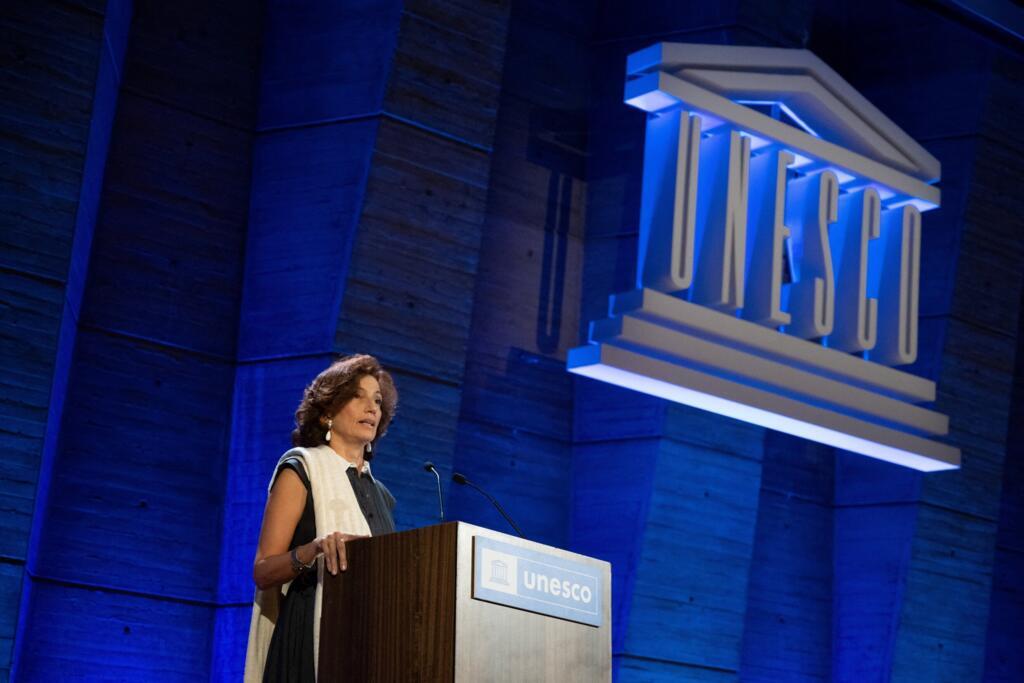
Unesco director general Audrey Azoulay said she hoped the Virtual Museum of Stolen Cultural Objects would draw attention to this vast illegal trade network.

The initiative will inform "as many people as possible" about "a trade that damages memories, breaks the chains of generations and hinders science," Azoulay told French news agency AFP, describing the virtual museum as "unique".


How an RFI investigation helped return an ancient treasure to Benin


UNESCO director general Audrey Azoulay. @ AFP - ALAIN JOCARD

'Identity and memory'

The online space, designed by renowned Burkina Faso-born architect Diebedo Francis Kéré, allows visitors to explore the lost objects and trace their origins and purpose through accompanying stories, testimonies and photos.

"Each stolen object takes with it a part of the identity, memory and know-how of its communities of origin," said Sunna Altnoder, head of Unesco's unit for combating illicit trafficking.

The initial collection will grow as more stolen artefacts are 3D-modelled, using artificial intelligence.

Interpol says 11,000 stolen artefacts seized in Europe crackdown

But the goal, Altnoder said, is for it to one day close, as Unesco hopes the pieces will instead move to a Returns and Restitutions section showcasing items recovered or sent back to their countries or communities of origin.

The initiative also aims to bring together sectors involved in tackling the trafficking of cultural property, Altnoder added.

"We need a network – involving the police, the judiciary, the art market, member states, civil society and communities – to defeat another network, which is the criminal network."

(with AFP)

The notion of primitive accumulation is based on the notion of capital as class relation, rather than capital as “stock”: The capital-relation presupposes a ...

Primitive Accumulation · of capital as a social relation · the encounter as industrial capitalist relation. ·

significance of primitive accumulation does not lay in primitive accumulation as an ... (2002), 'Capital, Labour and Primitive Accumulation. On Class and.


Capital is thus the governing power over labour and its products. The ... forged in the so-called primitive accumulation of English enclosures. r11r ...

“Primitive accumulation of capital” was the term. Marx used to describe the accumulation of the social and economic conditions from which capitalism arose ...

appears as 'primitive' because it forms the pre-history of capital, and of the mode of production corresponding to capital. (874-5). As a matter of ...

But the accumulation of capital presupposes sur- plus-value; surplus ... a primitive accumulation (the 'previous accumulation' of Adam. Smith*) which ...