Saturday, October 18, 2025

Bangladesh seeks death penalty for former Prime Minister Hasina

Bangladesh seeks death penalty for former Prime Minister Hasina
/ US Pentagon
By bno Chennai Office October 17, 2025

Bangladesh’s interim administration led by Nobel laureate Muhammad Yunus has requested the country’s criminal tribunal impose the death penalty on former Prime Minister Sheikh Hasina over the violent unrest in July and August 2024, which left thousands dead and injured, ultimately leading to the ouster of Hasina and her Awami League party from power. The government argued that Hasina and her associates were directly responsible for orchestrating the bloodshed, the BBC reported.

Bangladesh Ministry of Law presented evidence and witness testimonies against Hasina, asserting she acted as the master architect of the violence, personally ordering killings that included students, security officers, and political activists. Prosecutor Tajul Islam also sought the death penalty for former Bangladesh Home Minister Asaduzzaman Khan, citing the severity of his alleged crimes.

Meanwhile, the case against former Bangladesh Police Chief Chowdhury Abdullah Al-Mamun has been left to the tribunal’s discretion. Al-Mamun remains in custody and has cooperated as a state witness against Hasina.

Sheikh Hasina has been in exile in India since August 5, 2024, with reports suggesting Asaduzzaman Khan may also be in India. She has not appointed legal representation for the tribunal and previously dismissed the proceedings as a “kangaroo court.” The next hearing will allow a government-appointed lawyer a week to present arguments on her behalf. According to Bangladesh interim government health advisers, at least 800 people were killed and roughly 14,000 injured, though the United Nations report estimates 1,400 fatalities.

Hasina’s party has challenged the figures and demanded an independent investigation, calling the prosecution politically motivated. Separately, trials continue against 25 current and former Bangladesh military officials over enforced disappearances and human rights violations, with 15 officers recently detained in Dhaka Cantonment. Political restrictions currently hinder Hasina’s party from contesting upcoming elections.


Mongolia’s PM ousted as party infighting topples government

Mongolia’s PM ousted as party infighting topples government
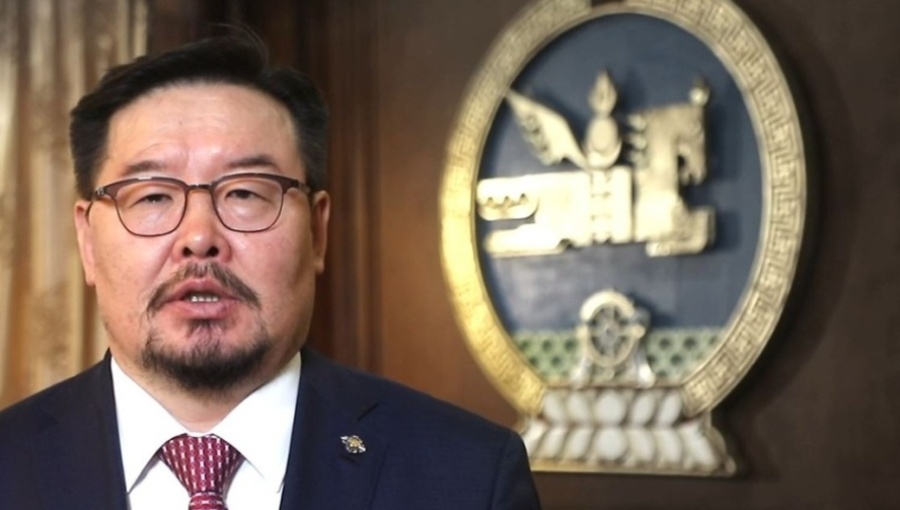
Zandanshatar Gombojav won the position of prime minister as a compromise candidate, but he lasted just four months. / parliament.mn
By Michael Kohn October 18, 2025

Mongolia’s parliament late on Friday (October 17) sacked Prime Minister Zandanshatar Gombojav in a surprise vote held amid growing ruling party infighting.

The proposal to dismiss Zandanshatar was initiated last week and finalised within the legal deadline. A committee voted against the dismissal but a sitting of the full parliament passed the proposal.

Friday also saw the parliament approve the resignation of its speaker, Amarbayasgalan Dashzegve, Zandanshatar’s main rival. The two have been locked in a battle of words for weeks following an inter-party vote for chairmanship of the Mongolian People’s Party (MPP).

Amarbayasgalan emerged victorious in that vote and he’s expected to be confirmed as MPP chairman next month during a party congress.

For now, Zandanshatar remains in power as head of a caretaker government until the MPP can put forward a successor. He also has an opportunity to appeal the decision to fire him, creating more uncertainty over who will lead the mineral-rich nation of 3.4mn.

“The fight over the prime minister’s dismissal is far from over,” said Amar Adiya, publisher of online newsletter Mongolia Weekly. “Pro-PM members challenged the decision as unconstitutional and the Constitutional Court is currently reviewing the procedure for the PM’s dismissal.”

The move against Zandanshatar laid bare a crisis within the MPP, long seen as enjoying political stability. Zandanshatar has only been in power since June – he took over from Oyun-Erdene Luvsannamsrai, who lost his job amid allegations that his family had profited from political influence.

One of several scenarios could unfold in the coming days, said Amar, including an opportunity for President Khurelsukh Ukhnaa to step in and veto the dismissal of the prime minister.

By law, the parliament must appoint a new prime minister within 30 days. If no one is selected in that timeframe, the legislature could be dissolved, sparking new elections.

Complicating matters further is the need for the parliament to pass the 2026 budget. Teachers are currently striking to demand higher pay in the new budget, and some healthcare professionals have joined sit-in protests.

“The next few months will likely be filled with uncertainty as the [MPP] continues to splinter,” said Amar.

Mongolia’s political spiral has been unexpected and rapid. When he was nominated for PM four months ago, observers saw Zandanshatar as a compromise candidate who could unify the country after weeks of street protests that called for Oyun-Erdene to step down. But Zandanshatar’s inability to secure control of the party last month left him vulnerable – it’s standard practice that the head of the ruling party is also the prime minister.

In the days following the leadership vote, Zandanshatar openly attacked Amarbayasgalan, accusing him of having connections to a longstanding coal theft scandal that has seen several officials jailed in recent years.

Amar says the root of the disruption in the MPP is the battle for control over Mongolia’s coal industry and the nation’s largest coal mine, Tavan Tolgoi. The massive deposit contains an estimated 6.4bn to 7.4bn tonnes of coal reserves. It boasts rail connections to China, where the coal is used in steel-making. 

“Control over Tavan Tolgoi fuels both budgets and political fortunes… It’s not ideology tearing the party apart, it’s the spoils of power,” Amar said.

CRIMINAL CAPITALI$M

Ex-chairman of Istanbul-listed Sisecam hit with travel ban in Can Holding investigation

Ex-chairman of Istanbul-listed Sisecam hit with travel ban in Can Holding investigation
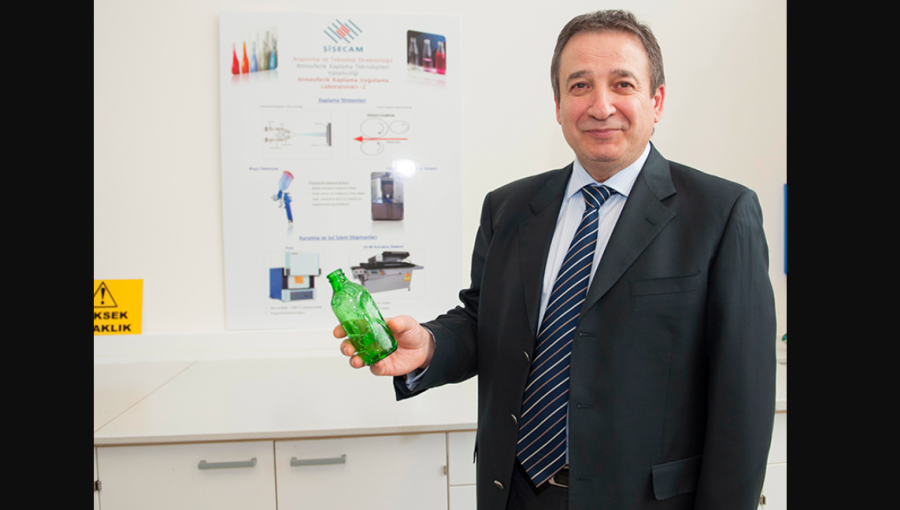
Summoned as a suspect, Ahmet Kirman. / Sisecam.com.tr
By Akin Nazli in Belgrade October 17, 2025

Ahmet Kirman, a former board chairman at Turkish glassmaker Sisecam (SISE), has received a travel ban after being questioned as part of the Can Holding prosecution, Turkey’s government-run Anadolu Agency reported on October 15.

Kirman was summoned by the Istanbul chief prosecutor’s office as a “suspect”.

Sisecam, controlled by Isbank (ISCTR), has yet to comment on the development. Kirman also serves as an independent board member at industrial conglomerate Koc Holding (KCHOL) and white goods maker Arcelik (ARCLK).

In June 2024, Kirman resigned from his post at Sisecam.

Prosecution launched in September

In September, Turkey’s deposit insurance fund TMSF took over Can Holding.

In 2024, Ciner Holding sold its media group to Can. The accusation is that Can earned money from cigarette smuggling and laundered black cash via the acquisition.

Following the Can Holding operation, the Istanbul chief prosecutor’s office targeted the other side of the transaction. Turgay Ciner, the owner of Ciner Holding, is currently a fugitive while many Ciner Holding companies have been seized.

Sisecam has partnerships with London-based We Soda, a unit of Istanbul-based Ciner Holding (owned by Turgay Ciner), in soda ash investments in the US.

Isbank targeted

Isbank has in the past been targeted by Turkey’s president, Recep Tayyip Erdogan, many times. There was speculation that the government would take over the Ataturk stake in Isbank.

Isbank’s pension fund Munzam Sandik has a 39% stake in the lender, launched in 1924 with capital provided by the founder of the Turkish Republic and also Isbank, Mustafa Kemal Ataturk.

The main opposition Republican People’s Party (CHP) controls 28% of Isbank. The stake was inherited from Ataturk. A total of 33% if Isbank is listed on the Borsa Istanbul.


Journalist beaten to death in Istanbul as security conditions in Turkey rapidly deteriorate

Journalist beaten to death in Istanbul as security conditions in Turkey rapidly deteriorate
#WhatHappenedToHakan, the journalist's friends asked on social media.
By Akin Nazli in Belgrade October 17, 2025

Journalist and environmental activist Hakan Tosun, 50, on October 13 died after spending three days in a coma following a violent attack on him in an Isanbul street, according to local media reports.

Tosun was found unconscious on the roadside in Esenyurt district in the early hours of October 11, having suffered a head injury. His family was not notified until 27 hours later as his ID card along with other personal belongings were taken.

Surveillance footage shows Tosun walking alone at around 00:30 local time before being attacked and beaten by two individuals. The assailants fled the scene on a motorcycle. Two suspects, aged 18 and 24. were arrested on October 12.

Journalists experience violence, judicial harassment and media lynching

Freedom of speech conditions in Turkey are vry poor as things stand. Journalists in the country are regularly subject to violence in addition to common judicial harassment and media or social media lynching.

On October 14, for instance, another journalist, Nafiz Koca, also a publisher, was shot in his leg in front of his office with a shotgun. He survived the attack.

Between September 2023 and September 2024, a total of 109 journalists were detained in Turkey. Sixty three of them received travel bans while 36 spent some time in jail.

A form of Wild West

Journalists are not the only victims of deteriorating security conditions in Turkey. Across recent years, bne IntelliNews has shown again and again that Turkey has descended to the point that it has become something like a form of the Wild West.

On October 16, a 17-year old child shot a school principal in Denizli. It seems that each day that goes by in the country, a child shoots their father or attacks a police station or kills a peer.

As of 2023, it was estimated that there were a total of 36mn unlicensed guns in Turkey in addition to 4mn licensed ones.

By September 20, 1,578 people had been murdered so far this year in armed assaults, while 2,225 were wounded. In 2024, 2,370 people were murdered and 3,829 people were wounded.

According to the latest report on the drugs scenario from the narcotics department of the Turkish police, the annual number of drug users who applied to health institutions for assistance rose to 0.39mn in 2024 from 0.35mn in 2023. As much as 45% of the applicants in 2024 were first-time applicants.

Another reality is that foreign gangs and extensive smuggling schemes are also active in the country.

As of April, the 395 prisons operating in Turkey had a combined capacity of 299,940 inmates, but they were hosting 403,060 prisoners, meaning that 103,120 people were sleeping on the floor.

In 2024, Sedat “The Botox” Peker, a fugitive mafia boss, told daily Sozcu that gangs initiated by Syrian and Afghan migrants had attained a 50% market share in smuggled gold arriving at the Grand Bazaar.

Ride-by motorbike assasinations, bribe tariffs and child crime

In 2023bne IntelliNews reported that Columbia-style motorcycle ride-by assassinations had emerged as the latest phenomenon in Turkey. Also in 2023, this publication reported on the Turkish judiciary’s “bribe tariff”. And in 2024, this publication reported on the country's “assassination tariff”. 

These figures should be updated in line with the latest USD/TRY rate due to hyperinflationary conditions in the country.

In 2024, a total of 0.20mn children in Turkey committed crimes. That compared to 0.18mn in 2023 and 0.21mn in 2022.

Assassination available for 4mn lira, buyer can ask for instalments

According to recent media reports, juniors on Telegram in Turkey are now offering to assassinate any target for Turkish lira (TRY) 4mn ($95,581). The price of wounding-only is reported at TRY 0.25mn.

In September, Cigdem Yilmaz from local daily Milliyet published details of her bargaining with online "triggermen", who are actually "triggerboys".

She offered TRY 1.5mn for an assassination but the online assassin rejected that offer, saying that the actual tariff stands at around TRY 5-6mn.

Another hitman, or hitboy, asked TRY 0.3mn for wounding a target but cut his offer to TRY 0.25mn after Yilmaz bid TRY 0.15mn. In the end, an agreement was made on TRY 0.25mn, including TRY 0.15mn in advance for operational costs and the remaining TRY 0.1mn in four equal instalments.

€3,000 to get over the Bulgarian border

The cost of getting across the Bulgarian border, meanwhile, stands at €3,000.

Also in September, local news portal NTV reported that child gangsters were on the internet offering prices on various kinds of assaults on property and persons.

The price tag of an arson attack on a workplace was reported as only TRY 10,000, with a gun attack on a workplace a heftier TRY 40,000. Prices for murder can fall as low as TRY 0.2-0.3mn.

ERDOGAN'S REICHSTAG FIRE 

2016


Malaysia plans social media ban for children under 13, following Singapore's lead

Malaysia plans social media ban for children under 13, following Singapore's lead
/ dole777 - Unsplash
By bno - Surabaya Office October 16, 2025

Malaysia is set to introduce new regulations prohibiting children under 13 from owning social media accounts, while Singapore’s parliament has tabled a bill to establish a commission tasked with removing harmful online content, Anadolu Ajansi reports.

Under Kuala Lumpur’s proposal, all social media platforms will be required to implement mandatory identity verification systems to prevent underage users from creating accounts.

Communications Minister Datuk Fahmi Fadzil said on October 15 that the initiative is aimed at safeguarding children online, strengthening the enforcement of community guidelines, and reducing exposure to scams and harmful digital content, according to state news agency Bernama.

“When I met representatives from social media platforms last month, I made it clear that Malaysia will make identity verification mandatory, especially to prevent children under 13 from having accounts,” Fahmi said, noting that the timeline for enforcement will be announced later. He added that the government will hold a meeting with social media companies next week to discuss immediate implementation steps.

Meanwhile, Singapore’s parliament has introduced a new Online Safety Bill, designed to bolster protections for users and enhance accountability for online misconduct.

According to the Ministry of Law, the bill aims to “strengthen online safety and protect Singaporeans from online harm” by granting victims faster access to remedies and enabling them to seek redress through legal channels. The proposed legislation would establish an online safety commission to oversee a statutory reporting system, introduce new statutory torts allowing victims to pursue civil action, and improve user identity disclosure requirements to hold perpetrators accountable.

A recent survey revealed that 84% of Singaporeans have encountered harmful online content, and 33% have experienced abusive behaviour in the past year, with sexual and violent material among the most common.

The legislation targets issues such as sexual harassment, doxxing, online stalking, image abuse, and child exploitation, with enforcement expected by mid-2026. Measures addressing impersonation and related harms will follow gradually.

The proposed commission would also have the authority to order the removal of harmful content, restrict offending accounts, or allow victims to post replies. “Non-compliance with directions is a criminal offence,” the ministry stated, adding that the commission could also issue access-blocking or app removal orders to curb persistent online harm.

SCI-FI-TEK 70 YRS IN THE MAKING

World's largest toroidal field coil box delivered


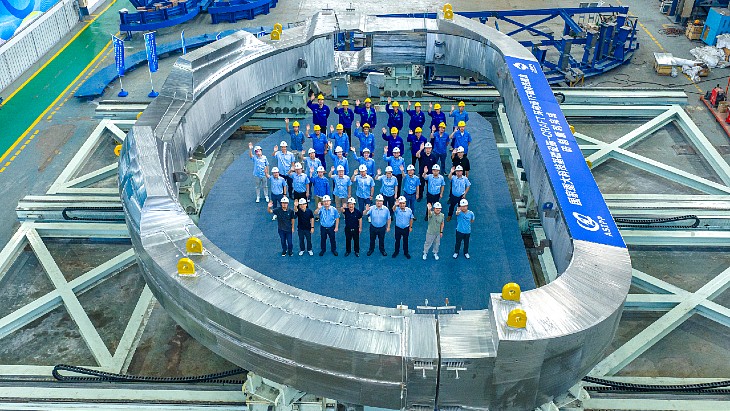
A delivery ceremony has been held for the toroidal field magnet coil box - measuring 21 metres by 12 metres - at the Comprehensive Research Facility for Fusion Technology in Hefei, China.
 
(Image: Shanghai Electric)

Shanghai Electric delivered the coil box, the primary load-bearing structural component of the toroidal field magnet and a core component of the magnet system as it protects the toroidal field coil windings and supports and secures other superconducting magnets, including the poloidal field magnet.

Consisting of ultra-low-temperature austenitic steel, it weighs 400 tonnes and Shanghai Electric said it was the world's largest toroidal field magnet coil box, at more than 1.2-times the size, and about twice the weight, of similar components in the multinational ITER fusion project in France.

The project team spent five years overcoming numerous technical challenges, said the Institutes of Physical Science, Chinese Academy of Sciences, adding: "In terms of manufacturing technology, facing the challenge of welding with a maximum thickness of 360mm, they developed a combination of high-thickness laser welding and ultra-deep narrow-gap tungsten inert gas welding, as well as phased array non-destructive testing technology, achieving shape and quality control during coil box welding. They also developed precision forming technology for 30-metre-long space bends and cooling tube fixation using low-temperature resin and brazing, enabling high-precision installation of the cooling tubes."

"The successful delivery of the coil box not only accumulates relevant technical experience for the manufacturing of high-end equipment for China's fusion devices, but also fosters a comprehensive, end-to-end industrial supply chain system, marking a significant step towards the commercialisation of fusion energy. The related technologies can also be applied in aerospace, energy equipment, shipbuilding, and offshore engineering."

Shanghai Electric said that the work "demonstrates its outstanding innovation and high-end manufacturing capabilities in major projects".

The company, in collaboration with the Institute of Plasma Physics, in July completed the design and delivery of the magnet cold test cryostat for the International Thermonuclear Experimental Reactor (ITER). The item, the largest transported, arrived at the construction site in Cadarache, southern France, following a 104-kilometre-long journey by road from the port of Berre-l'Étang, near Marseille.


The giant delivery to ITER (Image: ITER organisation)

The cryostat - into which some of the D-shaped toroidal field coils as well as PF1, the smallest of the ring-shaped poloidal field coils, will be inserted - is shaped "like a giant sardine box", the ITER Organisation said. It measures 22 metres in length and almost 11 metres in width and weighs 330 tonnes.

Shanghai Electric said that with its two decades of experience in the "future-oriented energy technology" of fusion, "industrialisation is key to driving technological breakthroughs and commercial applications".

Background

According to the recently published IAEA World Fusion Outlook 2025: "The Institute of Plasma Physics at the Chinese Academy of Sciences is advancing a complementary suite of facilities that together address physics, engineering and fuel cycle questions that will be foundational for future fusion plants."

These include the Comprehensive Research Facility for Fusion Technology (CRAFT), "now in the final stages of construction ... designed as a single campus-style platform bringing together some 20 specialised test stands covering superconducting magnets, heating and current-drive systems, blankets, and tritium technologies.

"Its purpose is to help address the engineering integration challenges involved in advancing magnetic fusion energy from present experiments towards a functional fusion power plant.

"The BEST tokamak is being built at the same site, next to the CRAFT facility, to explore steady state control of deuterium-tritium plasmas and to validate tritium production, extraction and recycling schemes. Civil works began in 2023, with a target of 2027 for first deuterium plasma; plans for subsequent deuterium-tritium operation are under review."

ITER is a major international project to build a tokamak fusion device designed to prove the feasibility of fusion as a large-scale and carbon-free source of energy. The goal of ITER is to operate at 500 MW (for at least 400 seconds continuously) with 50 MW of plasma heating power input. It appears that an additional 300 MWe of electricity input may be required in operation. No electricity will be generated at ITER.

Thirty-five nations are collaborating to build ITER - the European Union is contributing almost half of the cost of its construction, while the other six members (China, India, Japan, South Korea, Russia and the USA) are contributing equally to the rest. Construction began in 2010 and the original 2018 first plasma target date was put back to 2025 by the ITER council in 2016. However, in June last year, a revamped project plan was announced which aims for "a scientifically and technically robust initial phase of operations, including deuterium-deuterium fusion operation in 2035 followed by full magnetic energy and plasma current operation".