AFTER FIRING THEM
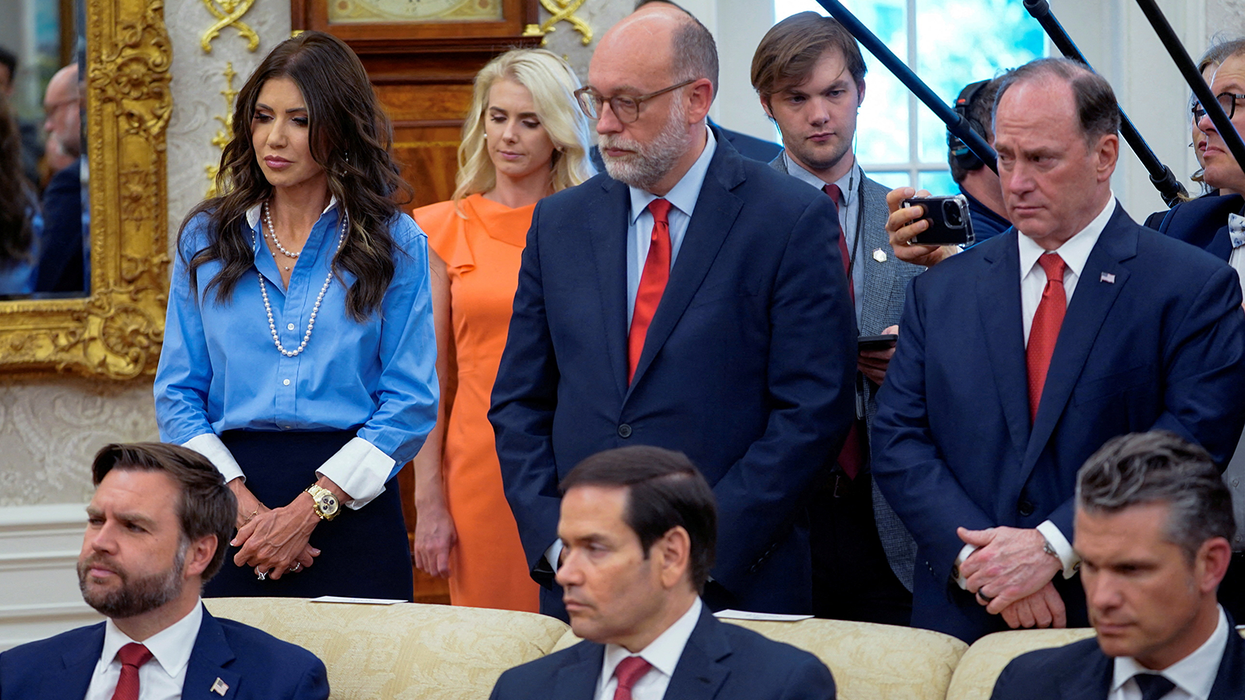
U.S. Homeland Security Secretary Kristi Noem and director of the Office of Management and Budget (OMB) Russell Vought stand, as U.S. Vice President JD Vance, U.S. Secretary of State Marco Rubio, and U.S. Defense Secretary Pete Hegseth sit in the Oval Office during a bilateral meeting between U.S. President Donald Trump and Finland's President Alexander Stubb, at the White House in Washington, D.C., U.S., October 9, 2025.
REUTERS/Nathan Howard
October 30, 2025
ALTERNET
Stephen Miller, the architect behind President Donald Trump’s notorious immigration crackdown and the administration’s targeting of non-white people for arrest and deportation, is joining a growing list of senior Trump appointees shielded in military housing.
The Atlantic reports Miller, his wife Katie Miller, and their children fled to military housing after suffering protests and catcalls from voices in their affluent Washington, D.C. neighborhood and now benefit from U.S. military protection in addition to their personal security.
“Miller … who is known for his inflammatory political rhetoric, singled out the tactics that had victimized his family — what he called ‘organized campaigns of dehumanization, vilification, posting peoples’ addresses,’” reports the Nation.
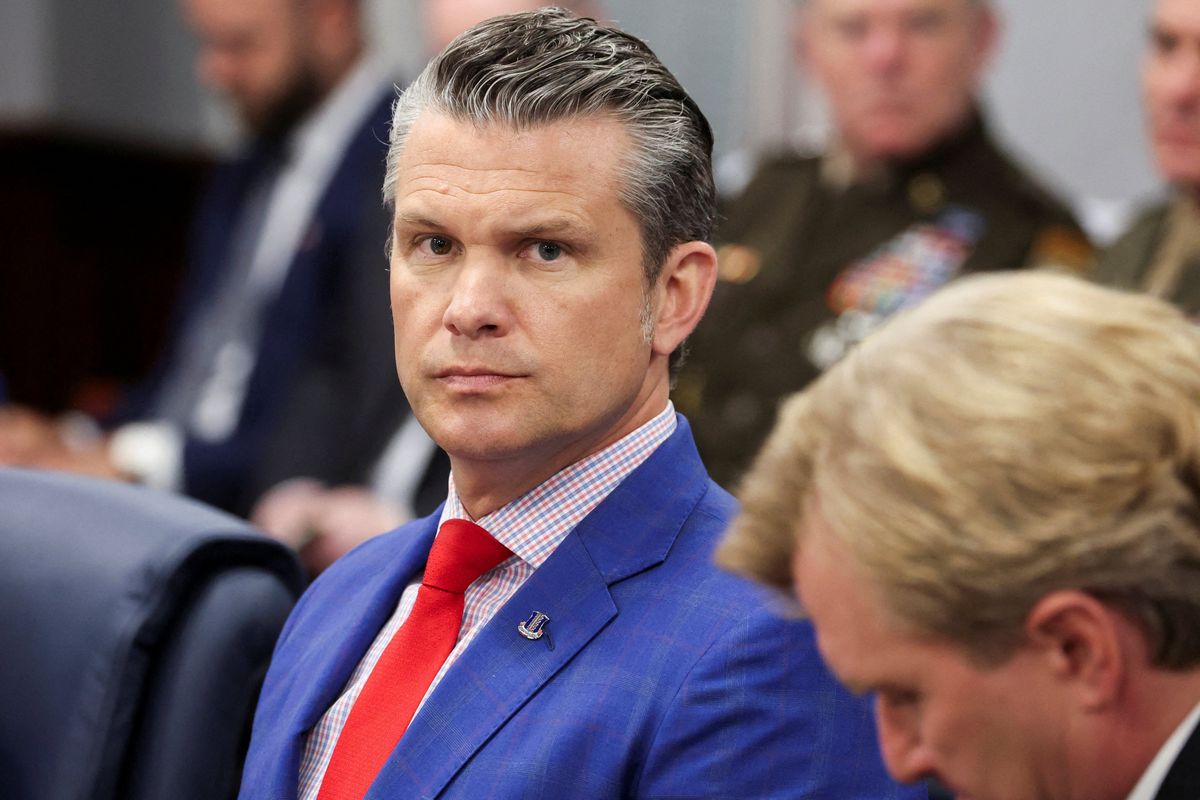
Homeland Security secretary Kristi Noem also moved out of her D.C. apartment building and into a home designated for the Coast Guard commandant on Joint Base Anacostia-Bolling after the Daily Mail described where she lived. And both Secretary of State Marco Rubio and Defense Secretary Pete Hegseth live on “Generals’ Row” at Fort McNair, an Army enclave along the Anacostia River, according to officials from the State and Defense Departments.
Another anonymous senior White House official moved to a military community after the assassination of Charlie Kirk, according to Nation writer Michael Scherer. However, so many Trump officials have made the move that they are now straining the availability of housing for the nation’s top uniformed officers.
Director of National Intelligence Tulsi Gabbard’s request to move to McNair didn’t initially work out “for space reasons,” according to officials.
There is no record of this many political appointees living on military installations, and critics tell the Nation that it appears to be “blurring … traditional boundaries between the civilian and military worlds” as Trump makes “the military a far more visible element of domestic politics, deploying National Guard forces to Washington, Los Angeles, and other cities run by Democrats.”
John Hopkins University international studies associate professor Adria Lawrence told the Nation that housing political advisers on bases sends a message that one particular political party owns the military.
“In a robust democracy, what you want is the military to be for the defense of the country as a whole and not just one party,” Lawrence said.
University of Chicago political-science professor Robert Pape told the Nation that the threat of political violence “is real for figures in both major parties,” but noted that Trump has deliberately revoked the security details for several of his critics and adversaries, including former Vice President Kamala Harris and former national security adviser John Bolton — despite Bolton having been the target of an Iranian assassination plot.
Additionally, the isolation of sequestering yourself on a military base creates deep divisions between Trump’s advisers and the metropolitan area they govern.
“Trump-administration officials, who regularly mock the nation’s capital as a crime-ridden hellscape, now find themselves in a protected bubble, even farther removed from the city’s daily rhythms,” the Nation reports. “And they are even less likely to encounter a diverse mix of voters.”
Read the Nation report at this link.
'Scared' ex-generals stay silent over fear Trump will use rare military law against them
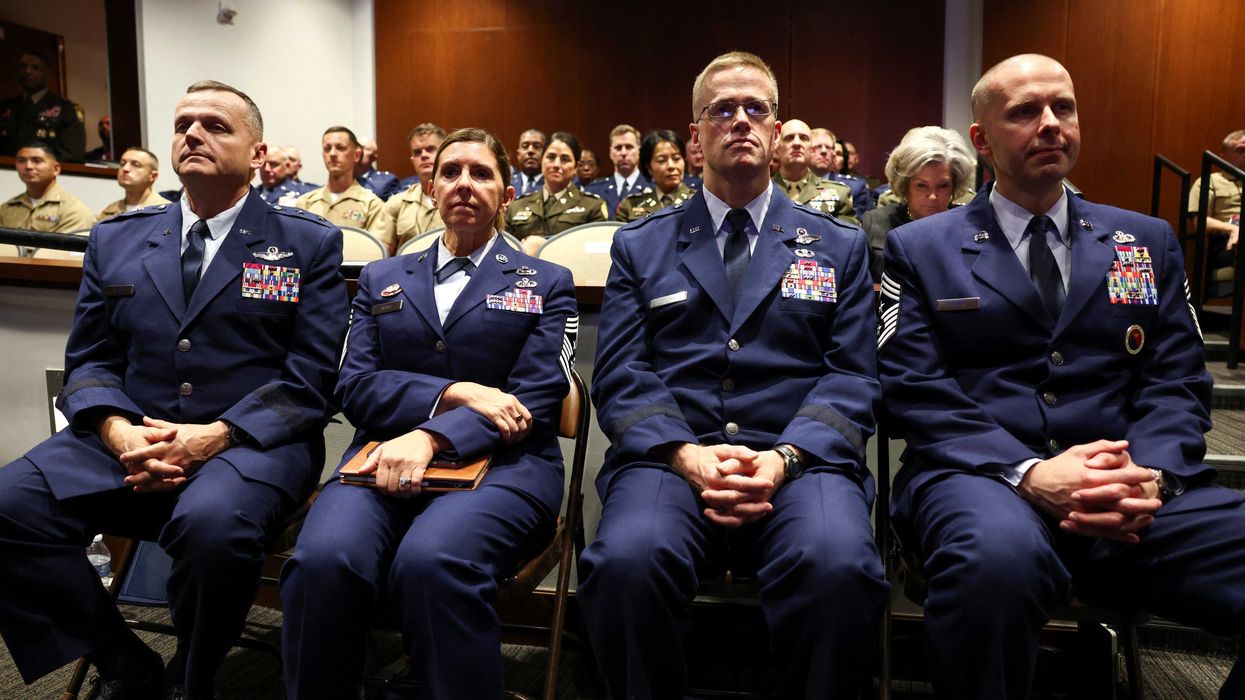
Members of the military attend a meeting convened by U.S. Defense Secretary Pete Hegseth, at Marine Corps Base Quantico, in Quantico, Virginia, U.S., September 30, 2025. REUTERS/Kevin Lamarque
November 03, 2025
ALTERNET
A military law that allows prosecution against ex-generals and retired senior military officers who speak out with "contemptuous" statements against President Donald Trump has rendered many silent, according to a report in the San Antonio Express News.
"Generals, admirals and other top commanders no longer in uniform are worried the administration might pursue criminal charges, tax investigations or other legal retribution against them," they report.
Retired military officers are worried because of Article 88, a section of the Uniform Code of Military Justice titled “Contempt Toward Officials," the newspaper reports.
Under this law, "officers can be court-martialed for speaking 'contemptuous words' about the president, vice president, defense secretary, members of Congress, the U.S. secretary of Homeland Security and the governors or legislatures of any state."
This is why many are staying silent even as they vehemently disagree with actions of the Trump administration, including the strikes on boats in the Caribbean under the guise of a war against alleged drug traffickers.
"The Trump administration is using the law as a weapon to go after its enemies, exact revenge and suppress dissent," said Frank Kendall, who was secretary of the Air Force under President Joe Biden and, according to the Express News, has been sharply critical of Trump and Defense Secretary Pete Hegseth.
Kendall noted the indictments of former FBI Director James Comey and New York Attorney General Leticia James as examples, saying, “There’s no reason to think they won’t do the same to retired generals in civil or military courts."
That same retribution has many retired members of the military on mute.
“I have worried about retribution,” one anonymous retired senior military member told the Express News. "In fact, I have even put together a sheet. If you do planning as long as I have, you sit down and you write out the pros and cons of everything.”
The anonymous military member said he and others feared they "would be recalled to active duty to face a court-martial, charged with crimes in a civilian court or subjected to a tax audit or investigation by the Internal Revenue Service," the newspaper reports.
“I don’t believe any of them, including myself, have ever done anything wrong, but that doesn’t seem to make any difference anymore. It’s not necessarily what you did or did not do. It’s the pain they can put you through. It’s the retribution that they seek," the ex-official said.
The law that could prosecute them dates back to the "Articles of War adopted by the Continental Congress in 1775 and was intended to bolster discipline and discourage insubordination," the Express News reports.
"This is very infrequently enforced but could provide a basis for dragging an officer through a trial,” said an anonymous former senior Defense Department official.
While some generals say they just choose to remain apolitical and stay out of the fray, others refuse to be silent.
“At some point in the future, we will look back on this period and review the choices we have made,” said Retired Army Brig. Gen Ty Seidule, who has publicly criticized Trump and Hegseth in op-eds, interviews and television appearances.
Seidule, a Gulf War veteran, served on the Naming Commission created by Congress in 2021 to remove the names of Confederate leaders from nine military installations across the South and bestow new monikers deemed more fitting, according to the Express News. Trump reversed those removals immediately upon taking office for his second term.
"I will not be silent,” Seidule said. “But many others fear retribution. I fear the consequences of staying silent.”
A military law that allows prosecution against ex-generals and retired senior military officers who speak out with "contemptuous" statements against President Donald Trump has rendered many silent, according to a report in the San Antonio Express News.
"Generals, admirals and other top commanders no longer in uniform are worried the administration might pursue criminal charges, tax investigations or other legal retribution against them," they report.
Retired military officers are worried because of Article 88, a section of the Uniform Code of Military Justice titled “Contempt Toward Officials," the newspaper reports.
Under this law, "officers can be court-martialed for speaking 'contemptuous words' about the president, vice president, defense secretary, members of Congress, the U.S. secretary of Homeland Security and the governors or legislatures of any state."
This is why many are staying silent even as they vehemently disagree with actions of the Trump administration, including the strikes on boats in the Caribbean under the guise of a war against alleged drug traffickers.
"The Trump administration is using the law as a weapon to go after its enemies, exact revenge and suppress dissent," said Frank Kendall, who was secretary of the Air Force under President Joe Biden and, according to the Express News, has been sharply critical of Trump and Defense Secretary Pete Hegseth.
Kendall noted the indictments of former FBI Director James Comey and New York Attorney General Leticia James as examples, saying, “There’s no reason to think they won’t do the same to retired generals in civil or military courts."
That same retribution has many retired members of the military on mute.
“I have worried about retribution,” one anonymous retired senior military member told the Express News. "In fact, I have even put together a sheet. If you do planning as long as I have, you sit down and you write out the pros and cons of everything.”
The anonymous military member said he and others feared they "would be recalled to active duty to face a court-martial, charged with crimes in a civilian court or subjected to a tax audit or investigation by the Internal Revenue Service," the newspaper reports.
“I don’t believe any of them, including myself, have ever done anything wrong, but that doesn’t seem to make any difference anymore. It’s not necessarily what you did or did not do. It’s the pain they can put you through. It’s the retribution that they seek," the ex-official said.
The law that could prosecute them dates back to the "Articles of War adopted by the Continental Congress in 1775 and was intended to bolster discipline and discourage insubordination," the Express News reports.
"This is very infrequently enforced but could provide a basis for dragging an officer through a trial,” said an anonymous former senior Defense Department official.
While some generals say they just choose to remain apolitical and stay out of the fray, others refuse to be silent.
“At some point in the future, we will look back on this period and review the choices we have made,” said Retired Army Brig. Gen Ty Seidule, who has publicly criticized Trump and Hegseth in op-eds, interviews and television appearances.
Seidule, a Gulf War veteran, served on the Naming Commission created by Congress in 2021 to remove the names of Confederate leaders from nine military installations across the South and bestow new monikers deemed more fitting, according to the Express News. Trump reversed those removals immediately upon taking office for his second term.
"I will not be silent,” Seidule said. “But many others fear retribution. I fear the consequences of staying silent.”