Saturday, November 08, 2025


Uneven progress: Urban–rural gap widens in China’s fight against cancer


China Anti-Cancer Association

Trends in age-standardized mortality rates for select cancers by gender in China, 2013–2021. 

image: 

Trends in age-standardized mortality rates for select cancers by gender in China, 2013–2021.

view more 

Credit: Cancer Biology & Medicine


New nationwide data reveal that China’s age-standardized cancer mortality rates have declined steadily between 2013 and 2021, largely due to progress in controlling stomach, liver, and esophageal cancers. Yet, the total number of cancer deaths continues to rise, projected to reach 2.4 million by 2030. Researchers found that population aging and uneven access to healthcare are driving these increases, even as mortality rates improve. Declines are most pronounced in urban regions, while rural areas lag behind. The study emphasizes that targeted screening, lifestyle interventions, and equitable healthcare expansion are critical to sustaining progress in cancer prevention and reducing mortality disparities across China.

Cancer remains the second leading cause of death in China, accounting for nearly one-quarter of all deaths nationwide. Rapid socioeconomic change, environmental exposure, and an aging population have intensified the burden of cancer across the country. Although national programs in cancer prevention and early detection have improved survival rates, regional inequalities persist. Rural residents face limited access to medical care and lower screening coverage compared to urban populations. At the same time, lifestyle-related risk factors such as smoking, alcohol use, and obesity continue to rise. Due to these challenges, a comprehensive analysis of long-term cancer mortality trends and future projections was needed to inform national prevention strategies.

A research team from the Cancer Hospital, Chinese Academy of Medical Sciences and Peking Union Medical College has published (DOI: 10.20892/j.issn.2095-3941.2025.0158)new findings in Cancer Biology & Medicine, revealing national cancer mortality trends from 2013 to 2021 and projections through 2030. Drawing on 2.37 billion person-years of data from the China Causes of Death Surveillance System, the study reports significant overall declines in cancer mortality but warns that population aging and regional disparities will continue to drive increases in absolute cancer deaths nationwide.

The researchers analyzed mortality data from 605 surveillance sites across 31 provinces, representing 24% of China’s population. Using age–period–cohort modeling, they calculated age-standardized mortality rates (ASMRs) and projected trends through 2030. Between 2013 and 2021, overall ASMRs for all cancers decreased by 2.3% annually, driven by substantial declines in esophageal (–4.8%), stomach (–4.5%), and liver cancers (–2.7%). However, mortality increased for pancreatic (+2.0%) and prostate (+3.4%) cancers. Urban areas achieved faster reductions (–3.0% per year) than rural ones (–2.0%), highlighting persistent inequalities. Decomposition analysis revealed that population aging contributed 20–50% of the increases in differentcancer deaths. By 2030, lung cancer will remain the leading cause of cancer-related death in both genders, followed by liver, colorectal, gastric, and esophageal cancers in men, and colorectal, liver, gastric, and breast cancers in women. The team estimates that 2.4 million people will die from cancer in 2030 despite continued improvements in mortality rates, underscoring the dual challenges of an aging society and unequal healthcare access.

“China has made remarkable strides in reducing cancer mortality through nationwide screening and risk-control programs,” said corresponding author Dr. Xiaoqiu Dai from the National Cancer Center. “However, the demographic shift toward an older population means that absolute cancer deaths will continue to rise. We need to focus on early detection and equitable access to cancer care, especially in rural regions. Integrating prevention and control measures into broader public health and aging policies will be essential to sustaining progress and narrowing the urban–rural divide.”

The study provides a crucial evidence base for policy decisions aimed at reducing China’s future cancer burden. Strengthening early screening in rural areas, promoting HPV and HBV vaccination, and encouraging healthier lifestyles could significantly reduce mortality in high-risk populations. Moreover, expanding cancer control into rural revitalization strategies can ensure that prevention and treatment reach underserved areas. The researchers suggest that coordinated national efforts to address environmental, behavioral, and demographic factors could not only lower cancer mortality but also serve as a model for other developing countries facing similar aging-related health transitions.

###

References

DOI

10.20892/j.issn.2095-3941.2025.0158

Original Source URL

https://doi.org/10.20892/j.issn.2095-3941.2025.0158

Funding Information

This study was supported by the CAMS Innovation Fund for Medical Sciences (Grant No. 2021-I2M-1-011) and the Capital’s Funds for Health Improvement and Research (Grant No. CFH2024-2G-40214).

About Cancer Biology & Medicine

Cancer Biology & Medicine (CBM) is a peer-reviewed open-access journal sponsored by China Anti-cancer Association (CACA) and Tianjin Medical University Cancer Institute & Hospital. The journal monthly provides innovative and significant information on biological basis of cancer, cancer microenvironment, translational cancer research, and all aspects of clinical cancer research. The journal also publishes significant perspectives on indigenous cancer types in China. The journal is indexed in SCOPUS, MEDLINE and SCI (IF 8.4, 5-year IF 6.7), with all full texts freely visible to clinicians and researchers all over the world (http://www.ncbi.nlm.nih.gov/pmc/journals/2000/).


New AI method boosts microplastic classification


Hefei Institutes of Physical Science, Chinese Academy of Sciences

New AI Method Boosts Microplastic Classification 

image: 

Hybrid microplastic recognition method combining attention mechanism and dual-branch convolutional neural network

view more 

Credit: TONG Jingjing


Recently, a research team from the Hefei Institutes of Physical Science of the Chinese Academy of Sciences, has developed a new deep learning method that improves the classification accuracy of mixed microplastics in infrared spectroscopy to 98%.

Their findings were recently published in Microchemical Journal.

Microplastics are plastic fragments smaller than 5 mm with different shapes. They are one of the four major emerging pollutants gaining global attention. Because of their tiny size, microplastics are more harmful than larger plastics. In practice, they often appear in mixtures, and the mixing ratios change spectral signals, making them difficult to analyze. Traditional machine learning methods capture only limited spectral features, which reduces the accuracy of microplastic identification.

In this study, researchers apply the highly efficient attention mechanism (CBAM) to a two-branch convolutional neural network. The two branches concatenate the outputs of the CBAM attention module to extract more spectral features, thereby optimizing the model's classification performance and achieving a classification accuracy of up to 98%, outperforming traditional algorithms.

The CBAM module first uses a channel attention module to identify key channels. It then utilizes a spatial attention module to locate important spatial regions within each channel. Finally, it generates an attention map and multiplies it element-wise with the input feature map to refine the features.

“Visualizing convolutional neural networks through Grad-CAM more clearly shows the important features selected by the model in characterizing microplastics,” said TONG Jingjing, a member of the team. 


First detection of zoonotic Rickettsia Species in dog ticks from Malawi reveals potential public health risk


Shanghai Jiao Tong University Journal Center


An international research team has reported the first molecular detection of Rickettsia bacteria in ticks collected from domestic dogs in Malawi, addressing a significant knowledge gap in understanding tick-borne disease risks in southeastern Africa.

The study, conducted by scientists from Hokkaido University in Japan and Lilongwe University of Agriculture and Natural Resources in Malawi, identified three species of Rickettsia—bacteria that can cause human diseases—in ticks commonly found on dogs throughout the country.

Filling a research gap

While neighboring countries like Tanzania, Mozambique, and Kenya have reported human cases of spotted fever rickettsioses, no previous study had investigated the occurrence of these pathogens in Malawi. This absence of data has made it difficult to assess the risk of rickettsial diseases in the country.

Research methodology

The researchers screened 209 blood samples from dogs and 259 tick specimens collected from four districts across Malawi between 2019 and 2020. The study combined field surveys, molecular diagnostics, and phylogenetic analysis. DNA sequencing techniques were used to detect the bacteria and to understand their genetic relationships and evolutionary history.

While no Rickettsia DNA was found in dog blood samples, the analysis revealed infection rates of 2.5% in Rhipicephalus linnaei ticks and 6.3% in Haemaphysalis elliptica ticks.

Three bacterial species identified

The study identified three distinct Rickettsia species:

  • Rickettsia conorii subspecies conorii — the causative agent of Mediterranean spotted fever, which can cause serious illness in humans
  • Rickettsia massiliae — known to cause mild to moderate spotted fever
  • Rickettsia rhipicephali — a species with uncertain pathogenicity in humans

This marks the first detection of R. massiliae and R. rhipicephali in southern Africa, expanding the known geographical distribution of these tick-borne pathogens.

Dogs and public health

The findings are particularly relevant given the close relationship between dogs and humans in Malawi. In many households, dogs serve as working animals for security and pest control, often sharing living spaces with their owners.

Dogs can serve as sentinel animals for detecting pathogens that may affect human health, as their tick exposure patterns often reflect those of humans in the same environment.

The study found that most infected ticks were collected during the rainy season (December to March), when tick populations are highest. Dogs from urban areas showed higher tick infestation rates compared to rural dogs, possibly due to differences in animal management practices and environmental conditions.

A One Health approach

The research employed a "One Health" framework, which recognizes the interconnection between human, animal, and environmental health. This integrated approach is useful for understanding zoonotic diseases—those that can be transmitted between animals and humans.

The findings suggest that dog-associated ticks may play a role in maintaining and transmitting rickettsial pathogens with zoonotic potential, creating a possible route for disease transmission to humans. 

Conclusion

This study provides the first molecular evidence of zoonotic Rickettsia spp. in ticks collected from dogs in Malawi. The findings underscore the potential for dog-associated ticks to maintain and transmit tick-borne pathogens. An integrated surveillance approach targeting vectors, animals, and humans is critical for understanding the epidemiology of rickettsial infections in Malawi.

About the research

The study was supported in part by the Japan Society for the Promotion of Science (JSPS) KAKENHI (grant numbers JP23K23770, JP24KK0133, and JP25K02166); the Japan Agency for Medical Research and Developmen (AMED) (grant numbers JP18jm0510001 and JP23wm0225034); JST SPRING (grant number JPMJSP2119).

'Con job!' Trump snaps at reporter over fact check on his big Thanksgiving claim

David Edwards
November 7, 2025 
RAW STORY


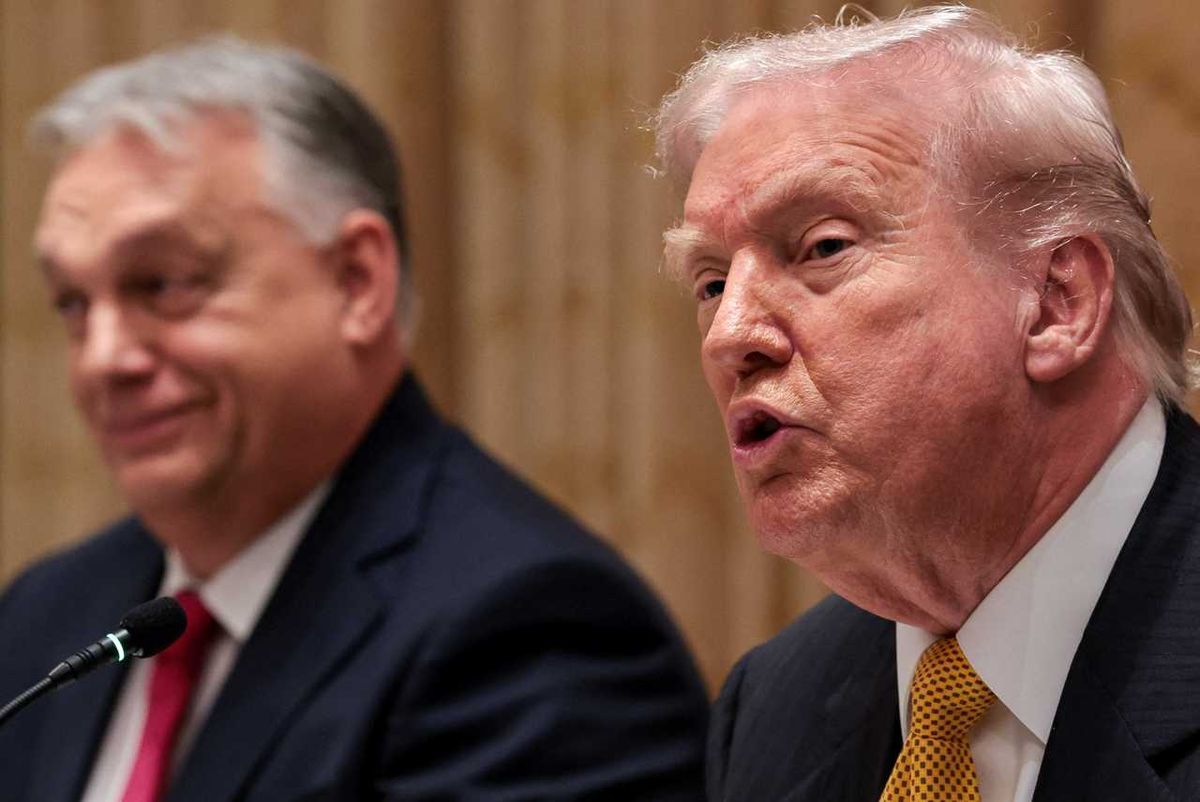
U.S. President Donald Trump hosts a bilateral lunch with Hungary's Prime Minister Viktor Orban at the White House in Washington, D.C., U.S., November 7, 2025. REUTERS/Jonathan Ernst

President Donald Trump lashed out at an NBC reporter after she fact-checked him on the affordability of grocery prices.

During a White House meeting with Hungarian Prime Minister Viktor Orbán on Friday, Trump touted Walmart's Thanksgiving meal promotion, which the company said was cheaper than in 2024. Fact checkers, however, pointed out that the promotional meal contained fewer items, used generic brands, and featured a smaller turkey.

"Mr. President, since you brought up the Walmart Thanksgiving meal, and it is cheaper, but it also contains less," the reporter noted.

"Well, I haven't heard that, you're telling me," Trump shot back. "Who are you with?"

"I'm with NBC News, sir," the reporter replied.

"Fake news!" Trump bellowed. "NBC, you're fake news! NBC's gone down the tubes along with most of the rest of them."

"Why do you think there's such a disconnect between the economy that you're describing today and the way many Americans say that people in and are concerned about our country right now?" the reporter pressed.

"Other than the shutdown, obviously, which is caused by the Democrats, could be ended by the Democrats in two minutes," Trump insisted. "They feel much better. We have more jobs."

"So I just heard this yesterday that Walmart said that the Thanksgiving was 25 more expensive, 25% more expensive under Biden," he continued. "That's a big, to me, that's a big number, because Walmart's respected. I mean, Walmart is Walmart, and, you know, they're giving you prices."


"So that would mean that the whole series of pricing and costs, you know, the groceries and everything else, it was a con job. It was a con job, affordability, they call it, was a con job by the Democrats. The Democrats are good at a few things, cheating in elections and conning people with facts that aren't true."

Trump repeated the claim that the Thanksgiving meal cost was down 25%.

"Walmart just announced it!" he exclaimed. "Two days ago, 25% cheaper! This year will be cheaper to have Thanksgiving than it was a year ago under Sleepy Joe Biden!"


Trump under pressure to ditch nuclear plans as Putin preps for possible tests

Brett Wilkins,
 Common Dreams
November 5, 2025 


Vladimir Putin, Donald Trump (Photo via Reuters)

More than a dozen US senators on Wednesday urged President Donald Trump to abort plans for a resumption of nuclear weapons testing, a call that came as Russian President Vladimir Putin directed his senior officials to draft proposals for possible new nuke tests in response.

“We write to you today to express grave reservation about any action to resume nuclear weapons testing,” 14 Democratic senators led by Sens. Jacky Rosen (D-Nev.) and Martin Heinrich (D-NM), ranking member of the Senate Select Committee on Intelligence, said in a letter to Trump.

“We request that you personally provide clarification,” the lawmakers added. “The decision to resume nuclear weapons testing would be geopolitically dangerous, fiscally irresponsible, and simply unnecessary to ensure the ability of the United States to defend itself.”

Sen. Ed Markey (D-Mass.)—who signed the letter—also introduced emergency legislation last week aimed at preventing Trump from resuming nuclear weapons tests.

Although no country is known to have tested a nuclear weapon since North Korea last did so in 2017, Trump last month ordered the Pentagon to prepare for a resumption of reciprocal testing.

“The United States has more Nuclear Weapons than any other country,” Trump falsely wrote on social media. “Because of other countries testing programs, I have instructed the Department of War to start testing our Nuclear Weapons on an equal basis.”

TASS reported Wednesday that Putin instructed the Russian Foreign Ministry, Defense Ministry, intelligence agencies, and civilian bureaus to submit proposals “on the possibility of preparing for nuclear weapons tests” in the event that other countries resume testing.

Russia has not tested a nuclear weapon in its modern history. The former Soviet Union’s final nuclear test took place in 1990 and the successor Russian state has adhered to a moratorium ever since.

Last week, Congresswoman Dina Titus (D-Nev.) introduced a bill to prohibit new US nuclear weapons testing. Titus accused Trump of putting “his own ego and authoritarian ambitions above the health and safety of Nevadans.

”Supporting Titus’ bill, Tara Drozdenko, director of the Global Security Program at the Union of Concerned Scientists, said in a statement Wednesday that “there is no good reason for the United States to resume explosive nuclear testing and it would actually make everyone in this country less safe.”

“We have so much to lose and so little to gain from resuming testing,” she continued. “New explosive testing by the United States would be to make a political statement, with major consequences: It would shatter the global freeze on nuclear testing observed by all but North Korea and give Russia, China, and other nuclear powers the green light to restart their own nuclear testing programs.”

“The United States has not conducted a nuclear detonation test since 1992,” Drozdenko noted. “Even those advocating for testing acknowledge there is no scientific need to test to maintain the US nuclear arsenal. In fact, Energy Secretary Chris Wright recently said that the updated systems can be tested without conducting full nuclear detonations.”

“To limit new weapons development in China or Russia, one of the best things the US can do is maintain the taboo on testing and ratify the Comprehensive Test Ban Treaty,” she added. “This treaty with on-site verification measures would be the best way to ensure that countries are not clandestinely testing nuclear weapons.”

The United States and Soviet Union came dangerously close to nuclear war on multiple occasions during the Cold War, most notably amid the 1962 Cuban Missile Crisis and, later, during then-President Ronald Reagan’s first administration in the early 1980s.

Weeks after becoming the first country to develop nuclear weapons in 1945, the United States waged the world’s only nuclear war, dropping atomic bombs on the defenseless Japanese cities of Hiroshima and Nagasaki and killing hundreds of thousands of people, mostly civilians.

According to the International Campaign for the Abolition of Nuclear Weapons, Russia leads the world with 5,449 nuclear warheads in its arsenal, followed by the US with 5,277 warheads, China with around 600, France with 290, and the United Kingdom with 225. Four other nations—India, Pakistan, Israel, and North Korea—also have nuclear arsenals of between 50-180 warheads each.