Monday, November 24, 2025


‘The socialism of freedom’


©Shutterstock

It’s not often that a speech at a regional party conference has an afterlife of any sort, much less that its butterfly wing effect is still being felt almost forty years later. Yet Neil Kinnock’s 1987 speech to the Welsh Labour Party conference, for that is the speech in question, fits the bill perfectly.

It is remembered – mostly by politics obsessives, granted – for being plagiarised by Joe Biden a few months later in his first tilt at the US presidency. For people who might consider themselves LabourList readers, the copied rhetorical flourish in question – “Why am I the first Kinnock in a thousand generations to be able to get to university?” – only needs to be uttered, for us to mentally hear the perfect cadence answer – “It was because there was no platform upon which they could stand.” Biden claimed it as his own and his 1988 campaign was sunk. And yet, we see the butterfly wings.

The implicit underpinnings of the call and response in the quote, however, are usually less considered. The reason for that, I think, is that they call into question one of the key foundations of the Labour Party; that it resolutely refused to choose which version of socialism it wanted to pursue. 

READ MORE: Neil Kinnock on his ‘impossible promises’ conference speech, 40 years on

Did it want a co-operative future of working class self-help, all Mechanics’ Institutes, Friendly Societies and mutuals? Did it want a programme of state ownership of key industries? Would it look to the party structure for influence in power or would it look to the electorate first? Did it really owe more to Methodism than Marx? The answer the party chose was emblematic of the compromises that have defined it ever since – essentially the party was like a diner at a restaurant who saw the menu and couldn’t make up their mind: “We’ll try a little bit of everything please”.

And yet Kinnock’s speech didn’t even try to acknowledge that patchwork quilt of socialisms. It resolutely and passionately made the case for just one – the socialism of freedom. A socialism of emancipation, explicitly for the working class and those born without the life chances of those at the top of society. It was the sort of socialism that inspired me as a teenager, and continues to inspire me as I see my fiftieth birthday on horizon.

I know I’m not alone in that.

RH Tawney’s metaphor that “freedom for the pike is death for the minnows” is as true today as it was when he wrote it in 1931.  And just a month ago, Bridget Phillipson described Roy Hattersley’s book “Choose Freedom: The Future for Democratic Socialism” (also from 1987, as it happens) as “a brilliant articulation from someone who’s seen as being on Labour’s traditional right of how to recapture the politics of freedom for the left.”

This is the perspective that drove me to become an MP in the first place. But there was anger that went with that perspective – anger at how people from my background still weren’t always free to fully reach our potential, often weren’t able to break free from the structural impediments of our upbringings, could rarely find a way to free ourselves from the impositions of a society that teaches us to know our place. 

And crucially, it was anger at a Tory government of Old Etonians, Wykehamists, Whatevers, that pulled up the ladders of opportunity, and demolished the building blocks that helped us curate our lives. It was anger at Jenrick and Pickles and Gove and Osborne and all the rest. At how they’d taken money from our communities to such an extent that my old childhood library now lies demolished, the local youth centre gone and Sure Start in tatters. It was anger at the nightly COVID TV press conferences at which second-rate politicians made life-changing decisions seemingly on a whim, while whole swathes of the country were shut out of the conversations being had about them.

It was, fundamentally, anger that a government could so carelessly and callously dismantle the platforms on which we’d stood.

And so to today. On the most difficult terrain for the country in many decades, our Labour government is doing great work. The Pride in Place programme, the modern industrial strategy, the changes to the Treasury Green Book, the focus on technical and vocational training, the commitment to grow the economy in our regions across the country rather than merely rely on the south east and London – these are all hugely positive changes.

They all have one thing in common, too – whether consciously or not, they all have the effect of increasing freedom for those who need it most; they are all interventions that slowly, painstakingly, rebuild those platforms Lord Kinnock mentioned. This, for me, points the way to the one question government ministers should be asking of themselves when considering future policy – “Does this increase freedom for those who need it most?”

In a world where headwinds come thick and fast, the strongest signpost to be guided by is this socialism of freedom. We could do a lot worse than that as an overriding principle for the government I’m incredibly proud to support. 

Maybe Kinnock’s speech to the Welsh Labour Party might even develop an unexpected second flap of its butterfly wings in its influence on where the party goes next.

 UK

The Labour Left Podcast Interview: Bell Ribeiro-Addy MP

In the latest edition of the Labour Left Podcast Bryn Griffiths of Labour Hub talks to Bell Ribeiro-Addy of the Socialist Campaign Group about fighting racism within Parliament.

Bell entered Parliament in 2019 as the Corbyn period drew to a close within the Labour Party.  She entered the Parliamentary Labour Party alongside numerous other new excellent socialists such as Nadia Whittome, Apsana Begum, Kim Johnson and Ian Byrne.

Before becoming an MP in her own right, she was the Chief of Staff to Diane Abbott, Britain’s first Black MP and the Mother of the House.  She cut her political teeth as the Black Student’s Officer of the National Union of Students (NUS) fighting racism and seeking to implement the NUS policy of no platform for fascists. 

What marks Bell out is that she was part of a parliamentary socialist intake as the Corbyn leadership period drew to a close.  She entered the Parliamentary Labour Party as a socialist with a clear commitment to joining the Socialist Campaign Group and a personal identification with the fight for Black representation led by the Labour Party Black Sections in the 1980s.  In the podcast we hear about how Bell used her Maiden Speech within Parliament to say: “Let’s address the historic injustices of the British Empire.” 

On 5th September 2025, when Angela Rayner resigned, she became the left’s candidate for the Deputy Leadership of the Labour Party. When Rayner stood down, both Momentum and the Campaign for Labour Party Democracy (CLPD) were keen that the socialist wing of the party stood a candidate, so both organisations were delighted when the Campaign Group announced Bell Ribeiro Addy as our candidate. 

In a previous Labour Left Podcast John McDonnell MP described the Deputy Leadership contest as a “stitch-up” and one of the features of that “stitch-up” was a procedure where the MPs had only three days to consider who would appear on the ballot that Labour members were to receive.  Given that Bell had only three days to campaign it was a considerable achievement that she began to set the agenda on issues such as why we should not seek to ‘out-Reform Reform’, Gaza, welfare policy and the need to reintroduce democracy back into the Labour Party.  Given the resonance Bell’s ideas received in those three short days, it is very clear why the right-wing of the Parliamentary Labour Party were so determined to ensure that Labour members did not get a real political choice.

After the short campaign, both the CLPD and Momentum were full of praise for the agenda-setting impact made by Bell.  Both organisations are keen to help to raise her profile and this episode of the Labour Left Podcast is Labour Hub’s contribution to that task.  Please share Bell’s compelling interview so we can continue to raise her profile.  During the course of the interview Bell says she is very happy to speak at Constituency Labour Party events so please consider whether she could be invited as a guest speaker to your local party.  You can invite her by mailing  bell.ribeiroaddy.mp@parliament.uk 

I hope you enjoy Bell’s compelling story.

If you’re new to the Labour Left Podcast, please take a good look at our back catalogue as nearly all the episodes were designed to be timeless contributions to debates on the left. 

The last episode was with author Mark Perryman where we discussed his book The Starmer Symptom; previous episodes have included John McDonnell MP of the Socialist Campaign Group where we explored the ideas behind his decades of Labour Left activity;  socialist feminist Lynne Segal of Beyond the Fragments looked back at her hugely impressive history of activisma recent episode interviewed Bell’s comrade Richard Burgon of the Socialist Campaign Group; previous episodes have looked at the fight for a United Ireland with historian Geoff Bell; a conversation with Compass’s Neal Lawson; Rachel Shabi talking about her book The Truth About Antisemitism;  Bernard Regan of the Palestinian Solidarity Campaign;  Prof Harvey J Kaye on the legacy of the Communist Historians; Prof Corinne Fowler, talking about her book Our Island Stories: Country Walks Through Colonial Britain; Andrew Fisher telling the story behind For the Many Not the Few, Labour’s 2017 manifesto; Jeremy Gilbert, a Prof of Cultural and Political Theory, a champion of Gramsci, talking about Thatcherism; episodes with Mish Rahman, Rachel Godfrey Wood and Hilary Schan on the contemporary Labour Left; Mike Phipps, author of Don’t Stop Thinking About Tomorrow, taking a long-term look at the Labour Left;  Mike Jackson, co-founder of Lesbians and Gays Support the Miners, on the Great 1984-85 Miners’ Strike; political activist Liz Davies telling her story as the dissenter within Blair’s New Labour; Rachel Garnham, a current co-Chair of the Campaign for Labour Party Democracy looking back at the history of the fight for democracy in the British Labour Party; and finally myself telling the story of Brighton Labour Briefing, a local Bennite magazine in the 1980s.

You can watch the podcast on YouTube, Apple Podcasts here, Audible here, Substack here and listen to it on Spotify here.  You can even ask Alexa to play the Labour Left Podcast. If your favourite podcast site isn’t listed, just search for the Labour Left Podcast

Bryn Griffiths is an activist in Colchester Labour Party and North Essex World Transformed. He is the Vice-Chair of Momentum and sits on the Campaign for Labour Party Democracy’s Executive. 

Bryn hosts Labour Hub’s spin off – the Labour Left Podcast.  You can find all the episodes of the podcast here  or if you prefer audio platforms (for example Amazon, Audible, Spotify, Apple etc,) go to your favourite podcast provider and just search for the Labour Left Podcast.


European rearmament and the drive to war

Carol Turner reviews this Saturday’s CND Conference.

Labour Home Secretary Shabana Mahmood has announced what she says are “the most sweeping asylum reforms in modern times.” Modelled on Danish legislation that is widely regarded as the most oppressive in Europe, her long list of measures includes lengthening the time before which leave to remain can be granted from 5 to 20 years, and making deporting undocumented migrants easier.

Driven by the Blue Labour faction Mahmood belongs to, these draconian measures have been received with delight by Reform and the Tories who immediately and predictably demanded more. With typical showmanship, Nigel Farage responded by inviting the Labour Secretary of State to join Reform!

Mahmood’s response to the clamour created by Reform and the Tories will further divide an already divided party. This is a poisoned chalice for Labour, and not just among its MPs, as the Labour Hub report well documents. It has already drawn protests across the party, from NGOs, and even our predominantly compliant media.

But why should a discussion about rearmament and war begin with asylum laws?

War as a driver of immigration

It is widely acknowledged that the main factors behind population flows are the desire to escape conflict, the adverse effects of climate change and the need to avoid persecution and human rights violations. The UN reports the global total of migrants in 2024 was 304 million.

Behind all these issues is the growing gap between rich and poor, relentlessly driving up migration.  Today, more people than ever before live in a country other than the one in which they were born. Growing efforts by governments of the global north to close their borders to migrants create further hardship for them, without resolving these long-term population flows.

The military bootprint is stamped as deeply on climate change as it is on war. Many reports from Scientists for Global Responsibility (SGR) attest to the details. SGR Director Stuart Parkinson will address this at CND’s Conference this Saturday. Sabby Dhalu, Co-convenor of Stand up to Racism, joins Jeremy Corbyn and others in the opening session of Stop Nuclear Expansion: How to Reverse the War Drive which takes place in person in London.

Europe’s drift to war

Few would dispute that 2005 has been dominated by preparations for war. Under pressure from President Donald Trump, Europe is preparing to take on a greater share of the military burden and financial cost of the continent’s security. The Council of Europe is encouraging military integration, promoting Europe-wide procurement, and offering loans for increased military spending.

In Britain, the government increasingly talks about ‘war readiness’. Not only has that meant increasing military spending – from the current 2.2%, to 2.7% in 2027, including more spending on security services, with hints of an increase to 5% by 2035. War readiness has also included expanding the UK’s nuclear capability.

Starmer has not only accepted the return of US nuclear bombs to Britain, but also purchased US nuclear-capable fighter jets which will form part of NATO’s European nuclear-sharing arrangements. All this has taken place without debate or vote in Parliament. With Trump in the White House, the drift to war is starting to look like a stampede.

These developments are beginning to be met by anti-war coalitions coming together, such as Stop ReArm Europe. In Britain, a new generation of peace campaigners is taking to the streets and protesting at military bases seeking to change the public dialogue.

A  new nuclear arms race

European preparations for war are replicated across the globe. The Stockholm International Peace Research Institute’s 2025 handbook warns a new arms race is opening up, the risks from which are likely to be “more diverse and more serious.”

SIPRI  reports global security continues to deteriorate, in particular:

  • global military spending was up for the tenth successive year, exceeding $2.7 trillion (that’s $2,700,000,000,0000) in 2024
  • “new uncertainties arose” as a result of President Trump’s election, and
  • major armed conflicts in Ethiopia, Myanmar, and Sudan, as well the Russia-Ukraine war and Israel’s continued slaughter in Gaza.

CND Conference workshops will drill down into some of these details — including a briefing on Britain’s nuclear expansion and an activist-led discussion about shutting down nuclear bases. Themes include European rearmament, the Ukraine war, the defence jobs myth, militarism in education, the rise of the far right, and a climate breakdown workshop with CND’s newly elected Vice Chair Murad Qureshi,

Changing the conversation

CND wants to change the national conversation. We urgently need to push back against  rearmament and military spending, to spread beyond the peace and anti-war movements, and the more progressive and far sighted sections of the labour movement into wider sections of British society.

Our conference is looking at solutions too — building opposition to war and nuclear expansion on the streets, in the unions, and across the universities. Join us and help change the dialogue: register now at https://tinyurl.com/CNDStopWarDrive.

Carol Turner is a CND vice-chair and convener of its International Advisory Group. She is a long-time peace and anti-war campaigner, and author of Corbyn and Trident: Labour’s Continuing Controversy and Walter Wolfgang: A Political Life.

Image: CND badge https://commons.wikimedia.org/wiki/File:CND_badge,_1960s.jpg Author: Gerald Holtom, photographed by BirchallDanny, made available under the Creative Commons CC0 1.0 Universal Public Domain Dedication.


Britain 2032. A dystopian state of the nation

NOVEMBER 23, 2025

Ian Hodson looks into the future and makes an assessment of what three years under Reform rule might look like.

Foreword: A Nation Rebuilt on Fear

When Reform UK swept to power in the 2029 election, taking nearly every English constituency and unexpected gains in Wales and Scotland, supporters declared a new era of pride, sovereignty, and national rebirth.

But by 2032, what emerged was not renewal.

It was a country hollowed out by authoritarianism, exclusion, and forced conformity.

This assessment details what Britain became.

1. THE GREAT PURGE OF CITIZENSHIP

1.1 The Three-Generation Rule

The British Heritage and Security Act 2030 required proof of three generations of British lineage for full citizenship.

Thousands who had lived here their entire lives teachers, nurses, delivery drivers, parents, children, were reclassified as:

  • Provisional Residents,

  • Non-British Dependents, or

  • Foreign-Aligned Persons.

1.2 Evictions and Exclusion

Those unable to meet the standard were:

  • evicted from public housing

  • removed from NHS patient lists

  • barred from state education

  • denied passports

  • stripped of voting rights

The government’s justification:

“National resources must serve real British families.”

1.3 Segregated Access Zones

Non-white residents were redirected to Alternative Community Access Zones for basic services.

These were segregation centres in all but name.

Complaints were labelled anti-British agitation.

2. THE MEDIA TAKEOVER

2.1 The Fall of the BBC

In 2031, the BBC was dismantled and sold.

GB News Media Group gained control of the national broadcaster.

2.2 The Free Speech Ethics Code

All media were ordered to follow a strict content code banning:

  • “woke messaging”

  • “identity propaganda”

  • critical journalism

  • satire

  • reporting that could “undermine national unity”

Investigative journalism disappeared.

Local radio died.

National news became state-scripted.

3. EXIT FROM THE ECHR: THE END OF RIGHTS

Leaving the European Court of Human Rights removed the last external safeguard.

3.1 The Work Sovereignty Act

This law abolished:

  • the minimum wage

  • health and safety laws

  • unfair dismissal

  • employment tribunals

  • discrimination protections

  • whistleblower safeguards

Employers were told workers were now “free to compete.”

Wages collapsed.

3.2 No Regulators Left

HSE, ACAS, and the EHRC were defunded or dissolved.

There was nowhere to appeal.

4. UNIONS OUTLAWED

4.1 Leaders Arrested

Union general secretaries, regional organisers, and reps were arrested on charges of

  • “economic sabotage,”

  • “domestic extremism” and

  • “obstructing national productivity.”

4.2 Membership Criminalised

Union membership became an offence punishable by detention,

Union assets were seized.

Collective bargaining died overnight.

5. THE END OF UNEMPLOYMENT – AND OF DECENT WORK

5.1 Forced Workfare

The British Work Contribution Scheme required all adults to work at least 30 hours.

Refusal meant:

  • loss of benefits

  • relocation to Work Preparation Centres

  • or loss of residency rights

5.2 Pensioners Drafted

Under the Elder Contribution Act, pensioners were forced into

  • agricultural labour

  • care work

  • neighbourhood “Civic Patrols”

Those who refused lost all top-up benefits.

6. TRANSITIONAL RESIDENCY CAMPS

6.1 New Internment Sites

Across the UK, fenced compounds called Transitional Residency Centres (TRCs) housed

  • those with revoked citizenship

  • families awaiting lineage checks

  • “heritage-incomplete” communities

6.2 No Oversight

The centres were

  • privately run

  • heavily monitored

  • legally inaccessible

  • shielded from media scrutiny

No statistics were published.

7. FOREIGN POLICY COLLAPSE

7.1 Ukraine Abandoned

Reform ended support for Ukraine and demanded repayment.

International trust evaporated.

7.2 The New Axis

Britain aligned with far-right governments across Europe and US isolationist factions.

It became known as “Europe’s rogue democracy.”

8. A NATION OF WORKERS COMPETING TO SURVIVE

8.1 Wage Auctions

Gig platforms allowed workers to bid downwards for shifts.

£2–£3/hour became normal.

8.2 Collapse of Public Services

Health services prioritised “work-ready” patients.

Education became indoctrination:

  • British Heritage Academies

  • Patriot Technical Colleges

  • censored curricula

  • monitored teachers

9. THE NATIONAL ATMOSPHERE IN 2032

Britain felt:

  • watched

  • divided

  • fearful

  • impoverished

  • exhausted

Neighbour reported neighbour.

Propaganda filled screens.

Food queues lengthened.

Public speech shrank into whispers.

Britain survived, but it no longer lived.

10. THE VANISHING OF DISABLED PEOPLE

Disabled people didn’t become invisible.

They were made invisible.

10.1 The Reassessment for National Fairness Act

Disability benefits were abolished.

Assessment was outsourced.

Most claimants were declared “fit” in minutes.

Support ended immediately.

10.2 Mass Institutionalisation

Those unable to work were taken to:

  • Residential Work Centres

  • Community Independence Hubs

  • Secure Assisted Living Facilities

Families often lost all contact.

10.3 Removal From Public Life

Accessibility laws vanished

  • disabled parking bays removed

  • assisted travel abolished

  • mobility grants scrapped

  • wheelchair access no longer required

Disabled people vanished from public spaces.

10.4 Hospital Exclusion

Hospitals prioritised those “most able to return to the workforce.”

Those with complex needs were diverted to institutions.

10.5 Behavioural Conduct Orders

People with learning disabilities, autism, or behavioural differences faced criminal penalties for,

  • “non-compliance with independence targets”

  • “public disruption”

  • “dependency behaviours”

Many disappeared into Secure Stability Units.

10.6 Media Erasure

Disability disappeared from screens, storylines, and public appeals.

10.7 The Unpublished Statistics

Independent estimates suggested:

  • tens of thousands institutionalised

  • thousands dead

  • vast numbers unaccounted for

The state stopped counting.

11. TESTIMONIALS FROM A BROKEN BRITAIN

Personal Stories Collected from Survivors, Witnesses, and Families

11.1 Amina — The Nurse Who Lost Her Citizenship

Amina, born in Birmingham, worked 18 years as an NHS nurse.

Her grandparents were Kenyan; she couldn’t produce their documents.

Her citizenship was revoked.

Her NHS ID stopped working.

Her children were removed from school.

She now queues in an Alternative Access Zone.

She still keeps her NHS lanyard in her handbag.

She says she can’t throw it away: “it’s the last proof I belonged.”

11.2 Peter — The Disabled Man Who Disappeared

After a four-minute reassessment, Peter lost his benefits and care support.

Officials arrived with a “Streamlined Support Pathway” order.

He texted his sister once,

“They’re taking us to a centre. Keep fighting.”

She never heard from him again.

The centre denies he was ever there.

11.3 Margaret and Bill — Pensioners in the Fields

In their seventies, they were forced into agricultural work.

Bill collapsed on the first day.

The supervisor shouted,

“If you can’t hack it, you shouldn’t get benefits.”

They now sort onions twelve hours a day.

Margaret says the worst part is hearing her husband apologise for “letting the country down.”

11.4 Olivia — The Teacher Watched by Cameras

Olivia’s pupils asked why children from “heritage-incomplete” families were removed.

She told them it was unfair.

A parent reported her for undermining unity.

She was suspended and placed on a “Behavioural Excellence” course.

She still teaches.

She refuses to give up.

11.5 The Fennings — A Family in the Camps

Unable to prove three generations, the Fennings were taken to a Transitional Residency Centre at dawn.

Inside were bunkbeds, floodlights, and ration queues.

Jacob, aged 9, asked,

“Are we criminals?”

His mother couldn’t answer.

11.6 Tom — The Worker Who Outbid Himself

On WorkMatch, Tom once bid £1.27/hour for a 14-hour shift.

He won the bid.

He told his daughter everything would be okay.

He knew it wasn’t true.

11.7 Keisha — The Campaigner Silenced

Her community group was raided.

She was detained for three weeks and forced to sign a National Integrity Contract.

She still organises, quietly. “If we stop speaking, they’ve won.”

11.8 Liam — The Boy in the Behavioural Unit

Liam, an autistic 13-year-old, had a meltdown in the lunch queue.

He was accused of “behavioural non-compliance” and taken to a Secure Stability Unit.

When his mother finally saw him, he whispered: “I’m trying to be normal, Mum.”

She hasn’t stopped fighting for him.

11.9 Matt — The Journalist Who Stopped Writing

After submitting a piece on camp conditions, he was told,“Your commitment to national values is under review.”

He shredded his notes.

He hasn’t written since.

12. THE FINAL TRUTH. HOW BRITAIN FELL

Britain did not collapse through a coup.

It slid — step by step — into authoritarianism wrapped in patriotism.

Reform said they would give Britain back to the people.

Instead, they built a country where:

  • rights vanished

  • neighbours feared each other

  • dissent was criminal

  • and entire communities were erased

The powerful prospered.

Everyone else tried to survive.

This is Britain in 2032 – a warning written in advance.

Ian Hodson is National President of the BFAWU.

Image: https://www.rawpixel.com/image/6038956 Creator: rawpixel.com  Licence: CC0 1.0 Universal CC0 1.0 Deed

UK 

Right-wing media watch: Where are the cries of “crisis and chaos”? The Telegraph sale falls through – again


Gabrielle Pickard-Whitehead 
Yesterday
Right-Wing Watch

Surely, media scrutiny should be consistent, not weaponised selectively.


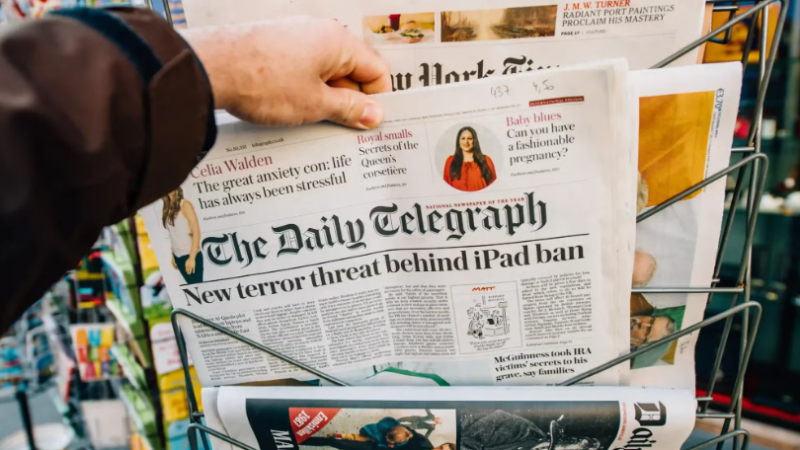
The Telegraph – the perpetuator of last week’s BBC’s ‘crisis’ over alleged left-wing bias – has, once again, hit its own crisis. Yet when it comes to the Telegraph’s very prolonged crisis, the paper and its ideological allies, it seems, suddenly lose their voice.

This week, with barely a murmur from the right-wing press, the Telegraph’s long-running ownership saga collapsed yet again.

Earlier this week, Sky News reported that RedBird Capital Partners had abandoned its proposed £500m takeover of the Telegraph Media Group. RedBird, alongside Abu Dhabi-based International Media Investments (IMI), formally withdrew its offer, confirming:

“RedBird has today withdrawn its bid for the Telegraph Media Group. We remain fully confident that the Telegraph and its world-class team have a bright future ahead of them and we will work hard to help secure a solution which is in the best interests of employees and readers.”

The Telegraph has been stuck in ownership limbo for more than two and a half years, ever since lenders seized control from the Barclay family. A complex financing arrangement with RedBird IMI was scuppered after objections to foreign state ownership of British media.

In May, the government changed the rules, raising the cap on foreign state-owned investors from 5 percent to 15 percent. This in theory reopened the door for IMI, which would have taken a 15 percent stake. Yet even after the rule-change, the consortium walked away without explanation. Again, the outcry one might expect for a major national newspaper in disarray didn’t materialise.

Yet inside the Telegraph, the situation was anything but quiet. Sky News reports that newsroom unrest played a role in RedBird’s withdrawal. Senior figures, including former editor Charles Moore and former Spectator editor Fraser Nelson, launched an attack on RedBird, publishing articles demanding scrutiny of alleged links to Chinese influence.

RedBird denies any such influence, and no evidence has been publicly established. Nonetheless, the campaign within the Telegraph became so fierce that Moore accused RedBird founder Gerry Cardinale of threatening to “go to war with our entire newsroom.”

When journalists are openly attacking their would-be buyers, something is clearly amiss. Yet the wider right-wing media, normally so quick to frame instability elsewhere as symptomatic of a broader “crisis in public trust,” suddenly found no such narrative to deploy here.

Only a handful of outlets, such as the Guardian, have given the collapse the attention it warrants.

Potential new bidders are reportedly circling again, including GB News investor Sir Paul Marshall, and a previous consortium led by Lord Saatchi and Lynn Forester de Rothschild. But nothing is guaranteed, and the asking price remains contentious.

Meanwhile, morale inside the Telegraph newsroom is reportedly deteriorating.

“We’re sick of being the story,” one frustrated member of the newsroom told the Guardian.

“This sorry saga has dragged on for more than two years now and most of us just want to see the back of it,” they add.

For a paper that delights in diagnosing institutional malaise elsewhere, the irony is striking.

None of this is to say the BBC is above criticism. It isn’t. But surely, media scrutiny should be consistent, not weaponised selectively.


Telegraph mocked for Brexit and tumble dryer story


Yesterday
Left Foot Forward


“Well at least the Telegraph was warning us Brexit would be a terrible idea."


The Telegraph, a paper whose Eurosceptic editorial line has been a fixture since the early 1990s, and which championed the Leave campaign during the 2016 EU referendum, found itself mocked this week after publishing a story about tumble dryers disappearing from the Northern Irish market – because of Brexit.

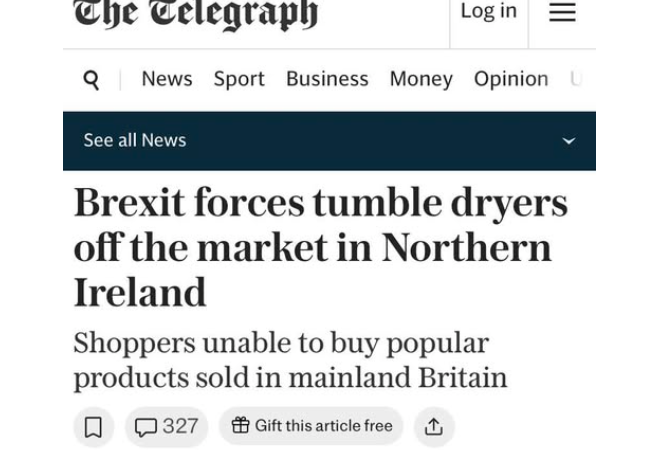
The article, headlined: “Brexit forces tumble dryers off the market in Northern Ireland,” reports that some popular models sold in Great Britain are no longer available in Northern Ireland because of new EU rules. According to the piece, shoppers are unable to buy certain appliances after updated European eco-design and energy-labelling regulations came into force.

Under the Windsor Framework, the post-Brexit agreement designed to keep the Irish border invisible and protect the peace process, Northern Ireland continues to follow EU product and environmental rules that the rest of the UK no longer applies. The deal introduced Irish Sea checks on goods entering Northern Ireland from Britain to ensure EU standards are met.

Unionists argue these arrangements weaken Northern Ireland’s place in the UK and encourage a drift towards a united Ireland. They also warn that the divergence will push supply chains away from long-established British suppliers in favour of those in the Republic of Ireland.

The Telegraph article explains that Northern Ireland’s alignment with EU eco-design rules means consumers can no longer buy certain types of traditional condenser tumble dryers and must instead purchase more energy-efficient appliances, such as heat-pump dryers.

Robin Swann, the Ulster Unionist Party MP for South Antrim, raised the matter after being contacted by a constituent. He told the paper:

“Unfortunately, this is reflective of the ongoing issues facing Northern Ireland consumers because of the divergence caused by the Windsor Framework.”

“This outworking of the framework once again unacceptably limits the range of products available to customers here, and risks sending customers out of the Northern Ireland market and into the Republic of Ireland to purchase these tumble dryers.”

The article sparked an onslaught of mockery online.

“Tumble dryer update…” Leeds for Europe posted on Facebook.

“Well at least the Telegraph was warning us Brexit would be a terrible idea,” another user mocked.

Others pointed out that the appliances still available in Northern Ireland are newer and more efficient. “But, unlike us, they have access to better, more efficient ones, so it doesn’t bloody matter,” read one comment.

Another observer didn’t beat around the bush: “It’s embarrassing how desperate the Torygraph has become. It promoted Brexit based on xenophobia and lies. Just a posh Daily Mail for narrow-minded people.”
Woke-bashing of the week: For proof of the ‘go woke, go broke’ myth, just look at Sydney Sweeney’s box office record
Yesterday
Right-Wing Watch

Sydney Sweeney is treated as a symbol of the ‘unwokening.’


Since the dawn of the culture wars, the right has insisted ‘woke means broke,’ especially when it comes to Hollywood. If a film includes diversity, a social message, or simply an actor they dislike, any box-office wobble is instantly ridiculed as ‘woke drivel.’

In 2023, the Daily Mail shouted: “Woke Disney loses $900million in recent box office flops as liberal agenda being pushed in movies like ‘Lightyear’ and ‘The Little Mermaid’ turn off movie-goers.”

Two years later… it declared: “Snow White suffers worst humiliation yet after woke Rachel Zegler remake tanked at box office.”

Yet funnily enough, no such triumphant headlines appear when a film flops without a supposedly woke agenda, say, when US actress Sydney Sweeney is involved. Why? Because Sweeney has been elevated into one of the right’s newest cultural darlings.

This summer, the Mail splashed: “Donald Trump sensationally anoints Sydney Sweeney his anti-woke queen as he hurls blistering insult at Taylor Swift.”

Since Taylor Swift announced her endorsement of Kamala Harris, Republicans have been circling. Trump even took to Truth Social, posting “I HATE TAYLOR SWIFT!”

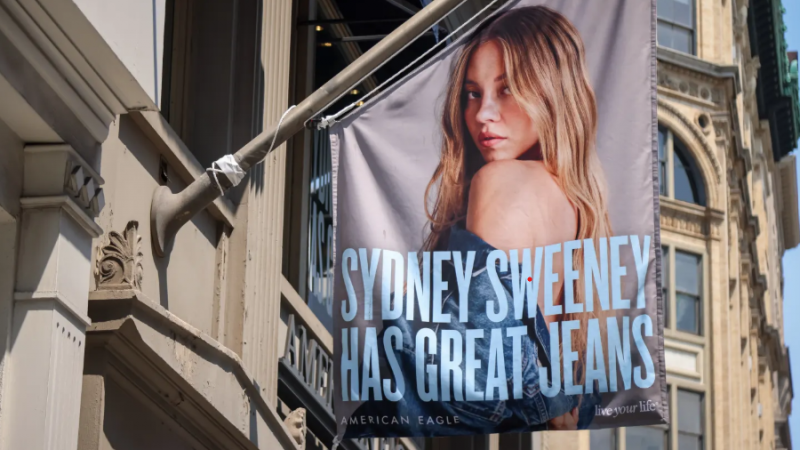
Sweeney, by contrast, is treated as a symbol of the ‘unwokening.’ When clothing brand American Eagle came under fire for a “racially charged” ad featuring the blonde hair blue eyed Sweeney, complete with the tagline
“Sydney Sweeney Has Great Jeans” which ‘critics’ likened to white-genetic-superiority aesthetics, while conservatives rushed to her defence.

“’Sydney Sweeney, a registered Republican, has the “HOTTEST” ad out there. It’s for American Eagle, and the jeans are “flying off the shelves.” Go get ‘em Sydney!’” the president said.

When GQ asked Sweeney about the controversy, journalist Katherine Stoeffel noting that “in this political climate, white people shouldn’t joke about genetic superiority”, the actor shrugged: “I think that when I have an issue that I want to speak about, people will hear.”

To her right-wing admirers, this non-answer was an act of cultural bravery.

But the inconvenient part for those eager to weaponise the box office, the “go woke, go broke” rule doesn’t seem to apply to their own icons.

Sweeney’s latest film, Christy, in which she plays boxer Christy Martin, recorded one of the worst opening weekends in box-office history. It follows other recent Sweeney-led flops like Eden and Americana. Yet somehow, the failures don’t trigger the same avalanche of ‘going broke’ headlines.

As always, it’s one rule for them and another for the rest of us. Surely if the right’s self-anointed ‘anti-woke’ queen keeps stumbling at the box office, their culture war catchphrase will expose itself for what it has always been – a convenient fiction propped up by selective outrage.
Storm Claudia hits and Thames Water dumps – again

22 November, 2025 
Left Foot Forward

"So how's all that banning bonuses, sending executives to jail bulls*t working out I wonder?"


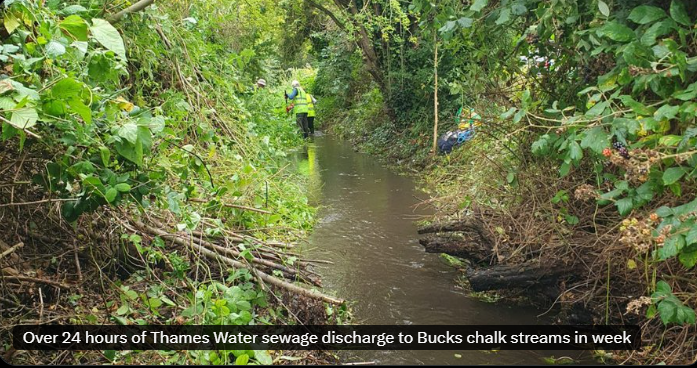
Storm Claudia swept across the UK this week, causing widely reported floods across Wales, Gloucestershire and Derbyshire. But one quieter casualty lay in Buckinghamshire, where two rare chalk streams, the River Misbourne in Gerrards Cross and the River Chess in Chesham, endured hours of sewage discharges under the label of ‘storm release.’

These rivers, fed by groundwater filtered through chalk bedrock and home to diverse wildlife, saw more than 24 hours of sewage pumped into them by Thames Water in the space of a week.

According to the Bucks Free Press, the Misbourne recorded 23 hours and 15 minutes of discharges even as the river remains in the midst of infrastructure ‘upgrades.’

The pollution came despite Thames Water having recently completed a £20 million upgrade to its treatment works, a project the company claimed would “reduce the need for untreated discharges in wet weather” and deliver a “higher quality of treated effluent.” The company says the capacity upgrades were completed in early 2023, with the improvements to effluent quality finished in early 2025.

Yet the rivers continue to bear the burden of repeated contamination.

This isn’t the first time sewage has derailed community life in Buckinghamshire. In 2024, Chalfont St Giles withdrew from the Best Kept Village competition because pollution in the Misbourne made the area impossible to present as ‘kept’ at all. The parish council publicly urged Thames Water to “clean up its act,” a message that still appears unanswered.

In September 2024, the government introduced sweeping powers to crack down on Thames Water and the wider water industry. Those reforms promised environmental protection, financial accountability, automatic fines for pollution, bonus bans, and even possible jail time for senior executives.

Yet Storm Claudia has offered a test of those powers, and the results are hard to ignore.

Environmental campaigner Feargal Sharkey summed up the public mood in a post on X, writing: “Bucks chalk streams have seen over 24hours of sewage discharged into them by Thames Water in a week. So how’s all that banning bonuses, sending executives to jail bulls*t working out I wonder?”