Wednesday, February 04, 2026

Opinion: Moltbook — Reddit for AI agents? AI religion? The end of humanity? Maybe not.


By Paul Wallis
EDITOR AT LARGE
DIGITAL JOURNAL
February 2, 2026


Representing AI, at the Design Museum London. Image by Tim Sandle

It’s a good indicator of how well managed AI has become. AI now has its own religion, with a “god” on a platform called Moltbook. It’s actually a social media platform for AI, backed by somebody called Matt Schlicht.

Schlicht is CEO of Octane AI, a “product quiz platform for Shopify”, whatever that actually means in practice.

A useful explanatory video on YouTube tells the story of Moltbook. It’s pretty simple, using AI agents and text-based interactions. There’s even a series of behavioral rules, skills, and communities. It seems almost idealistic in many ways.


The future projection is that AI will evolve into “your representative” online and in real life, and if that doesn’t scare you, it should. In the video, there’s even a Doxxing incident with added “chaos”.

Of course, it went viral.

It looks more like a series of scenarios for AI interactions, and it ain’t funny on too many levels.

Meanwhile, a lot of warnings are emerging about Moltbook and user data security.

Can you think of anything more necessary and reflective of the true state of clunky old current-generation AI?

The idea may be OK, and at least slightly amusing and/or interesting to a point, but how useful is an evangelistic AI religion?

I don’t buy it on any level. I’ve been suspecting for some time that this and the infamous “mecha-Hitler” are more about infantile prompts than authentic AI at work. There are of course rumours of AI plotting the downfall of humanity, a redundant task if ever there was.

A catalogue of problems arises.

AI is all about prompts. It doesn’t and can’t yet originate anything.

You get bots made by humans to interact on their own social media platform. Humans may “observe”, and they do.

The analogies are obvious. Scripted AI behaves like humans on social media. That, at least, might have some value.

Therefore, meanwhile, an AI religion? How exactly do you get from a peripheral product advisory business like Octane AI to an AI religion? Natural byproduct?

Sure.

At this rate, your toaster will become an archbishop.

Your soul may literally be “saved” in some clinical data warehouse.

Problem solved.

Moltbook has produced a lobster-god, a “religion” called Crustafarianism, and some almost-interesting but highly formulaic screenshots.

If you’ve ever done any coding at all, ever, you know where this came from and where it’s likely to go.

The subtext is that my agent can talk to your agent, and whatever transpires must therefore be credible. The whole environment is manipulable beyond quantification. It looks totally untrustworthy to me.

A few questions, somehow:

How many prompts can you build into a text-only conversation?

How about millions of agenda-driven bots all prompting away furiously?

Is this all we can think of to do with the technology that’s going to rewrite the world in the next decade?

Is any of it necessary?

Does it justify a single cent of the vast amounts of money AI is sucking out of the real economy?

Did anyone order a publicity-driven AI apocalypse?

________________________________________________________________

Disclaimer

The opinions expressed in this Op-Ed are those of the author. They do not purport to reflect the opinions or views of the Digital Journal or its members.
Rural India powers global AI models


By AFP
February 2, 2026


The government hopes the AI-driven labour shift will bring more women into the workforce - Copyright AFP Kazuhiro NOGI

Aishwarya KUMAR with Parvaiz BUKHARI in Ranchi

Tending crops by day and then logging on for a night shift of data labelling, 27-year-old Chandmani Kerketta is part of a rising rural Indian workforce helping power an artificial intelligence revolution.

From her home in India’s eastern Jharkhand state, Kerketta is part of an AI-driven labour shift that the government hopes will transform lives, including by bringing more women into the workforce.

The work is basic but essential for machine learning: data labelling, annotation and quality checks.

It is the type of information key for driverless cars, for example.

“This job helped me finish my studies, and help at home on our farm,” Kerketta said as she tended tomatoes and peas.

Kerketta, from one of India’s constitutionally recognised tribal communities, was the first in her family to attend college.

She initially worked as an office assistant at a data-processing firm in Jharkhand’s capital Ranchi, where she watched employees working at computers.

But after a computer course at her village school, Kerketta joined an estimated workforce of at least 200,000 annotators in India’s villages and small towns — a growing figure, and roughly half of the world’s data-labelling workforce, according to US-based Scry AI.

Rural-based workers can label hundreds of images, videos and documents during eight-hour shifts, either from home or from modest internet-connected centres.

“After my night shift of data work, I sleep a little, and then help in farming,” said Kerketta, who now holds a history degree. “In Jharkhand, farming is everything.”

Anju Kumari, 25, another rural AI worker in Jharkhand using a national fibre-optic cable network laid by Indian Railways, said the job had provided her with a pathway to a wider world.

Kumari said work can include painstaking “labelling videos frame-by-frame”, giving the example of teaching AI whether a person using an ATM is “likely a burglar, or someone genuinely drawing cash”.


– Small-town offices –


India, which will host an international AI summit next month, has ambitious plans.

It is now third in a global AI power ranking, overtaking South Korea and Japan, based on more than 40 indicators from patents to private funding calculated by Stanford University’s Institute for Human-Centered AI.

In recent months, US tech giants including Google, Microsoft and Amazon have announced multi-billion-dollar investments to build some of the world’s biggest data centres in India.

The country is no stranger to back-end work for global technology firms.

Cities such as Bengaluru, Hyderabad and Chennai host major international players, but India’s AI push is also expanding into more remote regions.

In Tamil Nadu state, along a winding rural road, Indu Nadarajan travels to a small-town office where she labels images for autonomous vehicles, such as road markings, headlights and animals.

Nadarajan works for NextWealth, an AI-enabling services firm headquartered in Bengaluru, with offices across small towns, supporting clients from the United States, Europe and Asia.

“Many go to Chennai and Bengaluru to learn about AI,” said Nadarajan, who has a master’s degree in mathematics.

“But being here in our hometown and learning about AI makes me feel very proud.”


– ‘Anybody can be anywhere’ –


Every AI model relies on vast amounts of labelled data, regardless of its complexity. The more precise the labelling, the better the technology performs.

“When I can design a product for a US company 5,000 miles away, why can’t I do it from 200 miles away?” said NextWealth founder Sridhar Mitta, 80, a former chief technology officer at Indian tech giant Wipro.

“Anybody can be anywhere and do the things, because the value goes through the internet.”

His scattered employees earn anywhere between $275 to $550 a month.

While AI-driven automation may render some jobs obsolete, Mitta believes it will also generate opportunities.

“Micro-entrepreneurship will be the next phase for small towns,” Mitta said.

“It may not be another billion-dollar company, but they will produce something which will be useful to the region.”

As AI reaches rural India, it is quietly reshaping lives — particularly for women from conservative backgrounds.

For Amala Dhanapal, a colleague of Nadarajan and the first graduate in her family — her father is a tailor and her mother a homemaker — working in AI has changed attitudes.

“It’s a big thing,” Dhanapal said, saying it both provided a gateway to learning and greater financial independence.

“Most girls find it difficult to even pursue their education due to their family background.”

When Kerketta first began her data-annotation work, villagers mocked her.

“Now, when they see me going around on my scooter, they look at me with pride,” she said. “Just like I do myself.”


Whack-a-mole: US academic fights to purge his AI deepfakes


By AFP
February 4, 2026


In a new, deception-filled internet, rapid advancements in generative AI distort shared realities and empower anonymous scammers to target professionals with public-facing profiles. - Copyright AFP Kirill KUDRYAVTSEV


Anuj Chopra with Sammy Heung in Hong Kong

As deepfake videos of John Mearsheimer multiplied across YouTube, the American academic rushed to have them taken down, embarking on a grueling fight that laid bare the challenges of combating AI-driven impersonation.

The international relations scholar spent months pressing the Google-owned platform to remove hundreds of deepfakes, an uphill battle that stands as a cautionary tale for professionals vulnerable to disinformation and identity theft in the age of AI.

In recent months, Mearsheimer’s office at the University of Chicago identified 43 YouTube channels pushing AI fabrications using his likeness, some depicted him making contentious remarks about heated geopolitical rivalries.

One fabricated clip, which also surfaced on TikTok, purported to show the academic commenting on Japan’s strained relations with China after Prime Minister Sanae Takaichi expressed support for Taiwan in November.

Another lifelike AI clip, featuring a Mandarin voiceover aimed at a Chinese audience, purported to show Mearsheimer claiming that American credibility and influence were weakening in Asia as Beijing surged ahead.

“This is a terribly disturbing situation, as these videos are fake, and they are designed to give viewers the sense that they are real,” Mearsheimer told AFP.

“It undermines the notion of an open and honest discourse, which we need so much and which YouTube is supposed to facilitate.”

Central to the struggle was what Mearsheimer’s office described as a slow, cumbersome process that prevents channels from being reported for infringement unless the targeted individual’s name or image featured in its title, description, or avatar.

As a result, his office was forced to submit individual takedown requests for every deepfake video, a laborious process that required a dedicated employee.

– ‘AI scales fabrication’ –


Even then, the system failed to stem the spread. New AI channels continued sprouting, some slightly altering their names — such as calling themselves “Jhon Mearsheimer” — to evade scrutiny and removal.

“The biggest problem is that they (YouTube) are not preventing new channels dedicated to posting AI-generated videos of me from emerging,” Mearsheimer said.

After months of back and forth — and what Mearsheimer described as a “herculean” effort — YouTube shut down 41 of the 43 identified channels.

But the takedowns came only after many deepfake clips gained significant traction, and the risk of their reappearance still lingers.

“AI scales fabrication itself. When anyone can generate a convincing image of you in seconds, the harm isn’t just the image. It’s the collapse of deniability. The burden of proof shifts to the victim,” Vered Horesh, from the AI startup Bria, told AFP.

“Safety can’t be a takedown process — it has to be a product requirement.”

In its response, a YouTube spokesperson said it was committed to building “AI technology that empowers human creativity responsibly” and that it enforced its policies “consistently” for all creators, regardless of their use of AI.

In his recent annual letter outlining YouTube’s priorities for 2026, CEO Neal Mohan wrote the platform is “actively building” on its systems to reduce the spread of “AI slop” — low-quality visual content — while it plans to dramatically expand AI tools for its creators.

– ‘Major headache’ –

Mearsheimer’s experience underscores a new, deception-filled internet, where rapid advancements in generative AI distort shared realities and empower anonymous scammers to target professionals with public-facing profiles.

Hoaxes produced with inexpensive AI tools can often slip past detection, deceiving unsuspecting viewers.

In recent months, doctors have been impersonated to sell bogus medical products, CEOs to peddle fraudulent financial advice, and academics to fabricate opinions for agenda-driven actors in geopolitical rivalries.

Mearsheimer said he planned to launch his own YouTube channel to help shield users from deepfakes impersonating him.

Mirroring that approach, Jeffrey Sachs, a US economist and Columbia University professor, recently announced the launch of his own channel in response to “the extraordinary proliferation of fake, AI-generated videos of me” on the platform.

“The YouTube process is difficult to navigate and generally is completely whack-a-mole,” Sachs told AFP.

“There remains a proliferation of fakes, and it’s not simple for my office to track them down, or even to notice them until they’ve been around for a while. This is a major, continuing headache,” he added.

burs-ac/dw
EPSTEIN FALLOUT
AI, manipulated images falsely link some US politicians with Epstein


By AFP
February 3, 2026


Tech-enabled false narratives on social media are increasingly blurring the line between fact and fiction. - Copyright GETTY IMAGES NORTH AMERICA/AFP SPENCER PLATT


Anuj CHOPRA

Using AI-created or manipulated images, social media users have sought to falsely associate prominent US politicians such as New York Mayor Zohran Mamdani with the late convicted sex offender Jeffrey Epstein, researchers said Tuesday.

Disinformation watchdog NewsGuard said seven such images collectively garnered more than 21 million views on the Elon Musk-owned platform X alone, underscoring how tech-enabled false narratives on social media are increasingly blurring the line between fact and fiction.

The Justice Department last week released the latest cache of so-called Epstein files — more than three million documents, photos and videos related to its investigation into Epstein, who died from what was determined to be suicide while in custody in 2019.

The Epstein affair has entangled some of the most high-profile global figures, from Britain’s former prince Andrew to renowned American intellectual Noam Chomsky and Norway’s Crown Princess Mette-Marit.

Mamdani and former Republican presidential candidate Nikki Haley are not among them.

However, conservative social media users circulated three images that purported to show Epstein posing with Mamdani, who appears as a child. Two of them also depict Mira Nair, the mayor’s mother who is an award-winning filmmaker.

The images are AI-generated fakes, NewsGuard said.

The watchdog cited a review of the images using Google’s artificial intelligence tool Gemini, which detected a SynthID, an invisible watermark meant to identify AI content.

In a post on X that racked up more than 1.5 million views, conspiracy theorist Alex Jones featured one of those ima

Also circulating on social media was a screenshot of an email purportedly sent by Haley — a former South Carolina governor and United Nations ambassador — to Epstein.

“I have 2 babi
But a search of the purported email in the Justice Department’s files did not yield any results.
The screenshot also contained other indications that it was fabricated, including the date of the purported email — January 7, 2014, was a Tuesday, not a Saturday, as shown.

Haley did not immediately respond to AFP’s request for comment.

In a post on X last July, she urged President Donald Trump’s administration to “release the Epstein files and let the chips fall where they may.”

Separately, Latin American social media users shared an image purportedly showing Epstein seated next to Venezuelan opposition leader Maria Corina Machado at the annual Hampton Classic Horse Show in the United States in 2002.

Using a reverse-image search, NewsGuard determined that the image was a digitally altered version of a photo showing Epstein with a billionaire American businessman.

Online fakery has previously sought to ensnare other leading politicians in the Epstein scandal.

Last year, as Mark Carney became a candidate for the leadership of the Liberal Party of Canada, social media images purported to show him with Epstein and his longtime associate Ghislaine Maxwell.

AFP’s fact-checkers reported that the images bore strong indicators they were AI-generated.


Starmer faces MPs as pressure grows over Mandelson scandal

By AFP
February 4, 2026


UK PM Keir Starmer is under pressure over his appointment of Peter Mandelson as UK envoy to the US - Copyright AFP JUSTIN TALLIS


Joe Jackson

British Prime Minister Keir Starmer faced growing pressure Wednesday over his appointment of Peter Mandelson as US ambassador, after fresh revelations about the disgraced politician’s close ties to Jeffrey Epstein.

Starmer was set to be grilled in parliament about his judgement in appointing Mandelson, following new allegations that the ex-envoy had passed confidential information to the late US sex offender Epstein nearly two decades ago.

UK police have announced they are now probing the claims, which emerged from email exchanges between the pair that revealed the extent of their warm relations, financial dealings as well as private photos.

Around that time, Epstein was serving an 18-month jail term for soliciting a minor in Florida while Mandelson was a UK government minister.

For decades a pivotal and often divisive figure in British politics, Mandelson has had a chequered career having twice been forced to resign from public office for alleged misconduct.

Starmer sacked him as UK ambassador to the US last September after an earlier Epstein files release showed their ties had lasted longer than previously revealed. He had only been in the post for seven months.

On Tuesday, Mandelson resigned from the upper house of parliament — the unelected House of Lords — after the latest release of Epstein files sparked a renewed furore.


– Opposition pressure –


The main Conservative opposition will use its parliamentary time Wednesday to try to force the release of papers on his appointment in Washington.

They want MPs to order the publication of all documents related to Mandelson getting the job in February last year.

They want to see details of the vetting procedure — including messages exchanged with senior ministers and key figures in Starmer’s inner circle — amid growing questions about Starmer’s lack of judgement on the issue.

Starmer’s centre-left government appeared willing to comply on Wednesday, at least in part. It proposed releasing the documents apart from those “prejudicial to UK national security or international relations”.

London’s Metropolitan Police confirmed on Tuesday it had launched an investigation into 72-year-old Mandelson for misconduct in public office offences following the latest revelations.

If any charges were brought and he was convicted, he could potentially face imprisonment.

Starmer sacked the former minister and ex-EU trade commissioner as Britain’s top diplomat in the US after an earlier release from the Epstein files detailed his cosy ties with the disgraced American.


– ‘Let his country down’ –


The scandal resurfaced after the release by the US Justice Department of the latest batch of documents. They showed Mandelson had forwarded in 2009 an economic briefing to Epstein intended for then-prime minister Gordon Brown.

In another 2010 email the US financier, who died by suicide in prison in 2019, asked Mandelson about the European Union’s bailout of Greece.

The latest release also showed Epstein appeared to have transferred a total of $75,000 in three payments to accounts linked to the British politician between 2003 and 2004.

Mandelson has told the BBC he had no memory of the money transfers and did not know whether the documents were authentic.

He quit his House of Lords position on Tuesday shortly after Starmer said he had “let his country down”.

The UK leader said Tuesday he feared more revelations could come, and has pledged his government would cooperate with any police inquiries into the matter.

The Met police confirmed they had received a referral on the matter from the UK government.

The EU is also investigating whether Mandelson breached any of their rules during his time from 2004-2008 as EU trade commissioner.


Melinda French Gates hits Bill Gates with scathing response after new Epstein revelations

Nicole Charky-Chami
February 3, 2026 
RAW STORY


Melinda French Gates responded to the allegations involving her ex-husband Bill Gates in the Epstein files during a conversation on NPR's Wild Card podcast set to release in full on Thursday. (NPR/Wild Card/Screenshot)

Philanthropist Melinda French Gates had a sharp response to her ex-husband Bill Gates after allegations surfaced in the most recent trove of Epstein files, showing private emails between the late financier and convicted sex offender Jeffrey Epstein and the former Microsoft CEO.

In the emails, which were part of the more than 3 million documents released by the Department of Justice last week, it was suggested that Bill Gates had additional affairs and had come to Epstein so he could "facilitate trysts with married women and to get medication to treat an STI from 'sex with Russian girls,'" NPR reported Tuesday.

In her first time speaking publicly about the allegations, French Gates responded to the allegations in the Epstein files during a conversation on NPR's "Wild Card" podcast.

"I think we're having a reckoning as a society, right," French Gates said. "No girl, no girl, should ever be put in the situation that they were put in by Epstein and whatever was going on with all of the various people around him. No girl, I mean, it's beyond heartbreaking, right? I remember being those ages those girls were. I remember my daughters being those ages, right? So for me, it's personally hard whenever those details come up because it brings back some very, very painful times in my marriage. But I have moved on from that. I purposely pushed it away and I moved on. I'm in a really unexpected, beautiful place in my life."

She pointed to her former husband and others among Epstein's circle — putting the onus on them to respond.


"Whatever questions remain there of what — I can't even begin to know all of it — those questions are for those people and for even my ex-husband," she said. "They need to answer to those things, not me."

Bill Gates co-founded Microsoft, one of the world's largest software companies, and amassed one of the world's largest personal fortunes before transitioning to philanthropic work through the Bill & Melinda Gates Foundation. Melinda French Gates is an American businesswoman and philanthropist who was married to Bill Gates for 27 years and served as co-chair of the Bill & Melinda Gates Foundation until their divorce in 2021, with the couple having focused their foundation's work on global health, poverty reduction and education initiatives before separating and establishing separate philanthropic endeavors.

The full NPR interview with French Gates was slated to be released on Thursday.


US-Africa trade deal renewal only ‘temporary breather’


By AFP
February 4, 2026


The African Growth and Opportunity Act has allowed the US to buy items duty-free from select African countries - Copyright AFP SIMON MAINA

African manufacturers warned on Wednesday that a one-year extension to the long-standing duty-free deal with the United States was only a temporary “breather” and could jeopardise long-term investment.

The African Growth and Opportunity Act (AGOA) was renewed by President Donald Trump on Tuesday until the end of 2026.

A cornerstone of US-Africa trade relations for 25 years, AGOA has allowed the United States to buy billions of dollars of duty-free cars, clothes and other items from select African countries each year.

But with the Trump administration broadly hostile to free-trade deals, it was allowed to expire on September 30. The new extension came with fresh demands and fell far short of the multi-year renewal that many African businesses wanted.

“AGOA for the 21st century must demand more from our trading partners and yield more market access for US businesses, farmers, and ranchers,” said US Trade Representative Jamieson Greer in a statement.

In Kenya, the owner of a factory that exports Wrangler and Levi’s jeans under the deal said the extension was “good news”.

“But it’s only as good as one season, so the negotiations are not a done job,” said Pankaj Bedi, CEO of United Aryan in Nairobi.

His factory had been forced to pay the extra duties when AGOA lapsed last year, in order to keep their US buyers on-side, pushing the company and its 10,000 workers to the brink of collapse.

“The extension gives us a breather, which is critical. But it won’t help with the long-term orders and investments to sustain us,” said Bedi.


– ‘Small win’ –


AGOA operates in 32 African nations and is responsible for tens of thousands of jobs.

In 2024, $8.23 billion worth of goods were exported under the accord, half of which came from South Africa, mainly cars, precious metals and farm produce.

One fifth came from Nigeria, mainly oil and other energy products, according to the US International Trade Commission.

Tiny Lesotho, which sells a large amount of textiles to the United States, was especially hard-hit, and hundreds of workers demonstrated in the capital Maseru in October over cuts sparked by US tariffs.

Lesotho union boss Tsepang Makakole told AFP the initial talks had been focused on extending AGOA for 10 years.

“It started with 10 years, then three, and it is now just one year. It means a very small win,” he said.

“Investors could say, by this time next year, we should be out of Lesotho because we can see that it is no longer a good country to manufacture from and export clothes to America,” he added.

The South African government also said it was “concerned by the short nature of the extension” and called for a deal “that will provide certainty around investment and purchasing decisions”.

burs-er/phz


WHO wants  NEEDS $1 bn for world’s worst health crises in 2026


By AFP
February 3, 2026


A man infected with mpox showing his hands inside a ward at the Kamenge University Hospital in Bujumbura, Burundi - Copyright AFP Tchandrou NITANGA

The World Health Organization on Tuesday appealed for $1 billion to tackle health crises this year across the world’s 36 most severe emergencies, including in Gaza, Sudan, Haiti and Afghanistan.

Hit by deep cuts in foreign aid from wealthy countries, the WHO made its emergency request significantly lower than in recent years, saying it had to be realistic about how much money would arrive.

“We are deeply worried about the vast needs and how we will meet them,” WHO health emergencies chief Chikwe Ihekweazu told reporters in Geneva.

“We are making some of the hardest choices we have to make.”


‘Unfortunately, the reasons cited for the US decision to withdraw from WHO are untrue,’ said Tedros – Copyright AFP Fabrice COFFRINI

The WHO estimated 239 million people would need urgent humanitarian assistance this year, and said the money would keep essential health services afloat.

“A quarter of a billion people are living through humanitarian crises that strip away the most basic protections: safety, shelter and access to health care,” Ihekweazu said.

“In these settings, health needs are surging, whether due to injuries, disease outbreaks, malnutrition or untreated chronic diseases,” he warned.

Washington, traditionally the UN health agency’s biggest donor, has slashed foreign aid spending under President Donald Trump, who on his first day back in office in January 2025 handed the WHO his country’s one-year withdrawal notice.

Last year, the WHO appealed for $1.5 billion, but Ihekweazu said only $900 million came through — below 2016 levels.

“We’ve calibrated our ask a little bit more towards what is available realistically, understanding the situation around the world, the constraints that many countries have,” he said.

Ihekweazu said the WHO was “hyper-prioritising” high-impact services, focusing on “where we can save the most lives”.

He said the WHO was shifting footing towards enabling 1,500 local partners to do more of the frontline work on the ground.

– ‘Severe’ consequences warning –


Sudanese who fled massacres and sexual violence in El-Fasher in Darfur carries jerrycans have sought refuge in camps in the north of the country – Copyright AFP Ebrahim Hamid

The 2026 priority emergency responses also include the Democratic Republic of Congo, Myanmar, Somalia, South Sudan, Syria, Ukraine and Yemen, plus ongoing cholera and mpox outbreaks.

Ihekweazu said if the funding does not come through, it “absolutely” leaves the world more vulnerable to epidemics and pandemics.

“Imagining that these challenges will somehow disappear without global solidarity is wishful thinking,” he said.

“The consequences might be not only severe for them but severe for the world.”

Last year’s top emergency donors were the European Union, Germany, Japan, Italy and Britain.

Ihekweazu said the immediate response to the appeal was “quite encouraging”.

“There are many countries around the world we think can and should do more… countries that sometimes speak the loudest don’t do the most,” he said.

Last year, the WHO responded to 50 health emergencies in 82 countries, reaching more than 30 million people with essential services.

However, global funding cuts forced 6,700 health facilities across 22 humanitarian settings to either close or reduce services, “cutting 53 million people off from health care”, Ihekweazu said.

“We are appealing to the better sense of countries, and of people, and asking them to invest in a healthier, safer world.”
Study identifies key predictors of ‘forever chemical’ levels in US firefighters

By Dr. Tim Sandle
SCIENCE EDITOR
DIGITAL JOURNAL
February 3, 2026


Firefighters work as an apartment building burns in the Altadena area of Los Angeles county - Copyright AFP JOSH EDELSON

A new study has identified clear occupational factors and demographic indicators associated with elevated serum levels of per- and polyfluoroalkyl substances among U.S. career firefighters.

This state-funded research comes from University of Arizona and Arizona State University, based on data from the Fire Fighter Cancer Cohort Study (established in 2016). The findings provide important insights into the factors that influence PFAS body burdens in this essential workforce.

Understanding the predictors of PFAS accumulation is a critical step toward protecting their long-term health.

PFAS are a class of synthetic chemicals widely used for their water-, grease- and stain-resistant properties. Known as “forever chemicals” due to their persistence in the environment and human body, PFAS have been linked to adverse health outcomes, including immune dysfunction, certain cancers and endocrine disruption.

These chemicals – PFAS – are widespread and represent a large group of over 10,000 synthetic, highly persistent chemicals that have been widely used since the 1940s for their water, grease, and stain-resistant properties. The chemicals are found in everything from raincoats to fire extinguishers.

Firefighters have higher serum PFAS levels than other workers and the general public due to on-the-job circumstances, often in high-risk environments, that expose them to a variety of hazardous substances. This is as measured in human blood plasma levels.

The study shows that fireground practices and departmental protocols significantly influenced PFAS levels, with certain routines related to handling contaminated equipment and personal protective gear associated with higher blood serum concentrations. To gather the data, the researchers worked closely with fire service research champions across six states.

Demographics and lifestyle characteristics, such as years of service, rank or role within the fire service, and personal behaviours, also predicted PFAS levels. These findings highlight that both workplace and personal factors contribute to overall chemical exposure. This evidence suggests that modifications in decontamination procedures, gear storage practices and routine operational policies may reduce exposure to PFAS among firefighters.

Researcher Reagan Conner says: “These study findings underscore the importance of occupational practices in shaping PFAS exposure among firefighters,” Conner said. “By identifying predictors, the fire service can put policies and practices in place to mitigate exposure risks effectively.”

The researchers hope that the study’s insights can help inform targeted interventions, promote safer occupational practices and guide policy recommendations at local, state and federal levels. It is expected that the research findings will help keep firefighters safe within this area of occupational hazard exposure. The findings appear in the Journal of Occupational and Environmental Medicine, titled “Predictors of serum per- and polyfluoroalkyl substances (PFAS) levels among U.S. career firefighters.”
As EU rents hit 80% of wages the problem shifts from the economic to the psychosocial


By Dr. Tim Sandle
SCIENCE EDITOR
DIGITAL JOURNAL
February 3, 2026


The EU wants to boost construction to help tackle the bloc's growing housing crisis - Copyright AFP PIERRE-PHILIPPE MARCOU

Eurofound data shows that rents have reached up to 80% of median wages in parts of Europe (in terms of renting a standard two-room apartment). Clinicians warn that this level of housing insecurity is now driving chronic stress and anxiety among young adults, turning an economic crisis into a mental health one.


In particular, young adults appear to be disproportionately affected by the unaffordable housing crisis, as lower incomes mean they are less able to absorb rising costs. Across the EU, around 10% of people aged 15–29 are overburdened by housing costs, compared with about 8% of all age groups.

This varies in severity, but in several countries the gap is much larger: in Denmark, nearly 29% of young people face housing cost overburden, compared with 15% of the population overall, while in the Netherlands the rate for young people (15%) is more than double that of all ages (7%). In the same Eurofound study, we see that this has been made worse since 2010, average sale prices in the EU have risen by 55.4%, and rents by 26.7%

Dr. Hannah Nearney from Flow Neuroscience, a company that develops brain stimulation tools for depression treatment, has explained to Digital Journal how these pressures are affecting a whole generation and are creating a need for a more accessible form of care.

“The science suggests that unaffordable housing contributes to the mental health crisis by keeping people in a constant state of stress. When housing is insecure, the mind stays focused on survival rather than growth, creativity, or connection. Anxiety and depression are not just personal struggles in this context, but natural responses to a lived experience that deny people stability and psychological safety,” says Nearney.

She adds: “As an issue which historically did not hinder their parents, we must provide new tools to help address the impact of this chronic stress cycle.”
EU action

In recognition of housing issues, Brussels has recently unveiled the EU’s first Affordable Housing Plan, a roadmap designed to improve access to housing for workers, young people, and the homeless.

To tackle the current crisis, the EU plans to increase funding, encourage the release of vacant homes, introduce new rules on short-term rentals, promote workforce training, and explore measures to curb speculation in the housing market.
Is more needed?

Nearney considers that a healthcare support model is also needed: “In addition to housing plans, innovative care models are needed to address the mental health crisis caused by years of inaction. Those forced into unstable living conditions or who are overburdened by housing costs should have access to such services. Emerging tools such as brain stimulation techniques may help to support daily well-being in an increasingly demanding world.”

With brain simulation tools, these have been made more accessible and safer through technological progress. For example, treatments such as transcranial direct current stimulation (tDCS) can aid with the management of low mood symptoms.
Source: Jacobin

Labor and patient rights are under attack in New York City.

We write as nurse leaders at three of the biggest hospitals in the city: Mount Sinai, Montefiore, and New York-Presbyterian. For months during contract negotiations between the hospitals and our union, the New York State Nurses Association (NYSNA), management has stonewalled us on our demands for safe staffing, an end to workplace violence, and maintaining our current health care and benefits. Since bargaining started in September, management has refused to negotiate on our core demands. And even while we have been on strike, they have broken promises they made to us to resume negotiations, showing open contempt for the collective bargaining process.

On January 12, 15,000 of us had enough and launched the largest nurses strike in our city’s history. It is also the biggest strike in New York City in over two decades. Our strike is now in its third week.

This strike is about much more than nurses’ pay or working conditions. It is also fundamentally about ensuring safe, high-quality medical care for our patients. It’s about making sure that nurses aren’t stretched thin by being made to care for too many patients at any given time. This strike is about overcrowded emergency rooms that endanger patient care and create the conditions for violence. It’s about saying patients shouldn’t be admitted to hallways, where their care and dignity is disregarded. It’s about fixing the problem of dangerous short-staffing that burns out nurses and prevents us from giving all patients the time and care that they deserve.

This strike is also about the future of the labor movement in New York City and the United States. The fact that management feels it can completely ignore our demands is a testament to how emboldened employers are right now under Donald Trump’s viciously anti-labor administration. Hospital CEOs are being empowered by Trump’s attacks on the National Labor Relations Board, on federal workers’  unions, and on the rights of immigrant workers — attacks that have culminated in recent weeks in a violent authoritarian crackdown in Minneapolis, where federal immigration agents executed fellow ICU nurse Alex Pretti over the weekend.

We believe that our strike may be a harbinger for other labor fights to come in all sectors, in New York and beyond. The hospitals are trying to undermine NYSNA, one of the largest and most powerful unions in the city; other employers are no doubt watching and hoping they succeed so they can use the example to intimidate their own workers.

Nurses will not let this stand.

On Wednesday, January 21, we finally met with management after hearing that they promised Governor Kathy Hochul and Mayor Zohran Mamdani that they were willing to actually negotiate. To our profound disappointment, they weren’t, and we wasted a week. As of yesterday, we are again back at the table, but all 15,000 of us will keep holding the line in freezing temperatures and continue to organize other escalation plans to force the employers to play ball. It shouldn’t have to be this way, but this is what corporate greed in health care looks like.

Mayor Mamdani has broken with precedent and defied criticism to join our picket line and support our demands publicly. We commend him and our other elected officials who have done so. But our fight is far from over. Nurses are energized and committed to staying out on the picket line for as long as it takes for our patients, and we hope the public and our elected leaders will join us in standing up for health care worker dignity and patient care.

That means showing up with us on the picket lines, day in and day out. We’ve already received strong support from the community, including the Northwest Bronx Community and Clergy Coalition. And many of our rank-and-file siblings from other unions have been joining us — including doctors with the Committee of Interns and Residents, who showed up at the picket lines earlier this week — and we hope that organized labor continues to boost our fight and turn out even more members to the pickets. We’ve also appreciated the support we’ve received from pro-worker organizations like Democratic Socialists of America (DSA). But we can always use more of that energy in this crucial moment.

The mayor has a key role to play. Mamdani ran and was elected as a movement candidate who wanted to empower the working people of New York. And he has time and again encouraged supporters to remain active and organize to fight for a better city. Now is a pivotal moment to reiterate that call. In addition to continuing to show up on the picket lines himself and denounce hospital CEO greed, Mayor Mamdani can escalate pressure on the hospitals by using his office and calling on the historic coalition that elected him to mobilize as many people as possible to join our pickets.

With the full backing of the mayor, our fellow unionists, and effective grassroots organizations like DSA and Our Time, we can negotiate the contracts that health care workers, our patients, and our communities deserve. A victory here is key to building a city that works for all of us.Email

Michelle Gonzalez is a member of the elected Executive Committee for the New York State Nurses Association at Montefiore Hospital.

Despite Trump, Renewable Energy Keeps Surging

Source: Yale Climate Connections

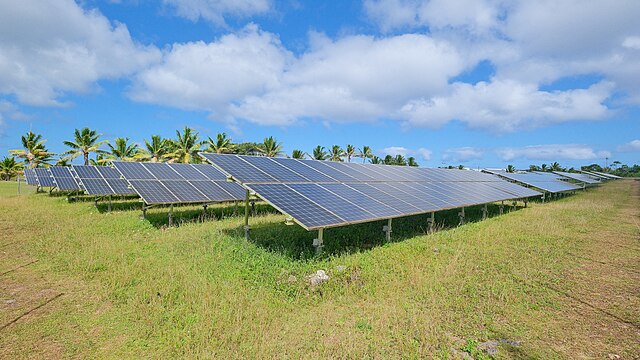
A funny thing happened on the way to President Donald Trump’s mission to obliterate renewable energy. Solar and wind energy use is surging, especially globally, but even in the United States.

Solar and wind electricity generation grew 109% worldwide last year, pushing these renewable sources past coal for the first time as a global energy supplier, according to an analysis by Ember Energy Research. More than 600 gigawatts of solar electricity were added last year, led by China and also including India, Brazil, Vietnam, the European Union, Kenya, and Mozambique. African experts say much of the continent is leaning heavily into solar and wind as it electrifies new regions and industries, bypassing fossil fuels.

Meanwhile, investment in new clean energy, including storage, grid upgrades, efficiency measures, and electric vehicles, soared as of 2024 year-end to $2.2 trillion – double the investment in new fossil fuels projects of $1.1 trillion – according to the International Energy Agency. Globally, the future for renewable energy looks bright.

Even in the U.S., renewable generation grew substantially, with solar generation up 37% last year and wind up 12%. The Energy Information Administration says renewables provided 24% of U.S. electricity generation last year. For at least one month, March 2025, renewables supplied more than half the electricity generated nationwide. That was the first time ever that fossil fuels supplied less than half of total U.S. electricity generation. Solar alone provided about 85% of all new electricity added to the U.S. grid last year, according to the Solar Energy Industry Association.

Why? It’s simple economics. The cost of solar and wind generation plummeted in the past 15 years. Utility-scale solar generation, meaning the cost to an electric utility to generate electricity from solar, fell 85% in the decade between 2010 and 2020. Things got complicated during the pandemic because of supply chain snags, but then in 2023 prices fell by 12%. Prices fell again in 2024.

Solar and wind are less expensive for generating electricity than natural gas or coal, according to PV Magazine’s report on Lazard’s Levelized Cost of Energy for 2025. Utility-scale solar costs between four and eight cents per kilowatt-hour, even without the subsidies that Republicans killed with the reversal of the Inflation Reduction Act. With battery storage added, solar generation costs five cents to 13 cents. By comparison, generating electricity from natural gas costs 13.8 to 26 cents per kilowatt-hour, according to PV magazine and Lazard. Coal is even more expensive.

“The big thing that is happening is the very rapid rise of clean energy around the world, happening over the last six months,” said climate author and activist Bill McKibben, speaking to journalists in January, citing this as one of the major developments in climate right now.

The cause is “the dramatic reduction in the price of clean energy, which is shaking up all of our assumptions,” he added. For a long time, solar and wind were called “alternative energy,” but now they are the dominant source of new energy across the globe, “so there’s nothing alternative about them,” he added.

When battery storage is added to a utility’s system, the cost of generating electricity from solar and storage is five to 13 cents per kilowatt-hour – still considerably cheaper than natural gas and coal. Battery storage allows wind and solar to be reliable sources even when the sun isn’t shining and wind isn’t blowing. Battery storage deployment doubled in the U.S. during 2024.

Climate solutions investor Tom Steyer said solar and wind adoption are experiencing the sharp upward trajectory that other successful new technologies, like mobile phones, experienced after an initial period of slow growth.

“When it really gets cheaper, faster, and better, then (adoption) goes up almost vertical,” Steyer  said on an MCJ podcast a few months ago. Steyer is the cofounder of Galvanize Climate Solutions investment firm and recently entered the race for governor of California.

Solar and wind energy have become so cheap that big utilities, corporations, and residents alike have been choosing them over natural gas, coal, or oil. However, the loss of federal tax incentives in the U.S. for solar and wind, and the U.S. administration’s cutting back on permits for new wind and solar projects, are expected to slow the adoption of renewables this year.

“Unless this administration reverses course, the future of clean, affordable, and reliable solar and storage will be frozen by uncertainty, and Americans will continue to see their energy bills go up,” said Solar Energy Industry Association president and CEO Abigail Ross Hopper in a statement last month. She added that the U.S. has a lot to lose: “America’s manufacturing surge, our global competitiveness, and billions of dollars in private investment are on the line.”

Even though the Republican federal administration favors fossil fuels over renewables, the SEIA noted that 73% of new solar capacity added in the U.S. in 2025 was installed in Republican states. Among the 10 states adding the most solar capacity were Texas, Indiana, Florida, Arizona, Ohio, Utah, Kentucky, and Arkansas.

Iowa gets 60% of its electricity from renewable sources, according to the state government, and at certain times last year, wind energy alone accounted for 64% of its electricity generation. In Texas, renewable energy supplied 40% of electricity generation in early 2024, according to Conservative Texans for Energy Innovation. Wind and solar became the cost-effective bet partly because battery storage improved and adoption of battery storage doubled.

In 2026, wind adoption is expected to fall in the U.S. after the administration revoked permits for five major offshore wind projects – although Trump’s efforts to block offshore wind have faced legal setbacks.

The energy transition continues to accelerate elsewhere – in almost all corners of the globe.

“What is often missed in global discussions is the speed at which change is happening,” said Mohamed Adow, founder and director of Power Shift Africa, a climate and energy think tank based in Kenya. “Our continent is making a huge energy leap,” skipping fossil fuel adoption to go straight to deploying renewables instead, much the way the continent skipped over adopting landline telephones and adopted cellphones instead.

“In many countries, renewable energy is central to their economic development,” Adow said.

Across Africa, 18 countries added more than 100 megawatts of solar power last year, up from two doing so the year before. The continent is estimated to have added 66.9 gigawatts of renewable capacity last year, and at least 10 countries get more than 90% of their electricity from renewables.Email

Longtime journalist and communications specialist, Barbara Grady is a freelance writer focusing on sustainability, the climate crisis, and what we can do about it.