Friday, February 13, 2026


Fortescue rolls out battery trains in Western Australia
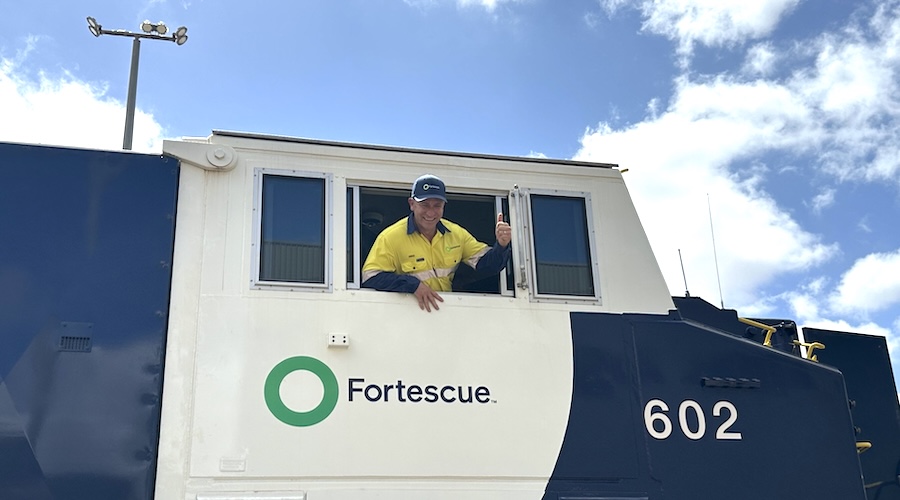
Fortescue Metals and Operations CEO Dino Otranto. (Image by Kristie Batten.)

Australian iron ore producer Fortescue (ASX: FMG) has commissioned two battery electric locomotives in Western Australia’s Pilbara, marking a key step in its plan to achieve real zero emissions across its iron ore operations by 2030.

The locomotives, delivered by US-based Progress Rail, a subsidiary of Caterpillar (NYSE: CAT), are the first of their kind globally and form part of a $6.2 billion push by the Andrew Forrest-chaired company to fully decarbonize its Pilbara operations, which it says are the most comprehensive in the global mining sector.

Speaking in Port Hedland on Thursday, Fortescue Metals and Operations CEO Dino Otranto said rail remains one of the hardest sectors to decarbonize.

“We push 40,000 tonnes up 400 metres, 300 or 400 kilometres away, multiple times a day,” he said. “The forces and energy that’s behind that have been worked on for more than 200 years in the combustion two-stroke engine that has historically powered all of our fleet, but today, this is a turning point.”

Each locomotive houses a 14.5 megawatt-hour battery, the largest fitted to a land-mobile application, and can recover 40% to 60% of energy through regenerative braking. Together, they will eliminate about one million litres of diesel a year and operate on renewable electricity supplied through Fortescue’s Pilbara Energy Connect program.

Fortescue operates a fleet of 70 locomotives and will now test the first two units before transitioning the remainder over the next few years.

Full electrons ahead

The rail rollout sits within a broader electrification push across Fortescue’s 760-kilometre Pilbara network, which links five mines to its port and towage infrastructure in Port Hedland. The company expects to produce 195 million to 205 million tonnes of iron ore in the 12 months to June 30, 2026.

Otranto said 2026 would be a year of delivery for several major renewable energy projects. At North Star Junction, which supplies the Iron Bridge magnetite mine, Fortescue operates a 100 megawatt solar farm supported by a 250 megawatt-hour battery energy storage system capable of delivering up to 50 megawatts for five hours.

Construction of the 190 megawatt Cloudbreak solar farm is about two-thirds complete. The company has secured primary approvals for the proposed 644 megawatt Turner River solar farm, with construction expected to start later this year, and expects a decision on the 440 megawatt Solomon solar project within days.

Fortescue is installing about 3,600 solar panels a day and is deploying automation technology to increase that rate, Otranto said.

The company has begun building its first Pilbara wind project at Nullagine and recently acquired Nabrawind to support future wind developments. Across its operations, Fortescue now runs one electric drill and 12 electric excavators and has started taking deliveries of electric wheel dozers and trucks.

While the shift requires significant capital, Otranto said every investment must meet strict financial hurdles.

“We are not doing this out of charity. We need these machines to be economic. We want them to compete on the open market against the old technology,” he said, adding that the Pilbara’s climate offers strong renewable energy potential.

Beyond decarbonizing its mining operations, Fortescue aims to produce its first green iron by the end of June. The company is building a plant at Christmas Creek and expects first metal this financial year.

“For us, that’s the next chapter of growth in the Pilbara,” Otranto said.


Op Ed: Canadians must match American urgency in the race for critical minerals

Too often, political leadership excels at saying the right things and then falls down on execution. Photo of the Peace Tower and Parliament in Ottawa. Credit: Pixabay

In the cavernous halls of the US State Department last week, something unusual was on display: earnest cooperation rather than the usual diplomatic theatre. The inaugural Critical Minerals Ministerial wasn’t about tariffs, trade tantrums, or chest-thumping press releases. It was, quite simply, a collective admission that the West is behind, China is ahead, and time is not on our side.

For the United States, the stakes are no longer academic. Critical minerals aren’t just inputs for batteries and wind turbines. They are strategic building blocks for modern defence, advanced manufacturing and economic independence. This is not a commodities story anymore. It’s a power story. And Washington gets it.

The Trump administration is backing ambitious measures, including a proposed $12-billion (C$16.3-billion) stockpile of essential raw materials – “Project Vault” – meant to shield US industry from shocks and reduce reliance on Beijing’s dominance. The Americans have discovered, rather late in the game, that you cannot build fighter jets, EVs, or the next industrial economy off of Chinese processing plants.

Closing the gap

The shift in tone at the Ministerial, from coercion to collaboration, reflects something deeper than diplomacy. It reflects anxiety. Because for all the tough talk of trade wars, the United States knows that to close the gap between the West and China it will take collaboration on a grand scale coupled with an internal build-up of Ameria’s own intellectual and physical capacity. 

One senior US official captured the moment perfectly: the goal now is to persuade America’s brightest young minds not to join the next Silicon Valley startup, but to enter mining and minerals engineering. It seems mining is back, not as nostalgia, but as necessity.


Of course, the question lingers: after a year of transactional American diplomacy, are allies skeptical? More than likely. But reality has a way of concentrating minds. China’s dominance – roughly 60% of mining and nearly 90% of processing in key sectors – is not something you diversify away from with a well-worded communiqué. Western nations know they cannot afford inaction, even if coordination occasionally requires holding one’s nose.

For Canada, the implications are profound.

Sleeping giant hitting snooze?

Canada is blessed with world-class deposits: gold, lithium, graphite, nickel, cobalt, copper, rare earths. These raw materials will determine who leads the next industrial era. Geologically, we are sitting at the grown-ups’ table. Strategically, we too often act like we’re still waiting in the lobby.

Because geology is not strategy. Reserves alone do not confer power. Processing and refining do. And that is where Western supply chains, Canada included, still lag badly.

Canada’s Critical Minerals Strategy, backed by nearly C$4 billion and coordination across 15 federal departments, aims to build resilient value chains from mine to midstream to manufacturing. Ottawa has also helped unlock 26 investments and partnerships worth billions under the G7’s Critical Minerals Production Alliance. Canada is looking better on paper. The question is whether we can be good in practice. And at speed.

Three initiatives matter most: the Critical Minerals Strategy and infrastructure funds meant to build domestic supply chains rather than exporting raw rock and importing finished product; the G7 Production Alliance investments mobilizing capital into graphite, rare earths and scandium; and emerging national funding mechanisms, including proposals for a Critical Minerals Sovereign Fund to back equity and offtake agreements. 

The policy wheels are turning, but Canada will not get where it needs to go on the back of good intentions and interdepartmental working groups. Too often, political leadership excels at saying the right things and then falls down on execution. Canada’s chronic weakness is not vision. It is velocity.

Sharp minds but who’s moving fast?

To Ottawa’s credit, there are now some serious economic minds closer to the centre of power. Tim Hodgson, Minister of Energy and Natural Resources, brings senior experience from Goldman Sachs and Ontario Teachers’ pension fund. He’s earned strong marks from the resource sector so far.

Michael Sabia is the Clerk of the Privy Council, Canada’s highest-ranking civil servant, who manages the government’s agenda. Sabia is a rare figure whose credibility resonates as strongly in boardrooms as in ministries. He has been shaped by leadership roles at Bell Canada, Hydro-Québec and Quebec’s largest pension, CDPQ.

Both men understand the stakes. But the question remains: Do they have the willingness and the support to accelerate critical mineral development at the pace that this moment requires?

From the sidelines of the Ministerial, the scuttlebutt was that high-ranking US officials are talking about single-month permitting timelines for strategically important projects. Single-month. In Canada, we call that “the early stages of preliminary consultation.” Even if Washington’s timeline is aspirational, next to Canada’s glacial system it should be deeply uncomfortable. Permitting reform is not a bureaucratic detail. It is a strategic imperative.

Canada’s Arctic, long treated as a distant abstraction, is becoming a frontier of real geopolitical value. Like Greenland, its mineral wealth is suddenly coveted. And rightly so.

But sovereignty is not flag-planting. Sovereignty is capacity. To unlock the North, Canada needs infrastructure: ports, rail, grids, logistics, and the ability to assert presence. Canada’s current plans remain incremental where the moment demands boldness. We must ask ourselves: are we building what’s needed for resource security, or watching opportunities pass while others consolidate alliances and claims?

Closing the window

Canada has the geological assets, the intellectual capital, and the partnerships to lead in the era of critical minerals. Our strategies appear sound. Our intentions are sincere. But intention is not a supply chain.

In this competition of geopolitics and economics, hand-wringing will spell victory for our rivals and a dangerous loss for Canada. Canada must streamline permitting drastically, scale industrial infrastructure, and harness the full force of government, capital markets, and industry. The stakes – sovereignty, economic independence, and global influence – are too high to settle for anything less.

History does not reward countries that move slowly while the world scrambles for leverage. And right now, leverage is buried in the ground.

_____________________
Anthony Vaccaro is President of the TNM Group, which includes MINING.COM, The Northern Miner and Canadian Mining Journal.


CK Hutchison Files Notice of Dispute with Panama and Warns AMP of Legal Action

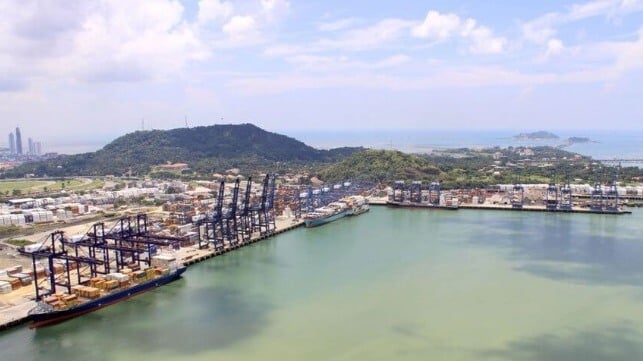
Balboa Panama
Hutchison is questioning the future oepration of the Panama terminals while pursuing legal recourse (Panama Ports Company)

Published Feb 12, 2026 2:23 PM by The Maritime Executive


CK Hutchison took further steps to protect its concession and investments in Panama, issuing a strongly worded statement invoking further legal actions. It asserts that the ongoing operation of the terminals at the Panama Canal “depends solely” on the actions of Panama.

The company continues to act in advance of the publication of the decision by the Supreme Court, which is reported to have ruled that the law establishing the concession for the terminals is unconstitutional. It continues to call the Panama court decision “unlawful,” highlighting that the law was in place for nearly 30 years to create the concession to operate the terminals in Balboa and Cristobal.

While the court decision is yet to come into force, CK Hutchison asserts Panama has “advanced steps toward a forced exit” and the transition of the port sector, “with no clarity as to operational plans.”

The company reports it filed a notice of dispute with Panama pursuant to an “investment protection treaty,” saying it was seeking to protect its rights and interests. This is in addition to the company reporting last week that it was seeking arbitration under the Rules of Arbitration of the International Chamber of Commerce. 

Hutchison Port Holdings Ltd. also reports that it notified AP Moller – Maerk that any steps by APM Terminals to assume the administration of the ports at Balboa and Cristobal without its consent would cause damages to the company. It warned it would seek legal recourse.

APM had indicated its willingness to temporarily oversee the operations after the announcement of the court’s decision. The government of Panama had suggested that APM become a temporary operator of the terminals until a new concession could be tendered. APM was quick to point out that it is not a party to the current legal dispute and had only expressed its willingness in response to the government. 

Hutchison asserts that as the government continues to push toward a forced stoppage or takeover, the court ruling could make the continued operation of the terminals impossible. In addition to warning APM, it also said other third parties were “warned against colluding in any unlawful action.”

The Chinese and Hong Kong governments have been critical of the court decision and the actions of Panama, with reports that they have told other companies to suspend investments in Panama. It has blamed the U.S. for political pressure after Donald Trump repeatedly said, “China runs that Panama Canal,” and threatened to take it back. Trump continues his campaign against China, recently saying Peru would lose its sovereignty if it continues to let China run the Chancay Port, which COSCO built and opened in November 2024.

CK Hutchison said it has “invited consultations” with Panama in an effort to resolve the steps taken by Panama and the court. It said it will continue to consult legal counsel regarding both national and international legal recourse. It says it is also committed to ensuring that steps are taken to protect the employees of the Panama Ports Company and to avoid disruptions to port operations in Panama.

The government has said it intends to conduct a new tender for the concession of the terminals at each side of the Panama Canal. Further, it said the operations of the terminals would be separated so that one company could no longer control the two ports. Panama has already started a separate tender for the construction of new terminals, which would further create competition and expand container handling capacity.


Senesco Marine Awarded Contract to Build Next-Generation Hybrid Ferry

Senesco Marine

Published Feb 12, 2026 10:33 PM by The Maritime Executive


[By: Senesco Marine]

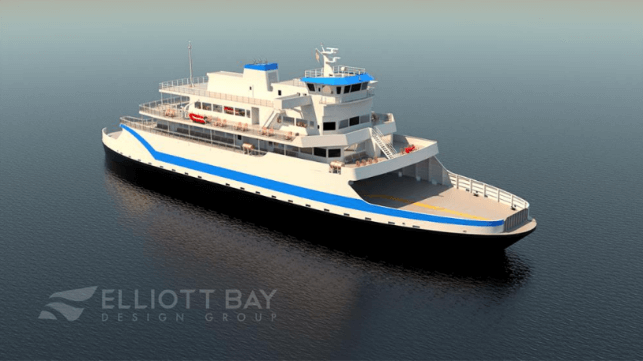
Senesco Marine has been awarded a contract by the Delaware River and Bay Authority (DRBA) to construct and outfit a new diesel-electric hybrid passenger and vehicle ferry for the Cape May–Lewes Ferry service. 1 The project is expected to support up to 200 Rhode Island jobs over the course of construction, including skilled trades such as welding, fabrication, piping, electrical integration, coatings, and commissioning, as well as engineering and quality-assurance roles. In addition to direct employment, the project will generate significant economic activity through regional suppliers, transportation providers, and support businesses, further strengthening Rhode Island’s maritime industry.

“This project represents a significant investment in Rhode Island’s skilled maritime workforce,” said Ted Williams, President of Senesco Marine. “Supporting up to 200 local jobs through this contract underscores our commitment to building high-quality vessels while creating meaningful, long-term economic impact for the communities where we operate.”

Engineering work on the new vessel will begin immediately, with construction scheduled to start in summer 2026 at Senesco Marine’s North Kingstown shipyard. The ferry will feature a first-of-its-kind design capable of operating in hybrid and all-electric modes. Compared to conventional diesel vessels, the new ferry is estimated to achieve annual emissions reductions of approximately 2,025 tons of carbon dioxide, 102.7 tons of nitrogen dioxide, 1.51 tons of fine particulate matter, 1.03 tons of hydrocarbons, and 5 tons of carbon monoxide, while reducing fuel consumption by an estimated 35 percent. Designed to serve one of the region’s most important transportation links, the Cape May– Lewes Ferry connects the southernmost tip of New Jersey with the southern shores of Delaware in an 85-minute crossing. The new vessel will be certified to carry up to 400 passengers and 75 vehicles. This contract underscores Senesco Marine’s continued commitment to innovation, sustainability, and U.S. shipbuilding excellence, while reinforcing Rhode Island’s role as a leader in the national maritime industry

The products and services herein described in this press release are not endorsed by The Maritime Executive.


Marine From USS Iwo Jima Declared Lost at Sea in MOB Incident

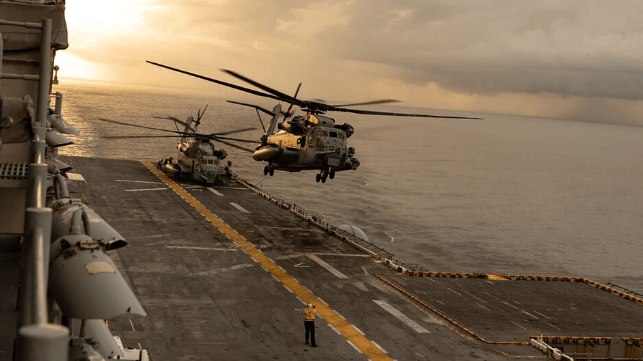
Marine Corps helicopter operations aboard USS Iwo Jima (USN file image)

Published Feb 12, 2026 3:44 PM by The Maritime Executive


Late Wednesday evening, the U.S. Marine Corps reported that a Marine had been declared lost at sea after falling overboard from the amphib USS Iwo Jima, which is currently deployed in the Caribbean for operations related to Venezuela. It is the first reported death in connection with the large-scale, multi-ship deployment. 

The deceased has been identified as rifleman Lance Corporal Chukwuemeka Oforah, age 21. II Marine Expeditionary Forces reported that he went over the side on February 7, and that five nearby vessels and 10 aircraft searched for him for 72 hours. Navy, Air Force and Marine Corps units all contributed to the search effort. 

Oforah was attached to a landing team in the 22nd Marine Expeditionary Unit (MEU), part of the USS Iwo Jima Amphibious Ready Group. Details of the MOB incident were not released, and an investigation is under way. 

"The loss of Lance Cpl. Oforah is deeply felt across the entire Navy-Marine Corps team. He will be profoundly missed, and his dedicated service will not be forgotten," said 22nd MEU commander Col. Tom Trimble in a statement. 

USS Iwo Jima is a Wasp-class "big deck" amphib commissioned in 2001. She played a role in the raid that resulted in the seizure of former Venezuelan dictator Nicolas Maduro, and was the landing pad for the returning helicopter flight that brought him into U.S. custody. 


Italian Cabinet Approves Bill to Allow "Naval Blockade" of Migrant Boats

Migrants on boat
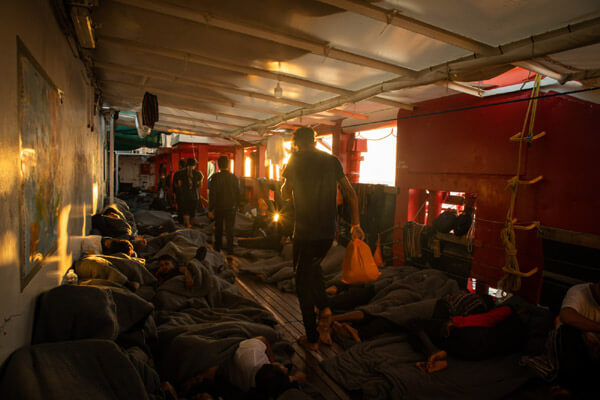
File image courtesy SOS Mediterranee

Published Feb 12, 2026 5:06 PM by The Maritime Executive


Italian Prime Minister Giorgia Meloni's cabinet has approved a bill that would provide her government with the power to impose a blockade on new migrant arrivals using the country's naval forces. The bill is the latest measure in Meloni's long - and by some measures successful - effort to stem maritime migration from Libyan shores, and it is among the most stringent yet proposed. 

The new bill includes a boost for border surveillance and gives the administration more ability to deport foreign nationals for criminal offienses, but its centerpiece is the naval-blockade element. It would allow Meloni to deploy Italy's navy to deter migrant vessels for up to 30 days in the event of "exceptional migratory pressure" or a "serious threat to public order." Other possible justifications enumerated in the bill include pandemics, terrorism risk, or security protection for major events. 

The bill appears aimed in part at maritime rescue NGO vessels, which routinely retrieve migrants from unseaworthy craft in international waters and then disembark them in Italian ports. The Meloni government has previously instituted a range of policy measures to reduce NGO vessel effectiveness, like minimizing the number of NGO rescues per trip and requiring maximum-distance transits to northern Italy for offloading, with vessel arrests and financial penalties for noncompliance. 

The new naval-blockade provision - if activated - would allow fines of up to about $60,000 for blockade-running vessels with migrants on board, or vessel confiscation by the Italian state for repeat offenders. NGO vessels are the only transport providers making multiple trips in and out of Italian waters, and if they continued operations during a declared 30-day blockade, they would appear to fall afoul of this provision. 

The bill would also enable Meloni's government to deport migrants intercepted at sea to third countries - not their nations of origin. The European Parliament has just approved parallel language allowing deportation to designated safe countries with a formal agreement with an EU member state, the first step towards EU-linked "offshore return hubs" that would receive migrants for processing elsewhere. The EU-listed "safe" third countries include Turkey, Georgia, Kosovo, Egypt, Tunisia, Morocco, India and Bangladesh. (In a statement, 39 human rights and rescue NGOs voiced opposition to the inclusion of Tunisia in the list, citing evidence of abuses.)

Italy's legislature would have to approve the naval-blockade bill in order for it to take effect. 


Page 1. MULTITUDE. WAR AND DEMOCRACY. IN THE AGE OF EMPIRE. MICHAEL HARDT. ANTONIO NEGRI ... pdf. 33. Richard Haass, for example, the U.S. State Department ...

Empire / Michael Hardt and Antonio Negri. p. cm. Includes ... missions of Empire will be constituent assemblies of the multitude, social ...


Singapore Arrests Crews from Three Tugs for Illegal Fuel Sales

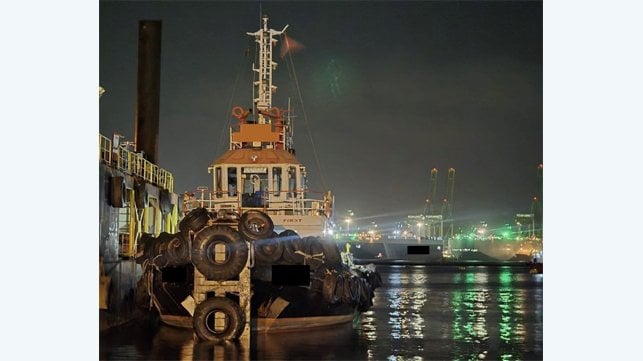
Tug arrested in Singapore
Singapore arrested the crews from three tugs for illegal fuel sales (Singapore Police)

Published Feb 12, 2026 6:27 PM by The Maritime Executive


The Singapore Police Force is reporting that it arrested the crews from three tugs working offshore on February 11 in what it suspects was an illegal effort at fuel sales. It comes as the Singapore bunker market continues to be at peak levels.

On February 11, at about 12:45 a.m. local time, officers from the Police Coast Guard located three tugs in the sea off Pandan, Singapore. According to the police report, two of the tugboats were foreign-registered, and the third one was a Singapore-registered tugboat.

The police took into custody a total of 18 men between the ages of 21 and 45. They were arrested for their suspected involvement in an illegal transaction of Marine Gas Oil (MGO).

Preliminary investigations revealed that the crew members allegedly misappropriated the MGO valued at about S$13,670 (US$10,826) without their company’s knowledge. The MGO was allegedly intended to be sold illegally for their personal financial gain.

The Police Coast Guard reports the 18 men were to be charged in court on February 12 with the offense of criminal breach of trust by employees. The offense carries an imprisonment term, which may extend to 15 years, and a fine.

The Police take a serious view of illegal transactions of MGO in Singapore waters. The authorities will continue to conduct enforcement and security checks to prevent, deter, and detect such illicit activities in Singapore waters.

The arrests come as the police continue efforts at strong enforcement, as the fuel market is booming. The strength of the shipping sector and the need for more fuel as vessels were traveling from Asia around South Africa to Europe is contributing to the strength of the bunker market.


Singapore’s bunker sales market has been steadily increasing for more than a decade, and today it is the world's largest marine refueling hub, according to S&P. Last fall, in its S&P Global Commodities at Sea report, S&P reported Singapore's bunker fuel sales in October were reaching record highs.

The Maritime and Port Authority of Singapore’s latest monthly report is for December 2025, where it reported total bunker sales of over 5.5 million tonnes, up 15 percent year-over-year. For all of 2025, it said bunker suppliers reported sales of 56.77 million tonnes, up more than three percent for the full year.


Pilot Falls into Ocean off Hawaii Attempting to Board Princess Cruise Ship

Princess Cruises
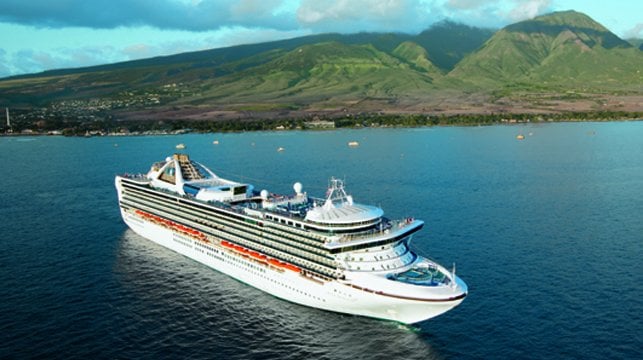
Princess cruise ship off Hawaii in much calmer circumstances (Princess Cruises)

Published Feb 12, 2026 7:57 PM by The Maritime Executive


Passengers onboard Princess Cruises’ Emerald Princess are reporting a scary event, which, however, had a positive outcome. The pilot coming out to meet the ship fell into the ocean, prompting an emergency Man Overboard call, while fast-acting crewmembers on the pilot boat were able to rescue the individual, apparently not seriously injured.

Travel agent and cruise passenger Walter Biscardi Jr. posted the details on his social media and recounted them to People.com. 

The 113,561 gross ton cruise ship, which is registered in Bermuda, was making port calls in a series of the Hawaiian Islands. On Tuesday, February 10, the ship was due to make a port call in Kuai.  According to Biscardi, the seas were rough, and the ship was rolling as the captain was maneuvering offshore and waiting for the pilot. He said they were waiting for about 20 minutes with severe winds blowing in the area.

Large cruise ships sometimes position themselves or make a series of turns attempting to create a lee alongside for the pilot boats. It is unclear if Princess was attempting that on Tuesday morning. The Emerald Princess is 951 feet (288 meters) in length. It has a capacity of 3,080 passengers and 1,200 crew.


“Then Man Overboard was called….I immediately ran out,” Biscardi writes in his social media posting.

He told People that the pilot had apparently made multiple attempts to get onto the ladder to board the cruise ship. Biscardi believes the pilot slipped off the ladder into “the churning ocean.” From his cabin balcony, he said it appeared the pilot remained calm and was directing the pilot boat, which was able to quickly get alongside the man in the ocean. Biscardi reports he could see two crewmembers from the pilot boat hoisting the pilot back aboard the boat.

Needless to say, the port call was canceled. The cruise ship proceeded to its next stop, which was Maui. 


Norwegian Cruise Line Holdings Appoints New CEO in Continuing Shakeup

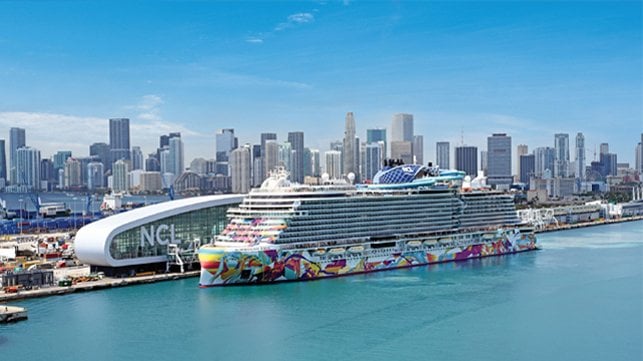
Norwegian Aqua cruise ship at NCL terminal Miami
Norwegian Cruise Line's newest ship at the company's signature terminal in Miami (NCL)

Published Feb 12, 2026 5:34 PM by The Maritime Executive


Norwegian Cruise Line Holdings, one of the largest public companies in the cruise industry, reported the sudden change of leadership as the company is pursuing major expansion efforts while it also continues to work on refining the positioning of its three cruise brands. The departure of President and CEO Harry Somner comes less than three years after he was elevated to the role and follows the sudden change last year of the president of its largest brand, Norwegian Cruise Line.

The Board of Directors announced the appointment of John W. Chidsey as President and Chief Executive Officer, effective immediately on February 12. Chidsey, who for five years served as Chief Executive Officer of Subway Restaurants, was appointed to the NCLH Board of Directors in February 2025. Previously, he also served on the NCLH board from 2013 to 2022.

In announcing the change, NCLH is emphasizing that Chidsey has “a proven track record of leading large global consumer-facing companies through strategic and operational transformation…. Across his career, he has been entrusted with leading companies at pivotal moments, strengthening execution, restoring operational discipline, and positioning organizations for improved performance.” It notes at Subway Restaurants that he led a multi-year effort to reposition the brand, modernize operations, and strengthen the company’s long-term growth trajectory.

Sommer had been with NCL and NCLH for more than 30 years, starting with marketing and later in positions in relationship marketing and international business development. He also spent years with Prestige Cruises, the luxury cruise holding company for Regent Seven Seas and Oceania Cruises. In 2020, he was elevated to the role of President and CEO of Norwegian Cruise Line and, in 2023, to the parent company as the successor to CEO Frank Del Rio.


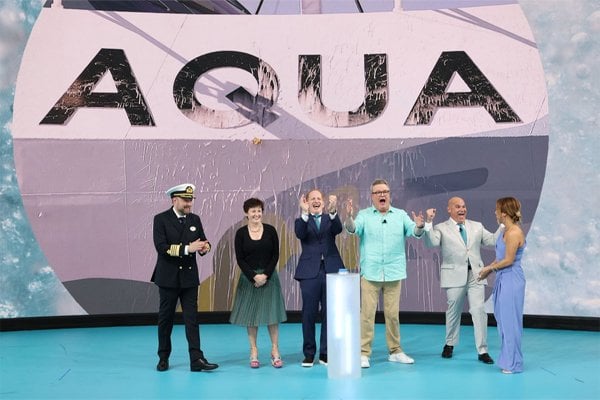
Sommer (center) and Herrera (right) seen at the christening in 2025 of Norwegian Aqua were both suddenly replaced as the company works to refine its strategies (NCL)


Sommer’s ouster follows several other high-profile management changes in the companies. David Herrera, who had been with the companies since 2015 and became President and CEO of Norwegian Cruise Line in July 2023, suddenly departed in August 2025. Marc Kazlauskas, most recently CEO of Avoya Travel, one of the largest travel companies in the U.S. and a leading travel platform and host agency, took that role as of January 19.

Analysts have highlighted that NCLH was under pressure to cut expenses and raise its Net Yields from the cruise business. It was also seen as playing “catch up” to its competitors, especially with its private destination, Great Stirrup Cay, in the Bahamas. The company recently opened a dock for its cruise ships at the private destination and is enhancing the waterpark features with a new pool and more luxury cabanas. 

In announcing the management change, NCLH sought to allay investors and analysts' fears, as the change comes less than three weeks before the scheduled year-end financial report on March 2. The company said  it expects its fourth quarter 2025 Net Yield to be around the midpoint of the previously disclosed range and expects its core quarterly and full-year 2025 results to be in line with its previously issued guidance

Chidsey takes the role as the company is midway through a repositioning of its brands, including moving Oceania more toward upscale luxury with an emphasis on destinations as well as food, and expanding Norwegian Cruise Line’s short cruises and family orientation. 

The corporation currently has a combined fleet of 34 ships and more than 71,000 berths between its Norwegian Cruise Line, Oceania Cruises, and Regent Seven Seas Cruises brands. It also has a large orderbook expecting to add 14 additional ships with 39,200 additional berths across its three brands through 2036.
 

Harry Sommer was the subject of a CEO profile and corporate case study in the January/February 2024 issue of The Maritime Executive. 


DHS Funding Lapse Appears Almost Certain, and U.S. Coast Guard Will be Hit

"The uncertainty of missing paychecks negatively impacts readiness and creates a significant financial hardship for service members and their families," 

Coast Guard boat
USCG file image

Published Feb 12, 2026 6:47 PM by The Maritime Executive


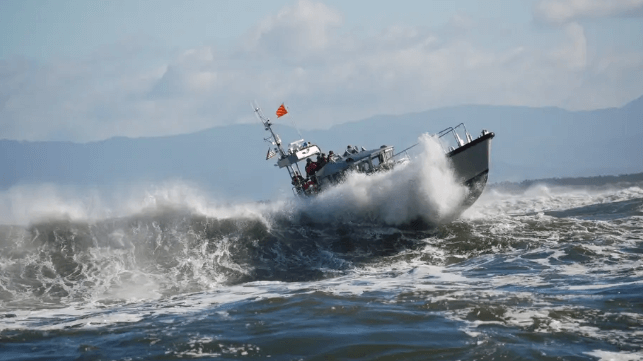
The U.S. Department of Homeland Security - including the U.S. Coast Guard - is expected to officially enter "shutdown" status on Friday night, as Senate Democrats have blocked a key funding package to keep DHS open. The decision to hold up the department's funding stems from Democrats' disagreement with immigration enforcement tactics, particularly the recent shootings in Minneapolis; Senate Democratic leadership demanded extensive changes in federal agents' rules of engagement, and when the Republican majority declined, Democrats voted on party lines to block the bill (via filibuster threat). 

As the Coast Guard happens to be co-located within the same department as Immigration and Customs Enforcement (ICE) and Customs and Border Protection (CBP), it will be just as affected - if not more so. For servicemembers and Coast Guard civilian employees, the shutdown could easily mean a gap in pay, along with a requirement for "essential personnel" - the majority of the service - to keep working. 

In a statement, DHS confirmed that as is usual practice, most employees would be required to come to work, without pay. "DHS essential missions and functions will continue as they do during every shutdown. However, during a shutdown, many employees will be forced to work without pay, putting strain on the frontline defenders of our nation," the agency said.

This is a familiar occurrence for the U.S. Coast Guard, and it puts strain on the service,  vice commandant Vice Adm. Thomas Allan said earlier this week.  

"The uncertainty of missing paychecks negatively impacts readiness and creates a significant financial hardship for service members and their families," warned Vice Adm. Allan in testimony before the House Appropriations Committee earlier this week. "This is not a distant administrative issue." Effects could include deferred maintenance on vessels, gaps in training for servicemembers, and negative impact on morale. 

The Democratic caucus' objections are targeted at DHS' Immigration and Customs Enforcement (ICE), but the lapse in funding is expected to have little effect on the target. Unlike the Coast Guard, ICE's finances are buffered by a giant $75 billion supplemental funding package passed as part of the One Big Beautiful Bill Act (OBBA) last year, and it is expected to continue to pay salaries and carry out its activities as normal by drawing down on this exceptionally large funding pool. Much of the burden of the shutdown will instead fall on non-target agencies, including the Transportation Security Administration, Cybersecurity and Infrastructure Security Agency, and the Secret Service.