Friday, February 13, 2026

WISHFUL THINKING

US envoy suggests Cuba has its own “Delcy Rodríguez” amid transition talks


US envoy suggests Cuba has its own “Delcy Rodríguez” amid transition talks
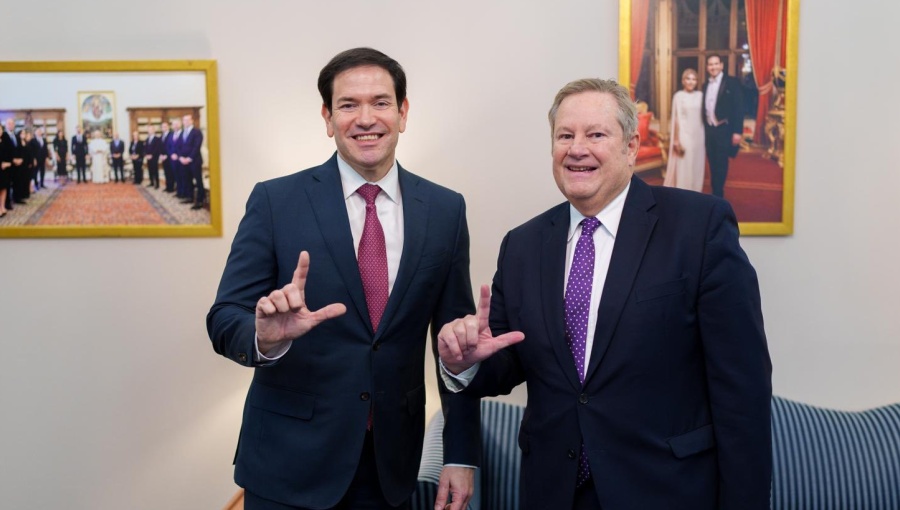
Mike Hammer, head of the US diplomatic mission in Cuba, and Secretary of State Marco Rubio have led the Trump administration's efforts to force regime change in Havana as the island faces economic collapse.
By bnl editorial staff February 12, 2026

The head of the US diplomatic mission in Cuba has revealed Washington is holding discussions with high-ranking government figures on the island, hinting a political transition is imminent as the Trump administration tightens economic pressure on Havana.

Mike Hammer told Miami-based Telemundo on February 10 that contacts were taking place with senior regime officials, though he indicated some members of Cuba's ruling party remained unaware of the conversations. "Obviously, there are conversations with some very high-ranking people within the regime. Others won't be aware of them," he said.

The diplomat suggested Cuba had a figure equivalent to Venezuela's interim president Delcy Rodríguez, who assumed office as US-handpicked leader following Washington's military intervention in Caracas on January 3 that resulted in Nicolás Maduro's capture. However, Hammer declined to identify the individual despite repeated questioning. "Yes, there is a Delcy Rodríguez," he stated.

The claims echo statements by President Donald Trump, who said in January and again in recent days that dialogue with Havana was under way and that developments would soon follow. The Cuban government has flatly denied negotiations are taking place beyond routine exchanges on migration and drug trafficking.

Carlos Fernández de Cossío, Cuba's deputy foreign minister, recently insisted any talks must occur "with mutual respect" and dismissed reports of internal divisions as malicious. "If people think there is a split within the Cuban government and a willingness on the part of a small group to cede Cuba's sovereign rights, that is a misinterpretation," he told EFE.

Spanish newspaper ABC reported that the dialogue was being mediated by General Alejandro Castro Espín, son of former president Raúl Castro, a version Hammer declined to confirm.

The US envoy warned of a "plan B" if progress was not achieved within weeks, pointing to 2026 as the target year for political change in Cuba. He drew parallels with Venezuela, where Trump offered a negotiated exit to Maduro in November before ordering military action weeks later when talks yielded no results. "We have to imagine similar timelines," Hammer said.

“Washington seeks a peaceful solution,” he added. "No one wants to see bloodshed, but it's very important that change happens," he said, whilst urging other nations to "wake up and help move this process forward".

Hammer described a country in rapid deterioration following visits to several Cuban provinces. "The energy infrastructure is collapsing, everything is going wrong," he said, citing energy system failures, declining tourism and rising insecurity.

The diplomat rejected suggestions that Cuba's crisis stemmed from the Trump administration's latest measures, including the January 29 executive order threatening tariffs on countries that supply oil to the island. That order prompted Mexico to suspend oil deliveries, dealing the final blow to the island's energy production network. 

"The embargo places no restrictions on food. The embargo places no restrictions on medicine. Cuba can trade with any country in the world," Hammer said. However, goods have begun accumulating at ports due to lack of fuel for distribution.

Cuba faces an acute energy crisis following the collapse of already dwindling oil deliveries from Venezuela, a close ally under former presidents Hugo Chavez and Maduro. Shipping data provider Kpler estimates Havana has just a few days of petroleum reserves remaining. The island, subjected to crippling US sanctions for over 60 years, has taken delivery of just one oil shipment so far in 2026.

Earlier this week, Cuban authorities informed international airlines that aviation fuel would be unavailable at all airports until March 11, threatening the island's vital tourism sector. The government has implemented emergency measures including a four-day working week for state employees, restrictions on fuel sales, and the closure of several hotels and resorts.

Power generation, which largely relies on ageing Soviet-era oil-fired plants, has been severely curtailed, with the state electricity operator reporting that 101 distributed generation plants sit idle due to fuel shortages, eliminating 927 megawatts of capacity. Prolonged daily blackouts have become routine whilst Cubans queue for hours at petrol stations and stock up on tinned food.

Hammer questioned why resources existed for "a repressive state machine", asking why police had fuel and vehicles whilst large sectors of the population lacked electricity and transportation.

He suggested that in a democratic scenario, reconstruction plans could be implemented with support from migrants and foreign investors. The electrical power system alone would require approximately $10bn investment, he said, noting Cuba lacks natural resources comparable to Venezuela's oil wealth.

Secretary of State Marco Rubio, the first US-born Cuban to hold the post, has made no secret of his desire to topple the communist regime. He told Congress last month: "We would love to see the regime change."

Breaking with years of defiance, President Miguel Díaz-Canel has indicated willingness to open dialogue with Washington, describing "economic strangulation by the world's leading power". But he has also launched military drills to prepare for potential instability, with Cuba's National Defence Council approving plans to shift the country into a "state of war" posture last month.

Hammer acknowledged facing hostile government-sponsored demonstrations in Cuba, but highlighted support from citizens who approach him with their problems. "Anyone within the inner circle knows that this is coming to an end," he concluded, insisting the United States seeks to support the Cuban people without legitimising the current regime's continued hold on power.

PETRO-IMPERIALISM

The UAE’s ascendancy in Africa

The UAE’s ascendancy in Africa
/ bne IntelliNews
By Brian Kenety February 12, 2026

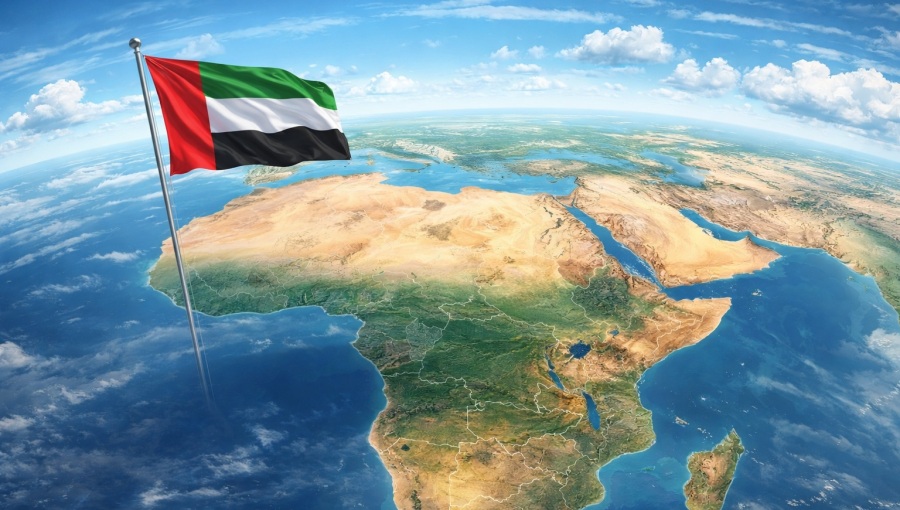
The United Arab Emirates (UAE) has stepped up the size and scale of commercial and strategic investment activity across Africa in recent months, with initiatives spanning ports and logistics, renewable energy, digital infrastructure and financial services, as Emirati state-backed groups and corporates look for growth markets – and influence – beyond the Gulf. 

The federation of seven emirates has long used its sovereign wealth funds and state-owned companies to drive investments, focusing on long-term economic stability and securing supply chains. The UAE rapidly emerged as a dominant economic and security actor in Africa, investing over $110bn in new projects between 2019 and 2023. It has also become a key security partner for over two dozen African nations, focusing on the Horn of Africa, North Africa, and the Sahel, making it a significant player in regional geopolitics.

“The United Arab Emirates has quietly but decisively positioned itself as one of Africa’s most consequential economic partners. Through its Comprehensive Economic Partnership Agreement (CEPA) program, the UAE is reshaping how trade, investment, and mobility between the Gulf and Africa are structured,” wrote Seade Caesar, Executive Director, Africa Global Policy and Advisory Institute.

“What began as a diversification strategy away from oil has evolved into a sophisticated form of economic diplomacy, anchored in bilateral agreements that go far beyond tariff reduction.”

CEPAs include tariff liberalisation, but their main value lies in services trade, investment protection, business mobility, and regulatory cooperation. For the UAE, Caeser argues, they serve three interconnected goals:

1) to diversify away from hydrocarbons by guaranteeing steady access to food, raw materials, and intermediate goods; 2) to lower regulatory barriers for UAE firms in logistics, finance, construction, aviation, and digital services; and, 3) beyond commerce, using CEPAs as instruments of economic diplomacy to reinforce its role as a global trade hub linking Africa, Asia, and Europe.

“Africa fits this strategy well. Its demographic growth, urbanization, and continental market integration offer scale, while its infrastructure and financing gaps create space for Gulf capital and expertise,” Caeser writes.

Alongside CEPA agreements, a key new plank of its current investment drive in Africa is digital infrastructure. In November 2025, the UAE announced a $1bn “AI for Development Initiative” aimed at expanding AI infrastructure and services across Africa, framing the programme around public services and climate and development priorities.

While that’s a long-term project yet to bear tangible fruit, a spate of deals in transport and trade sectors have been announced in 2026 that are set to make a more immediate and visible impact, while cementing the UAE’s position among the continent’s biggest investors.

Transport, trade and logistics

Dubai-owned DP World, a global ports and logistics operator, has continued to position Africa as a priority market. The company said in January its $442mn investment in Somaliland’s Berbera port remains on track despite regional political tensions over the breakaway Somalian territory’s status.

(In 2026, the UAE is strengthening its partnership with the African Union to support peace, security, and sustainable development, with a specific focus on water initiatives.  But its involvement has also faced scrutiny regarding its role in regional conflicts, such as the war in Sudan, where it has been accused of backing the Rapid Support Forces (RSF), a notorious paramilitary group fighting government forces since April 2023).

Abu Dhabi’s AD Ports Group (ADX: ADPORTS), a state-backed ports, maritime and logistics developer, has been expanding its African footprint in Tanzania, Angola and the Republic of Congo. It is now exploring infrastructure opportunities in Nigeria, as part of a broader agenda tied to the country’s Lagos–Calabar corridor and other strategic transport assets across West Africa. A formal agreement with the Nigerian authorities is under discussion that could see UAE capital deployed into port and trade infrastructure projects.

In Egypt, AD Ports has disclosed plans to increase its stake in Alexandria Container & Cargo Handling, a key operator at Egypt’s Mediterranean gateway. The move, announced in late 2025, is part of a strategy to expand international terminals portfolio and strengthen links between Gulf and Mediterranean trade routes.

Egyptian transport authorities have also highlighted growing cooperation with UAE-linked logistics firms in Red Sea and Suez Canal corridor developments.  Water Alliance Ventures, a consortium comprising UAE-based renewable energy developer AMEA Power and Spain’s Cox Water (MSE: COXG), has held talks with Egyptian authorities to explore cooperation and investment opportunities in seawater desalination projects across Egypt.

Nigeria, meanwhile, has also deepened trade and investment ties directly with the UAE. Earlier this year, the two countries signed a CEPA intended to boost trade facilitation and investment flows across sectors including machinery, construction equipment, cocoa and export-oriented manufacturing. The UAE’s Minister of Investment Mohamed H. Alsuwaidi, has projected that the government and private sector of the federation will invest over $10bn into the Nigerian economy alone within the coming years. 

First Abu Dhabi Bank (ADX:FAB), the UAE’s largest lender, is preparing to open a representative office in Lagos as part of a strategy to expand its presence in sub-Saharan Africa, marking its first physical entry into West Africa. First Abu Dhabi Bank already has exposure to Nigeria through its involvement with the African Export-Import Bank (Afreximbank) in financing infrastructure. The lender participated in funding Phase 1, Section 2 of the Lagos–Calabar Coastal Highway project, contributing $1.126bn. It currently operates in Egypt and Libya, and the addition of Nigeria will expand its international network to 22 countries.

The UAE has also deepened formal economic ties with the Democratic Republic of Congo (DRC) through the signing of a CEPA in early January. The agreement is expected to support trade, logistics cooperation and investment flows, with Congolese authorities highlighting mining and agriculture as priority sectors. The deal reflects Abu Dhabi’s interest in securing supply-chain relationships in critical minerals while expanding its commercial presence in Central Africa.

The UAE and Sierra Leone in mid-February also signed a CEPA aimed at expanding trade, investment and private sector cooperation between the Gulf and West Africa, with a focus on high -value sectors, including minerals, iron ore, bauxite and agriculture. Bilateral non-oil trade reached $153mn in 2025. The agreement is expected to accelerate that growth by opening additional channels for private sector participation and long-term investment partnerships.

“As 2026 unfolds, attention is shifting to the next wave of African partners. Among the most discussed are Ghana and Rwanda. Both countries occupy strategic positions within Africa’s political economy, and both align closely with the UAE’s long-term objectives in logistics, services, finance, and regional market access. This examines why these countries matter, what the UAE is seeking, and what African policymakers should be prioritizing as CEPA talks deepen,” wrote Caesar of the Africa Global Policy and Advisory Institute.

Beyond infrastructure, private capital flows from the UAE to Africa are broadening. A Dubai-based company recently committed around $1.6bn in investments across Nigeria, Ghana and Kenya in AI infrastructure and agricultural land projects over the next two years, including data centre and farm assets aimed at food security and digital capacity.

Green energy, regional power

In Angola, meanwhile, Abu Dhabi Future Energy Company (Masdar) signed a power purchase agreement (PPA) for the 150MW Quipungo solar project, adding to its pipeline in African power markets where EV and industrial electrification agendas are gaining traction.

The contract represents the primary phase of "Project Royal Sable," a broader 500MW green energy scheme spanning three distinct locations, and is seen as a critical step for Angola as it seeks to fix chronic power shortages in its southern regions and reduce its heavy dependence on traditional hydroelectric plants by tapping into the country's vast, underused solar potential.

Through its Infinity Power partnership, Masdar currently manages 1.3GW of clean energy across Egypt, South Africa, and Senegal. With a massive 13.8GW development pipeline, the Angolan venture supports the company’s global ambition to reach a 100GW capacity by 2030.

Meanwhile, Gabon has signed three memoranda of understanding with the UAE covering the mining, digital and logistics sectors, as the country seeks to accelerate economic transformation and attract foreign investment. The agreements are intended to boost local value creation and enhance Gabon’s appeal to international investors, the presidency said in a statement outlining the outcomes of the Abu Dhabi visit.

In mining, the MoU focuses on the exploration, development and commercialisation of gold projects in mineral-rich regions of the country. Gabon has been seeking to diversify its resource base beyond oil, with gold and other minerals identified as priority growth areas.

In the digital sector, Gabon renewed its partnership with Presight (ADX:PRESIGHT), an artificial intelligence and data analytics firm that is a subsidiary of Abu Dhabi-based technology group G42. Presight specialises in AI-driven big data analytics and digital transformation solutions for governments and enterprises.

The renewed cooperation aims to support the digital modernisation of Gabon’s public administration and key government services through artificial intelligence, advanced analytics and big-data systems, according to the statement.

UAE investment is not limited to commerce. The Gulf state’s development foundations and finance vehicles also back regional projects, while bilateral trade has grown significantly: the UAE’s trade with Africa reached roughly $107bn in 2024, reflecting expanding commercial linkages, according to government figures.

The UAE’s prime objectives 

Taken together, the recent flow of announcements points to a UAE strategy that pairs infrastructure-heavy investments (ports, logistics, power) with enabling platforms (AI/data capacity and financial services).

“Understanding the UAE’s motivations is essential for effective negotiation. The UAE is not primarily seeking access to African consumer markets for finished goods. Instead, itis focused on three deeper objectives,” writes Caesar: control and efficiency of trade corridors, services leadership in strategic sectors, and long-term investment in strategic assets.

“The UAE prioritizes securing and optimizing ports, airports, shipping lanes, and logistics hubs that link Africa to global markets. By investing in corridor infrastructure, the UAE reduces supply-chain risk, shortens delivery times, and positions itself as an indispensable transit and re-export gateway for African trade.

“Rather than competing on manufactured goods, the UAE seeks dominance in high-values ervices such as finance, logistics, construction, aviation, and digital platforms. CEPAs open regulatory space for Emirati firms to operate, scale, and embed themselves deeply within African economies.

“The UAE targets assets tied to food security, energy transition, minerals, and industrial inputs. Through CEPAs, it secures predictable investment conditions, aligns projects with sovereign wealth strategies, and ensures stable access to resources critical for long-term economic resilience.”

 

Taiwanese prefer peace over outright independence, study shows

Taiwanese prefer peace over outright independence, study shows
/ Rovin Ferrer - Unsplash
By Mark Buckton in Taipei February 13, 2026

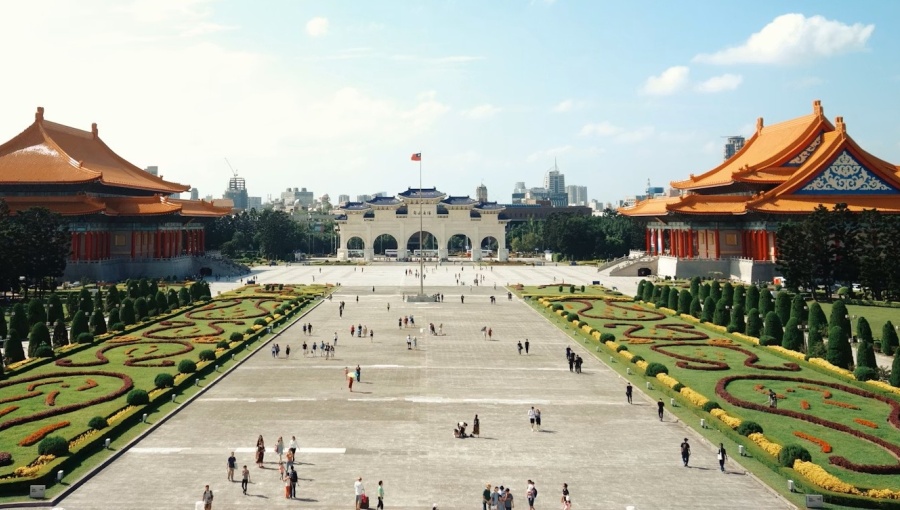
Support in Taiwan for formal, de jure independence remains limited and highly sensitive to both Chinese pressure and the posture adopted by Washington, according to new academic research examining how shifts in US foreign policy could influence public opinion on the island, a new report issued by Incheon National University in South Korea says.

For decades, the US has adhered to a doctrine of strategic ambiguity over Taiwan, largely acknowledging Beijing’s One China principle while continuing to maintain legal commitments that enable US forces to participate in Taiwan’s self-defence. That stance has broadly been seen as a means of deterring any unilateral moves towards independence in Taipei while also discouraging military adventurism from Beijing the report by Assistant Professor Dr. Kyung Suk Lee in the Department of Political Science and International Studies claims.

According to Lee’s report, the geopolitical environment has now become more fluid. Political leaders in Taiwan have pursued a more distinct international profile as officials in Beijing have reiterated their commitment to eventual reunification as it is termed by China. Yet Washington has also expanded its official-level contacts with Taipei. Against this backdrop, researchers sought to test how alternative US policy signals might affect Taiwanese attitudes towards independence.

The study which was carried out by scholars at both Incheon National University and Sogang University in South Korea was published in the Journal of Chinese Political Science, and surveyed 900 Taiwanese respondents.

Participants were presented with six hypothetical scenarios combining two forms of Chinese pressure; coercive military build-up or direct military strikes, as well as three possible US responses including continued ambiguity, explicit defence commitments, or out and out abandonment of Taiwan.

The results pointed to a public that is pragmatic and essentially cost-conscious. Across all scenarios, the report shows that a clear majority preferred maintaining the status quo of de-facto independence as is, without any formal international recognition. Support for this position stood at 73% under conditions of Chinese coercion and 68%, even in the event of military strikes.

When China was described as engaging in coercive military pressure short of open conflict, clearer US security commitments, however, did see an increase in support for formal independence by respondents, while a signal of abandonment only reduced it. When the possibility of outright military attacks were introduced a noticeable shift was seen. In this scenario, US ambiguity generated a higher degree of support for clear Taiwanese independence than either an explicit pledge to defend Taiwan or a declaration of non-intervention.

In other words, once conflict escalates, clarity does not necessarily stiffen pro-independence sentiment and may in some cases dampen it.

The findings themselves are seen as highlighting two possible dynamics. The most obvious is that Taiwanese respondents prioritise stability and peace over symbolic moves towards outright sovereignty if those moves risk provoking large-scale conflict with Beijing.

Stated independence rather than the de-facto version enjoyed by the nation today, however, whilst a significant factor for some, is not an absolute objective at any cost. Secondly, the impact of US signalling one way or the other is contingent on the type and intensity of any potential Chinese action.

As such, for policymakers in Washington, the implications are delicate on the Taiwan question. Explicit commitments to defend Taiwan may strengthen pro-independence sentiment under limited coercion by China, and in turn this may potentially alter political incentives in Taipei. At the same time though, an outright declaration of non-defence of the island could weaken deterrence while also depressing public confidence.

Once conflict moves beyond coercion to direct attack though, the relationship between US clarity and Taiwanese opinion becomes more complex and far less predictable.


Aluminum price rises as looming smelter closure adds to supply strains


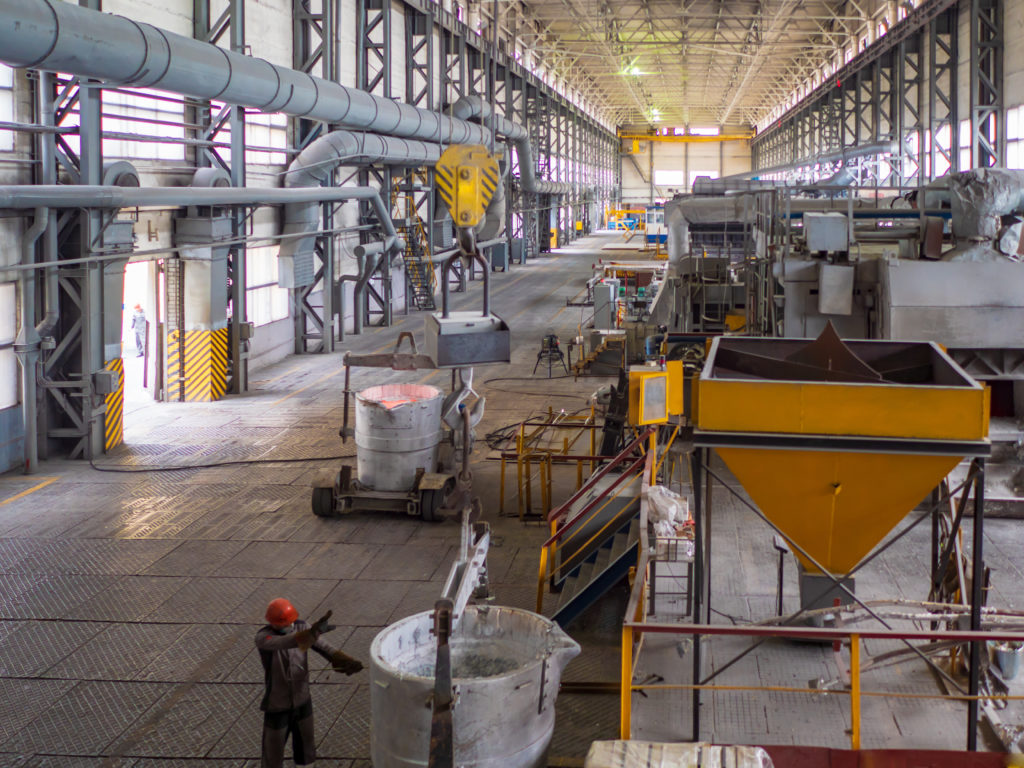
Aluminum plant. Stock image.

Aluminum led most industrial metals higher as the looming closure of a smelter in Mozambique underscored the growing constraints on supplies in key consumer markets.

Prices rallied as much as 2% to the highest in almost two weeks in London, as South32 Ltd. confirmed that it’s still planning to mothball its Mozal smelter in Mozambique next month, despite receiving some “inbound interest” in the asset. While the plant is small relative to China’s powerhouse aluminum industry, it’s a major supplier to the European market, and its closure adds to growing supply constraints weighing on key manufacturing hubs worldwide.

In China, smelters are nearing a government-imposed cap on production capacity, while 50% tariffs on the metal in the US have caused imports to slump and the all-in price of aluminum paid by manufacturers to skyrocket. Though demand has been sluggish globally, those tightening supply dynamics helped fuel a 17% price rally last year, and a further 5.5% advance so far in 2026.

Copper also extended gains, buoyed by a tighter supply outlook and a weakening dollar, even as Chinese buying waned ahead of the Lunar New Year break.

Investors continue to bet on rising demand from global manufacturing, the green transition and artificial intelligence, at a time when mine supplies are constrained by falling grades. Speculative funds, including those in China, have helped supercharge the rally in recent months. A weaker greenback makes commodities cheaper to buy in other currencies.

Although Chinese buying has tailed off ahead of next week’s holiday, overseas risk appetite remains, said Wu Kunjin, head of base metals research at Minmetals Futures Co.

Refined copper spot trades in China dropped to 13,400 tons on Wednesday, from a peak of over 38,000 tons on Feb. 2, according to consultancy Mysteel Global, citing a survey of plants. Open interest and trading volumes on the Shanghai Futures Exchange have dropped to the lowest since November.

Aluminum climbed 1.8% to $3,159 a ton by 10:28 a.m. local time on the London Metal Exchange. Copper rose 0.1% to $13,292.50 a ton. Nickel dropped 0.8%, paring recent gains after moves to cut output at the world’s biggest nickel mine in Indonesia.


Metals retreat on reports Trump may soften aluminium tariffs

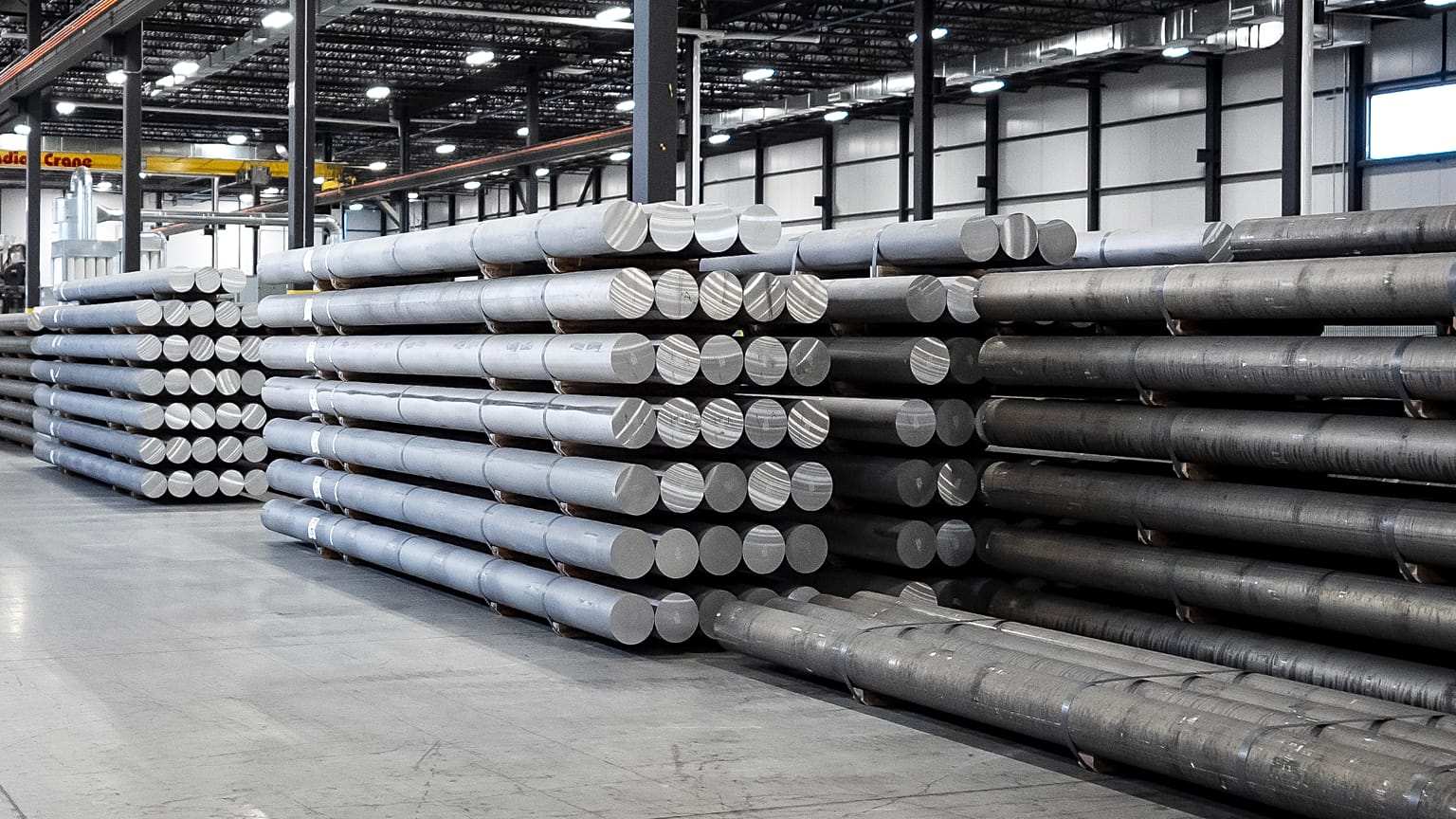
FILE. Aluminum billet awaits processing and extrusion at Magna Aluminum Profile's fully electric extrusion facility in Salaberry-de-Valleyfield, Quebec, 3 Sept. 2025.
Copyright AP Photo

By Una Hajdari
Published on 

The metal fell in morning trade alongside zinc, nickel, and lead as investors digested reports the White House could ease duties ahead of November’s midterms.

Aluminium prices edged lower on Friday as a broader pullback in metals gathered pace after reports that US president Donald Trump may roll back some tariffs on metal goods.

On the London Metal Exchange, the benchmark three-month aluminium contract slipped more than 2.5% to $2,965.75 a tonne by around midday, while the most-active contract on the Shanghai Futures Exchange fell 1.76% to 23,195 yuan (€2,832) a tonne.

Several core industrial metals have also moved lower on the day. Zinc was quoted at $3,316.50 a tonne, down $51.95 (-1.54%), nickel at $16,993.38, down $257 (-1.49%) and lead at $1,972.38 or down $10.30 (-0.52%).

The decline reflects growing expectations that Washington could loosen some of the restrictions that have tightened global supply chains and driven up costs for manufacturers.

According to a report from the FT, the White House is reviewing the extensive list of goods caught by tariffs on steel and aluminium and may exempt certain products, stop further tariff expansions, and rely instead on more targeted duties.

The shift comes as the administration grapples with voter dissatisfaction over the cost of living ahead of November’s midterm elections.

Trump imposed duties of up to 50% on imported metals last summer, later extending them to a wide range of everyday items.

The policy pushed US tariffs to their highest levels since before the Second World War, but economists say the levies have fed through to consumer prices, undermining claims that foreign producers would bear the burden.

Trump has since scaled back tariffs on popular food products in a bid to tame grocery price inflation for ordinary Americans and called a truce in its trade war with China after Beijing retaliated with its own tariffs.

Aluminium, in particular, sits at the heart of packaging, transport, and appliances, so even modest daily moves can quickly feed into expectations for input costs, especially if investors start to believe US tariff settings are becoming less restrictive than feared.


Trump aides urged sale of Congo lithium claim to a US company

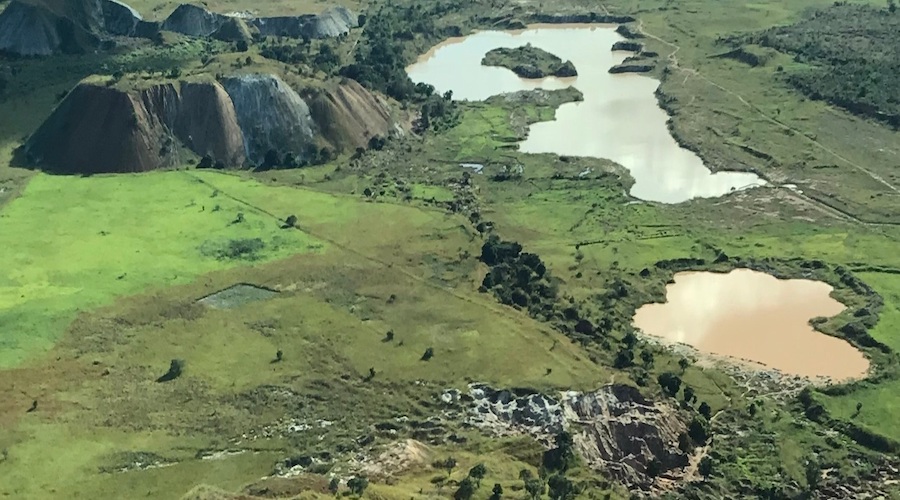
Aerial view of the Manono lithium project in the DRC. (Image courtesy of AVZ Minerals.)

During a meeting at the White House last month, Trump administration officials urged an Australian mining executive to sell his firm’s interest in a major African lithium project to a US company — an unusual session that offers a rare, behind-the-scenes glimpse into the administration’s deal-brokering as it pursues an ambitious and controversial policy on critical minerals.

People familiar with the Jan. 21 meeting described it as an effort by the White House and US State Department to persuade Perth-based AVZ Minerals Ltd. to sell its claim to the Manono lithium deposit in the Democratic Republic of Congo to a US firm. The people asked not to be named to discuss sensitive matters.

“The White House encouraged AVZ to do a commercially responsible deal with an American company — but did not nominate a specific company,” Nigel Ferguson, AVZ’s managing director, said in a statement responding to questions from Bloomberg News. “They are not putting pressure on AVZ to do a deal with a specific company, but with any vetted, genuinely American company.”

The only US firm that’s known to have an interest in taking over AVZ’s claim to the Manono lithium project is KoBold Metals, a Berkeley, California-based, AI-driven exploration startup whose backers include billionaires Bill Gates, Jeff Bezos and Marc Andreessen. KoBold, which has the support of the Congolese government, has offered to acquire AVZ’s interest at a price that AVZ executives consider far less than reasonable, according to people familiar with the offer. KoBold declined to comment. The firm’s interest in Manono was first reported by Bloomberg last March.

The US State Department also declined to comment. In response to questions about the Jan. 21 meeting, a US official said the administration is working in collaboration with Congolese officials “to identify opportunities for US investment throughout the DRC including the critical minerals sector.”

Descriptions of the White House meeting provided to Bloomberg News reflect the Trump administration’s new approach to boosting projects and companies it deems critical to US national security. Lithium is key for making rechargeable batteries, mainly used in electric vehicles but also in military communications equipment, drones and weapons systems.

During the session, US officials including special adviser to the president David Copley and State Department adviser Chris Kulukundis made clear that getting access to Manono — one of the largest hard-rock lithium deposits in the world – is a top priority for American officials, including President Donald Trump, who are working to reduce China’s commanding lead in securing supplies of critical minerals.

“Because of how distorted supply chains have become due to China’s dominance, we can’t go into this competition for access by playing by Marquess of Queensberry rules,” said J. Peter Pham, a former US special envoy to Congo and its surrounding region during Trump’s first term. He’s currently a distinguished fellow at the Atlantic Council’s Africa Center in Washington and executive chairman of a firm developing an iron-ore mine in the West African nation of Guinea. The Queensberry rules, established in 1867, created modern boxing in part by replacing bare-knuckled fighting with mandatory gloves.

With respect to Manono, the Trump administration has some potential leverage: An economic partnership agreement with Congo that’s designed to give American investors preferential access to some of Congo’s abundant mineral reserves also calls for strengthening the two nations’ “cooperation in security, defense and protection of critical infrastructure.” That pact, which was announced in December, could serve as a framework for providing enhanced security for a mine and related facilities — no small consideration in Congo, where thousands of people were killed last year alone in fighting between rebels backed by neighboring Rwanda and Congolese forces.

The rebels, known as M23, currently occupy a vast area in Congo’s eastern provinces a few hundred miles from Manono, but they have at times threatened to move south toward Tanganyika province in southeastern Congo where the mining project is located. Over much of last year, Trump and his administration sought to quell the violence and enhance US influence over Congolese affairs by brokering a peace agreement known as the Washington Accords. Trump, accompanied by leaders from Congo and Rwanda, signed the accords in December. The shakiness of the pact was highlighted just days later when the M23 captured a third major Congolese city before withdrawing a few days later.

It’s unclear what form any enhanced security might take, but foreign policy experts in Washington said the Manono discussions fit into a broader pattern of the US seeking “minerals-for-security” deals around the world.

“There’s something that the US gets as well,” said Heidi Crebo-Rediker, a senior fellow on the Council on Foreign Relations and the co-author of a report published this month on how the US can leapfrog China to dominate critical-mineral supply chains. “It’s a much more forceful approach than we’ve seen in the past. We’ve moved from carrots to sticks.”

Pham agreed. “If you want to benefit from America’s diplomatic and security cover, the US is going to want American companies to have privileged access to economic opportunities in line with Washington’s strategic investment in partnership,” he said.

It sounds to me like a material shift in tone to say, ‘sell it to the Americans’

Pressing for a sale to a US firm would represent a new edge in US policy, said Peter Harrell, a former Biden administration economic adviser who’s now at the Carnegie Endowment for International Peace.

“It isn’t uncommon for US government officials to meet with a foreign company that has a strategic asset it might be selling and saying: ‘We’d like for that to not end up in Chinese hands,’” said Harrell, who previously worked at the State Department and the White House and said he’d been involved in such conversations. “It sounds to me like a material shift in tone to say, ‘sell it to the Americans.’”

AVZ’s rights to the Manono project have a convoluted history. Congo revoked the mining permit in 2023, after the Australian company had found Manono to contain one of the largest hard-rock lithium deposits in the world. The authorities then awarded the northern half of the concession to China’s Zijin Mining Group Co., which is set to start producing the mineral in mid-2026. AVZ has initiated international arbitration cases to recover the entire exploration license.

KoBold, the US firm, wrote to the office of Congo’s president in January 2025 to say that in order to advance its plans for mining the southern part of Manono, AVZ would need to receive “appropriate compensation” and agree to transfer all its interests in Congo to KoBold.

State-owned Cominiere SA now owns the license covering the southern portion of Manono, according to Congo’s register of mining rights. “It’s ill-advised for AVZ to engage in negotiations about a permit which doesn’t belong to it,” said managing director Celestin Kibeya.

Complicating matters further is that a Chinese joint venture involving Contemporary Amperex Technology Co., or CATL, the world’s largest battery manufacturer, is AVZ’s biggest shareholder and has an agreement with the Australian company to purchase Manono’s lithium production. That investor is also funding AVZ’s arbitration campaign.

During last month’s White House meeting, officials expressed urgency to secure a deal. Last week, Secretary of State Marco Rubio played host to a major ministerial meeting of global government officials involved in critical minerals. As part of the ministerial-level event, the US and its allies pitched price floors as a way to shield Western critical minerals companies from China’s dominance of the global market.

Manono is just one of several mining projects Congolese and US officials have identified as key to the Washington Accords. Another part of the negotiations entailed finding a US buyer for Chemaf SA, which received financial backing from Trafigura Group and is building one of the world’s largest cobalt mines.

Chemaf put itself up for sale more than two years ago after a slump in cobalt prices stalled expansion works. The heavily indebted company scrapped a deal with a Chinese firm 10 months ago because Congo withheld the necessary approvals. US officials in the Biden administration also urged the central African country to prevent the transaction, Bloomberg has previously reported.

A firm headed by veterans of the US military and intelligence services agreed to buy Chemaf, Bloomberg reported last week. The company, Virtus Minerals Inc., will pay an undisclosed sum for Chemaf and assume the firm’s liabilities, including debt owed to Trafigura, managing director Phil Braun said.

In an email at the end of January, Virtus told Chemaf that Virtus had received the support of the US State Department. The email, which was reviewed by Bloomberg News, was carbon copied to Kulukundis, the State department adviser.

A third Congolese mining project singled out for US investment is the tantalum deposits at Rubaya in eastern Congo, but any progress would be impossible until the M23 withdraw from that area.

Congolese officials believe US political pressure in the region has been crucial for halting further advancement of the M23. China’s Zijin is planning an export route for the Manono lithium via Kalemie port on Lake Tanganyika, 450 kilometers (280 miles) away, and it’s currently building a road to the port.

Manono’s lithium would be boarded onto ships bound for Tanzania on the other side of the lake, and ultimately to China and global markets.

“The fact is, markets have failed. It’s ended up in a near-monopoly situation of China controlling 80% of processing for critical minerals,” Pham said. “The solutions of the past aren’t sufficient.”

(By Joe Deaux, Sheridan Prasso, William Clowes and Michael J Kavanagh)