Tuesday, February 17, 2026


Madagascar and Landlocked Zimbabwe Warm IMO of False Flags
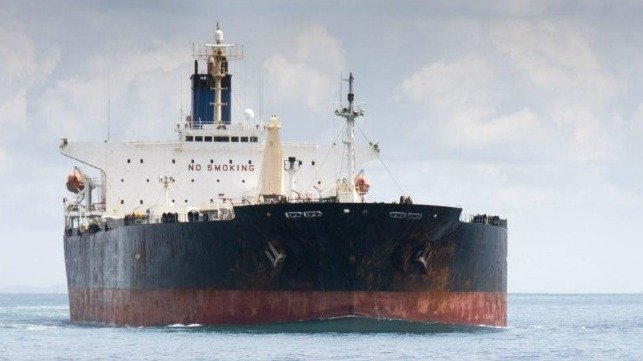
tanker
More countries are warning of false flag claims mostly by shadow fleet tankers (file photo)

Published Feb 17, 2026 3:13 PM by The Maritime Executive


The scourge of false flag operations continues to pop up, moving from country to country, with Madagascar and Zimbabwe being the latest to issue alerts to the International Maritime Organization and other regulatory bodies. They follow the African nation of Cameroon, which said it was suspending international registrations, and recent warnings from South Pacific nations, including Vanuatu, the Cook Islands, and Tonga. 

Madagascar, in its notice to the IMO dated February 9, highlights that the “common characteristics” of the effort, including fraudulent telephone numbers and email addresses, “suggested an organized operating method.” It notes that there are no links to any of the authorized organizations that Madagascar uses for statutory certificates.

Observers have recently noted shadow tankers displaying Madagascar as their registry, and the government reports it became aware of the situation at the end of 2025. It says organizations, including Starshell Marine, S&P Global, the Tokyo MOU, and the Turkish MRCC, had submitted documents for verification. Madagascar identified them as “forged certificates” and false registrations claiming the Malagasy flag. 

It notes the common identification of “International Maritime Registry,” while no such entity exists under Malagasy law. It warns that these documents have no legal basis. 

Reviewing the situation, it identified nine tankers that specifically have made the claim to its flag. It further warns that there could be additional vessels.

The government reports it is monitoring the registration fraud and lodged a complaint with its judicial authorities. It has also handed the matter over to its ministries of justice and foreign affairs.

The Equasis database currently lists 25 vessels, almost exclusively tankers, as claiming a false Malagasy flag. Madagascar has 136 ships that are legitimately registered, according to the database.

Zimbabwe, which is a landlocked nation in central Africa, has no legally registered ocean-going ships and does not have a Registrar of Ships or a Zimbabwe Maritime Authority. However, it received inquiries about a tanker named Range Vale claiming to be registered in the country. It declares to the IMO that there is no such organization as a “Maritime Authority” in Zimbabwe.

The Range Vale (111,775 dwt) tanker, built in 2005, is reported to be owned by a company in St. Kitts & Nevis. Equasis lists the vessel as flag-hopping through a series of false flags since last September, when it took on this identity. It reported Comoros, then Zimbabwe, and now Sierra Leone, all listed as false. The ship’s AIS signal shows that today (February 17), it is anchored off Port Said, Egypt, waiting for a Suez Canal transit, declaring it is heading to Singapore.

While Range Vale appears to have dropped its claim to the Zimbabwe flag, Equasis lists another tanker, Ruby Cross (110,500 dwt), currently falsely claiming Zimbabwe. Built in 2007, it is listed as owned by a company registered in the Marshall Islands, while it has had its classification withdrawn by the China Classification Society. Previously, it also falsely claimed the flag of Comoros, according to Equasis. Its AIS signal reports that this tanker is anchored off China.

Zimbabwe’s alert to the IMO, dated February 11, came less than a week after Cameroon’s Ministry of Transport issued an official communique dated February 6 saying that it was suspending registrations for vessels intended to navigate outside Cameroonian waters until further notice. It says the action was pending reforms aimed at strengthening the legal framework governing registrations after it became aware of fraud.

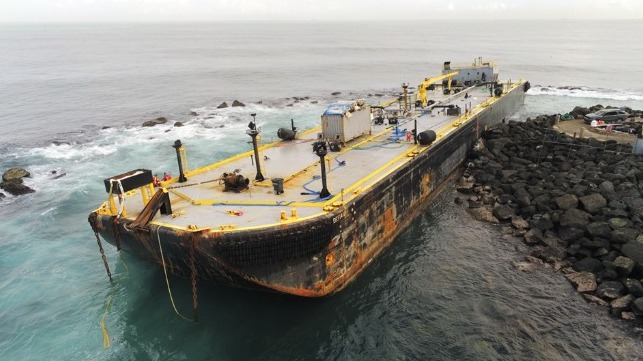
 

Salvors Finish Defueling Grounded Barge at San Juan's Harbor Entrance

Barge
Courtesy USCG

Published Feb 17, 2026 3:26 PM by The Maritime Executive


The U.S. Coast Guard and commercial salvors have completed the removal of the last bits of recoverable fuel from the grounded barge at the entrance to San Juan's harbor, the service confirmed Tuesday. 

The barge Defiant broke away from its towing vessel on February 9 in foul weather. It ran aground that afternoon at a position next to San Juan's harbor entrance, right at the foot of the El Morro fortress. The barge landed between a manmade breakwater and a riprap revetment, and its hull was in contact with rocks on both ends. 

The brge was used to deliver fuel to the USVI, which is reliant on shipments of refined products for power generation. The power authority for the territory told local media that the transportation provider has secured a replacement barge and that the grounding is not expected to impact the local economy. 

Salvage efforts have been slowed by heavy seasonal swell affecting the north shore of Puerto Rico. The commercial salvor has submitted a plan for removing the tank barge, but it will not be easy; the location is difficult, and five out of the vessel's ten tanks have been breached, the Coast Guard told St. Thomas Source - adding complexity for any potential refloat attempt.

The barge had an estimated 1,000 gallons of leftover fuel in its tanks at the time of grounding, and while the amount of any release is unknown, it is expected to have minimal effects on the environment. 

The Coast Guard has formed a unified command with the barge operator and with local authorities to oversee the response operation. An investigation into the cause of the barge's breakaway and grounding is under way.

CRIME AGAINST HUMANITY

Video U.S. Strikes Three Boats in One of Deadliest Days of Drug Campaign

strike on alleged drug running boat
SOUTHCOM released video of three more boats being struck (SOUTHCOM)

Published Feb 17, 2026 4:18 PM by The Maritime Executive


In what is one of the deadliest days of the Trump administration’s campaign against drug runners, SOUTHCOM is reporting three strikes in one day, the first time the U.S. has targeted boats on both the Atlantic and Pacific on the same day. Observers also note that the pace of the strikes is accelerating.

Few details were provided with the posting of a new video on social media. The strikes reportedly took place late on February 16, and the announcement repeated the allegation that the boats were operated by designated terrorist organizations. “Intelligence confirmed the vessels were transiting along known narco-trafficking routes and were engaged in narco-trafficking operations,” wrote SOUTHCOM.

The first boat struck on the Pacific was reported to have had four people and was a typical fast-go boat with five outboard motors. However, it was not moving when the strike came. Only the second boat was underway, traveling at a high speed with what appears to be four outboard motors and an open area that appears to have bundles. Four people were also aboard the boat, according to the report, and it was also in the Eastern Pacific.

The third strike was reported in the Caribbean, but it is more difficult to discern because the image is higher and more distant. The boat, however, was clearly drifting and not underway. SOUTHCOM reports three people were aboard.


With the 11 people killed in these strikes, the media reports are calculating the death toll at 144 or 145 people since the campaign began in September. Two known survivors of the attacks were handed back to their countries. The Associated Press says there have been a total of 42 known strikes. 

The U.S. was also reported to have killed 11 people on December 30 when it struck three boats traveling together on the Pacific. However, in that instance, it was estimated that eight of the people aboard the second and third boats jumped into the ocean after the first boat was hit. None were recovered, despite a search by the Coast Guard, and all were presumed to have died.

The New York Times reports that the strikes are now coming at a pace of every three or four days. It points to the change in command, with SOUTHCOM now led by General Francis L. Donovan after Admiral Alvin Holsey retired. The paper writes that Admiral Holsey “had expressed concerns about the strikes.”

The Trump administration has vowed to keep up the strikes on the boats.

Opinion

Algorithms and AI have turned Gaza into a laboratory of death


February 17, 2026 


A view of makeshift tents amid the rubble left behind by Israeli attacks as Palestinians carry on with their daily lives under harsh conditions in Gaza Strip on February 16, 2026. [Saeed M. M. T. Jaras – Anadolu Agency]

by Sayid Marcos Tenorio
soupalestina
Middle East Monitor.


The revelations by +972 Magazine and Local Call have exposed the darkest core of the contemporary war in Gaza, in which genocide is carried out not only by bombs and missiles, but by data, algorithms and global digital platforms.

The Israeli artificial intelligence system known as Lavender has confirmed what the Palestinian resistance, Lebanon, and Iran have denounced for years: Technology as an organic part of the Zionist war machine, functioning as an instrument of surveillance, target selection, and mass extermination.

The liberal rhetoric of “digital privacy” collapses in the face of the facts. Applications such as WhatsApp insist on the promise of end-to-end encryption, but conceal what is essential, in which metadata are worth more than messages.

Location, contact networks, patterns of communication, and group affiliations make it possible to map the social life of an entire people. In Gaza, these data have been incorporated into military systems that turn human relationships into algorithmic criteria for death.

Lavender assessed virtually the entire population of the Gaza Strip, comprising more than 2.3 million people, assigning automated “risk scores”. Merely being in a WhatsApp group, maintaining frequent contact with someone already marked, or displaying digital patterns considered “suspicious” was enough to be placed on execution lists.

Human supervision was deliberately minimal, reduced to seconds, with conscious acceptance of high error rates. Entire families were killed in their homes, treated as “acceptable collateral damage” in an algorithmic equation that normalises massacre.

This is not a technical deviation. It is a policy of extermination. International Humanitarian Law explicitly prohibits indiscriminate attacks and requires distinction between civilians and combatants.

Systems that automate lethal decisions, pre-accepting the death of innocents, constitute crimes against humanity and reinforce the characterisation of genocide as a technologically organised and rationalised process.

The machinery that sustains this model is global. Twenty-first century espionage no longer depends on intercepting messages, but on controlling digital ecosystems.

Private platforms function as permanent sensors of planetary social life, feeding databases accessible to intelligence services such as the Mossad and the CIA, through formal cooperation, legal pressure or the exploitation of vulnerabilities. This represents a structural convergence between big tech companies, the military-industrial complex and the imperial security apparatus.

Palestine is the laboratory. In an official statement released during the war, Hamas stated on its Telegram channel that “the occupier has turned every modern tool into a weapon against the Palestinian people, using technology to justify the killing of civilians and to conceal genocide behind technical terms”

(free translation). The denunciation is clear: Israel is not waging a war against combatants, but against Palestinian existence itself, now mediated by algorithms.

Lebanese Hezbollah has warned that this model forms part of a regional hybrid war, combining digital surveillance, technological sabotage, and selective attacks.

After the attack that occurred in Lebanon in 2024, involving the coordinated explosion of pagers used by its members, Hezbollah declared through institutional channels that “the enemy has turned civilian devices into tools of assassination, proving that its war knows no ethical or human limits” (free translation). The episode revealed a new level in the weaponisation of everyday technology.

This pattern is not isolated. International investigations have already demonstrated the recurring use of military spyware against journalists, activists, and political leaders in various countries, often through smartphones widely available on the global market.

The message is unequivocal: every connected device is a potential instrument of surveillance, control, or death when inserted into the logic of imperial power.

Leaders of the Islamic Republic of Iran have been particularly outspoken. The Iranian Supreme Leader, Ayatollah Ali Khamenei, has stated in various speeches that “the Zionist regime is a cancerous tumour that uses the most modern tools to oppress and massacre peoples”.

Iranian authorities maintain that Gaza foreshadows the future of imperial domination, in a world governed by algorithmic surveillance, selective assassinations, and “clean” wars only in rhetoric.

The Lavender case thus exposes the consolidation of a digital necropolitics. Algorithms decide who lives and who dies; corporations provide the infrastructure; intelligence services operate in the shadows; and technocratic language seeks to normalise the unacceptable. Gaza bleeds so that this model may be tested, refined, and then exported.

Denouncing this machinery is a historic task. It is not merely a matter of solidarity with the Palestinian people, although that solidarity is urgent and non-negotiable.

It is about resisting a world in which data are worth more than lives, in which technology serves colonialism, and in which genocide is presented as an “algorithmic decision”. Today it is Gaza. Tomorrow, any people who dare to resist.

The views expressed in this article belong to the author and do not necessarily reflect the editorial policy of Middle East Monitor.


Researchers discover 5,000-year-old bacteria resistant to modern antibiotics

A Tropical Medicine University virology lab researcher works to develop a test.
Copyright  Copyright 2021 The Associated Press. All rights reserved.

By Marta Iraola Iribarren
Published on 

A strain of bacteria found in a Romanian ice cave is resistant to ten modern antibiotics, according to a new study.

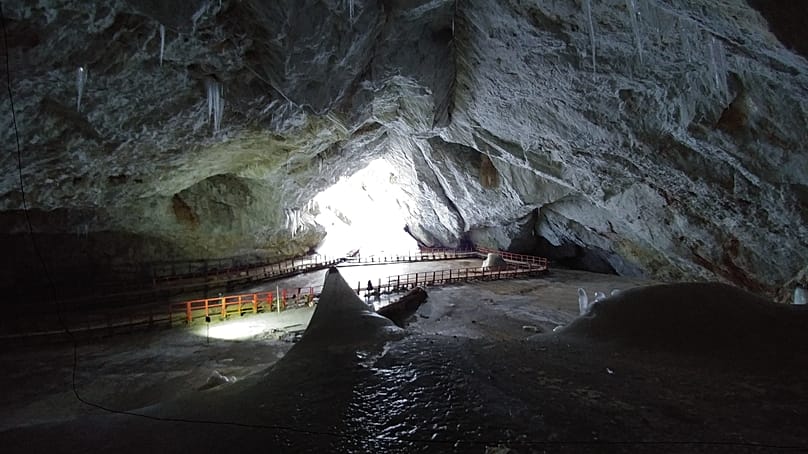
Frozen bacteria kept for 5,000 years in an underground cave have been found to be resistant to modern antibiotics, researchers say. In the depths of ScăriÈ™oara Cave, one of Romania’s largest ice caves, preserved under a 5,000-year-old layer of ice, scientists discovered a strain of Psychrobacter SC65A.3 – bacteria resistant to modern antibiotics.

Bacteria can survive for thousands of years under extreme conditions: under ancient layers of ice, in permafrost, under the sea, or in glacial lakes.

These bacteria play by their own rules, having adapted for survival and persistence over time.

Now, Romanian researchers have found that the SC65A.3 strains of Psychrobacter – bacteria adapted to cold environments – are resistant to 10 modern antibiotics from 8 different classes.

“The Psychrobacter SC65A.3 bacterial strain isolated from ScăriÈ™oara Ice Cave, despite its ancient origin, shows resistance to multiple modern antibiotics and carries over 100 resistance-related genes,” said Cristina Purcarea, author of the study and scientist at the Institute of Biology Bucharest of the Romanian Academy.

The Cave’s ice block measures 100,000 cubic meters and is approximately 13,000 years old – making it the largest and oldest underground ice block.

The research team drilled a 25-meter ice core from the area of the cave known as the Great Hall. By analysing ice fragments from this part of the cave, they isolated various bacterial strains and sequenced their genomes to determine which genes allow the strains to survive in low temperatures, and which confer antimicrobial resistance.

Scărișoara Ice Cave in Romania. Paun V.I.

Purcarea added that the antibiotics they found resistance to are widely used in oral and injectable therapies used to treat multiple serious bacterial infections in clinical practice, such as tuberculosis, colitis, and urinary tract infections (UTIs).

Previous studies have analysed other strains of Psychrobacter bacteria, mainly for their biotechnological potential, but the antibiotic resistance profiles of these bacteria are largely unknown, the study noted.

“Studying microbes such as Psychrobacter SC65A.3 retrieved from millennia-old cave ice deposits reveals how antibiotic resistance evolved naturally in the environment, long before modern antibiotics were ever used,” said Purcarea.

While antimicrobial resistance is a natural phenomenon, it has been accelerated by chronic antibiotic use, promoting the diversification and spreading of antibiotic resistance genes, the researchers noted.

The results, published in Frontiers in Microbiology, found that, with 20 percent of Earth’s surface comprising frozen habitats and low temperatures characterising much of the biosphere, understanding cold-adapted microbes is increasingly critical amid rapid climate change.

Antimicrobial resistance, a growing concern

Antimicrobial resistance (AMR) causes millions of deaths every year worldwide. In Europe, it is estimated to be the cause of over 35,000 yearly deaths – a number expected to rise in the coming years.

A handful of factors have created the perfect environment for AMR across the region, the European Centre for Disease Prevention and Control (ECDC) said last year.

Europe’s ageing population is more vulnerable to infections, drug-resistant pathogens are spreading across borders, doctors and patients are overusing antibiotic medicines, and there are critical gaps in infection prevention and control efforts.

One in six bacterial infections worldwide is now resistant to standard treatments, according to the World Health Organization (WHO).


Single-dose of ayahuasca’s active compound could help ease depression, research finds

FILE: A man brews ayahuasca a psychedelic tea locals know as the Holy Daime in Ceu do Mapia, Amazonas state, Brazil.
Copyright Copyright 2016 The Associated Press. All rights reserved.

By Marta Iraola Iribarren
Published on 

One dose of the active compound in ayahuasca significantly improves depressive symptoms in early stages of a clinical trial, according to a new study.

Dimethyltryptamine (DMT), a potent natural psychedelic and a primary psychoactive component of ayahuasca, could work as an antidepressant, a study published in Nature has found.

Researchers at Imperial College London conducted a trial that demonstrated DMT’s potential to ease symptoms of depression.

Intravenous DMT has a short half-life – the time it takes for the concentration of a drug in your bloodstream to drop by half after administration – of around five minutes due to rapid metabolism.

This allows for shorter therapeutic sessions, potentially improving patient convenience and reducing costs, the research noted.

The trial is a phase 2a clinical trial, meaning a pilot study designed to provide preliminary evidence of a drug’s efficacy and to determine the most effective dose for future trials.

The number of participants is typically small, between 30 and 50, to minimise exposure to potentially ineffective treatment and to focus on a targeted patient group.

The research team in London included 34 participants who had lived with depression for an average of 10.5 years. They were randomised so that 17 received the placebo, and 17 received the active substance.

Participants received a single 21.5 milligram dose of DMT or placebo infused over 10 minutes, alongside psychotherapeutic support.

After a two-week follow-up period, those treated with DMT showed a significantly greater reduction in depressive symptoms than those who received the placebo. The effects persisted up to three months after the start of the trial.

The researchers found that DMT was well-tolerated, with no serious adverse events. Most side effects were mild or moderate, the most common being pain where the patients received the injection.

Independent experts cautioned that, while the findings are promising, further research is needed to assess the treatment’s efficacy.

“In terms of safety concerns, there may be a risk of negative experiences during the psychedelic experience that could be frightening or traumatising,” said James Stone, professor of psychiatry, Brighton and Sussex Medical School.

He added that certain groups of people may be more susceptible to these types of effects, and further studies are required to identify how often they occur.

Need for new depression drugs?

Approximately 332 million people in the world have depression, according to the World Health Organization. In Europe, more than 25 million people are estimated to live with depressive disorders.

The most common treatments include antidepressant medications and psychotherapy. However, the study authors noted that many patients experience insufficient improvement or unacceptable side effects from selective serotonin reuptake inhibitors (SSRIs), the most commonly prescribed class of antidepressants.

Previous research has shown that antidepressants achieve response rates of between 40 and 60 percent. Around 20 to 30 percent of patients with major depressive disorder (MDD) develop treatment-resistant depression, meaning they don’t respond to at least two different antidepressant medications.

The study authors argued that there is an urgent need for innovative and more effective treatments and suggested that psychedelics have emerged as a promising candidate.

The future of psychedelic treatments

No psychedelic treatments like DMT and lysergic acid diethylamide (LSD) currently hold full marketing authorisation from the European Medicines Agency for clinical use in Europe.

In most countries, psychedelic treatments are limited to research trials, compassionate use programmes, which allow patients with serious or life-threatening conditions to access investigational drugs outside clinical trials when no approved treatments exist, and they can't join a trial.

The Czech Republic became the first European Union country to legalise medical psilocybin – commonly known as “magic mushrooms” – for psychotherapy from 1 January 2026.

Under the new framework, the treatment is offered to people resistant to traditional depression treatments, suffering from cancer-related, severe non-psychotic, or life-threatening mental deterioration.

It can only be administered by certified psychiatrists and clinical psychotherapists with specialised psychedelic training, and in approved facilities.


NATO Prepares to Demonstrate its Greenland Defense Plans

HMS Dragon (D35) (UK MoD)

Published Feb 16, 2026 10:59 PM by The Maritime Executive


NATO is to conduct a series of integrated exercises to test and exercise plans for the defense of the High North and Greenland.  A keynote of the plans is the engagement of numerous NATO nations but also use of NATO command and control structures.

British involvement in the plan was announced by British Prime Minister Sir Keir Starmer at the Munich Security Conference last week. The United Kingdom will deploy a Royal Navy carrier strike group (CSG) led by HMS Prince of Wales (R09) supported by Type 45 destroyer HMS Dragon (D35), a frigate, a nuclear attack submarine and a logistics support vessel.

The Prince of Wales CSG, as part of Operation Firecrest, will operate as part of NATO’s Standing Naval Maritime Group 1, which is being led in 2026 by the Royal Navy. It also includes ships from the United States, Canada and Northern European members of the Joint Expeditionary Force. Standing Naval Maritime Group 1 is in turn commanded by NATO’s Joint Force Command in Norfolk, Virginia, which will be exercising NATO’s new plans for defending the High North and Greenland under the NATO Artic Sentry plan.

The Prince of Wales CSG will also visit the Eastern Seaboard of the United States for port visits and to exercise with US F-35 aircraft.  The Royal Navy may also during this period seek to take forward plans to operationalize autonomous air-to-air refueling tanker drones.

The clear intent of the plans announced by the UK Prime Minister is to demonstrate the NATO alliance’s commitment to defending the High North and Greenland as a joint enterprise.

None of the various announcements made about the deployment of the Prince of Wales CSG has given an indication of when it would commence. HMS Prince of Wales is still in a recovery and repair period after an extended deployment to the Asia-Pacific theater last year. But she is still alongside in Portsmouth rather than at the shipyard in Rosyth, to which she would normally be sent if any major problems needed to be rectified. Therefore a likely timetable for this year’s Operation Firecrest deployment is likely to be mid-summer. By this time her sister ship HMS Queen Elizabeth (R08) will have completed her deep maintenance period in Rosyth and should be ready once again for operational deployment, should sufficient UK F-35B aircraft be available.

Built to live for centuries, Greenland sharks are charting uncertain waters

Greenland sharks can live for hundreds of years, drifting through some of the coldest and darkest waters on Earth. Once dismissed as slow, clumsy and nearly blind, these deep-sea giants are now giving up new secrets – at a time when climate change and commercial fishing are encroaching further on their world.


Issued on: 14/02/2026 - RFI

Greenland sharks can live for more than 400 years, making them the longest-living vertebrates on Earth.
 © Wikimedia Commons

By: Amanda Morrow


Some of the Greenland sharks swimming today were alive during the French Revolution, and a few may even date back to the time of Shakespeare. Yet despite their age, scientists still know remarkably little about them. Where they reproduce, for example, remains a mystery. So does their number, and how their populations are changing.

For decades, these sharks were believed to be almost blind. Their eyes, often cloudy and covered in parasites, helped reinforce that view. Along with their slow movements and life far below the surface, this fed the idea of a sluggish scavenger drifting through the darkness.

That assumption has now been turned on its head. In research published in January, scientists examining Greenland sharks estimated to be 100 to 134 years old discovered that their eyes showed no signs of the damage normally associated with ageing.

“Usually tissue just kind of degrades over time. But we found evidence that there is a functional visual system in the Greenland shark, and it seems to be really well adapted for life in dim light,” Lily Fogg, a marine biologist at the University of Basel, who led the research, told RFI.

“With ageing, the DNA in the cell usually starts to break. So we did a test and we couldn't find any evidence for it. This suggests there's no ongoing cell death in the eye, which is quite incredible for an animal that's over a century old.”

Hidden lives

Despite their name, Greenland sharks are not geographically confined to Greenland. They roam both the Arctic and Atlantic oceans in waters that remain near freezing. Their presence has been observed from the surface down to depths of more than 2 kilometres.

Fully grown, the sharks can reach up to 7 metres in length and weigh more than a tonne. Much of what scientists know comes from animals caught accidentally in fishing gear.

Studying them under controlled scientific conditions, however, is challenging. Their habitat is remote, research expeditions are expensive and handling animals of such size is a daunting task in itself.

However, the research on their eyes offers a clue as to why these animals remain so mysterious: a visual system that works for more than a century doesn’t evolve quickly, and neither does anything else about them. Greenland sharks are fine-tuned for stability.

The cost of longevity

Greenland sharks grow extremely slowly, and scientists believe their gestation period may last between eight and 18 years, although firm data is lacking. The last pregnant Greenland shark documented was caught back in 1950, and more than 70 years later scientists have yet to discover where they breed.

They do know, however, that they produce very few offspring.

"They live a very, very long life. But this life is also linked to a very, very late sexual maturity – about the age of 150 years," explained Alessandro Cellerino, an evolutionary biologist at the Scuola Normale Superiore in Italy.

He's part of the team that sequenced the Greenland shark's genome in an effort to better understand how an animal can live for centuries.

While living for so long may sound like an advantage, it also comes with risks.

Cellerino says the sharks likely inhabit the entire bottom of the ocean, an icy abyss where temperatures remain more or less constant – meaning they could simply retreat to deeper waters as surface conditions change.

"It is very difficult for us to foresee what the effect of climate change could be on this specific species," he told RFI. "Unless their reproduction grounds are in regions that are getting warmer, which we don't know."

Their slow biology also means the species may take generations to recover from population losses. A shark caught before it reaches maturity never reproduces. Even small losses can echo for generations.

A fast-changing world


When an animal's environment shifts in the space of decades, that kind of biology can become a weakness – and the pressure on Greenland sharks is growing.

As Arctic sea ice contracts, previously inaccessible waters are opening to commercial fishing, exposing the sharks to greater bycatch risk. Around 3,500 are caught each year in nets set to catch cod and halibut.

Scientists do not know how many survive after being released.

"For any species, the rapid human-caused changes to the planet are going to present nearly unprecedented challenges," Catherine Macdonald, a marine ecologist at the University of Miami, told RFI.

"But for Greenland sharks that have such long generation times, those challenges are going to be even greater because the timescales on which evolutionary processes can act are so much longer."

Even low levels of mortality can have serious effects on a population that replaces itself so slowly. "It takes so long for adults to mature that the loss of reproductive adults is going to be really harmful," Macdonald said. In 2020, the Greenland shark was listed as Vulnerable on the IUCN Red List.

Scientists encounter Greenland sharks in Arctic waters partly because shrinking sea ice changes where both animals and researchers can operate.

With researchers studying the places that are easiest to access rather than those where animals may actually spend most of their lives, Macdonald compares deep-sea research to “looking for lost keys under a street lamp, because it's light there”.


‘A very great loss’: Greenland sled dog champion fears for his culture as ice melts

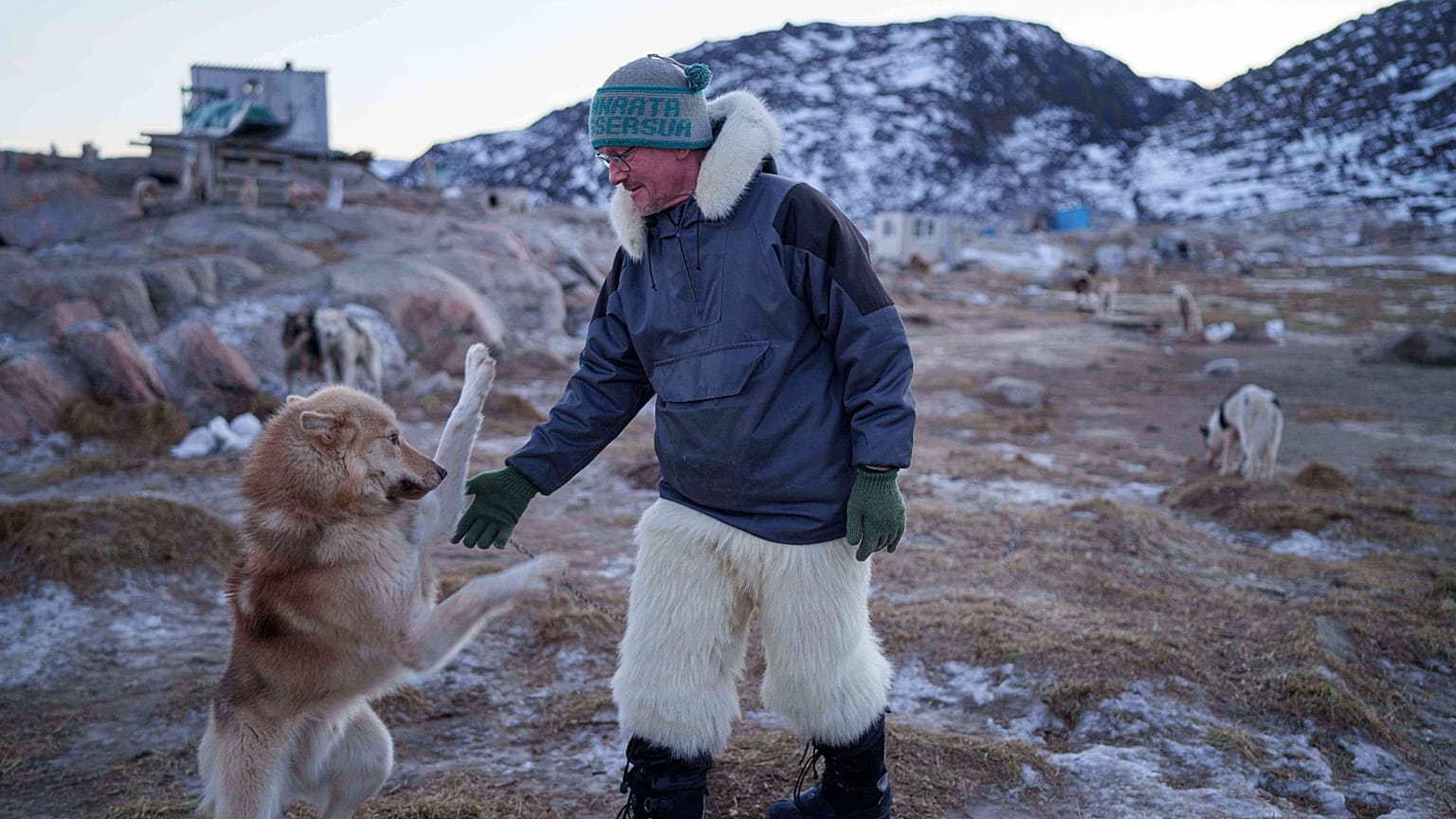
Jørgen Kristensen pets his sled dog before a ride in Ilulissat, Greenland, Tuesday, Jan. 27, 2026.
Copyright AP Photo/Evgeniy Maloletka


By Emma Burrows, Evgeniy Maloletka and Kwiyeon Ha with AP
Published on 

Sled dog champion Jørgen Kristensen, 62, says it’s the first time he can remember when there has been no snow in January.

Growing up in a village in northern Greenland, Jørgen Kristensen’s closest friends were his stepfather’s sled dogs. Most of his classmates were dark-haired Inuit; he was different. When he was bullied at school for his fair hair – an inheritance from the mainland Danish father he never knew – the dogs came to him.

He first went out to fish on the ice with them alone when he was nine years old. They nurtured the beginning of a life-long love affair and Kristensen’s career as a five-time Greenlandic dog sled champion.

“I was just a small child. But many years later, I started thinking about why I love dogs so much,” says Kristensen, 62.

The dogs were a great support. They lifted me up when I was sad.
 Jørgen Kristensen 
Greenlandic dog sled champion

“The dogs were a great support,” he says. “They lifted me up when I was sad.”

For more than a thousand years, dogs have pulled sleds across the Arctic for Inuit seal hunters and fishermen. But this winter, in the town of Ilulissat, around 300km north of the Arctic Circle, that’s not possible.

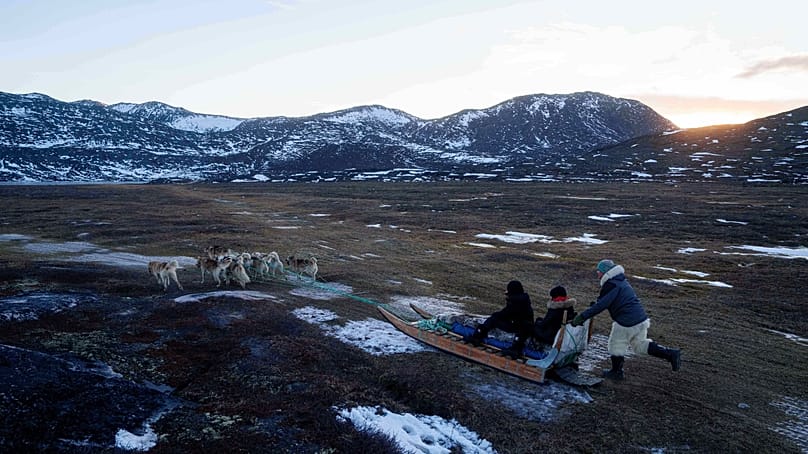
Instead of gliding over snow and ice, Kristensen’s sled bounces over earth and rock. Gesturing to the hills, he says it’s the first time he can remember when there has been no snow – or ice in the bay – in January.

Rising temperatures in Greenland contribute to global sea level rise

The rising temperatures in Ilulissat are causing the permafrost to melt, buildings to sink and pipes to crack but they also have consequences that ripple across the rest of the world.

The nearby Sermeq Kujalleq glacier is one of the fastest-moving and most active on the planet, sending more icebergs into the sea than any other glacier outside Antarctica, according to the United Nations cultural organisation UNESCO.

As the climate has warmed, the glacier has retreated and carved off chunks of ice faster than ever before – significantly contributing to sea levels that are rising from Europe to the Pacific Islands, according to NASA.

The melting ice could reveal untapped deposits of critical minerals. Many Greenlanders believe that’s why US President Donald Trump turned their island into a geopolitical hotspot with his demands to own it and previous suggestions that the US could take it by force.

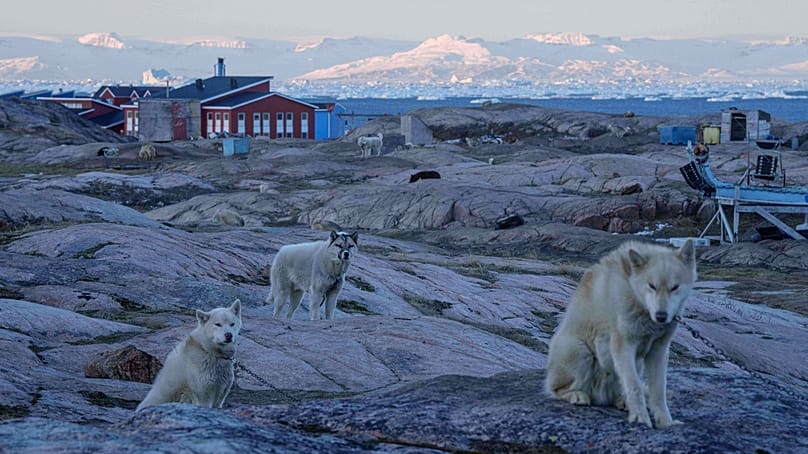
Greenlandic sled dogs stand in Ilulissat, Greenland, Tuesday, Jan. 27, 2026. AP Photo/Evgeniy Maloletka

'We have large parts of our culture that we’re losing'

In the 1980s, winter temperatures in Ilulissat regularly hovered around -25 Celsius in winter, Kristensen says.

But nowadays, he says, there are many days when the temperature is above freezing – sometimes it can be as warm as 10 Celsius.

Kristensen says he now has to collect snow for the dogs to drink during a journey because there isn’t any along the route.

Although Greenlanders have always adapted – and could make dog sleds with wheels in future – the loss of the ice is affecting them deeply, says Kristensen, who now runs his own company showing tourists his Arctic homeland.

“If we lose the dog sledding, we have large parts of our culture that we’re losing. That scares me,” he says, pressing his lips together and becoming tearful.

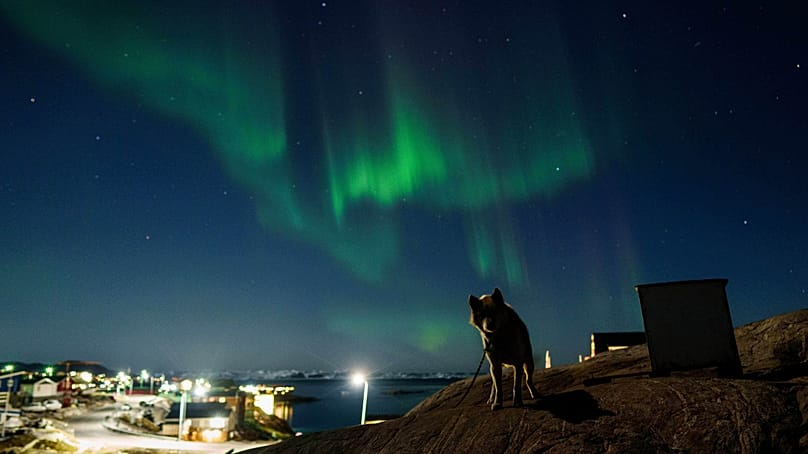
A sled dog stands as the northern lights shine over Ilulissat, Greenland, Wednesday, Jan. 28, 2026. AP Photo/Evgeniy Maloletka

The sea ice is disappearing

In winter, hunters should be able to take their dogs far out on the sea ice, Kristensen says. The ice sheets act like “big bridges”, connecting Greenlanders to hunting grounds but also to other Inuit communities across the Arctic in Canada, the United States and Russia.

“When the sea ice used to come, we felt completely open along the entire coast and we could decide where to go,” Kristensen says.

This January, there was no ice at all.

Driving a dog sled on ice is like being “completely without boundaries – like on the world’s longest and widest highway,” he says. Not having that is “a very great loss”.

Several years ago, Greenland’s government had to provide financial support to many families in the far north of the island after the sea ice did not freeze hard enough for hunting, says Sara Olsvig, chair of the Inuit Circumpolar Council, which represents Inuit people from across Arctic nations.

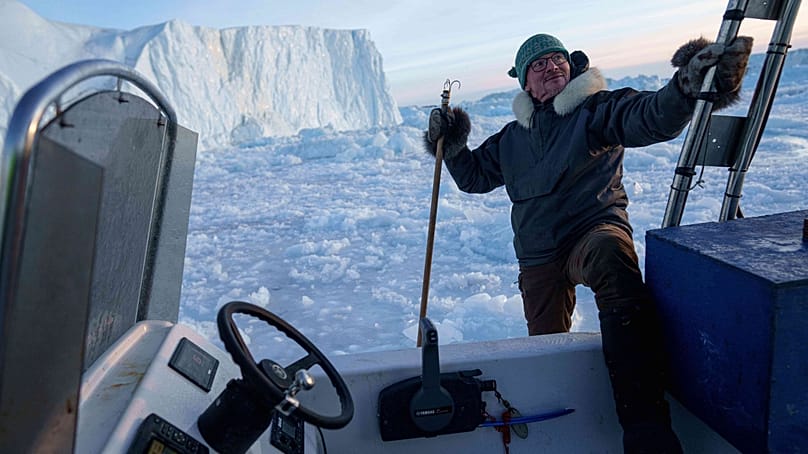
The warming weather also makes life more dangerous for fishermen who have swapped their dog sleds for boats, because there is more rain instead of snow, says Morgan Angaju Josefsen Røjkjær, Kristensen’s business partner.

When snow falls and is compressed, air is trapped between the flakes, giving the ice its brilliant white colour. But when rain freezes, the ice that forms contains little air and looks more like glass.

A fisherman can see the white ice and try to avoid it, but the ice formed from rain takes on the colour of the sea – and that’s dangerous because “it can sink you or throw you off your boat,” says Røjkjær.

Climate change, Olsvig says, “is affecting us deeply”, and is amplified in the Arctic, which is “warming three to four times faster than the global average”.

Jørgen Kristensen rides with his sled dogs in Ilulissat, Greenland, Tuesday, Jan. 27, 2026. AP Photo/Evgeniy Maloletka

The glaciers are melting

Over the course of his lifetime, the Sermeq Kujalleq glacier has retreated by about 40 kilometres says Karl Sandgreen, 46, the head of Ilulissat’s Icefjord Center which is dedicated to documenting the glacier and its icebergs.

Looking out of the window at hills which would normally be covered with snow, Sandgreen describes mountain rock revealed by melting ice and a previously ice-covered valley inside the fjord where “there’s nothing now”.

Pollution is also speeding up the ice melt, Sandgreen says, describing how Sermeq Kujalleq is melting from the top down, unlike glaciers in Antarctica which largely melt from the bottom up as sea temperatures rise.

This is exacerbated by two things: black carbon, or soot spewed from ship engines, and debris from volcanic eruptions. They blanket the snow and ice with dark material and reduce reflection of sunlight, instead absorbing more heat and speeding up melting. Black carbon has increased in recent decades with more ship traffic in the Arctic, and nearby Iceland has periodic volcanic eruptions.

Many Greenlanders told news agency AP they believe the melting ice is the reason Trump – a leader who has called climate change “the greatest con job ever” – wants to own the island.

“His agenda is to get the minerals, ” Sandgreen says.

Since Trump returned to office, fewer climate scientists from the US have visited Ilulissat, Sandgreen says. The US president needs to “listen to the scientists”, who are documenting the impact of global warming, he says.

Jørgen Kristensen gets on a boat by an iceberg at Disko Bay near Ilulissat, Greenland, Thursday, Jan. 29, 2026. AP Photo/Evgeniy Maloletka

Teaching children about climate change

Kristensen says he tries to explain the consequences of global warming to the tourists who he takes out on dog sled rides or on visits to the icebergs. He says he tells them how Greenland’s glaciers are as important as the Amazon rainforest in Brazil.

International summits, such as the United Nations climate talks in November in the Amazon gateway city of Belem, play a role, but it’s just as important to “teach children all over the world” about the importance of ice and oceans, alongside subjects like maths, Kristensen says.

“If we don’t start with the children, we can’t really do anything to help nature. We can only destroy it,” Kristensen says.