Friday, March 06, 2026


US aluminum buyers hunt for alternatives as Iran war upends global supply
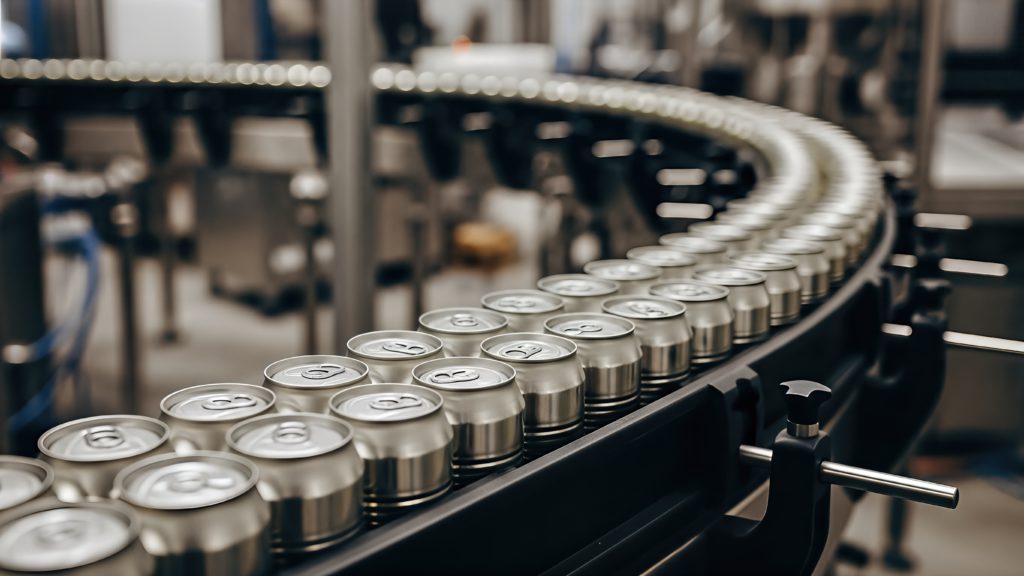

Stock image.

Aluminum buyers in the US are rushing to secure alternative supplies from Asia as the war on Iran disrupts a major foreign source — a development that threatens to hike the cost of the metal used in auto parts, appliances and beverage cans.

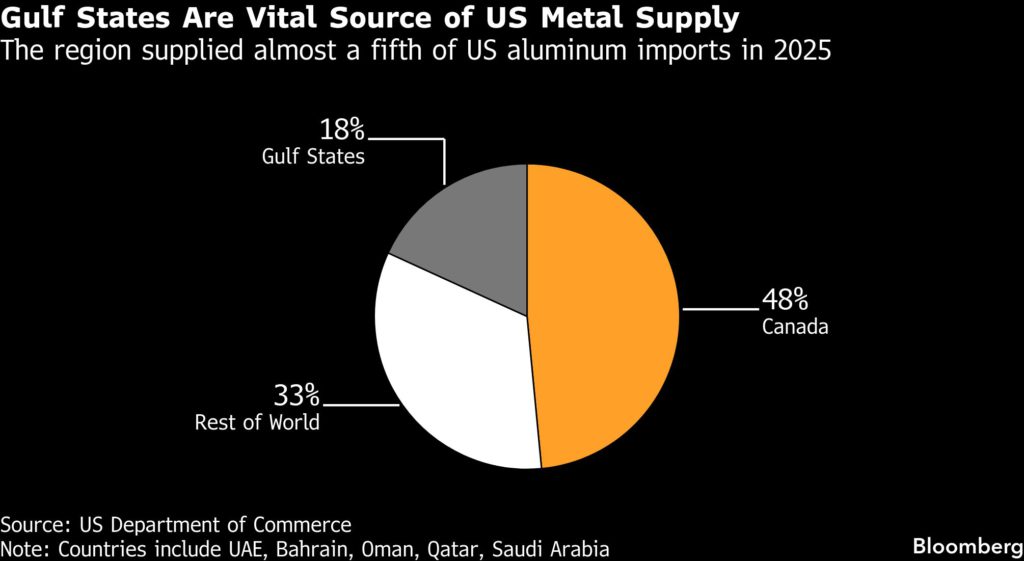
An effective halt on shipments through the Strait of Hormuz has already prompted two top producers in the region, Qatar and Bahrain, to suspend deliveries to customers. The US relies heavily on imports, with the Middle East supplying nearly a fifth of its aluminum last year, according to government data.

Andy Massey of Bonnell Aluminum said the company, which molds aluminum into shapes that can be used in products including cars and construction materials, is looking to source the metal from markets such as India and Australia. The Georgia-based manufacturer may even tap the domestic market for near-term deliveries if there’s metal that isn’t tied up in annual contracts.

“We’re all scrambling to figure out what’s happening on the ground” in the Middle East, said Massey, Bonnell’s vice president of metals, procurement and transportation. “I need to find alternative supplies over the next two days — fast — and make sure we don’t overpay.”

The Middle East supply turmoil comes at a particularly fragile moment for American aluminum consumers. They’ve already been squeezed by President Donald Trump’s import tariffs on the metal, which have driven up domestic prices and constrained flows from Canada, the largest foreign supplier to the US. Even brief interruptions to the supply of aluminum, prized by manufacturers for its abundance and low cost, can cause chaos for factories that tend to buy it on a just-in-time basis.
RM-Metals, a New Jersey-based supplier of specialty metal products, is facing a quandary similar to Bonnell’s. It’s seeking alternative sources as some of its shipments remain stuck in Dubai, according to vice president Sam Desai.

“Korea is a great option right now,” said Desai, adding that his firm is also looking at supplies from northern Europe. “It’s becoming very hard because the cost of aluminum itself has gone up” since the Iran war started.

Prices of the lightweight metal traded on the London Metal Exchange soared to the highest since 2022 this week. The so-called US Midwest premium — the amount added to global benchmarks to deliver aluminum to that region — climbed to a fresh record of $1.075 a pound. Before the Iran crisis, American manufacturers were already paying among the highest aluminum prices worldwide due to Trump’s 50% tariffs.

While aluminum from India is the most likely seaborne replacement for American consumers, shipping it across the Pacific takes about 60 days, according to Jean Simard, chief executive officer of Aluminum Association of Canada. Other alternatives include Brazil, Indonesia, Iceland and Norway, said Timna Tanners, an analyst at Wells Fargo Securities.

Meanwhile, shipments from Canada — the most obvious alternative for US buyers — have continued to decline under Trump’s tariffs. Producers there have increasingly favored Europe, where net returns have been more attractive than selling into the US market. At the same time, expectations that the levies could be eased or repealed in coming months have made US buyers wary of locking in large volumes, for fear of overpaying if the tariffs are later rolled back.

It could be “a timely moment to review” the US tariffs on Canadian aluminum, Simard said. Those levies, which fall under a law that allows duties on certain sectors to protect national security, weren’t affected by the recent Supreme Court decision that struck down other Trump tariffs.

About 6 million tons of primary aluminum — metal that has not yet been recycled — is now stranded in the Middle East, according to Simard. There is about 30 days’ supply of alumina, the raw material used to make aluminum, left for most smelters in the region, he said.

As the Iran crisis persists, aluminum producers in the Gulf region may have to curtail production as the near-shutdown of the Strait of Hormuz means they may soon run out of alumina. Those output cuts would have a sustained impact on global supply.

The regional conflict is likely to worsen a global aluminum deficit this year, according to Bank of America.

“Given the Middle East accounts for around 9% of global production and supply is at risk, we have raised our shortfall forecast to 1.5 million tons from 1 million tons,” analysts at the bank led by Michael Widmer said in a note Thursday.

Some suppliers are already going offline. Qatalum, jointly owned by Qatar’s state-owned aluminum producer and Norway’s Norsk Hydro ASA, said on Tuesday that it started a controlled shutdown of output because of a natural gas shortage, adding that a full restart could take six to 12 months.

“This could just be the tip of the iceberg. There could be more smelters affected, in which case this magnifies the impact,” said Tanners. “Aluminum smelters need to run full out — if not, they’re just going to shut. This isn’t a quick fix.”

(By Yvonne Yue Li, Jacob Lorinc and Mathieu Dion)


Column: Risks to Western aluminum supply rise as Iran war escalates


It is not just oil and gas that flow through the Strait of Hormuz, the Gulf’s key shipping choke point now threatened by the war with Iran.

The region is also a significant producer of aluminum, accounting for over 8% ​of global output last year, according to the International Aluminium Institute (IAI).

Over 5 million metric tons of metal are shipped through the Hormuz Strait each year by smelters ‌in Bahrain, Qatar, Saudi Arabia and the United Arab Emirates. Huge amounts of bauxite and alumina travel the other way to feed the smelters.

None of these plants has yet been directly targeted in the escalating hostilities. But Qatar Aluminium, jointly owned by Norway’s Norsk Hydro and QatarEnergy, already faces possible closure because power supplies have been hit by the halt to the country’s liquefied natural gas production.

The longer the Strait of Hormuz is blocked, the ​greater the threat to Western manufacturers.

Primary aluminium production outside of China by region
Primary aluminum production outside of China by region

Key Western supplier

The Middle East has emerged as a major aluminum production hub over the last two decades, leveraging the region’s ​huge gas reserves to power the energy-intensive smelting process.

Gulf Cooperation Council (GCC) output has grown from 2.7 million tons in 2010 to 6.2 million ⁠last year, making it now the second largest regional supplier outside of China.

Actually, make that the largest.

The IAI’s production figures for Europe, the largest regional non-Chinese production hub on ​paper, include some 4 million tons of annual Russian metal.

Russian aluminum can’t be imported to the US due to Ukraine sanctions and the European Union is phasing out imports this year for ​the same reason.

Taken together, that makes GCC producers a core component of Western supply of a metal used across a wide spectrum of industries from automotive and construction to packaging.

Multiple channels

The potential impact on Western buyers runs down multiple channels.

Gulf smelters don’t just export primary aluminum. They are also major producers of bespoke alloys and feed local clusters of semi-manufactured product plants.

Bahrain, which hosts a 1.5-million-ton capacity smelter, exported over 1 ​million tons of alloy, 500,000 tons of products and 160,000 tons of virgin metal last year, according to the World Bureau of Metal Statistics, which uses official customs data.

Exports flowed ​to 70 different countries, including significant quantities to Europe and the US.

The diversity of product and destination means that any protracted halt to either regional production or export flows would hit multiple countries ‌and multiple ⁠parts of the processing chain.

Vulnerable market

The aluminum market is as vulnerable as it’s been for many years to such supply disruption.

China, the world’s largest producer, has seen growth in both output and exports slow as its smelter sector runs up against Beijing’s capacity cap of 45 million tons.

Western buyers, particularly those in Europe, have been squeezed by the phase-out of Russian imports, the closure of the Mozal smelter in Mozambique, and the production hit to Century Aluminum’s Grundartangi smelter in Iceland.

London Metal Exchange (LME) inventory, including metal in off-warrant storage, fell by 331,000 tons last year and ​is down another 84,000 tons since the start ​of January.

LME aluminum prices had already ⁠been rising before the Iran crisis hit with full force.

Tuesday’s news that Qatar Aluminium may be facing a suspension of operations has lifted three-month metal to $3,315 per ton, within striking distance of January’s near four-year high of $3,356 per ton.

Power threat

While Western aluminum buyers are facing an ​immediate supply shock, there is likely to be a second one in the form of higher energy prices.

One reason why GCC ​production has become so important ⁠to the Western market is the closure of other smelters due to high power prices. The Mozal plant in Mozambique, a major supplier to the European market, is a case in point.

Europe itself has lost several plants in the wake of the power price surge that followed Russia’s invasion of Ukraine four years ago.

Another energy shock is the last thing Western aluminum producers need.

And the last ⁠thing Western ​buyers need is a loss of supply from producers sitting on the wrong side of the Strait of Hormuz.

(The opinions expressed here are those of the author, Andy Home, a columnist for Reuters.)

(Editing by Marguerita Choy)


Column: China imports the most energy, but is best placed on Iran

Stock image.

China is the world’s largest energy importer and would therefore appear vulnerable to the surge in crude oil and natural gas prices from the conflict between Israel and the United States against Iran.

But the opposite is most likely the ​case, with China’s vast stockpile of crude a cushion against price spikes, meaning that any energy-led inflation in the rest of the world will not hit China.

It is ‌also possible that China’s refiners could reap windfall profits in the event of a prolonged disruption to crude supplies from the Middle East, by ramping up exports of refined products.

If Asia’s export-orientated refineries in countries such as India and Singapore start to run low on crude supplies, China will have the ability to refine stockpiled crude and export products such as diesel and gasoline to take advantage of the inevitable surge in fuel prices.

China has other advantages as well, ​insofar as it remains the major buyer of sanctioned, but discounted, Russian crude and is also the destination for any Iranian crude at sea that managed to exit the Strait ​of Hormuz before the weekend attacks by Israel and the United States.

China does not disclose how much crude it adds to commercial and strategic inventories, ⁠but an estimate of the surplus oil can be made by adding together crude imports and domestic production and then subtracting refinery throughput.

On this basis, China’s surplus crude was 1.13 million barrels per day (bpd) in ​2025, with especially strong builds toward the end of the year as imports rose sharply, hitting a record high of 13.18 million bpd in December.

While official data on imports and refinery production for the ​first two months of this year are yet to be released, it is likely the strong builds in inventories continued.

China’s crude imports are estimated at 12.47 million bpd for the first two months by LSEG Oil Research, as the country’s refiners took advantage of discounted Russian and Iranian barrels.

If domestic output remained largely steady from December levels of around 4.2 million bpd and refinery throughput held around 14.7 million bpd, the surplus for the January-February period may be ​as high as nearly 2 million bpd.

This level of surplus crude offers China two options.

Firstly it means they can cut imports in coming months and thus mitigate some of the impact of the ​sharp rise in prices, with Brent crude futures jumping 7.3% to end Monday at a one-year high of $77.77 a barrel.

It would not be surprising to see China’s imports drop to about 10.5 million bpd to 11.0 million bpd ‌by May ⁠and June.

The second option is for China to maintain robust refinery throughput, thus ensuring domestic supply and even allowing for increased fuel exports, should Asian prices surge in the event of tighter supply of crude from the Middle East.

Since Beijing also controls domestic prices of retail fuel that means Chinese consumers and businesses will not be exposed to any spike in energy-led inflation that affects competitors in the United States and Europe.

Coal, LNG

China’s advantage extends beyond crude oil to both coal and liquefied natural gas (LNG).

The world’s biggest importer of LNG, China has shown in past episodes of high prices it will cut spot purchases ​and only take long-term cargoes, which tend to ​be either on fixed or oil-linked prices.

China ⁠may also resell LNG cargoes, allowing its utilities to boost profits.

Domestic natural gas output can probably be boosted for a short period and China can also maximise imports via pipelines from central Asia and Russia, thus ensuring that any global price spike does not cross into the domestic market.

Benchmark Asian LNG prices jumped ​almost 39% on Monday morning, with the S&P Global Energy Japan-Korea-Marker, widely used as an Asian LNG benchmark, standing at $15.068 per million British thermal ​units, Platts data showed.

China ⁠is the world’s biggest coal producer and importer and has flexibility to increase domestic output and trim imports if seaborne coal prices rise amid increased demand as an alternative for LNG for power generation.

But China mainly imports thermal coal from Indonesia, and it tends to be of a lower energy content and therefore not sought by European buyers or utilities in Japan and South Korea.

This means that similar to crude oil and LNG, ⁠China is ​largely insulated from any surge in coal prices.

These are already showing signs of moving higher in response to the Iran crisis, ​with globalCOAL assessing Australia’s benchmark Newcastle coal at $121.13 a metric ton on Monday, up 4.7% from the prior close.

(The views expressed here are those of the author, Clyde Russell, a columnist for Reuters.)

(Editing by Clarence Fernandez)


Defense Metals conditionally approved for Canadian infrastructure funding

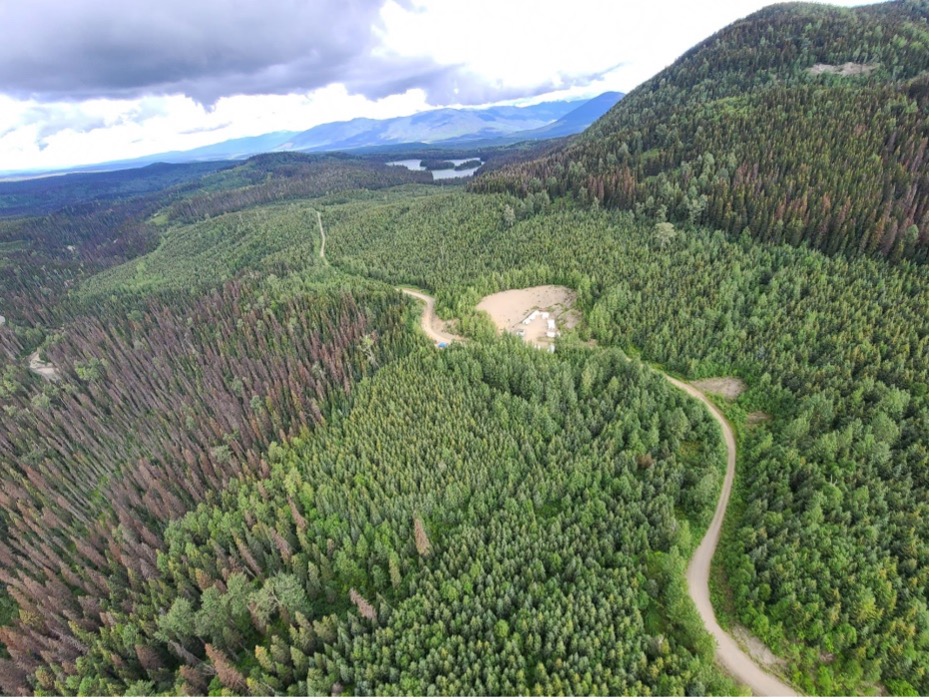
Aerial view of Wicheeda project. Image provided by Agentis Capital

Defense Metals (TSXV: DEFN) says it has received conditional approval for C$1.88 million ($1.38 million) in Canadian government funding to support the infrastructure development of its flagship rare earths project in British Columbia.

The Vancouver-based company is currently advancing the Wicheeda project located 80 km northeast of Prince George. Considered one of North America’s top near-term rare earth projects, it hosts 25.5 million tonnes in reserves at an average oxide grade of 2.4%. A pre-feasibility study published last year outlined a 15-year rare earth mine that could produce 31,900 tonnes of concentrates annually.

Recently, the project was selected by the BC government for early coordination to fast-track its permitting process as it enters the feasibility stage and undergoes preparation for an environmental assessment.

The C$1.88 million funding, which would come from the federal Critical Minerals Infrastructure Fund, would allow Defense Metals to advance the development of a new 60-km transmission line designed to deliver up to 35MW of electricity from the BC Hydro grid directly to the proposed mine site.

Operational efficiency

Access to reliable, grid-based hydroelectric power represents a significant step toward reducing the project’s carbon footprint while strengthening long-term operational efficiency, the company said in a press release on Wednesday.

In addition to constructing the transmission line, the project also entails the engineering design of upgrades to the existing 43-km forest service road connecting Highway 97 to the mine site. These improvements are expected to enhance site accessibility, safety and logistical efficiency during both construction and future operations, Defense Metals added.

These infrastructure developments, which also include BC Hydro interconnection, rail network integration studies and Indigenous engagement initiatives, are scheduled to commence in this year and finish in 2028.

“This conditional funding approval represents an important milestone in advancing critical infrastructure planning for the Wicheeda REE project,” Defense Metals CEO Mark Tory said in the press release. “Securing access to clean, low-carbon hydroelectric power and optimizing transportation networks are key components in positioning Wicheeda as a strategically important domestic source of rare earth elements.”

“The Wicheeda rare earth project is a strong example of how strategic infrastructure like clean electricity, modern transportation corridors and stronger regional connections unlocks the full potential of the minerals beneath our feet,” Tim Hodgson, Canada’s Minister of Energy and Natural Resources, added.

Shares of Defense Metals dipped by 1.8% by midday Wednesday, for a market capitalization of C$107 million ($78 million).

Vizsla confirms two more deaths in Mexico kidnappings

The Panuco silver-gold project in Mexico might start production in 2027. Credit: Vizsla Silver

Vizsla Silver (TSX, NYSE: VZLA) said Thursday two more of the 10 workers taken from its project site in Concordia, Mexico, have been confirmed dead, lifting the death toll to seven.

“Our hearts are with the families who have lost loved ones and with those who continue to wait for answers,” CEO Michael Konnert said in a news release. The company remained focused on helping families and supporting efforts to locate the missing, he said.

The abducted workers were taken in late January in Concordia, a municipality in Mexico’s Sinaloa state about 50 km east of Mazatlán. Authorities have said rival cartel factions have driven a surge in violence in the region, complicating security for businesses and residents.

Vizsla shares fell as much as 4.6% in Toronto on Thursday to an intraday low of C$5.39, before recovering to C$5.51 in afternoon trading. The company has a market capitalization of about C$1.9 billion ($1.4 billion).

Mexican authorities are continuing search efforts and the wider investigation is proceeding with Vizsla’s support. The company said it’s reviewing and strengthening its security protocols in coordination with local authorities.


Mexico to tighten coal mining regulations after deadly accident

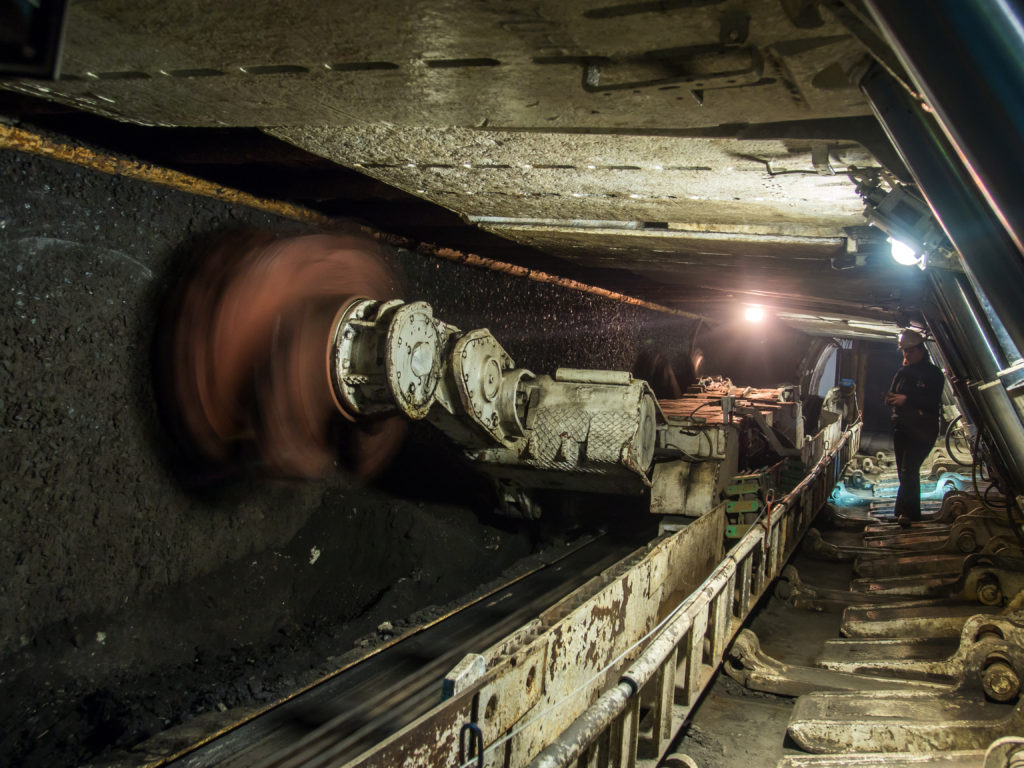
Coal mine. Stock image.

Mexico is set to tighten regulations on coal mining operations, the labor ministry said on Thursday, following widespread scrutiny brought on after a 2022 mine collapse killed 10.

The plan eliminates a previous system which allowed “small-scale” coal mining operations to be subject to less strict safety requirements or exemptions from certain rules.

The 2022 disaster in the northern border state of Coahuila highlighted the dangers workers face at Mexico’s small, unregulated coal mines and drew criticism of state utility CFE, which the mine provided with coal.

Last year, eight workers in a Coahuila coal mine were briefly trapped after the winch pulling their mine cart broke, local media reported.

The fresh regulations mandate larger tunnel dimensions for structural safety, ventilation systems to ensure adequate oxygen, and new technical standards for ramp inclinations, the labor ministry said.

Beyond powering a small percent of Mexico’s energy grid, coal is used in the country by steelmakers such as ArcelorMittal.

(By Kylie Madry; Editing by Natalia Siniawski)

First Nations Coalition says Indigenous equity key to faster mining approvals in Canada

Oil pipeline. Stock image by serikbaib.

Indigenous ownership in major mining and resource projects could help accelerate permitting timelines in Canada while improving economic outcomes for First Nations, according to the First Nations Major Projects Coalition (FNMPC). 

The national non-profit, which represents 186 First Nations across the country, works with Indigenous communities to help them participate in large-scale developments ranging from mining and energy to transmission infrastructure. 

“We’re a capacity service group. We help Nations get to the table,” FNMPC CEO Mark Podlasly said in an interview with MINING.COM the week of the PDAC 2026 global mining convention in Toronto. 

Podlasly is of the Nlaka’pamux Nation (NNTC), whose traditional territory is in the southern interior of British Columbia and extends into the state of Washington. NNTC is actively involved in protecting Nlaka’pamux traditional cultural properties related to the Seattle City Light Hydro Project. 

Coalition origins 

Founded 11 years ago in British Columbia, the Coalition emerged after a group of First Nations missed out on a major investment opportunity tied to a C$5 billion natural gas pipeline project. Eleven Nations had negotiated a 30% equity stake, but when they approached banks for financing they were treated as high-risk borrowers. 

“First Nations went to the bank to finance their equity and discovered they had no collateral,” Podlasly said. “They were offered credit-card level interest rates — 30% or 35%.” 

Unable to secure affordable financing, the Nations lost the investment opportunity — an inflection point that led to the creation of the Coalition to help Indigenous communities overcome structural barriers to capital and commercial participation in resource projects. 

Today the Coalition provides technical support to its members project economics and commodity markets, environmental assessments and regulatory processes. The organization employs about 35 staff across Canada, roughly 70% of whom are Indigenous, including economists, lawyers and finance specialists. 

“You can’t make an informed decision unless you have the information,” Podlasly said. “That’s what we do — technical, regulatory and financial.” 

From consultation to ownership 

For decades, Indigenous participation in major projects largely focused on consultation and impact-benefit agreements. But the Coalition says the landscape is shifting toward direct equity ownership. 

“It’s not nations asking for grants anymore,” Podlasly said. “Nations want to co-invest.” 

Equity participation can give communities a long-term revenue stream while aligning their interests with project developers, Podlasly said. “If you bring a First Nation in as a partner, they bring capital and they bring rights that will have to be addressed anyway.”  

The Coalition has advised on or supported several projects that include Indigenous ownership. 

In Ontario, First Nations have secured about 50% equity stakes in  electricity transmission projects. In British Columbia, multiple Coalition members collectively hold a 10% stake in the Coastal GasLink pipeline, a 670-km natural gas pipeline connecting Dawson Creek to the LNG Canada facility in Kitimat.

Other initiatives include the North Coast transmission line project in northern British Columbia, where First Nations are expected to hold roughly 50% equity, and a 100% Indigenous-owned geothermal project in Fort NelsonPodlasly said.

The Coalition has also begun advising on mining projects, including an early-stage lithium development in northern Ontario. Some projects listed on the Coalition’s website remain confidential while negotiations are ongoing. 

Source: FNMPC

Partnership and permitting 

As global demand for critical minerals grows and governments move to secure domestic supply chains, Canada has increasingly focused on accelerating project approvals. Federal officials have pledged to shorten timelines for major developments in mining and energy. 

At PDAC this week Energy and Natural Resources Minister Tim Hodgson said Canada will lead the Group of 20 nations with the fastest permits as the government’s Major Projects Office (MPO) advances projects to production within two years.

The Coalition says Indigenous participation could be key to making that happen. 

“If you have an Indigenous partner with an economic stake who wants the project to succeed, are they going to oppose it?” Podlasly said. “Probably not.” In that sense, equity partnerships can help reduce regulatory delays, Podlasly pointed out.  “Indigenous ownership can actually shorten permitting timelines,” he said. 

But the Coalition also cautions that projects imposed without Indigenous participation could still face strong opposition. 

“If projects are dropped in the way they were done in the past, Nations will fight,” he said. 

Instead, the Coalition advocates what it calls “smart projects” — developments that incorporate Indigenous environmental values, economic participation and community consent. 

“As long as Indigenous environmental and economic interests are built into the project — and the nation wants it — we support it,” Podlasly said. 

National competitiveness 

The Coalition says the conversation around Indigenous participation in major projects has evolved significantly over the past decade. 

“It’s not just an Indigenous issue anymore,” Podlasly said. “It’s about national economic competitiveness.” 

With Canada seeking to develop critical minerals and energy infrastructure in an increasingly uncertain geopolitical environment, collaboration between Indigenous communities, governments and industry will be essential, the Coalition says. 

Indigenous ownership could also reshape the relationship between communities and resource development. 

Rather than being seen solely as stakeholders or rights holders, Podlasly said First Nations can become partners in projects that take place on their territories. 

“Indigenous people are Canadians. We’re going to sink or swim together.” 

The 9th annual First Nations Major Projects Coalition Conference will take place April 29 to May 1 at the Sheraton Centre Toronto. Information is here.  


Peru taps fuel reserves to combat worst energy crunch in two decades

Oil & gas pipelines. AI-generated stock image.

 Peru will draw on fuel reserves to safeguard domestic supply, Prime Minister Denisse Miralles said on Friday, after a gas pipeline rupture triggered the most severe energy crisis in two decades.

The government will urge public and private‑sector employees to work remotely while shifting schools to online learning, she added.

The emergency measures follow suspension of natural gas exports on Thursday as Peru scrambles to contain the fallout from the gas‑pipeline rupture on Sunday that choked energy supplies and triggered a major power crunch.

“The reduction in the gas supply has been tremendous… only 10% is being delivered,” Energy and Mines Minister Angelo Alfaro told Congress on Thursday.

The National Chamber of Mining, Oil and Energy (SNMPE) on Friday said its members were working to minimize the impact on the population and are looking to import an LPG shipment in “record time.”

Peru is the world’s second-largest copper producer, making the mining sector a critical pillar of its economy and a major consumer of its domestic energy supply.

Operator Transportadora de Gas del Peru (TGP) shut down a section of the pipeline in the Megantoni district to isolate the leak. The company implemented temporary restrictions on gas supplies to industrial and electricity sector users to prioritize residential and essential services.

The outage forced energy firm Pluspetrol to suspend production of liquefied petroleum gas (LPG) at its Pisco fractionation plant, which accounts for approximately 70% of Peru’s LPG consumption.

(Reporting by Marco Aquino, Editing by Daina Beth Solomon and David Gregorio)

BAN DEEP SEA MINING

Deep-sea mining debate reaches critical global moment

Stock image by allexxandarx.

Ocean governance is entering a decisive moment as governments weigh whether to allow deep sea mining in international waters or impose a global moratorium while science and regulations catch up.

The debate is intensifying ahead of a key meeting of the International Seabed Authority (ISA), the UN-established body that manages mineral-related activities in the deep sea. Governments will gather in Kingston, Jamaica, from March 9 to 20 to continue negotiations on a proposed mining code that could open the door to commercial seabed mining.

Experts warn that decisions made in the coming months could determine whether the deep ocean remains protected as humanity’s shared heritage or becomes the next frontier of industrial extraction.

At a media and policy briefing Wednesday, Samantha Robb, a senior associate with Ocean Vision Legal, outlined the legal risks of mining outside the ISA system. She said the United Nations Convention on the Law of the Sea (UNCLOS) establishes the ISA as the sole authority to regulate mining in seabed areas beyond national jurisdiction, yet some companies and governments are exploring ways to proceed independently.

Robb pointed to recent developments in the US, where a new domestic regulatory pathway created by President Donald Trump could authorize mining in international waters. Such actions, she said, would conflict with UNCLOS provisions that designate the deep seabed and its resources as the “common heritage of humankind,” meaning activities must benefit all people, including future generations.

Unilateral mining, she warned, would bypass mechanisms designed to ensure equitable distribution of financial benefits and environmental protections. It could also destabilize international governance structures built on multilateral cooperation.

Support for restraint has grown. As of December 2025, about 40 countries back a moratorium on deep-seabed mining, citing environmental uncertainty and governance gaps. Scientific studies have added weight to those concerns, including trials showing steep declines in seabed animal abundance and diversity following disturbance. Several governments have slowed or halted plans, with Norway pausing its deep-sea mining ambitions amid domestic and international opposition.

David Willima, the Deep Sea Conservation Coalition’s Africa regional lead, said the deep-sea mining debate also intersects with the new High Seas Treaty, formally known as the BBNJ Agreement on biodiversity beyond national jurisdiction. 

The treaty entered into force on Jan. 17 and aims to strengthen conservation and sustainable use of marine biodiversity in international waters.

Allowing deep sea mining now, Willima said, could undermine the treaty before it is fully implemented. The agreement emphasizes precaution, biodiversity protection and equitable benefit sharing, particularly for developing countries.

“Mining could threaten fragile ecosystems, disrupt food webs and damage habitats that hold valuable marine genetic resources,” he said.

Scientists believe these resources could lead to medical and scientific breakthroughs, yet many of the ecosystems that contain them overlap with areas targeted for mineral extraction, including hydrothermal vents and seamounts, Willima noted.

He also highlighted concerns from African countries about potential economic and environmental impacts. An influx of seabed minerals could oversupply global markets and destabilize terrestrial mining sectors that many developing economies depend on.

Key issues unresolved

Emma Wilson, policy lead at the Deep Sea Conservation Coalition, said the ISA faces growing pressure to finalize its mining regulations even though the proposed mining code remains incomplete.

Dozens of key issues remain unresolved, including environmental protections, benefit-sharing rules and the rights of Indigenous peoples, she said.

Wilson also raised concerns about the ISA secretariat advocating rapid adoption of the mining code in response to unilateral mining threats. Accelerating the process, she said, risks weakening governance rather than strengthening it.

A moratorium would not halt negotiations or scientific research, Wilson said, but would give governments time to resolve legal and technical questions while insulating the process from industry pressure.

She added that ISA member states can also limit unilateral mining efforts by denying access to global investment, partnerships and markets for companies attempting to bypass the international regime.

Increased interest

Interest in deep-sea mining has grown over the past two years. Some companies, including US defence giant Lockheed Martin (NYSE: LMT), have resumed Pacific seabed mining plans through a UK subsidiary, despite ongoing regulatory uncertainty.

Deep Sea Minerals Corp. (CSE: SEAS) (FRA: X45), joined last month the US Defense Industrial Base Consortium (DIBC), a Department of War-backed consortium that connects government, private industry, and academia under a flexible contracting framework to rapidly develop and deliver advanced technologies and strengthen the US defence industrial base.  

The company also announced this week that it is on track to proceed with its license application in accordance with the National Oceanic and Atmospheric Administration (NOAA) regulatory requirements. 

California-based Impossible Metals has already applied for exploration rights both under US law and through the ISA, targeting the Clarion-Clipperton Zone (CCZ) in the Pacific, which holds nodules rich in copper, nickel, manganese and other metals vital for electric vehicles. 

Canada’s The Metals Company (NASDAQ: TMCWW) filed for a commercial permit almost a year ago and secured an $85.2 million investment from South Korea’s Korea Zinc in June.The deal positioned Korea Zinc as a non-Chinese alternative capable of refining TMC’s extracted materials into battery-grade metals.

Beyond mining: Oklahoma bets on refining to anchor US critical minerals supply chain

AI-generated stock image by KarpenArt Studio.

As the United States races to secure supplies of critical minerals, much of the policy discussion has focused on opening new mines. But industry leaders say the bigger bottleneck lies further down the value chain: refining, processing and manufacturing.

In Oklahoma, state officials believe they have found an opportunity in that gap.

Rather than positioning itself as a mining jurisdiction, the state is building a strategy around processing critical minerals into usable industrial materials — aluminum, rare earth magnets and batteries essential to aerospace, defense and advanced manufacturing. 

A series of early-stage proposed investments and federal funding programs are now converging around that vision.

The goal is to plug Oklahoma into the middle of the domestic supply chain as the United States works to reduce dependence on overseas processing from China.

“Here in Oklahoma we’re not actually doing the mining of these minerals,” Jay Shidler, Advanced Technology Project Manager at the Oklahoma Department of Commerce told MINING.com in an interview. “It’s around the refining and the production side — being part of the supply chain that turns these materials into finished products.”

“One of the things we’re really focused on is strengthening domestic supply chains and not being dependent on other countries for these materials,” Shidler said. 

The “missing middle” of the supply chain

For decades, the US gradually ceded much of the world’s mineral processing capacity to other countries. China built a dominant position refining rare earths and producing permanent magnets, key components used in everything from electric vehicles to defense systems.

As geopolitical tensions have grown and supply chain vulnerabilities have become more apparent, Washington has shifted its attention toward rebuilding domestic capacity.

Federal incentives, including funding tied to the CHIPS and Science Act and other industrial policy initiatives, have begun encouraging companies to establish processing and manufacturing facilities inside the US.

Industry analysts increasingly describe this stage of the value chain as the “missing middle” — the industrial infrastructure that connects raw materials to finished products.

Oklahoma’s pitch to investors centers on filling that gap.

The state’s strategy emphasizes refining, magnet manufacturing, recycling and smelting rather than primary mineral extraction. 

Shidler said the approach aligns with broader national priorities around onshoring supply chains and supporting defense manufacturing.

A $4 billion aluminum bet

The most prominent project tied to Oklahoma’s emerging strategy is a proposed aluminum smelter from Emirates Global Aluminium.

The company announced plans to invest roughly $4 billion in a facility near Tulsa at the Port of Inola, a logistics hub that offers barge access for bulk materials moving through the U.S. inland waterway system.

Construction has been forecast to begin as early as 2026.

If completed, the plant would represent one of the largest aluminum investments in the US in decades.

Aluminum remains a critical industrial metal for aerospace, defense and transportation applications. However, the number of operating U.S. smelters has declined significantly over the past several decades due to high energy costs and global competition.

Power and location advantages

In Oklahoma, the combination of wind generation and natural gas resources gives the state a structural advantage, Shidler said. 

The State produces roughly 65% more energy than it consumes, according to state figures, with a significant portion of that supply coming from wind power. It’s also a major producer of natural gas.

Those energy resources translate into relatively low electricity costs — a critical consideration for aluminum smelting and other heavy industrial processes.

Location also plays a role in the state’s pitch.

The Port of Inola, where the proposed EGA smelter would be located, is often described as the furthest inland ice-free port in the United States. Through the McClellan–Kerr Arkansas River Navigation System, the port connects to the Mississippi River and eventually the Gulf of Mexico, allowing raw materials to move inland by barge.

Combined with Oklahoma’s central location in the United States, the infrastructure allows materials to move relatively efficiently to manufacturing hubs across the country.

Rare earth magnets and national security

Another pillar of Oklahoma’s critical minerals strategy involves rare earth magnets — a technology that has become increasingly important for defense systems and advanced manufacturing.

USA Rare Earth is developing a vertically integrated rare earth magnet manufacturing facility in the State. The company is building a magnet manufacturing facility in Stillwater,  a project that has received roughly $1.6 billion in funding from the Department of Commerce and from the private sector.

Permanent magnets made from rare earth elements such as neodymium and praseodymium are essential components in electric motors, precision guidance systems, wind turbines and a range of other technologies.

Yet global magnet production remains heavily concentrated in China.

The United States currently has limited domestic capacity to manufacture these magnets at scale, making them a key focus of industrial policy efforts.

Building that capability inside the country is seen as an important step toward securing supply chains for both civilian industries and defense systems. 

Stardust Power (NASDAQ: SDST)  in February joined the Cornerstone Consortium to Support U.S. Critical Minerals and Industrial Base Resilience. 

Stardust is advancing development of its lithium refinery in Muskogee,  with major engineering work completed and key permits secured, Stardust Managing Director, Oklahoma, John Riesenberg told MINING.com. 

The project has secured a major offtake agreement with Sumitomo, and established multiple feedstock supply partnerships, Riesenberg said, adding that construction is expected to lead to commercial production roughly 24 months after initial construction begins. 

said they are actively working to attract companies across the supply chain — from refining and recycling to component manufacturing.

Defense and aerospace demand

Another reason Oklahoma believes it can sustain such a cluster lies in its existing aerospace and defense industries,  Oklahoma Department of Commerce officials said. 

Aerospace and defense is already the state’s second-largest and fastest-growing industrial sector. Oklahoma hosts five military installations, including Tinker Air Force Base near Oklahoma City.

Tinker is widely considered the largest maintenance, repair and overhaul facility in the world, supporting aircraft and equipment used by the U.S. military.

The broader context for Oklahoma’s efforts is the evolution of the United States’ critical minerals strategy, Shidler noted. 

Five years ago, much of the discussion centered on restarting domestic mining operations after decades of decline, but that conversation has expanded rapidly. 

Policy makers increasingly recognize that mining alone cannot solve supply chain vulnerabilities. Without refining, processing and manufacturing capacity, raw materials must still be sent overseas to become usable products.

That realization has shifted attention toward building industrial capacity across the entire value chain.

Whether Oklahoma ultimately becomes a major processing hub remains to be seen. But the projects now being proposed suggest that the next phase of America’s critical minerals strategy may be less about digging new mines — and more about rebuilding the industrial infrastructure needed to turn those minerals into finished materials.