Saturday, March 14, 2026

Exposure To Life-Limiting Heat Has Soared Around The Planet

March 15, 2026 
By Eurasia Review


Climate change since the 1950s has doubled the amount of time per year that millions of people around the world must endure heat so extreme that everyday physical activities cannot be done safely, a new study concludes.


“Most heat studies focus on how hot it feels. This one asks a different question: What can a human body safely do in that heat?” said co-author Jennifer Vanos, an associate professor at Arizona State University in the School of Sustainability.

An important goal of the research is to identify vulnerable populations and regions to help prioritize work to protect people from extreme heat. But the researchers also emphasized the importance of slowing global warming by reducing the use of fossil fuels.

“Unless we stop burning oil, coal, and gas then the constraints on livability caused by extreme heat will only become more common and widespread, particularly as the global population ages,” said first author Luke Parsons of The Nature Conservancy.

Over the past 20 years, young adults (those age 18 to 40) have faced about two times as many hours per year of heat-related “severe livability limitations” as people the same age did from 1950 to 1979, the study found. Adults age 65 and older experienced about 50% more hours of life-limiting heat than their mid-20th century counterparts. The researchers published their findings in the journal Environmental Research: Health.

Unlivable heat


The researchers defined ‘severe livability limitations’ as high temperature and humidity that would limit any activity more strenuous than sweeping a floor in the shade. Instead of relying on simple measures of heat danger, the researchers used a modeling approach to estimate how much physical activity people of varying ages could perform in different ranges of heat and humidity without their core body temperature rising uncontrollably. Vanos led development of the physiological model used to assess heat risk.

With worldwide records of hourly temperature and humidity measurements from 1950 to 2024, the team calculated how many hours per year heat would limit activity. They overlaid those results with global population data to determine who is most exposed. In some tropical and subtropical regions, heat restricts outdoor activity for older adults for between one quarter and one third of the year, the study found.

For healthy younger adults, severe heat limits affect a relatively small portion of the year, though that share is growing. For older adults, the shift is more dramatic. On average, they now face severe heat limits during more than 10% of all hours in a year.

Globally, younger adults were exposed to an average of 25 hours per year of severe livability limitations during the 1950-79 period. That has risen to about 50 hours per year in the 1995-2024 period. Older adults, whose bodies are less able to regulate heat, were exposed to about 600 hours per year of life-limiting heat in the earlier period. That has climbed to about 900 hours per year in the later period.

Hottest hot spots

Southwestern and eastern North America are among the regions with the largest increase in life-limiting heat, along with southern South America, the eastern Sahara region of Africa, much of Europe, Southwest and East Asia, and southern Australia.

In the United States overall, older adults now experience about 270 hours of severely heat-limited conditions per year, up from about 200 hours in the 1950s. Several areas across the South and Southwestern U.S. show hundreds of hours a year of severe limitations.

South and Southwest Asia experience the most hours per year of limitations. In Qatar, for example, younger adults experienced 382 hours per year of severe livability limitations between 1950 and the 1970s. From the mid-1990s to 2024, that figure rose to 866 hours per year, an increase of 484 hours. Exposure for older adults increased by 520 hours to more than 2,820 hours per year over the same period. That means older adults in Qatar now face severe limitations for roughly one-third of the year.

In Cambodia, Thailand and Bangladesh, older adults now experience severe limitations during one-quarter to one-third of the year. Compared with the 1950s, older adults now experience an additional 686 hours in Cambodia, 568 hours in Thailand and 390 hours in Bangladesh. Many people in these countries have limited ability to cope with the heat because of economic or other hurdles.

In 2024, the hottest year on record, more than 43% of young adults and nearly 80% of older adults experienced at least some periods when heat and humidity severely limited livability. That’s up from 27% and 70% in the 1950s.

Access to cooling, infrastructure, and workplace protections can limit exposure to dangerous heat, but access is far from universal even in wealthy nations such as the U.S.

As world populations grow and age, many more people will face longer periods when ordinary daily activity is unsafe. Regions already hot enough to impose severe heat-related livability limitations, such as sub-Saharan Africa and southern Asia, are also expected to experience rapid population growth, the study authors said.

The researchers noted that widespread livability limitations have emerged with just over 1 degree Celsius of global warming driven by human activity.

“We hope this work motivates rapid emissions reductions to slow global warming and limit future extreme heat impacts,” the authors wrote. “We also hope this work can be used to highlight regions with the most extreme heat risk based on population exposure, vulnerability and heat limitations to target adaptation efforts.”
Study Reveals How Ethiopia’s Hyenas Combat Climate Change, Save Money And Prevent Disease


March 15, 2026 
By Eurasia Review


Urban scavengers like spotted hyenas are preventing over a thousand tonnes of carbon emissions annually in Ethiopia’s second-largest city, according to new research revealing the predators’ role as accidental eco-warriors.

By consuming organic waste that would otherwise rot, these predators are saving the city of Mekelle over $100,000 USD in waste management costs while reducing the significant sanitation risk associated with routine roadside dumping.

In Mekelle, a rapidly urbanising city with a population of over 660,000, over one million chickens, goats and sheep are slaughtered in people’s homes for food each year. The leftover parts of the animals not consumed by people are then discarded, with two thirds of the organic waste being dumped at roadsides or other open sites.

The University of Sheffield-led study reveals urban scavengers such as spotted hyenas, African wolves and vultures are providing a vital ecosystem service by consuming waste that, left to rot, releases greenhouse gases and spreads disease.

Research lead Dr Gidey Yirga, from the University of Sheffield’s School of Biosciences, said: “At a time when cities across the world are struggling with waste and climate goals, we’ve found that scavengers are providing essential ecosystem services while significantly reducing potentially catastrophic sanitation risks.

“Animals like spotted hyenas have adapted to a high-density, urban environment and have become an essential part of the city’s ecosystem.

“This demonstrates a mutually beneficial coexistence between people and large carnivores that, in most circumstances, require vast natural environments free of human intervention.”

To understand the scale of organic waste discarded across the city, researchers interviewed over 400 randomly selected households to understand their waste disposal habits. This data was extrapolated across the entire city, revealing that approximately 1,058,200 animals are slaughtered each year in people’s homes.

This generates 1,240.6 metric tonnes of meat waste – the equivalent to the total weight of roughly 31,000 live sheep. In a city with generally poor waste management and sanitation, this mountain of meat waste is dumped along roadsides and other open sites throughout the city.

The study found that by scavenging the meat waste, urban predators are preventing over 1,000 metric tonnes of carbon emissions entering the atmosphere and saving waste disposal services worth over $100,000 USD annually.

Dr Yirga added:“In our conversations with residents we found that they recognise and appreciate the benefits of living alongside these urban scavengers, highlighting the further potential of a peaceful coexistence between wildlife and humans in urban areas.

“This model could be applied to other Ethiopian cities and across many other African states where organic waste is routinely dumped at road sides.”

Having established hyenas and other scavengers’ value to the city, the research team is now turning its attention to the animals themselves. The next phase of the research will investigate how their urban lifestyle could be physically changing the animals by comparing them to their wild counterparts.


China approves world’s first brain implant for commercialisation

BCIs connect a person's nervous system to devices capable of interpreting their brain activity.
Copyright Canva

By Roselyne Min
Published on 

China approves the first brain implant for commercial use while Elon Musk plans to start high-volume production of the trialled Neuralink devices this year.

China has approved its first brain implant designed to help people with paralysis regain some movement in their hands, marking the world's first commercial authorisation for such a device.

The device was developed by the Chinese company Neuracle Medical Technology and uses a brain-computer interface (BCI).

BCIs connect a person's nervous system to devices capable of interpreting their brain activity, allowing them to act, such as using a computer or moving a prosthetic hand, by the sheer force of their thought.

Neuracle’s system is aimed at people who have paralysis caused by serious injuries to the spinal cord in the neck. These injuries can prevent the brain’s signals from reaching the arms and hands.

The system works by detecting brain signals linked to the intention to move the hand. Those signals are then translated by software and sent to a robotic glove worn by the patient. The glove uses air-powered movement to help the hand open and close, allowing the user to grasp objects, according to CGTN.

Not all patients are eligible to use the device. According to the Chinese state media, it is intended for adults between the ages of 18 and 60 who have had paralysis for more than a year and whose condition has remained stable for at least six months.

The device is designed for people who cannot grip objects with their hands but still retain some movement in their upper arms.

China has been increasing its investment in brain-computer interface technology in recent years. The country has recently included BCI technology as a national strategic priority and plans to feature it in the country’s upcoming economic planning as a potential driver of future growth, according to the South China Morning Post.

The development comes as companies around the world race to bring similar technologies to market.

Last year, another brain-computer interface developed by the Chinese company Shanghai NeuroXess drew international attention after a 28-year-old man who had been paralysed for eight years following a severe spinal cord injury was able to control digital devices using his thoughts five days after receiving the implant in China.

Meanwhile, Elon Musk said recently in an X post that his brain implant company Neuralink, which started human trials in 2024, will start "high-volume production" of BCI devices in 2026.

Neuralink said in September last year that 12 people worldwide with severe paralysis have received the brain implants and were using them to control digital and physical tools through thought.

How Migration Made The Human World – Analysis


Dental modification in eastern parts of Indonesia, showing the influence of Austronesian migration into Indonesia. (Image provided by author CC 4.0)


March 15, 2026 
360info
By Toetik Koesbardiati and Delta Bayu Murti


Last August, archaeologists discovered a number of artefacts in Indonesia dating back between 1 million and 1.4 million years. The findings could transform theories of early human migrations, according to an article the team published in the journal Nature.

People often consider migration to be a new phenomenon. In fact, migration has been a characteristic of human existence for millions of years.

The beginnings of human migration date back to the origins of humans as a species. Studies show that the now-extinct Homo erectus, the oldest human species, had already explored the entire earth. Homo sapiens, our species, is the last in this line. Homo sapiens’ ability to explore the earth between about 1.89 million and 110,000 years ago was remarkable. Compared to other species such as Neanderthals, Homo sapiens were far superior in controlling certain areas as their living space.

Ancient migration

The discovery of human fossils and artefacts in Africa, Europe, Asia and Australasia has made the study of human origins even more exciting. A comparison of the morphology of both fossils and artefacts shows that there are interconnections between regions. This indicates that the link between these regions is migration.

In general, there are two theories that explain human migration in ancient times.

The first is Out of Africa, which explains that human development was centred in Africa and then spread throughout the world. Through DNA analysis of living people, geneticists can trace where humans came from and when they began to spread.

The second theory is the Multiregional Evolution Model, which explains that Homo erectus, the ancestor of Homo sapiens, was already spread throughout the world. Modern humans developed in each of these regions. Experts say that the spread of modern humans from Africato all regions of the earth was through single dispersal and multiple dispersal, assuming that they travelled out of Africa from Arabia peninsula, India all the way to Indonesia. was along the coast to Indonesia, and through the continent to Europe and Asia, and then on to America.

There are several reasons why modern humans (Homo sapiens) spread throughout the region. Several experts explain that in addition to the issue of food needs, other factors that influenced human migration were climate, drought, and environmental variations.

When the climate improved, it is likely that human groups that had been separated into small groups would unite and then multiply. The ability to make tools (technological development) helped them to overcome natural obstacles.

Based on reconstructions, experts say modern humans roamed to warm, humid areas that provided more food sources; a combination of forests, grasslands and waterways.

Traces of migration have also been found in Indonesia through agriculture that developed around 11,000 years ago in Southeast Asia. Archaeological data shows that rice fossils were found in Sulawesi, which are believed to be the first development of agriculture in Indonesia.

The most massive migration hypothesised to have affected Southeast Asia (including the continent and waters) and the Pacific was the migration from Austronesia of a group of communities that spoke Austronesian languages which are believed to have originated in Taiwan. Cultural and linguistic similarities to Austronesian are found in Thailand, Vietnam, Cambodia, the Philippines, Indonesia, and the Pacific region. Traces of Austronesian culture have even been found in Madagascar, brought there by inhabitants of Borneo.

An important factor driving ancient migration was the climate and ecology that shaped human history, emphasising that biodiversity played an important role in human survival and mobility.

In Indonesia, the Majapahit Empire was an example of a regional power that succeeded in uniting several Southeast Asian regions under its rule.

During the colonial era around the 15th century, Europeans began expanding into various parts of the world, such as North and South America, Australia, and Southeast Asia. The main objective of this expansion was to find new territories that were more economically profitable and more suitable for habitation.

Along with colonisation came an era of slavery that caused massive migration, especially from Africa to South America and the Caribbean. The development of plantation industries such as tobacco and sugarcane increased the demand for labour, forcing many Africans to move as slaves. After slavery began to decline, a system of contract labour developed, triggering migration from India and China to various regions such as the Caribbean, the Philippines, and South America.

In the modern era, migration continues for economic reasons and in search of better opportunities. The famine in Ireland in 1845 triggered large-scale migration to the United States and other new world regions. After World War II, countries experiencing economic growth, such as Japan, Korea, and countries in the Middle East, became destinations for migration.

The demand for labour in the industrial and oil sectors attracted many people to move in search of a better life.

The modern world

The latest developments related to migration are more modern needs such as education, better jobs, and diplomatic assignments. The era of migrant workers also began, especially in industrialised countries. In Asia, countries such as Hong Kong, Singapore, and Malaysia became the main destinations for migrants. On the other hand, European and American countries, Australia, and New Zealand became destinations for education.

In addition to migrant workers, migration today is largely influenced by structural violence.Conflicts, political pressure, poverty, gender inequality, discrimination, lack of access to healthcare, hunger, religious differences and so on, have triggered large-scale migration. Of course, the goal of this migration is a better and safer life.

Human migration from South America to the United States is an example of a society experiencing structural violence. Migration to Europe, whether from Africa or the Middle East, is an attempt to find peace in a life free from conflicts or persecution and to secure a better future.

Migration has consequences for the destination country. Structural violence has not only psychological but also physical consequences. Therefore, mental and physical health issues become a major concern. Recently, there have been many protests directed at migrants, but conversely, there have also been protests from migrants against their destination countries.

Consequences of migration

It is clear that migration has many consequences. Acculturation, language, way of life, mentality and even disease are inevitable consequences. Migration produces significant effects on the receiving population, including cultural mixing, social change, and shifts in technological practices. For migrants themselves, the consequences involve processes of adaptation—both to the physical environment and to the social life of the host community. It is not uncommon for conflicts to be triggered by differences between migrant groups or between migrants and locals who feel that their rights as indigenous people have been taken away. Generally, this is related to livelihoods.

COVID-19 is an example of how migration or mobility has consequences for the spread of disease. Research on the spread of leprosy throughout the world has shown that it was caused by migration in various contexts (slavery, trade, etc.). Research on human skeletal remains in Papua has shown the presence of infectious diseases that are believed to have been brought by soldiers who entered the Papua region. Basically, migration is not only the movement of people but also the movement of microbes and associated diseases.

Yet, despite its difficulties and its mixed bag of consequences, humans have always migrated, either in groups or individually, to seek freedom from war and conflict, to escape famine and poverty, to seek new economic opportunities and jobs, to flee religious intolerance or political repression, or even to trade and travel to new places.

About the authors and editors:

Toetik Koesbardiati is an expert in paleoanthropology, paleopathology, and bioarchaeology at the Department of Anthropology and Museum Ethnography and Death Study at Airlangga University, Surabaya, Indonesia.

Delta Bayu Murti is an expert in paleopathology and bioarchaeology at the Department of Anthropology at Airlangga University, Surabaya, Indonesia.

Ria Ernunsari, Sr. Commissioning Editor, 360info

Samrat Choudhury, Commissioning Editor, 360info

Source: This article was published by 360.info

360info

360info provide an independent public information service that helps better explain the world, its challenges, and suggests practical solutions. Their content is sourced entirely from the international university and research community and then edited and curated by professional editors to ensure maximum readability. Editors are responsible for ensuring authors have a current affiliation with a university and are writing in their area of expertise.


Empire / Michael Hardt and Antonio Negri. p. cm. Includes bibliographical ... 4.3 The Multitude against Empire. 393. Notes. 415. Index. 473. Page 11. PREFACE.

Multitude: war and democracy in the Age of Empire /. Michael Hardt and Antonio Negri. p. cm. Sequel to: Empire. Includes index. ISBN 1 ...

REST IN POWER

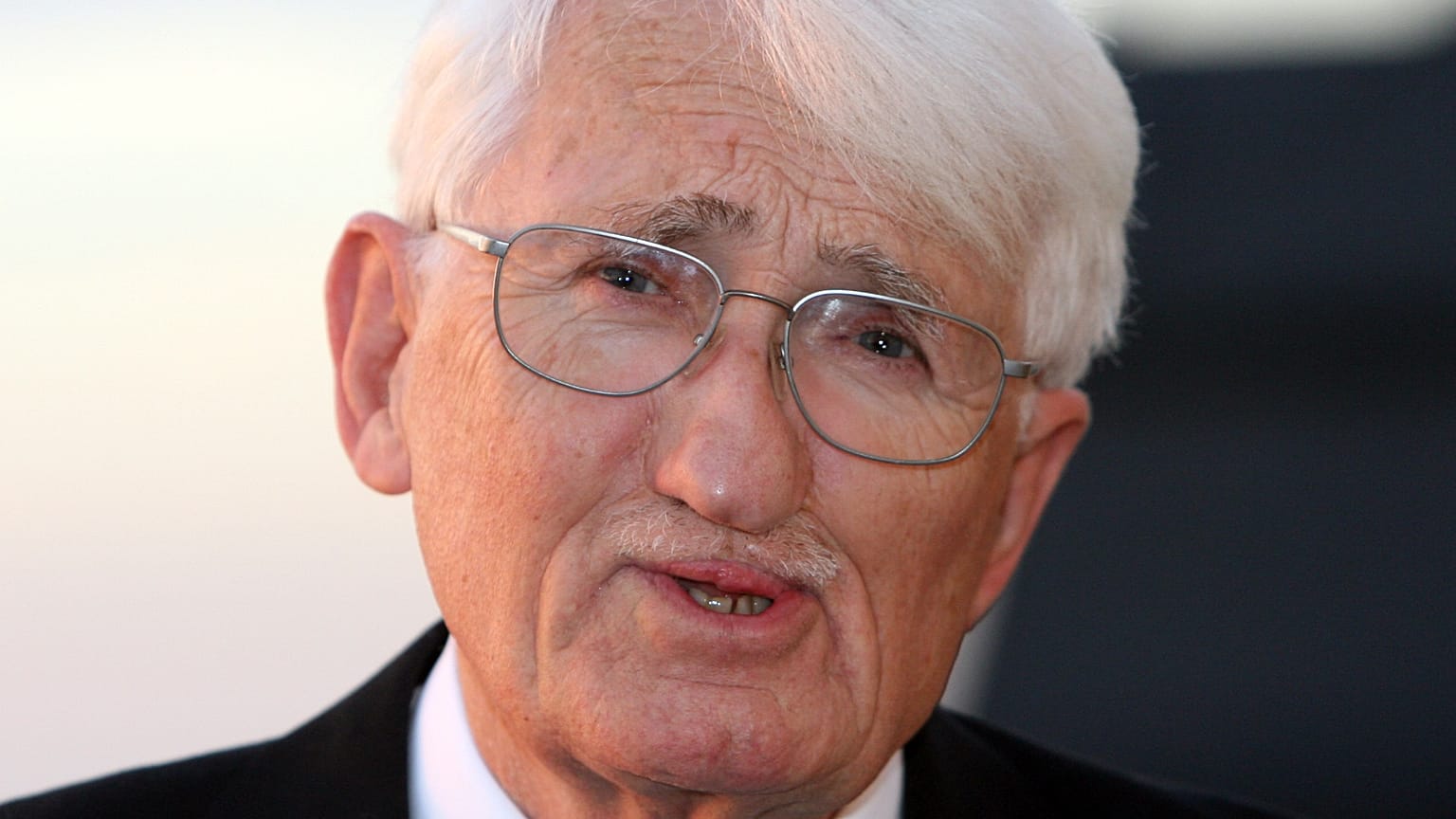
Jürgen Habermas, one of Germany's leading philosophers, dies

The German philosopher Jürgen Habermas has died
Copyright AP Photo


By Euronews with AP
Published on 

He was regarded as one of Germany's most influential contemporary philosophers. Jürgen Habermas has now died in the Bavarian town of Starnberg, aged 95.

One of Germany's most influential postwar philosophers Jürgen Habermas died at the age of 96 on Saturday, according to his publishing house, Suhrkamp.

Habermas' work on communication, rationality and sociology made him one of the most important contemporary German philosophers and a leading figure at the Frankfurt School, besides Marxist thinkers like Theodor Adorno and Max Horkheimer.

The philosopher made an international name for himself for reworking the famous "Critical Theory" developed by Adorno and Horkheimer, a theory that analyses society, politics and culture and often calls into question existing power structures, ideologies and relations of domination.

Habermas was the last surviving representative of the Frankfurt School and spoke out on current political issues for as long as he could.

His best-known works included the two-volume "Theory of Communicative Action," published in 1981.

Habermas was born in Düsseldorf in 1929 and had been enrolled in the Hitler Youth at a young age, as did many German boys, but soon became deeply marked by the collapse of Nazism when he was 15 years old.

He later recalled that the Nazi atrocities were a formative moment that ultimately guided him toward philosophy and social theory, recalling that "you saw suddenly that it was a politically criminal system in which you had lived".

The philosopher had an ambivalent relationship with the German left-wing student movement in the 1960s. While he engaged with it, he rejected any radicalisation and the use of violence, as well as warned against the danger of what he called “left-wing fascism".

Later, however, he acknowledged that the movement had contributed to a "fundamental liberalisation" of German society.

Habermas was born with a cleft palate and had corrective surgery several times as a child. He later said the experience helped shape his thinking about language.

His wife, Ute Habermas-Wesselhoeft, died last year. The couple had three children: Tilmann; Rebekka, who died in 2023; and Judith.


Jürgen Habermas Archive. 1929-. Jurgen Habermas. “The system of social labour develops only in an objective connection with the antagonism of classes; ...


Sep 1, 2023 ... PART ONE The Crisis of the Critique of Knowledge 11 Hegel's Critique of Kant:Radicalization or Abolition of the Theory of Knowledge 72 ...

Habermas, Jürgen (1984) The theory of communicative action vol. 1 : Reason and the rationalization of society. Boston: Beacon Press.

Aug 12, 2022 ... In this collection, Jurgen Habermas engages with a wide range of twentieth-century thinkers. The essays display Habermas's appreciation for ...


In Memoriam Berta Cáceres


Ten years ago, Berta Cáceres, a campaigner against dams and mining projects that were displacing rural communities in Honduras, said that death threats had forced her to lead a ‘fugitive existence’. Most of the threats came from Desarrollos Energeticos SA (DESA), a company planning a hydroelectric project on the Gualcarque River, sacred to Cáceres’s Indigenous Lenca community.

Hired killers were tracking her movements. An attempt to assassinate her on 5 February 2016 was aborted. On 1 March, Cáceres said goodbye to her youngest daughter, who was returning to college. ‘This country is fucked,’ she said, ‘but if anything happens to me, don’t be afraid.’ The next evening, she drove back to her house with a Mexican environmentalist, Gustavo Castro, who was staying the night. Castro was woken near midnight by armed men bursting into the house. They shot him, left him for dead, found Cáceres in another room, and shot her three times. Castro crawled to assist her, and she died in his arms as he called for help.

At first, the police treated the attack as a failed burglary. They then arrested a member of Cáceres’s organisation for supposedly killing her in a ‘crime of passion’. The seven actual culprits were arrested two months later, found guilty of the murder in November 2018, and given long prison sentences.

They were just the hired killers: who had hired them? Two years after Cáceres’s death, a former president of DESA, David Castillo, was arrested as he tried to leave Honduras. In 2021, he was sentenced to thirty years in prison for plotting the murder. DESA is owned by the Atala Zablah family. There is a warrant out for the arrest of one of them, Daniel Atala, but he remains at large.

If Cáceres’s murder is still unresolved, so is the question of how ordinary Hondurans can wrest control of their country from the dozen families, like the Atala Zablahs, that control much of the media and many large businesses, and have close ties with both the Honduran military and politicians in the United States.

Before her murder, Cáceres told the reporter Nina Lakhani (who later wrote the book Who Killed Berta Cáceres?): ‘I want to live. I love my country, and we must rebuild it so that young people are not forced to emigrate.’

After a succession of manipulated elections that kept the oligarchs in power, the progressive Libre party finally won the presidency in 2021. This proved to be temporary. Neoliberals are already back in charge, looking to reverse the modest gains from four years of Libre rule. President Nasry Asfura’s first foreign visits were to Donald Trump in Mar-a-Lago and Benjamin Netanyahu in Jerusalem. He broke ties with Venezuela and promised to reset relations with Taiwan. Cuban doctors working in Honduras were told to leave, even as Honduran medics say their health system is close to collapse.

Environmental defenders face new threats. Draft legislation would outlaw protests against large-scale agroindustrial projects that threaten communities such as Cáceres’s. The Libre government tried to halt the worst of these projects, including the libertarian charter cities now known as ZEDEs (‘zones for employment and economic development’), backed by entrepreneurs including Peter Thiel and other Silicon Valley billionaires. Through the investor-state dispute settlement system, disappointed investors brought claims against Honduras that total nearly $10 billion, roughly a quarter of the country’s GDP. Asfura has signalled his intention to back down and allow the projects to continue.

During the eight years of President Juan Orlando Hernández’s narcostate (2014-22), Global Witness documented the murders of 81 environmental defenders, of whom Cáceres was one of the first. As Tegucigalpa’s mayor, Asfura was close to Hernández throughout that period. In 2020, he was accused of diverting public funds, laundering money, and committing fraud. The Honduran Supreme Court annulled the charges after he won the presidential election last November.

Trump not only intervened in the election to ensure Asfura’s victory but also pardoned Hernández, who was serving a 45-year sentence for trafficking hundreds of tonnes of cocaine to the United States. There was immediate speculation that Hernández would soon be back. Honduras’s brief respite from extreme neoliberalism is at an end.

Published by the London Review of Books

John Perry is based in Masaya, Nicaragua and writes for several independent media. Read other articles by John.
Red fox stowaway from UK finds shelter in NY’s Bronx zoo after transatlantic trip


After a journey from Southampton, England, to New York, a red fox that slipped onto a cargo ship is the care of the Bronx Zoo, according to zoo officials. Once the 11-pound male fox gets a clean bill of health from veterinarians, zookeepers said they would be looking for a long-term home for the animal.


 14/03/2026 -
By: FRANCE 24

There are tens of thousands of urban foxes in Britain, according to academic research. © Loic Venance, AFP

A red fox that managed to slip onto a US-bound ship in Britain was discovered by customs officers in the Port of New York, a zoo in the city has said.

The animal that zookeepers believe to be around two years old somehow boarded a vessel in Southampton, England, and was detected on arrival at the Port of New York and New Jersey, the Bronx Zoo said late Wednesday.

Once veterinarians give the 11-pound male fox a clean bill of health, zookeepers said they would be looking for a long-term home for the animal, which is said to be doing well.

"The Bronx Zoo regularly works with officials to help rescue wildlife that is illegally trafficked through nearby ports and airports," the zoo said.

Red foxes are one of the most prevalent carnivorous mammals globally and are found in Europe, Asia and North America as well as in parts of Africa.

There are tens of thousands of urban foxes in Britain, according to academic research, and Britain has some of the highest-density fox populations in the world.

They have been a part of the city landscape since the 1930s, when urban sprawl began to encroach on their rural territory.

(FRANCE 24 with AFP)


Fantastic Mr Stowaway: Fox sails from Britain to New York port

By AFP
March 12, 2026


There are tens of thousands of urban foxes in Britain, according to academic research - Copyright AFP LOIC VENANCE

A red fox that managed to slip onto a US-bound ship in Britain was discovered by customs officers in the Port of New York, a zoo in the city has said.

The animal that zookeepers believe to be around two years old somehow boarded a vessel in Southampton, England, and was detected on arrival at the Port of New York and New Jersey, the Bronx Zoo said late Wednesday.

Once veterinarians give the 11-pound male fox a clean bill of health, zookeepers said they would be looking for a long-term home for the animal, which is said to be doing well.

“The Bronx Zoo regularly works with officials to help rescue wildlife that is illegally trafficked through nearby ports and airports,” the zoo said.

Red foxes are one of the most prevalent carnivorous mammals globally and are found in Europe, Asia and North America as well as in parts of Africa.

There are tens of thousands of urban foxes in Britain, according to academic research, and Britain has some of the highest-density fox populations in the world.

They have been a part of the city landscape since the 1930s, when urban sprawl began to encroach on their rural territory.
Shark nets planned for €100 million Club Med resort threaten endangered species in South Africa

Scientists warn that proposed shark nets for protecting swimmers near a new €100 million Club Med resort in South Africa could threaten a host of endangered species, calling for a full environmental impact assessment to prevent endangered marine life from becoming casualties of the luxury resort project, on track to open in July.


Issued on: 14/03/2026 
FRANCE24
By: Eunice Masson


Members of the KwaZulu-Natal Sharks Board retrieve a dead Indian Ocean humpback dolphin from their nets. © Dave Savides


Scientists are warning that proposed shark nets near a €100 million Club Med resort in South Africa could threaten endangered marine species, intensifying tensions between tourism development and marine conservation.

The €100 million development on KwaZulu-Natal’s northern coast combines beach and safari experiences in the coastal village of Tinley Manor, bordering the buffer zone of the protected uThukela Banks Marine Protected Area.

The coastline is habitat to several shark species, including bull and great white sharks.

Both the KwaZulu-Natal Sharks Board and the local KwaDukuza Municipality advocated for the installation of “bather safety gear” as a precautionary “necessity” for public safety.


Such gear refers to traditional shark nets and drumlines in waters home to endangered marine species such as the Indian Ocean humpback dolphin.

Leading scientists in South Africa strongly oppose the use of such measures, arguing they are obsolete and that better ones exist. Moreover, the nets will kill large numbers of other marine animals, many of them endangered.

Nevertheless, the lodge remains on track to open on July 4 as scheduled, with the controversial safety measures in place.
No shark encounter since 1994

With up to 1,000 additional visitors expected to visit the resort's beaches per day, resort developer Collins Residential said the KwaDukuza Municipality applied to the Department of Forestry, Fisheries and the Environment (DFFE) “to assess appropriate bather-safety measures” for this stretch of coastline.

Collins Residential said an initial environmental impact assessment was made. But the public participation process held in November took place without a full environmental assessment.

“After further engagement with the relevant environmental authorities, it was determined that a full Environmental Impact Assessment is required in terms of the National Environmental Management Act,” Collins Residential said, responding on behalf of Club Med.

However, the DFFE confirmed to FRANCE 24 that Collins Residential's initial assessment “did not evaluate the impacts” of installing the nets and drumlines.

Dr Enrico Gennari, founder of the Oceans Research Institute, argues that in the absence of a full environmental impact assessment, “the public participation process has been flawed”, specifically citing “wrong and outdated information”.

Moreover, Gennari said, the project is unnecessary.

“None of us believes that there is any data that supports that adding nets and drumlines at Tinley Manor will reduce the risk of an encounter. And you know why? Because there has been no encounter at that location since 1994, and also no bites.”
Declining shark populations

Following the public participation process, Gennari and 10 other leading shark and maritime mammal scientists in South Africa felt compelled to publish an open letter opposing the installation of shark nets at Tinley Manor beach.

The KwaZulu-Natal Sharks Board did not respond to FRANCE 24’s request for comment.

In their open letter, the scientists noted that the risk of shark encounter was already low, due to the “population declines of most of the shark species in the area”.

Following the death of a juvenile white shark in a net last year, the Two Oceans Aquarium Foundation wrote that “shark nets catch more than 500 sharks and other species every year”. Gennari noted in a recent article for Oceans Research News that “several independent indicators suggest that South Africa’s white shark population is more likely to be declining than stable”.

Scientists argue that any discussion around shark nets must distinguish between target and non-target species, as well as threatened and protected species.

According to DFFE data on captures by the KwaZulu-Natal Sharks Board’s nets and drumlines between 2016 and 2019 - 2021, an average of 58 target species are caught per year, including tiger, white and bull sharks.

This compares with around 381 non-target animals per year, including marine mammals, turtles, non-dangerous sharks, rays and birds.

The most concerning recent casualty was an endangered Indian Ocean humpback dolphin in mid-February in Alkantstrand in Richards Bay, about 124km north of Tinley Manor.

The death of the endangered dolphin – fewer than 500 remain in South Africa – triggered renewed calls to halt the installation of lethal shark nets at Tinley Manor.

The shoreline along Tinley Manor was previously one of the highest-risk sites for humpback dolphin deaths in shark nets.

The SouSA Consortium – a group of conservationists and organisations working to protect the species – said in a statement that “re-installing lethal gear” in the area “is an unacceptable risk for the species, a risk that seems inconsistent with Club Med's high environmental standards, considering less than 1% of all animals caught in the nets are released alive”.

According to Gennari, the KwaZulu-Natal Sharks Board’s approach to bather safety is to “remove potentially dangerous sharks”.

“Their idea is one less shark, one less risk of an encounter for a human. So they are not there to separate people from sharks. They are there to kill sharks, large sharks and, unfortunately, by doing that, they kill much more.”
Alternatives

Scientists argue that non-lethal methods could also improve bather safety. Gennari explained that the most effective approach is usually a combination of several measures.

Proposed alternatives include drone surveillance, modern drumlines that allow sharks to be released alive and electromagnetic barriers designed to deter sharks.

Other options – including shark spotters and sonar technology to detect sharks – were also identified by the KwaDukuza Municipality.

However, some of these alternatives cannot yet be implemented.

“KZNSB’s research into alternative technologies for bather safety, including an electrical shark-repelling cable concept, is ongoing but not yet deployable,” the municipality wrote in its public participation document.
Club Med at a crossroads

Club Med now finds itself at a crossroads “in terms of its ethical approach”, Gennari said.

Collins Residential, speaking on behalf of Club Med, said that “sustainability is central to how Club Med designs and operates its resorts”.

“If it is true that they are looking after the wildlife population in the area, they cannot be seen as intentionally targeting and killing species that are at risk of extinction," Gennari said.

"They need to decide: Are we [here] just for the money, or is [it] really true that we are interested in the well-being of our planet?”

Green Globe is a global certification standard for the travel and tourism industry aimed at promoting economic, social and environmental sustainability.

Collins Residential said that in 2025, nearly 90% of Club Med resorts worldwide achieved Green Globe certification for daily operations, including 100% of resorts in Africa. In South Africa, Club Med “aims to secure Green Globe certification within its first year of opening”.

Gennari emphasised that scientists are not opposed to the lodge’s development, but are simply calling for sustainable solutions.

He encouraged Club Med to collaborate with people “willing to help in making the right decision, using scientific data and a long-term approach to sustainable development”.

“It’s up to them, however, to make that decision.”