Sunday, March 15, 2026

 Hungary pre-election showdown draws crowds amid foreign interference claims


By AFP
March 15, 2026


Orban has sought to portray opposition leader Magyar as a 'puppet' of Brussels and Kyiv - Copyright AFP Attila KISBENEDEK


Géza MOLNAR, Andras ROSTOVANYI

Huge crowds joined rival marches staged by Hungarian premier Viktor Orban and his main opponent Peter Magyar in Budapest on Sunday, as both push allegations of foreign interference just four weeks before tightly-fought elections.

Orban — who faces an unprecedented challenge to his 16-year rule — has sought to portray the opposition leader as a “puppet” of Brussels and Kyiv, while Magyar has accused the Moscow-friendly premier of seeking the Kremlin’s help to stay in power ahead of the April 12 elections.

The nationalist leader in his speech Sunday urged Ukraine to stop “attacking” the central European country.

In a heated spat, he has accused Kyiv in past weeks of blocking a key pipeline transporting Russian oil through Ukraine to Hungary.

Magyar, in turn, accused Orban on Sunday of seeking to curb Hungary’s freedom by “inviting Russian agents” to “interfere in the elections”.

This follows reports by regional investigative outlet VSquare and the Financial Times of a covert Russian social media campaign to boost Orban and weaken the opposition.

Tens of thousands of people attended both rallies, according to AFP journalists on site.


– ‘ We will not be a Ukranian colony’ –


Hungarians from around the country travelled to Orban’s rally dubbed a “peace march” on the country’s national day, many using buses rented by a group close to Orban’s Fidesz party.

“There is unrest all over the world, and here in our little country we want to preserve peace, calm and security. And Viktor Orban ensures that for us,” said Sandorne Pista, 60, who came from the southern university town of Pecs.

“We will not be a Ukrainian colony,” read one of the banners carried ahead of the crowd, which later chanted “Viktor, Viktor” as the Hungarian premier took the stage in front of the parliament.

“Give us our oil, then roll your trucks over to the cash register in Brussels to collect money from the West, since they can’t say no,” Orban said in reference to the ongoing oil dispute with Kiyv.

Orban’s party has been trailing in polls since last year, and he has recently centred his campaign on attacking Ukrainian President Volodymyr Zelensky.

Tensions between Zelensky and Orban reached new heights last week, when Zelensky appeared to issue a direct threat against Orban and Hungary detained and then expelled a group of Ukrainian bank employees.

Orban told supporters that either he or the Ukrainian leader will form Hungary’s next government.

Zelensky, whose country has been battling a Russian invasion since 2022, in a fresh statement Sunday accused Hungary’s government of spreading “anti-Ukrainian sentiment”.

“We are ready to work amicably (with any Hungarian leader), provided this person is not an ally of (Russian President Vladimir) Putin,” he said.


– ‘Russians go home’ –


Opposition supporters marched behind horsemen dressed as hussars — Hungary’s historic light cavalry formation.

Many have dismissed the government accusations against Magyar’s party.

“They’re trying to divert attention away from the scandalous state of public affairs,” Noemi Kiss, a 28-year-old communications manager, told AFP.

Amid recurring chants of “Russians go home,” Magyar promised the crowd that his party would achieve a “victory so great” that “it will be visible… even from the Kremlin.”

He also vowed that his government will bring an end to “hatred, division and fear” in public discourse.

Billboards against Zelensky have sprung up in recent weeks across Hungary, using images of the Ukrainian leader next to Magyar.

“Orban is doing everything he can to rev up the war psychosis that brought him a fourth supermajority in 2022” after Russia invaded Ukraine, Robert Laszlo, an election specialist at the think-tank Political Capital, told AFP.


'Orbán betrayed Hungarian freedom': Magyar accuses PM of inviting Russian agents to rig the vote


By Sandor Zsiros
Published on 

Opposition leader Péter Magyar called Viktor Orbán a traitor at a Budapest rally, accusing him of enlisting Russian agents to interfere in Hungary's 6 April elections, as polls show Tisza ahead of Fidesz.

Hungary's opposition leader Péter Magyar branded Prime Minister Viktor Orbán a traitor and accused him of enlisting Russian agents to interfere in the country's upcoming parliamentary elections.

Magyar delivered the remarks at a rally in central Budapest marking Hungary's national day, which commemorates the 1848 uprising against Habsburg rule, a revolt that was ultimately crushed by the Russian Empire.

Hungary goes to the polls on 12 April. Magyar's Tisza Party leads Orbán's Fidesz in most opinion polls. Fidesz has governed Hungary with an absolute parliamentary majority since 2010.

"Orbán invited the most skilled Russian agents to our country to interfere in the elections and once again rob us of our most sacred possession, Hungarian freedom, for which our ancestors gave their lives," Magyar said.

He was referring to press reports alleging that Russia has deployed a team of agents from its Budapest embassy to influence the electoral campaign in Orbán's favour. Russia has denied the allegations.

"Lies, deception and harassment, that is what they have in store for us. Viktor Orbán betrayed Hungarian freedom for thirty pieces of silver, for himself and his dynasty. Shame, shame, shame," Magyar said.

Magyar also took direct aim at Orbán's campaign narrative, in which the prime minister portrays himself as the guarantor of peace and stability while casting the opposition as willing to drag Hungary into war.

"To provoke war, to threaten war, to incite war — this is his last weapon against the Hungarians, deployed to keep himself in power," Magyar said. His Tisza Party, he added, stands firmly against any form of military involvement.

"We don't want war, we don't want war," he said.

Opposition focuses on the cost of living

Magyar also devoted a significant portion of his speech to economic issues, pledging to improve living standards and address the cost-of-living pressures facing Hungarian households.

"Viktor Orbán is a traitor who betrayed our common future. He did not build a country, but his own dominion. He did not elevate the homeland, but made it the poorest and most corrupt country in the EU," Magyar said.

He added that his future government aims to bring back EU funding earmarked for Hungary, currently frozen over concerns about corruption and the rule of law.

Magyar also promised to prioritise the repair of public services if his party wins the election.

"Citizens are entitled to the best available public healthcare, wherever they live. They are entitled not to die prematurely from preventable diseases, and not to wait years for a routine examination," Magyar said.

The opposition leader also pledged to introduce a two-term limit on the office of prime minister should Tisza come to power.


'Our sons will not die for Ukraine,' Orbán tells supporters ahead of crucial April elections
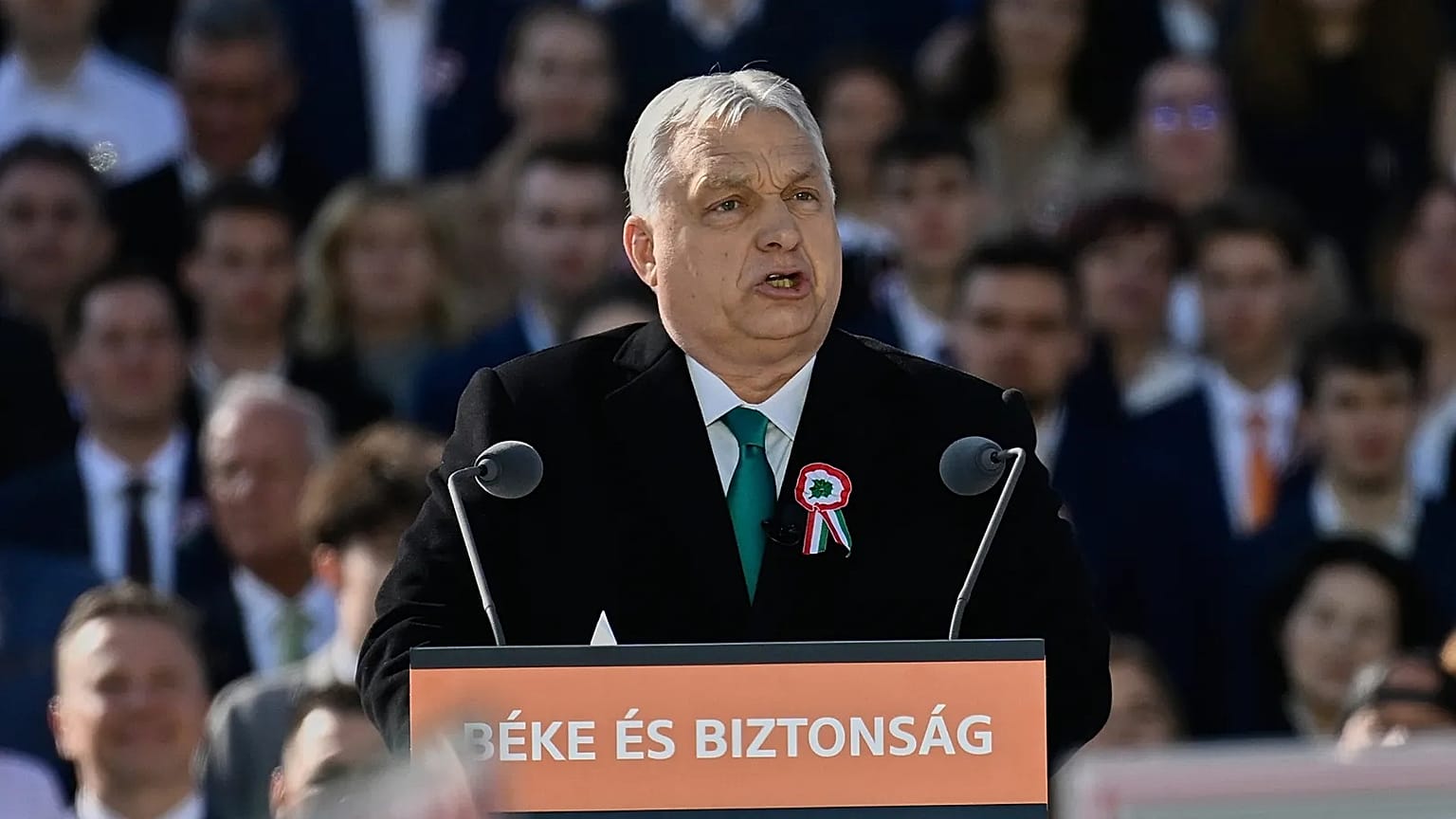
Hungary's Prime Minister Viktor Orbán addresses supporters during a march in Budapest, 15 March, 2026
Copyright MTI

By Sandor Zsiros
Published on 

Hungarian PM Viktor Orbán rallied supporters in Budapest, framing April's election as a choice between peace and war, while lashing out at Ukraine's Zelenskyy and the EU over the Druzhba pipeline dispute.

Hungarian Prime Minister Viktor Orbán declared that Hungary's upcoming parliamentary elections represent a choice between peace and war, casting his government as the guarantor of stability.

Orbán made the remarks at a rally in central Budapest marking Hungary's national day, which commemorates the country's 1848 revolution against Habsburg rule.

Hungary goes to the polls on the 12th of April in a vote widely regarded as the most serious challenge to Orbán's grip on power since he took office in 2010.

Péter Magyar, leader of the opposition Tisza Party, is currently ahead of Orbán's Fidesz in opinion polls.
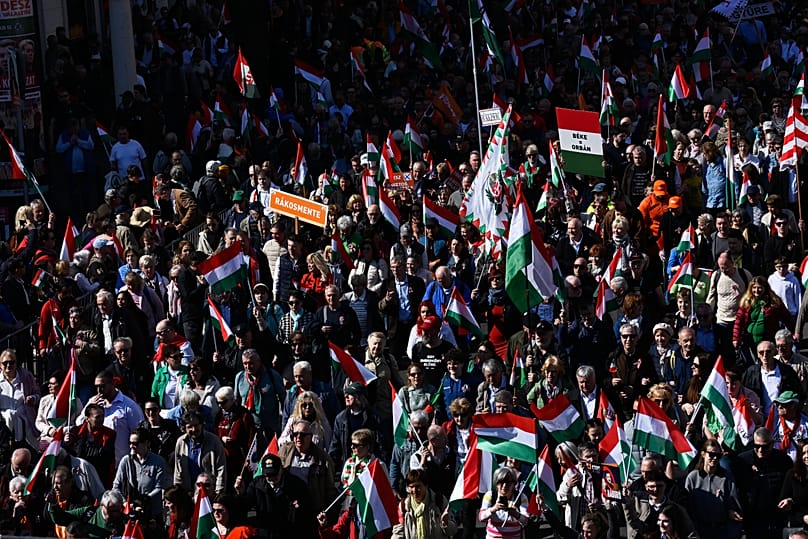
Supporters of Hungary's Prime Minister Viktor Orbán at a march in Budapest, 15 March, 2026 AP Photo

Orbán said Brussels and Kyiv seek to unseat him

Orbán also accused Ukraine of interfering in the electoral campaign, alleging that Kyiv was siding with the opposition and the European Union in an effort to unseat him.

Budapest and Kyiv are locked in a bitter dispute over the shutdown of the Druzhba pipeline, which carries discounted Russian oil to Hungary via Ukraine. Budapest has blocked the EU's €50 billion loan package to Ukraine until the pipeline is restored.

The row has also taken on a personal dimension, with sharp exchanges between Orbán and Ukrainian President Volodymyr Zelenskyy.

"Do you see this, Ukrainians? Do you see this, Zelenskyy? This is the thousand-year-old Hungarian state. And you think you can scare us with an oil blockade, blackmail and threats against our leaders? Be smart and stop this," Orbán said.

Campaign overshadowed by diplomatic spat with Ukraine

Last week, Zelenskyy said he would allow his troops to phone a European leader who was blocking EU aid to Ukraine, a statement the Hungarian government condemned as a direct threat to Orbán.

"Don't you have enough trouble on the eastern front? Why did you attack us? We are a peace-loving people. Give us our oil, and then roll your vans to Brussels for Westerners' money," Orbán said, in an apparent reference to the seizure of two Ukrainian cash-transport vehicles near Budapest a fortnight ago.

Hungary raided two Ukrainian vehicles from Ukraine's Oschadbank, and confiscated $40m, €35m, and 9kg of gold in a money laundering probe. Ukraine said the transport was legal and accused Hungary of state terrorism. The incident triggered a diplomatic dispute between the two countries.
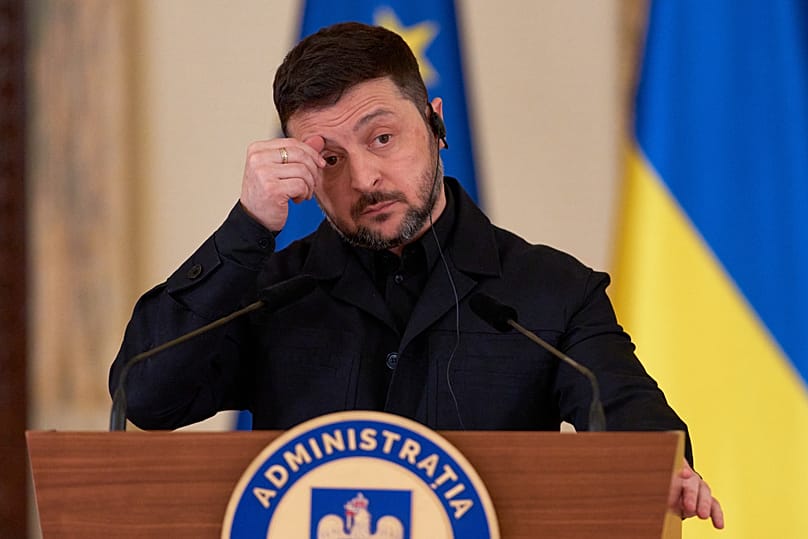
Ukrainian President Volodymyr Zelenskyy gestures during a news conference in Bucharest, 12 March, 2026 AP Photo

Orbán frames elections as choice between peace and war

Framing the vote as existential, Orbán portrayed the upcoming elections as a stark choice between peace and war. He frequently depicts the European Union as a pro-war bloc that is escalating the conflict in Ukraine through financial support and talk of deploying ground troops.

"It is time for Kyiv and Brussels to understand that our sons will not die for Ukraine, they will live for Hungary," Orbán said.

"We must choose who should form a government, me or Zelenskyy? I offer myself, with due modesty," he added.

Orbán also alleged that both Ukraine and the EU have a vested interest in a change of government in Hungary, and called on his Fidesz party to outperform its result from four years ago, setting a target of at least three million votes.

FASCIST INTERNATIONAL


EU Parliament firewall breached? EPP reportedly worked closely with AfD

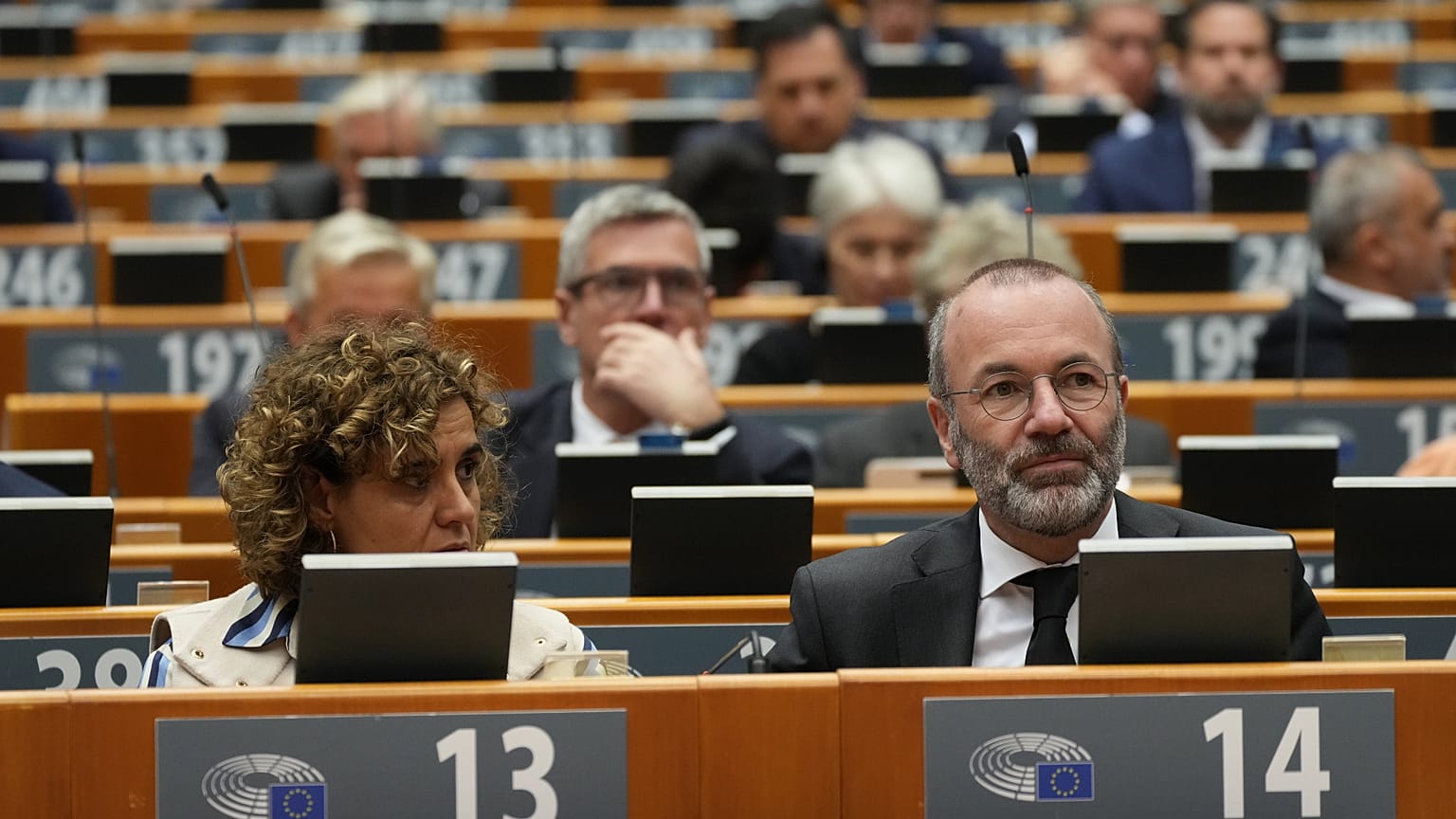
Manfred Weber (EPP) at the European Parliament in Brussels, Wednesday, 12 November 2025.
Copyright AP Photo

By Nela Heidner
Published on 

Investigations suggest the EPP group in the European Parliament cooperated more closely with right-wing parties, including the AfD, on tougher EU migration laws, with a chat group and a meeting of MEPs playing a key role.

The CDU and CSU groups in the European Parliament appears to be cooperating more closely with the AfD and other right-wing parties than was previously known.

Research by the dpa news agency revealed that the EPP has recently been working together with the right-wing camp in a text group chat and at a face-to-face meeting of MEPs on a legislative proposal to tighten up migration policy.

Bill had been stuck for months

The draft law under negotiation secured the required majority in the competent committee of the European Parliament shortly after the MEPs' meeting.

In addition to members of the EPP group, MEPs from the right-wing camp also voted in favour, among them was AfD politician Mary Khan. The planned law intends to, among other things, allow the deportation of asylum seekers to so-called "return hubs" in countries outside the EU.

The cooperation came about after the legislative project had been stuck for months, with the EPP, Social Democrats and Liberals unable to reach an agreement.

These three party families normally form an informal alliance in the European Parliament that is supposed to make any cooperation between the EPP and parties on the far-right "unnecessary".

In this case, however, efforts to reach an agreement failed at the beginning of March, as the Social Democrats refused to back the concept of "return hubs" in its current form. A WhatsApp group was then reportedly set up, according to dpa, in which the EPP presented its proposal to the right-wing groups.

The group included the conservative, right-wing populist ECR, with MEPs from the camp of Italian Prime Minister Giorgia Meloni, Patriots for Europe (PfE), which includes politicians from Marine Le Pen's French Rassemblement National, and the Europe of Sovereign Nations (ESN) group, to which AfD MEPs also belong.

AfD proposal: safeguards against fraud over age claims

Group chat members responded to the proposal with requests for amendments. According to information obtained by dpa, the EPP also took into account suggestions from the office of AfD politician Khan. In the WhatsApp group the EPP wrote, for example: "We can support this".

Khan advocated, among other things, broader powers for the authorities when checking the age of asylum seekers. She argued that medical tests should also be used, where there is any doubt, to determine whether those seeking protection are in fact minors.

Shortly after the WhatsApp group was created, the four MEPs from ESN, ECR, PfE and the EPP met in person on 4 March to negotiate the bill. They were French EPP politician François-Xavier Bellamy, AfD MEP Khan, as well as Ehlers from PfE and Weimers from the ECR. Together they drafted a bill for the forthcoming vote.

After the deal was reached, someone wrote in the WhatsApp group: "Thank you very much for this excellent cooperation," to which staff from the EPP responded with the applauding emoji.

Weber claims 'Firewall' holds at European level

Previously, Manfred Weber, head of the conservative European People's Party (EPP) and CSU deputy leader, had repeatedly stressed that a "firewall" was in place at the European Parliament, emphasising the importance that there was no cooperation with extreme right-wing parties.

Speaking to Bild on Saturday, Weber did not deny that the chat logs exist, but rejected any political relevance of the AfD: "The AfD plays no role when it comes to majorities and content. As group chairman I set the strategy. However, I do not control staff chat groups".

The majority in the committee is seen as a breakthrough for the possible creation of EU return centres. The proposed return regulation suggests that rejected asylum seekers who cannot be sent back to their countries of origin should be taken to holding centres outside the EU.

Federal Interior Minister Alexander Dobrindt (CSU) is promoting the concept, which is intended to ease the burden on the European asylum system. Together with four other EU countries, the federal government has drawn up a rough roadmap for this. Critics warn that it could violate refugees' fundamental rights.

The cooperation with right-wing parties that has now come to light could apparently further jeopardise the project.


Razzie Awards 2026: Anti-Oscars name ‘War Of The Worlds’ as Worst Picture

Razzie Awards 2026: Anti-Oscars name ‘War of the Worlds’ as Worst Picture
Copyright Universal Pictures

By David Mouriquand
Published on 

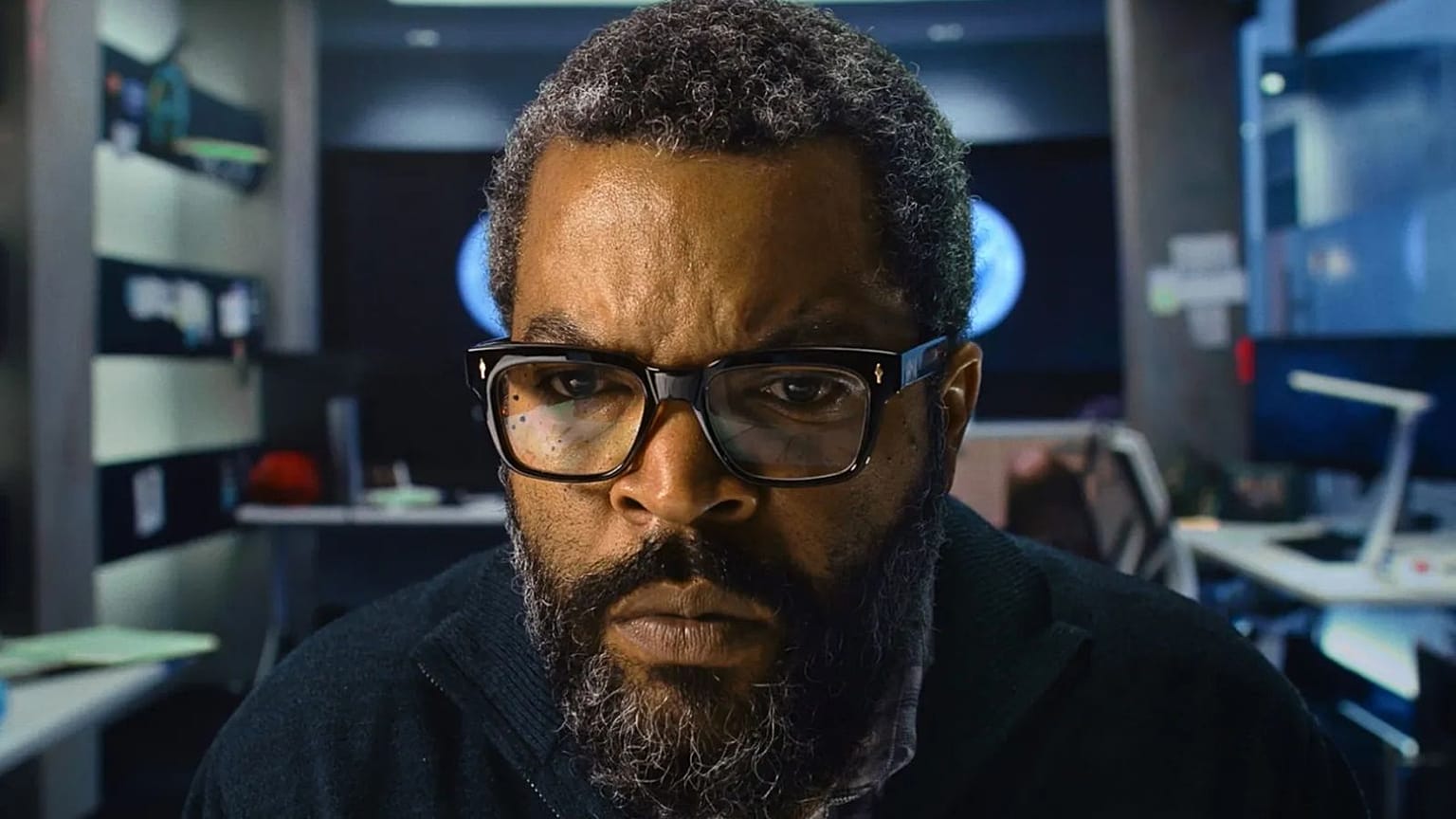
Worst Picture was just one of five awards that 'War Of The Worlds' took home, making it something of a clean sweep for the Ice Cube-starring adaptation / devastation of H.G. Wells’ classic novel.

As is tradition, prior to celebrating the best films of the year with the Oscars comes news of the Golden Raspberry Awards, aka: the Razzies, which celebrate the worst cinema had to offer.

Punching down for some; balancing the cinematic scales for others...

The 46th edition of the Razzies named War Of The Worlds, starring Ice Cube, as the worst film of last year.

It’s hard to argue with that assessment, as the laughably naff Amazon-sponsored adaptation / devastation of H.G. Wells’ classic novel can only be considered a cinematic crime against humanity.

Further cementing its status as such is the fact that War Of The Worlds just about swept the board at the parody awards this year, bagging a total of five prizes: Worst Picture, Worst Director (Rich Lee), Worst Actor (Ice Cube), Worst Screenplay (Kenny Golde, Marc Hyman) and Worst Prequel, Remake, Rip-Off or Sequel.

With War of the Worlds dominating almost every category, just four other films won Razzies this year.

Disney’s Snow White remake won two: Worst Supporting Actor and Worst Screen Combo, both for the film’s CGI dwarfs. Again, tough to argue.

Rebel Wilson took home Worst Actress for her action “comedy” Bride Hard, and Scarlet Rose Stallone (daughter of Sylvester Stallone) won Worst Supporting Actress for Gunslingers.

The Razzies also awarded Kate Hudson with the Redeemer Award for her Oscar-nominated performance in Song Sung Blue. Hudson has received several Razzie acting nods throughout her career, including ones for My Best Friend’s Girl (2008), Mother’s Day (2016) and Music (2021).

Here is the full list of this year’s dishonours:

WORST PICTURE

  • War Of The Worlds - WINNER
  • The Electric State
  • Hurry Up Tomorrow
  • Disney's Snow White
  • Star Trek: Section 31

WORST ACTOR

  • Ice Cube, War of The Worlds - WINNER
  • Dave Bautista, In The Lost Lands
  • Scott Eastwood, Alarum
  • Jared Leto, Tron: Ares
  • Abel "The Weeknd" Tesfaye, Hurry Up Tomorrow

WORST ACTRESS

  • Rebel Wilson, Bride Hard - WINNER
  • Ariana DeBose, Love Hurts
  • Milla Jovovich, In The Lost Lands
  • Natalie Portman, Fountain Of Youth
  • Michele Yeoh, Star Trek: Section 31

WORST REMAKE / RIP-OFF / SEQUEL

  • War Of The Worlds - WINNER
  • I Know What You Did Last Summer
  • Five Nights At Freddy's 2
  • Smurfs
  • Snow White

WORST SUPPORTING ACTRESS

  • Scarlet Rose Stallone, Gunslingers - WINNER
  • Anna Chlumsky, Bride Hard
  • Ema Horvath, The Strangers: Chapter 2
  • Kacey Rohl, Star Trek: Section 31
  • Isis Valverde, Alarum

WORST SUPPORTING ACTOR

  • All Seven Artificial Dwarfs, Snow White - WINNER
  • Nicolas Cage, Gunslingers
  • Stephen Dorff, Bride Hard
  • Greg Kinnear, Off the Grid
  • Sylvester Stallone, Alarum

WORST SCREEN COMBO

  • All Seven Dwarfs, Snow White - WINNER
  • James Corden & Rihanna, Smurfs
  • Ice Cube & His Zoom Camera, War of The Worlds
  • Robert De Niro & Robert De Niro (as Frank & Vito), The Alto Knights
  • The Weeknd & His Colossal Ego, Hurry Up Tomorrow

WORST DIRECTOR

  • Rich Lee, War Of The Worlds - WINNER
  • Olatunde Osunsanmi, Star Trek: Section 31
  • The Russo Brothers, The Electric State
  • Trey Edward Shults, Hurry Up Tomorrow
  • Marc Webb, Snow White

WORST SCREENPLAY

  • War Of The Worlds - WINNER
  • The Electric State
  • Hurry Up Tomorrow
  • Snow White
  • Star Trek: Section 31

Middle East war strains US air defence supplies needed by Ukraine

TRUMP'S REAL REASON FOR IRAN WAR
HELPING PUTIN

Middle East war strains US air defence supplies needed by Ukraine
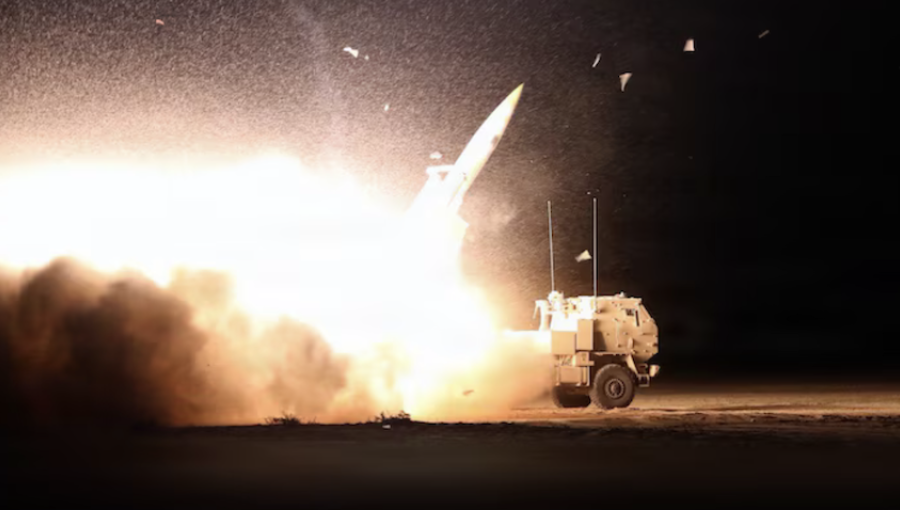
An M142 High Mobility Artillery Rocket System conducts live-fire missions during Operation Epic Fury. / war.gov
By bne IntelliNews March 15, 2026

The widening US-led war with Iran is rapidly consuming expensive American air defence munitions that Ukraine relies on to shield its cities from Russian missile strikes, raising concerns among European allies that Kyiv could face critical shortages in the months ahead, reported Politico.

Hundreds of interceptors from the US-made Patriot system have already been fired by American forces and their Gulf partners to counter waves of Iranian ballistic missiles and attack drones, according to European officials and US lawmakers. The scale of the fighting in the Middle East is eating into stockpiles that might otherwise have been available for Ukraine, placing two simultaneous conflicts in direct competition for the same limited supply of high-end defensive weapons.

The dynamic has unsettled governments across Europe that have been trying to sustain Ukraine’s air defence capabilities as Russia intensifies attacks on civilian infrastructure and energy facilities.

“If [Russian President Vladimir] Putin was feeling any pressure to negotiate before, and it’s not clear he was, it’s gone for now,” said one EU official familiar with the discussions. “The United States is distracted and burning through some of the weapons Europe wants to purchase for Ukraine. It’s a very gloomy scenario.”

The concern is that Moscow could exploit the moment by escalating missile and drone strikes while Western attention is divided between two theatres of war.

Ukraine’s air defence network, heavily dependent on the American-made Patriot missile system, has played a crucial role in protecting major cities from Russian ballistic missiles. However, the interceptors required to operate the system are among the most complex and costly weapons in the Western arsenal.

Ukrainian President Volodymyr Zelenskiy warned this week that shortages could become a serious challenge if the Middle East conflict continues to absorb available supply.

“The overall deficit of missiles for Patriot systems is not because of this war in the Middle East,” Zelenskiy said in an interview with WELT. But, he added, “this war will have influence on decreasing the number of missiles, decreasing the opportunity to get more missiles” for Ukraine.

The scale of the fighting around the Gulf has been striking. The defence ministry of the United Arab Emirates said Iran had launched 1,475 drones, 262 ballistic missiles and eight cruise missiles at the country since the war began. Most were intercepted using American-made systems, including Patriot and the Terminal High Altitude Area Defense, better known as THAAD.

More than 1,600 incoming drones and missiles were reportedly shot down — a figure that illustrates both the intensity of the attacks and the enormous expenditure of interceptor missiles required to stop them.

According to a Bloomberg Intelligence estimate, US and allied forces in the region may already have fired as many as 1,000 PAC-3 Patriot interceptors since the conflict began. That figure far exceeds the rate at which the sophisticated missiles can currently be replaced.

Production bottlenecks have long plagued the Patriot supply chain. In the years before the wars in Ukraine and the Middle East erupted, the United States produced roughly 270 Patriot missiles annually, according to the Center for Strategic and International Studies.

Demand has since surged as governments around the world scramble to strengthen their air defences.

In January, US defence contractor Lockheed Martin agreed to dramatically expand production of Patriot missiles, planning to increase output from around 600 annually in 2025 to about 2,000 per year. The expansion was partly driven by pressure from the administration of US President Donald Trump and requests from allied governments.

Yet industry officials say it will take years for new factories and supply chains to reach those levels of output.

“There’s a lot of confusion on that question, of what the priorities are going to be for Ukraine versus the Middle East,” said US Senator Richard Blumenthal, a Democrat who has advocated strong support for Kyiv.

“Europeans are frustrated that we’re not more forthcoming in terms of our production capacity, and that the difficulty of ramping up production is used as an excuse for failing to provide more,” he said.

The uncertainty is already affecting strategic planning among Nato governments.

“It goes without saying that Ukraine will be affected as the US will prioritise national needs,” said an official from a Nato country, speaking on condition of anonymity because of the sensitivity of the discussions.

European officials say recent delays in weapons deliveries have already had tangible consequences. A German government representative said “sluggish” shipments of air defence equipment late last year contributed to the heavy damage inflicted on Ukraine’s energy infrastructure during Russian winter bombardments.

“The worry is that Trump will break agreements, withhold supplies, and that Putin will ruthlessly exploit this,” the official said.

At the same time, soaring demand for advanced American weapons has pushed prices sharply higher.

“Some prices of weapon systems are clearly doubled,” said another Nato official involved in procurement discussions. “That’s the ballpark and degree of price issues we are having.”

For European governments, the immediate challenge is securing enough air defence interceptors to sustain Ukraine’s shield against Russian missiles. But the broader worry is that the entire pipeline of military equipment could tighten if the Middle East conflict expands further.

To mitigate that risk, Nato allies last year created the Prioritized Ukraine Requirements List, known as PURL. The mechanism allows European countries to purchase American equipment — including Patriot interceptors — and then transfer it to Kyiv.

The programme became particularly important after the Trump administration halted direct US military aid to Ukraine last year, leaving European governments to finance many of the weapons deliveries themselves.

Some European leaders now argue that the solution lies in shifting more production to the continent.

Finland’s defence minister, Antti Häkkänen, said Europe must develop its own industrial capacity alongside the American supply chain.

“We have emphasised there has to be some kind of a European industry pillar, and Ukrainian pillar,” Häkkänen said, allowing parts of the production process to move closer to the battlefield and shorten delivery times.

For now, however, the reality is that Ukraine’s most advanced air defences remain dependent on American technology and American factories. As Washington diverts resources to confront Iran, European officials fear Kyiv may soon find itself competing for the very weapons that keep its skies — and its cities — safe.

Cubans strike Communist Party facility as energy crisis ignites fury

Cubans strike Communist Party facility as energy crisis ignites fury
/ Cristian Crespo F - X
By bno - Taipei Office March 15, 2026

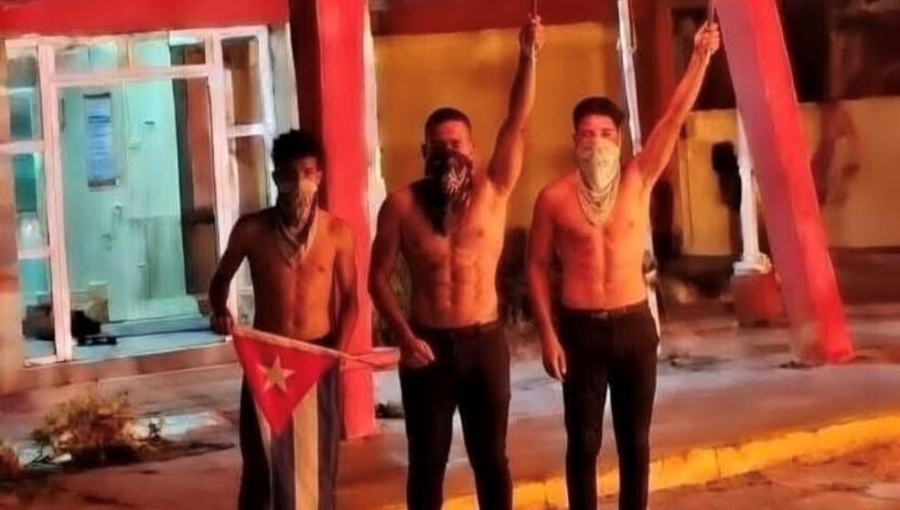
In the central city of Morón, Cuba, simmering anger over soaring food prices and relentless power cuts has erupted into violence as a band of protesters stormed a provincial Communist Party building, setting it ablaze in the process. Furniture was torn from the offices as fires were set late on March 13 and into the following day, while local police moved swiftly to detain those involved in the vandalism. Nearby, other state-run facilities, including a pharmacy and a government market, also bore the brunt of the unrest the BBC reports.

What began as a seemingly peaceful demonstration according to multiple media outlets rapidly descended into chaos. Footage circulating on social media captured rocks smashing through windows and flames leaping into the sky as the voices of demonstrators demanded change. Cuban authorities have already launched an official probe into the episode, sources say.

The unrest in Moron reflects a deepening crisis gripping the island, where blackouts of up to 15 hours a day are commonplace and have compounded severe shortages of food, fuel and medicine. In the capital Havana and other cities, residents have increasingly resorted to nighttime protests by banging pots and pans.

Cuban President Miguel Díaz‑Canel recognised the legitimacy of public grievances over living conditions but also took to social media to warn that acts of violence and vandalism would not be tolerated by the authorities, before pinning the blame for the energy crisis on the United States. In doing so, he cited a blockade that has effectively halted fuel deliveries to the island for the past three months.

Amid the turmoil, Havana confirmed ongoing talks with Washington aimed at easing the current bilateral tensions. Meanwhile, US President Donald Trump has continued to call for regime change in Cuba and has threatened additional measures against any nation caught supplying oil to the impoverished state which remains heavily reliant on imports.