Sunday, March 15, 2026

Who covers AI business blunders? Some insurers cautiously step up

By AFP
March 14, 2026


Many insurers remain reluctant to cover business mistakes made by 'agentic" AI programmes housed in data centres - Copyright AFP YASUYOSHI CHIBA


Thomas URBAIN

As more businesses trust artificial intelligence “agents” to independently grow their revenues, some insurance firms are stepping in to cover any mistakes — while others are steering clear.

“The whole intent of using advanced AI is to substantially replace human assistance and oversight in decisions,” said Phil Dawson, head of AI policy and partnerships at the specialist insurer Armilla.

The trend of “agentic AI” has taken off, with bots handling computer tasks by themselves and businesses trimming ranks of human workers as a result.

“That really challenges some of the fundamental logic of existing insurance coverage,” Dawson said.

Companies in the AI race are striving to perfect the technology, but they have not eliminated the possibility of errors such as “hallucinations” in which fabricated output is confidently presented.

AI-related liability risks have been largely accounted for implicitly under insurance policies in what is referred to as “silent coverage”, analyst Sonal Madhok and law professor Anat Lior said in a research paper published late last year by the brokerage firm Willis Towers Wa000_96CW39Vtson.

However, they argue that the situation is similar to the liability coverage questions raised in the early years of cybercrime.

“We can expect policies to explicitly address AI in the near future, ending the silent coverage era,” Lior and Madhok said.

Insurers are already moving beyond their “wait-and-see approach” when it comes to AI mishaps, according to Jonathan Mitchell, head of the financial sector practice at brokerage firm Founder Shield.

Some standard insurance policies now include “absolute AI exclusion” clauses that expressly deny coverage for AI-related mishaps, Mitchell said.

Dawson cited a commercial real estate firm that tried to have its AI agent covered as a regular employee but had to revert to a special policy.

– ‘AI malfunction’ protection –

Founder Shield incorporates “AI malfunction and hallucination” scenarios specifically into professional services policies covering losses the technology causes clients.

The scope of such policies can be extended, for a price, beyond computer networks to cover real world harm such as AI mistakenly ordering too much inventory for a company.

Armilla tests AI models for vulnerabilities before committing to coverage and assesses whether the client’s risk management framework adheres to international standards.

But like other insurers, Armilla can decline to take on certain risks.

For example, it avoids providing coverage for anything related to medical diagnostics or applications focused on mental health.

Munich Re, a global titan that does both insurance and reinsurance, provides coverage for companies that design AI models as well as those that use the technology.

“This risk of a model making errors or hallucinating cannot be fully avoided in any technical way,” said Munich Re’s head of AI insurance, Michael von Gablenz.

“AI systems, at the end of the day, are statistical models; and any statistical model has uncertainty in it,” he said.

The AI risk brings with it great opportunity for insurers, though, with von Gablenz estimating the size of the market could eclipse that of cybersecurity insurance.

The Deloitte Center for Financial Services projects the global AI insurance premium market could grow to as much as $4.8 billion by 2032.
AI and automation cut 54,836 U.S. jobs in 2025


By Dr. Tim Sandle
SCIENCE EDITOR
DIGITAL JOURNAL
March 15, 2026


Amazon. — © AFP Behrouz MEHRI

In 2025, AI has been a significant factor in the U.S. job market, leading to thousands of layoffs. Major companies like Amazon have cut thousands of roles, citing AI as a key factor, according to The Guardian.

Layoffs are accelerating fast in the U.S., and 2026 is shaping up to be one of the most disruptive job-loss years in decades. This is based on the trajectory established in 2025.

For example, the Massachusetts Institute of Technology released a study in November showing that AI can already do the job of 11.7% of the U.S. labour market and save as much as $1.2 trillion in wages across finance, healthcare, and other professional services.

In the second half of 2025, the company J&Y Law analyzed federal labor records, monthly job-cut reports, and employer disclosures to understand what’s driving this surge. What stands out is not just how large the numbers are, but how persistent and uneven the losses have become across industries and regions.

This matters now because layoffs are rising while hiring is barely moving. Through July 2025, employers created only 86,132 new jobs, even as layoffs continue at roughly 1.6 million per month, a gap that signals a labour market losing workers faster than it can replace them.

U.S. Job Cuts by Sector and Region, 2025 (Year-to-Date):

Sector / Region2025 Job CutsYoY ChangePrimary Driver
Government308,167+703%Automation upgrades, federal restructuring
Technology154,445+36%AI adoption, role consolidation
Retail92,989+249% (July)Automation, store closures
Nonprofit17,826+413%Funding pressure, automation
Automotive4,975Highest since Nov 2024Tariffs, automation
Washington, D.C.434,385+219%Federal job cuts, automation
Eastern U.S. Total540,539+173% vs 2024Government concentration


Layoffs have become structural, not temporary

With more than 1.2 million job cuts announced and monthly layoffs averaging 1.6 million, employers are making long-term reductions, not short-term corrections. Historically, this pattern appears when companies expect slower demand to last, not rebound quickly.
Government and policy decisions now drive national job losses

Government job cuts reached 308,167 in 2025, surpassing those in every private-sector industry. Between January and July alone, 292,294 federal and government-linked jobs were eliminated, marking a shift from past downturns that private companies led.
AI and automation are eliminating jobs faster than the market can adjust

At least 54,000 layoffs were directly tied to automation or AI, while tech job losses climbed 36% year over year. Retail followed with a 249% spike in July layoffs, showing that automation now affects white-collar, service, and logistics roles at the same time.
Why This Matters Now

Layoffs tied to AI are accelerating into late 2025 instead of slowing. July’s 62,075 job cuts, up 140% year over year, show momentum is still building. With hiring plans falling to their lowest level since 2010, workers displaced by automation are facing longer unemployment spells, making these numbers a critical early warning signal for 2026 workforce planning and policy coverage.

Job losses rise in the US: Government workers are hit hardest


By Dr. Tim Sandle
SCIENCE EDITOR
DIGITAL JOURNAL
March 14, 2026


The entire US House and 35 of the 100 seats in the Senate are up for grabs in November, along with 39 state and territorial governorships - Copyright GETTY IMAGES NORTH AMERICA/AFP/File WIN MCNAMEE


Layoffs are accelerating fast in the U.S., and 2025 is shaping up to be one of the most disruptive job-loss years in decades. More than 1.2 million job cuts were announced, pushing layoffs well beyond what most workers or policymakers expected coming into 2026 (as reported by the New York Times).

In the second half of the year, J&Y Law analysed federal labour records, monthly job-cut reports, and employer disclosures to understand what’s driving this surge. The data has been published in March 2026.

What stands out is not just how large the numbers are, but how persistent and uneven the losses have become across industries and regions.

This matters for U.S. society because layoffs are rising while hiring is barely moving. Through July 2025, employers created only 86,132 new jobs, even as layoffs continue at roughly 1.6 million per month, a gap that signals a labour market losing workers faster than it can replace them.

For example, 1,206,374 job cuts were announced in the U.S. in 2025, ranking it the 7th worst year since 1989. The review of the year further finds that 62,075 layoffs occurred in July 2025 alone, up 140% year over year.

Another way of expressing the data is with 1.6 million workers are being laid off per month, equal to 19.2 million annualised. In terms of specific sectors, 308,167 government jobs were cut in 2025, the highest of any sector. After this, 154,445 technology jobs were eliminated, a 36% increase from 2024.

The situation for 2026 remains problematic, not least through advances in technology. For instance, 54,000 layoffs were explicitly linked to AI or automation adoption.

The key trends are outlined in the following table:


U.S. Job Cuts by Sector and Region, 2025 (Year-to-Date)

Sector / Region2025 Job CutsYoY ChangePrimary Driver
Government308,167+703%Automation upgrades, federal restructuring
Technology154,445+36%AI adoption, role consolidation
Retail92,989+249% (July)Automation, store closures
Nonprofit17,826+413%Funding pressure, automation
Automotive4,975Highest since Nov 2024Tariffs, automation
Washington, D.C.434,385+219%Federal job cuts, automation
Eastern U.S. Total540,539+173% vs 2024Government concentration

What This Data Reveals


Layoffs have become structural, not temporary

With more than 1.2 million job cuts announced and monthly layoffs averaging 1.6 million, employers are making long-term reductions, not short-term corrections. Historically, this pattern appears when companies expect slower demand to last, not rebound quickly.
Government and policy decisions now drive national job losses

Government job cuts reached 308,167 in 2025, surpassing those in every private-sector industry. Between January and July alone, 292,294 federal and government-linked jobs were eliminated, marking a shift from past downturns that private companies led.
AI and automation are eliminating jobs faster than the market can adjust

At least 54,000 layoffs were directly tied to automation or AI, while tech job losses climbed 36% year over year. Retail followed with a 249% spike in July layoffs, showing that automation now affects white-collar, service, and logistics roles at the same time.

Why This Matters Now Layoffs tied to AI are accelerating into late 2025 instead of slowing. July’s 62,075 job cuts, up 140% year over year, show momentum is still building. With hiring plans falling to their lowest level since 2010, workers displaced by automation are facing longer unemployment spells, making these numbers a critical early warning signal for 2026 workforce planning and policy coverage.

How AI will reshape work: Anthropic identifies the most exposed jobs

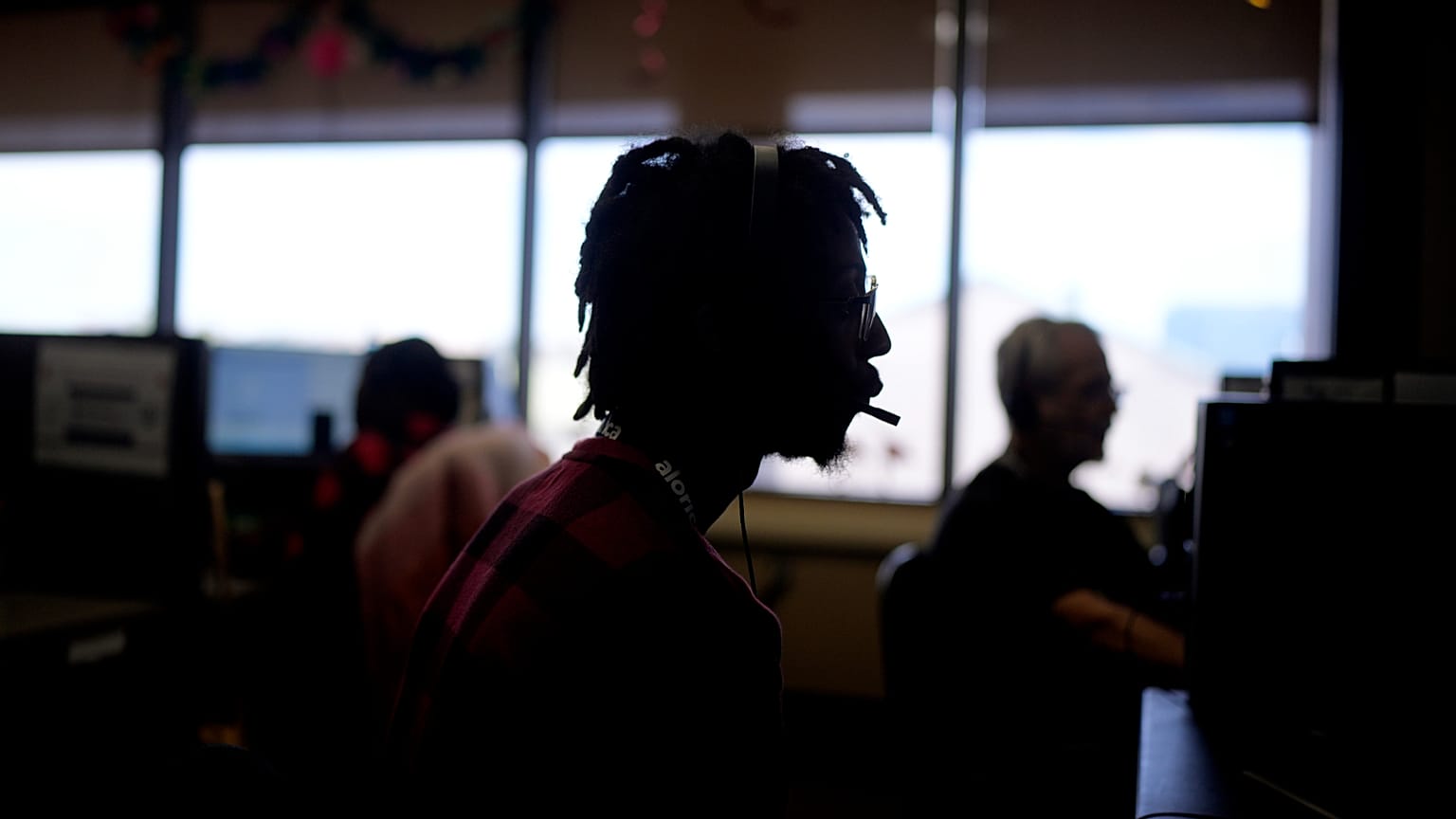
AI Job Market  Customer Experience Representative Rico Thomas takes calls at an Alorica center, Monday, Aug. 19, 2024, in San Antonio.
Copyright Copyright 2024 The Associated Press. All rights reserved

By Servet Yanatma
Published on 

AI giant Anthropic compared observed AI exposure and theoretical AI capability in the labour market. The analysis shows that AI is still far from reaching its theoretical potential.

The impact of Artificial Intelligence on jobs has become one of the defining debates of the moment, with international organisations, academics and hiring companies regularly publishing projections on which professions are most at risk.

A new entry in that crowded field now comes from one of the AI giants itself.

Anthropic, the company behind Claude, has published a report titled Labour Market Impacts of AI: A New Measure and Early Evidence, based on its own real-world usage data.

Theoretical capability vs observed exposure

The report introduces a new measure called "observed exposure" — designed to quantify not just which tasks large language models could theoretically speed up, but which are already being automated in practice.

The distinction matters: theoretical capability reflects what AI could do while observed exposure reflects what it is actually doing.

Highest theoretical AI coverage: Computer, math, business and finance

The theoretical AI coverage exceeds 80% in several occupation groups among the 22 analysed. Computer and math, as well as business and finance occupations have the highest theoretical AI coverage both at 94.3%.

Other groups with theoretical capability above 80% include management (91.3%), office and administrative support (90%), legal (89%), architecture and engineering (84.8%), and arts and media (83.7%).

In five additional occupational groups, scope for LLM penetration exceeds 50%.

These include life and social sciences (77%), sales (62%), education and library occupations (61.7%), healthcare practitioners (59.9%), and social services (50.5%).

The red area above, based on data from the Anthropic Economic Index, shows how people use Claude in professional settings.


“As capabilities advance, adoption spreads, and deployment deepens, the red area will grow to cover the blue. There is a large uncovered area too; many tasks, of course, remain beyond AI’s reach—from physical agricultural work like pruning trees and operating farm machinery to legal tasks like representing clients in court,” the report said.

Lowest ‘potential’ include transportation, agriculture and food

Theoretical AI coverage is lowest in ground maintenance where only 3.9% of jobs in this group are theoretically open to AI usage.

Transportation (12.1%), agriculture (15.7%), food and serving (16.9%), construction (16.9%), personal care (18.2%), installation and repair (18.4%), and production (19%) also have significantly lower theoretical AI coverage, all below 20%.

This suggests there may be less potential space for AI use in these sectors.

Theoretical AI coverage is also lower in healthcare support (28.5%) and protective services (31.6%).

Highest observed exposure: Computer, math, office and admin

The more important question is to what extent theoretical capability has turned into observed exposure, showing AI displacement risk.

Computer and math occupations have the highest observed AI coverage at 35.8%, followed closely by office and administrative roles (34.3%).

Business and finance (28.4%) and sales (26.9%) are also close to these levels.

Legal (20.4%), arts and media (19.2%), and education and library occupations (18.2%) also have relatively high observed AI exposure at around 20%.

Observed exposure as a share of theoretical AI capability

The ratio of observed exposure to theoretical capability shows to what extent this potential is already being used.

Sales tops the list at 43% (27% vs 62%), followed by office and administrative jobs (38%) and computer and math occupations (38%).

Observed exposure as a share of theoretical AI capability is 30% in business and finance, and in education and library occupations.

While architecture and engineering have very high theoretical capability (85%), the ratio is just 5%

Most exposed occupations: Computer programmers and customer service representatives

Among individual occupations, computer programmers show the highest observed AI exposure at 74.5%.

Customer service representatives (70.1%), data entry keyers (67.1%), and medical record specialists (66.7%) also rank among the most exposed.

Market research analysts and marketing specialists follow at 64.8%, along with sales representatives in wholesale and manufacturing, except technical and scientific products (62.8%).

The data also sheds light on who is most exposed. Workers in the highest-risk professions tend to be older, more educated, better-paid and more likely to be women.

Yet so far, at least, exposure has not translated into unemployment.

The report found no systematic increase in joblessness among workers in heavily exposed occupations since late 2022, though it did find suggestive evidence that hiring of younger workers has slowed in those same fields — a detail worth watching.

US mayors push back against data center boom as AI backlash grows

By AFP
March 14, 2026


Mayor Kate Gallego of Phoenix says people are growing tired of seeing data centers multiply in their communities - Copyright AFP Patrick T. Fallon


Alex PIGMAN

Data centers were supposed to be a gift. In cities across the United States, more and more mayors are treating them like a problem.

With the midterm election season approaching, big tech’s promise of a windfall of jobs and tax revenue has given way to talk of polluting gas turbines, strained power grids and a growing sense that the AI revolution is being built on the backs of regular citizens.

The issue has grown large enough to reach the White House, where President Donald Trump this month assembled big tech companies to demand that they bear the exorbitant cost of powering the new data centers breaking ground in communities across the nation.

“Most talk has been, ‘hey, this is the future, this is economic development, we need to go as far and as fast as we can,'” Tim Kelly, the mayor of Chattanooga, Tennessee, told AFP on the sidelines of the South by Southwest (SXSW) conference in Austin, Texas.

“I wouldn’t say I necessarily disagree with that, but I think now it’s starting to get interesting,” he added.

At the top of many people’s minds is Elon Musk’s xAI, which has gone the farthest and at dizzying speed in building AI infrastructure in Memphis and neighbouring Mississippi.

To meet its massive energy demands, xAI has been running at least 18 methane gas turbines at its South Memphis site — sometimes without permits — accused of pumping out pollutants in predominantly Black neighbourhoods already burdened by industrial pollution.

This week, Mississippi’s environmental regulator gave its green light to the gas generators at a site despite fierce local resistance.

Microsoft, Google, Meta and Amazon are also scouring the country to build out the sprawling windowless concrete structures, driven by the insatiable computing demands of AI.

Phoenix has become a prized destination, thanks to generous tax incentives, low regulation and the construction of new semiconductor plants.

But Mayor Kate Gallego says the local population is growing tired of seeing data centers multiply in their communities, straining water supplies and a power grid that are already at breaking point.

“When you suddenly have transmission equipment in your front yard, that, for many people, does not make it more desirable,” she told a SXSW audience.

Her frustration with the industry goes beyond power lines. Arizona’s largest utility, APS, says it cannot accommodate all the demand — if every data center seeking to locate in its service area were approved, electricity demand would reach 19,000 megawatts, more than double the grid’s record peak.

“We are in constant battle with our utility provider,” said Larry Klein, the mayor of Sunnyvale, in the heart of California’s Silicon Valley.

– We are not here –

Gallego said she often discovers a tech company has arrived in town only by checking the utility’s latest list of biggest customers — the result of non-disclosure agreements that leave citizens in the dark until it is too late.

“There’s a real spectrum of companies — some are proud to be your partners, and others would just prefer you not even acknowledge that they’re there,” she said, pointing to Microsoft and Google as more transparent operators.

Mayors warn that the data center issue is becoming a symbol of Americans’ growing doubts about AI more broadly.

An NBC News poll released this month found 57 percent of registered voters saying the risks of AI outweighed its benefits, compared with just 34 percent who said the opposite.

“I’m not a Luddite,” Kelly said. “But I do think these are the right conversations to figure out how we manage this.”

New York Residents Are Fighting a Data Center Backed by a Billionaire Trump Ally

Residents in Western New York are opposing a data center backed by an Epstein-tied private equity firm.

March 15, 2026

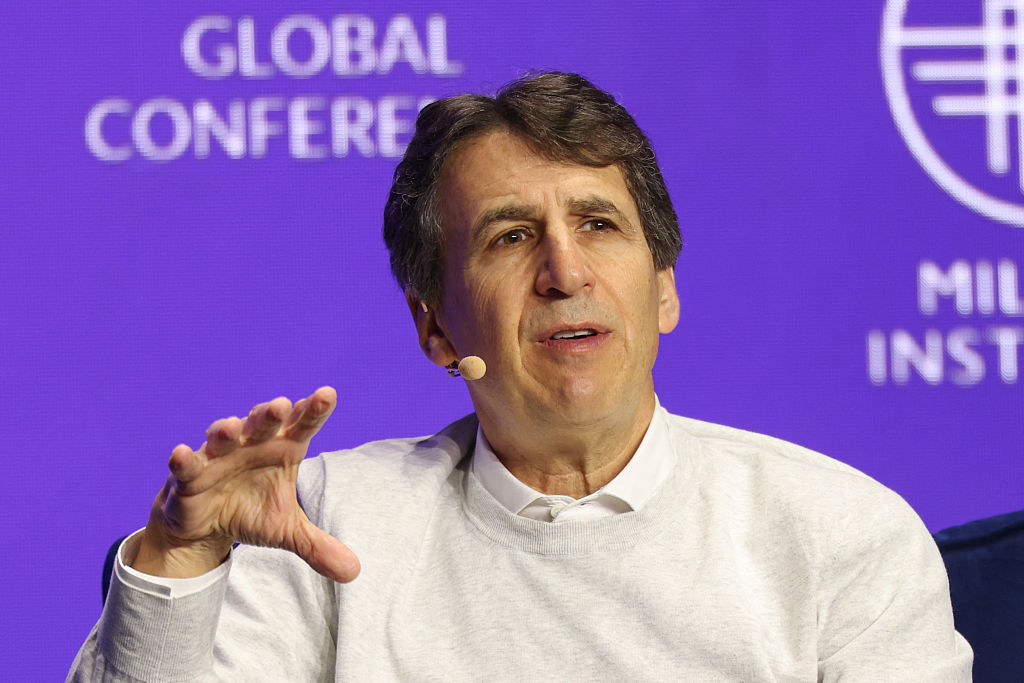
Marc Rowan, Co-Founder and CEO, Apollo Global Management, speaks at the 28th annual Milken Institute Global Conference at the Beverly Hilton in Beverly Hills, California, on May 5, 2025.
Patrick T. Fallon /PATRICK T. FALLON / AFP via Getty Images


Truthout is a vital news source and a living history of political struggle. If you think our work is valuable, support us with a donation of any size.

Abattle over a data center complex in rural Western New York may seem like a purely local affair. But an analysis of the project’s owner reveals ties that include the Jeffrey Epstein scandal, the government’s crackdown on U.S. campuses, and the imposition of neocolonial rule over Gaza.

Over the past year, residents of Genesee County, New York — located between Buffalo and Rochester — have strongly opposed a proposed data center that is being pushed by county officials and backed by Stream Data Centers, a Texas-based developer of hyperscale data centers. Community members say the data center will bring noise, pollution, and higher electric bills, while endangering nearby wetlands and wildlife and threatening the sovereign territory of the Tonawanda Seneca Nation.

But opponents of the data center are up against a much bigger force than Stream Data Centers.

Community members say the data center will bring noise, pollution, and higher electric bills, while endangering nearby wetlands and wildlife and threatening the sovereign territory of the Tonawanda Seneca Nation.

The parent company of Stream is Apollo Global Management, one of the world’s biggest private equity firms. The Wall Street giant has faced controversy over ties to the late convicted sex offender Jeffrey Epstein. Moreover, the CEO and public face of Apollo, mega-billionaire Marc Rowan, is a powerful insider who’s shaped the Trump administration’s pressure campaign against universities and is helping oversee the new “Board of Peace” in Gaza.

The entry of a massive Wall Street firm’s portfolio company into a rural and thinly populated area is jarring to local residents in Western New York, who are facing an enormous power structure with arms extending to the heights of government and across the world.

“It feels like this insatiably hungry machine that’s just steamrolling whatever’s in its path,” Adrienne Yocina, who lives a few miles from the site of the proposed data center, told Truthout. “But this place is too beautiful to be another victim of that.”
STAMP Data Center

The proposed data center complex is being backed by the Genesee County Economic Development Center (GCEDC), a public agency that offers tax breaks and other economic incentives to attract private business.

STAMP (Science, Technology and Advanced Manufacturing Park) is a mega-industrial site that was proposed and developed by GCEDC. It’s existed for about two decades — with little to show, many argue. Around a year ago, the GCEDC turned to a new hope for STAMP — data centers — and selected Stream Data Centers as a future tenant.


“It feels like this insatiably hungry machine that’s just steamrolling whatever’s in its path.”

The proposed data center has been mired in controversy. Facing opposition and litigation, Stream withdrew its initial $6.3 billion proposal made in early 2025, only to come back with a bigger, more expensive $11.2 billion proposal, which has now grown to $19.5 billion. Stream says it’s developing the data center “in direct collaboration” with an undisclosed but “prominent” Fortune 50 company.

Community members have staunchly opposed the data center, worrying it will bring noise and pollution and drive up electricity costs. The Sierra Club and the Tonawanda Seneca Nation — a sovereign Indigenous Nation in Western New York, whose reservation shares a border with the STAMP site, itself located in the Seneca Nation’s unceded territory — have opposed the project, arguing it could harm nearby wetlands and wildlife.

Critics have also raised concerns over conflicts of interest in the environmental review of the data center and lambasted the huge public subsidies the project could receive, reported the Buffalo-based watchdog news outlet Investigative Post.

Yocina, who is disabled, has lived in Indian Falls, a hamlet a few miles from STAMP, for 15 years. She’s active with local groups opposing the data center, including the ReThink STAMP campaign.

Yocina said her electric bill recently shot up, and she worries the data center will make it worse. “They’re going to jack up my electric bill even more,” she told Truthout. “That’s really motivated a lot of people around here.”

She’s also upset about the public money that could subsidize the data center. “They’re asking for $801 million in subsidies,” she said. “That’s our money. The audacity to ask for that much money while I’m struggling to pay my electric bill.”


“There’s unity happening here. This is a bipartisan issue. Everybody is against this data center.”

Yocina’s mention of $801 million in public subsidies is a reference to the package of tax exemptions the GCEDC is offering to Stream — a number that Stream is now looking to increase to a whopping $1.44 billion.

Despite the opposition to the data center, the GCEDC unanimously approved a motion on February 5, 2026, to start reviewing a financial assistance application from Stream.
Apollo Global Management

Tucked into Stream’s STAMP data center proposal is a short clause that notes the company is “strategically backed by Apollo Global Management-managed funds.”

Apollo is one of the world’s top private equity firms, overseeing $908 billion in assets. Apollo CEO Marc Rowan is worth over $7 billion, and he’s spent tens of millions of dollars in recent months and years buying up properties near the Hamptons, the elite enclave of Long Island.

“It’s almost impossible for me to even think about having that much money,” said Yocina. “I just feel like $37,000 a year” — the per capita income of Genesee County – “compared to Marc Rowan is an unfair fight.”

Like other private equity firms, Apollo has faced criticism over its management of its holdings, such as hospitals and for-profit colleges, and for labor policies among its portfolio companies. And also like other private equity firms, Apollo is aiming to profit off the AI and data center boom.

In November 2025, Apollo completed its acquisition of Stream Data Centers. Apollo executives view their new portfolio company as a hands-on and strategic investment.

One Apollo statement said that Stream will allow the firm to “potentially deploy billions of dollars into next-generation digital infrastructure,” while Apollo president Jim Zelter declared that “Stream Data Centers strengthen our presence in digital infrastructure.” Goldman Sachs, who advised Stream on the majority investment from Apollo, emphasized that Apollo will “help Stream execute on a multigigawatt development pipeline” and that Stream will provide Apollo “with an ‘origination engine’ for deploying capital.”
Apollo and Jeffrey Epstein

Apollo has also faced controversy over its top executives’ ties to Jeffrey Epstein.

Most notably, Apollo’s cofounder and longtime former CEO Leon Black left the firm in 2021 after revelations that he was Epstein’s main client. Black paid Epstein $158 million to avoid as much as $2 billion in tax payments. As Bloomberg reports, the newly released Epstein files show “how enmeshed” Epstein “was in Black’s financial and personal lives,” noting that “[i]n Epstein’s world, few billionaires loomed as large as Black.”

Bloomberg referred to Epstein as“Black’s stealthy do-it-all fixer” and added that “the convicted sex offender arranged family portraits, helped the billionaire leverage up a vast art collection” and “obscured some of his most sensitive secrets.” The New York Times reports that “[t]he two men often socialized and dined together.”

With the release of the Epstein files, the Financial Times reports that “[t]op Apollo Global Management executives including chief Marc Rowan held wide-ranging discussions over the firm’s tax arrangements” with Epstein throughout the 2010s, despite Apollo’s previous claim that it “never did any business.”

Rowan “repeatedly corresponded with Epstein” over financial matters and forwarded an internal document to Epstein in March 2016, said the Financial Times. An investigation by the Daily Penn — the paper of Rowan’s alma mater — found that Rowan “remained in contact with Epstein between 2013 and 2016” and that emails reveal “discussions about a potential purchase of Rowan’s private jet and multiple plans to meet for breakfast at Epstein’s home.”

“It’s hard not to see these rich, powerful men in suits just continuing what Epstein did, and this insatiable hunger for more power and money,” Yocina told Truthout. “In Genesee County, we weren’t expecting this.”

Truthout reached out to both Apollo and Stream Data Centers for comment about this article but did not receive responses from them.
Campus Witch Hunts and Higher Ed “Compact”

Rowan’s influence stretches well beyond the business world. He’s been a driving force behind the Trump’s administration’s pressure campaign against U.S. universities as well as efforts to stifle campus Palestine solidarity efforts.

In September 2023, Rowan opposed a Palestinian literary festival scheduled at Penn, and following the October 7, 2023 attacks, Rowan “led a crusade” against Liz Magill, then president of the University of Pennsylvania, “[a]rguing that Penn had become a bastion of antisemitism,” sending “daily emails to trustees to protest the school’s direction,” according to The New York Times.

Rowan chairs the board of Penn’s prestigious Wharton business school and has donated tens of millions of dollars to the school. As part of his pressure campaign, Rowan “[curbed] his contributions and [beseeched] other donors to do the same,” reported the Times.

Ultimately, Magill resigned in December 2023 after facing a congressional committee chaired by hard-right North Carolina Rep. Virginia Foxx. In the following weeks, Rowan and his wife donated $13,200 to Foxx and Rowan cohosted a fundraiser with “critical Penn donors” for Foxx.

Rowan is also widely reported as a key architect of the Trump administration’s campaign against higher education, which has included staging investigations into universities over allegations of antisemitism and fraud, and strong-arming rollbacks of so-called “woke” programs by threatening massive funding cuts.

In October 2025, The New York Times referred to Rowan as “the billionaire behind Trump’s deal for universities,” stating that Rowan “was regarded as a central force” behind a document, circulated “at the behest” of Rowan, that became the blueprint of the administration’s campaign against universities.

“The ideas that flowed from Mr. Rowan and his allies are now the backbone of a potentially far-reaching administration effort to tie campus policies to Mr. Trump’s agenda and the federal government’s financial might,” The New York Times asserted.

The administration’s assault on higher education, led by Trump aides like Stephen Miller, has included attempts to pressure universities into signing a “compact,” which Rowan helped write, that would condition federal funding on alignment with Trump’s policies — what one law school dean has called “extortion, plain and simple.”
Weaponizing Antisemitism

News reports have also tied Rowan to broader efforts to paint opposition to Zionism and Palestine solidarity efforts as forms of “antisemitism.”

A New York Magazine investigation into the rightward turn of the Anti-Defamation League (ADL) suggested that Rowan has shaped the group’s focus on the “radical left” as the face of antisemitism.

“Current and former ADL employees repeatedly mentioned one name in connection with this idea: Marc Rowan, the Republican megadonor and CEO of Apollo Global Management,” said the investigation, with staffers implying that ADL President Jonathan Greenblatt’s desire to secure funding was involved.

A Jewish Currents investigation into the ADL’s methodology for auditing “antisemitic incidents” argued that a 2023 report misclassified “more than a thousand items” as antisemitic, all of which were “cases of speech critical of Israel or Zionism.”

In a recent speech during a fundraiser for the UJA-Federation of New York, whose board Rowan chairs, Rowan alluded to New York City Mayor Zohran Mamdani as “someone who uses antisemitism in their campaign and normalizes antisemitism” and stated that “he is our enemy.”

Rowan’s statements, which equate Mamdani’s criticism of Israel with antisemitism, appear at odds with the views of at least a large plurality of New York City Jews, who voted in significant numbers for Mamdani.

During his mayoral campaign, Mamdani criticized Israel’s genocide in Gaza and stated his support for universal rights and equality for Israelis and Palestinians.
Board of Peace

Rowan is also a member of the executive board of Donald Trump’s new “Board of Peace” and a member of Trump’s “Gaza Executive Board.”

Trump’s “Board of Peace” is dominated by authoritarian leaders. “The board seems designed above all to assert Trump’s primacy in world affairs” and “to serve private interests close to the president,” wrote the Financial Times. As part of its seven-member executive board, Rowan sits alongside Secretary of State Marco Rubio, U.S. Middle East envoy Steven Witkoff, and Trump’s son-in-law Jared Kushner.

The “Gaza Executive Board” that Rowan also sits on is a subset of the “Board of Peace,” which will reportedly “assume full legislative, executive, and judicial control over Gaza, including ‘emergency powers,’” according to Drop Site News.

At a recent “Board of Peace” meeting, Rowan raved about the “tremendous” potential for Gaza’s reconstruction, including “$50 billion on a conservative basis” for “the coastline alone” and “$115 billion of value” in total that “just needs to be unlocked and financed.”

Human rights attorney Diana Buttu has referred to the “Board of Peace” as “neocolonialism in the 21st century,” saying its “aim, of course, is to try to erase Israel’s crimes and to turn them into a money-making real estate venture for Trump, Kushner, and their cronies.”
“Everybody Is Against This Data Center”

Local organizing against data centers and opposition to political repression, militarism, and occupation may seem like distant struggles from each other. In fact, they’re increasingly linked.

Artificial intelligence — powered by data centers — is being ever more integrated into U.S. and Israeli military campaigns and surveillance efforts. Israel has used AI during its annihilation campaign in Gaza and its occupation of the West Bank. The Pentagon has been pushing for deeper integration of AI into its surveillance and war apparatus, and it’s using AI in the U.S.-Israeli war on Iran. Authorities have used AI to surveil pro-Palestine protesters in the U.S., including on campuses.

Back in Western New York, organizers against the STAMP data center are focused on impacting current siting, environmental and financial incentive reviews and showcasing the wide opposition to the project, while also imagining the region they actually want — one where $1.44 billion could go toward local needs rather than corporate subsidies.

In doing all this, they’re up against a force much more powerful than just Stream Data Centers and local officials: the well-connected Wall Street powerhouse firm, and its influential billionaire leadership, that sits atop the data center’s ownership chain.

But communities across the U.S. are rising en masse against the data center boom. In Wisconsin, residents recently stopped a data center project owned by Blackstone — a private equity firm even more powerful than Apollo.

Yocina sometimes feels overwhelmed when she thinks about the forces her community is up against. But she also remains undaunted.

“They think that we’re all just stupid country bumpkins,” she said. “But they’re underestimating us. There’s unity happening here. This is a bipartisan issue. Everybody is against this data center.”


This AI tool can detect domestic abuse risk years before victims seek help

According to a report from the European Commission, 18 percent of women who had ever had a partner said they had experienced physical or sexual violence by their partner in 20
Copyright Canva


By Roselyne Min
Published on 

The new AI system can detect patterns of physical trauma linked to abuse and allow healthcare professionals to intervene earlier.

Scientists have developed an artificial intelligence (AI) tool designed to help doctors identify patients who may be at risk of intimate partner violence (IPV), potentially years before victims seek help.

Researchers in the United States trained a machine learning model using data collected during regular hospital visits. The study was published in the journal Nature.

Intimate partner violence refers to abuse from current or former partners and can lead to severe injuries, chronic pain, and mental health disorders.

According to a report from the European Commission, 18 percent of women who had ever had a partner said they had experienced physical or sexual violence by their partner in 2021.

Current screening for domestic abuse in hospitals usually relies on doctors asking patients questions about their safety at home. But many victims do not disclose abuse because of fear, stigma or safety concerns, leading to cases often going undetected.

The research team used several years of records from nearly 850 women who had experienced intimate partner violence and more than 5,200 patients of similar age in a control group to build three different AI systems to test how well the technology could identify people at risk.

The first system analysed structured hospital data such as age, medical history, and other standard patient information. The second one looked at written medical notes, including doctors’ observations and radiology reports. The third system combined both types of information.

All three models performed strongly, but the combined system proved the most accurate. It correctly identified risk in 88 percent of cases.

The tool was also able to flag potential abuse more than three years before many patients later entered hospital-based domestic abuse intervention programmes.

By analysing large amounts of hospital data at once, the new AI system can detect patterns of physical trauma linked to abuse and flag patients whose records resemble those seen in confirmed abuse cases, allowing healthcare professionals to intervene earlier.

“This clinical decision support tool could make a significant impact on prediction and prevention of intimate partner violence,” said Qi Duan, the program director of the division of health informatics technologies at the US National Institutes of Health’s National Institute of Biomedical Imaging and Bioengineering (NIBIB).

“Given the prevalence of cases, the tool could be a game-changing asset to public health,” Duan added.

Researchers say that the technology is designed to support clinicians rather than replace their judgment. It does not diagnose abuse or force patients to disclose information. Instead, it provides a signal that may help doctors approach the topic carefully and offer support if needed.

“Our work represents a shift towards recognising risk earlier using information already present in healthcare data,” said Bharti Khurana, an emergency radiologist at Mass General Brigham and associate professor at Harvard Medical School.

Researchers say they are planning to integrate the technology into electronic medical record systems so hospitals can receive real-time assessments during routine care.