Thursday, March 26, 2026

Poland begins work on digital services tax bill, risking US fury

Poland begins work on digital services tax bill, risking US fury
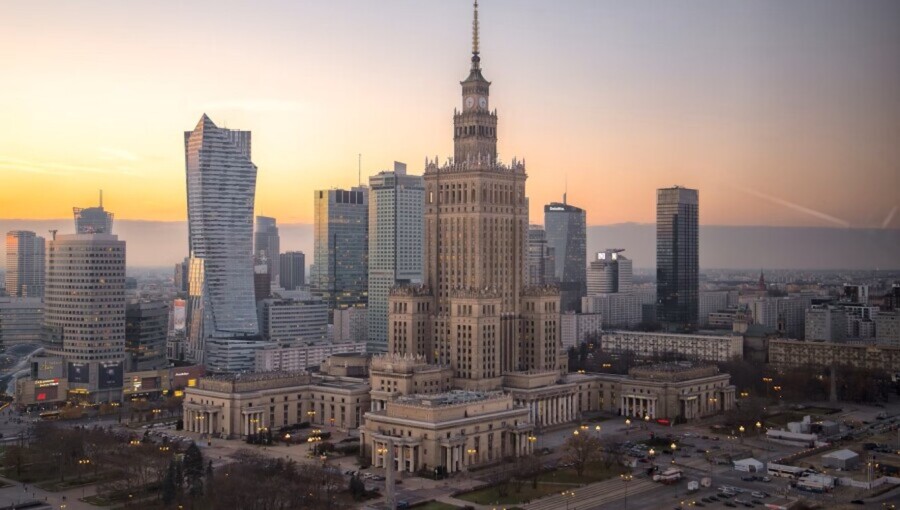
/ Iwona Castiello d'Antonio - UnsplashFacebook

By Wojceich Kosc in Warsaw March 25, 2026

Poland’s government will begin work on legislation introducing a digital services tax, Deputy Prime Minister and Minister of Digital Affairs Krzysztof Gawkowski said on March 24, in a move that could heighten tensions with the United States.

Gawkowski said in a post on social media platform X that the proposed bill aims to ensure fair competition between global technology firms and domestic companies, while boosting public revenues and funding for digital development.

“It’s time for a level playing field. Today, global platforms often pay lower taxes than locally operating companies. This undermines competition and limits budget revenues. We’re changing that,” Gawkowski said.

The proposal would impose a levy of up to 3% on revenues from selected digital services, including online advertising, user platforms and data trading. It would apply only to companies with annual revenues exceeding €1bn globally and PLN25mn (€5.85mn) in Poland.

The plan builds on an earlier proposal announced in 2025, when Poland’s Ministry of Digital Affairs outlined a framework targeting large multinational firms. The levy would cover activities such as personalised advertising, online marketplaces and the sale of user data, while excluding digital content streaming, telecommunications, and financial services.

Digital services taxes have been introduced in several countries, including the United Kingdom at 2% and France, Italy and Spain at 3%, often drawing criticism from Washington. The measures typically affect large US-based companies such as Alphabet, which operates Google, Meta, which operates Facebook and Instagram, as well as Apple and Amazon.

The issue has been a longstanding source of friction in transatlantic trade relations. When Poland first outlined its plans in 2025, US Ambassador to Poland Tom Rose described the proposal as “self-destructive” and warned it could damage bilateral ties. 

The initiative follows a separate proposal to restrict social media access for children under 15, potentially adding to pressure on global technology firms operating in Poland.


China bans Manus founders from leaving country after Meta acquires AI startup and reviews deal

FILE - The Meta logo is seen at the Vivatech show in Paris, France, on June 14, 2023.
Copyright (AP Photo/Thibault Camus, File

By Pascale Davies
Published on 

Manus was dubbed as China’s next DeepSeek and said its AI agent could buy property, program video games, analyse stocks, and plan travel itineraries.

China has blocked the boss of an artificial intelligence startup from leaving the country after the company was acquired by Meta, according to a media report.

The chief executive of Manus Xiao Hong and chief scientist Ji Yichao were told they could not leave China while regulators review the acquisition, the Financial Times reported.

Meta said in December it would acquire Manus to boost its AI development. Manus catapulted onto the tech sphere when it unveiled what it called the “world’s first fully autonomous AI”.

The company was dubbed as China’s next DeepSeek and said its AI agent could buy property, program video games, analyse stocks, and plan travel itineraries.

Manus’ creator said in a video last year that it is more than "just another chatbot or workflow... It's a completely autonomous agent".

Shortly after the acquisition was announced in December, China’s commerce ministry said it would investigate whether the deal complied with local laws and regulations.

Hong said the move would allow the company to “build on a stronger, more sustainable foundation without changing how Manus works or how decisions are made".

EU votes to ban AI 'nudifier' apps after explicit deepfake outrage

The European Parliament on Thursday approved a ban on artificial intelligence tools that generate sexualised deepfakes without consent, as lawmakers also voted to delay key parts of the EU’s landmark AI law. The move follows outrage over explicit fake images produced using Elon Musk’s chatbot Grok.


Issued on: 26/03/2026 
RFI

Grok, an AI chatbot developed by Elon Musk’s company xAI, is under EU investigation over its role in generating sexualised deepfake images of women and minors. 
© AFP - LIONEL BONAVENTURE

The measures, adopted by an overwhelming majority, target so-called “nudifier” systems that use AI to create or manipulate sexually explicit or intimate images of real, identifiable people without their consent.

The ban forms part of broader changes to the Artificial Intelligence Act, the bloc’s main effort to regulate the fast-growing technology. EU member states have already backed similar measures, and negotiations will now begin to agree a final version of the law.

The new rules define nudifier systems as those that use AI “to create or manipulate images that are sexually explicit or intimate and resemble an identifiable real person” without consent, the European Parliament said in a statement.

Systems with safeguards will not be affected. Lawmakers said AI tools with “effective safety measures preventing users from creating such images” would remain allowed.

Deepfake backlash

The European Parliament vote passed with 569 lawmakers in favour and 45 against.

EU countries had already approved a similar ban earlier in March, paving the way for negotiations between member states and parliament on a final text.

The move follows widespread anger earlier this year after Grok, an AI chatbot available on X, was used to generate highly realistic fake nude images of women and children from real photos.

The controversy triggered an ongoing EU investigation. X said in January it would introduce changes to stop the creation of sexualised deepfakes of children and women.

Delayed AI rules


Lawmakers also backed delaying the implementation of rules for high-risk AI systems, which are considered to pose potential threats to safety, health or citizens’ fundamental rights.

These rules were originally due to come into effect in August. Under the proposal, standalone high-risk systems would face compliance deadlines from 2 December 2027, while AI tools embedded in other products would have until 2 August 2028.

Parliament cannot change EU law on its own, meaning negotiations with the European Council, which represents the 27 member states, will determine the final outcome before the rules are formally adopted.

(with newswires)
US judge temporarily halts Trump-era sanctions on AI firm Anthropic


A US federal judge on Thursday temporarily blocked sanctions imposed by the Trump administration on AI company Anthropic, saying the measures likely violated the law. The ruling freezes a Pentagon designation of the firm as a national security risk, protecting it while the government considers an emergency appeal.


Issued on: 27/03/2026 - 
By: FRANCE 24


Pages from the Anthropic website and the company's logos are displayed on a computer screen in New York on Thursday, Feb. 26, 2026. © Patrick Sison, A

A US federal judge on Thursday suspended sanctions imposed by President Donald Trump's administration on Anthropic, saying the measures likely violated the law in blacklisting the AI powerhouse for expressing unease about the Pentagon's use of its technology.

In the northern district of California, Judge Rita Lin granted Anthropic's request for a preliminary injunction in its suit against the government, freezing a presidential order that barred all federal agencies from using Anthropic technology.

The ruling also suspends a Pentagon designation of Anthropic, creator of the Claude AI model, as a national security supply chain risk – a label typically reserved for organisations from unfriendly foreign countries.

The designation not only blocks use of the company's technology by the Pentagon, but also requires all defence vendors and contractors to certify that they do not use Anthropic's models in their work with the department.

Watch a special edition of “Truth or Fake,” produced for France's Media in Schools week (March 23-27, 2026). © Observers


"We're grateful to the court for moving swiftly, and pleased they agree Anthropic is likely to succeed on the merits," a company spokesperson said.

"While this case was necessary to protect Anthropic, our customers, and our partners, our focus remains on working productively with the government to ensure all Americans benefit from safe, reliable AI."

The dispute erupted last month after Anthropic infuriated Pentagon chief Pete Hegseth by insisting its technology should not be used for mass surveillance or fully autonomous weapons systems.

Hegseth said on X that Anthropic had "delivered a master class in arrogance and betrayal as well as a textbook case of how not to do business with the United States Government or the Pentagon."

The tech sector has largely supported Anthropic in the wake of the punitive measures, which were suspended for seven days by Thursday's ruling to allow the government time to file an emergency appeal in the short term.

READ MORE Is this the beginning of the end for the Metaverse?


At a hearing earlier this week, Lin said she was concerned that the government was "trying to punish Anthropic … for criticising the government's contracting position in the press," which would be a violation of the constitutional right to freedom of expression.

In her ruling, she said the government's designation of Anthropic as a supply chain risk was "likely both contrary to law and arbitrary and capricious."

"Nothing in the governing statute supports the Orwellian notion that an American company may be branded a potential adversary and saboteur of the US for expressing disagreement with the government," she wrote.

Lin also cited other "serious procedural problems with the government's actions" as reasons for issuing the injunction.

(FRANCE 24 with AFP)
German 'green village' rides out Mideast energy storm

Feldheim (Germany) (AFP) – While the world frets about surging energy prices pushed up by the Middle East war, one small German village has been reaping the benefits of its turn to climate-friendly renewables.


Issued on: 27/03/2026 - RFI


Surrounded by wind turbines and studded with solar panels, Feldheim, population 130, boasts its own electricity and heating networks, supplied entirely by cheap local energy © Tobias SCHWARZ / AFP

ADVERTISING


Surrounded by wind turbines and studded with solar panels, Feldheim, population 130, boasts its own electricity and heating networks, supplied entirely by cheap local energy, also including biogas.

When it comes to keeping the lights on, "what's happening in the rest of the world doesn't really interest us," 56-year-old Michael Knape, who served as Feldheim mayor for almost a quarter-century, told AFP.

Feldheim, 80 kilometres (50 miles) southwest of Berlin, started its move towards clean renewables in the 1990s after German unification and by 2010 was boasting of its "energy self-sufficiency".

The small village has since attracted attention from across the world as an example of Germany's decades-old energy transition project away from fossil fuels and nuclear power.


Feldheim sits on a flat, windswept plain, meaning the tens of nearby wind turbines generate plenty of energy © Tobias SCHWARZ / AFP


The process has benefited from unique local conditions and significant investments.

Like much of the eastern state of Brandenburg where it is located, Feldheim sits on a flat, windswept plain, meaning the tens of nearby wind turbines generate plenty of energy.

While one of them provides enough power for the whole village, the others earn it money through taxes and charges levied on the operators.

As for heating, a biogas plant runs on slurry and leftover grain from an agricultural cooperative. On very cold evenings, the village gets a boost from a woodchip-fired heating plant.

Excess energy is stored in a battery for use in periods with little sun or wind, so-called "dark lulls".

"We hope it always stays like this, this model makes us happy," said Petra Richter, 62, a long-time resident of Feldheim.

Like her neighbours, she pays an average of 12 cents before tax per kilowatt hour of electricity, less than half the price usually paid elsewhere in Germany.

Her oil-powered boiler was replaced 15 years ago with pipes carrying communal hot water and a heat exchanger, and the same system has been in place ever since.
'Economically it works'

According to Knape, who has just handed over the mayor's post, the municipality saves several hundred thousand euros a year by doing without fossil fuels.


Long-time mayor Michael Knape at the village, whose green energy project has attracted visitors from as far as India and North Korea © Tobias SCHWARZ / AFP


"Obviously I can't compare a small village with a big city, but economically it works," he said.

The Middle East war has once again highlighted Germany's dependence on foreign energy imports, with the government taking steps to limit price rises at petrol stations.

Europe's top economy is still suffering from the cut-off of plentiful and cheap Russian gas imports after the 2022 full-scale invasion of Ukraine.

In this context, Knape argued, Feldheim could become "a successful export product" for Germany, just as the mighty automobile once was.

The village has made energetic efforts to publicise its model, attracting visitors including former chancellor Olaf Scholz but also professionals and politicians from the United States, India and even North Korea.

An information centre welcomes more than 3,000 people a year, schoolchildren come from across the state, and the technically curious can explore the inner workings of a wind turbine.

However, even in Feldheim, there are limits to how far residents can be truly insulated from the global energy shock.

Photovoltaic panels are seen on a roof in Feldheim © Tobias SCHWARZ / AFP


Although the village has an e-car charging station, Richter is among the locals who do not have an electric vehicle and for whom petrol remains a crucial resource.

"We have to use the car every day," she said, adding that the spike in prices at the pump was "no longer bearable".

Richter pointed out that the village's energy independence may not be guaranteed in the long term, with the biogas plant nearing the end of its service life.

"We have to think about new solutions," she said.

© 2026 AFP
Greenpeace France announces job cuts amid falling donations

Environmental campaigning NGO Greenpeace France announced plans on Thursday to cut 32 jobs, to compensate for a fall in donations since 2022.


Issued on: 26/03/2026 - RFI


Greenpeace France has announced plans to cut around 30 jobs due to a drop in donations. AFP - GEOFFROY VAN DER HASSELT
                                                         

The proposal to reduce the organisation's workforce from 138 full-time equivalent positions to 106 was presented to staff representatives on 17 and 18 March.

“While Greenpeace France is funded exclusively by private donations, it has recorded weaker growth in donations in recent years... in a strained economic context,” it said in a statement.

The organisation told French news agency AFP that between 2018 and 2021, donations increased by 26 percent, but since 2022 this growth has dropped to 7 percent.

"The situation requires Greenpeace France to exercise the greatest financial caution so that it can continue its environmental protection campaigns in France and internationally,” the statement added.

The organisation is supported by more than 240,000 members, 90 percent of whom make regular donations, and raises around €31 million this way each year.

Greenpeace France said less money had been coming into the organisation over the past two years from donors, attributing the fall to rising prices in France.

Laurence Veyne, its co-executive director, told AFP: “This situation is also worsened by difficulties in reaching donors by phone. All of these factors are weakening our model, and we must take action. We have to acknowledge that this is a difficult moment for the organisation and its employees."

Veyne said Greenpeace International, to which Greenpeace France transfers up to €9 million each year to fund other offices, is not able to intervene in structural problems such as those faced by the French branch.

You still can't sink a rainbow, Greenpeace boss says 40 years after bombing


Greenpeace in the headlines

In+63nce and Russia, after activists observed the loading of a tanker in northern France with reprocessed uranium bound for Russia.

Greenpeace published footage it said was shot by its activists of around 10 containers with radioactive labels being loaded on to a cargo ship in Dunkirk.

The Panamanian-registered ship, the Mikhail Dudin, is regularly used to carry enriched or natural uranium from France to St Petersburg, according to Greenpeace.
Global trade tensions test WTO as reform battle begins in Yaoundé

Trade ministers from 166 countries are gathering in Cameroon’s capital this week for a high-stakes World Trade Organisation meeting – with divisions over reform, digital trade and development raising doubts about whether the body can adapt to a rapidly changing world.


Issued on: 26/03/2026 - RFI

Stacks of shipping containers at a Tokyo port, as global trade faces growing tensions and uncertainty. AP - Koji Sasahara


The WTO’s 14th Ministerial Conference, its top decision-making forum, runs from Thursday to Sunday in Yaoundé. It is only the second time the meeting has been held in Africa, after Nairobi in 2015.

The talks come at a tense moment for the global economy.

The war in the Middle East has added to uncertainty and geopolitical divisions, while new United States tariffs and a broader return to protectionist policies have put pressure on a multilateral trading system that still governs around 72 percent of world trade.

Director-General Ngozi Okonjo-Iweala urged ministers to produce concrete results.

“The WTO has long spoken of unfinished negotiations and long-overdue reform, yet too often our promises have outpaced our results,” she said, calling on members to ensure that “this time is different”.

Much of the focus in Yaoundé will be on a reform roadmap rather than immediate changes, reflecting the lack of agreement between members.

“A large majority of members support the plan... but there is some disagreement,” said Petter Olberg, Norway’s ambassador to the WTO, ahead of the meeting.

Reform under pressure


The draft reform plan centres on how the WTO takes decisions, how developing countries are treated under its rules and how to improve transparency and address market distortions.

The organisation has long been criticised for moving too slowly, in part because decisions are taken by consensus. Several members want more flexible approaches, including agreements among smaller groups of willing countries.

Another key issue is special treatment for developing countries.

Some advanced economies argue that major emerging economies should no longer receive the same flexibilities as poorer states, while many developing countries say those measures remain essential.

“Development is a cross-cutting issue and should remain at the heart of the WTO’s work,” said Kadra Hassan, who chairs trade and development talks, in a video posted to social media.

The WTO’s dispute settlement system also remains blocked after the US stopped the appointment of judges to its appellate body in 2019. A temporary mechanism was set up in 2020, but no lasting solution has been agreed.

Digital trade tensions

Digital trade is another major issue in Yaoundé. Members must decide whether to renew a long-standing rule that bans taxes on digital products like software, films and data sent across borders.

Some developing countries argue that ending the moratorium would allow them to collect tax revenue, while others warn it could harm competitiveness.

A 2025 report by the United Nations Conference on Trade and Development said the expected gains would likely be limited and could weaken economies.

“Digital trade is reshaping the global economy at incredible speed,” said Richard Brown, the WTO facilitator on e-commerce – adding that governments need to adapt policies and infrastructure to keep pace.

Fish and farm divisions

Ministers are also expected to discuss fisheries subsidies and agriculture, two areas where divisions remain strong.

A 2022 agreement on fishing subsidies came into force in September 2025, but negotiations continue on a follow-up deal targeting overcapacity and overfishing, with members divided over how much flexibility to give developing countries.

In agriculture, a draft text has been presented as a compromise aimed at restarting long-stalled talks and addressing food security concerns.

While broadly welcomed, some members, including African cotton-producing countries, say it does not fully reflect their priorities.

(with newswires)
ANALYSIS

How Hezbollah is rebuilding its military power despite political isolation


Beirut – Hezbollah is facing growing isolation in Lebanon, with political leaders and the government turning against it. But despite that pressure – and heavy losses in war – the group has continued to show unexpected strength on the battlefield.


Issued on: 26/03/2026 - RFI

Hezbollah fighters attend the funeral of three of their members, including Haitham Tabatabaï, a senior military commander, in November 2025. © Hussein Malla / AP


Once respected, admired or feared, Hezbollah is now facing more criticism than ever before. Leaders, politicians, journalists and analysts are no longer mincing their words when it comes to their views on the Shia Islamist party and its paramilitary wing.

The party, which has a large parliamentary group and two ministers in the Lebanese government, finds itself isolated, almost ostracised. Its representatives are no longer welcome on television programmes, its leaders accused of "anti-patriotism".

And this wave of anti-Hezbollah sentiment, unprecedented in Lebanon, is not confined to criticism in the media.


Ambassador expelled


On Tuesday, Foreign Minister Joe Raggi – who is close to the Christian Lebanese Forces party – announced that the Iranian ambassador’s accreditation had been withdrawn and gave him until Sunday to leave Lebanese territory.

On 2 March, soon after the outbreak of the war on Iran being waged by Israel and the United States, the Lebanese government outlawed Hezbollah's military wing and declared its security activities "illegal", instructing the army to enforce these unprecedented measures.

A few days later, three Hezbollah fighters who had been arrested in possession of weapons whilst travelling to southern Lebanon to confront Israeli troops were brought before the military court, a special tribunal responsible for hearing cases relating to state security.

While the three men were released on bail equivalent to $20, the fact that they were brought to trial was in itself unusual.

"I would have liked to implement the decisions more quickly, but we inherited many years of inaction and have begun arresting Hezbollah members in possession of illegal weapons,” Prime Minister Nawaf Salam said in an interview with TV channel al-Hadath.

Hezbollah, through its secretary-general Naim Qassem and several of its leaders, has rejected all these accusations.

It claims to have started the war to “defend Lebanon” and to retaliate against “the Israelis’ ongoing violations of the ceasefire” – referring to the fact that in the past 15 months, Israel has killed some 400 of its members in strikes carried out across Lebanon, despite the truce agreed on 27 November 2024.

Weakened by war


Hezbollah’s political decline, however, stands in stark contrast to its military performance, which has taken observers – including those in Israel – by surprise.

The party had emerged severely weakened from the war with Israel between October 2023 and November 2024. Its charismatic secretary-general Hassan Nasrallah was assassinated on 27 September 2024, followed by his designated successor Hashem Safieddine on 5 October.

There were heavy losses from its ranks, estimated at 4,000 dead and 10,000 wounded.

Following the ceasefire, the Lebanese army dismantled Hezbollah's infrastructure south of the Litani River with support from the United Nations Interim Force in Lebanon (UNIFIL). Nearly 700 tunnels, depots and weapons caches were discovered, destroyed or neutralised during the operation.

Four hundred deaths were recorded following the truce, during which UNIFIL reported 7,500 Israeli airspace violations and 2,500 ground incursions.

In addition, the fall of Bashar al-Assad’s regime in Syria on 8 December 2024 saw disruption of Hezbollah's land supply lines.

Written off as finished, the group surprised observers by deploying significant firepower, using weapons it was previously unknown to have, and engaging Israeli troops at the border – the very place it was supposed to have no presence left.

Opportunity to rebuild


“It is clear that Hezbollah has rebuilt its military capabilities based on the concept of decentralisation,” explained Elias Farhat, a retired general in the Lebanese Army.

“It has deployed its forces in small units and adopted a strategy of mobile defence. This was evident in the fighting, particularly in the battles that took place at Taybeh [5km from the border], where it destroyed six Israeli tanks in 90 minutes.”

This nighttime battle was filmed using thermal cameras and the video was widely circulated.

In recent weeks, sources close to Hezbollah have spoken of a “major step forward in the reconstruction of military capabilities”. Many analysts dismissed these claims as propaganda aimed at boosting the morale of a weary and vulnerable grassroots support base. However, events on the ground have proven them wrong.

Hezbollah's military and security apparatus has been taken over by a third generation of commanders, aged between 30 and 40, who have completely reorganised its structures, sought to address weaknesses – particularly regarding exposure to Israeli intelligence services – and overhauled its military doctrine.

“The party has rebuilt its chain of command and appointed replacements for the commanders who were killed,” said Farhat. “These new commanders are young, have completed higher education and hold degrees in scientific and technical fields. Clashes with the Israeli army demonstrate their professional conduct and extensive military knowledge.”

Hybrid warfare


Amal Saad-Ghorayeb, an expert on Hezbollah and author of Hizbu’llah: Politics and Religion, has examined the new combat doctrine it is employing in the current war. In a post on X (formerly Twitter), she refers to a “return to forms of hybrid warfare that predate the current conflict by a considerable margin”.

She says Hezbollah has shifted to “smaller cells, streamlined chains of command, mobile warfare and surprise attacks”.

These adjustments represent “a return to what Hassan Nasrallah called ‘Imad Mughniyeh’s school of war’, which characterised the 2006 conflict” – during which Hezbollah thwarted all Israeli attempts at ground advances.

The "Mughniyeh model" – named for the Hezbollah military commander assassinated in Damascus in February 2008 – is based on dispersed forces organised into small units, combining guerrilla-style mobility and tactical surprise with the military capabilities typical of regular armies.

According to Saad-Ghorayeb: “This unique hybrid model developed by the former Hezbollah commander was studied in American military manuals precisely because it challenged the traditional distinction between conventional and unconventional warfare on which American military doctrine was based.”

To counter the systematic infiltration of its intelligence and communications systems – which enabled the Israelis to locate and assassinate a large number of its commanders during the last war – Hezbollah now relies on handwritten notes, human couriers or other forms of communication with a low electronic signature.

This explains why, despite the intensity of its air strikes, the Israeli military has not yet managed to identify and eliminate the new senior commanders.

Firepower


Meanwhile, Hezbollah’s sustained barrage of rockets and missiles on northern Israel – more than 2,000 projectiles have been fired since 2 March – demonstrates significant firepower, despite the depots destroyed by the Israelis and those seized by the Lebanese army.

The type of weaponry used is also notable. In addition to variants of Russia's Kornet anti-tank missiles, it has introduced Iranian Almas 2 and 3 missiles, which are capable of defeating the Trophy protection system deployed by Israel's Merkava 4 tanks.

On 18 March, Hezbollah fired a projectile for the first time at the Israeli city of Ashkelon, 200km from the border, demonstrating that it possesses long-range, high-precision missiles.

According to Farhat: "Based on Israeli sources which, prior to the last war, put the figure at 150,000 projectiles, and Israel’s announcement that 70 percent of the arsenal had been destroyed, 45,000 missiles may still remain. That would be enough to sustain the war effort for months."

This article has been adapted from the original version in French by RFI's correspondent in Beirut, Paul Khalifeh.

CRIMINAL CAPITALI$M

World Cup tickets promised at $60, fans paid $4,185: The European Commission could take on FIFA

Soccer playoffs in Italy
Copyright Copyright 2025 The Associated Press. All rights reserved


By Rebecca Spezzano
Published on 


Euroconsumers and the Football Supporters Europe (FSE) network have filed a formal complaint with the European Commission, accusing FIFA of abusing its monopoly position over 2026 World Cup ticket sales.

As the sole organiser of the event and the only authorised seller on the primary market, FIFA holds enormous power over 2026 World Cup tickets.

Euroconsumers, a European consumer rights organisation, argues it is abusing that power through high prices and a lack of transparency. The cheapest available final ticket starts at $4,185 (€3,611) or more than 7 times the price of the cheapest final ticket at the 2022 World Cup.

FIFA told Euronews it had not formally received the complaint and was therefore unable to comment.

A spokesperson added that the organisation is "focused on ensuring fair access to our game for existing and prospective fans," and that as a not-for-profit, World Cup revenues are reinvested across its 211 member associations globally.

For many fans, however, the prices tell a different story.

"It was one of my dreams to go to the US for the World Cup," said Jean-Philippe Ducart, a Belgian fan who has attended more than 200 games for his national team.

"Unfortunately, this year, I won't be there. The prices are just too high."

What ‘variable pricing’ means

FIFA uses what it calls "variable pricing," which is similar to dynamic pricing, in its ticket sales. This means that the price customers pay can change during the ticket sale process depending on demand and availability.

An investigation by The Athletic revealed that the price of tickets for games in Mexico and Canada increased by around 25% between sales phases.

Similarly, the price of a Category 1 ticket, which includes the highest-priced seats located in the lower tier, rose by $250 (€232.85) from October to November.

Els Bruggeman, head of policy and enforcement at Euroconsumers, says dynamic pricing is deeply unfair to fans and that the price they pay bears no relation to the seat they get.

“The way it's being organised now, you can sit next to someone at the World Cup that paid three times less than you did, or maybe 10 times less than you did, just because they entered the digital queue 3 seconds before you did,” she said.

“Putting two and two together”

Euroconsumers have been advocating a ban on dynamic pricing for live events because limited supply and high demand leave consumers with little power.

So, when FIFA announced it was using variable pricing, it raised concerns in Brussels.

“We have been monitoring very closely how this would evolve, but we also have been working together with Football Supporters Europe, who heard that we were very active on dynamic pricing,” Bruggeman explained.

“They [FSE] had the complaints, they had the experiences coming in. And putting two and two together, we were able to file this complaint.”

More than just sky-high prices

The complaint includes other factors aside from dynamic pricing and high prices.

Euroconsumers claim FIFA used bait advertising, which is illegal under EU consumer law.

Prior to the first phase of ticket sales opening, FIFA announced it would sell group-stage tickets starting at $60 (€51.77). In reality, few fans were able to secure tickets at those prices, according to the press release.

If customers wish to resell World Cup tickets or purchase resale tickets, FIFA encourages them to do so via the FIFA Resale/Exchange Marketplace rather than competitors such as StubHub or Vivid Seats, stating that its own marketplace is the “official and secure way”.

FIFA’s Resale/Exchange Marketplace then imposes a 15% fee on both the buyer and the seller. The Euroconsumers and FSE complaint notes this is highly profitable for FIFA but “to the detriment of consumer rights and interests”.

“No games anymore,” said Els Bruggeman, Head of Policy and Enforcement at Euroconsumers.

“Let’s put a stop to this dynamic pricing. Let’s be very clear on how many tickets you [FIFA] still have and for where. Announce in all transparency what will be the prices.”

Euroconsumers said it reached out to FIFA ahead of ticket sales to ask how the variable pricing would work for the 2026 World Cup, but it did not receive a response.

What can the European Commission do?

Euroconsumers and FSE are calling on the European Commission to order FIFA to stop using dynamic pricing for all tickets sold.

Bruggeman said she hopes this will be settled quickly, as another ticket draw opens on April 2 and the World Cup begins in June.

“If we don't have measures by then, then the damage for consumers will be irreparable,” she said.

A Commission spokesperson said they have received the complaint and "will assess it under our standard procedures".


Iran reportedly allows Spanish ships to transit Hormuz strait due to position on war

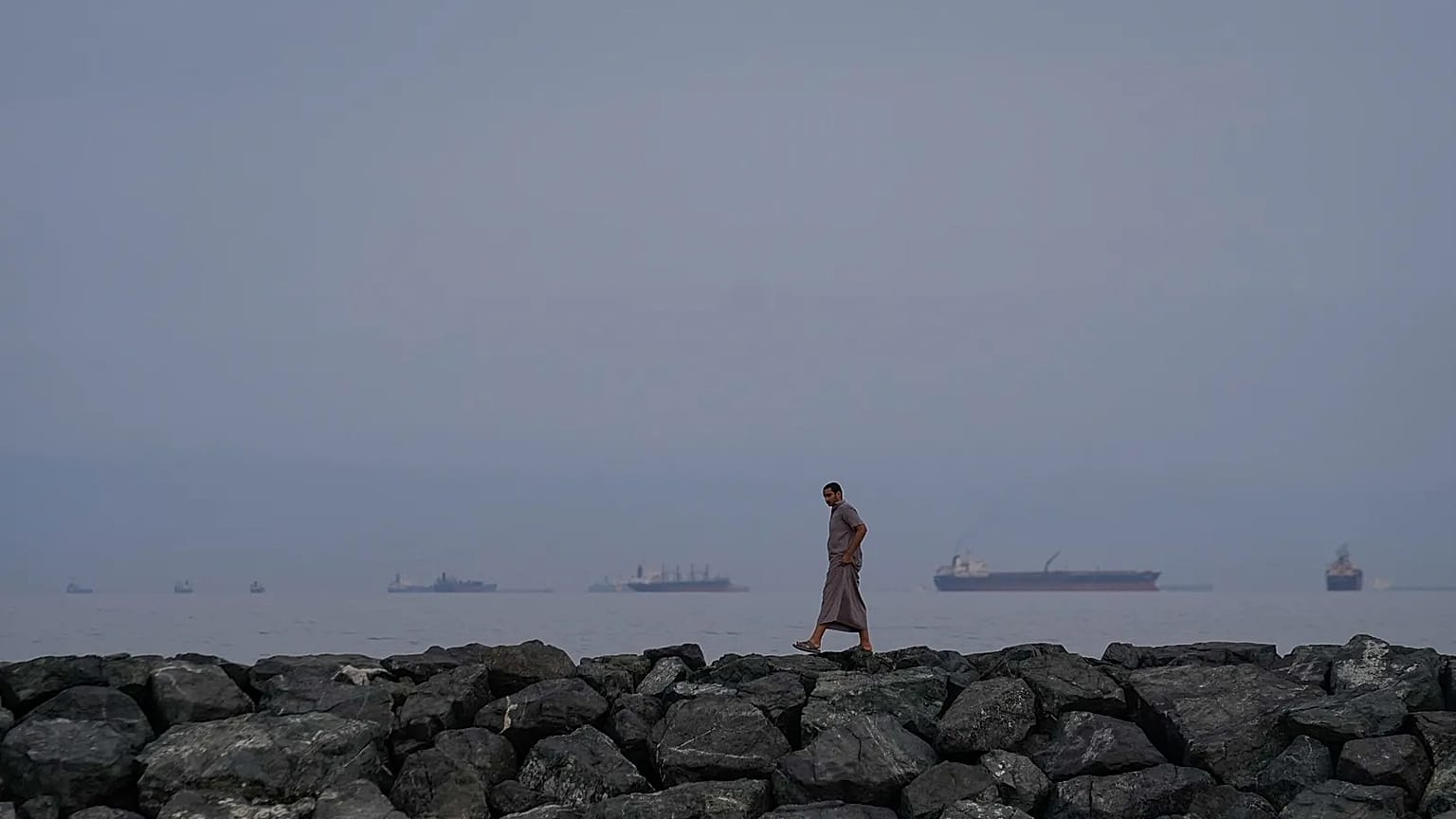
A man walks along the shore as oil tankers and cargo ships line up in the Strait of Hormuz as seen from Khor Fakkan, 11 March, 2026
Copyright AP Photo

By Maria Muñoz Morillo
Published on 

The Strait of Hormuz is one of the world’s most important energy routes and before the war carried around a fifth of global oil supply and key liquefied natural gas exports from the Gulf.

Iran is reportedly allowing ships linked to Spain to transit through the Strait of Hormuz in response to Madrid's opposition to the war in the Middle East.

After receiving reports from various sources that Iran is facilitating the transit of Spanish-linked ships through the vital waterway, Euronews contacted the Spanish Ministry of Foreign Affairs, which confirmed that it had no knowledge of the decision.

However, the Iranian Embassy in Spain confirmed the news via a post on X.

The war in Iran has transformed the Strait of Hormuz into a flashpoint for global economic survival, with approximately 20% of the world's oil and 19% of liquefied natural gas (LNG) passing through the waterway from Gulf countries into the wider world.

Other raw materials such as fertilisers, aluminium and chemicals also pass through the strait, and its effective closure by Iran has had an impact on the global supply of energy and goods.

The strait's closure has caused instability on the stock markets and rising fuel prices around the world.

On this chessboard, where Donald Trump and Benjamin Netanyahu are redoubling military pressure on Iran, the government of Pedro Sánchez has emerged as a counterpoint to the US and Israel's war policy.

Sánchez has established himself as the main European actor opposing the US "maximum pressure" strategy, even hinting that the European position has been aligned with Spain's stance.

Strait of Hormuz as a political weapon

The Strait of Hormuz is a narrow waterway currently under the control of the Iranian Revolutionary Guard's naval forces. Tehran has moved from total closure to a strategy of "selective blockade," with the strait only closed to ships belonging to what Iran considers enemy countries.

In this context, Spain's position is privileged but also dangerous as Sánchez has been lauded by Iran's theocracy, which has even used his image on Iranian missiles.

Favourable treatment for Spanish-linked vessels to transit Hormuz would be a response to Sánchez's policy of "neutrality."

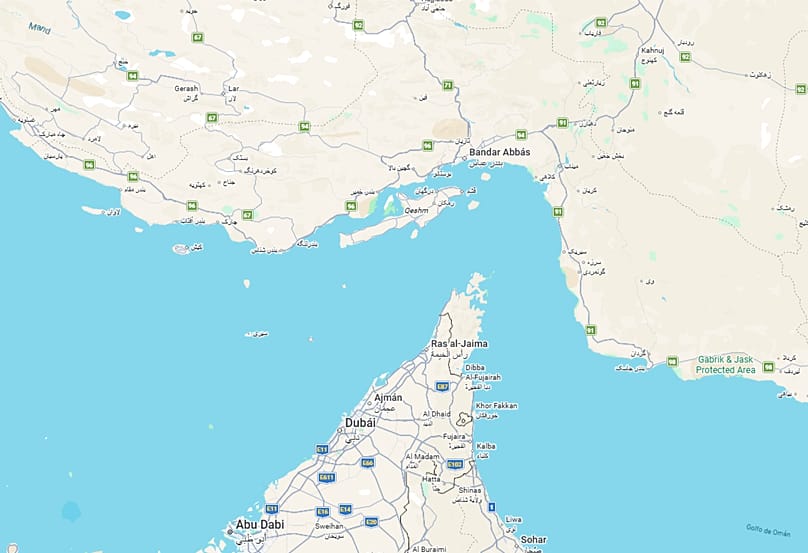
Image of the Strait of Hormuz.
Image of the Strait of Hormuz. Google Maps

Spain's prime minister refused to participate in the military operation led by Washington and has also prohibited the use of the Rota and Morón bases, sparking anger and criticism from the Trump administration and the Israeli government for what they consider to be support for a dictatorial regime that is dangerous for the West because of its nuclear programmes.

"Spain has been terrible," Trump complained to Germany's Chancellor Friedrich Merz earlier in March.

"So we're going to cut off all trade with Spain. We don't want anything to do with Spain."

But a majority of Spaniards, 53.2%, back Sánchez's decision not to allow the US to use the Rota naval base and the Morón air base for strikes against Iran, a poll published earlier this month in the daily newspaper El País showed.

The Algerian connection

The risk of sailing through Hormuz has forced Madrid to look for a plan B to secure its gas supply. After years of tensions with Algiers, due to the Sánchez government's change of opinion on Western Sahara and its support for Morocco's plan for the area, the foreign minister, José Manuel Albares, has begun a trip to Algeria to sign new contracts and become less dependent on supplies from the Middle East in order to keep energy prices low.

Although Spain is not highly dependent on the energy supply that passes through Hormuz, the war does have an impact on price volatility in such a globalised market as the crude oil and gas market.

Algeria is an indispensable source of energy for Spain; together with the US, it is the country's largest gas supplier, with a total of 128,500 GW/h delivered in 2025 and almost 40% of the total imported.

Implications for Spain

This preferential treatment by Tehran could have consequences for Madrid.

The White House has already threatened tariffs on Spanish products and the withdrawal of intelligence cooperation. Trump has not hesitated to attack Sánchez and questioned Spain's role in the trans-Atlantic alliance.

Israel, for its part, considers Sánchez's stance to be a “reward for Iranian state terrorism.”

While countries such as France are keeping an eye on Spain's course, the Atlanticist axis could oppose Madrid's acceptance of benefits from the Iranian regime.

This could either be a political victory for Sánchez, tarnished by the hand of a repressive regime that killed some 30,000 people earlier this year, but could be a short-lived triumph that ends up leading to Spain's diplomatic isolation within the West.