It’s possible that I shall make an ass of myself. But in that case one can always get out of it with a little dialectic. I have, of course, so worded my proposition as to be right either way (K.Marx, Letter to F.Engels on the Indian Mutiny)
NASA aims for nuclear-powered Mars mission in 2028
The US space agency NASA has set out a series of ambitious goals for missions, which include a return to the Moon by early 2028 as well as a Mars mission the same year utilising nuclear propulsion technology.
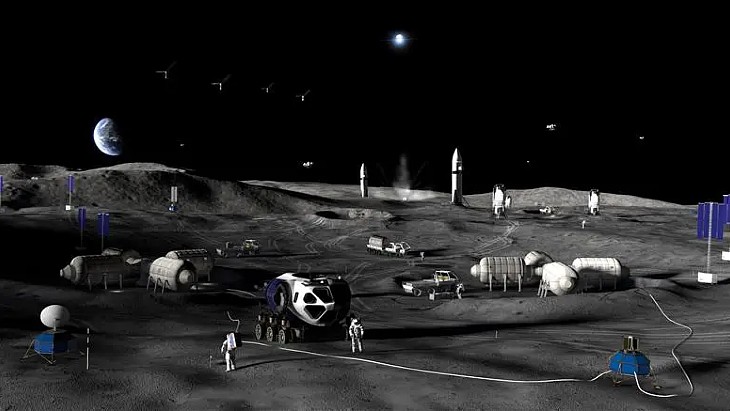
An artist's impression for NASA of its Moon base (Image: NASA)
NASA Administrator Jared Isaacman, speaking at the agency's 'Ignition' event earlier this week, said: "If we concentrate NASA's extraordinary resources on the objectives of the National Space Policy, clear away needless obstacles that impede progress, and unleash the workforce and industrial might of our nation and partners, then returning to the Moon and building a base will seem pale in comparison to what we will be capable of accomplishing in the years ahead."
The announcements included "a major step forward in bringing nuclear power and propulsion from the lab to space. NASA will launch the Space Reactor‑1 Freedom, the first nuclear-powered interplanetary spacecraft, to Mars before the end of 2028, demonstrating advanced nuclear electric propulsion in deep space. Nuclear electric propulsion provides an extraordinary capability for efficient mass transport in deep space and enables high-power missions beyond Jupiter where solar arrays are not effective".
The announced plan is that when the spacecraft reaches Mars "it will deploy the Skyfall payload of Ingenuity‑class helicopters to continue exploring the Red Planet". NASA said the mission "will establish flight heritage nuclear hardware, set regulatory and launch precedent, and activate the industrial base for future fission power systems across propulsion, surface, and long‑duration missions. NASA and its US Department of Energy partner will unlock the capabilities required for sustained exploration beyond the Moon and eventual journeys to Mars and the outer solar system".
Plans for the return of people to the surface of the Moon continue, with NASA saying on Wednesday that teams at Kennedy Space Center in Florida continue preparing the SLS (Space Launch System) rocket and Orion spacecraft for its crewed launch as early as Wednesday, 1 April. This rocket aims to take the four crew around the Moon and back to Earth as part of the developing programme for astronauts to land on the Moon in 2028.
Background
In January NASA and the US Department of Energy (DOE) said they had signed a memorandum of understanding to solidify their collaboration and advance the "vision of American space superiority" set out in an Executive Order signed by US President Donald Trump on 18 December. As well as "returning Americans to the Moon by 2028" - through the Artemis Program - this order includes deploying nuclear reactors on the Moon and in orbit, including the development of a lunar surface reactor by 2030, as a priority.
The agencies - which have a 50-year long history of collaboration - said they "anticipate deploying a fission surface power system capable of producing safe, efficient, and plentiful electrical power that will be able to operate for years without the need to refuel. The deployment of a lunar surface reactor will enable future sustained lunar missions by providing continuous and abundant power, regardless of sunlight or temperature".
Nuclear fission power was one of the two main power generation technologies for crewed surface exploration architectures considered in NASA's 2025 Integrated Lunar Power Strategy Considerations White Paper (the other is solar). The White Paper forms part of the agency's Moon to Mars Architecture, which defines the elements needed for long-term, human-led scientific discovery in deep space.
The USA's CNN said Steven Sinacore, who will also oversee the SR-1 Freedom mission for NASA, had told it there will need to be an information programme to ease any public concerns over the use of nuclear propulsion: "Ultimately, it is safe. On the ground, the reactor is off. There's no radiation coming from it. It doesn’t actually turn on until you're up in space."
According to a SpaceNews report of the event, Sinacore said the SR-1 Freedom will use a nuclear reactor that NASA plans to develop in-house, generating 20 kilowatts of electrical power using high-assay low-enriched uranium (HALEU). The journey time to Mars is expected to be about a year, and NASA said it plans to share the reactor design for SR-1 Freedom with industry.
Assessment completed of Chernobyl shelter repair works
The costs of repairing the damaged New Safe Confinement at the Chernobyl nuclear power plant in Ukraine will be "in the order of" EUR500 million (USD577 million), according to a preliminary technical assessment by Bouygues and Vinci.
(Image: EBRD)
The New Safe Confinement (NSC) is the largest moveable land-based structure built - with a span of 257 metres, a length of 162 metres, a height of 108 metres and a total weight of 36,000 tonnes equipped - and with a lifetime of 100 years, it has been designed to allow for the eventual dismantling of the ageing makeshift shelter built over the destroyed Chernobyl unit 4 in a matter of just months after the 1986 accident and the management of radioactive waste. It has also been designed to withstand temperatures ranging from -43°C to +45°C, a class-three tornado, and an earthquake with a magnitude of 6 on the Richter scale. The process of sliding the entire arched structure from its assembly point into position over unit 4 was completed on 29 November 2016.
A drone strike on 14 February last year caused a 15-square-metre hole in the external cladding of the NSC, with further damage to a wider area of about 200-square-metres, as well as to some joints and bolts. It took about three weeks to fully extinguish smouldering fires in the insulation layers of the shelter. Temporary repair work was carried out before the winter to prevent weather damage.
French firms Bouygues Travaux Publics and Vinci Construction Grands Projets - who previously formed the Novarka consortium responsible for the original design and construction of the NSC - have now completed a preliminary technical assessment of damage sustained by the structure.
The assessment identified a series of potential repair activities - both temporary protective measures and longer-term restoration works. These include: temporary protection and stabilisation measures, such as weatherproofing of the roof and repairs to damaged steel components; restoration of the external cladding, together with additional repairs required to re-establish sufficient airtightness of the NSC annular space; repair or replacement of sealing joints affected by the damage; testing and re-commissioning of the annular space ventilation system following completion of repairs; restoration of leak-tight membranes within the NSC structure; and restoration of the main crane system, which is essential for safe internal operations.
The assessment identifies the restoration of full NSC functionality by 2030 as a key objective, to limit the risk of corrosion of the steel arch structure and maintain long-term safety. However, it says that this timeline would only be met if site access and security conditions allow works to proceed, and that construction activities begin by around the end of 2027. The assessment stresses that the schedule remains subject to significant uncertainty and would need to be refined once detailed designs, regulatory approvals, and procurement strategies are defined.
The assessment concludes that it is not yet possible to provide a reliable cost estimate for the repair works. However, based on the current level of information, the total cost "could be in the order of EUR500 million". It says a more robust cost estimate would depend on: completion of a detailed repair design; confirmation of procurement routes and market conditions; clarification of security-related constraints; and alignment with regulatory and donor requirements.
"The assessment is intended to provide an initial technical basis for understanding the nature of the damage, potential repair pathways, and key constraints," said the European Bank for Reconstruction & Development (EBRD), which led the project to fund and construct the NSC. "It does not constitute a final repair design, investment decision, or implementation plan. Further engineering, regulatory review, and donor coordination would be required before any works could proceed."
The report will be presented to the 31 March meeting of the International Chernobyl Cooperation Account, which was established in November 2020 by the EBRD at the Ukrainian government's request to support a comprehensive plan for Chernobyl.
“In October last year, the plant's staff and the SES units managed to carry out a number of urgent measures and close the hole in the outer cladding of the Confinement damaged by a Russian drone," said Serhii Tarakanov, Director General of SSE Chornobyl NPP (ChNPP) on 9 March after a working meeting of representatives from ChNPP, the EBRD and the French companies. "This made it possible to get through the autumn-winter period relatively smoothly and to prevent excessive ingress of precipitation into the structure. However, this solution was only temporary. Now it is necessary to undertake comprehensive repairs and full restoration of the NSC functionality.
"It is very important to restore the function of containing radioactive substances within the NSC, as well as active anti-corrosion protection to ensure the functioning of the Confinement for the designed 100 years. After completing the comprehensive repair work within the specified time frame (by 2030), we will be able to move on to the implementation of the main task for which the New Safe Confinement was built - dismantling the unstable structures of the Shelter Object and transforming it into an environmentally safe system."
Singapore to bolster nuclear safety capabilities
Singapore's National Environment Agency said it will issue tenders to commission three studies on nuclear safety standards and environmental considerations as the island city-state studies the potential deployment of nuclear energy.
(Image: cegoh / Pixabay)
The three studies will examine different aspects of nuclear safety: safety standards adopted by international organisations and national regulators, including how to design and operate the reactor safely, what safety systems are needed, and how to prevent accidents; international environmental standards and regulatory frameworks for nuclear facilities; and environmental considerations for the potential deployment of nuclear energy in Singapore and the region – both of which focus on how to protect public health and the environment.
"These studies will complement the ongoing study commissioned by the Energy Market Authority (EMA) to evaluate the safety performance and technical feasibility of advanced nuclear energy technologies," the National Environment Agency (NEA) noted.
The NEA, as the radiation and nuclear safety regulator, has been developing Singapore's nuclear safety capabilities through close partnerships with the International Atomic Energy Agency and established regulatory bodies in Finland, France and the USA, as well as its regional neighbours with whom it engages in nuclear safety cooperation discussions. The NEA's Nuclear Safety Advisory Panel, comprising experts in nuclear and related scientific fields, provides independent advice on nuclear safety, security and safeguards.
"The studies, together with our other capability-building efforts, ensure that Singapore is well equipped with the knowledge and technical expertise to independently assess the potential for safe deployment of nuclear energy in Singapore," the NEA said. "These capabilities will also allow us to contribute to strengthen regional discussion on nuclear, to better prepare for a region with nuclear power plants. The studies will also support our preparations in the event that countries in our region decide to deploy nuclear power."
In 2012, the Singapore government conducted a pre-feasibility study on nuclear energy. While the study concluded that nuclear power plants of the time were not suited for a small and densely populated city-state, it recommended that Singapore continue to monitor the progress of new nuclear energy technologies.
In March 2022, the EMA released a report that concluded nuclear energy could supply around 10% of Singapore's energy needs, helping its power sector achieve net-zero carbon emissions by 2050.
In October 2024, the EMA signed a memorandum of understanding (MoU) with the UAE's Emirates Nuclear Energy Company to develop capabilities in nuclear energy. Through the MoU, both parties would work together to strengthen capabilities in nuclear science and technology, and identify activities of mutual interest in areas such as the assessment of emerging nuclear technologies and human resource development. The parties agreed to facilitate information sharing through workshops, technical exchanges, and/or staff attachments.
In September 2025, the EMA appointed UK-headquartered engineering firm Mott MacDonald to conduct a study on the safety and technical feasibility of advanced nuclear energy technologies. The study aims to evaluate the safety performance and technical feasibility of advanced nuclear energy technologies, such as small modular reactors, based on their safety features, technology maturity, and commercial readiness.
Delivering his Budget 2025 speech in February last year, Prime Minister Lawrence Wong - who is also Finance Minister - said the government would study the potential deployment of nuclear power in Singapore and take further steps to systematically build up capabilities in this area. "We will need new capabilities to evaluate options, and to consider if there is a solution that Singapore can deploy in a safe and cost-effective way," he said.
Brazil's NBEPar and Rosatom create joint venture
Rosatom's Uranium One Group and Nucleo Brasil Energia Participações have signed an agreement to establish a joint venture to implement critical mineral exploration and extraction projects in Brazil.
(Image: Rosatom)
The signing ceremony for the new company, to be called Nadina Minerals, took place at the Nuclear Summit 2026 international forum in Rio de Janeiro, Brazil.
Rosatom said: "As part of their joint venture, the partners plan to obtain the necessary permits, conduct geological exploration at promising deposits, and build modern facilities for the extraction and processing of metals critical to the development of high-tech industries. The project is an important step in strengthening international cooperation and a strategic step for the development of Brazil's national economy."
It added that the Russian state nuclear corporation has "extensive experience collaborating with Brazil in the nuclear fuel cycle, primarily in the supply of enriched uranium for fuel production at the Angra Nuclear Power Plant, as well as services for the conversion of Brazilian uranium. The signed agreement lays the foundation for expanding this partnership".
Based in São Paulo, privately owned Núcleo Brasil Energia Participações (NBEPar) was created in 2024 "to structure the nuclear sector of the Diamante Group, which has been operating in the area of thermoelectric power generation for six decades". It describes its mission as "to build partnerships with public and private companies to guarantee a supply chain for nuclear power generation in Brazil".
Brazil's uranium plans
The Nuclear Summit 2026 featured discussion of the opportunities and potential for Brazil in terms of uranium resources and nuclear fuel production.
Reinaldo Gonzaga, director of Nuclear Fuel for Indústrias Nucleares do Brasil (INB), said that with the support of the publicly-owned holding company Empresa Brasileira de Participações em Energia Nuclear e Binacional SA (ENBPar), they were working to structure new business models with the objective of expanding national production, with input as well from the National Bank for Economic and Social Development (BNDES).
He said that developing mining, conversion and enrichment abilities was a way to reduce external dependence and add value to the uranium produced in the country. In addition to a number of international agreements relating to its critical mineral resources, Brazil has outlined its plans to return to uranium exploration and expand its nuclear fuel cycle capabilities.
A Request for Information was launched by BNDES in December for consulting firms interested in participating in the structuring of Indústrias Nucleares do Brasil's uranium production expansion project.
Indústrias Nucleares do Brasil (INB) launched the Pró-Urânio programme in 2024 "with the aim of expanding and accelerating the exploration of new deposits, and which will involve BNDES in developing the model for partnerships with mining companies".
Background
According to World Nuclear Association, following active exploration in the 1970s and 1980s, Brazil has reasonably assured resources of 210,000 tonnes of uranium. There has been little exploration since the mid-1980s.
The country's three main deposits are: Pocos de Caldas in Minas Gerais state, where a uranium mine closed in 1997; Lagoa Real or Caetité in Bahia state, which has been operating since 1999; and Itataia, now called Santa Quitéria, in Ceará state, where the production of uranium as a co-product with phosphate is planned.
Uranium has been mined in Brazil since 1982, but the only operating mine is INB's Lagoa Real/Caetité mine, with a capacity of 340 tU per year. The mine has known resources of 10,000 tU at 0.3%U.
INB commenced developing the adjacent Engenho mine in January 2017, a 200-300 tU per year open pit operation. Production was initially planned from October 2017, but did not commence.
In January 2020, the country's energy minister reported that investment in INB would allow it to produce 150 tU annually from Caetité, starting in 2020, and expanding to 360 tU per year by 2023. The Santa Quitéria Consortium - a partnership between INB and privately owned fertiliser producer Galvani - expects to produce 2,300 tonnes of uranium concentrate annually from the Itataia deposit.
In 2022, Brazil produced 43 tU. All mined uranium is used domestically, after conversion and most enrichment abroad. The country's uranium requirements are currently about 339 tU per year.
Kentucky incentives support laser enrichment plant
A USD98.9 million incentive package from the Commonwealth of Kentucky and McCracken County will support the ongoing development of Global Laser Enrichment's planned Paducah Laser Enrichment Facility.
GLE's vision of the PLEF (Image: GLE)
North Carolina-based Global Laser Enrichment (GLE) completed its full licence application to the US Nuclear Regulatory Commission for the Paducah Laser Enrichment Facility (PLEF) in July last year. It intends to re-enrich high-assay depleted uranium tails acquired from the Department of Energy at the facility at Paducah, Kentucky, and says the project represents a transformational investment opportunity for the greater Paducah region. It is expected to be the single largest capital investment in Western Kentucky's history.
The performance-based incentive package will potentially provide up to USD98.9 million in tax and other economic incentives should GLE reach agreed investment and job creation thresholds, the company said.
"GLE greatly appreciates McCracken County and the Commonwealth of Kentucky's enthusiasm and support for nuclear energy and the creation of new US domestic nuclear fuel sources," GLE CEO Stephen Long said. "The incentive package reflects a shared vision for economic development, technological leadership, and the establishment of a resilient domestic nuclear fuel supply chain."
GLE is the exclusive licensee of the SILEX laser enrichment technology invented by Australian company Silex Sytems Ltd. The company completed a large-scale uranium enrichment demonstration programme last year at its Wilmington, North Carolina Test Loop facility, reaching Technology Readiness Level 6, and is continuing its technology maturation program (TRL-7+) and full-scale preliminary detailed design for the PLEF.
The company said it "remains on track to begin re-enriching the DOE’s Paducah inventory of depleted uranium tails by 2030".
Deep Isolation further validates borehole technology
US nuclear waste disposal company Deep Isolation Nuclear Inc announced that federally funded research has shown that deep borehole disposal could be a viable option for disposing of high-level radioactive waste from advanced reactor fuel recycling.
A prototype UCS canister (Image: Deep Isolation)
Deep Isolation was among the recipients of USD36 million in funding announced in March 2022 by the US Department of Energy (DOE) for 11 projects seeking to increase the use of nuclear power as a reliable source of clean energy and to limit the amount of radioactive waste produced from advanced reactors. The awards were made through the DOE Advanced Research Projects Agency-Energy's (ARPA-E's) Optimising Nuclear Waste and Advanced Reactor Disposal Systems (ONWARDS) programme. ONWARDS was launched in 2021 as ARPA-E's first programme created to identify and facilitate technologies for advanced reactor used fuel recycling, waste forms, used fuel disposal pathways and associated advanced safeguards technologies.
In one project - titled Enabling the Near Term Commercialisation of an Electrorefining Facility to Close the Metal Fuel Cycle - which received a USD4 million grant, Deep Isolation was joined by Oklo Inc and the Argonne and Idaho national laboratories to commercialise a fuel recycling facility that will include, for the non-recyclable waste, the development of a final waste solution compatible with a deep borehole repository. The Oklo-led project was the first focused programme to identify pathways to reduce waste material and minimise the need for disposal sites, and was the first federally-funded programme to explore pairing a commercial borehole solution with a recycling facility for an advanced reactor developer.
In the project, Deep Isolation analysed the waste streams that would be generated by the electrorefining facility to identify waste forms suitable for a deep borehole repository. It would also establish the technical and cost savings framework for using deep borehole repositories as a complement to electrorefining. Oklo and Argonne would focus on industrialising fuel recycling through advanced automation techniques and sensor technologies.
Deep Isolation has now said its analysis has "confirmed that nuclear waste streams partitioned through the Argonne-baseline electrorefining process are compatible with deep borehole disposal, demonstrating a safe and practical pathway for permanent isolation. Physics-based modelling showed that high-level waste, when disposed of in Deep Isolation's deep borehole system within generic shale and granitic host rocks, achieved long-term safety levels surpassing targets set in developing the model and achieving exposure levels that were several orders of magnitude below a stringent radiological exposure dose standard".
It added: "The results of this comprehensive initiative provide confidence that borehole disposal could serve as a viable option for high-level radioactive waste from advanced reactor fuel recycling, highlighting a potential pathway for closing the metal fuel cycle if US law is changed to authorise borehole repositories for high-level waste."
Jesse Sloane, Executive Vice President of Engineering, Deep Isolation, said: "This collaboration with Oklo represents an important step forward for the advanced reactor ecosystem and our deep borehole disposal solutions for nuclear waste. By pairing innovation in fuel recycling with advanced deep geologic disposal technology, we are helping build the technical foundation for a fully integrated, sustainable nuclear future."
The borehole technology
Disposal in deep boreholes - narrow, vertical holes drilled deep into the earth's crust - has been considered as an option for the geological isolation of radioactive wastes since the 1950s. Deep borehole concepts have been developed in countries including Denmark, Sweden, Switzerland, and the USA but have not yet been implemented.
Deep Isolation's patented technology leverages standard drilling technology using off-the-shelf tools and equipment that are common in the oil and gas drilling industry. It envisages emplacing nuclear waste in corrosion-resistant canisters - typically 9-13 inches (22-33 centimetres) in diameter and 14 feet long - into drillholes in rock that has been stable for tens to hundreds of millions of years. The drillhole - which is lined with a steel casing - begins with a vertical access section which then gradually curves until it is nearly horizontal, with a slight upward tilt. This horizontal 'disposal section' would be up to two miles (3.2 kilometres) in length and lie anything from a few thousand feet to two miles beneath the surface, depending on geology. Once the waste is in place, the vertical access section of the drillhole and the beginning of its horizontal disposal section would be sealed using rock, bentonite and other materials.
Deep Isolation's Universal Canister System (UCS) - developed in collaboration with NAC International Inc through a three-year project funded by the DOE's Advanced Research Projects Agency–Energy (ARPA-E) - is designed to accommodate a range of advanced reactor waste streams, including vitrified waste from reprocessing, TRISO used fuel, and halide salts from molten salt reactors. It is compatible with modern dry storage and transport infrastructure, and meets performance and safety requirements across both borehole and mined repository options, which gives greater flexibility and reduced uncertainty in future waste disposition, the company says.
In January, Deep Isolation said that a two-year research project, also funded by the DOE's ARPA-E programme, subjected its UCS to the kinds of conditions found thousands of feet below the surface had shown materials used in its fabrication perform reliably and remain resistant to corrosion over time.
Last month, Deep Isolation announced the launch of its multi-year, full-scale, at-depth deep borehole demonstration programme to test its technology for safely and permanently disposing of nuclear waste deep underground.
Australia’s long-standing model of exporting crude and importing refined fuels is breaking down amidst supply disruptions.
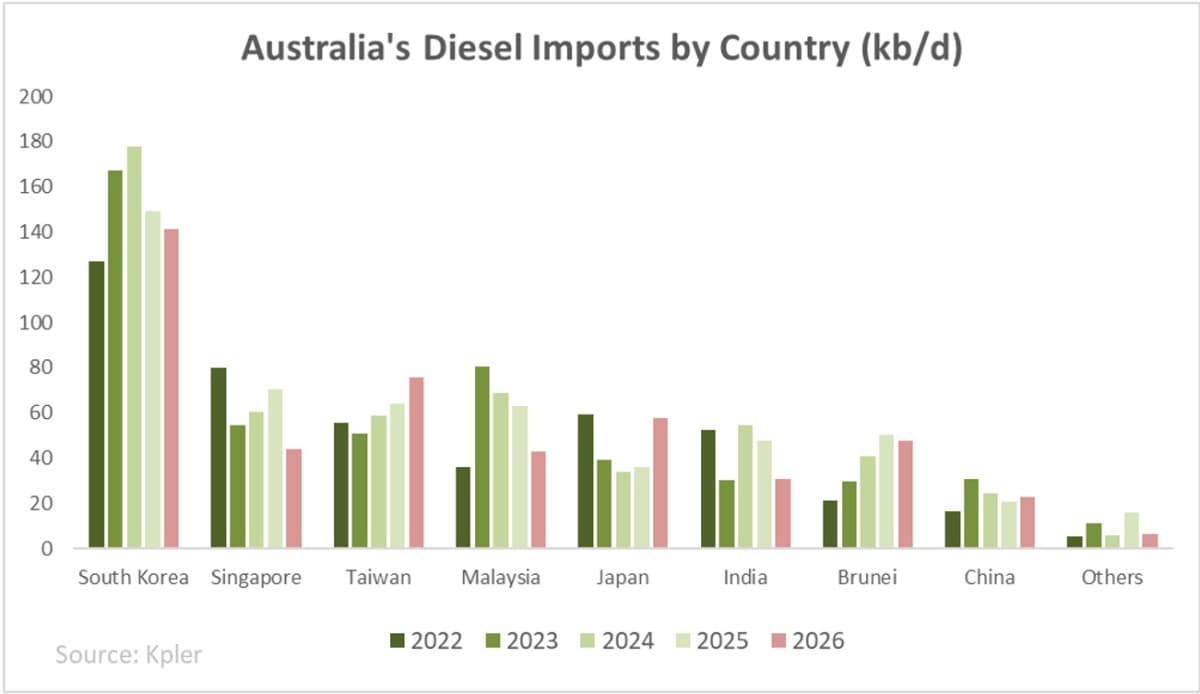
Around 80–90% of its fuel demand (around 850,000 b/d) is import-dependent, leaving the system highly exposed to Asian export restrictions.
With product stocks at ~30 days and domestic refining barely covering 20% of demand, import disruptions are rapidly translating into a real availability crisis.
Australia has long been synonymous with resource abundance — a country rich in minerals, energy, and hydrocarbons, including its own crude oil production. Yet today, it finds itself in the paradoxical position of scrambling for fuel, as disruptions to imports expose just how dependent the nation has become on refined products from abroad.
Australia continues to produce oil domestically, with crude output around 320,000 b/d, yet its downstream dependency is overwhelming. In 2025, the country imported roughly 850,000 b/d of refined products against total demand of about 1.1 million b/d, leaving 80–90% of consumption reliant on external suppliers. Even before the current disruption, strategic fuel stocks stood at just 37 days — barely one-third of IEA requirements.
The trigger for today’s unraveling crisis has been a combination of disrupted shipping through the Strait of Hormuz and export restrictions imposed by key Asian suppliers. China, Thailand, and South Korea – all major exporters to Australia – have introduced full or partial curbs on refined product exports. South Korea alone accounts for roughly a quarter of Australia’s imports, supplying around 220,000 b/d – about half of which is diesel (around 120,000 b/d), the most critical fuel in Australia’s demand structure and the segment with the deepest supply deficit.
Jet fuel has largely been sourced from China, with February 2026 cargoes reaching around 190,000 b/d. Gasoline flows are mostly sourced from Singapore and South Korea, which together accounted for roughly two-thirds of Australia’s average 210,000 b/d gasoline imports in 2025.
The impact has been immediate. On March 22, Australia’s Energy Minister confirmed that six tankers carrying refined products from Malaysia, Singapore, and South Korea had either been cancelled or deferred. Officials have repeatedly stressed that cargoes are still arriving nonetheless. In reality, however, theincoming volumes on water largely reflect shipments that departed before the disruption took hold – with the true extent of the shortage yet to demonstrate itself in the upcoming days.
For the first time in decades, Australia has turned to the US as an emergency supplier. Around 240,000 tons of refined fuels have been secured – including roughly 120,000 tons of diesel, 70,000–80,000 tons of gasoline, and about 35,000 tons of jet fuel. The shipments consist of at least six vessels: three multi-product cargoes from ExxonMobil, two diesel shipments from BP, and one gasoline cargo from Vitol. Collectively, this marks the largest monthly inflow of US fuel to Australia since the 1990s.
The logistics alone underline the severity of the disruption. Transit times from the US Gulf Coast to Australia stretch to 55–60 days, with freight costs around $20/bbl, compared with typical Asia-Pacific routes that stood at $5–6/bbl before the crisis. The price dynamics of regional products briefly blurred that disadvantage: on March 18, delivered gasoline and diesel from Singapore and Houston converged at roughly $161/bbl. As of March 25, Singapore cargoes look more attractive again — around $153/bbl versus $164/bbl from Houston. But pricing is no longer the decisive factor. The issue has shifted to physical availability. With unsold cargoes in Asia increasingly rare, the US – despite longer routes and more expensive freight – might become the only reliable way out of this imports’ deadlock for Canberra.
Australia’s domestic refining system offers little relief. The country operates just two refineries – Lytton (110,000 b/d) and Geelong (120,000 b/d) – with combined capacity of 230,000 b/d, covering only around 20% of national demand. Both facilities are structurally constrained. They depend entirely on imported crude, as Australia’s domestic output (largely ultra-light, condensate-rich streams with API gravity above 55–60) is unsuitable for their configuration. The refineries themselves are aging assets, built in the 1950s and 1960s, designed for a different crude blend and market environment. Their output profile also mismatches domestic demand. Australian refineries are gasoline-heavy, producing around 100,000 b/d of gasoline and 80,000 b/d of diesel, while consumption is skewed toward diesel – the segment now under the greatest stress.
The refining sector’s decline reflects years of structural pressure. Between 2012 and 2022, five refineries ceased operations, driven into the ground by weak margins, high operating costs, and competition from highly complex mega-refineries across Asia. To keep the remaining capacity alive, the government has extended financial support to both remaining plants. The Fuel Security Services Payment (FSSP) scheme (originally due to expire in 2027) has been extended to 2030, effectively subsidizing domestic refining. Maintenance schedules, including planned work at Lytton, have been deferred as authorities push facilities to sustain maximum throughput.
In parallel, the government has activated emergency response measures. On March 13, it released 4.8 million barrels of gasoline and diesel from strategic reserves. Yet the country’s limited stockpile – structurally below IEA thresholds – constrains how long such interventions can be sustained. As of March 17, Australia held just 30 days of diesel and jet fuel, and 38 days of gasoline (as opposed to the IEA requirement of 90 days stock levels). All categories remain even below the national Minimum Stockholding Obligations — diesel by 18%, jet fuel by 28%, and gasoline by 78%.
Authorities have moved to relax fuel specifications in an effort to widen supply options. Gasoline sulphur limits have been temporarily eased from 10 ppm to 50 ppm, while diesel flashpoint requirements have been reduced from 61.5°C to 60.5°C for a six-month period. These adjustments allow a broader range of imported fuels to enter the market and enable the two domestic refiners to sell previously non-compliant products locally.
A potential resolution to Australia’s import struggles may lie with two key suppliers. First, South Korea. Korean authorities have introduced limits on refined product exports, capping them at 2025 monthly average levels. While this restricts any growth in supply, it does not fully exclude Australia from accessing Korean volumes - provided it remains competitive on pricing and bids up. Second, India. Prior to the EU’s January 2026 restrictions on imports of products refined from Russian crude, India exported approximately 160,000 b/d of diesel to Europe. With US sanctions on Russian barrels now lifted and Indian refiners increasing their purchases of Russian crude, these previously Europe-bound volumes are being redirected. In this context, Australia could emerge as a natural alternative destination for such flows.
Refineries may be running at full capacity, but their limited scale – and production skewed toward gasoline rather than the more critical diesel – leaves a gap they cannot close. Imports are still arriving, but largely from cargoes that sailed before the disruption and the imposition of export restrictions across Asia. With fuel stocks already well below the IEA’s 90-day benchmark, the outlook is increasingly strained. If anything, the crisis has already delivered its key lesson: for a country as remote as Australia, domestic refining is no longer just a matter of economic efficiency – it is a question of national security.
By Natalia Katona for Oilprice.com
Alberta Courts Asian Capital for 1M bpd Pipeline to Break U.S. Dependence
Asian and Middle Eastern investors are willing to fund a major Alberta-to-Pacific pipeline to reduce Canada’s reliance on U.S. exports.
Indigenous opposition, tanker bans, and complex approvals threaten the project’s feasibility despite strong economic potential.
Middle East disruptions highlight Canada’s potential as a stable supplier, but limited infrastructure may prevent it from fully capitalizing.
Asian and Middle Eastern capital is lining up behind Alberta’s latest export push. Premier Danielle Smith says investors, including sovereign wealth funds, are prepared to take 15% to 30% minority stakes in a proposed 1-million-barrel-per-day pipeline aimed at Asian markets.
The plan centers on moving oil sands crude to the northwest coast of British Columbia, with Prince Rupert now favored over Kitimat as the terminal site. The objective is straightforward: break Canada’s near-total dependence on the U.S., which still absorbs roughly 95% to 97% of Alberta’s crude exports.
For Edmonton, the pipeline is a direct response to chronic transport bottlenecks that have long capped production growth and discounted Canadian crude.
But the political barrier is just as clear. Indigenous leaders along B.C.’s coast remain firmly opposed to lifting the tanker ban, calling it non-negotiable, setting up a familiar standoff between market access and local consent.
The 2019 Oil Tanker Moratorium Act bans vessels carrying over 12,500 metric tons of crude or persistent oil from stopping, loading, or unloading at ports along British Columbia's northern coast, specifically protecting areas from Northern Vancouver Island to the Alaska border. The Act intends to protect fragile marine ecosystems and the Great Bear Rainforest. The project's feasibility also depends on ongoing negotiations regarding carbon pricing, with negotiations between Alberta and the federal government on an industrial carbon tax and thePathways Alliance carbon capture project expected to miss an April 1 deadline.
A recent study by ATB Financial and Studio.Energy found that expanding Canadian oil pipeline capacity could boost export capacity by an additional 1.5 million barrels per day, add an average of $31.4 billion annually to Canada's real GDP between 2027 and 2035 (~1.1% of GDP) and support 112,000 extra Canadian jobs. The joint study by Studio.Energy and ATB Economics revealed that increased capacity to the West Coast allows for better access to Asian-Pacific markets, reducing reliance on U.S. routes and strengthening economic security.
The proposed pipeline could do much of the heavy lifting for Canada’s oil export ambitions thanks to its massive capacity, comparable to the famous BTC pipeline, with a throughput capacity of 1.2 million barrels per day (bpd). The Baku-Tbilisi-Ceyhan (BTC) pipeline is a 1,768-kilometer (1,099-mile) crude oil pipeline that serves as a primary energy corridor linking the landlocked Caspian Sea to the Mediterranean. It originates at the Sangachal Terminal near Baku, Azerbaijan, traverses Georgia via Tbilisi, and terminates at the Ceyhan Marine Terminal on Turkey's southeastern coast.
The Iran conflict has positioned Canada as a potentially reliable, low-risk oil and natural gas supplier for its allies, potentially boosting its energy exports. According to Eric Nuttall, senior portfolio manager at Toronto-based Ninepoint Partners, the Middle East conflict is a “massive opportunity” for Canada, which can position itself as a stable and secure supplier of oil.
Nuttall argues that Canada is uniquely positioned as a stable and secure energy supplier with decades of inventory in the oil sands and the Clearwater formation. The Clearwater Formation in Alberta, Canada, holds vast, high-viscosity heavy oil and bitumen reserves, with estimated in-place volumes exceeding 70 billion barrels in the Cold Lake area alone. Production is expected to grow, withestimates that it could hit nearly 400,000 bbl/d by 2031. The war has also accelerated calls to ramp up Canada’s LNG export capabilities, with companies like ARC Resources (OTCPK:AETUF) and TC Energy (NYSE:TRP) looking to benefit.
Unfortunately, limited pipeline capacity coupled with long regulatory approvals for infrastructure threaten to hinder Canada’s ability to fill the global supply gap. Major Canadian oil pipeline projects have historically faced significant political and regulatory hurdles, resulting in several high-profile cancellations and delays. U.S. President Joe Biden famously revoked the permit for the cross-border permit for TC Energy's Keystone XL project in 2021 on his first day in office. The project was designed to carry oil from Alberta to Texas, with a capacity of 830,000 barrels per day.
Indeed, the Trans Mountain Expansion (TMX) stands as the only major recent expansion project to reach completion in Canada after becoming operational in May 2024. TMX was similarly plagued by legal challenges from First Nations and environmental groups, leading the federal government to purchase it from Kinder Morgan (NYSE:KMI) for $4.5 billion in 2018 to ensure its completion. Massive cost overruns also threatened to derail the project after final construction costs surged from an initial estimate of $5.4 billion to nearly $35 billion.
Prime Minister Mark Carney’s government is working to streamline Canada’s byzantine energy regulatory hurdles, and has pledged to come up with an efficient approval process that will attract the private sector. Carney has proposed creating "energy corridors" to facilitate project development and has encouraged provinces to create agreements to allow regional assessments to substitute for federal reviews. The Carney government is focused on attracting private capital, and has doubled the Indigenous Loan Guarantee Program to $10 billion in a bid to support Indigenous ownership of major resource projects. By Alex Kimani for Oilprice.com
Woodside Takes Control of Texas Ammonia Plant in U.S. Expansion Push
Woodside Energy has officially taken over operations of its Beaumont New Ammonia (BNA) facility in southeast Texas, completing the final stage of its acquisition of OCI’s clean ammonia business and advancing its push into lower-carbon fuels.
The Australian energy company confirmed it assumed control following the successful completion of performance testing and handover from OCI Global.
The BNA facility has a nameplate capacity of up to 1.1 million tonnes per year and is expected to significantly expand U.S. ammonia export capacity - potentially doubling current levels, according to company estimates.
The milestone represents a critical component of Woodside’s broader strategy to diversify beyond LNG and oil into new energy products, particularly ammonia, which is increasingly viewed as a key hydrogen carrier and decarbonization fuel.
CEO Meg O’Neill (named Liz Westcott in the release) framed the development as a “significant milestone” in building a lower-carbon portfolio, even as the company continues to navigate near-term market volatility.
Ammonia is gaining traction globally as both a fertilizer feedstock and a potential clean fuel for shipping and power generation. For Woodside, the move aligns with a broader industry trend: oil and gas majors pivoting toward hydrogen and derivative fuels to maintain relevance in a decarbonizing energy system.
Woodside acquired 100% of OCI Clean Ammonia Holding in September 2024 for approximately $2.35 billion, including capital expenditures through completion.
The transaction structure included an initial 80% payment, with the remaining 20% paid upon operational handover—now completed.
Production at the BNA facility began in December 2025, marking a relatively rapid transition from acquisition to operational integration.
Woodside has already secured offtake agreements for conventional ammonia from the facility at prevailing market prices and is actively pursuing additional sales contracts aligned with expected production volumes.
However, the company noted that production of lower-carbon ammonia—likely involving carbon capture or cleaner hydrogen inputs—has been delayed beyond 2026 due to construction issues at a third-party feedstock supplier.
This delay highlights a broader challenge across the hydrogen-ammonia value chain: dependence on upstream infrastructure that is still under development or facing cost inflation and execution risk.
Woodside’s move comes as global ammonia demand is being reshaped by energy transition dynamics. Countries in Asia and Europe are exploring ammonia imports as a means of decarbonizing power generation and heavy industry, while the U.S. Gulf Coast is emerging as a key export hub due to its existing petrochemical infrastructure and access to low-cost natural gas.
The Beaumont facility positions Woodside alongside a growing list of players—including CF Industries, Yara, and ExxonMobil—seeking to scale ammonia production for both traditional and emerging energy uses.
With operational control now secured, Woodside has taken a decisive step into the global ammonia market, leveraging U.S. Gulf Coast infrastructure to build a new pillar in its evolving energy portfolio—though its lower-carbon ambitions remain contingent on upstream project execution.
By Charles Kennedy for Oilprice.com
Equinor Tightens Safety After Mongstad Chemical Exposure Probe
Equinor has completed its internal investigation into a chemical exposure incident at its Mongstad refinery in Norway, identifying multiple safety and risk management failures and introducing corrective measures to prevent recurrence.
The incident, which occurred on October 29, 2025, involved personnel exposure to benzene during maintenance work on a measuring instrument. While initially expected to last 30 minutes, the task extended to more than five hours without a reassessment of risk, resulting in prolonged exposure. Two workers reported discomfort, with one requiring a short absence from work.
The investigation points to a combination of operational, procedural, and organizational shortcomings. Workers operated in an environment with elevated benzene levels while using respiratory protection deemed inadequate for prolonged exposure. At the same time, heightened activity levels during the refinery’s restart phase following maintenance contributed to time pressure and insufficient planning.
Critically, no updated risk assessment was conducted when the job deviated significantly from its original scope and duration. Additional gaps included poor preparation of the assigned team, unclear planning, and the handling of naphtha—known to emit benzene—in open containers without proper protective equipment.
In response, Equinor has introduced a series of measures aimed at strengthening chemical safety and operational oversight at Mongstad. These include:
Replacing naphtha with glycol in measuring instruments to eliminate benzene emissions
Increasing availability and compliance with respiratory protection
Enhancing training on benzene exposure and gas detection
Assigning a dedicated safety engineer to improve oversight of the chemical work environment
The company has also emphasized stricter adherence to its updated respiratory protection protocols introduced in February 2025.
The incident has been reported to Norway’s Ocean Industry Authority, which has launched its own investigation and referred the case to police authorities. The regulator has intensified scrutiny across the sector in recent years as awareness of benzene exposure risks has grown, prompting tighter exposure limits and stricter compliance requirements.
Mongstad is one of Europe’s largest oil refineries and a critical asset in Equinor’s downstream portfolio. The findings highlight ongoing challenges in managing safety during high-intensity operational phases such as post-maintenance ramp-ups—a known risk period across the refining industry.
Equinor’s investigation underscores how operational pressure, inadequate risk reassessment, and gaps in protective measures combined to expose workers to hazardous chemicals, prompting the company to overhaul safety protocols at one of its key refining hubs.
By Charles Kennedy for Oilprice.com
TotalEnergies Beats 2025 Emissions Targets in Transition Push
TotalEnergies has exceeded key emissions reduction targets outlined in its 2025 transition strategy, underscoring progress in its dual-track approach of maintaining hydrocarbon production while scaling low-carbon energy.
The company’s newly released Sustainability & Climate – 2026 Progress Report shows significant declines in operational emissions across its oil and gas portfolio. Methane emissions from operated assets fell by 65% compared to 2020 levels, surpassing the company’s 60% reduction target and keeping it on track toward an 80% cut by 2030.
Scope 1 and 2 emissions from operated assets totaled 33.1 million tonnes in 2025, down from 46 million tonnes in 2015 and ahead of the company’s target of 37 million tonnes. Overall, greenhouse gas emissions from operated oil and gas facilities declined by 38% over the same period.
A key driver of improved performance was the commissioning of new projects in Brazil and the United States, which helped reduce average emissions intensity to below 16 kg CO?e per barrel of oil equivalent—setting a new internal benchmark for future developments.
On the power side, TotalEnergies continued to expand its integrated electricity business. Net power generation reached 48 TWh in 2025, equivalent to roughly 10% of its hydrocarbon output. This growth contributed to an 18.6% reduction in lifecycle carbon intensity of energy products sold since 2015, exceeding the company’s 17% target.
TotalEnergies has outperformed its 2025 emissions reduction goals across methane and Scope 1 and 2 metrics while accelerating growth in its integrated power segment.
TotalEnergies’ results reflect a broader trend among European oil majors pursuing “integrated energy” strategies—balancing continued investment in low-cost, lower-emissions oil and gas projects with expansion into renewables and electricity markets.
The company’s focus on low-breakeven, lower-carbon upstream developments aligns with investor pressure to maintain returns while reducing environmental impact. Meanwhile, scaling power generation positions TotalEnergies alongside peers like BP and Shell, which are increasingly emphasizing electrification as a long-term growth pillar.
The reported emissions intensity improvements in new projects, particularly in Brazil’s offshore sector and U.S. developments, also highlight how technology and project design are reshaping upstream competitiveness in a carbon-constrained environment.
TotalEnergies maintains that its multi-energy model—combining hydrocarbons with renewables and power—remains central to delivering both supply growth and emissions reductions, a balance that continues to define strategy across the sector.
Japan is considering ramping up coal-fired power generation amid a liquefied natural gas crunch that has led to significantly higher prices.
Per a proposal drafted by the economy ministry, the 50% utilization rate cap on coal-fired power plants could be removed in the new fiscal year that begins in April, Reuters reported, adding that this could reduce consumption of LNG by half a million tons annually. For context, Japan imports around 4 million tons of liquefied gas annually from the Middle East.
This also happens to be the amount of LNG that the country has in storage, the report also said. Japan is the world’s second-largest importer of liquefied natural gas due to its energy commodity scarcity. These imports last year came into the spotlight after the United States stepped up the pressure on Russia’s energy industry and buyers of Russian energy commodities, urging them to switch to U.S. energy instead.
In November 2025, unnamed sources from the economy ministry told Reuters Tokyo was going to start buying LNG for its strategic reserve, at a monthly rate of at least 70,000 tons. The buying was scheduled to begin this January, which means the buyers did not have a lot of time to add any meaningful volumes of liquefied gas to the reserve before QatarEnergy declared force majeure on its exports following Iranian strikes on its infrastructure.
As a way of boosting its supply of liquefied natural gas, Japan’s largest buyer of the fuel, JERA. A month before the war erupted, JERA signed a long-term LNG sale and purchase agreement with QatarEnergy to secure the supply of 3 million tons per year for a period of 27 years, with deliveries expected to commence in 2028. Now, the Japanese utility expects the start of deliveries to be delayed, prompting a search for alternatives.
By Irina Slav for Oilprice.com
Cyclone Causes Outages at Australia’s Top LNG Projects
A cyclone has disrupted operations at a total of three LNG facilities in Australia, including Chevron’s Gorgon and Wheatstone, worsening an increasingly severe global LNG supply crunch.
Santos was the first to report a shutdown at its Barossa gas field, which feeds the Darwin LNG terminal, earlier this week as a tropical cyclone barreled towards Australia. Chevron reported the outages at Gorgon and Wheatstone earlier today, as quoted by Reuters, with a spokesperson saying that “We will resume full production at both facilities once it is safe to do so.”
Woodside also reported cyclone-related disruptions at a facility linked to its North West Shelf LNG project.
The Gorgon facility is the largest LNG project in Australia, with an annual capacity of 15.6 million tons, while Wheatstone has a capacity for 8.9 million tons. Woodside’s North Wet Shelf project produces 14.3 million tons per year, and Santos’ Darwin LNG facility, which is fed by Barossa gas, has a capacity of 3.7 million tons per year.
Natural gas prices in Asia have swelled by 143% since February 28, and European gas prices have gone up by 85%, and while some observers make a point of noting that even with that increase, prices are lower than they were back in 2022, this does not really matter. The important fact is that a sizable chunk of LNG supply has been taken off the market due to war and weather.
Meanwhile, the Australian government began eyeing a windfall profit tax on energy companies as a result of the soaring prices in the LNG sector. ABC first reported the news last week, saying the Department of Prime Minister and Cabinet had drafted a document for modelling “new levy options” for the gas and coal industries. “Energy producers should not benefit from high international prices at the expense of domestic customers,” the document said.
_75258.jpg)


_18080.jpg)
_13211.jpg)