Monday, March 30, 2026


INTERVIEW: Democratic Party of Iranian Kurdistan

INTERVIEW: Democratic Party of Iranian Kurdistan
/ PDKI video - screenshot
By Mark Buckton in Taipei March 30, 2026

In the eyes of the government of Iran, the Democratic Party of Iranian Kurdistan (PDKI) is a terrorist organisation operating its own armed group as part of its push for self-determination for the Kurdish people of Iran – a population of between seven and 15mn depending on the source.

Banned by Tehran, the PDKI is the oldest active Kurdish political party in existence, and unable to operate openly in Iran, is currently based in the Erbil Governorate region, part of the Kurdistan Region of northern Iraq.

The PDKI is not, however, listed as a terrorist organisation by any major international body including the United Nations, the European Union or the United States Department of State.

Speaking through Bakhtyar Osmany, head of the Asylum Department of the PDKI, the group gave Bne IntelliNews an assessment of the PDKI view of the current conflict involving Iran, the United States and Israel.

“The ongoing conflict between the Iranian regime and the United States and Israel is largely rooted in the regime’s issues within the country, especially in the repression of the people, and Iran’s role in creating instability in the region and beyond” Osmany said. “As a result of the regime’s internal policy of severe domestic repression, there has been widespread public resentment toward the government, and therefore, not many people are opposed to the idea of the regime being overthrown by foreign forces.

Bakhtyar Osmany

“As Kurds in Iran, the Islamic Republic has been our number one enemy for the last 47 years. We have fought against it at great cost, making it impossible for the regime to impose its policies in Iranian Kurdistan. We see more and more coming to agree with what we have long been pushing for, as the regime is unable to make reforms, and that negotiations with the regime would not lead to any meaningful results.”

As a result, the current conflict “creates favourable conditions for Kurdish and Iranian opposition movements, and opens the door for broader alliances aimed at regime change” in Iran.

Questioned on whether or not the PDKI is currently engaged in, or preparing for, armed operations in light of the situation in Iran, Osmany states that the PDKI is “not currently engaged in armed operations” but adds that “given our long history and experience, we retain the capability to enter an armed phase if we deem it necessary.”

Turning to Iranian strikes on Kurdish opposition areas in the Kurdistan Region of Iraq, Osmany confirms that “The Iranian regime has opposed us in every possible way including assassinations, bombings and poisoning, but in recent years has mostly carried out missile attacks and drone attacks. For example, in 2018 it targeted our refugee camps and headquarters with missiles that left dozens dead and many wounded. It is worth noting, however, that the (Iranian) regime failed to achieve its goals, even with missile attacks on our headquarters. On the contrary, we consider ourselves even stronger now.”

As a group that has historically moved from seeking outright independence in Iran, to advocating autonomy within a Federal Iran, Osmany also gives an insight into the PDKI’s core political objectives in 2026.

“Our main goal is to achieve political rights and national demands. We seek to have a meaningful role in shaping Iran’s future and participating in decision-making. A Federal Iran would mean decentralisation of power, a non-centralised government in Tehran, and guarantees for Kurdish rights, such as education in our mother tongue and fair access to national and regional resources without repressive systems as seen under past monarchies or the current regime. At present, the Islamic Republic remains a major obstacle that must be removed.”

However, after decades of intermittent armed struggle since 1979, Osmany indicates the lessons learnt from such a drawn out campaign led to action forced upon the PDKI. “We did not choose armed struggle; in fact, it was imposed on us by the regime’s brutality against our existence and as our national dignity was unfolding. The unique hardship of our armed struggle has strengthened our resilience and revolutionary spirit. An important lesson we have learned from our eight-decade long struggle is that no single method will see us achieve our goals. Rather, it will be a combination of different methods that sees us achieve our aims and objectives.”

Politically, it is well reported that the PDKI identifies with democratic socialist principles. Asked how the PDKI would use these principles to shape governance in a future, post-Islamic Republic Iran, Osmany answers “social justice has always been at the centre of our agenda” continuing “we aim at bringing about a system that has the capacity of providing the broadest possible access to public, financial, and social services for the largest segments of society.”

In achieving these political goals though, the PDKI is building upon what Osmany calls “political mobilisation and international efforts for regime change and building broader alliances against the Islamic Republic.”

Part of this can be seen in the protest movements within Iran – protests Tehran has cracked down upon with levels of brutality that some sources claim has led to the deaths of tens of thousands of protesters. Addressing this, Osmany says the PDKI is “not separate from protest movements; we are part of them. Kurdish people have repeatedly responded positively to our calls for strikes and demonstrations. A clear example is the ‘Woman, Life, Freedom’ movement, which began in Kurdistan and spread across Iran” although he makes no mention of the most recent round of protests and Iranian response.

On the role of external actors such as the US or others in the region, and how these are seen by the PDKI, Osmany explains “if they aimed to bring about genuine democracy in the country as one of the results of the current war, it would be in our mutual interests for them to consider us, the Kurdish forces, as one of the influential forces on the ground. We can bring about stability, help Iran to turn into a democratic country, and preserve constructive relations with them, especially with the United States.”

And after the recent formation of a broader coalition of Iranian Kurdish political groups drew international attention, Osmany sees this as having “accelerated decision-making, strengthened unity of voice, improved cooperation, and enhanced the political standing of Kurdish groups in international forums” although on Kurdish groups sometimes differing in ideology and tactics across the region, he sees the PDKI navigating these differences in a positive manner.

“This is one of the strong points of the coalition of the Kurdish political parties. As a democratic political party that has been fighting to bring about democracy for 80 years, we see the differences within the coalition as a reflection of Kurdish society”he says, before looking beyond Iran at wider PDKI engagement with Kurdish movements in neighbouring countries.

“Kurds share common aspirations, as well as language and history. Our collective goal is to achieve human and political rights, to free ourselves from oppression and to attain freedom.”

 

Ice Slows the Start of Shipping on the Upper Great Lakes

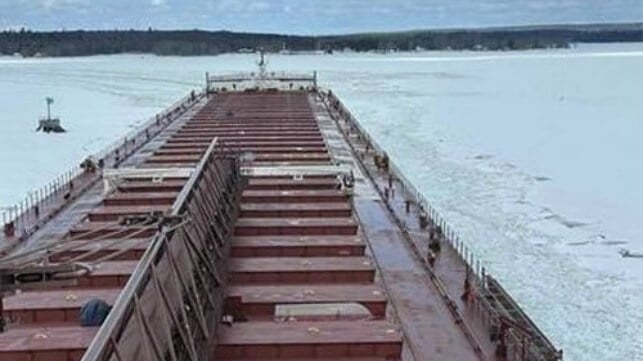
ice on the Great Lakes
Whitefish Bay still has two feet of ice and three feet of snow stranding ships trying to transit Lake Superior (Lake Carriers Association)

Published Mar 29, 2026 5:47 PM by The Maritime Executive


The shipping industry is sounding a cautionary tale as the 2026 season for operations on the Great Lakes is getting underway. They are saying a shortage of icebreakers is compounding a difficult situation, leaving ships stranded after a heavy winter across much of the region.

The Soo Locks reopened on Wednesday, March 25, and it is a big day for the region and the economy. Located at Sault Ste. Marie, Michigan, the locks close each winter for maintenance when the weather is at its harshest. When it reopens, it normally means shipping can resume on Lake Superior, providing access to ports such as Duluth and Thunder Bay. 

This year, however, is different, because while the locks started handling ships, areas of the lake are still choked with ice and snow. In particular, Whitefish Bay, to the west of the locks, is still buried, and ships are finding it basically impossible to make progress in the area. A dozen or more ships have been stuck, reports the Lake Carriers Association.

In places, the reports indicate the ice is still two feet thick on Lake Superior. A late blizzard in early March left massive amounts of snow, which in some places is three feet on top of the two feet of ice. A spokesperson for NOAA, Brian Howell, told NBC Northern News Now that ice coverage was above normal, peaking at 60 percent this winter on the lake, and now the problem is compounded by refreezing at night. Overall ice coverage on the Great Lakes was still at 24 percent, above average, at the end of March.

The Lake Carriers Association notes the situation is critical as the steel mills are waiting for their first deliveries of iron ore and other materials after more than two months since the locks closed. While areas such as Duluth are clear and ready for shipping, Whitefish Bay is the challenge.

The Association notes that the U.S. Coast Guard only has one heavy icebreaker for the lakes, the Mackinaw, but it has been unable to make the lock transit this year. The other USCG vessels for the region lack the power to address the current ice situation.

The other option is the Canadian icebreakers, but they have been busy in Canadian waters this season. At the end of the week, USCG Spar was reported on its way to help in Thunder Bay, which created the hope that the Canadian heavy icebreaker could transit south to break up Whitefish Bay.

The Lake Carriers Association asserts that representatives for the region were able to initially get funding in Congress for another heavy icebreaker, but they assert the money was diverted to the Polar and Arctic icebreaker projects favored by Donald Trump, leaving the lakes to depend solely on soley the Mackinaw for at least three more years.

The USCG Coast Guard last week released a request for information for the replacement of its smallest icebreakers, the ones used along the Atlantic Coast. In its fleet assessment, it notes a strong need to also replace its aging medium icebreakers, comprised of the 140-foot Bay-class icebreaking tugs, which were commissioned into service between 1978 and 1988. It anticipates building 11 of these vessels, which are used primarily on the Great Lakes and along the Atlantic seaboard.

BAN DEEP SEA MINING

NOAA Ship to Map Potential Critical Mineral Deposits in Pacific U.S. Waters

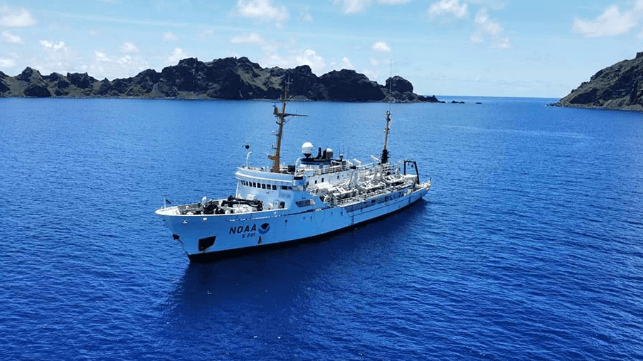
NOAA Ship Rainier
NOAA Ship Rainier mapping in the Pacific  in 2022 (credit: NOAA).

Published Mar 28, 2026 4:24 PM by The Maritime Executive


In early April, NOAA Ship Rainier will begin to map and characterize more than 8,000 square nautical miles of federal waters off Kingman Reef and Palmyra Atoll in the Pacific Ocean. This project is part of the Department of Commerce's implementation of the U.S. Offshore Critical Minerals Mapping Plan, as described in President Trump’s Executive Order 14285: Unleashing America's Offshore Critical Minerals and Resources.

Rainier is a hydrographic survey ship staffed by NOAA Corps Officers and professional mariners. The first survey leg will focus on mapping with multibeam echo sounders in deep water. The second survey leg will use autonomous underwater vehicles from Orpheus Ocean to acquire high-resolution seabed imagery and geological samples, in partnership with the NOAA Ocean Exploration Cooperative Institute. 

“Nearly half of U.S. waters, including this area of the Pacific, have not been mapped to modern standards,” said Neil Jacobs, Ph.D., NOAA administrator. “The Rainier crew will collect high-resolution survey data in this area for the very first time to deepen our understanding of its seabed composition.” 

NOAA will produce publicly accessible maps and images of these federal waters in the Pacific. These products will inform NOAA, other federal agencies and interested parties of the likelihood of finding critical mineral deposits in the surveyed area. This effort will generate high-quality, deep-ocean data to help increase the baseline understanding of the deep-ocean environment, as well as stimulate further potential exploration, research and management projects, including activities related to critical minerals.

About deep seabed mineral development

Deep seabed mining is the extraction of nodules containing critical minerals from the ocean floor. Some regions of the deep seabed contain an abundance of valuable resources like manganese, nickel, cobalt, copper and rare earth elements. Critical minerals are used in everything from defense systems and batteries to smartphones and medical devices and are increasingly important components for American manufacturing. Access to these minerals is a key factor in the resilience of U.S. supply chains.

The products and services herein described in this press release are not endorsed by The Maritime Executive.


Trump allows Russian oil tanker to dock in Cuba but warns island is "next" after Iran

Trump allows Russian oil tanker to dock in Cuba but warns island is
The Trump administration's de facto blockade has reshaped Cuba's energy landscape since January, when the US-led operation to remove Venezuelan president Nicolás Maduro severed the island's dominant source of subsidised oil. / xinhua
By bnl editorial staff March 30, 2026

The United States has allowed a Russian government-owned oil tanker to break its own blockade of Cuba, delivering the fuel-starved island its first significant energy shipment in three months, as President Donald Trump said the cargo would do little to alter Havana's fate.

The Anatoly Kolodkin, a sanctioned Russian state vessel carrying an estimated 730,000 barrels of crude oil, arrived at the port of Matanzas on March 30 after Washington chose not to deploy the Coast Guard vessels stationed in the region to block its passage. A US official told the New York Times ahead of the vessel's arrival, speaking on condition of anonymity, that the administration did not intend to intervene.

Speaking to reporters aboard Air Force One on March 29, Trump confirmed the decision. "We don't mind having somebody get a boatload, because they have to survive," he said. "I told them, if a country wants to send some oil into Cuba right now, I have no problem with that. Whether it's Russia or not."

But he was dismissive of the shipment's significance. "Cuba is finished," Trump said. "They have a bad regime. They have very bad and corrupt leadership. And whether or not they get a boat of oil, it's not going to matter." He also brushed aside suggestions that allowing the delivery amounted to a concession to Moscow. "It doesn't help him. He loses one boatload of oil, that's all it is," Trump said of Russian President Vladimir Putin. "If he wants to do that, and if other countries want to do it, it doesn't bother me much."

He also issued a fresh warning, telling reporters: "Cuba's going to be next. Cuba is a mess, it's a failing country and they're going to be next . . . Within a short period of time, it's going to fail and we will be there to help it out." The remarks followed Trump's statement at an investment conference on March 27 that "Cuba is next, by the way" after the Iran campaign.

The Kremlin welcomed the tanker's arrival and offered a notable diplomatic disclosure: spokesman Dmitry Peskov said energy supplies to Cuba had been discussed with the US ahead of the delivery, suggesting the shipment had been tacitly negotiated between Washington and Moscow. Russia "considers it its duty not to stand aside, but to provide the necessary assistance to our Cuban friends," Peskov told reporters on March 30.

The Anatoly Kolodkin's arrival stands in contrast to the fate of a second Russian-origin cargo that never reached the island. The Hong Kong-flagged tanker Sea Horse, carrying around 200,000 barrels of Russian diesel loaded via a ship-to-ship transfer, spent weeks stranded in the Atlantic before diverting to Venezuelan waters, according to LSEG ship-monitoring data cited by Reuters. The reasons for the diversion were not disclosed, though the vessel's Hong Kong registry may help explain its caution: China, unlike Russia, retains substantial trade exposure to Washington and has been considerably more careful about running afoul of US tariff threats. As of March 27, the Sea Horse had yet to discharge its cargo off the Venezuelan coast.

The delivery represents a significant, if temporary, reprieve for an island that has been brought to its knees by months of fuel shortages. Cuba's national power grid, heavily dependent on ageing oil-fired generators, has collapsed three times in March alone, leaving millions without electricity for prolonged periods. Cuban officials have said the healthcare system is buckling under the strain, with surgical waiting lists swollen to more than 100,000 patients, among them over 11,000 children. The United Nations has warned that hospitals have been struggling to maintain emergency and intensive care services.

Analysts cautioned against reading too much into the shipment. "It buys them time," said Jorge Piñón, a former oil executive who studies Cuba's energy system at the University of Texas at Austin, as quoted by the NYT. "But this is not a magic wand that all of a sudden, by the arrival of this tanker, all of their problems are solved." Piñón estimated the oil would take roughly three weeks to refine into usable products such as diesel, gasoline and fuel oil, and a further week to distribute across the country. According to analysts cited by the Associated Press, the cargo could be refined into roughly 180,000 barrels of diesel, sufficient to cover around nine to ten days of the island's needs, meaning Cuba could exhaust the supply in under a month.

Diesel is the most acute shortage, Piñón noted, as it powers trucks, tractors and a significant portion of the island's smaller power plants. Humanitarian supplies have piled up undistributed, with delivery trucks unable to operate for lack of fuel. He expected Havana to ring-fence a share of the cargo for its military and security apparatus rather than releasing it all for civilian use. "This is going to give diesel to the police, to the military units, to basically the whole apparatus of the Cuban government," he said.

The decision not to intercept the Anatoly Kolodkin avoids what would have been a potentially explosive confrontation with Moscow just off the Florida coast, at a moment when Ukraine peace talks are tentatively under way and US forces remain engaged in a military campaign against Iran that has sent oil prices surging to their highest in years. Russia, already heavily sanctioned over its invasion of Ukraine, has little additional trade exposure to US reprisals – a point the Kremlin has made repeatedly.

The Trump administration's de facto blockade has reshaped Cuba's energy landscape since January, when the US-led operation to remove Venezuelan president Nicolás Maduro severed the island's dominant source of subsidised oil. A subsequent executive order threatening tariffs on any country supplying fuel to Cuba successfully deterred Mexico and other potential suppliers, though Russia, with almost no bilateral trade with Washington to protect, proved a harder target to deter.

Secretary of State Marco Rubio, who has openly called for regime change in Havana, reiterated that position last week. "Cuba's economy needs to change, and their economy can't change unless their system of government changes," he told reporters.

Cuba has responded with characteristic defiance. Its deputy foreign minister, Carlos Fernández de Cossío, said last week that the island's military was actively preparing for the possibility of US military aggression. Yet behind the combative public posture, the communist regime has been engaged in backchannel talks with Washington, navigating, as it has before, between ostentatious defiance and private pragmatism. It is a balancing act that grows harder to sustain with each passing blackout.

Russian Oil Tanker Arrives Off Cuba Despite U.S. Ordered Embargo

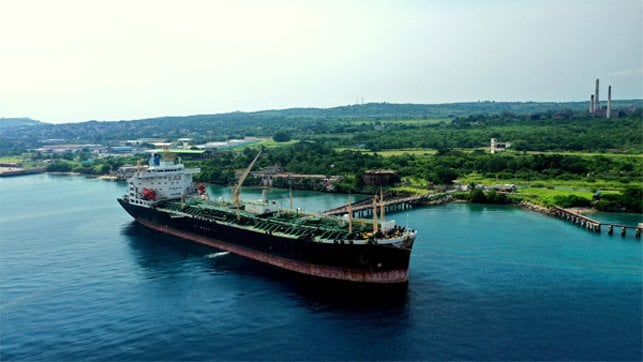
tanker in Cuba
A tanker at the Cuban port of Matanzas in 2024 (posted by Eduardo Rodríguez Dávila)

Published Mar 29, 2026 6:47 PM by The Maritime Executive


After three weeks of transit and a “cat-and-mouse” game crossing the Atlantic, the Russian-flagged tanker Anatoly Kolodkin is ready to reach Cuban waters late on Sunday and dock by Monday or Tuesday. Sunday afternoon, The New York Times reported, citing “a U.S. official brief on the matter,” that the Trump administration has decided to let the vessel proceed to Cuba.

Russian officials have spoken for weeks in support of the Cuban regime and people. They had said they would be sending humanitarian aid and denounced the U.S. pressure campaign. Cuba has not received an oil shipment since early January, after Nicolás Maduro was deposed in Venezuela, which had been the island’s main supplier.

Trump has said he could do anything he wanted with Cuba, and he would have the honor “of taking it.” However, U.S. officials have been quietly saying they would consider a humanitarian move for the island, which in recent weeks suffered two island-wide power failures. Residents are living with fuel rationing, but the key concern, in addition to power, is the supply of water.

The Anatoly Kolodkin, loaded with 730,000 barrels of crude at Primorsk, Russia, departed on March 8. Someone aboard the vessel had set its AIS transmission for most of the crossing indicating the destination as “Atlantis.” By Sunday, however, the vessel had changed its AIS to read Matanzas, Cuba, arriving on March 31. Its AIS signals have shown the tanker moving at 12 to 13 knots, and by Sunday afternoon, it had passed the eastern tip of Cuba and was sailing along the north shore.

Open source analysis showed the Trump administration had available at least two Coast Guard cutters, USCG Tahoma near Florida and USCG Richard Etheridge south of the Florida Keys. The landing craft USAV Wilson Wharf is also off the coast of Cuba, and an unnamed warship is also north of the Bahamas. 

Unconfirmed reports said last month the USCG had been used to intimidate at least one smaller product tanker from approaching Cuba. It was chased off to the coast of the Dominican Republic. Another Hong Kong-flagged product tanker is a bit of a mystery. It loaded diesel in Russia, but in the middle of the Atlantic, started sending messages saying “not under command” and varying course. It vanished, with maritime AI data firm Windward suggesting it might have snuck into Cuba using the AIS signals as a diversion.

Others suspect the product tanker, Sea Horse, ended up diverting to Trinidad, where it likely resold its cargo. The ship is now anchored off Venezuela.

Analysts highlight that even if the U.S. is letting this cargo land in Cuba, it only gives the government a few days. It could take 15 to 20 days, sources told Agence France-Presse, for Cuba to refine the crude and another five to 10 days to deliver it. It will also have to choose to use the diesel produced for power generation, transportation with buses or trains, or possibly to fuel tractors and other farm equipment. They expect it will yield about 250,000 barrels of diesel, which would meet demand for about 12.5 days.

The High Cost of Canceling Offshore Wind in the United States


  • The U.S. will reimburse TotalEnergies nearly $1 billion to abandon offshore wind projects that could have generated over 4 GW of clean power.

  • In exchange, the company will reinvest in U.S. oil, gas, and LNG infrastructure, marking a sharp policy pivot.

  • The move comes as global energy markets tighten due to geopolitical conflict and rising demand from AI and data centers.

Donald Trump’s hatred for wind farms reached a new peak this week. The President announced that the United States will pay $1 billion in taxpayer dollars to a French company to not build planned wind farms in leased federal waters off the coast of New York and North Carolina. Together, those wind projects would have supplied more than 4 gigawatts of clean electricity for households and businesses in the United States.

Under the unusual deal, the French energy giant TotalEnergies would abandon its planned wind farms and annul the lease deal it made during the Biden administration. After the U.S. Treasury reimburses the company the $928 million it paid for those leases, the deal stipulates that TotalEnergies will reinvest that money in oil and gas projects in the United States. This would include a facility to export liquefied natural gas from Texas, ramping up oil production in the Gulf of Mexico, and building additional gas-powered plants.

“The deal is an extraordinary transfer of taxpayer dollars to a foreign company for the purposes of boosting the production of fossil fuels, a main driver of climate change, while throttling offshore wind power,” reads a New York Times article published earlier this week.

While the Trump administration’s decision to axe a planned domestic energy project seems fuelled by personal vendetta and long-standing hatred for wind energy rather than energy security strategy, for France’s TotalEnergies, the deal is reportedly a pragmatic one. “When the Trump administration came to power and began setting U.S. energy policy, we said that we’ll have to reconsider, clearly, these offshore wind project developments,” says Patrick Pouyanné, the CEO of TotalEnergies. He said that without the Biden-era clean energy subsidies that have been cut by the Trump administration, the margins for such a project become much tougher in the United States. A $1 billion payout is therefore a pretty good alternative.

“To be clear, we don’t renounce onshore wind,” Pouyanné went on to say. “We continue to invest in onshore solar, onshore wind, batteries [in other countries].”

This is just the latest in a long series of attacks on ongoing offshore wind projects in the United States on the part of the Trump administration. Last year, Trump tried to order an immediate halt to the construction of five wind projects along the East Coast of the U.S., but judges overturned this ruling across the board. This failure has led to the administration’s current tactic, paying off companies to cancel their wind power projects before they’ve even begun.

This most recent deal comes at a pivotal time in global energy markets. While it’s somewhat puzzling that the Trump administration would choose to derail plans that would boost the United States’ energy independence and resilience to oil market shocks, it stands to reason that the U.S. would be doing everything it can to boost liquefied natural gas output as oil and gas prices soar across the globe. Europe will also benefit from an increased flow of LNG out of the United States, which would not require navigating the chaos in the Strait of Hormuz.

The Strait of Hormuz, through which one-fifth of global oil trade passes on a normal day, has been closed to nearly all traffic for nearly a month now as the United States and Israel continue to wage war in Iran, and that closure is not likely to reverse any time soon. This energy crisis comes on top of another concurrent threat to global energy security – the rapid rise of AI and data centers, which have sent energy growth trends skyrocketing and global leaders scrambling to shore up energy security strategies.

By Haley Zaremba for Oilprice.com


Washington Plans $1 Billion Deal to Kill Wind Power as Energy Prices Rise

  • The U.S. plans to reimburse TotalEnergies $928 million to cancel offshore wind leases and halt future development.

  • The move reflects a broader policy shift away from renewables toward oil and gas amid geopolitical energy disruptions.

  • Critics argue the decision will increase energy costs and deepen reliance on volatile fossil fuel markets.

United States President Donald Trump will not stop in his efforts to quash offshore wind energy development, as he offers France’s TotalEnergies almost $1 billion to permanently halt its wind projects. The move follows more than a year of Trump badmouthing wind energy, cutting federal financial support for wind projects, and refocusing energy policy on fossil fuels.

Wind contributes around 10 percent of U.S. energy at present, with wind capacity having grown rapidly following the introduction of the Inflation Reduction Act (IRA) and other favourable policies under the Biden administration. In fact, Wind energy has become the cheapest source of new electricity in the U.S. However, since coming into office last January, President Trump has repeatedly taken aim at the wind industry.

Last January, Trump issued an executive order pausing the approval for wind development. He stated that wind projects were “the most expensive form of energy that you can have, by far.” He has often referred to wind farms as an eyesore, calling turbines ugly, as well as falsely claiming that offshore wind projects kill whales and overstating the impact of turbines on the bird population. Trump also suggested that the lifespan of the average wind turbine is just eight years, when it is actual

Trump paused several offshore wind projects in the United States last year, as he put increasing pressure on the industry to halt development. However, in February, a federal judge threw out the Interior Department’s halt work order on a multibillion-dollar wind farm off the coast of New York State, making it the fifth time that U.S. courts have ruled against the Trump administration’s efforts to stop offshore wind development. Judge Royce Lamberth of the U.S. District Court for the District of Columbia issued a preliminary injunction with the intention of allowing the developer of the New York project, Sunrise Win,d to restart construction while the broader legal battle continues.

Now, in the face of rising energy prices linked to the ongoing Iran War (which the U.S. started), the Trump administration is looking to use any means possible to halt offshore wind development. The federal government has announced plans to pay French energy major TotalEnergies almost $1 billion to scrap plans to build wind farms off the U.S. East Coast.

U.S. Interior Secretary Doug Burgum announced the deal on Monday at the annual CERAWeek conference in Houston, where he appeared alongside TotalEnergies CEO Patrick Pouyanne. The agreement states that TotalEnergies must give up two offshore leases it had purchased off New York and North Carolina, and, in response, the Interior Department is expected to reimburse the company the $928 million it paid for the leases under Joe Biden.

“We’re partnering with TotalEnergies to unleash nearly $1 billion that was tied up in a lease deposit that was directed towards the prior administration’s subsidies that were pushing expensive weather-dependent offshore wind,” said Burgum.

As part of the agreement, TotalEnergies has pledged not to develop any new offshore wind projects in the United States and will invest almost $1 billion in the development of four trains at the Rio Grande LNG plant in Texas, and the development of upstream conventional oil in the U.S. Gulf and shale gas production this year, according to a U.S. Interior Department statement.

Sam Salustro, a senior vice-president of pro-offshore wind group Oceantic Network, said in a statement, “This is political theatre meant to obscure the fact that offshore wind capacity is being pulled out of the pipeline when energy prices are skyrocketing, even as other offshore wind projects continue delivering reliable and affordable power to the grid.” Salustro added, “Paying to remove affordable, homegrown energy out of the equation leaves American consumers struggling to pay their electricity bills.

The move to kill offshore wind comes during the biggest oil supply disruption in history, which is driving up energy prices higher and higher every week that the conflict continues. Lena Moffitt, the executive director of the climate advocacy group Evergreen Action, believes that “Trump is deliberately deepening our dependence on the same volatile fossil fuel markets his reckless war is destabilising – while destroying the homegrown clean energy that could protect Americans from that volatility.”

Despite the Trump administration’s best efforts to restrict offshore wind development, several projects have gone ahead in recent months, with support from federal courts. The Vineyard Wind project, off the coast of Massachusetts, was completed in March, while Revolution Wind off Rhode Island’s coast launched operations just a few days before.

At a time when U.S. consumers fear rising energy bills (after a year of repeated cost increases), the Trump administration is continuing to attack offshore wind energy, as it favours the development of the country’s fossil fuel resources. The Trump administration will now pay almost $1 billion to halt TotalEnergies offshore wind plans, despite a federal court previously ruling in favour of the French firm’s wind projects.

By Felicity Bradstock for Oilprice.com


'Every housewife could be CEO of Rheinmetall': Zelenskyy hits back at German weapons boss

The logo of German arms manufacturer Rheinmetall is pictured in Unterluess, Germany, Wednesday, Aug. 27, 2025
Copyright AP Photo

By Sasha Vakulina
Published on 

German defence company Rheinmetall issued a public statement expressing respect for Ukraine’s defence manufacturers after its CEO mocked Ukrainian weapons and drone producers over the weekend in sexist remarks.

Ukrainian President Volodymyr Zelenskyy has responded sharply to remarks by Germany’s Rheinmetall CEO Armin Papperger, who dismissed Ukraine’s drone industry as “housewives with 3-D printers in the kitchen.”

“If every housewife in Ukraine really can produce drones, then every housewife could be the CEO of Rheinmetall,” Zelenskyy said, praising Ukraine’s defence industry for reaching “this high standard.”

Papperger, in an interview with The Atlantic, described Ukraine’s weapons production as unremarkable, likening it to “playing with Legos.”

His comments triggered widespread backlash in Kyiv.

Rheinmetall later issued a statement expressing “utmost respect” for Ukraine’s defence sector, highlighting the “innovative strength and fighting spirit of the Ukrainian people,” though it did not apologise for the CEO’s remarks.

Zelenskyy told journalists via WhatsApp that Ukraine competes “not with rhetoric, but with technology and results,” pointing to successes on land, in the air and at sea.

He added that Ukraine’s defence industry “will take, and is already taking, its place in the world.”

Alexander Kamyshin said Ukrainian drones have destroyed more than 11,000 Russian tanks. Officials and social media users responded with hashtags like #LegoDrones and #MadeByHousewives.

Ukrainian Prime Minister Yulia Svyrydenko called Papperger’s remarks sexist, saying: “Europe’s defence is powered by Ukrainian ‘housewives’. Ukrainian women are an essential part of Ukraine’s war effort and Europe’s security. They have stepped into roles once seen as male-dominated, bringing energy, discipline and determination.”

The statement was echoed by the head of Ukraine's Mission to NATO Alyona Getmanchuk.

Over 70,000 women serve in the Armed Forces of Ukraine, with nearly 20,000 in combat roles. Many of them work as drone operators and developers.

Kyiv officials say women-drones operators took part in last year’s “Spiderweb” operation, in which more than 100 Ukrainian drones struck air bases deep inside Russia, targeting nuclear-capable long-range bombers.

Germany’s Rheinmetall, one of Europe’s largest arms manufacturers, has become a major supplier to Ukraine, providing tanks, 155mm artillery, mortar shells and surveillance drones.

The company’s chief executive officer, Armin Papperger, sparked controversy with comments dismissing Ukraine’s drone industry as “housewives with 3-D printers in the kitchen,” coming as Volodymyr Zelenskyy was touring the Gulf and signing defence agreements.

These deals include cooperation on missile and drone threats, with Ukrainian specialists deployed to several countries to assist with air defence and drone interception systems.

Papperger’s remarks have also sparked wider debate on defence innovation. Four years into Russia’s full-scale invasion, drones are estimated to cause around 80% of combat casualties on both sides.

Germany and Ukraine have launched a joint venture between Germany’s Quantum Systems and Ukraine’s Frontline Robotics.

The facility, expected to produce up to 10,000 drones within a year, is the first Ukrainian drone production line in Germany and forms part of Kyiv’s effort to expand arms manufacturing in Europe amid rising demand for unmanned systems.

Ukrainian companies now produce around four million drones of various types each year.


Ukraine Sustains Unrelenting Nightly Attacks on Russia’s Baltic Oil Ports

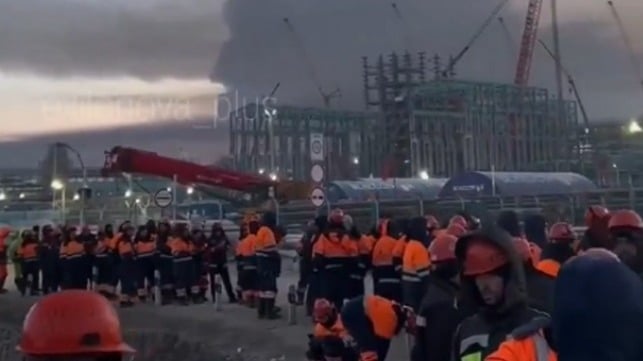
fire at Russia's Ust-Luga oil terminal
Smoke rising from Ust-Luga after the overnight attacks (screen grab from Exilenova+)

Published Mar 29, 2026 4:17 PM by The Maritime Executive


Ukrainian officials are reporting that they have maintained a series of unrelenting attacks designed to dramatically impact the oil export operations on the Baltic. Overnight into Sunday, they staged what they said was the fifth consecutive nightly attack on the Russian terminal at Ust-Luga.

The governor of the Leningrad region, Alexander Drozdenko, confirmed the attacks in a series of social media postings. He warned residents, initially saying they had destroyed 29, then 31, and then 36 drones. He also warned that additional attacks were possible throughout the day, with air defense forces on alert.

He sought to downplay the level of damage but confirmed there was damage and fires at Ust-Luga from the most recent attack. He reported that additional firefighting resources had been called in from the Leningrad region and St. Petersburg, including two fire trains. He later reported the fires had been contained while also saying drone debris had damaged a nearby residential building.

Satellite pictures, however, seem to show more extensive damage. Residents have been warned not to post photos, but some are leaking onto social media showing large plumes of smoke and workers evacuated. Ukraine asserted that as much as 40 percent of the export capacity has been impacted.

The attacks have alternated between Ust-Luga, which Reuters says ships 700,000 barels were day, and Primorsky, which it says handles one million barrels per day. Storage tanks and loading facilities are believed to have been damaged, as well as railroad tracks. Bloomberg notes the two terminals handle nearly half of Russia’s crude oil exports.

It is not the first time Ukraine has struck the terminals. They hit Ust-Luga in 2025. Volodymyr Zelensky told reporters, however, that long-range drones are becoming more effective. He said they are being technically refined.

Zelensky asserted that the systematic targeting of the oil operations, including also hitting refineries, was in response to Russia’s attacks over the past few months on Ukraine’s energy infrastructure. “We responded with a strong blow, reducing the possibility of Ust-Luga,” he said.

Ukraine’s Security Service confirmed that they had hit the two terminals on successive days. Yevhenii Khmara said they were aiming at reducing Russia’s ability to finance the war through oil revenues. The strikes come as oil prices skyrocketed above $100 pr barrle due to the war with Iran.

Russian officials said they had shot down a total of 155 Ukrainian drones over 16 regions last night. It responded by launching 442 drones and one missile into Ukraine.