
.jpeg)
The United States has allowed a Russian government-owned oil tanker to break its own blockade of Cuba, delivering the fuel-starved island its first significant energy shipment in three months, as President Donald Trump said the cargo would do little to alter Havana's fate.
The Anatoly Kolodkin, a sanctioned Russian state vessel carrying an estimated 730,000 barrels of crude oil, arrived at the port of Matanzas on March 30 after Washington chose not to deploy the Coast Guard vessels stationed in the region to block its passage. A US official told the New York Times ahead of the vessel's arrival, speaking on condition of anonymity, that the administration did not intend to intervene.
Speaking to reporters aboard Air Force One on March 29, Trump confirmed the decision. "We don't mind having somebody get a boatload, because they have to survive," he said. "I told them, if a country wants to send some oil into Cuba right now, I have no problem with that. Whether it's Russia or not."
But he was dismissive of the shipment's significance. "Cuba is finished," Trump said. "They have a bad regime. They have very bad and corrupt leadership. And whether or not they get a boat of oil, it's not going to matter." He also brushed aside suggestions that allowing the delivery amounted to a concession to Moscow. "It doesn't help him. He loses one boatload of oil, that's all it is," Trump said of Russian President Vladimir Putin. "If he wants to do that, and if other countries want to do it, it doesn't bother me much."
He also issued a fresh warning, telling reporters: "Cuba's going to be next. Cuba is a mess, it's a failing country and they're going to be next . . . Within a short period of time, it's going to fail and we will be there to help it out." The remarks followed Trump's statement at an investment conference on March 27 that "Cuba is next, by the way" after the Iran campaign.
The Kremlin welcomed the tanker's arrival and offered a notable diplomatic disclosure: spokesman Dmitry Peskov said energy supplies to Cuba had been discussed with the US ahead of the delivery, suggesting the shipment had been tacitly negotiated between Washington and Moscow. Russia "considers it its duty not to stand aside, but to provide the necessary assistance to our Cuban friends," Peskov told reporters on March 30.
The Anatoly Kolodkin's arrival stands in contrast to the fate of a second Russian-origin cargo that never reached the island. The Hong Kong-flagged tanker Sea Horse, carrying around 200,000 barrels of Russian diesel loaded via a ship-to-ship transfer, spent weeks stranded in the Atlantic before diverting to Venezuelan waters, according to LSEG ship-monitoring data cited by Reuters. The reasons for the diversion were not disclosed, though the vessel's Hong Kong registry may help explain its caution: China, unlike Russia, retains substantial trade exposure to Washington and has been considerably more careful about running afoul of US tariff threats. As of March 27, the Sea Horse had yet to discharge its cargo off the Venezuelan coast.
The delivery represents a significant, if temporary, reprieve for an island that has been brought to its knees by months of fuel shortages. Cuba's national power grid, heavily dependent on ageing oil-fired generators, has collapsed three times in March alone, leaving millions without electricity for prolonged periods. Cuban officials have said the healthcare system is buckling under the strain, with surgical waiting lists swollen to more than 100,000 patients, among them over 11,000 children. The United Nations has warned that hospitals have been struggling to maintain emergency and intensive care services.
Analysts cautioned against reading too much into the shipment. "It buys them time," said Jorge Piñón, a former oil executive who studies Cuba's energy system at the University of Texas at Austin, as quoted by the NYT. "But this is not a magic wand that all of a sudden, by the arrival of this tanker, all of their problems are solved." Piñón estimated the oil would take roughly three weeks to refine into usable products such as diesel, gasoline and fuel oil, and a further week to distribute across the country. According to analysts cited by the Associated Press, the cargo could be refined into roughly 180,000 barrels of diesel, sufficient to cover around nine to ten days of the island's needs, meaning Cuba could exhaust the supply in under a month.
Diesel is the most acute shortage, Piñón noted, as it powers trucks, tractors and a significant portion of the island's smaller power plants. Humanitarian supplies have piled up undistributed, with delivery trucks unable to operate for lack of fuel. He expected Havana to ring-fence a share of the cargo for its military and security apparatus rather than releasing it all for civilian use. "This is going to give diesel to the police, to the military units, to basically the whole apparatus of the Cuban government," he said.
The decision not to intercept the Anatoly Kolodkin avoids what would have been a potentially explosive confrontation with Moscow just off the Florida coast, at a moment when Ukraine peace talks are tentatively under way and US forces remain engaged in a military campaign against Iran that has sent oil prices surging to their highest in years. Russia, already heavily sanctioned over its invasion of Ukraine, has little additional trade exposure to US reprisals – a point the Kremlin has made repeatedly.
The Trump administration's de facto blockade has reshaped Cuba's energy landscape since January, when the US-led operation to remove Venezuelan president Nicolás Maduro severed the island's dominant source of subsidised oil. A subsequent executive order threatening tariffs on any country supplying fuel to Cuba successfully deterred Mexico and other potential suppliers, though Russia, with almost no bilateral trade with Washington to protect, proved a harder target to deter.
Secretary of State Marco Rubio, who has openly called for regime change in Havana, reiterated that position last week. "Cuba's economy needs to change, and their economy can't change unless their system of government changes," he told reporters.
Cuba has responded with characteristic defiance. Its deputy foreign minister, Carlos Fernández de Cossío, said last week that the island's military was actively preparing for the possibility of US military aggression. Yet behind the combative public posture, the communist regime has been engaged in backchannel talks with Washington, navigating, as it has before, between ostentatious defiance and private pragmatism. It is a balancing act that grows harder to sustain with each passing blackout.
Russian Oil Tanker Arrives Off Cuba Despite U.S. Ordered Embargo
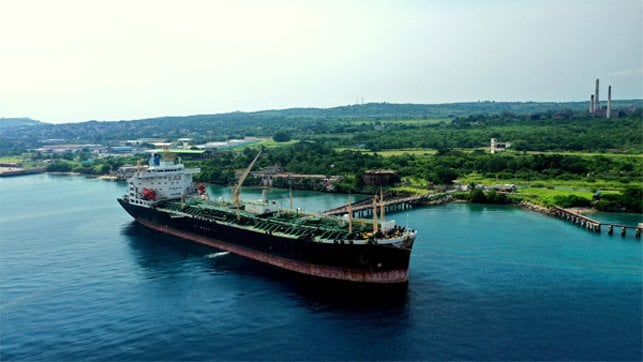
After three weeks of transit and a “cat-and-mouse” game crossing the Atlantic, the Russian-flagged tanker Anatoly Kolodkin is ready to reach Cuban waters late on Sunday and dock by Monday or Tuesday. Sunday afternoon, The New York Times reported, citing “a U.S. official brief on the matter,” that the Trump administration has decided to let the vessel proceed to Cuba.
Russian officials have spoken for weeks in support of the Cuban regime and people. They had said they would be sending humanitarian aid and denounced the U.S. pressure campaign. Cuba has not received an oil shipment since early January, after Nicolás Maduro was deposed in Venezuela, which had been the island’s main supplier.
Trump has said he could do anything he wanted with Cuba, and he would have the honor “of taking it.” However, U.S. officials have been quietly saying they would consider a humanitarian move for the island, which in recent weeks suffered two island-wide power failures. Residents are living with fuel rationing, but the key concern, in addition to power, is the supply of water.
The Anatoly Kolodkin, loaded with 730,000 barrels of crude at Primorsk, Russia, departed on March 8. Someone aboard the vessel had set its AIS transmission for most of the crossing indicating the destination as “Atlantis.” By Sunday, however, the vessel had changed its AIS to read Matanzas, Cuba, arriving on March 31. Its AIS signals have shown the tanker moving at 12 to 13 knots, and by Sunday afternoon, it had passed the eastern tip of Cuba and was sailing along the north shore.
Open source analysis showed the Trump administration had available at least two Coast Guard cutters, USCG Tahoma near Florida and USCG Richard Etheridge south of the Florida Keys. The landing craft USAV Wilson Wharf is also off the coast of Cuba, and an unnamed warship is also north of the Bahamas.
Unconfirmed reports said last month the USCG had been used to intimidate at least one smaller product tanker from approaching Cuba. It was chased off to the coast of the Dominican Republic. Another Hong Kong-flagged product tanker is a bit of a mystery. It loaded diesel in Russia, but in the middle of the Atlantic, started sending messages saying “not under command” and varying course. It vanished, with maritime AI data firm Windward suggesting it might have snuck into Cuba using the AIS signals as a diversion.
Others suspect the product tanker, Sea Horse, ended up diverting to Trinidad, where it likely resold its cargo. The ship is now anchored off Venezuela.
Analysts highlight that even if the U.S. is letting this cargo land in Cuba, it only gives the government a few days. It could take 15 to 20 days, sources told Agence France-Presse, for Cuba to refine the crude and another five to 10 days to deliver it. It will also have to choose to use the diesel produced for power generation, transportation with buses or trains, or possibly to fuel tractors and other farm equipment. They expect it will yield about 250,000 barrels of diesel, which would meet demand for about 12.5 days.

No comments:
Post a Comment