INTERVIEW: Democratic Party of Iranian Kurdistan
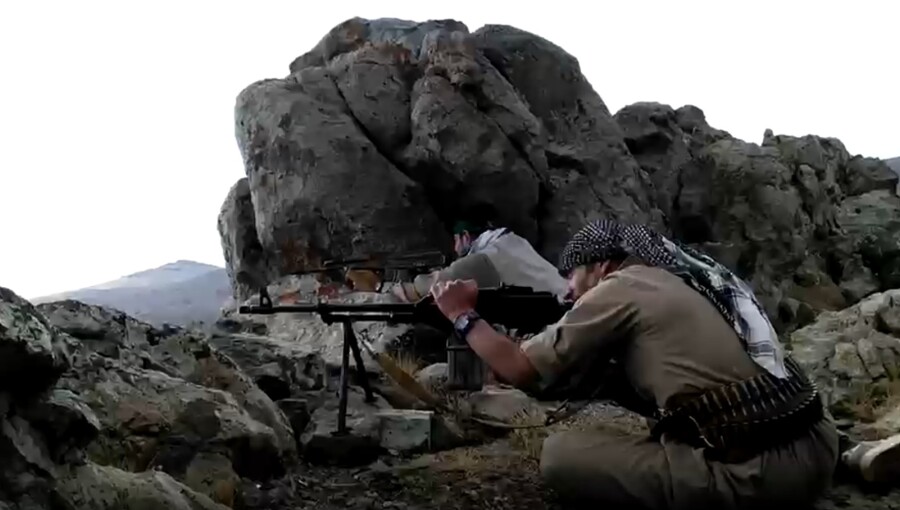
In the eyes of the government of Iran, the Democratic Party of Iranian Kurdistan (PDKI) is a terrorist organisation operating its own armed group as part of its push for self-determination for the Kurdish people of Iran – a population of between seven and 15mn depending on the source.
Banned by Tehran, the PDKI is the oldest active Kurdish political party in existence, and unable to operate openly in Iran, is currently based in the Erbil Governorate region, part of the Kurdistan Region of northern Iraq.
The PDKI is not, however, listed as a terrorist organisation by any major international body including the United Nations, the European Union or the United States Department of State.
Speaking through Bakhtyar Osmany, head of the Asylum Department of the PDKI, the group gave Bne IntelliNews an assessment of the PDKI view of the current conflict involving Iran, the United States and Israel.
“The ongoing conflict between the Iranian regime and the United States and Israel is largely rooted in the regime’s issues within the country, especially in the repression of the people, and Iran’s role in creating instability in the region and beyond” Osmany said. “As a result of the regime’s internal policy of severe domestic repression, there has been widespread public resentment toward the government, and therefore, not many people are opposed to the idea of the regime being overthrown by foreign forces.
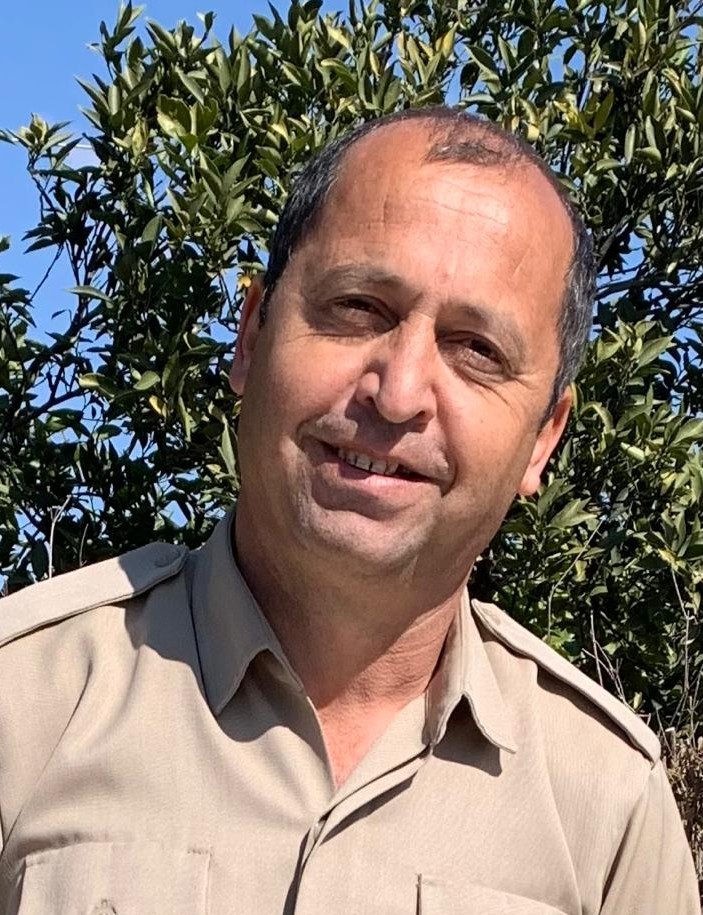
Bakhtyar Osmany
“As Kurds in Iran, the Islamic Republic has been our number one enemy for the last 47 years. We have fought against it at great cost, making it impossible for the regime to impose its policies in Iranian Kurdistan. We see more and more coming to agree with what we have long been pushing for, as the regime is unable to make reforms, and that negotiations with the regime would not lead to any meaningful results.”
As a result, the current conflict “creates favourable conditions for Kurdish and Iranian opposition movements, and opens the door for broader alliances aimed at regime change” in Iran.
Questioned on whether or not the PDKI is currently engaged in, or preparing for, armed operations in light of the situation in Iran, Osmany states that the PDKI is “not currently engaged in armed operations” but adds that “given our long history and experience, we retain the capability to enter an armed phase if we deem it necessary.”
Turning to Iranian strikes on Kurdish opposition areas in the Kurdistan Region of Iraq, Osmany confirms that “The Iranian regime has opposed us in every possible way including assassinations, bombings and poisoning, but in recent years has mostly carried out missile attacks and drone attacks. For example, in 2018 it targeted our refugee camps and headquarters with missiles that left dozens dead and many wounded. It is worth noting, however, that the (Iranian) regime failed to achieve its goals, even with missile attacks on our headquarters. On the contrary, we consider ourselves even stronger now.”
As a group that has historically moved from seeking outright independence in Iran, to advocating autonomy within a Federal Iran, Osmany also gives an insight into the PDKI’s core political objectives in 2026.
“Our main goal is to achieve political rights and national demands. We seek to have a meaningful role in shaping Iran’s future and participating in decision-making. A Federal Iran would mean decentralisation of power, a non-centralised government in Tehran, and guarantees for Kurdish rights, such as education in our mother tongue and fair access to national and regional resources without repressive systems as seen under past monarchies or the current regime. At present, the Islamic Republic remains a major obstacle that must be removed.”
However, after decades of intermittent armed struggle since 1979, Osmany indicates the lessons learnt from such a drawn out campaign led to action forced upon the PDKI. “We did not choose armed struggle; in fact, it was imposed on us by the regime’s brutality against our existence and as our national dignity was unfolding. The unique hardship of our armed struggle has strengthened our resilience and revolutionary spirit. An important lesson we have learned from our eight-decade long struggle is that no single method will see us achieve our goals. Rather, it will be a combination of different methods that sees us achieve our aims and objectives.”
Politically, it is well reported that the PDKI identifies with democratic socialist principles. Asked how the PDKI would use these principles to shape governance in a future, post-Islamic Republic Iran, Osmany answers “social justice has always been at the centre of our agenda” continuing “we aim at bringing about a system that has the capacity of providing the broadest possible access to public, financial, and social services for the largest segments of society.”
In achieving these political goals though, the PDKI is building upon what Osmany calls “political mobilisation and international efforts for regime change and building broader alliances against the Islamic Republic.”
Part of this can be seen in the protest movements within Iran – protests Tehran has cracked down upon with levels of brutality that some sources claim has led to the deaths of tens of thousands of protesters. Addressing this, Osmany says the PDKI is “not separate from protest movements; we are part of them. Kurdish people have repeatedly responded positively to our calls for strikes and demonstrations. A clear example is the ‘Woman, Life, Freedom’ movement, which began in Kurdistan and spread across Iran” although he makes no mention of the most recent round of protests and Iranian response.
On the role of external actors such as the US or others in the region, and how these are seen by the PDKI, Osmany explains “if they aimed to bring about genuine democracy in the country as one of the results of the current war, it would be in our mutual interests for them to consider us, the Kurdish forces, as one of the influential forces on the ground. We can bring about stability, help Iran to turn into a democratic country, and preserve constructive relations with them, especially with the United States.”
And after the recent formation of a broader coalition of Iranian Kurdish political groups drew international attention, Osmany sees this as having “accelerated decision-making, strengthened unity of voice, improved cooperation, and enhanced the political standing of Kurdish groups in international forums” although on Kurdish groups sometimes differing in ideology and tactics across the region, he sees the PDKI navigating these differences in a positive manner.
“This is one of the strong points of the coalition of the Kurdish political parties. As a democratic political party that has been fighting to bring about democracy for 80 years, we see the differences within the coalition as a reflection of Kurdish society”he says, before looking beyond Iran at wider PDKI engagement with Kurdish movements in neighbouring countries.
“Kurds share common aspirations, as well as language and history. Our collective goal is to achieve human and political rights, to free ourselves from oppression and to attain freedom.”

No comments:
Post a Comment