Monday, March 30, 2026


MEPs rally behind Magyar in Hungarian elections despite ideological divides

Opposition leader Péter Magyar is a member of the European Parliament since 2024
Copyright Copyright 2026 The Associated Press. All rights reserved

By Vincenzo Genovese & Sandor Zsiros
Published on 

A vast majority of European lawmakers hopes to see Orbán’s fall in the upcoming Hungarian elections, widely considered a watershed moment in Brussels. Even left-wing lawmakers are rooting for Orbán's rival, Péter Magyar, in a make-or-break vote for the future of Europe.

With two weeks to go until Hungary’s elections, the campaign is also heating up in Brussels.

While the European Commission has kept a low profile to avoid any controversy, European lawmakers are speaking up.

Euronews estimates that most parliamentary groups—together holding more than three-quarters of MEPs—are against Prime Minister Viktor Orbán and, to some extent, favor opposition leader Péter Magyar.

"This vote is an absolute game-changer," according to Andrey Kovatchev, a prominent member of the European People's Party. "The group is in full support of Tisza [Magyar's party]," he told Euronews, despite recent frictions on issues such as the EU-Mercosur trade deal. "Overthrowing Orbán is very important for the future of the EU."

According to calculations made by the think tank EU Matrix, Hungary has been the country that most often sided against other member states' decisions in the 2020s, which could explain why many in Brussels would favour a more conciliatory government than Orban’s.

Several lawmakers agree that an Orbán defeat would spare Europe one of its most persistent internal challenges, particularly in light of recent revelations about the Hungarian foreign minister calling Russia's counterpart, Sergei Lavrov, before and after key EU meetings.

“Orbán has long acted as Putin’s man within the EU," German MEP Daniel Freund told Euronews. "His constant vetoes and political maneuvering are undermining European security."

Hungary has been against the decisions taken but the EU Council roughly one in ten times in 2020's
Hungary has been against the decisions taken but the EU Council roughly one in ten times in 2020's EU Matrix

A Fidesz defeat would be a victory for a vast majority of MEPs who have taken a firm position against Hungary’s government in recent years, criticizing corruption, the erosion of the rule of law, and crackdowns on press freedom and political opponents.

During the previous terms, lawmakers for example launched the Article 7 procedure against Hungary—which could ultimately strip the country of its EU voting rights— declared the country an “electoral autocracy,” and asked Budapest to forgo its turn in the Union’s rotating presidency.

In this legislature, the Parliament approved a report that harshly criticized judicial interference, corruption, misuse of EU funds, and attacks on civil society in the country

“[Orbán’s fall] would mean that the voters agree that the rule of law must be restored in Hungary,” Dutch MEP Tineke Strik, rapporteur for the file, told Euronews. “This can only be achieved with his defeat.”

Péter Magyar is everyone's hope, including the left

The Parliament’s opposition to Orbán translates into broad support for his opponent, Péter Magyar, leader of the Tisza party.

“The upcoming elections are decisive, a break-free momentum to return to a free, pluralistic democracy,” Renew Europe group President Valérie Hayer told Euronews, reflecting a widely shared view in the hemicycle, where Hungarian elections are seen as the most important vote of the year.

While Tisza belongs to the center-right European People’s Party, support for a change of government extends beyond right-wing political forces. Magyar has found backing among left-wing lawmakers, even though they oppose much of his stance on environment, migration, and LGBTQ+ issues.

Magyar’s rapid rise in the polls has led to a collapse in support for other opposition parties in Hungary, which had been the main political alternative to Orbán for years.

The Hungarian Socialist Party (MSZP) and Momentum have pulled out of the campaign, directing their supporters to vote for the strongest opposition candidate in each district, usually a Tisza member.

It is rather unusual for liberal and left-wing MEPs to be quietly rooting for a conservative, centre-right politician simply because he is considered more pro-European than the current prime minister.

“In an ideal world, I would like to see my Socialist colleague Klára Dobrev running Hungary," said French Socialist MEP Chloé Ridel, referring to Dobrev, a member of Hungary's socialist party, Demokratikus Koalíció. "But now the priority is getting rid of a corrupted regime, and therefore kick Orbán out."

She hopes that Orbán loses the elections to prevent him from “holding hostage the EU”, even though it is not guaranteed that his opponent would follow through on his campaign promises.

The Greens, who have been among the most vocal MEPs against the Budapest government in recent years, will use their social media “to call upon all Hungarians to go to the vote and bring this system down”, a MEP from the group said.

The Left in the European Parliament does not officially back any candidate, but “looks forward to the fall of Orbán,” a group representative told Euronews.

Who supports Orbán in the Parliament?

Despite a long line of detractors, Orbán still retains some supporters in the European Parliament and across the EU.

European nationalist leaders, including France’s Marine Le Pen and Italy’s Matteo Salvini, showed their support for the current Prime Minister during an event called The "Patriots’ Grand Assembly” on 23 March in Budapest.

Fidesz belongs to the Patriots for Europe (PFE or Patriots), the third-largest in the European Parliament, and Orbán’s government enjoys support even beyond his political allies, with over a hundred MEPs hoping for his reappointment as prime minister.

The Europe of Sovereign Nations (ESN), the other far-right group in the Parliament, will officially support Our Homeland Movement, a minor nationalist force that is part of the group and polls around 6%.

However, ESN MEPs say they admire Orbán for his hard line on migration, his anti-EU and anti-woke narrative.

"I hope that Fidesz remains in government, ideally in a coalition with our partners, as a corrective force. It is no secret that we maintain good relations with Viktor Orbán," Alternative for Germany (AfD) MEP Tomasz Froelich told Euronews, referring to a recent meeting between the Hungarian leader and AfD leader Alice Weidel.

The right-wing European Conservatives and Reformists (ECR) stop short of endorsing Orbán, although some parties within the group, such as Poland’s Law and Justice and Giorgia Meloni’s Brothers of Italy, do support him.

“Our group is not taking a united stand on the Hungarian elections,” co-chair Nicola Procaccini told Euronews, reflecting the different views among national delegations.

 

Architecture of Adaptability: Designing Vessels to Stand the Test of Time

Boksa

Published Mar 29, 2026 4:13 PM by Boksa Marine Design


The marine and maritime industries are currently navigating a sea of rapid technological evolution. For commercial and government vessel owner-operators, the pressure to design vessels that remain relevant for a 30- or 40-year-plus lifespan is industry standard. Whether driven by tightening emissions regulations, the promise of alternative fuels, or the competitive aspects of autonomous operations, the goal is to "future-proof" vessels.

However, in the world of naval architecture and marine engineering, true longevity is not found in a single "silver bullet" solution. Instead, it is the result of a holistic, customized design process that prioritizes flexibility and operational reality over one-size-fits-all promises.

The Complexity of Choice

"The idea of future-proofing can be a little misleading because it implies there is a universal solution, and if you do this, your vessel is going to be covered through for the next several decades," says Boksa Marine Design (BMD)’s President Jeff Kuenning.

In reality, the "best" technology is entirely dependent on the vessel’s specific mission, its marine domain, and its geographic infrastructure. For instance, while electric propulsion is transformative for a ferry on a fixed short-haul route with shore-power, it presents different hurdles for a river push boat.

"What happens when that system breaks down?" Kuenning asks. "They can't wait to fly a tech rep in to fix their system if they're moving along the Mississippi River."

Bridging the Knowledge Gap: The Value of Vendor Relationships

Many operators find themselves overwhelmed by the pace of innovation. Emerging solutions in carbon capture, hydrogen fuel cells, and batteries are hitting the market at record time. Oftentimes, operators do not have the internal resources to vet every new claim, which is why a partnership with an experienced multi-disciplinary engineering firm is essential.

Because firms like BMD maintain deep, technical relationships with global equipment vendors, they serve as a vital filter for the owner.

“We understand not only what a piece of equipment promises on a spec sheet, but how it actually impacts a vessel's design and performance,” says Luke Tiefenthaler, marine systems engineer at BMD.

Owners are increasingly seeking experts who can provide these holistic recommendations, leveraging strong vendor working relationships, practical implementation experience, and an understanding of how to turn complex vendor data into a clear roadmap that meets both short-term operational needs and long-term goals.

The Holistic Design Requirement

A vessel is not a collection of independent parts; it is a single integrated structure. Implementing new technologies often has cascading effects. Consider the impact of onboarding a new hybrid system:

- Weight & Stability: New power systems often weigh more and take up more space, requiring a recalculation of trim and performance.

- Systems Integration: Marine electrical engineers must manage complex power management systems that now govern not just auxiliary and hotel loads but propulsion as well.

- Structures & Auxiliaries: Increased weight may require structural reinforcement, while new power electronics often demand enhanced cooling and ventilation.

"This is why a holistic approach is critical. When naval architects, structural engineers, and systems integrators work in unison, they can identify trade-offs in real-time," says Tiefenthaler. "For example, if a chosen engine or propulsor adds a significant weight or space burden, the naval architect must adjust the hull design, structure, or arrangement to maintain speed, power, range, and/or stability.”

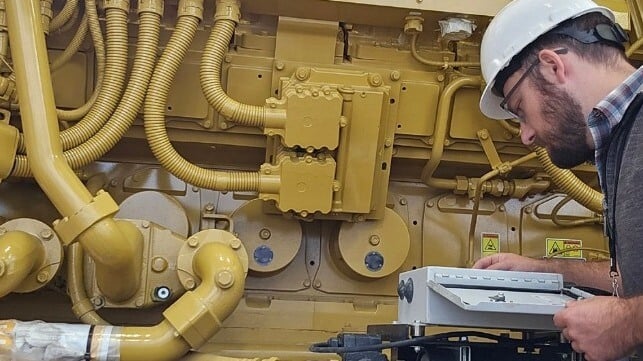
Boksa Marine Design's Marine Electrical Engineer Jordan Anger performs field verification on electrical upgrades to a switchboard.

Innovation You Can Implement Now

While much of this conversation focuses on the future, there are still gains that can be made today for new and existing vessels. In fact, there are technologies available now that don’t require extensive shipyard time or even taking the vessel out of the water.

From advanced fuel-flow meters and automated data-gathering sensors to software-based optimizations, these solutions can immediately reduce fuel consumption and wear on machinery.

"There are enhancements we can make right now to improve a vessel’s performance," says BMD’s Ethan Trupia, senior marine electrical engineer. "We can implement automated systems that fine-tune pumps and fans to run at their peak efficiency points, providing a real rate of return without a massive overhaul."

Flexibility Over Finality

If a design cannot be truly "fixed" for the next half-century, it can and should be made flexible. This involves designing margins into systems to accommodate future growth.

- Electrical Margins: Sizing electrical systems that incorporate additional reserve capacity and adding a more robust communications network to accommodate future data needs allow for the seamless addition of next-generation equipment down the line.

- Structural Allowances: Designing "drop-in" capability for emerging technologies allows an operator to adapt once the supporting infrastructure and regulations catch up.

- Regulatory Foresight: Understanding the trajectory of global emissions ensures a vessel won't be rendered obsolete by a sudden policy shift.

The Role of Systems Integration

As vessels become more computerized, the role of the systems integrator becomes paramount. However, innovation must be balanced with simplicity.

"There’s sometimes a tendency to overcomplicate things where it really benefits to have a voice in your ear to say, 'Let's simplify, let's standardize,'" says Tiefenthaler. “It’s also helpful to have historical knowledge of what’s worked well in the past, to help predict what might work best in the future.”

A resilient system is one that is straightforward to operate, easy to maintain, and backed by a robust redundancy plan.

Proving the Path Forward

The bridge between a conceptual future and an operational reality is built on data. Feasibility, risk, and detailed trade studies are critical “future-proofing” tools in proving that a customized solution will meet objectives, while also defining long-term needs for vessels. By evaluating ROI, engineers provide substantive value.

Ultimately, ensuring a vessel stands the test of time isn't about picking the newest technology; it’s about a deep technical partnership. It’s about understanding the "devil in the details" at the design level to avoid catastrophic issues later.

"Real longevity is achieved through flexible design, holistic integration, and a respect for operational reality," says Kuenning. "This allows us to design and build practical vessels that are ready for whatever the next 40 years may bring."

To learn more about preparing your vessels for future technologies and regulations, contact Boksa Marine Design for a customized consultation.

This message is sponsored by Boksa Marine Design.

The opinions expressed herein are the author's and not necessarily those of The Maritime Executive.


China Merchants Is the Latest to Withdraw from China’s Cruise Market

Chinese cruise ship
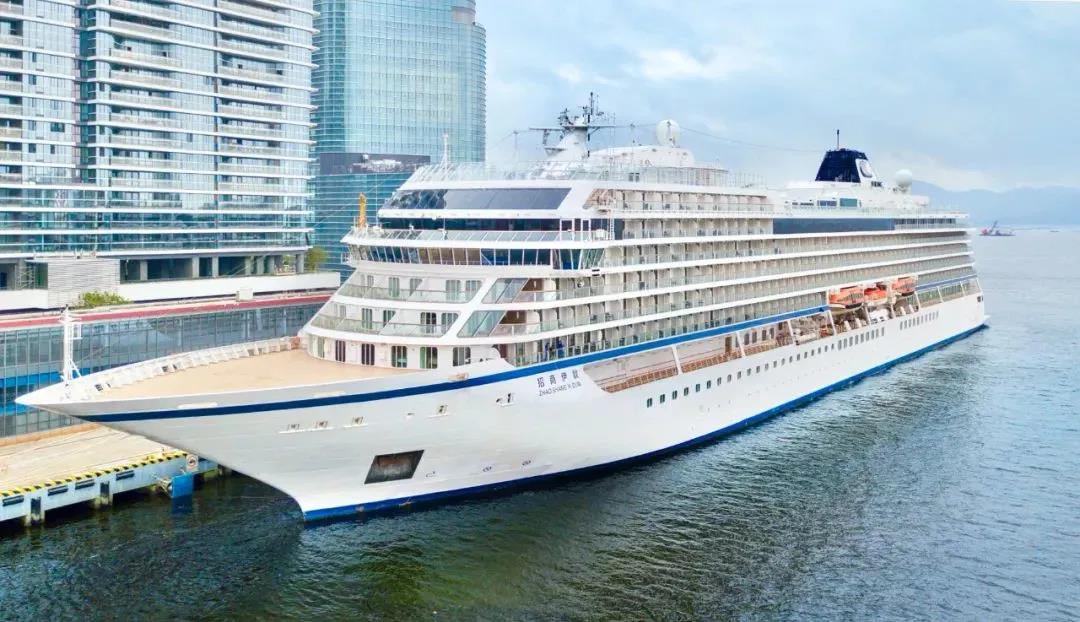
China Merchants Eden (Yi Dun) in Shanghai (China Merchants)

Published Mar 29, 2026 2:46 PM by The Maritime Executive


China Merchants, one of the country’s largest industrial companies and heavily involved in the maritime sector, has abandoned its efforts to develop a luxury Chinese cruise product. The company had launched a joint venture with Viking in 2021, acquiring one of Viking’s cruise ships, but recently put the cruise ship up for sale.

The company had reportedly paid nearly $400 million in 2021 as part of the joint venture to take control of the 745-foot Viking Sun (47,800 gross tons). Built by Fincantieri and introduced in 2017 as the fourth of Viking’s ocean cruise ships, the ship was rechristened Zhao Shang Yi Dun (China Merchants Eden). It was listed in February with the Beijing Equity Exchange, with a minimum price of RMB 2.9 billion (which, depending on exchange rates, could be as much as $420 million).

Bids were due by mid-March, with some speculation that Viking might reacquire the vessel, although it has been quietly removed from Viking’s webpage. China Merchants set strict terms requiring the buyer to remove all China Merchants branding from the ship within one month of completing the purchase, and they were prohibited from marketing the ship with any association or note of its past association with China Merchants. Further, it stated the Viking branding, the names of all the public spaces, including the restaurants aboard, and operating systems are licensed from Viking, but the license is not part of the sale. The buyer can negotiate a new agreement with Viking or relinquish the use of the licensed branding and systems.

The operation had been positioned as a high-end luxury cruise tailored to the Chinese market. However, when it launched in 2021, China was still closed due to the COVID-19 pandemic, and the ship was limited to coastal cruises. It sailed at different times from the ports of Shanghai, Shenzhen, and Tianjin. Pricing was reported to be at the high-end of the Chinese market, and extra tariff options aboard the ship further increased the total cost.

When China finally reopened cruising to the international market, the joint venture attempted to reposition Yi Dun from 5 to 8-day coastal cruises. They introduced a 15-day cruise to Japan and South Korea. Between September and November in 2024 and again in 2025, Viking marketed the ship to the international market for cruises from China. However, reports are that the ship often sailed with 600 passengers, significantly below its 930-passenger capacity, and continued to report financial losses.

For 2026, Viking had planned to reposition the Yi Dun to Europe. Viking had built a successful fly-cruise business from China with its river cruises in the past, devoting some ships to Chinese passengers.


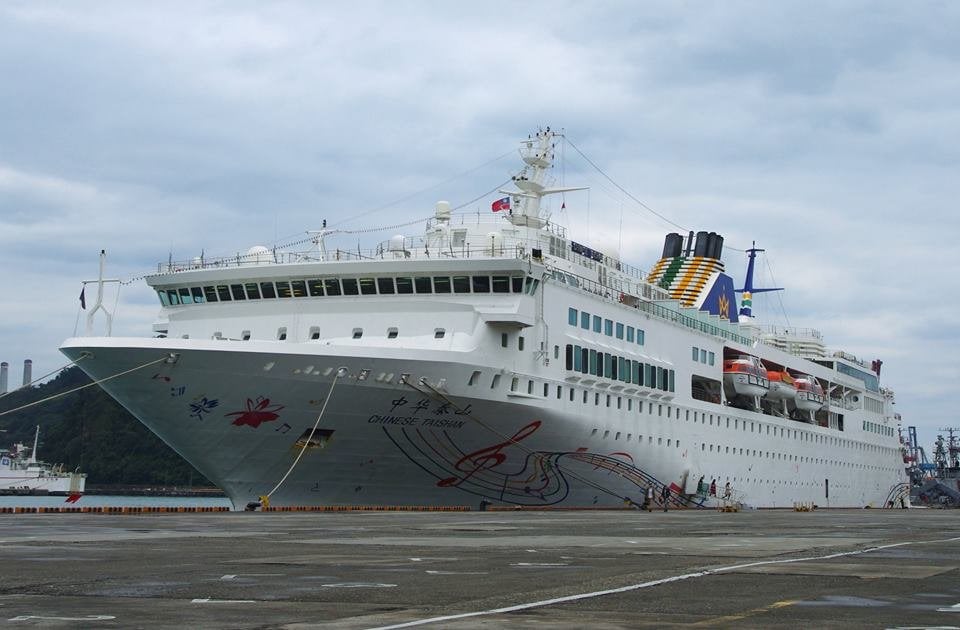
Chinese Taishan - Taiwan International Ports


China Merchants’ decision to exit the cruise market follows smaller companies, including ferry operator Bohai, which earlier this month reported its board of directors was putting its single cruise ship up for sale for $23 million. Bohai paid nearly $44 million in 2014 to acquire a cruise ship, Voyager (24,500 gross tons), from Carnival Corporation’s Costa. The ship entered service in 2000 and was acquired by Costa five years later when the original cruise line owners went bankrupt. She had sailed in China as the Chinese Taishan but, according to reports, never res

China’ Blue Dream Cruises, another small independent firm, went bankrupt earlier this year. It cited geopolitical tensions that had forced it to shift its itineraries away from Japan and South Korea. The company had two cruise ships, with reports that one was placed under arrest for debts, and both have been listed for sale. In addition, a former British cruise ship, which had been acquired by a regional tourism operation and launched as Piano Land, is heading to Spain in July for a new company. The operation was merged into a new Chinese cruise holding company, but the ship built in 1995 has aged out of the Chinese market due to a Ministry of Transport regulation that bars ships more than 30 years of age from operating from mainland China. 

Reports highlight that the Chinese consumer is mostly interested in family cruising and shorter trips focused on the destinations. MSC Cruises and Royal Caribbean International have been successful in re-entering the market with mega cruise ships with extensive amusements, which have a stronger appeal to the Chinese traveler. However, with a less developed marketing base, China remains a more challenging segment for the industry. Most of the Western cruise lines did not reposition ships to homeport in China after the pandemic. The Chinese cruise market, however, continued to show strong growth, with passenger levels up nearly 28 percent for the first 11 months of 2025, and China's Adora Cruises recently saw its second domestically built cruise ship floated ahead of a year-end delivery while the company placed an order for two ships and an option for a third, all to be built in China.


Stena RoRo Takes Delivery of the 13th E-Flexer from the China Merchants

Stena Ro-Ro

Published Mar 29, 2026 8:28 PM by The Maritime Executive


[By Stena RoRo]
 
 
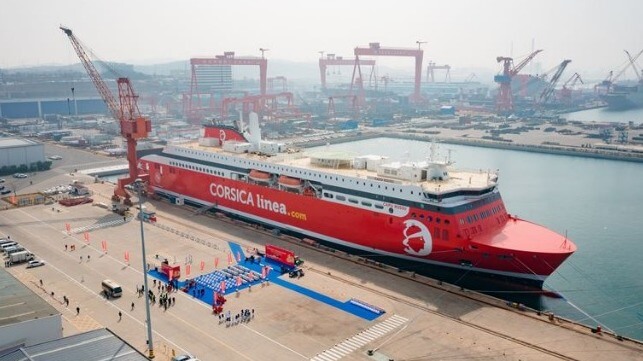
Stena RoRo has taken delivery of the 13th ship in the 15 ship series of E-Flexer RoPax ferries from the China Merchants Industry shipyard in Weihai, China. The ship, named Capu Rossu, was handed over to CORSICA LINEA following the delivery to Stena RoRo. The ship will start its commercial operation mid June and will trade between Marseille and Corsica.

GOTHENBURG, Sweden, March 28, 2026 /PRNewswire/ -- The E-Flexer-series is based on a design which is larger than the typical standard RoPax ferry and designed for flexibility. Each ship will be tailormade for the operators' technical and commercial needs. A highly optimized hull form, multifuel engines and the Battery Power Class notation as well as several other features make this ship one of the most economically friendly ever designed and built.

"Due to today's fast development of the hull form design and propulsion optimization in combination with the Battery Power systems we now start to install on our ships, it is clear that ordering of new ships will be the most important and strongest tool to reduce the CO2 emissions of the ferry industry", says Per Westling, CEO Stena RoRo.

Partnership with China Merchants Industry (CMI) Weihai Shipyard

The ship has been built by the China Merchants Industry Weihai shipyard in China. Stena RoRo has been cooperating with this shipyard since 2016 which has resulted in 19 orders so far. 15 of these have been E-Flexers, 2 NewMax RoRo ships and 2 C-Flexer RoRo ships.

"The cooperation between the CMI Weihai shipyard and Stena RoRo has been instrumental for the successful deliveries of ships and it has made it possible for us to deliver tailormade ships both to our own ferry operator Stena Line but also to several external ferry companies with the highest quality and in time," concludes Per Westling.


Basic specifications:

Length: 203 m

Draught: 6,5 m

Width: 27,8 m

Capacity: 1000 passengers and 2500 lane meters freight

The products and services herein described in this press release are not endorsed by The Maritime Executive.


Oceanwide Expeditions Plans Two Eco-Sail Expedition Cruise Ships

eco-sail cruise ship
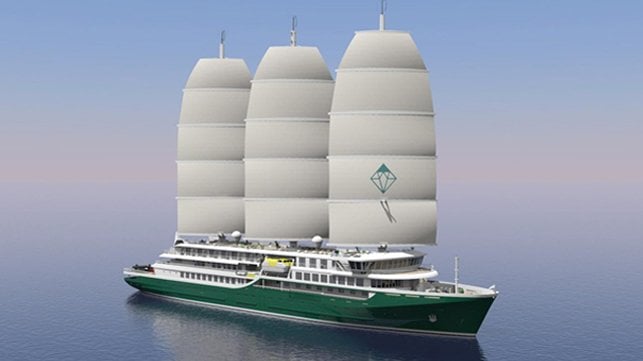
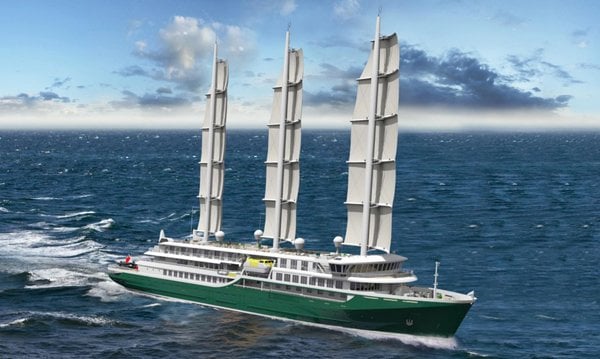
Eco-sail expedition cruise ship planned for up to 146 passengers (Oceanwide Expeditions)

Published Mar 27, 2026 10:13 AM by The Maritime Executive


The Dutch company Oceanwide Expeditions, a veteran polar and expedition cruise operator, has signed a Letter of Intent for the construction and delivery of two eco-sail expedition cruise ships. The unique-looking vessels, which are shown with three giant masts in renderings, join a trend in the expedition segment of the cruise industry, which is at the forefront of adopting wind-assisted propulsion.

Few details were provided on the intended order, other than that the two ships would feature a hybrid sail propulsion system. The company reports that a variety of sustainability-focused features will be built into the design. It said details on the shipyard and the construction timeline would be released when the contract is finalized, and that marketing for the ships would commence in 2027.

The ships, which are expected to enter service in 2029 and 2030, are said to be part of Oceanwide Expedition’s goal of supporting a future for environmentally-conscious polar tourism. The company, which has been operating for over 30 years, currently owns and operates a fleet of four expedition vessels, s/v Rembrandt van Rijn, a three-mast schooner used for expedition cruising among the fjords of Greenland and Spitsbergen, and the ice-strengthened vessels m/v Hondius, m/v Ortelius, and m/v Plancius, deployed in the Arctic and Antarctic.


“Sailing has been part of our DNA from the start, and these eco-sail vessels will integrate modern sustainability features, hybrid propulsion, and a smaller footprint into the same authentic, immersive Oceanwide guest experience. These vessels are a key part of our long-term vision to remain small-scale, operationally flexible, and environmentally responsible,” said Rémi Bouysset, CEO of Oceanwide Expeditions.

The company reports the design of the eco-sail ships will be based on its Hondius, which entered service in 2019. It is 107 meters (351 feet) in length with accommodations for 170 passengers. It was built by Brodosplit in Croatia and is Polar Class 6 (equivalent 1A-Super). The ship was to have been joined in 2021 by a sister named Janssonius. Construction began in 2020, and the ship was launched in March 2021, but has not been delivered due to the financial troubles at the yard.

The new ships will introduce “significant upgrades” both in operations and passenger experience reports, Oceanwide Expeditions. Each will have accommodations for 146 passengers.

Sail-powered cruise ships have traditionally been a niche in the industry, with companies such as Windstar that started in the 1980s. Starting later this year, Orient Express will enter the ultra-luxury cruise segment with the first of two cruise ships outfitted with sails. Its first ship, Orient Express Corinthian, recently set a speed mark for a large sail-powered ship.

The drive for sustainability, especially in expedition cruising, has led to an increased interest in batteries and wind-assisted propulsion. Another expedition cruise line, Atlas Ocean Voyages, recently announced its plans for a 26,000 gross ton sail-assisted expedition cruise ship able to accommodate 400 passengers. Hurtigruten, working with Vard, has also discussed its efforts to design a zero-emission ship for its coastal operations in Norway that would feature retractable sails, while Ponant released details on a concept using sails, carbon capture, and fuel cells.


US Supercarrier Ford on the Move After Four Days of Repairs

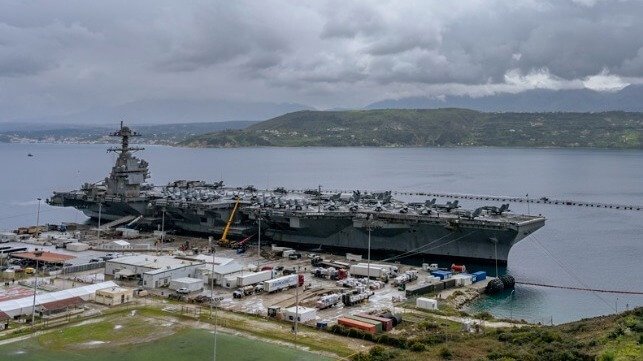
USS Ford at Souda Bay
USS Ford at Souda Bay (USN)

Published Mar 28, 2026 2:41 PM by The Maritime Executive


US Naval Forces Europe confirmed that the carrier USS Gerald R. Ford is back on the move after its short stay at the naval base in Crete. It reported the carrier had arrived at the Port of Split in Croatia on March 29.

The carrier had arrived at the base at Souda Bay, Crete, on March 23 after a transit from the Red Sea, where it suffered a laundry room fire that reportedly spread in the ventilation system, damaging berthing areas. According to the Navy’s statement, personnel from the maintenance base, including structural engineers, naval architects, and other experts, conducted a repair assessment. Working with the ship's personnel and local industry partners, they undertook the rehabilitation of seven berthing compartments affected by the fire.

They also reported that military and federal civilian law enforcement continued investigations into the fire that originated in the ship's laundry facilities. The carrier was at Souda Bay from March 23 to March 26.

Capt. David Skarosi, commanding officer of Gerald R. Ford, said the crew was receiving “some well-deserved liberty" while in Split. They noted it was its second visit to Split during the deployment, having also called there from October 21 to 26 before the carrier was transferred to the Caribbean to support the efforts targeting Venezuela.

The Iranian propaganda efforts have been taunting Ford, saying the carrier never made it into the fight before it was forced to withdraw due to the fire. 

The Navy had been holding the carrier in the northern Red Sea after its transit of the Suez Canal. Today, it said the carrier is traveling with the Arleigh Burke-class guided missile destroyer USS Winston S. Churchill (DDG 81), and is deployed to the U.S. 6th Fleet area of operations.

There has been wide speculation over how long the current deployment will continue. The carrier departed Naval Station Norfolk (Virginia) on June 24, 2025. It has traveled to Norway and the Arctic, the Mediterranean, the Caribbean, returned to the Mediterranean, and gone into the Red Sea. There were additional unconfirmed reports this week that the George H.W. Bush Carrier Group was underway from Virginia after having completed a training program. 

U.S. Central Command today confirmed that USS Tripoli arrived in the U.S. Central Command area of responsibility on March 27. It said the amphibious assault ship serves as the flagship of the Amphibious Ready Group. It highlighted that the group is composed of about 3,500 sailors and marines in addition to transport and strike fighter aircraft, as well as amphibious assault and tactical assets.

Alaska Seeks Interested Buyer to Save 63-Year Old Historic Ferry

Matanuska ferry Alaska
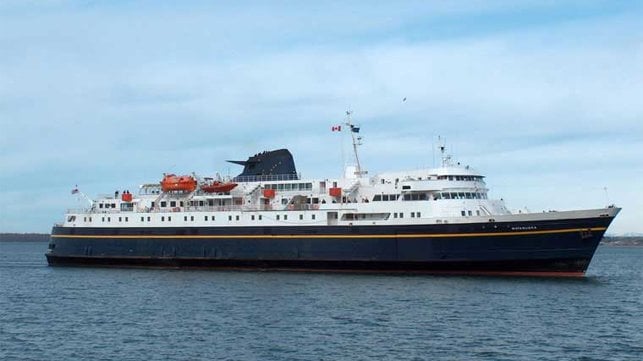
Matanuska, the last of the first newbuilds after Alaska became a state, after 63 years has been placed up for sale by Alaska (Alaska Marine Highway)

Published Mar 29, 2026 11:18 AM by The Maritime Executive


Faced with the challenges of a mounting budget shortfall and an aging fleet, the Alaska Marine Highway System, operated by the state’s Department of Transportation, has decided to part with the last of its historic ferries. It issued a Request for Information on March 20 for the Disposition of the m/v Matanuska, but with a catch: it says the priority is to “dispose  of the vessel in a manner that honors its historic significance while allowing it to continue serving Alaska in new innovative ways.”

The state is seeking letters of interest from qualified offerors to purchase, acquire, preserve, repurpose the ferry, which was built in Seattle in 1963. It says the focus is on preservation, adaptive reuse, or continued maritime service that respects the vessel’s legacy. It suggests uses for maritime training, tourism, community, or cultural use, education, museum, research, or heritage preservation, but says it will also accept letters proposing scrapping, dismantling, or scuttling.

Named for one of Alaska’s famous glaciers, the ferry was one of three, and the last owned by the state that launched the Alaska Marine Highway System. They were the first ferries built for the state after Alaska gained statehood in 1959. The marine highway provides vital connections for many regions of Alaska that lack long-distance road connections and carries passengers, vehicles, and cargo. The Matanuska spent most of her career running between the area north of Juneau and south to British Columbia.

As the oldest operating vessel of the fleet, she was given a gold-painted funnel and the designation of the “Queen of the Fleet” in her later years. The ships are famous for their medium blue livery, which earned them the popular nickname “blue canoe” in Alaska.


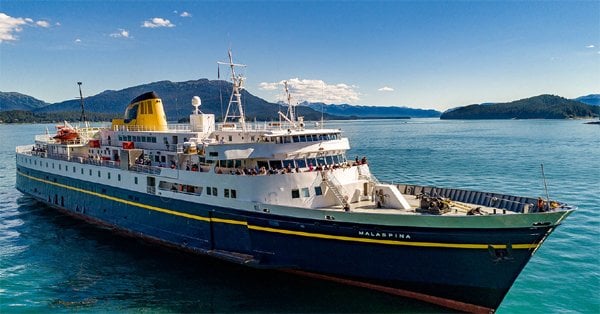
Sister ship Malaspina at the end of her career with the Queen of the Fleet livery (Alaska Marine Highway)


The Matanuska was lengthened in the 1970s to her current size of 408 feet (124 meters) with a capacity for 450 passengers with 106 cabins as well as deck accommodations. And space for approximately 83 vehicles. She featured a lounge, heated solarium, cafeteria, movie area, showers and lockers for deck passengers, and a children’s play area. She is just over 3,000 gross tons with a service speed of 16.5 knots.

Despite the need for vessels on the service – the system has been making do with six ships for the past few years while awaiting replacements – old age caught up with Matanuska, along with years of deferred maintenance. A 2022 survey found extensive steel deterioration and asbestos in the crew quarters. Reports said she would require at least 125,000 pounds of steel replacement. Estimates to restore her for the state’s intercoastal service were at least $45 million or up to $132 million to bring her up to international code for service beyond Alaska.

The Matanuska was docked in Ketchikan, Alaska, and for the past few years has been used to provide accommodations for Alaska Marine Highway staff. Last year, the ferry staff made the recommendation to the state to retire the ship, saying she was simply too costly to restore to service. This year, facing a lack of grant money from the Trump administration, the Alaska Marine Highway System is facing a greater financial shortfall, and the decision was to lower expenses by disposing of the historic ship.

Proposals are due to the state by April 14. She follows her sister ships into retirement. The Taku was put up for sale in 2017 with an original price of $1.5 million, but finally sold to a cash buyer from Dubai for $171,000. She was towed to Alang, India, and scrapped. Her sister Malaspina was taken out of service in 2019 when it was determined she too needed steel repairs costing at least $16 million. She was sold in 2022 for $128,250. The buyer had said she would be used as worker housing and a potential maritime museum.

The hope is that the historic ship, which has been a critical part of Alaska’s heritage as a state, can find a suitable new owner and be repurposed for additional service to the community. In January, the state opened bidding for the construction of a new 330-foot ferry for the system that must be built in an American shipyard. Submissions are due by May 28, and they expect the new ferry will be in service by 2029.


Ethiopia signs $13.1 billion of energy, mining investment deals


Addis Ababa, Ethiopia. Stock image.

Ethiopia has signed $13.1 billion of investment deals spanning renewable energy, manufacturing, real estate, mining and green ammonia, according to the government.

Representatives of the investing companies — from China, Poland, India, Singapore and Kenya — converged in the capital, Addis Ababa, to ink accords at the Invest in Ethiopia conference.

“These are a great success, but they are only a starting point,” said Zeleke Temesgen, head of the Ethiopian Investment Commission. “The real success will be how quickly these investment commitments translate into operational promise on the ground.”

Deals signed:

  • Ming Yang Smart Energy Group Ltd., a Chinese renewable energy company, intends to invest $10 billion into green ammonia production and the manufacture of electrical equipment.
  • Global Future Investment Ltd. is exploring manufacturing opportunities in a special economic zone for a total $2 billion.
  • Liaoning Fangda Group Industrial Co. will invest $500 million in steel and pharmaceutical manufacturing.
  • Rashmi Group has earmarked $235 million for establishing a mining operation in the country.
  • Gobez Electric Manufacturing Plc plans to expand its solar-cell production capacity by injecting $150 million.
  • Sun King will invest $150 million by 2030 in solar equipment manufacturing.
  • Quantum Everest, a Polish company, will engage in real estate for a total $100 million.

(By Fasika Tadesse)


Indonesia delays windfall taxes on coal, nickel exports


Jakarta, Indonesia. Stock image.

Indonesia is delaying plans to impose windfall taxes on coal and nickel exports from April 1, its energy and mining minister Bahlil Lahadalia said on Friday.

Bahlil said his ministry and the finance ministry were still discussing the technicalities of the taxes and that they will not be implemented on April 1, as previously suggested.

Imposing windfall taxes of Indonesia’s prized commodities, of which the Southeast Asian country is a top exporter, was an option suggested by the government to rein in its budget deficit amid an ongoing conflict in the Middle East, which has sent fuel costs rising.

Indonesia had sought to tax refined nickel products including nickel pig iron.

Separately, Bahlil said fuel and liquefied petroleum gas supplies in Indonesia remain secure, but he added that people should consume fuel wisely. The conflict in the Middle East has disrupted shipments globally.

Among the measures Indonesia has taken to maintain its financial reserves was a cut in the budgets for its ministries.

Tri Winarno, a senior official at the mining ministry, said separately on Friday that Indonesia had so far issued 580 million tons of coal mining quota and 150 million tons of nickel mining quota.

(B


Video: Philippines Calls “Close Encounter” With Chinese Navy an Escalation

Chinese Navy and Philippine Navy
Philippines says the Chinese Navy frigate came within about 25 feet in an unsafe maneuver (WESCOM)

Published Mar 27, 2026 4:21 PM by The Maritime Executive


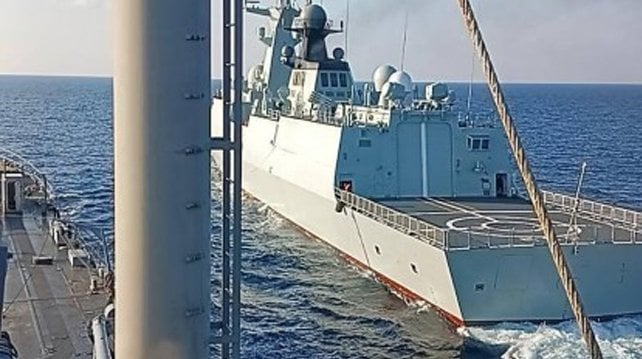
The Armed Forces of the Philippines released a new video reporting its second “close encounter” this month with a Chinese vessel in the ongoing disputes over the shoals in the South China Sea/West Philippine Sea. Noting that this was the first time in a while that the incident involved the Chinese Navy, the Philippines' military is calling it an “escalation”  of the tensions.

The report indicates the Chinese warship, 532 Missile Frigate, came within five to eight meters (16 to 26 feet) of the BRP Benguet. A spokesperson for the Western Command (WESCOM) called it an “extremely close distance for vessels at sea.” Rear Admiral Roy Vicent Trinidad asserted that it was intentional and not an accident while calling the actions unsafe.

The Philippine Navy vessel, they asserted, was on a routine patrol in the Spratly Islands. It was near the island that the Philippines calls Pag-asa Island (Thitu Island) when the encounter took place. Trinidad said it was what they termed a “nudging” since both vessels were traveling in the same direction. They asserted that the Chinese vessel closed in and passed alongside to steer the BRP Benguet off course.


They said the Philippine vessel was able to avoid a potential collision due to the skilled seamanship of the crew. No one was injured, and the vessels did not make contact.

Most of the encounters they pointed out are with civilian Chinese ships, frequently from the Coast Guard. They noted it is rarer to have a direct encounter with the Chinese Navy. 

It was the second incident this month that Philippine authorities highlighted. They said on March 6 that a Chinese vessel had also approached another patrolling Philippine vessel and aimed its fire control radar at the ship.

This latest incident came as the Philippines and France signed a new military pact. They called it a visiting forces agreement, saying it would be used for joint military training. The Philippines said it came during a discussion with its French counterparts on regional security issues.  They said the new agreement would “greatly bolster bilateral cooperation.”