Wednesday, April 01, 2026

Israel Admits It ‘Photoshopped’ Image to Portray Assassinated Lebanese Journalist as Hezbollah Operative

The Committee to Protect Journalists regional director called the killing part of “a disturbing pattern” of “Israel accusing journalists of being active combatants and terrorists without providing credible evidence.”
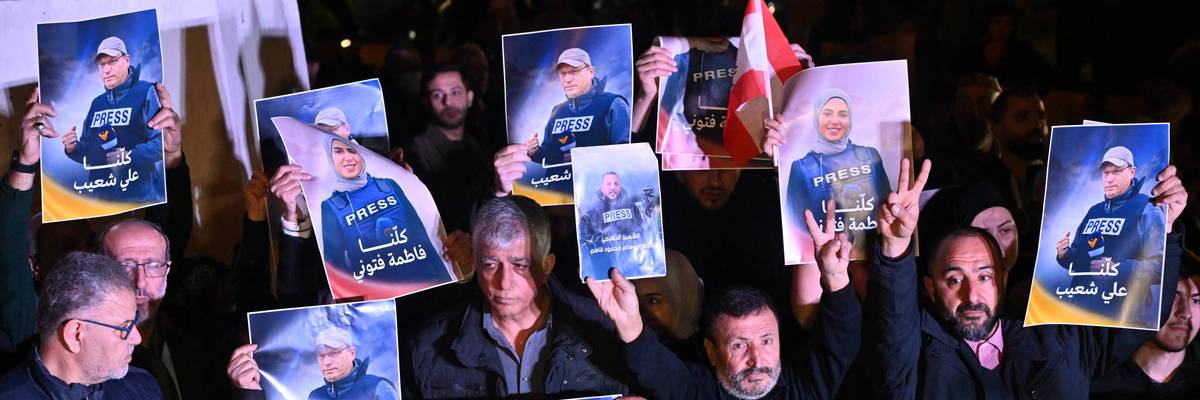


Journalists and activists gather at Martyrsâ Square to protest the targeting of journalists, calling for the protection of media workers and accountability for those responsible for attacks in Beirut, Lebanon, on March 28, 2026.

(Photo by Houssam Shbaro/Anadolu via Getty Images)

Stephen Prager
Mar 30, 2026
COMMON DREAMS


An Israel Defense Forces spokesperson has admitted that the military posted a “photoshopped” image of a Lebanese journalist killed in an airstrike in order to portray him as a Hezbollah operative.

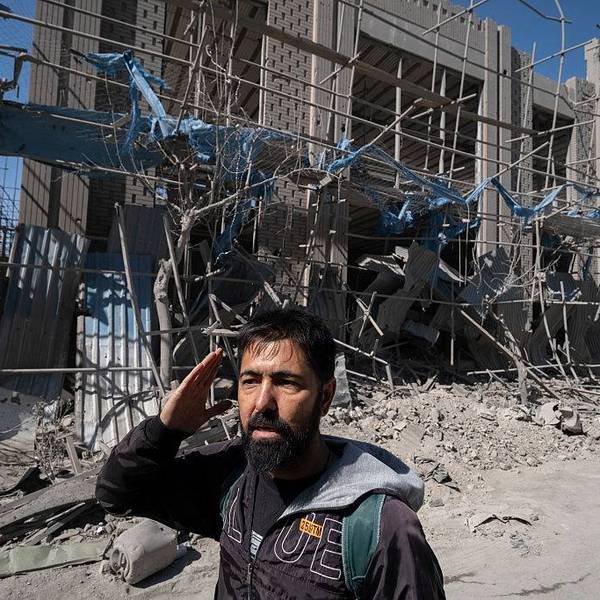
On Saturday, three journalists—Ali Shuaib, a veteran correspondent for Al-Manar TV; Fatima Ftouni of the Al Mayadeen channel; and her brother, cameraman Mohammad Ftouni—were killed when four precision missiles hit their car on the Jezzine Road in Southern Lebanon. Several other reporters were injured in the attack.

According to Al Jazeera, the vehicle was clearly marked “press.”

In the following hours, the IDF’s official social media account posted that it had “ELIMINATED” Shuaib in the attack.

“For years, Ali Hassan Shuaib operated as a Hezbollah Radwan Force terrorist under the guise of a journalist,” the post read. “Turns out the ‘press vest’ was just a cover for terror.”


The post, which has more than 2.1 million views on X as of Monday, featured a split image showing Shuaib in a press outfit on one side and in a Hezbollah military uniform on the other.

But according to Fox News’ chief foreign correspondent, Trey Yingst, the network later asked the IDF about the photo’s source. They were told: “Unfortunately, there isn’t really a picture of it. It was photoshopped.”

On Monday, Israel issued another statement claiming that Mohammad Ftouni was “an additional terrorist in Hezbollah’s military wing, who also operated under the guise of a journalist.”

But when asked for evidence to confirm this by the Agence France-Presse, it provided none, with a spokesperson saying, “What we have is what we can state.”

Committee to Protect Journalists (CPJ) regional director Sara Qudah called the killings part of “a disturbing pattern in this war and in the decades prior [of] Israel accusing journalists of being active combatants and terrorists without providing credible evidence.”

Israel accused Shuaib of “consistently working to expose the locations of IDF troops operating in southern Lebanon and along the border, and maintain[ing] continuous contact with other terrorists in the Radwan Force unit in particular, and within the terror organization in general.”

American journalist Ryan Grim, the co-founder of Drop Site News, said: “The Israeli statement itself says that his ‘crime’ was reporting on troop locations and communicating with sources in Hezbollah. That is called war reporting.”


According to a report last month by CPJ, a record 129 journalists were killed in 2025, and Israel was responsible for two-thirds of the worldwide total.

The vast majority of those killed have been Palestinian journalists in Gaza—at least 261 of whom have been killed since October 7, 2023—according to a running tally by the International Federation of Journalists. At least 11 journalists have also been killed in Lebanon since 2023.

In addition to Shuaib and the Ftounis, two others have been killed since Israel’s latest onslaught in Lebanon after Hezbollah retaliated against US-Israeli attacks on Iran. Israeli attacks have also resulted in the deaths of photojournalist Hussain Hamood and journalist Mohammed Sherri this month.


An investigation last year by +972 and the Israeli outlet Local Call revealed that the IDF has an informal unit known as the “Legitimization Cell,” which seeks to find tenuous links between journalists and militant groups to justify assassinating them.

As one source explained, the cell’s members seek out reporters they believe are “smearing [Israel’s] name in front of the world” by reporting evidence of the country’s conduct.

While Al-Manar is the official news outlet for Hezbollah and Al Mayadeen is considered to be closely tied with the militia, Qudah noted that under international law, “journalists are not legitimate targets, regardless of the outlet they work for.”

In less than a month, Israeli attacks in Lebanon have killed more than 1,100 people, including at least 121 children, according to the Lebanese Health Ministry.

Many pieces of civilian infrastructure—including hospitals, schools, and residential buildings—have been attacked, and Israel has issued forced evacuation orders that have led more than 1 million people to be displaced from their homes.

On the same day that the three journalists were attacked, the World Health Organization reported that nine paramedics were killed across southern Lebanon in a series of attacks on healthcare infrastructure.

Lebanese President Joseph Aoun said that by attacking civilian workers carrying out their professional duties, Israel has violated “the most basic rules of international law.”

He called it “a blatant crime that violates all norms and treaties under which journalists are granted international protection during armed conflicts.”
‘A War Crime’: UN Rights Chief Urges Immediate Repeal of Israel’s New Death Penalty Law

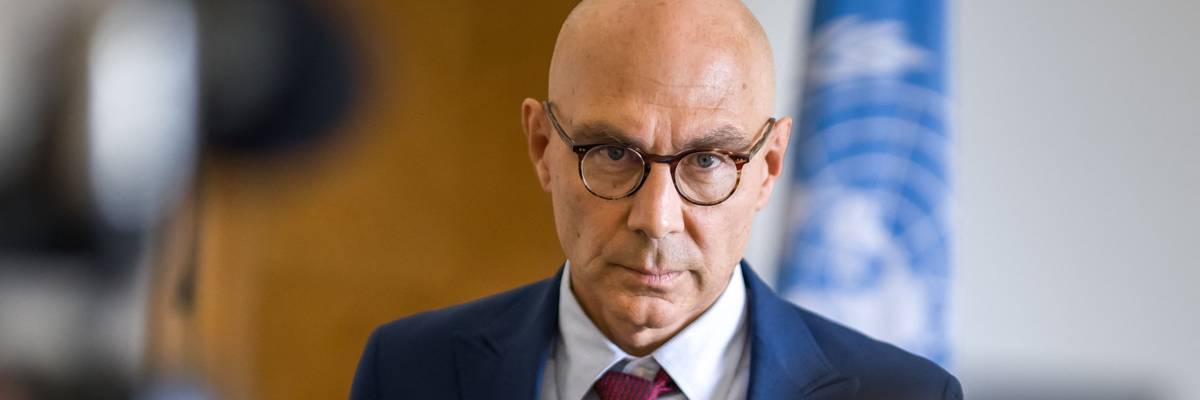
UN High Commissioner for Human Rights Volker Türk said the new law “raises serious concerns about due process violations, is deeply discriminatory, and must be promptly repealed.”


United Nations High Commissioner for Human Rights Volker Türk is seen at the UN Office in Geneva 
(Photo by Fabrice Coffrini/AFP via Getty Images)


Brett Wilkins
Mar 31, 2026
COMMON DREAMS


The top United Nations human rights official was among those who on Tuesday urged Israel to repeal legislation it passed the previous day legalizing the hanging of Palestinians convicted of terrorism-related killing of Israelis—a law critics contend will not apply to Israelis who commit similar crimes.

The law passed by the Israeli Knesset states that Palestinians must be hanged within 90 days if convicted of nationalistic killings in a military court. While the legislation does not allow pardons, it gives judges discretionary power when it comes to sentencing Israeli citizens convicted of similar crimes, and observers say it’s highly unlikely that any jIsraeli would ever be hanged under the law.


Critics Warn of Mass Executions as Israel Advances Death Penalty Bill for Palestinians

Experts argue the 90-day provision and lack of appellate process are violations of international humanitarian law.

“It is deeply disappointing that this bill has been approved by the Knesset,” UN High Commissioner for Human Rights Volker Türk said Tuesday. “It is patently inconsistent with Israel’s international law obligations, including in relation to the right to life. It raises serious concerns about due process violations, is deeply discriminatory, and must be promptly repealed.”

“The death penalty is profoundly difficult to reconcile with human dignity, and it raises the unacceptable risk of executing innocent people,” he added. “Its application in a discriminatory manner would constitute an additional, particularly egregious violation of international law. Its application to residents of the occupied Palestinian territory would constitute a war crime.”

While proponents of the law—some of whom, like Israeli National Security Minister Itamar Ben-Gvir, celebrated its passage—say they believe it will deter Palestinians from killing Israelis, studies in the United States, the only Western democracy that actively executes people, have repeatedly shown that the death penalty is not a deterrent to crime.


Palestinians and their defenders have also warned that the law could open the door to mass executions, including of anyone found to have killed Israelis during the October 7, 2023 Hamas-led attack, for which Israel retaliated with an ongoing assault and siege that has left more than 250,000 Palestinians dead, maimed, or missing.

“Trials for crimes related to October 7 are supremely important, but they must not be anchored in discrimination,” said Türk. “All victims are entitled to equal protection of the law, and all perpetrators must be held accountable without discrimination.”

Other human rights defenders also condemned the new Israeli law and called for its repeal.


“The Israeli parliament’s adoption of a racist law authorizing the hanging of Palestinian prisoners is the very definition of apartheid,” the Washington, DC-based Council on American-Islamic Relations (CAIR) said in a statement Tuesday. “Even the South African apartheid government never adopted a death penalty law so explicitly racist.”

Taking aim at Israeli Prime Minister Benjamin Netanyahu—who is wanted by the International Criminal Court for alleged crimes against humanity and war crimes in Gaza—CAIR continued, “The Netanyahu regime is completely out of control because our nation continues to bankroll its crimes, from the de facto annexation of the West Bank to the genocide in Gaza, to the ethnic cleansing of southern Lebanon, to the occupation of Syria, to the illegal war with Iran that it triggered, to the closure of Christian and Muslim holy sites in Jerusalem.”

“Congress is not just failing to act, it is actively advancing more military support while treating that US taxpayer funding as automatic, even as these abuses escalate,” the group added. “Every member of Congress—especially Democratic leaders of the House and Senate—must condemn these crimes, including the racist execution law, and announce their opposition to any further military funding for the Israeli apartheid regime.”

A 2024 ruling by the International Court of Justice in The Hague—where Israel is also facing a genocide case brought by South Africa in response to the US-backed war on Gaza—affirmed that the Israeli occupation of Palestine is an illegal form of apartheid that must be ended.

More than 9,500 Palestinians are currently locked up in Israeli prisons, including 350 children and 73 women, according to advocacy groups. Palestinian and Israeli human rights defenders say detainees face torturestarvation, and medical neglect behind bars, causing many deaths.

Former prisoners as well as Israeli staff and medical personnel say they have witnessed torture at prisons including Sde Teiman, the most infamous of Israel’s lockups, with victims ranging from children to the elderly.

Israeli physicians who worked at Sde Teiman described widespread serious injuries caused by 24-hour shackling of hands and feet that sometimes required amputations. Palestinians taken by Israeli forces recounted rapes and sexually assaults by male and female soldiers, electrocution, maulings by dogs, denial of food and water, sleep deprivation, and other torture.

Advocates Demand Repeal of Israeli Death Penalty Law Explicitly Targeting Palestinians


“There is nothing legal about an occupying power using the death penalty exclusively for the people it occupies,” said one historian.


A protester holds a placard reading “No to the Death Penalty” as other protesters stand nearby during a Combatants for Peace rally at a roundabout in the Beit Jala village near Bethlehem, in the occupied West Bank, on December 19, 2025.

(Photo by Mosab Shawer/Middle East Images/AFP via Getty Images)


Julia Conley
Mar 30, 2026
COMMON DREAMS


Leading international human rights groups as well as organizations in Israel swiftly demanded the repeal of a law passed by the Israeli Knesset on Monday that makes death by hanging the default punishment for Palestinians convicted of deadly attacks on Israelis—a law that one group called “discriminatory by design.”

Those were the words of the Association of Civil Rights in Israel, which petitioned the country’s Supreme Court minutes after lawmakers passed an amendment to the federal penal law, “Death Penalty for Terrorists,” in a vote of 62-48.


‘A War Crime’: UN Rights Chief Urges Immediate Repeal of Israel’s New Death Penalty Law

Critics Warn of Mass Executions as Israel Advances Death Penalty Bill for Palestinians

The group called on the high court to challenge the new law and said the far-right government had passed it “without legal authority” over Palestinians in the West Bank, which Prime Minister Benjamin Netanyahu’s government aimed to illegally annex to Israel.

The Association of Civil Rights was joined by groups including Amnesty International, which has spoken out forcefully against the legislation in recent months, in demanding the death penalty law be repealed.

Amnesty said that under the new policy, Israel—which has vehemently rejected accusations of imposing apartheid policies on Palestinians—“explicitly creates two legal frameworks for the use of the death penalty in the occupied West Bank... and in Israel.”

The law also does not allow for any pardons for those sentenced to death, making it “one of the world’s most extreme death penalty laws,” said Amnesty.

The new law demands that Palestinians be put to death by hanging if convicted of nationalistic killings in a military court, and gives Israeli courts the option of sentencing Israeli citizens to capital punishment if they’re convicted of similar crimes.

But Amichai Cohen, a senior fellow at the Israel Democracy Institute’s Center for Democratic Values and Institutions, told The Associated Press that only Palestinians will ultimately be killed under the law.

“It will apply in Israeli courts, but only to terrorist activities that are motivated by the wish to undermine the existence of Israel,” Cohen told the AP. “That means Jews will not be indicted under this law.”

Erika Guevara-Rosas, Amnesty International’s senior director of research, advocacy, policy, and campaigns, noted that Israeli military courts “have a conviction rate of over 99% for Palestinian defendants and... are notorious for disregarding due process and fair trial safeguards.”

“Israel is brazenly granting itself carte blanche to execute Palestinians while stripping away the most basic fair-trial safeguards,” said Guevara-Rosas.

She added that the law was passed weeks after the Israeli military attorney general dropped all charges against five Israel Defense Forces soldiers accused of raping a Palestinian prisoner—“a decision celebrated by the prime minister and several ministers.”

“It speaks volumes to the extent of Israel’s dehumanization of Palestinians that this law has passed” after those charges were dropped, said Guevara-Rosas. “For years, we have seen an alarming pattern of apparent extrajudicial executions and other unlawful killings of Palestinians—with the perpetrators also enjoying near-total impunity. This new law which allows for state-sanctioned executions is a culmination of such policies.”

Celebrations were seen among Netanyahu’s top ministers once again on Monday, with National Security Minister Itamar Ben-Gvir—whose Otzma Yehudit Party initially introduced the amendment—seen clutching a bottle of champagne after the passage was announced.

Historian Assal Rad noted that much of the international coverage of the bill’s passage has used “procedural language to sanitize the story and make it sound legitimate.”

The law, however, “is just another way for Israel to kill Palestinians,” she said.


The Euro-Mediterranean Human Rights Monitor warned that “the most dangerous aspect of the new law lies in its application within a judicial system that lacks any guarantees of a fair trial for Palestinians.”

“Confessions are often obtained under duress, access to effective legal representation is severely limited, the presumption of innocence is routinely ignored, and there are major restrictions on appeals or access to documents essential for the defense,” said the group.

“Combined with a lack of judicial independence and integrity in proceedings, applying the death penalty in this context cannot be considered a legitimate judicial measure,” the organization added. “Instead, it constitutes an arbitrary deprivation of life, in direct violation of fundamental principles of international human rights law.”
Hegseth Says Trump Has Vision of ‘Greater North America.’ Critics Alarmed by ‘Greater Israel’ Parallel


“Right now the US and Israel are realizing ‘Greater Israel’ by attacking-invading Lebanon and Iran,” said one professor. “Hegseth is saying it’s Greenland, Cuba, Canada, and Mexico next.”


Brett Wilkins
Mar 30, 2026
COMMON DREAMS


Alarm mounted Monday over the Trump administration’s “Greater North America” plan, a geopolitical blueprint for US imperial hegemony from Greenland to Guyana that’s drawing comparisons with a messianic project being pushed by President Donald Trump’s far-right allies and war partners in Israel.

US Defense Secretary Pete Hegseth first unveiled the plan earlier this month, telling reporters: “Trump has drawn a new strategic map, from Greenland to the Gulf of America to the Panama Canal and its surrounding countries. At the Department of War we call this strategic map the Greater North America.”

“Why? Because every sovereign nation and territory north of the Equator, from Greenland to Ecuador and from Alaska to Guyana, is not part of the ‘Global South,’” Hegseth added. “It is our immediate security perimeter in this great neighborhood that we all live in.”

Graeme Garrard, a Canadian professor at Cardiff University in Wales, said Monday on social media in response to Hegseth’s comments: “By ‘Greater North America’ he means ‘Greater United States. The US is now and has long been a menace and threat to the sovereignty and independence of its hemispheric neighbors.”

Numerous observers have compared Trump’s “Greater America” with the “Greater Israel” movement, whose most zealous proponents want to conquer everything between the Nile and Euphrates rivers—that is, all of Palestine, Lebanon, and Jordan; most of Syria and Kuwait; large parts of Egypt and Iraq; and some of Turkey—for Israel.

“Hesgeth’s ‘Greater North America’ should be taken VERY seriously as a real threat,” University of Lausanne professor Julia Steinberger, who is Swiss-American, said on social media. “Right now the US and Israel are realizing ‘Greater Israel’ by attacking-invading Lebanon and Iran. Hegseth is saying it’s Greenland, Cuba, Canada, and Mexico next.”

Based on the biblical boundaries of ancient Jewish kingdoms, Greater Israel is rooted in the supremacist supposition that the Abrahamic deity figure God promised the Jews all of the lands between the Nile and Euphrates.

Israeli Prime Minister Benjamin Netanyahu—who is wanted by the International Criminal Court for alleged crimes against humanity and war crimes in Gaza—and other prominent right-wing Israelis support the Greater Israel vision and are working to make it a reality by accelerating the illegal settler colonization and ethnic cleansing of the West Bank and East Jerusalem, preparing to annex the dwindling Palestinian territories, and planning to occupy—perhaps permanently—parts of Syria and Lebanon.

For nearly two centuries, claims of divine favor have also underpinned US expansionism, most famously expressed in Manifest Destiny and mid-19th century plans to annex lands “from the Arctic to the Tropic.” This notion drove the US conquest of half of Mexico, as well as later takeovers of Cuba, Puerto Rico, the Dominican Republic, and Haiti. The US also took control over the Panama Canal, which it built at the cost of thousands of laborers’ lives, most of them from Barbados and other West Indies isles.

“It is part of the great law of progress that the weak should give way to the strong, and that the superior should displace the inferior races,” one New Orleans newspaper opined in 1848.

Nearly 178 years later, Hegseth echoed this supremacist ideology, telling Latin American leaders that the region must remain “Christian nations under God” and stand united in the face of “radical narco-communism.”

Like the 19th century US imperialists, Trump has also repeatedly expressed his goal of “taking Cuba”—an objective that goes back over 200 years, when Thomas Jefferson, then a former president, called the island “the most interesting addition which could ever be made to our system of states.”


CRIMINAL CAPITALI$M
Hegseth Broker Reportedly Tried to Make ‘Big Investment’ in Weapons Stocks Just Before Iran War

“In a functional democracy, he would offer his resignation tonight.”


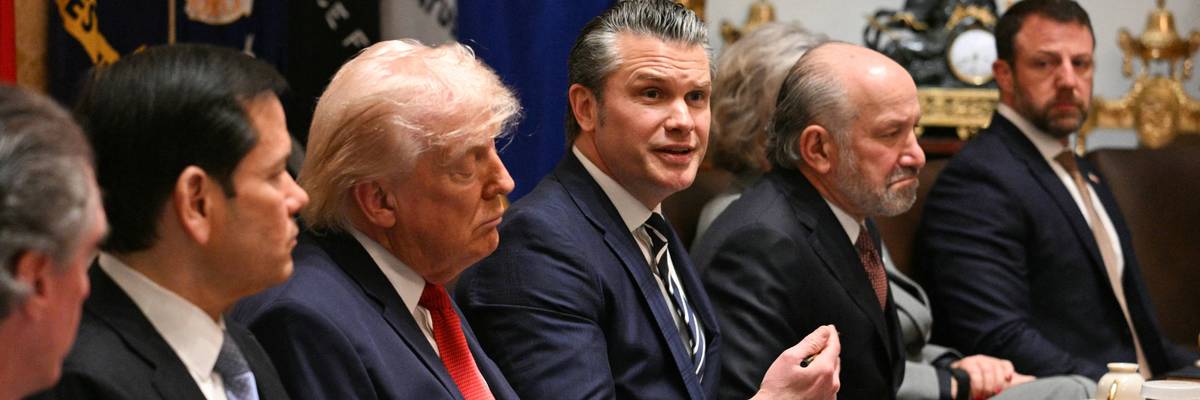
Pentagon Secretary Pete Hegseth speaks during a White House Cabinet meeting on March 26, 2026.
(Photo by Jim Watson/AFP via Getty Images)

Jake Johnson
Mar 31, 2026
COMMON DREAMS


A broker for Pentagon Secretary Pete Hegseth reportedly tried to make a “big investment” in a bundle of weapons stocks just weeks before the US and Israel launched their war on Iran, an unpopular assault that Hegseth has aggressively championed.

Citing three unnamed people familiar with the matter, The Financial Times reported on Monday that Hegseth’s “broker at Morgan Stanley contacted BlackRock in February about making a multimillion-dollar investment in the asset manager’s Defense Industrials Active ETF... shortly before the US launched military action against Tehran.” The bombing began on February 28.

A spokesperson for the Pentagon denied the story, calling it “entirely false and fabricated” and insisting that neither Hegseth nor any of his representatives approached BlackRock about such an investment. But the FT reported that the broker’s “inquiry on behalf of the high-profile potential client was flagged internally at BlackRock.”

The investment was not ultimately made because the fund—which includes behemoths such as RTX, Lockheed Martin, Boeing, and Northrop Grumman—was not available for Morgan Stanley clients to buy at the time.

The purchase would not have been immediately lucrative: Over the past month, the Defense Industrials Active ETF is down over 12%. But the reported allegation that Hegseth’s broker sought to make the largest investment in the weapons industry set off alarm bells, particularly amid growing concerns that Trump administration officials are using inside knowledge and manipulating markets to cash in on the war.

“You know, back when the [US government] gave a damn about anti-corruption, this is something we would’ve seen as a ‘no no,’” said Richard Nephew, a former anti-corruption coordinator at the US State Department.

Economist Justin Wolfers wrote of Hegseth that, “in a functional democracy, he would offer his resignation tonight.”

Instead, Pentagon spokesperson Sean Parnell demanded that the FT issue an “immediate retraction,” dismissing the newspaper’s story as “yet another baseless, dishonest smear designed to mislead the public.”

Hegseth has emerged as the most prominent and belligerent cheerleader of the Iran war in the US, and—according to President Donald Trump—the Pentagon chief was the first of the president’s advisers to “speak up” in favor of the assault during the internal decision-making process.

Trump has also suggested Hegseth does not want the war to end, saying last week that the Pentagon chief was “quite disappointed” when the president claimed the conflict would be over shortly.

“I don’t want to say this, but I have to,” Trump told reporters at the White House. “I said, Pete and General Razin’ Caine, this thing is going to be settled very soon, and they go, ‘Oh, that’s too bad.’”


The US-Israel War on Iran Is Undermining the Very Foundations of the Rule of Law

Right now, Iranian civilians are paying the highest price. But the collapse of the rule of law makes the future more dangerous for everyone else, too.


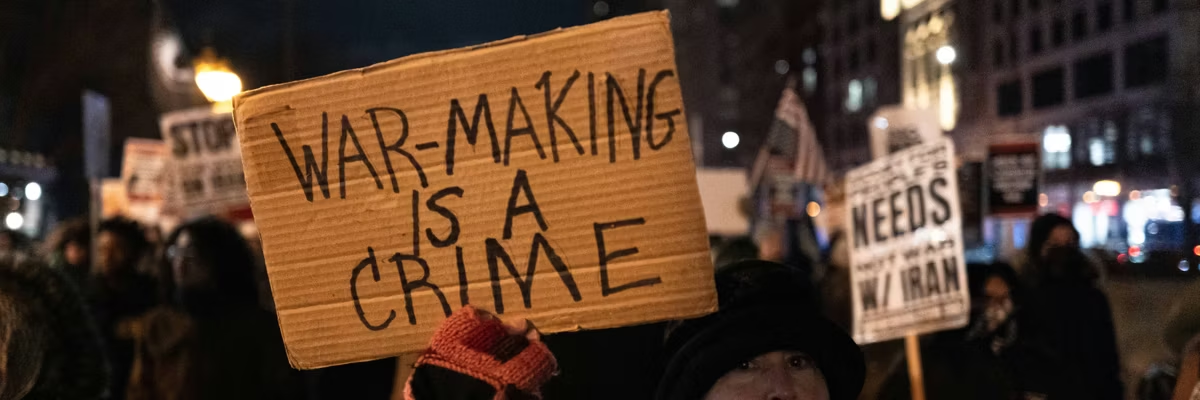
A protester holds placards reading ‘’war making is a crime’’ during a demonstration against the war in Iran, in Chicago, Illinois, on February 28, 2026.
(Photo by Jerome Gilles/NurPhoto via Getty Images)

Phyllis Bennis
Mar 31, 2026
Foreign Policy In Focus

The US and Israeli war has, from its very beginning, violated both US domestic and international law.

The legal consequences go beyond specific violations. Washington and Tel Aviv’s breaches of the United Nations Charter and other legal frameworks also undermine the very foundations of the rule of law. Even while international legal institutions too often lack sufficient capacity to enforce their decisions, they still provide a crucial framework for protest, for pressure on individual governments, and for the hope of a future world where the rule of law is paramount.


Experts Worldwide Agree: US-Israel Attack on Iran a Clear Violation of International Law


Unlike Security Council, UN Experts Condemn US and Israel for Waging ‘Illegal War’ on Iran

Now, however, that future is in more danger than any other time in recent memory. Right now, Iranian civilians are paying the highest price. But the collapse of the rule of law makes the future more dangerous for everyone else, too.
What Are the Laws of War?

On the domestic front, the US Constitution is very clear that only Congress, not the president, has the power to declare war. But President Donald Trump did not even consult with Congress before attacking Iran, let alone receive a congressional declaration of or even authorization for war.

This US war against Iran is deepening the ongoing delegitimization of the rule of law—something that must be taken seriously if future wars are to be averted.

This is nothing new, of course. In recent years, successive Congresses have abandoned their constitutional prerogative, allowing various presidents of both parties to initiate and continue the use of massive military force without even the pretense of asserting their power to declare war.

Indeed, both houses of Congress voted, in overwhelmingly partisan votes, to reject War Powers Resolutions which could have prevented or at least constrained Trump’s reckless and illegal war. They didn’t even hold votes at all until the United States and Israel had already launched their war against Iran.

International law is equally clear. The Nuremberg trials following World War II determined that the “supreme international crime” was that of aggression. The International Military Tribunal ruled in 1946 that initiating a war of aggression differed from other war crimes because “it contains within itself the accumulated evil of the whole.” War crimes, crimes against humanity, and all the related international crimes, therefore, are understood to stem from that fundamental crime of going to war illegally.

The US and Israel went to war illegally. They are waging a war of aggression against Iran. The UN Charter declares that no country may attack another country, and that “all Members shall settle their international disputes by peaceful means in such a manner that international peace and security, and justice, are not endangered.” It also prohibits UN member states from using “the threat or use of force against the territorial integrity or political independence of any state, or in any manner inconsistent with the purposes of the United Nations.”

There are only two exceptions to that prohibition on the use of force. One is if the Security Council itself authorizes the use of military force. The other is for immediate self-defense, which applies only “if an armed attack” occurs and then only “until” the Council decides collectively how to deal with the crisis.

Neither of those happened here. The Council was never asked, and certainly had not authorized anything, and Iran had not attacked the US or Israel. The US claim that it “had to” attack Iran to prevent some potential imagined retaliatory attack at some unknown point in the future does not legitimize so-called “preventive” use of force when no such imagined future attack had occurred.
The Danger of International Lawlessness

Despite the dangerous trends toward international lawlessness in recent years, it wasn’t that long ago that US leaders at least made a pretense of trying to follow them.

In 2002, George W. Bush officially won congressional authorization for war against Iraq and grudgingly acknowledged the need for a UN Security Council authorization as well. For months he tried—using lies, threats, and pressure—to get a Security Council resolution passed that would authorize a US-U.K. war. Those efforts failed.

In the absence of global institutions able and willing to enforce international law, these popular movements are essential. Without them, there’s no one to hold the powerful to account.

The Council majority stood defiant, and the Bush-Blair team finally launched the war illegally, without UN approval, and without any “armed attack” by Iraq that might have justified a claim of self-defense. International law didn’t stop the war, but it lent moral and political weight to a global anti-war movement that the Bush administration was forced to contend with.

But today, Trump has consistently refused to acknowledge any need for either congressional approval or UN authorization of his war against Iran. Trump himself dismissed international law entirely, saying that the only limit on his global power was “my own morality. My own mind….I don’t need international law.” Trump’s Secretary of Defense, Pete Hegseth, infamously said that his Pentagon would have “no stupid rules of engagement” to limit its killing.

Practically no one—not the UN, not Congress, not the mainstream press, and few among foreign governments too often cowed by Trump’s threats—seems to be even mentioning the UN Charter’s restrictions against launching new wars. And although Congress debated new War Powers Resolutions designed to prevent a rogue presidential decision to go to war, there were not enough votes to pass them.

In short, this US war against Iran is deepening the ongoing delegitimization of the rule of law—something that must be taken seriously if future wars are to be averted. The weakness and lack of political will in both Congress and the United Nations have failed to prevent the US and Israel from launching a destructive new war.

Their lack of enforcement capacity means that people—in social movements and civil society organizations in the US and around the world—must step up to demand their governments actually follow the law. In the absence of global institutions able and willing to enforce international law, these popular movements are essential. Without them, there’s no one to hold the powerful to account.

The war in Iran has already killed thousands of people, displaced millions more, and put millions of others throughout the region at risk as it continues to expand. It’s created what some are calling the “Gazafication” of Tehran, causing a vast humanitarian and economic crisis that is continuing to spread. It’s undermining the very foundations of international law and the institutions created to uphold it.

And if this war continues without accountability, it threatens even more dire consequences in years ahead.


© 2023 Foreign Policy In Focus


Phyllis Bennis
Phyllis Bennis is a fellow of the Institute for Policy Studies and serves on the national board of Jewish Voice for Peace. Her most recent book is "Understanding Palestine and Israel" (2025). Her other books include: "Understanding the US-Iran Crisis: A Primer" (2008) and "Challenging Empire: How People, Governments, and the UN Defy US Power" (2005).
Full Bio >


Everyone But Egomaniacal Trump Knows His Iran War Is Reckless, Unjustified, and Strategically Incoherent


The US president, trapped by his own ego, has wrought unparalleled destruction to the people of Iran, the Middle East, and the world.


Ramzy Baroud
Mar 31, 2026

Common Dreams


The judgment on the Trump administration’s war on Iran is already largely settled across mainstream media, public opinion, and much of the analytical sphere.

What remains supportive of the war is limited to two predictable camps: official government discourse and the president’s most loyal supporters, along with entrenched pro-Israel constituencies.
RECOMMENDED...


‘This War Is Dumb as Hell’: Military Historian Assesses Trump’s Disaster in Iran


Amid Alarm That Trump Has No Plan for Iran, Critic Contends None ‘Could Possibly Justify This’

Beyond these circles, the war is widely understood as reckless, unjustified, and strategically incoherent.

Among the wider American public, this conclusion is not abstract. It is shaped by growing unease, economic anxiety, and a mounting sense that the war lacks both purpose and direction.

A defeat in Iran would not simply be a policy failure; it would represent the collapse of that identity. For a leader driven by narcissistic imperatives, such a collapse is existential, threatening not only his political standing but his relationship with his own base.

Since the outbreak of the war on February 28, 2026, polling has consistently pointed in one direction. A Pew Research poll in late March found that 61 percent of Americans disapprove of Trump’s handling of the conflict.

Another AP-NORC survey showed that six in ten Americans believe US military action against Iran has already “gone too far,” while even Fox News polling found 58 percent opposition.

These numbers confirm a broader trend that began early in the war and has only intensified. Reuters reported on March 19 that just 7 percent of Americans support a full-scale ground invasion.

In that same reporting, nearly two-thirds of respondents said they believe Trump is likely to pursue one anyway, highlighting a growing disconnect between policy and public will.

Days later, Reuters noted that Trump’s approval rating had dropped to 36 percent, with rising fuel prices and economic instability cited as key drivers.

The longer the war continues, the more its consequences are internalized by ordinary Americans, turning distant conflict into immediate economic pressure.

Among the American intelligentsia, opposition is no longer confined to traditional anti-war circles. It now spans ideological boundaries, including segments of Trump’s own political base.

Reporting from the 2026 Conservative Political Action Conference, The Guardian observed that many MAGA supporters warned the war risks becoming another “forever war.”

This convergence is significant, reflecting not a passing disagreement but a deeper structural shift in public perception.

Yet mainstream media—from CNN to Fox News—has largely avoided confronting what many Americans already recognize: that the war aligns closely with the agenda of Israeli Prime Minister Benjamin Netanyahu.

Within Washington itself, unease is also becoming more explicit. The Wall Street Journal reported in March that lawmakers from both parties are increasingly skeptical of the administration’s approach.

At the strategic level, the war’s foundational assumptions have already begun to unravel. Israel’s early calculations that escalation might trigger internal collapse in Iran have failed to materialize.

Iran’s political system remains intact, its leadership stable, and its military cohesion unbroken under Supreme Leader Ali Khamenei.

At the same time, Tehran has demonstrated its ability to retaliate across multiple fronts, targeting Israeli territory and US military assets in the region.

Its geographic leverage over the Strait of Hormuz continues to exert pressure on global energy markets, amplifying its strategic position despite sustained attacks.

The structural reality is therefore unavoidable. Regime change in Iran would require a massive ground invasion, a broad coalition, and a prolonged occupation.

Even under such conditions, success would remain uncertain, as the experience of Iraq has already demonstrated with devastating clarity.

This raises the central question: why continue a war whose strategic premises are already collapsing?

Part of the answer lies not in strategy, but in psychology. A substantial body of political psychology research, frequently cited in relevant 2026 analyses, describes Trump’s leadership style as deeply narcissistic. Traits such as grandiosity, hypersensitivity to criticism, and an overriding need to project dominance are not incidental—they actively shape decision-making.

Trump’s rhetoric has long relied on humiliation, domination, and spectacle, framing politics as a contest of strength rather than negotiation.

Within this framework, escalation becomes a psychological necessity. To retreat risks appearing weak, while compromise risks humiliation.

For a leader whose identity is built on projecting strength, such outcomes are politically and personally intolerable.

This dynamic is reinforced by the broader culture of the administration, where senior officials have repeatedly relied on language such as “obliteration” and “total destruction.”

Such rhetoric, however, has not been matched by evidence of a coherent long-term strategy, exposing a widening gap between performance and planning.

At the same time, the administration’s fixation on masculine power—on dominance, strength, and spectacle—has contributed to a profound underestimation of its adversary.

Iran is not a fragmented state waiting to collapse, but a regional power with decades of experience in asymmetric warfare and strategic resilience.

Yet Trump appears to have operated under the assumption that American power alone guarantees outcomes, an illusion reinforced by past displays of military force.

Reuters reported in late March that Trump is now increasingly pressured to “end the war” quickly, as the administration confronts what it described as “only hard choices.”

The same report cited officials acknowledging that there is no clear exit strategy, leaving the administration caught between escalation and political fallout.

One official told Reuters that there are “no easy solutions” left, underscoring the depth of the strategic impasse.

Another added that any withdrawal would have to be framed carefully to avoid appearing as a defeat, reflecting the administration’s concern with optics as much as outcomes.

This is where the psychological dimension becomes decisive. Trump has constructed a political identity rooted in strength, dominance, and victory.

A defeat in Iran would not simply be a policy failure; it would represent the collapse of that identity. For a leader driven by narcissistic imperatives, such a collapse is existential, threatening not only his political standing but his relationship with his own base.

This is why some analysts—and even figures within Trump’s own orbit—have begun to float a theatrical exit strategy. As Reuters reported on March 14, White House adviser David Sacks stated bluntly that the United States should “declare victory and get out” of the war on Iran, calling for disengagement despite the absence of a clear strategic outcome.

Such a move would allow Trump to claim success while disengaging from an increasingly untenable conflict, preserving the image of strength even in the face of strategic failure.

But this reveals the deeper truth of the war. The “victory” being pursued is not military—it is psychological.

The US-Israeli war on Iran is therefore not only a moral and legal crisis. It is also a geopolitical catastrophe shaped, in no small part, by the psychology of a leader unwilling to confront the consequences of his own disastrous decisions.
Another Oil War, Another Perfect Reason to Stop Burning It

It’s a dirty business that’s ruining the planet and jeopardizing our futures in countless ways, of which this despicable war in Iran is just the latest and highest profile.


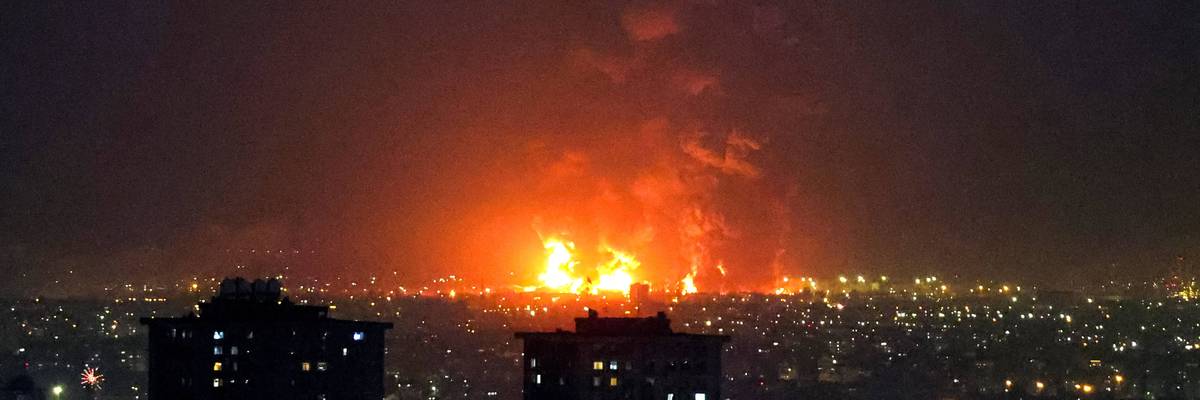
Explosions erupt following strikes at Tehran Oil Refinery in Tehran on March 7, 2026.
(Photo by Atta Kenare/ AFP via Getty Images)


Kyle Schmidlin
Mar 31, 2026
Common Dreams

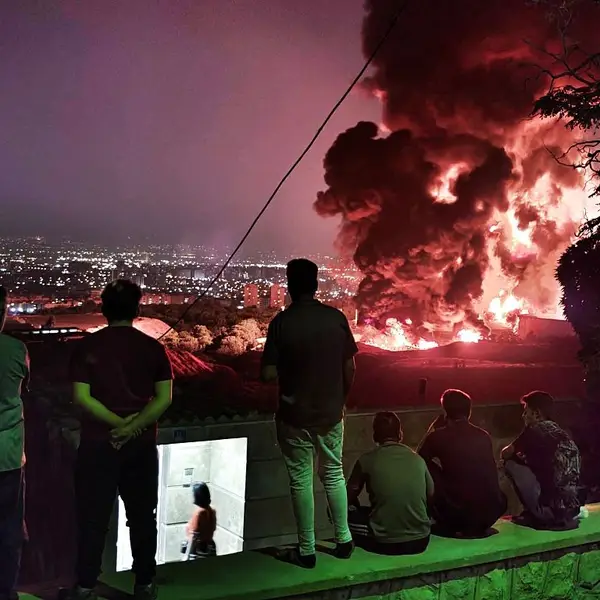
On February 28, President Donald Trump and Israeli Prime Minister Benjamin Netanyahu started a war with Iran. Since then, violence has spread throughout the Middle East. On the first day of bombing, the US bombed an elementary school, killing more than 100 children. Iran struck back, hitting Israel and US bases in the region. Israel expanded into Syria and Lebanon, bombing apartment buildings in Beirut. A few weeks ago Israel bombed oil depots in Tehran, engulfing the sky in flames and raining toxic oil on a population bigger than New York City.

But all Americans can think of, naturally, is the price of gas.


As Another Oil-Fueled War Erupts, Study Reveals Planet Heating at Unprecedented Rate


As G7 Weighs Measures to Confront Growing Energy Crisis, Officials Urged to Tackle ‘Fossil Fuel Profiteering’

Oil is both a major driver of this war and, for now at least, the primary way Americans are feeling its effects. The war drives home the grim reality that we are hostage to this toxic ooze that burns dirty, poisons wildlife, causes cancer, and accelerates climate change. The necessity to wean ourselves off of it, as quickly and completely as possible, has never been more apparent.

An Oil Crisis of Trump’s Own Making

Even Trump is subservient to the whims and demands of the oil economy. Since he started the war, he’s tried desperately to control the chaotic effect his bombing campaign has had on global oil markets. Trump may not be bright, but he understands one very basic political reality: He can cover up the Epstein files, get away with all manner of fraud and graft, and even commit war crimes—but he cannot let the price of gas get too high.

Oil makes all our lives dirtier and less safe. Fighting wars so we can dig it up until it’s all gone—or until we are—is as stupid, reckless, and self-destructive a thing as any animal has ever done.

From a strategic perspective, then, the focal point of the war quickly became the Strait of Hormuz, a narrow passageway out of the Persian Gulf that pinches down between southern Iran and the Omani Musandam Peninsula. The strait is an essential shipping lane for 20% of the world’s liquefied natural gas (LNG), as well as a third of the global fertilizer trade. With essentially uncontested control of the strait, Iran has closed it to “enemy-linked” ships. Iran insists that non-hostile ships pay a toll in Chinese yuan, which is an attempt to undermine the supremacy of the petrodollar.

The crisis at the Strait of Hormuz is entirely of Trump’s own making, and has triggered an erratic series of threats, pleas, lies, and bargaining from him as he tries to keep his stupid war from grinding the global economy to a halt. Trump has even threatened to deploy the US Navy to escort ships through the strait. One has to wonder how sailors feel about being offered up as bodyguards for Qatari tankers, thrown into a situation where they would be wide open for Iranian drone and missile attacks.

Trump the Oil Imperialist

Trump sees this war almost entirely through the lens of oil. As part of alleged ceasefire negotiations, Trump claimed Iran “gave us a present… worth a tremendous amount of money… it was oil-and-gas related.” That turned out to be Iran allowing 10 oil ships through the Strait of Hormuz. Trump also implied that those high gas prices causing so many people pain at the pump are actually good for the country. Because the US is a net exporter of oil, Trump said, “When oil prices go up, we make a lot of money”—perhaps forgetting that most Americans do not own oil companies.

Compare Trump’s constant talk of oil with the Bush administration’s 2003 invasion of Iraq. In 2003-06, calling Iraq a war for oil was considered a conspiracy theory. Dissidents and war critics were driven out of polite conversations for even bringing it up. Insinuating that the troops would ever be deployed for such an ignoble purpose was treated as beyond the pale, if not treasonous, by Fox News and the Bush White House.

This time, there’s next to no pretense of nobility in Trump’s war. While lots of motivations, with varying degrees of believability and logic, have been given—ranging from halting Iran’s nuclear capabilities to ushering in Armageddon—the Trump administration is perfectly open about the centrality of oil to their war mission. In a way, it’s almost refreshing to hear a politician speak so forwardly about their imperialist intent, even if it does lay bare the villainy of the US empire.

In addition to the Strait of Hormuz, Trump is focused on Kharg Island, a small island in the Persian Gulf that handles up to 90% of Iran’s crude oil exports. Sen. Lindsey Graham (R-SC), who is among the most bloodthirsty war hawks on the planet, encouraged Trump to seize Kharg Island (and compared such an operation to Iwo Jima, in which 7,000 Marines died—no skin off Lindsey Graham’s back). Trump himself then said, while discussing his military options, “My favorite thing is to take the oil in Iran.”

Trump has long openly fantasized about using the military to conquer oil fields. In 2013, before his political career really started, he tweeted, “I still can’t believe we left Iraq without the oil,” and he repeated this urge to plunder Iraq’s oil during the 2016 election. To Trump, this is just how the world works: If your guns and bombs make bigger holes and explosions, you get to just take whatever you want, anywhere in the world. There is no right, no wrong, no law.

This also tracks with how Trump has handled the oil industry in Venezuela. Last year, Trump started claiming that Venezuela had stolen, or “unilaterally seized and sold American oil.” This claim was a reference to Venezuela nationalizing their oil industry and evicting American oil companies. Then, in January, the US military abducted Venezuelan President Nicolás Maduro, an astonishing breach of international norms. With Maduro gone, Trump began shadily directing Venezuelan oil revenue into an offshore Qatari account.

The Need to Wean Ourselves off of Oil

Such oil imperialism long predates Trump. Just ask other offenders of the US oil monopoly, like Muammar Gaddafi or Saddam Hussein. Oil is the locus of US foreign policy. The US military itself is the single largest institutional polluter and user of fossil fuels. It’s a dirty business that’s ruining the planet and jeopardizing our futures in countless ways, of which this despicable war in Iran is just the latest and highest profile.

The simple answer to all this madness is to wean ourselves off of oil. It won’t be easy, and we’ll probably never be fully rid of it, but we aren’t even trying. There are a million ways we could start cutting back, a million investments we could make toward a future that is as oil free as possible. But Trump is doing everything he can to keep us addicted to it, including starting an unpopular and illegal war.

Trump has always been particularly pro-fossil fuel. He loves the nonsensical phrase “beautiful clean coal.” He calls green energy a “scam” and has repeatedly made the utterly deranged claim that windmills cause cancer. His administration displays a psychotic obsession with destroying green energy initiatives, most recently paying a French energy company $1 billion to cancel a wind farm and instead invest in oil and gas.

Oil makes all our lives dirtier and less safe. Fighting wars so we can dig it up until it’s all gone—or until we are—is as stupid, reckless, and self-destructive a thing as any animal has ever done. With a little bit of will and some leadership, we could control our greed and addiction. If we were able to do that, we might not find ourselves charging into the Middle East on such a regular basis, burning through American lives and treasure, killing countless men and women and children, and making the rest of the world hate us.


Our work is licensed under Creative Commons (CC BY-NC-ND 3.0). Feel free to republish and share widely.


Kyle Schmidlin
Kyle Schmidlin is a freelance writer who also runs the Third Rail News blog.
Full Bio >
As G7 Weighs Measures to Confront Growing Energy Crisis, Officials Urged to Tackle ‘Fossil Fuel Profiteering’

“It is obscene that companies like TotalEnergies are making enormous profits from war, while ordinary people’s lives are being shattered and the world faces a spiraling economic crisis,” said one campaigner.


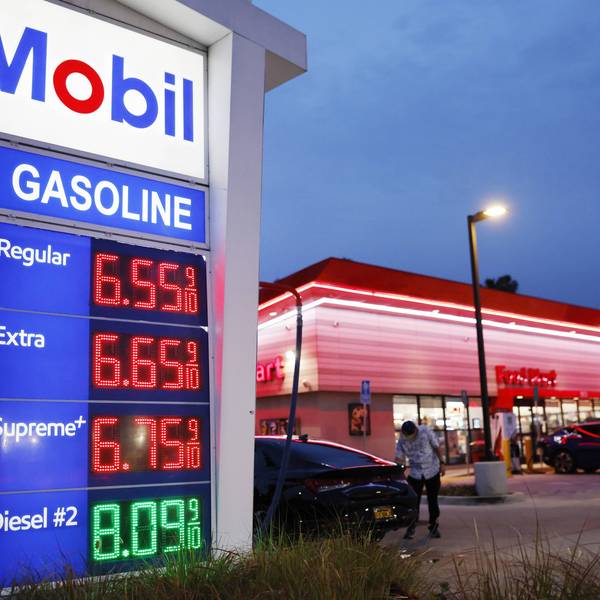
Gas prices are displayed at a Mobil gas station on March 30, 2026 in Pasadena, California.
(Photo by Mario Tama/Getty Images)

Julia Conley
Mar 31, 2026
COMMON DREAMS

As energy and finance officials from across the European Union prepared to review energy supply levels amid the US-Israeli war on Iran on Tuesday, campaigners from a leading climate action group renewed their call for officials to go further than just releasing oil reserves in order to keep costs down.

Oil giants that have benefited from the growing global energy crisis set off by the US-Israeli attacks and Iran’s retaliatory closing of the Strait of Hormuz should be held to account for their “fossil fuel profiteering,” said 350.org.

After a virtual meeting of energy ministers from the G7 countries on Monday, 350.org called on officials to tax the windfall profits of companies like France’s TotalEnergies, which is estimated to have made $1 billion in profits in just the last month since Iran closed the strait in retaliation for the US and Israeli attacks.

Total has reportedly “monopolized” about 70 crude oil shipments from the UAE and Oman in the last month, as Murban crude prices surged from $70 to $170 per barrel.

As Common Dreams reported Monday, 350.org released an analysis showing that spiking oil and gas prices resulting from the US-Israeli war have cost consumers and businesses more than $100 billion in the past month.

“It is obscene that companies like TotalEnergies are making enormous profits from war, while ordinary people’s lives are being shattered and the world faces a spiraling economic crisis,” said Fanny Petitbon, France team lead for 350.org. “At a time of such profound human suffering, no company should be allowed to exploit chaos and conflict for financial gain. The G7’s deafening silence on these windfall profits speaks volumes, signaling a failure to hold corporate greed accountable while the rest of the world pays the price.”

Revenues from taxing windfall profits could “be used to support vulnerable households, accelerate the transition to renewable energy, and fund recovery efforts in regions affected by conflict,” said Petitbon.

“The principle is clear: extraordinary profits made in times of crisis should be redirected for the public good, not concentrated in the hands of a few,” she said.

The ministers from the G7 countries—which include the United States, Canada, Japan, Britain, France, Germany, and Italy—met virtually to discuss how the war in Iran is affecting energy and commodity markets and inflation. They called on countries “to refrain from imposing unjustified export restrictions” on oil and gas, but did not announce any specific steps they plan to take.

“We stand ready to take all necessary measures in close coordination with our partners, including to preserve the stability and security of the energy market,” the ministers said in a statement. “We recognize the importance of coordinated international action to mitigate spill overs and safeguard macroeconomic stability.”

Earlier this month, the International Energy Agency coordinated the release of 400 million barrels of oil to mitigate the supply shortfall caused by the closing of the Strait of Hormuz, from which about one-fifth of the world’s oil supply flows.

But gas prices across Europe have continued to rise by 70% nonetheless. In the US, the average price of gas rose to $4 per gallon on Tuesday for the first time since August 2022.

Brent crude oil, which cost about $70 per barrel before the war, has gone up to $119 per barrel, and analysts are projecting prices as high as $200 as the conflict continues.

Monday’s virtual summit was held ahead of an emergency meeting of EU energy ministers, who were told by EU Energy Commissioner Dan Jørgensen in a letter Monday that they were “encouraged to make timely preparations in anticipation of a potentially ⁠prolonged disruption” of energy imports.

Jørgensen emphasized in a video posted on social media Monday that the growing energy crisis underscores how a transition away from oil and gas toward renewable sources is crucial for economies as well as the planet.


“We will need immediate targeted measures to combat this crisis, but all of these measures need to be in line with our long-term strategy, which is more renewables as fast as possible,” said Jørgensen.