It’s possible that I shall make an ass of myself. But in that case one can always get out of it with a little dialectic. I have, of course, so worded my proposition as to be right either way (K.Marx, Letter to F.Engels on the Indian Mutiny)
Friday, April 03, 2026
French court overrules police ban on annual Muslim event
A French court on Friday overruled a Paris police ban on an annual Muslim event over the weekend due to a “terrorist risk targeting the Muslim community". The court noted that the public disturbances cited by the authorities to justify the ban were “not substantiated" by the evidence provided.
France’s administrative court on Friday ruled on an urgent appeal to overturn a ban on the Annual Gathering of French Muslims, scheduled for Friday through Monday, at Bourget, north of Paris.
The court found the public disturbances cited by the authorities to justify the ban were “not proven”. The presiding judge ruled that “the public order disturbances cited” by the Paris police to ban the Annual Gathering of French Muslims “were not substantiated by the evidence in the case file”, according to a statement from the Paris Administrative Court.
The judge also noted the absence of any documented incidents during previous such events, “which were also held at the Bourget Exhibition Center in tense contexts, particularly following the 2015 Paris attacks”.
The court ruling followed a ban order by the Paris police citing a "major terrorist risk" that the event might be targeted. The police order said the event was "taking place in a particularly tense international and national context".
The gathering was "exposed to a significant terrorist risk targeting the Muslim community", it added.
The ban order cited a foiled bid last weekend to bomb the Bank of America building in Paris – an event, it said, that underlined the seriousness of the threat inside France.
French prosecutors said the attempted attack might have been linked to a pro-Iran group, as security fears flare over the war in the Middle East.
Police also cited a polarised political debate during municipal elections last month.
The decision comes as the French interior ministry prepares a draft law designed to tackle the danger of radical Islamist elements infiltrating Muslim groups.
The bill is due to be presented to President Emmanuel Macron's cabinet at the end of April, the ministry said, confirming a report by Le Parisien newspaper.
(FRANCE 24 with AFP)
Industry contamination of soil with toxic metals exposes failure to translate science into policy
Issued on: 31/03/2026 - FRANCE24
Eve Irvine is pleased to welcome Dr. Jagannath Biswakarma, Honorary Senior Research Associate at the University of Bristol. As an environmental scientist, his work focuses on understanding how human activity reshapes the natural systems we depend on, often in ways that remain invisible until their consequences surface in our bodies. He examines the growing global exposure to toxic heavy metals such as cadmium, arsenic, lead, and mercury, substances that, while naturally present in the Earth, are increasingly concentrated through industrial and agricultural processes.
'Typosquatting': How to spot fake news sites created by AI
Issued on: 25/03/2026 -
Courrier France 24, Sud Ouest Direct, 20minutes.com… they sound like real news outlets, but they are not. Learn how to spot sites created by AI.
Since 2023, fake media sites, often created by AI, have been appearing online. The sites publish articles aimed at misleading users or getting views for ad revenue. Here are four tips for spotting fake media sites.
Tip #1: Check the URL
In 2023, an article appeared online that looked like it was published by the French newspaper Le Parisien. Using the same logo and graphic style as the real newspaper, the article reported that wheat from Ukraine, meant for children in Africa, was instead being used as pig feed in Europe.
But the URL – “leparisien.ltd” – showed that the article was fake. The newspaper's real address is “leparisien.fr”.
Imitating a site by using a URL that is close to the real one is called "typosquatting".
Tip #2: Check the real news site.
See whether the article appears on the real news site. If you search for the pig feed article on the real Le Parisien site, you find an article saying that the newspaper had been plagiarised.
Tip #3: Watch out for signs of AI
In 2024, the Russian embassy in South Africa shared an article about atrocities supposedly committed by mercenaries fighting for Ukraine. The article was fake and was published by a site calling itself The Boston Times with the URL "https://bostontimes.org/".
The logo of this site contained nonsense text – a frequent giveaway that AI created the image.
The Boston Times was, in fact, a real newspaper, but it ceased publication in 1943.
Tip #4: Look for AI prompts in the text
Also, look out for traces of the prompts used to tell AI bots what to create. In the case of a fake French site that appeared in 2024, Media Alternatif, the instruction accidentally appeared in a headline.
In an article about supposed death threats against a school principal, the headline began with this text: "Here is a short headline based on the topic you described."
If an article or a news site seems suspicious, check the URL and go to the real site.
In a 19-minute address to the nation from the White House on Wednesday, President Donald Trump defended his war in Iran, now entering its second month, presenting the operation as a success “nearing completion.” But the President also stretched the truth on several points, including certain battlefield victories and the state of the US economy. Among the most striking claims was that the United States had toppled Iran's government and achieved “regime change” following the deaths of senior officials, including former Supreme Leader Ali Khamenei.
Despite these losses at the top, there is no evidence that Iran’s governing system has collapsed or that power has shifted away from the Islamic Republic. Analysts say the core institutions of the regime remain intact, with no clear signs of political transition underway.
Trump also asserted that the United States currently has “no inflation” and is “totally independent” of Middle Eastern oil. These statements conflict with the latest US government data, which show inflation rising even before the conflict in Iran began. They also overlook oil’s role as a global commodity, which affects prices at the US pump.
Vedika Bahl examines Trump’s claims and separates fact from fiction in Truth or Fake.
HE DIDN'T MENTION NATO IN HIS SPEECH
Trump strongly considering pulling US out of NATO, Britain's Telegraph reports
US President Donald Trump said he was strongly considering pulling the United States out of NATO in an interview published Wednesday by Britain's Daily Telegraph, describing the Western alliance as a "paper tiger". The threat comes after European allies declined to join his war against Iran.
US President Donald Trump said he was strongly considering pulling the United States out of NATO after allies failed to back US military action against Iran, according to an interview with Britain's Daily Telegraph.
Trump described the alliance as a "paper tiger" and said removing the United States from the defence pact was now "beyond reconsideration", the newspaper reported. He said he had long held doubts about NATO's credibility.
"Oh yes, I would say [it’s] beyond reconsideration," Trump told the newspaper when asked about whether he would reconsider US membership of the alliance after the conflict.
"I was never swayed by NATO. I always knew they were a paper tiger, and (Russian President Vladimir) Putin knows that too, by the way."
Asked about Trump’s comments, UK Prime Minister Keir Starmer said Britain remained "fully committed to NATO", which he described as "the single most effective military alliance the world has ever seen".
Starmer told reporters that whatever the pressure on me and others, whatever the noise, I am going to act in the British national interest in all the decisions I make."
A German government spokesperson also reaffirmed Berlin's commitment to the Western alliance, noting that the US president has made similar comments in the past.
"This isn't the first time he's done this, and since it's a recurring phenomenon, you can probably judge the consequences for yourself," said the spokesperson at a regular government press conference.
"It's not my place here to comment on the American president's words. I simply want to state on behalf of the German government that we are, of course, committed to NATO."
(FRANCE 24 with Reuters)
RECYCLED ANNOUNCEMENT
Trump signs order threatening up to 100% tariffs on pharmaceuticals
US President Donald Trump unveiled sweeping new pharmaceutical tariffs on Thursday that could reach 100 percent unless drugmakers strike pricing deals with his administration. The move escalates his trade strategy and could reshape global supply chains and raise costs.
President Donald Trump signed an executive order Thursday that could slap long-threatened pharmaceutical tariffs of up to 100 percent on some patented drugs from companies that don't reach deals with his administration in the coming months.
Companies that have signed a “most favoured nation” pricing deal and are actively building facilities in the US to onshore production of patented pharmaceuticals and their ingredients will have a 0 percent tariff. For those that don’t have a pricing deal but are building such projects in the US, a 20 percent tariff will apply but will increase to 100 percent in four years.
A senior administration official told reporters on a press call that companies still have months to negotiate before the 100 percent tariffs kick in – 120 days for bigger companies, and 180 days for everyone else. The official, speaking on condition of anonymity to preview the executive order before it was issued, did not identify any companies or drugs that were in jeopardy of getting hit with the increased tariffs but noted the administration had already reached 17 pricing deals with major drugmakers, 13 of which have signed.
In the order, Trump wrote that he deemed such actions necessary “to address the threatened impairment of the national security posed by imports of pharmaceuticals and pharmaceutical ingredients”. It arrived on the first anniversary of Trump’s so-called Liberation Day, when the president unveiled sweeping new import taxes on nearly every country in the world that sent the stock market reeling. Those “Liberation Day” tariffs were among the duties the Supreme Court overturned in February.
Some warned of consequences of the coming tariffs announced Thursday. Stephen J. Ubl, CEO of pharmaceutical company trade group PhRMA, said taxes “on cutting-edge medicines will increase costs and could jeopardise billions in US investments". He pointed to America's already large footprint in biopharmaceutical manufacturing and noted medicines sourced from other countries “overwhelmingly come from reliable US allies”.
Trump has launched a barrage of new import taxes on America’s trading partners since the start of his second term and repeatedly pledged that sky-high levies on foreign-made drugs were on the way. But the administration has also used the threat of new levies to strike deals with major companies – like Pfizer, Eli Lilly and Bristol Myers Squibb – over the last year, with promises of lower prices for new drugs.
Beyond company-specific rates, a handful of countries have reached trade frameworks with the US to further cap tariffs on drugs sent to the US. The EU, Japan, Korea and Switzerland will see a 15 percent US tariff on patented pharmaceuticals, matching previously agreed rates for most goods, and the UK will get 10 percent – which Thursday’s order noted would “then reduce to zero” under future trade agreements. The UK previously said it secured a 0 percent tariff rate for all British medicines exported to the US for at least three years.
In addition Thursday, Trump rolled out an update on his 50 percent tariffs on imported steel, aluminium and copper. Starting Monday, tariff rates on those metals will be calculated based on the “full customs value” of what US customers pay when buying foreign metal under the latest order, which the administration officials claimed will keep importers from other countries from escaping higher payments.
Products fully made of steel, aluminium and copper will continue to be tariffed at 50 percent for most countries. But the administration is also shifting how tariffs are calculated for derivative metals – or finished goods that contain some of these metals, but are not made entirely of them.
For a product with metal that amounts to less than 15 percent of its entire weight (like the cap on a perfume bottle) only country-specific tariffs will now apply, officials told reporters Thursday. But for products with more metal, such as a largely steel washing machine, they said a 25 percent tariff will apply to the whole value.
Thursday’s orders reflect the latest example of Trump tapping into sectoral duties. The president used Section 232 of the 1962 Trade Expansion Act to impose the levies, the same authority he cited to slap import taxes on cars, lumber and even kitchen cabinets. And many expect to see more product-specific import taxes down the road.
That’s because a ruling from the Supreme Court struck down tariffs Trump imposed using another law – the 1977 International Emergency Economic Powers Act – to immediately slap tariffs on any country, at nearly any level.
While the February 20 court decision marked a significant blow to Trump’s economic agenda, the president still has plenty of options to keep taxing imports aggressively. Beyond sectoral levies, Trump also imposed a 10 percent tariff on all imports under a separate legal power mere hours after the Supreme Court’s ruling, but that duty can only last for 150 days. Some two dozen states already challenged the new tariffs.
Trump has argued his steep new import taxes are necessary to bring back wealth that was “stolen” from the US. He says they will narrow America’s decades-old trade deficit and bring manufacturing back to the country. But Trump has also turned to tariffs amid personal grudges, or in response to political critics. And upending the global supply chain has proven costly for businesses and households that are already strained by rising prices.
(FRANCE 24 with AP)
French prosecutors open hate speech probe into polarising news channel CNews
The Paris prosecutor's office announced Friday it had launched an investigation into alleged racist comments following remarks made in late March on French news channel CNews targeting the newly elected mayor of Saint-Denis Bally Bagayoko.
The Paris prosecutor's office said on Friday it had opened an investigation into French news channel CNews for possible hate speech after alleged racist comments about Bally Bagayoko, the newly elected Black mayor of Parisian suburb Saint-Denis.
Bagayoko, the first Black mayor of Saint-Denis, an impoverished and diverse suburb north of Paris, lodged a complaint on Wednesday, alleging the comments made by panelists on the channel on March 27 and 28 constituted racist slurs, the prosecutor's office said in a statement.
Contacted by Reuters, CNews had no immediate comment. It told AFP the controversy was "baseless" and denied any racist comments were made. The mayor also could not be immediately reached for comment.
Separately, the prosecutor opened an investigation into possible cyberbullying targeting the mayor, who is a member of the far-left France Unbowed party, due to his skin colour.
Under French law, racial slurs are punishable by up to one year in jail and a fine of up to €45,000 ($52,000), while cyberbullying is punishable by an up to two-year jail term and a fine of up to €30,000.
(FRANCE 24 with Reuters)
Samsung Heavy Industries Participates in Its First U.S. Navy MASGA Project
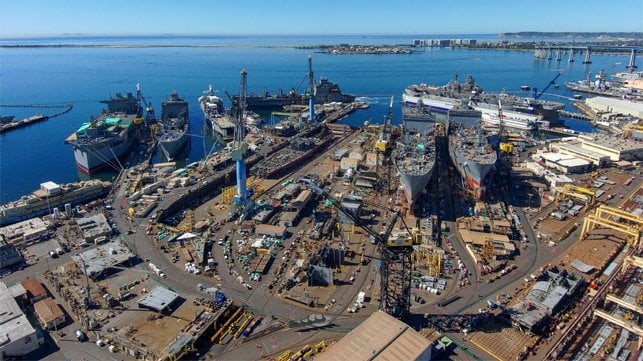
General Dynamics will be using SHI's expertise in hull efficiency as it refines the Next Generation Logistic Support Ship (NASSCO)
South Korean shipbuilder Samsung Heavy Industries announced that it will be participating in its first U.S. shipbuilding project, working with General Dynamics NASSCO and DSEC. It is a design project that is being billed as part of the South Korean program launched last year, calling for a $150 billion investment project known as Make American Shipbuilding Great Again (MASGA).
The project is for the refining of the design of the future “Next Generation Logistics Support Ship,” which the U.S. Navy is currently developing as part of its “Distributed Ocean Operations” strategy. The concept is for a small vessel capable of high maneuverability and targeted, tailored operational capabilities. The program envisions as many as 13 ships to be built in the future for roles in refueling, rearming, and resupplying Navy and Marine vessels.
The project commenced in 2020 with the first concept designs. It has proceeded through several steps up to the next round of contracts awarded in March to both Houston-based Vard Marine US and General Dynamics NASSCO in San Diego. This next phase is for design development and production planning for the Next Generation Logistics Ship (NGLS) program. According to the solicitation, the objectives of this effort include identifying cost-effective design solutions, leveraging commercial practices and standards to the maximum extent practical to inform and validate requirements, and maximizing affordability and producibility.
Samsung Heavy Industries had announced in December 2025 that it was partnering with NASSCO and DSEC to collaborate on design projects and to enhance manufacturing capabilities. NASSCO, of course, has a long history of building ships since the 1950s for the U.S. Navy, having delivered over 150 vessels, and is currently building the John Lewis (T-AO 205) Fleet Oilers. DSEC provides a complete range of shipbuilding and marine engineering services.
NASSCO was awarded a contract valued at more than $3.9 million for the next phase of the NGLS project. It will involve both Samsung Heavy Industries and DSEC, and will run till March 20207.
Samsung Heavy Industries reports it will participate in the field of high-efficiency hull design. It says it plans to utilize its hull design technology accumulated with the world’s largest commercial test tank, measuring 400 meters in length and located at the Daedeok Research Center. It also points out that the technical cooperation with NASSCO will be enhanced by utilizing a newly established research center at San Diego State University.
It looks at this project as its entry into MASGA and a chance to further leverage its expertise to support U.S. shipbuilding. Samsung has also established a U.S. subsidiary, which will be working with Vigor to bid for U.S. government maintenance and repair projects.
The Samsung Heavy Industries team will, oddly enough, be competing with Hanwha and the Hanwha Philly Shipyard, which is also partnering for the NGLS project. Hanwha Philly announced earlier in the week that it had won its first U.S. project, working with Vard Marine, which was awarded a parallel contract valued at $4.5 million for a similar design refinement project.
The U.S. Navy has said it is anxious to proceed with these ships as an augmentation to its capabilities with the John Lewis class. The Navy has projected that the first ships could be completed by FY 2028
Wah Kwong & Bureau Veritas 1st SMART “Augmented Ship” in Newbuild Series
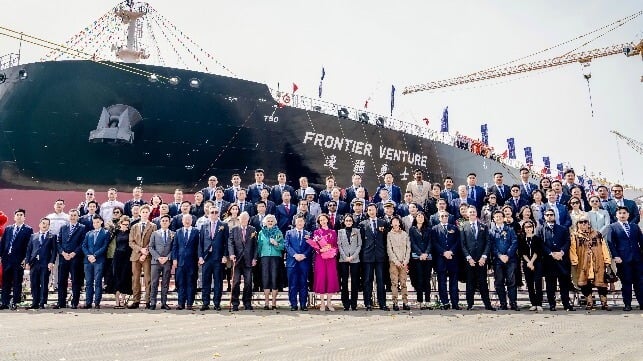
Wah Kwong Maritime Transport and Bureau Veritas Marine & Offshore celebrated the delivery of the LR2 tanker Frontier Venture on 30 March, at the Hengli Shipyard, the first in Wah Kwong SMART-enabled ships series to demonstrate Group 3 “augmented ship”
Wah Kwong Maritime Transport (“Wah Kwong”) and Bureau Veritas Marine & Offshore (“BV”) celebrated the delivery of the LR2 tanker Frontier Venture yesterday, the first vessel in Wah Kwong’s new series of SMART-enabled ships, representing a significant milestone in Wah Kwong’s fleet development. Built by Hengli Shipyard in Dalian, the vessel is the first in the series to demonstrate Group 3 “augmented ship” capabilities, integrating advanced on-board digital systems with shore-based support.
Classed by BV, the Frontier Venture has been assigned the SMART (H1,M1,EnE3,MH3) notations, recognizing its enhanced capabilities in machinery health monitoring and energy efficiency optimization. The new vessel is the latest example of industry innovation, resulting from the long-standing collaboration between Wah Kwong and BV to advance class-recognized digitalization across its fleet.
The “augmented ship” features expert-in-the-loop services that deliver timely, actionable insights to ship officers. This includes early detection of machinery anomalies and recommendations for more efficient operating profiles, a critical capability in modern maritime operations, where complex variables demand both data-driven analysis and human expertise for sound decision-making.
The Frontier Venture is the first in the series being built at Hengli Shipyard. The delivery of the second LR2 is expected to be in July 2026. The 114,000 DWT LR2 Frontier Venture is 248.8 metres long, with a breadth of 44.0 metres and a depth of 21.5 metres. It is powered by a modern Everllence B&W main engine rated at 10,800 kW SMCR, and meets EEDI Phase III requirements. The LNG-ready vessel has three cargo oil pumps, each with a capacity of 3,000 m³/h, for efficient loading and discharge.
The CROWN+ Ultramax bulk carrier Eastern Venture owned by Wah Kwong was the first newbuild worldwide to be granted the BV SMART (EnE1) notation on delivery in 2023. Since then, the Wah Kwong fleet has progressed from Group 1 foundational onboard digital systems to more advanced Group 3 “augmented ship” capabilities, integrating additional monitoring and decision-support capabilities from shore. This progression reflects Wah Kwong’s commitment to a new generation of vessels equipped with integrated smart technologies supporting advanced analytics, predictive maintenance, and enhanced operational performance.
The wider SMART-enabled ship program includes seven SMART-enabled vessels across multiple ship types, including LNG carriers under construction at Dalian Shipbuilding Industry Company (DSIC) and bulk carriers at New Dayang Shipyard, to be delivered from 2026 to 2027.
The delivery of these SMART notations follows verification, validation, testing and audit protocols. This systematic approach is grounded in a critical principle: digital solutions deliver measurable value only when technical, operational and organizational elements are fully aligned. The objective of this third-party recognition is to reinforce stakeholder confidence in the reliability and integrity of digital capabilities deployed on board and supported from shore.
Hing Chao, Chairman of Wah Kwong Maritime Transport, said: “The SMART notations awarded to our first LR2 mark a key milestone in our long?term partnership with Bureau Veritas and demonstrate how we translate innovation into fleet?wide progress. BV continues to set a higher bar for the governance of digital capability, and together we have advanced through the SMART framework in recent years, ensuring that data?driven insights are effectively embedded in operations onboard and ashore. This supports a future where trusted data and digital technologies enable the sector to collaborate more closely and move faster towards an intelligent, sustainable, maritime world.”
Alex Gregg-Smith, President, Marine & Offshore at Bureau Veritas, said: “The maritime sector is undergoing profound transformation, in which digitalization continues to play a central role. As with any major transition, building trust in new technologies is essential. Bureau Veritas has been a strong and forward?thinking partner to Wah Kwong in helping advance the deployment of voluntary SMART notations to help build confidence in the digital solutions across the industry. From early advances in energy efficiency monitoring to the integration of sophisticated smart systems across multiple vessel types, this collaboration demonstrates how shipowners, classification societies, and technology providers can work together to enable safer, more efficient operations through data?driven technologies.”
The products and services herein described in this press release are not endorsed by The Maritime Executive.
World Fuel Services & West Coast Clean Fuels Establish Methanol Bunkering
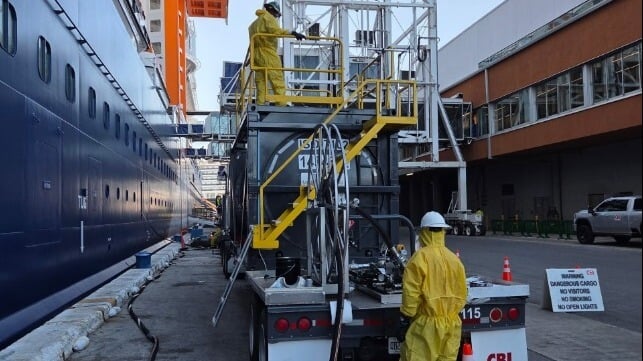
Methanol bunker fuel delivery in South Florida; World Fuel Services Image Caption: Methanol bunker fuel delivery in South Florida
World Fuel Services, in collaboration with West Coast Clean Fuels, has established a proven methanol bunkering capability available to vessel owners and operators across U.S. ports. The companies successfully completed an over-the-water methanol bunker fuel delivery in South Florida, demonstrating a safe, scalable, and regulatory-compliant solution ready for deployment nationwide.
Shipowners and operators evaluating methanol as a marine fuel now have access to a fully operational bunkering capability backed by U.S. Coast Guard-approved procedures, trained personnel, and purpose-built equipment. West Coast Clean Fuels is currently the only operator in the U.S. whose truck-to-ship methanol bunkering procedures have been approved by U.S. Coast Guard, and its infrastructure is designed for rapid deployment to additional ports on demand.
The capability is the result of years of rigorous preparation, including comprehensive risk assessments, development of operational and emergency response procedures, equipment procurement, and personnel training - all developed in coordination with the United States Coast Guard to meet the highest safety and regulatory standards. Recent regulatory guidance has incorporated elements of this work, reflecting how the operational approach developed by West Coast Clean Fuels and World Fuel has helped inform evolving industry standards.
"Our procedures didn’t just meet regulatory requirements - they helped shape them. The U.S. Coast Guard’s recent guidance reflects the operation we’ve developed. Bringing that collaborative work to life with World Fuel is exactly the kind of milestone that demonstrates we are ready to deliver methanol bunkering across U.S. ports,” said Matt Campbell, Technical Manager, West Coast Clean Fuels.
"World Fuel's established global marine fuel platform allows us to deliver and transact methanol bunkering solutions efficiently and reliably to customers," said Brad Hurwitz, senior vice president, supply and trading, World Fuel. "Shipowners and operators evaluating methanol as a marine fuel require both technical expertise and marine fuel delivery experience. This enhanced capability of World Fuel with West Coast Clean Fuels provides customers practical turnkey access to integrate methanol into existing fuelling strategies."
World Fuel and West Coast Clean Fuels are ready to support methanol bunkering needs across the United States, offering vessel owners and operators a reliable, compliant, and immediate accessible solution as the maritime industry transitions toward lower-emission fuel alternatives.
The products and services herein described in this press release are not endorsed by The Maritime Executiv
TUI Orders First Methanol River Cruise Ships as Sector Growth Continues
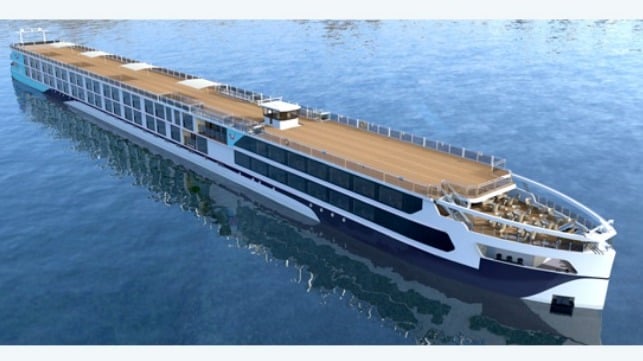
TUI will reach 10 river cruise ships i 2028 with two methanol-ready ships (TUI)
River cruising continues to be one of the hottest segments in the cruise industry, with strong growth continuing, especially in the European market. Analysts report there are over 380 river cruise ships currently sailing, with an additional 10 percent currently under construction and continuing new orders.
The UK division of Germany’s TUI Group announced that it has ordered two more new builds, and these ships are being designed and built for the next generation of alternative fuels. The company reports the ships are being designed particularly for methanol-fueled operation as it looks to address sustainable operations.
It has ordered two additional ships, each with 94 cabins and a total passenger capacity of 188 people. News of the order was shared as TUI christened the newest addition to its river cruise fleet, TUI Aria. Built in 2018 as the VistaStar, the ship has completed a refurbishment and has become the largest-capacity river cruise ship in the company’s fleet.
TUI announced its plans to enter river cruising in 2019, but its launch was delayed until 2021 after the COVID-19 pandemic. The company reports that in its nearly five years of service, it has seen strong growth with a 50 percent year-on-year growth in sales for 2026.
It currently has four ships, all focused on the UK market with fly-cruises to Europe’s popular destinations. Next year, it will add its next ship, TUI Elara, which will cruise between Frankfurt, Amsterdam, and Basel on the Rhine, Moselle, and Dutch and Belgian waters. The company’s first newbuild, Tui Lizia, follows in the summer of 2027. By 2028, it will reach 10 ships.
TUI’s news of the orders due for delivery in 2028 follows others in the European cruise industry. Viking, one of the largest river cruise operators, has 89 ships worldwide with orders for 23 river cruise ships and options for 16 additional river cruise ships. Other companies, including American Cruise Lines in the United States, and Ama and Scenic, also recently announced new ships. Celebrity Cruises announced a fleet expansion ahead of the launch of its river cruise offering in 2027.
A new entry into the market, and with a new concept, Transcend Cruises also last week announced an order to build two more ships, which will double its start-up fleet. The company is focusing exclusively on the group and charter market. The first of its river cruise ships, Connect, is completing construction in the Netherlands and will start service in July. A second ship is under construction for delivery in 2027, and the company has ordered two more ships for 2028.
Transcend’s ships are unique in that they have 60 identical staterooms, and all of them can convert into two-room suites. It is part of the focus on the insensitive and group market. They also feature both fitness centers and a spa. The hulls of the ships are built in Romania, with the outfitting and completion at Den Breejen Shipyard in the Netherlands.
River cruising is popular because of the combination of scenery and culture the ships present for travelers who are increasingly focused on experiences. Analysts project that the market segment will continue to see strong growth, outpacing the broader cruise industry.
First Offshore Post-Combustion CO2 Capture System Starts on FPSO
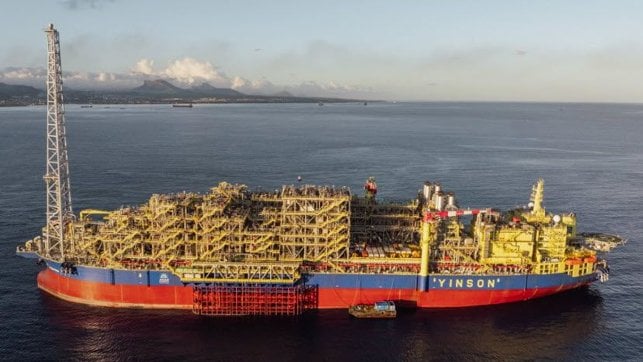
Agogo FPSO is positioned off Angola and it has completed commissioning of the first offshore carbon capture system (Yinson Production)
What is being billed as the world’s first offshore post-combustion CO2 capture system is now fully operational on an advanced FPSO positioned off Angola. Developed by Carbon Circle for the Yinson Production FPSO Agogo, which is being operated by Azule Energy, the FPSO and this new system are considered to be a pioneer in the emerging field of offshore carbon capture.
The massive FPSO was built in China and delivered in March 2025 by COSCO Shipping Heavy Industry Shipyard. Measuring 330 meters (1,082 feet) in length, it has a production capacity of 120,000 barrels of oil per day and a storage capacity of 1.6 million barrels of oil. The FPSO arrived off Angola in May 2025 and achieved first oil at the end of July 2025. It started a 15-year charter.
The Agogo FPSO is billed as the centerpiece of the Agogo International West Hub project, located approximately 180 kilometers (over 110 miles) off the coast of Angola. It involved two fields, which will each have an FPSO. Combined, the fields have estimated reserves of approximately 450 million barrels and a projected peak production of 175,000 barrels per day.
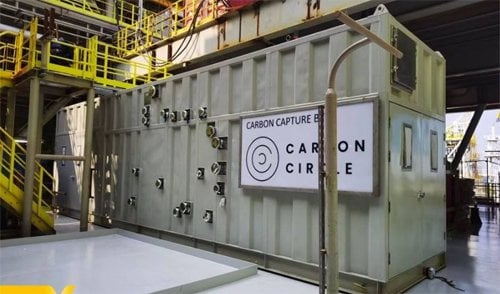
Carbon Circle received the contract to develop the carbon capture system in late 2023. The partners highlight the challenges, which ranged from tight layouts to limited access and operational challenges. They noted a need for a flexible, modular commissioning, noting that delivering the first carbon capture offshore was “anything but plug and play.”
The unique CCS system will provide vital information about how the systems perform offshore (Yinson Production)
The Agogo CCS system, they explained, is running on the open source CESAR1 solvent, which is an advanced amine blend shaped by years of academic research, international pilots, and global R&D collaboration. With low-energy regeneration and high reaction rates, the companies believe CESAR1 is showing strong potential for large-scale offshore deployment.
Yinson Production reports that integrating carbon capture into an FPSO reduces emissions from operations and builds an understanding of how such systems perform offshore. It is part of an advanced approach to the FPSO. It includes the first Combined Cycle Power Generation units ever deployed on an FPSO. All of its topside and marine systems were also designed to be fully electric, and it incorporates various advanced solutions aimed at minimizing operational environmental impact while maximizing efficiency.