It’s possible that I shall make an ass of myself. But in that case one can always get out of it with a little dialectic. I have, of course, so worded my proposition as to be right either way (K.Marx, Letter to F.Engels on the Indian Mutiny)
Saturday, April 18, 2026
MS NOW unloads withering supercut of all the 'deals' Trump claims Iran wants to make
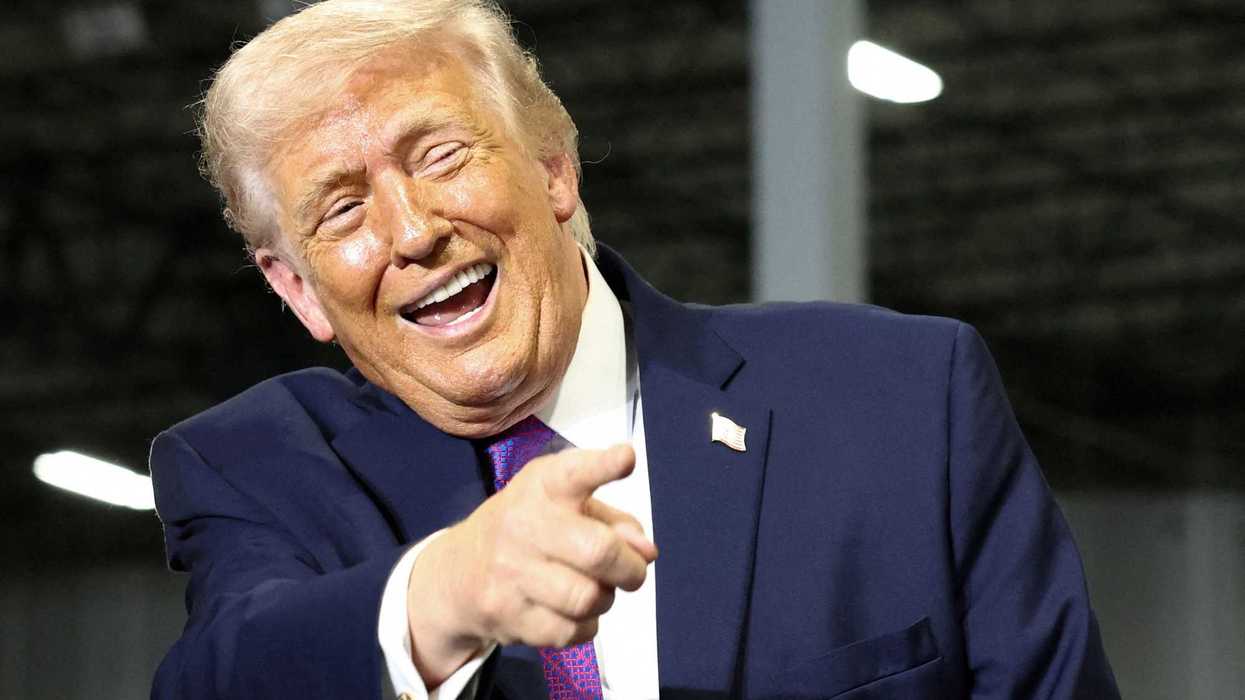
U.S. President Donald Trump gestures during a visit to Verst Logistics in Hebron, Kentucky, U.S., March 11, 2026. REUTERSKevin Lamarque
Critics say President Donald Trump is a walking example of projection. If so, the president’s description of Iran’s leaders over the course of his war with that nation may be telling, considering a steady rollout of claims recorded and presented for MS NOW’s The Weekend on Saturday.
“I think Iran looks like they want to make a deal very badly,” Trump said February 6, in the weeks leading up to the February 28 joint U.S./Israeli attacks.
“They want to make a deal,” he said March 16, weeks after the attacks. And then: “They want to make a deal very badly,” on March 23 in Palm Beach, Florida.
“They want to make a deal so badly. You have no idea how badly they want to make a deal,” he repeated on March 24 at the White House.
“They want to make a deal so badly, but they're afraid to say it because they figure they'll be killed by their own people,” Trump claimed on March 25.
“They are begging to make a deal — not me. They're begging to make a deal very badly,” he insisted yet again March 26.
“They want to make a deal,” he proclaimed on March 27, followed by: “They’re begging to make a deal. They’re begging to make a deal” that same day at a new location.
“They want to make a deal. They want to make a deal more than I want to make a deal,” he claimed in the Oval Office on March 31.
“They’d like to make a deal very badly,” he repeated yet again April 13 at the White House.
Former CIA Director John Brennan told Weekend anchors that he doubted Trump had any credibility left to squander at this point.
“I don't think he's ever had credibility on this issue because he has consistently misrepresented and lied about the situation. And the Iranians know that,” said Brennan. “And that's why when we're talking about the Strait [of Hormuz] right now, it's absurd to think that the Iranians would allow the strait to remain open if the U.S. blockade of Iranian ports continues.”
“So, he's making all these claims about they've agreed to suspend uranium enrichment and, open up. And the Iranians know that he is lying. And why should they believe anything that he might be saying that has an element of truth in it?” Brennan added.
Inside the pattern of bungled decisions exposed in Trump's late-night screeds
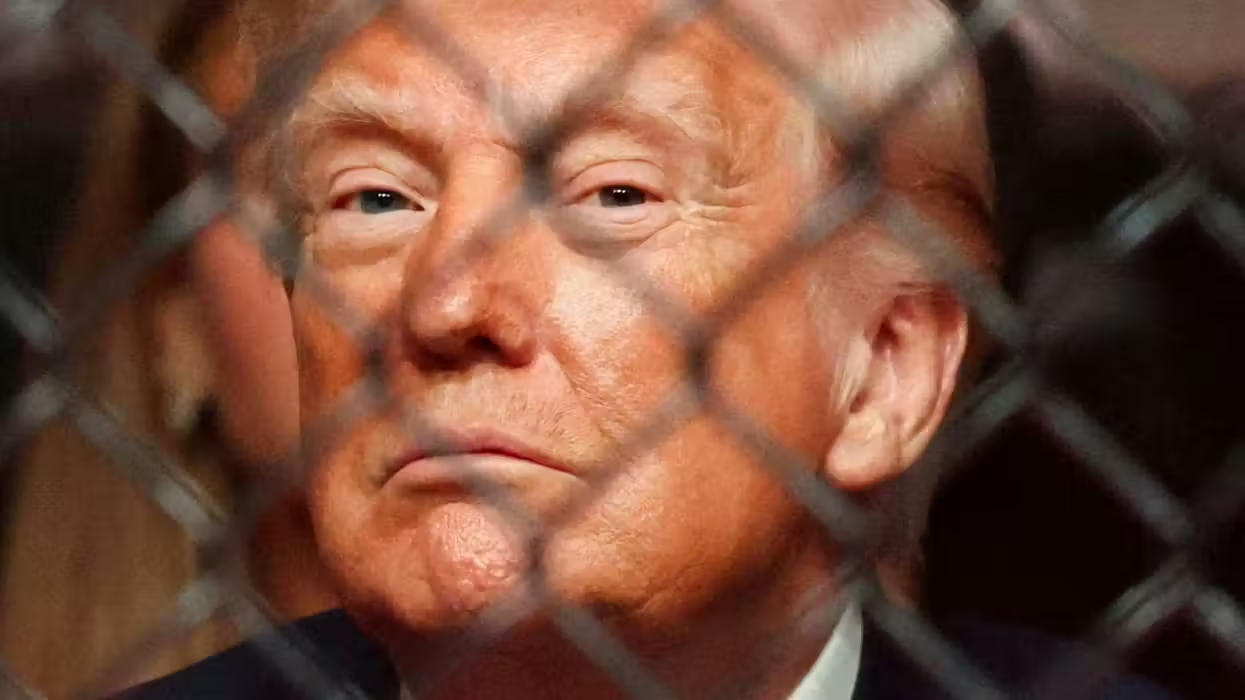
U.S. President Donald Trump watches a match during the UFC 327 event at Kaseya Center in Miami, Florida, U.S., April 11, 2026. REUTERS/Kevin Lamarque TPX IMAGES OF THE DAY
As bad as it is at home, Trump’s foreign policy blunders are even worse, setting us up for long term security consequences no one is talking about. In every bizarre late night social media post, Trump keeps modeling multi-faceted incompetence to explain his dastardly deeds. From threatening Greenland, to kidnapping Venezuela’s president and stealing their oil, to attacking the Pope, to exploding boats on the high seas then publishing snuff videos to brag about it, Trump has committed one hubristic, sophomoric, and dangerous act of aggression after another.
In Iran, Trump keeps mocking the old adage: when you find yourself in a hole, stop digging. Instead, he brandishes shinier shovels.
Frustrated by Iran’s control of the Strait of Hormuz, which has strangled 20% of the world’s oil transport, Trump nonsensically decided to impose his own blockade on Iran’s blockade. Blockading their blockade will only worsen the problem he’s trying to solve.
Trying to educate the economically illiterate, the WSJ explained, “The U.S. blockade on ships entering or exiting Iranian ports is set to drain more oil from a tight market, prolong the squeeze on other key commodities flowing through the Strait of Hormuz and inject significant uncertainty into the global economy.” They assessed, “Trump’s naval blockade of Iran risks further upending a global economy already battered by weeks of (Trump’s) war, escalating a regional clash into a worldwide financial shock that could prove more devastating than the fighting itself.”
Trump’s war in Iran will end up costing American taxpayers over $1 trillion, without factoring in energy prices, lack of healthcare, inflation, or the long-term costs of global economic contraction. And for what? Middle East policy experts say the war has made Iran’s cabal of religious fanatics even more dangerous.
How stupid does he think Americans are?
Trump blames the media for widespread public opposition to his war, but seems incapable of considering why Americans are opposed. He needs to look no further than his own words and deeds.
After Trump bombed Iran last June, he claimed to have “completely obliterated” Iran’s enriched uranium supply. Strutting on the world stage with great bombast, he declared that Iran’s nuclear capacity had been annihilated. Eight months later, he’s using Iran’s nuclear capacity to justify a war, without explaining what changed. Even his most diehard supporter wonders: was he was lying then or is he lying now?
It’s bizarre that Trump thinks Americans can’t track such a major incongruity, demonstrating either his deep contempt for them, or his own mental infirmity.
Signaling more incompetence during negotiations
Trump, who proudly rules by his “gut” instead of intelligence reports, doesn’t recognize that he’s swimming in geopolitical complexities above his head. It’s no surprise that the first round of negotiations to end the war he started failed.
To resolve the highly complex quagmire he created, Trump needs negotiators steeped in Iran’s history, geography, culture, and technological capacities. But he’s relying on loyalists: VP Vance, real estate developer Steve Witkoff, and his son-in-law Jared Kushner, all of whom lack the expertise and diplomatic experience needed to achieve an agreement. Two diplomats from the failed negotiations immediately identified Trump’s problem: choosing negotiators for personal loyalty instead of subject-matter expertise.
The results reflect the obvious, and it’s nothing new. Kushner and Witkoff failed in negotiations between Russia and Ukraine and failed in talks between Israel and Hamas while Israel continued bombing Gaza. For his part, Vance seems to have failed at everything.
Three days later, the Pope warned that the world is “being ravaged by a handful of tyrants.” He reiterated Catholic teachings of peace— “Blessed are the peacemakers. But woe to those who manipulate religion and the very name of God for their own military, economic, and political gain, dragging that which is sacred into darkness and filth.” Looking at you, Hegseth.
Every member of Congress swore an oath to uphold the Constitution. Every one of them, except perhaps Lindsey Graham, knows that what Trump is doing is illegal, dangerous, and unconstitutional, but they have chosen power over honor.
President Donald Trump delivered the cap to the Turning Point USA event in Phoenix, Arizona, and he had a friendly audience to take his words. This might explain the absence of rolling eyes and questioning looks on a few claims that Trump inflated, played down or made a point not to mention at all due to their controversy.
1.The U.S. will march in and take the Iranian nukes that he claimed were obliterated.
Months ago, Trump claimed to have “obliterated” Iran’s nuclear capabilities — the lingering existence of which he then later cited as one of the reasons to attack Iran last month and blow-up global fuel prices. But at the Friday TPUSA event, Trump said Iran’s nuclear capabilities are still somehow both “obliterated” yet in need of collection.
“You'll be very happy. The USA will get all nuclear dust,” he told the cheering TPUSA crowd. “You know what the nuclear dust is? That was that white powdery substance created by our B-2 bombers, those great B-2 bombers. Late one evening seven months ago. … And you know how we're going to get the dust, right? We're going to take it anyway. But taking it, taking it that way is slightly more dangerous. But we were going to get it anyway. … They will never have a nuclear weapon.”
But this information was immediately fact-checked by CNN reporter Nick Robinson, who told CNN anchor Jake Tapper that Iran has agreed to no such plan.
“[W]e’re hearing from Iranian sources who say that is just not the case. So, the Iranians are pushing back on some of what the president is claiming,” said Robinson.
2. The U.S. is paying Iran no compensation for Trump’s unilateral war.
Trump must be hotly aware of critics accusing him of hypocrisy for agreeing to pay Iran $20 billion after criticizing former President Obama for giving the country $1.7 billion because he denied that very fact at TPUSA.
“No money will exchange hands in any way, shape or form,” Trump insisted, in defiance of news that the U.S. has tentatively agreed to unfreeze $20 billion in Iranian assets.
British ambassador to the United States, Christian Turner claimed to CNN that he was “not close enough to the detail of how that would work” to say whether or not the transaction counted as a gift, but he conceded that as part of U.S./Iran negotiations Iran and Syria is “asking for an economic lifeline” from the U.S.
Bulwark Editor Jonathan Last called the transaction of money for Iran’s nuclear arsenal “a purchase … to the tune of $20 billion, which would be something that Donald Trump criticized the Obama administration for doing, but at a much greater scale.”
3. Ten wars ended.
The number of wars Trump has allegedly singlehandedly put an end to appears to be creeping up. This apparently includes the ending of the war he voluntarily started himself with February airstrikes on Iran, that left the nation’s more combative leadership in charge of the country.
Trump called his second term “by far the most successful first year of any administration in the history of our country, acknowledged by everybody.”
“To begin with, I ended eight wars, and it may be a little early to say this, but if we add Iran and Lebanon, that will be ten wars ended and many, many millions of lives saved,” Trump said.
Critics rated much of that claim bogus, with various international leaders denying either Trump’s intervention, or that the wars really ended at all.
'Radiating the spirit of Antichrist': Conservative Christians still unsettled by Trump stunt
President Donald Trump's recent social media posts, including an AI-generated image depicting him as Jesus Christ, have ignited debate within evangelical Christian circles about his relationship with religious values and his base.
The controversial posts — which included a profanity-laced Easter message and mocking references to Islam — prompted conservative author Rod Dreher to suggest Trump is "radiating the spirit of Antichrist," though he stopped short of calling Trump the Antichrist himself.
Speculation about the Antichrist's identity has long been a feature of Christian thought. Historical candidates have included Franklin D. Roosevelt, Ronald Reagan, and more recently, Barack Obama and Vladimir Putin, according to an analysis featured at Religion News Service.
What distinguishes Trump's posts is the division they've caused within his own evangelical support base, notes RNS. Calvin University professor Kristin Kobes Du Mez noted that the image "caused some real division within his religious base," marking a rare moment when Trump's supporters rejected rather than embraced his social media content.
Matthew Sutton, a religious history scholar at Washington State University, traced modern evangelical Antichrist speculation to early 20th-century fundamentalism and end-times theology. While some theological elements of Trump align with evangelical Antichrist expectations — such as his charismatic communication through Truth Social — traditional interpretations suggest the Antichrist will oppose Israel, a position Trump does not hold.
Religious technology scholar Heidi Campbell emphasized how AI-generated images reflect and shape contemporary religious consciousness, particularly on social media platforms.
Sutton suggested this moment may represent a turning point in Trump's relationship with his evangelical base, noting that while previous controversial acts seemed to carry no consequences, this image has struck a different chord.
‘A New World Is Possible’: NJ Voters Elect Progressive, Pro-Palestinian Organizer Analilia Mejia
Voters “chose people over corporations,” said one progressive group. Analilia Mejia, who was elected to represent New Jersey’s 11th Congressional District on April 16, 2026, is seen at a campaign event. (Photo by @AnaliliaForNJ/X)
Two months after her primary victory was declared a sign that progressive advocates for the working class can win elections “everywhere” in the US, organizer Analilia Mejia easily won a special election in New Jersey’s 11th Congressional District on Thursday after a campaign dominated by big spending by the pro-Israel lobby.
Mejia, an organizer who worked on Sen. Bernie Sanders’ (I-Vt.) 2020 presidential campaign and has served as executive director of the New Jersey Working Families Alliance, was outspoken in her support for expanding the Medicare program to the entire US population through the Medicare for All Act, abolishing US Immigration and Customs Enforcement, canceling student debt, and breaking up corporate monopolies.
“In one of the richest nations in the world, middle-class families, working-class families, should not find themselves falling behind in greater and greater debt, while billionaires consolidate their stranglehold on every aspect of our economy,” said Mejia in her victory speech.
The race was called by The Associated Press within minutes of polls closing Thursday night. With 94% of votes tallied as of early Friday afternoon, Mejia was nearly 20 points ahead of her opponent, Republican Joe Hathaway.
Despite the resounding victory, Hathaway insisted in his concession speech that the “broader electorate” is not enthusiastic about “the kind of far-left policies embraced by Ms. Mejia.”
Journalist Ryan Grim of Drop Site News noted that, as with other races in which progressives have challenged more moderate Democrats like former Rep. Tom Malinowski, whom Mejia ran against in the primary, “the argument was that candidates like Mejia couldn’t win this district.”
Mejia is one of several progressive Democrats also running in the 2026 midterm elections, in which the Democratic Party is hoping to take control of at least one chamber of Congress to weaken President Donald Trump’s grip on the federal government.
In Maine, political newcomer Graham Platner, a combat veteran and advocate for a billionaire’s minimum tax, is running against Democratic Gov. Janet Mills in the primary; Mills was pushed by Senate Minority Leader Chuck Schumer (D-NY) to join the race. In Michigan, a new poll from Emerson College this week showed Medicare for All advocate Abdul El-Sayed statistically tied with state Sen. Mallory McMorrow (D-8); El-Sayed was eight points ahead of where he was in the same survey in January, following sustained attacks by McMorrow and a centrist group over his decision to campaign with an outspoken critic of Israel.
The result in New Jersey’s 11th Congressional District, said Grim, “suggests a new world is possible.”
In addition to pushing for policies to improve the lives of working New Jersey families, Mejia was the only candidate in the Democratic primary election in February who publicly stated that Israel’s US-backed assault on Gaza is a genocide.
Journalist Zaid Jilani noted that—with public support for Israel plummeting, including among Jewish voters, as it wages war on Gaza, Iran, and Lebanon—Mejia’s position didn’t prevent largely Jewish communities in the 11th District from supporting her.
Hathaway accused Mejia of being antisemitic over her criticism of Israel’s assault on Gaza, an allegation she vehemently rejected during a debate.
“As a member of Congress, I would use every legislative power at my disposal to protect the rights of Jewish constituents and convene spaces to educate and to fight antisemitism, because I know it’s real,” she said.
During the primary, the United Democracy Project, a super political action committee aligned with the powerful pro-Israel lobby group the American Israel Public Affairs Committee, focused its attention on Malinowski, attacking the longtime supporter of Israel for his criticism of far-right Prime Minister Benjamin Netanyahu. The group’s spending against Malinowski appeared to backfire, benefiting Mejia, who has been more outspoken in her objections to Israel’s violent policies.
Mejia was elected to fill the seat left vacant by Gov. Mikie Sherrill, also a Democrat, for the next eight months. She has already entered the race for the November election, and Hathaway has signaled he plans to run as well.
The progressive advocacy group Our Revolution said that by electing Mejia to represent the 11th District, voters “chose people over corporations.”
“They chose to send an organizer to Congress,” said the group, “to fight for radical change and build a better Democratic Party.”
AIPAC Is Wasting Its Money on Democrats (And That’s a Good Thing)
Let’s do the math on congressional votes this week and AIPAC’s return on investment with Democratic lawmakers.
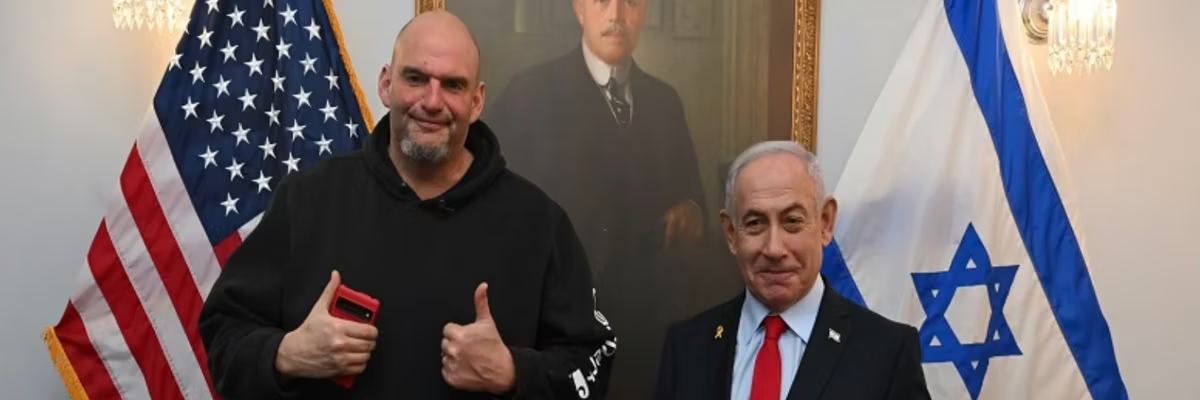
US Sen. John Fetterman (D-Pa.) meets with Israeli Prime Minister Benjamin Netanyahu on Capitol Hill in Washington, DC on February 6, 2025. (Photo by Avi Ohayon/Israeli government)
The American-Israel Public Affairs Committee (AIPAC) and its allies have long been considered one of the strongest lobbies in Washington, exercising outsized influence, especially on US policies toward Israel and the Middle East. Recently, its purported muscle has come under question, and votes in Congress the last two days show why, or at least that there is a stark partisan divide.
For all the hundreds of millions of dollarsAIPAC and its allies have given to Democrats, they got exactly 14 votes from Democrats in the House of Representatives and Senate over the last two days on four key votes regarding the war on Iran and US weapons transfers to Israel, which computes to a paltry bang for the buck.
The votes were on Iran War Powers Resolutions in both Houses of Congress to oppose the Trump Administration’s deeply unpopular, reckless participation in the war on Iran, and on two resolutions to stop US Caterpillar bulldozers, used to demolish Palestinian homes, and 12,000 half-ton bombs, used by Israel against Palestinians, Iranians and Lebanese. All these votes (three in the Senate, one in the House) failed along closely divided, nearly total partisan lines, so one might consider the votes a win for AIPAC, Netanyahu, and President Trump.
But let’s do the math on these votes and AIPAC’s return on investment with Democratic Members of Congress. AIPAC had a possible total of 355 Congressional votes cast it could have gotten—47 Senate Democrats, times the three Senate votes, for a total of 141 possible votes, on War Powers, bulldozers and bombs, and 214 Democrats in the House on the Iran War Powers Resolution vote, for a grand total of 355 possible Democratic votes. It got 14 votes, for a batting average of 0.039, or just under 4% of possible votes if you prefer. Here are the Democratic members who voted AIPAC’s way, to allow Trump to continue the war, and to ship weapons to Israel:
Senate War Powers Resolution—one vote, Sen. John Fetterman (PA)
House War Powers Resolution—one vote, Rep. Jared Golden (ME)
Senate Joint Resolutions of Disapproval—12 votes (seven on bulldozers, four on bombs)—Sens. Chuck Schumer (NY), Kirsten Gillibrand (NY), Chris Coons (DE), Richard Blumenthal (CT), Fetterman again (twice), Katherine Cortez Masto (NV), Jacky Rosen (NV), Gary Peters (MI), Jack Reed (RI), Mark Warner (VA), Sheldon Whitehouse (RI).
That’s it, 14 votes, cast by eleven senators (with Fetterman three times) and one member of the House. Schumer, in particular, once again showed how out of touch he is as Minority Leader, prompting this video from US Rep. Ro Khanna, a leader of pro-peace forces in Congress, calling on Schumer to step down.
For Americans seeking a more peaceful foreign policy, and to avoid domestic and global economic shocks caused by senseless wars, AIPAC and the “pro-Israel lobby” becoming more or less isolated in one party would be a welcome development.
The poster child for AIPAC’s lousy votes per dollar spent, and he is easy to pick on, is US Rep. Wesley Bell (D-MO). AIPAC and co. bought him his seat (according to the websiteTrack AIPAC, for about $17 million) to oust Cori Bush because she dared to author the House Gaza ceasefire resolution. Yet Bell voted right the correct way on the War Powers Resolution. AIPAC must be very disappointed in him. And, it should be noted, Cori Bush may well get her seat back from Bell in the upcoming midterm election.
None of this is to say AIPAC and the pro-Israel lobby should be considered a toothless paper tiger. Its grip on the Republican Party, which voted almost entirely to continue the war and keep sending weapons to Israel, is vice-like. Only two Republicans, US Rep Thomas Massie and Senator Rand Paul, both from Kentucky, voted in favor of the Iran War Powers Resolutions, and no Republican senator, including Paul, voted to stop the bombs and bulldozers to Israel.
According to Federal Election Commission records, AIPAC and its Super PAC, the United Democracy Project, spent nearly $127 million in the 2023-2024 election cycle, a good chunk of it in Democratic primaries to oust progressives critical of Israel’s genocide in Gaza (former Rep. Jamaal Bowman’s primary in New York was another high profile race, in addition to Cori Bush’s, with AIPAC spending $9 million to defeat Bowman).
Looking ahead to 2028, all of the Democratic Senators who are allegedly thinking of running for president (Cory Booker, Ruben Gallego, Mark Kelly, Chris Murphy and Chris Van Hollen) voted for the Iran War Powers Resolution and the resolutions to prohibit the weapons transfers to Israel. Booker, Gallego, and Kelly had voted against prior Joint Resolutions of Disapproval on weapons transfers to Israel brought forward by Sanders, so it certainly could be asserted they want to get right with the Democratic voter base. And they should. Exit polls showed a key reason Kamala Harrislost in battleground states in 2024 was her refusal to break from former President Biden’s embrace of Israel, either as Vice President or as the Democratic standard bearer.
Unquestioned support for Israel used to be axiomatic in Washington, but it no longer is. AIPAC and its allies may soon find themselves limited to the work of swaying Republicans, as polls indicate even core conservative demographics shifting away from their unwavering support for Israel by double digits. And nobody should expect AIPAC to taper their financial interference over Democrats either. A recent brag video asserts AIPAC is the top donor to African American, Latino and Asian American Members of Congress, mostly Democrats.
For Americans seeking a more peaceful foreign policy, and to avoid domestic and global economic shocks caused by senseless wars, AIPAC and the “pro-Israel lobby” becoming more or less isolated in one party would be a welcome development. The upcoming mid-term elections should tell us a lot about who has more power, AIPAC or the American voters.
Feuding with Pope Leo, Trump Cancels $11 Million Contract for Catholic Charity Helping Homeless Migrant Children
“The administration chose to strip funding from a Catholic ministry that cares for traumatized children,” said one Catholic commentator. “The real reason is retaliation.”
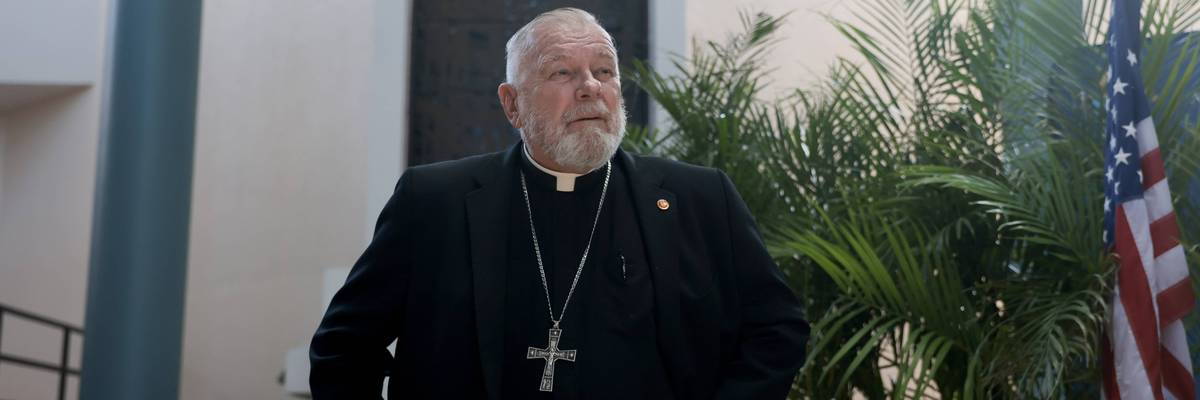
Archbishop Thomas Wenski, Archdiocese of Miami, attends a press conference about the cancellation of an $11 million federal contract with Catholic Charities on April 16, 2026 in Miami, Florida. (Photo by Joe Raedle/Getty Images)
In a move that the archbishop of Miami called “baffling,” President Donald Trump suddenly cut ties with a Catholic charity dedicated to helping unaccompanied migrant children in what many interpreted as a gesture of contempt amid his feud with Pope Leo XIV.
In an op-ed for the Miami Herald on Wednesday, Archbishop Thomas Wenski explained that Trump had abruptly cut off $11 million of funding and ended more than 60 years of government partnership with the Catholic Charities in the Archdiocese of Miami, which “has worked closely with the Office of Refugee Resettlement (ORR) to provide shelter and other services to thousands of unaccompanied minor children of all nationalities.”
Wenski said: “For more than 60 years, the Archdiocese of Miami’s services for unaccompanied minors have been recognized for their excellence and have served as a model for other agencies throughout the country. Our track record in serving this vulnerable population is unmatched. Yet, the Archdiocese of Miami’s Catholic Charities’ services for unaccompanied minors has been stripped of funding and will be forced to shut down within three months.”
Emily Hillard, the press secretary of the US Department of Health and Human Services (HHS), told the Herald that the relationship had been terminated because the number of unaccompanied minors entering the US is “significantly lower” under the Trump administration than under that of former President Joe Biden.
According to HHS, the number of unaccompanied children under the agency’s care is about 1,900, a significant decrease from the peak of the Biden administration, when it held about 22,000.
She said the Office of Refugee Resettlement was canceling the contract as part of a process of “closing and consolidating unused facilities as the Trump administration continues efforts to stop illegal entry and the smuggling and trafficking of unaccompanied alien children.”
“The real reason is retaliation.”
But while Wenski acknowledged that fewer unaccompanied minors are entering the US, he pointed out that the Miami charity’s facilities are hardly “unused.”
Wenski said its Children’s Village facility in Palmetto Bay can hold up to 81 minors, whom it helps to place in foster care, reunite with family members, and provide supportive services.
He said, “It is baffling that the US government would shut down a program that it would be hard-pressed to replicate at the level of competence and excellence that Catholic Charities has achieved if and when future waves of unaccompanied minors reach our shores.”
While the White House did not name Pope Leo as a factor in Trump’s sudden decision to gut the Catholic Charities funding, Christopher Hale, the author of the Pope-centric newsletter Letters from Leo, argues that “the timing tells you everything about the motive.”
Trump slashed the Catholic Charities funding just two days after lambasting Leo for being “WEAK on Crime and terrible for Foreign Policy” following the pontiff’s criticism of his war in Iran.
Leo responded that he has “no fear of the Trump administration” and will “continue to speak out loudly against war.” On Thursday, Leo added that “the world is being ravaged by a handful of tyrants” who spend billions of dollars to wage war and condemned “those who manipulate religion and the very name of God for their own military, economic, and political gain, dragging that which is sacred into darkness and filth.”
“They turn a blind eye to the fact that billions of dollars are spent on killing and devastation, yet the resources needed for healing, education, and restoration are nowhere to be found,” Leo said.
“This is the context in which the administration chose to strip funding from a Catholic ministry that cares for traumatized children,” Hale wrote. “The real reason is retaliation, and the pattern stretches back to the administration’s first days.”
He noted that in December, Trump also canceled funding for six years to the Catholic Charities of the Rio Grande Valley of Texas, which operates a migrant shelter in McAllen and has assisted more than 500,000 migrants since its founding in 2014.
The government’s contract with Catholic Charities in Miami dates back to 1960, when—as part of what was called Operation “Pedro Pan”—the organization sheltered more than 14,000 Cuban children whose parents had sent them alone to Florida by plane or by boat to flee the revolution led by Fidel Castro.
The Trump administration has acknowledged that a large new wave of migrants could be imminent as people flee the devastating consequences of its fuel blockade in Cuba, which military leaders have acknowledged could cause a “humanitarian crisis.” In recent days, reports have said Trump is mulling plans to attack Cuba militarily.
Last month, SOUTHCOM commander Gen. Francis Donovan said the US military was coordinating with the Department of Homeland Security to prepare to house any potential influx of refugees at the US military prison in Guantánamo Bay, a proposal that has been decried by dozens of human rights groups.
Catholic leaders in Miami told the Herald that blocking funds to the Catholic Charities and forcing the closure of the Children’s Village will needlessly traumatize dozens of children who have come there for refuge and have already endured enormous hardship, many having arrived in the US after fleeing poverty and violent conflict.
“You don’t cross several borders, you don’t walk across Mexico if you are 10 or 12 years old without being exposed and suffering trauma of one type or the other,” Wenski said.
Wenski and Catholic Charities CEO Pedro Routsis-Arroyo have asked the federal government to reconsider pulling the funding. Without it, they say many of the children will be forced to relocate to other shelter programs, which can create more trauma and instability.
“Who loses?” Routsis-Arroyo said. “The children lose.”
With 38,000+ Dead, Women and Girls Make Up Over Half of Those Killed in Israel’s US-Backed War on Gaza: UN
“Not a single combatant among them,” said one human rights activist. “Further confirmation that over 90% of the victims are innocent civilians.” Palestinians mourn the loss of their loved ones killed in an Israeli attack on September 25, 2025. (Photo by Abdalhkem Abu Riash/Anadolu via Getty Images)
Israel’s years long assault on Gaza has killed more than 38,000 women and girls, according to a report released Friday by the United Nations.
In total, the UN found that at least 22,000 women and 16,000 girls have been killed in the conflict, an average of nearly 50 women and girls per day.
Sofia Calltorp, chief of humanitarian action at UN Women, said the report shows how Israel’s war on Gaza “has affected every aspect of life, with its most horrific toll seen in the scale of death.”
“Women and girls accounted for a proportion of deaths far higher than those observed in previous conflicts in Gaza,” Calltorp emphasized. “Those killed were mothers, they were daughters, sisters, and friends—deeply loved by those around them. They were individuals with lives and with dreams.”
More than 72,000 people in total have been killed since Israel launched its attack on Gaza in October 2023, after Hamas invaded Israeli territory and killed approximately 1,200 Israelis. Experts warn that the current known death toll is likely an undercount.
While Palestinian women and girls represent more than half of those who have been killed, according to the report, Israeli and US officials have persisted in claiming the US-backed assault has targeted Hamas fighters.
“Not a single combatant among them,” said Ramy Abdul, chairman of the Euro-Mediterranean Human Rights Monitor. “Further confirmation that over 90% of the victims are innocent civilians.”
Although a ceasefire has been in place since October 2025, the report notes that an estimated 730 Gaza residents have been killed over the last six months. Additionally, the report says the humanitarian situation in Gaza remains dire.
“Nearly one million women and girls have been displaced, repeatedly,” said Calltorp. “Access to water and food have been severely limited, with nearly 790,000 women and girls experiencing crisis-level or catastrophic levels of food insecurity. Extensive damage to infrastructure has made it almost impossible for women and girls in Gaza to access their basic needs, like healthcare.”
Calltorp demanded that the ceasefire deal “be fully implemented,” and that “respect for international law must be upheld” to ease the suffering in Gaza.
“Humanitarian assistance must reach those in need—at scale and without obstruction,” Calltorp said. “And women and girls must be placed at the center of response and recovery efforts.”
In addition to causing a humanitarian disaster in Gaza, Israel in recent weeks has also been waging an aerial bombing and ground invasion in Lebanon that has killed thousands of people and displaced more than 1 million. US President Donald Trump announced on Thursday that Israel and Lebanon came to a ceasefire agreement that is set to last for 10 days.
At the same time, Israeli settlers have been waging a campaign of increased violence against Palestinians living in the West Bank, and veteran Israeli war correspondent Ron Ben-Yishai on Thursday declared that the actions of the settlers look like “ethnic cleansing.”
Donald Trump: The Forever War President
Everywhere, everywhere, everywhere is war.
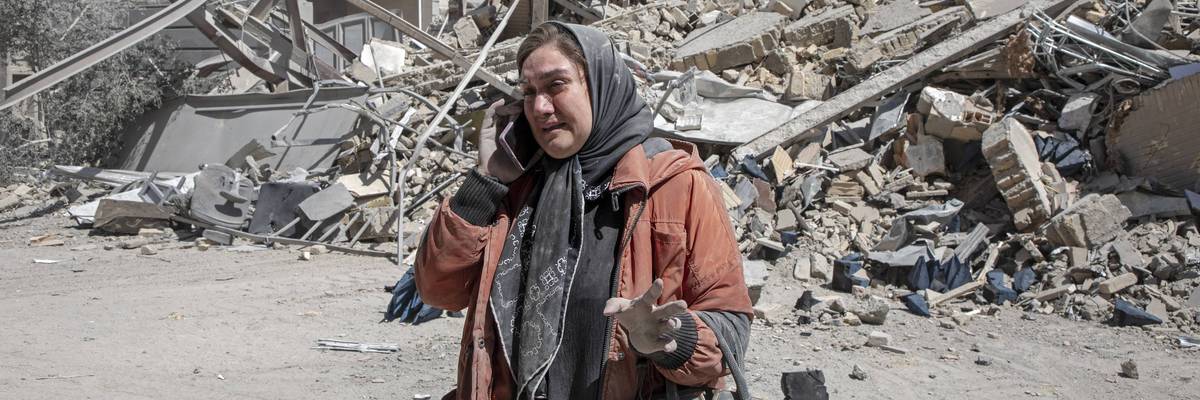
A resident weeps while talking on the phone near a residential building that was hit in an airstrike on March 30, 2026 in the west of Tehran, Iran. (Photo by Majid Saeedi/Getty Images)
War against Iran. Kidnapping the president of Venezuela. Threatening to take over Cuba and Greenland. Plans to plunder the planet of its land, labor, and vital resources to feed the insatiable appetite of American capitalism are indeed afoot and, in the age of Donald Trump, U.S. imperialism is back with a particular vengeance. Not, of course, that it ever went away. In fact, it’s been there from the beginning.
After all, the United States was launched as an act of settler colonialism, dispossessing the New World’s indigenous inhabitants. President James Monroe issued what became known as the “Monroe Doctrine” in 1823, proclaiming the country’s exclusive right to determine the fate of the rest of the western hemisphere. Meanwhile, the slave trade and slavery constituted an imperial rape of Africa by America’s planter and merchant elites.
And by the turn of the twentieth century, Washington had announced its “Open Door” policy, meaning it intended to compete for access to the world’s markets while joining the European race for colonies. It proceeded to do so by brutally taking over the Philippines in 1899, while the U.S. armed forces would make regular incursions into countries in Central America to protect the holdings of American corporations and banks. And the story that began there has never ended with bloody chapters written in Guatemala, Vietnam, most recently Iran, and all too many other places.
As the dispossession of indigenous populations and the enslavement of Africans suggest, the “homeland” (itself an imperial locution) has long been deeply implicated in the imperial project. Indeed, various forms of repressive military and police measures used abroad were first tested out against labor, Black, immigrant, and native insurgents. Rebellious immigrant workers in the nineteenth century were compared to “Indian savages” as local police and federal militia treated them with equal savagery. White supremacist ideology, nurtured at home, would then be exported to the global south to justify U.S. domination there. In fact, this country’s vaunted economic prosperity for so much of the last century was premised on its exploitative access to the resources of the global south, as well as its post-World War II hegemony over Western Europe.
Donald Trump turns out to be a purveyor of both imperialism (notwithstanding his promises to “stop wars” and refrain from “forever wars”) and its toxic outcome.
Today, Donald Trump’s government exercises a reign of terror over our immigrant brothers and sisters, millions of whom are here because their homelands were economically despoiled by this country’s business and financial powerhouses. Homegrown resistance to our imperial adventures abroad has always been met by government repression, the stripping away of democratic rights, and the creation of a surveillance state.
In the Beginning
The United States was always conceived as an imperial project, its DNA infected from the outset.
The earliest settlers were simultaneously colonial subjects of the British and other European empires, and themselves colonizers exercising their dominion over indigenous populations. Native Americans — agrarian communities, hunting and trading tribes, seafaring and fishing societies — were systematically stripped of their lands, resources, and ways of life (not to speak of their actual lives) by the newly arrived settler colonials.
Sometimes their undoing was left to the silent workings of the marketplace. From the sixteenth through the eighteenth centuries, the fur trade catered to the appetites of the world’s aristocracy — in Russia, China, and across Europe. Native American fur-trapping and trading societies entered into commercial relations with fur merchants like John Jacob Astor, the country’s first millionaire. But the terms of trade were always profoundly unequal and eventually undermined the viability of those fur-trapping communities.
Often enough, however, the colonizers resorted to far less “pacific” kinds of actions: military force, legal legerdemain, illegal land seizures, and even bio-warfare, as European-borne diseases nearly wiped out whole indigenous populations. The social murder of those peoples went on through the nineteenth century, from “the Trail of Tears” (the forced removal of the “five civilized tribes” from Georgia in 1830 on the orders of President Andrew Jackson) to the massacre of the Lakota Sioux at Wounded Knee in 1890.
Imagine the United States minus that historic erasure.
There’s no way, since the very geographic borders we take for granted would be utterly different. Much of this country’s most fertile land, crucial water resources, mineral-rich deposits, as well as the industries that grew up around them using buffalo hides for conveyer belts and horses to pull street-cars (not to speak of the oil wells that made certain Americans so rich drilling in territory that once had been part of the Comanche empire) would have remained outside the “homeland.” Where would America the Great have been then?
Less tangibly, but perhaps more essentially, without that emotional elixir, the sense of racial superiority that still poisons our collective bloodstream and helps justify our imperial brutality abroad, that sense of being perpetually at war with savages — President Trump only recently called Iran’s leaders “deranged scumbags,”— who knows what this country might have been.
Slavery and Manifest Destiny
Of course, slave labor disfigured the homeland for centuries, thanks initially to the transatlantic slave trade conducted by the imperial powers of Europe and eventually the United States. Shipowners, merchants, bankers, slave brokers, and planters, backed by the authority of the Constitution, grew extraordinarily wealthy by kidnapping and plundering African peoples.
Wealth accumulated in the slave trade or thanks to slavery found its way into industrial development, especially of the textile industries that powered the earliest stages of this country’s industrial revolution. We may fancy the notion that such a revolution was homegrown, a manifestation of a kind of native inventiveness, but factoring in the imperial assault on Africa makes the homeland’s vaunted industrial miracle seem less miraculous.
Territorial acquisition is often a hallmark of the imperial quest. And so it was in the case of this country’s expansion into the southwest and west, sometimes by purchasing land, but all too often by war. In fact, the seizure of a vast region that today stretches from Texas to California — sometimes referred to as the Mexican-American War (1846-1848) — was actually an invasion driven by the appetites of the slave owners of the American South for fresh lands to cultivate. Indeed, the most avaricious leaders of the Southern planter class wanted to take parts of Central America to extend the reach of the slave economy, as one imperial adventure whetted the appetite for another.
The phrase “Manifest Destiny,” the rubric deployed by American politicians to explain away their predatory behavior as something fated to be, remains part of an inbred American hubris. We, of course, make war and destroy only for the most idealistic motives: to save democracy, uplift the poor, hunt down demonic rulers, or bring the blessings of the American way of life to the benighted.
Exacerbated as well through the experience of conquest was a racialized ideology already deeply embedded in the country’s psyche. If, today, Donald Trump’s America is infected with an aversion to Latinos (not to mention African Americans), or immigrants of any non-White kind, look to the American imperial experience for its source. Earlier exercises in racism, including lynchings and church burnings in the Jim Crow South, became dress rehearsals for assaults on Muslims in our own moment of Trumpian paranoia.
Imperialism Without Colonies
Looked at from this vantage point, the American story turns out to be a serial exercise in imperial ambition. And yet, compared to its European competitors, the United States had precious few actual colonies.
True, after the Spanish-American War of 1898, it did run Cuba for a time, while establishing an unofficial protectorate over the Philippines (after waging a horrific counterinsurgency war there against a guerrilla independence movement). During that conflict U.S. forces mastered techniques — the establishment of concentration camps, for example — that they would deploy later against similar anti-colonial movements, particularly in Vietnam in the twentieth century.
Of course, the U.S. military also occupied various Central American nations — the Dominican Republic, Haiti, and Nicaragua, among other places — during the opening decades of the twentieth century, taking control of their government finances and so ensuring that they paid debts owed to American banks. That was the original version of what came to be known as “gunboat diplomacy” and is now being revisited. (Think of the recent capture of Venezuelan president Nicolás Maduro and his wife by the Trump administration.)
At the beginning of the previous century, Secretary of State John Hay developed a different approach to establishing American imperial hegemony, something less haphazard than those semi-colonial one-offs. In 1899, he announced an “Open Door” policy which, on the face of it, seemed eminently fair. The United States claimed that it sought equal access to markets, particularly China’s, that had previously been carved into exclusive zones by the great European powers.
Opening that door eventually led to American global economic dominance, not counting the part of the world controlled for about 75 years by the Soviet Union (in parts of which China is now dominant). U.S. economic preeminence after World War II, backstopped by the world’s most powerful military machine, proved irresistible, while functionally Europe became something like an American colonial possession under the auspices of the Marshall Plan and NATO. That door, in other words, was opened wider than Hays had ever imagined.
Mind you, his imperial perspective was trained not only on the outside world but on the homeland as well. By the turn of the twentieth century, this country’s business and political elites were worried that the domestic market for America’s huge industrial and agricultural output was fast approaching exhaustion. Periodic and severe depressions in the last quarter of the nineteenth century seemed like evidence of that.
What was needed, key Washington strategists came to believe, was an “open door” for U.S. commodities and capital investment globally. Such a policy would, they believed, not only ensure American prosperity but also dampen the chronic class warfare between the haves and have-nots that had raged in this country throughout the Gilded Age, threatening the viability of American capitalism.
From the close of the Civil War to the end of the nineteenth century, many people believed that the United States had entered a “second civil war,” as the titans of industry (sometimes backed by the country’s armed forces) faced off against the mass strikes of working people and farmers trying to survive the ravages of a capitalist economy. Ever since then, this country would have been inconceivable without its various versions of “open door” imperialism to buoy up the home front and pacify the natives — that is, us.
Acting the role of the hegemon, while lucrative, is also expensive. Public money still pours into sustaining and enlarging the warfare state to ward off all challenges to American supremacy. (The Pentagon only recently, for instance, asked for another $200 billion for its war in Iran.) It does so at the expense of social welfare programs, while starving investment in productive activities like the development of alternative forms of energy and new infrastructure, housing, and rapid transit that would improve life for everyone.
At times, as in the case of the Vietnam War, the warfare state has engendered full-blown domestic economic crises. Vietnam led to punishing years of hyper-inflation followed by years of economic stagnation. Moreover, such war expenditures nearly collapsed the world’s financial system in 1968.
Today, we may be beginning to experience something similar as the global economy teeters on the edge of collapse thanks to Trump’s war on Iran.
Democracy and Imperialism
From the beginning, however, there was resistance to the homeland’s imperialism. Native peoples waged war. Slaves revolted. Mexicans became anti-imperialists. Abolitionists took on the slavocracy. The Spanish-American War elicited opposition from middle-class folk and public figures like Mark Twain. During World War I, thousands of anti-war radicals had their organizations raided and their newspapers shut down by government decree, while some were imprisoned and some deported. Similarly, government repression sought to quell the anti-Vietnam War movement of the 1960s, culminating in the killing of four Kent State students in 1970.
Democracy and civil liberties, thought to make up the essence of the homeland’s civic religion, can’t survive the imperial drive. Today, violations of the most basic rights to free speech, privacy, a fair trial, and the right to vote are appalling and commonplace. Immigrants, often here because they couldn’t survive the ravages of American capitalism in their homelands, are treated like outlaws. The most basic constitutional requirement — the exclusive right of Congress to declare war — is ignored with impunity (and had been long before Trump took over). The imperial state, the surveillance state, and the authoritarian state are hollowing out what’s left of the democratic state.
Imperialism does massive and fatal damage abroad. The wars in Gaza and Iran are the latest bloodbaths for all to see. Less visible are the wages of imperialism at home. An equation might clarify the historical record: The Imperium = land, labor, resources, power, and wealth. The Homeland = cultural brutalization, dispossession, fear, misogyny, racism, repression, slavery, tyranny, and war.
Donald Trump turns out to be a purveyor of both imperialism (notwithstanding his promises to “stop wars” and refrain from “forever wars”) and its toxic outcome. Conjoined in his person is the perfect amalgam of America’s imperial history of aggressive aggrandizement and the ubermensch cruelty that history has instilled in the American psyche.
Steve Fraser Steve Fraser is a historian, writer, and editor. His research and writing have pursued two main lines of inquiry: labor history and the history of American capitalism. He is the author of Class Matters: The Strange Career of an American Delusion. His previous books include The Age of Acquiescence and The Limousine Liberal. He is a co-founder and co-editor of the American Empire Project. Full Bio >
Trump Is Stark-Raving Mad—Impeach Him Now
He’s been losing it for a while now, but in the last few months it’s become far worse. President Donald Trump and first lady Melania Trump host a Women’s History Month Celebration at the White House on March 12, 2026 in Washington, DC. (Photo by Heather Diehl/Getty Images)
“HAVE THEY NO SHAME? HAVE THEY NO SENSE OF DECENCY?” Trump posted in CAPITAL LETTERS about the Times, inadvertently echoing the famous words of Joseph Welch when standing up to Joseph McCarthy during the Army-McCarthy hearings of 1954. Trump went on to take issue with the Times‘s coverage of his war in Iran rather than his mental state, as if to prove the Times‘s point.
He keeps saying he’s “won” the war with Iran, although he’s never said what “winning” means. At one moment his goal is to free Iran’s people. At another, it’s to end Iran’s capacity to produce a nuclear weapon. At another, to destroy Iran’s missiles. At another, to achieve “regime change.” At another, to open the Strait of Hormuz (which was open before Trump started his war). At another, he says he’ll know the U.S. military operation in Iran is over when he feels it “[in] my bones.”
We are all endangered. What happens if, in a demented rage, he hurls a nuclear bomb? Who is watching the “football” with the nuclear codes? Who’s ready to stop him to save the world?
He can’t even stay on the same subject for more than a few minutes. In the middle of a high-level Cabinet meeting about the war, he spends five minutes talking about his preference for Sharpie pens. He interrupts another Iran war update to praise the White House drapes.
He threatens that if Iran doesn’t reopen the strait, “a whole civilization will die tonight.” Then he says America doesn’t need the strait reopened. Then he says: “Open the Fuckin’ Strait, you crazy bastards, or you’ll be living in Hell - JUST WATCH! Praise be to Allah. President DONALD J. TRUMP.”
He calls the Pope “WEAK on Crime, and terrible for Foreign Policy” because the Pope wants peace. He posts an AI-generated picture of himself as Jesus, then says he was only depicting himself as a physician.
He won’t give up on his illegal and dangerous (for the economy) criminal investigation of Fed Chief Jerome Powell, claiming it’s not just about Powell’s renovations at the Fed but also a “probe on incompetence,” adding he’ll fire Powell if he doesn’t resign after his term as chair ends.
After Robert Mueller’s death, he says, “Good, I’m glad he’s dead.” He blames the murders of Rob Reiner and his wife Michelle on “the anger [Rob Reiner] caused others through his massive, unyielding, and incurable affliction with a mind crippling disease known as TRUMP DERANGEMENT SYNDROME.” After Joe Biden is diagnosed with an aggressive form of Stage 4 prostate cancer, Trump says, “I’m surprised that the public wasn’t notified a long time ago because to get to Stage 9, that’s a long time” (there is no Stage 9 cancer).
He’s been losing it for a while now, but in the last few months it’s become far worse.
In 2017, 27 psychiatrists, psychologists, and other mental health professionals concluded in The Dangerous Case of Donald Trump that Trump’s mental condition posed a “clear and present danger” to the nation.
In 2021, members of Trump’s own Cabinet — horrified by the January 6, 2021, violence at the Capitol and Trump’s lack of urgency in stopping it — discussed whether to invoke the 25th Amendment to remove him from office due to mental incompetence.
During his 2024 campaign, he attacked Kamala Harris and then went into the stratosphere of his bonkers mind: “She destroyed the city of San Francisco, it’s – and I own a big building there – it’s no – I shouldn’t talk about this, but that’s OK, I don’t give a damn because this is what I’m doing. I should say it’s the finest city in the world – sell and get the hell out of there, right? But I can’t do that. I don’t care, you know? I lost billions of dollars, billions of dollars. You know, somebody said, ‘What do you think you lost?’ I said, ‘Probably two, three billion. That’s OK, I don’t care.’ They say, ‘You think you’d do it again?’ And that’s the least of it. Nobody. They always say, I don’t know if you know. Lincoln was horribly treated. Uh, Jefferson was pretty horribly. Andrew Jackson, they say, was the worst of all, that he was treated worse than any other president. I said, ‘Do that study again, because I think there’s nobody close to Trump.’ I even got shot! And who the hell knows where that came from, right?”
It’s no longer possible to overlook his conspiracy-obsessed paranoia, his uncontrolled rage, his emotional volatility, his delusional claims, his vengeful rantings, his foul-mouthed posturing, his increasing detachment from reality.
Yet his Cabinet members and aides keep their heads down. Republican members of Congress pretend not to notice. His billionaire supporters dare not speak of his rapid decline. The media tries to “sanewash” his growing incoherence.
But some voices on the right — people who have long been supporters of Trump — have had enough.
Former Representative Marjorie Taylor Greene says Trump’s threat to destroy Iran’s civilization is “not tough rhetoric, it’s insanity.” Far-right podcaster Candace Owens calls him “a genocidal lunatic.” Conspiracy theorist Alex Jones says Trump “does babble and sounds like the brain’s not doing too hot.” A White House lawyer in Trump’s first term, Ty Cobb, says Trump is “clearly insane.” Former Trump White House press secretary Stephanie Grisham says “he’s clearly not well.”
The public is catching on. Fully 61 percent of Americans think he’s become more erratic with age, while just 45 percent say he is “mentally sharp and able to deal with challenges” (down from 54 percent in 2023).
For the good of the nation and the world, it’s time we face the reality: The most powerful man in the world does not have the mental capacity to do the job. Donald Trump — who has a family history of dementia — is increasingly unhinged.
We are all endangered. What happens if, in a demented rage, he hurls a nuclear bomb? Who is watching the “football” with the nuclear codes? Who’s ready to stop him to save the world?
Robert Reich Robert Reich is professor emeritus of public policy at Berkeley and former US secretary of labor. His latest book is the No. 1 New York Times best-seller, "Coming Up Short." Full Bio >
Reagan AG finally concedes 'Trump must be impeached'
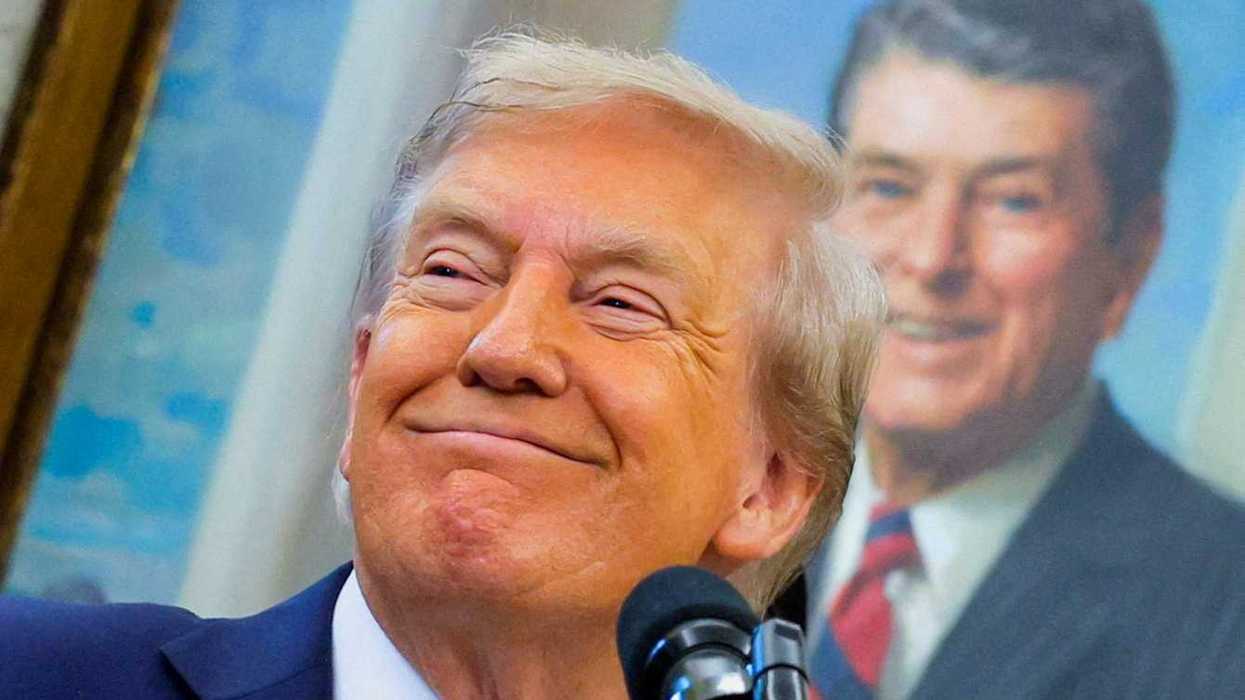
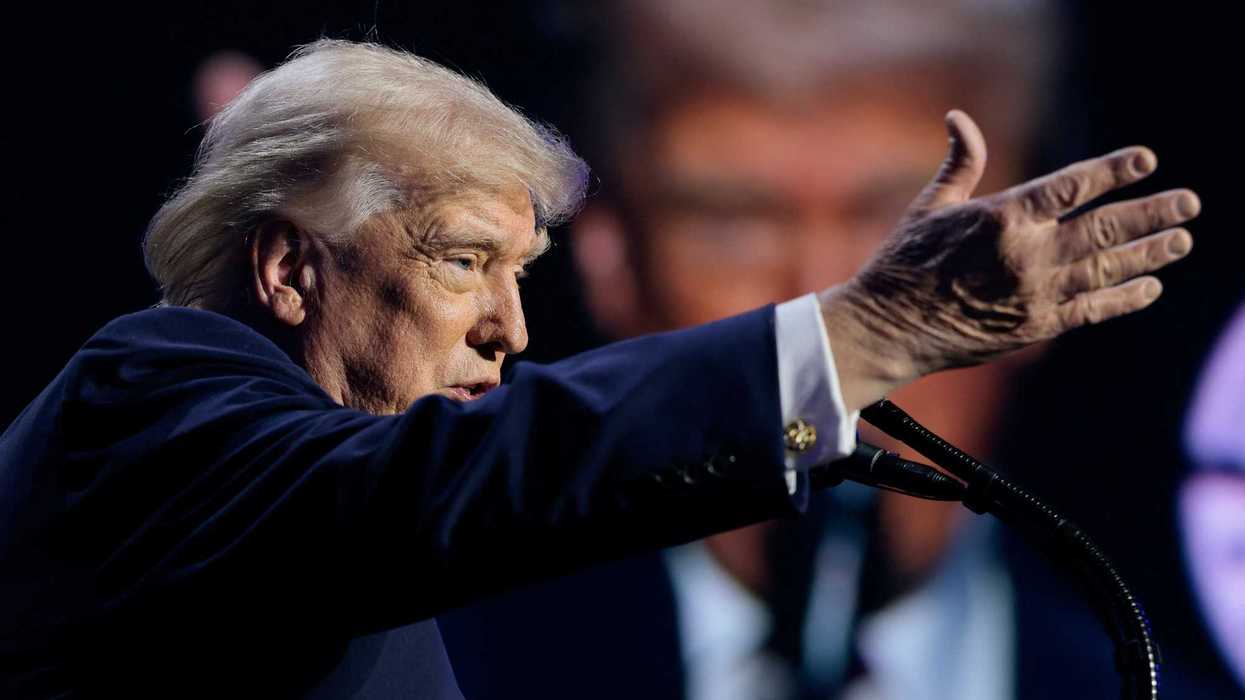
U.S. President Donald Trump, in front of a painting of former U.S. President Ronald Reagan, smiles during an event to announce that the Space Force Command will move from Colorado to Alabama, in the Oval Office (REUTERS)
Ronald Reagan’s former asst. attorney general tells The American Conservative that it’s time for President Donald Trump to go before his damage to the nation becomes permanent.
“Trump has said and done appalling things no other president has dared — not even close,” said attorney Bruce Fein, pointing out that Rep. John Larson (D-Conn.) has introduced 13 articles of impeachment against President Donald Trump through House Resolution 1155, “to save the nation from a worse tyranny than provoked July 4, 1776.”
Fein ticked down a long list of reasons to jettison Trump, including exploiting the powers of office “for billions of dollars in personal or family enrichment indistinguishable from bribery or extortion,” and “commercializ[ing] his pardon power as if he were a Sotheby auctioneer selling a Hieronymus Bosch painting.”
He also razed Trump for “militariz[ing] domestic law enforcement by concocting national emergencies divorced from reality in Washington, DC, Los Angeles, Chicago, and Minneapolis to deploy the National Guard,” and for “retaliat[ing] against universities, lawyers, journalists, and lawfully present aliens for refusing to join Trump’s claque.”
Not to mention, said Fein, Trump “threaten[ing] the death of the 6,000-year-old Iranian civilization,” and murdering “nearly 200 alleged drug traffickers in the Caribbean and eastern Pacific without even providing evidence of their crimes to the public.”
“Congress should not idle like Nero while the Constitution is in flames,” said Fein. “… Trump must be impeached and removed from office immediately before it is too late. He is a dictator, pure and simple, who may well seek to disrupt the 2026 congressional elections by illegally invoking the Insurrection Act to dispatch the military to seize voting machines and occupy voting places.”
Fein added that Trump orchestrated the January 6, 2021 attack on the Capitol “to prevent Vice President Mike Pence from counting state-certified electoral votes,” and this shows “Trump will move heaven and earth to remain in power.”
“Our constitutional dispensation glorifying the rule of law and liberty may be destined to pass away. But it is the duty of Congress to be the last, not the first to surrender,” said Fein.




.jpg)