Wednesday, May 28, 2025


Rio Tinto split with CEO Stausholm over conflicting priorities
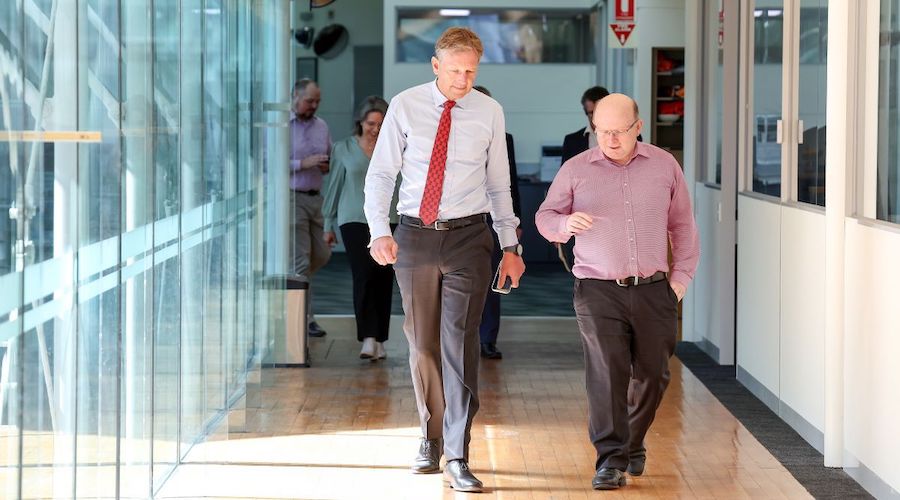
CEO Jakob Stausholm (left) and Jared Osborne, general manager at Rio’s Bundoora Tech Development Centre. (Image: Stausholm’s LinkedIn.)

Rio Tinto’s board and Jakob Stausholm agreed to part ways last week amid mounting concerns the CEO was reluctant to follow board priorities, including focusing on costs, after years of expansions in lithium, copper and iron ore, three sources said.

Rio, the world’s second-largest listed mining company, surprised investors last week by announcing Stausholm would step down later this year when a successor is appointed.

No reason for Stausholm’s exit was given, and sources said it was not tied to any scandal. The CEO had as recently as two weeks ago given no indication of his departure at a major industry conference in Spain, according to three sources who attended.

Reuters spoke with six people who were familiar with board considerations, or who had been briefed on them, or briefed by management. They agreed to speak on condition of anonymity to discuss sensitive internal matters or private conversations.

Rio Tinto declined to comment for this story, while Stausholm did not respond to requests for comment.

Stausholm took the helm at Rio in 2021 at a low point in the company’s history after his predecessor was sacked. The Dane started his tenure with a listening tour of the company’s global portfolio, which stretches across every continent but Antarctica.

He led a turnaround in the miner’s fortunes by resetting relationships in Guinea and Mongolia to bring its next wave of iron ore and copper projects online. Stausholm also inked three major lithium deals in the past year.

As his successes mounted, one source said Stausholm became more likely to push back on board suggestions and too quickly dismissed opportunities the board felt could have been better explored.

One of those opportunities included Stausholm’s rejection of an approach by Glencore executives last year seeking a potential merger, according to a person familiar with the matter.

Another related to reviewing options around the stake of its largest UK shareholder Chinalco, which came up with investor pressure for the miner to review its dual Anglo-Australian share market listing, said the first source.

While the board backed Stausholm’s investments and strategic decisions, it held concerns that rising costs had to be dealt with now rather than in a few years’ time, two of the sources said.

Rio’s average headcount has climbed by 22% to around 60,000 people since Stausholm’s appointment in 2021, according to its most recent annual report. Meanwhile, revenue has dropped more than $10 billion over that time, with prices of its key profit generator, iron ore, expected to fall further in coming years.

The board told Stausholm that he must put more focus on cost cuts and operational excellence, but he was resistant and they decided to part ways, three of the sources said.

“Nothing else changes. The board is happy with the growth options, they are happy with lithium, the strategy is the same,” one source said.

Doubling down

Some investors criticised Rio for overspending on its $6.7 billion buy of lithium miner Arcadium after a plunge in prices for the battery metal. That deal was followed by more than $1 billion more in spending on two projects in Chile earlier this month.

With the lithium market in the doldrums, it will take years to know whether Stausholm’s bet will have paid off, although demand projections for the metal are strong into the next decade.


Rio’s lithium joint venture with Codelco “aligned with its growth and value creation strategy,” Goldman Sachs, which has a “buy” recommendation on the stock, said last week.

Rio investor Pendal Group has raised concerns about additional staffing costs at both Rio and larger rival BHP, said Pendal investment analyst Jack Gabb. As recently as February, Stausholm said that costs “hadn’t been a focus,” Gabb said.

Rio’s ballooning costs had been flagged internally for some time, including at a recent executive retreat in Australia by CFO Peter Cunningham, a source with direct knowledge said.

Despite those warnings, Stausholm saw himself as a strategic leader rather than a cost-cutter, with the board increasingly preferring the latter, the person added.

“Rio’s got amazing assets, but a bloated bureaucracy, full of people looking for work to do. That’s just not sustainable,” the person said.

Of Rio’s internal bench of potential successors, iron ore head Simon Trott, chief commercial officer Bold Baatar, and aluminum division boss Jerome Pecresse are seen as potential replacements, all of the sources said.

Pecresse may have an advantage given his management style focused on cost-cutting, one of the sources said.

“Rio doesn’t need another visionary right now,” the source added.

(By Clara Denina, Ernest Scheyder and Melanie Burton; Editing by Veronica Brown and Lincoln Feast)

 

Congo eyes US minerals deal by end of June, FT reports

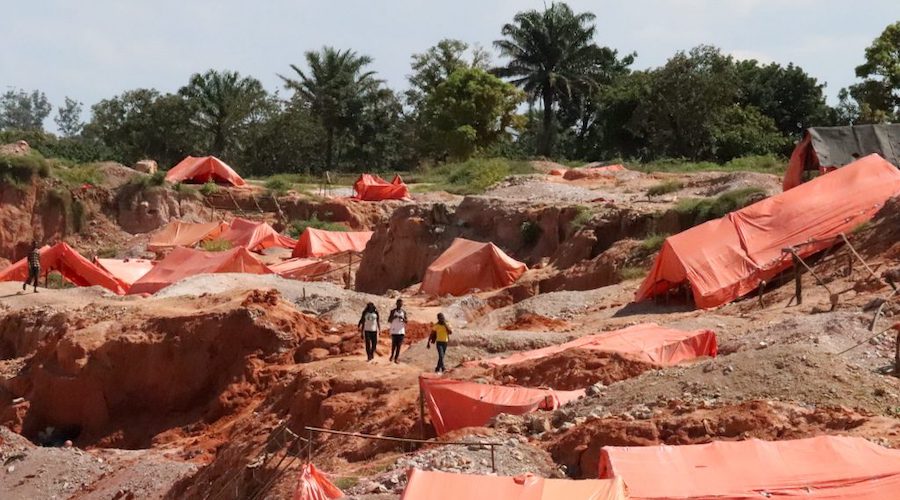
More than three-quarters of the world’s cobalt comes from Congo. (Image courtesy of The Impact Facility.)

Officials from the Democratic Republic of Congo are optimistic they can reach a deal with Washington next month to secure US investment in critical minerals alongside support to end a Rwandan-backed rebellion in the country’s east, the Financial Times reported on Sunday.

Congolese minerals such as tungsten, tantalum and tin, which Kinshasa has long accused neighbouring Rwanda of illegally exploiting, could be exported legitimately to Rwanda for processing under the terms of a peace deal being negotiated by the USReuters reported last week.

An investment deal with the US and separate peace deal with Rwanda were possible “by the end of June”, the newspaper said, citing two people close to the negotiations. But potential stumbling blocks remain substantial, the FT said.

Reuters could not confirm the report.

Congo’s Mines Minister Kizito Pakabomba said an agreement with the US would help “diversify our partnerships”, reducing the country’s dependence on China for the exploitation of its vast mineral riches, the FT reported.

Kinshasa views the plundering of its mineral wealth as a key driver of the conflict between its forces and Rwanda-backed M23 rebels in eastern Congo that has intensified since January, accusing Kigali of smuggling tens of millions of dollars worth of minerals over the border each month to be sold from Rwanda.

Washington is pushing for a peace agreement between the two sides to be signed this summer, accompanied by minerals deals aimed at bringing billions of dollars of Western investment to the region, Massad Boulos, US President Donald Trump’s senior adviser for Africa, said earlier this month.

“Both participants have committed to work to find peaceful resolutions to the issues driving the conflict in eastern DRC, and to introduce greater transparency to natural resource supply chains. Respect for each country’s territorial integrity is at the center of the process,” a US State Department spokesperson told Reuters on Sunday.

Rwanda’s defensive measures along the border are necessary as long as threats and the cause of insecurity in the DRC persists, Yolande Makolo, a Rwandan government spokesperson said, according to the FT.

(By Mrinmay Dey, Rajveer Singh Pardesi and Nilutpal Timsina; Editing by Christian Schmollinger)


US will have golden share in Nippon Steel’s takeover of US Steel, senator says


NO SUCH THING AS A GOLDEN SHARE

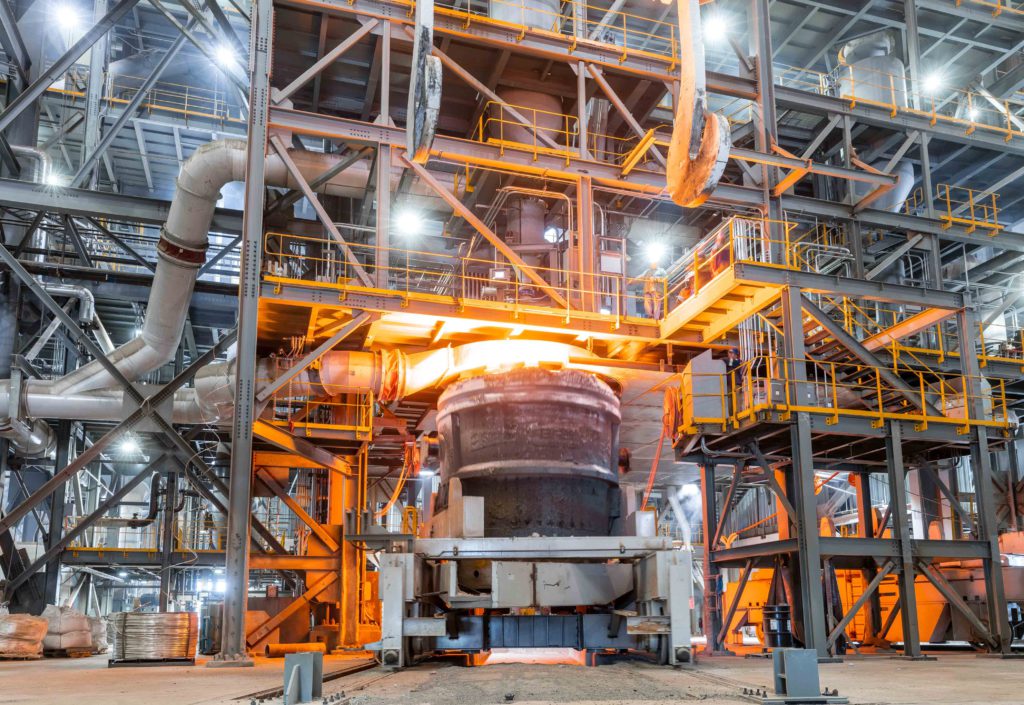
Credit: US Steel

The US government will have veto power over key decisions relating to US Steel, as part of a deal with Nippon Steel that would approve the Japanese firm’s bid for the well-known American steel company, a US lawmaker said on Tuesday.

The details are laid out in what is called a national security agreement the companies will sign with the US government, said Republican Senator David McCormick of Pennsylvania, where US Steel is headquartered.

“It’ll be a US CEO, a US majority board and then there will be a golden share, which will essentially require US government approval of a number of the board members, and that will allow the United States to ensure production levels aren’t cut and things like that,” he told CNBC in an interview after Nikkei reported that a golden share was under consideration.

It was not immediately clear if McCormick was announcing a new part of the deal beyond prior pledges made by the companies to the Committee on Foreign Investment in the US, which reviews foreign investments for national security risks and has reviewed Nippon Steel’s bid for US Steel twice.

But on Tuesday, investors appeared confident the deal would soon close, with US Steel shares trading up 1.6% to $52.84 a share, close to their highest point since the deal was announced.

US President Donald Trump was expected to address the deal in a rally at a US Steel plant in Pennsylvania this week.

In response to questions about the deal, White House spokesperson Kush Desai said, “The President looks forward to returning to Pittsburgh … on Friday to celebrate American Steel and American Jobs.”

Nippon Steel declined to comment and US Steel did not respond to a request for comment.

National security agreements get worked out in reviews led by the Committee on Foreign Investment in the US, which scrutinizes foreign investments for national security risks and has reviewed Nippon Steel’s proposed merger twice.

In an NSA term sheet proposed to CFIUS in September 2024, Nippon Steel pledged that a majority of US Steel’s board members will be American, and that three of them — known as the “independent US directors” will be approved by CFIUS.

“US Steel may reduce production capacity if and only if it is approved by a majority of the Independent US directors,” the term sheet states, adding that core US managers will be US citizens.

Japan’s top steelmaker has since December 2023 sought to seal a $14.9 billion bid to acquire US Steel at $55 a share.

Both President Donald Trump and former President Joe Biden expressed opposition to the tie-up, arguing US Steel should remain American-owned as they sought to woo voters in Pennsylvania ahead of the November presidential election.

Biden formally blocked it in January on national security grounds, prompting a lawsuit by the companies that alleged the review process had been unfair. The Biden White House disputed that view.

Trump launched a fresh CFIUS review of the deal in April. On Friday he appeared to finally give it his blessing in a social media post, noting that the “planned partnership” would create “at least 70,000 jobs, and add $14 billion dollars to the US economy.” The post sent US Steel’s share price up over 20%.

But on Sunday, Trump cast doubt over that interpretation, noting in remarks to reporters that “It’s an investment and it’s a partial ownership, but it will be controlled by the USA.”

(By Kaori Kaneko, Kentaro Komiya, Yuka Obayashi, Alexandra Alper, Trevor Hunnicutt and Susan Heavey; Editing by Kirsten Donovan, Rod Nickel and David Gregorio)


Swiss monthly gold imports from the US hit highest since at least 2012

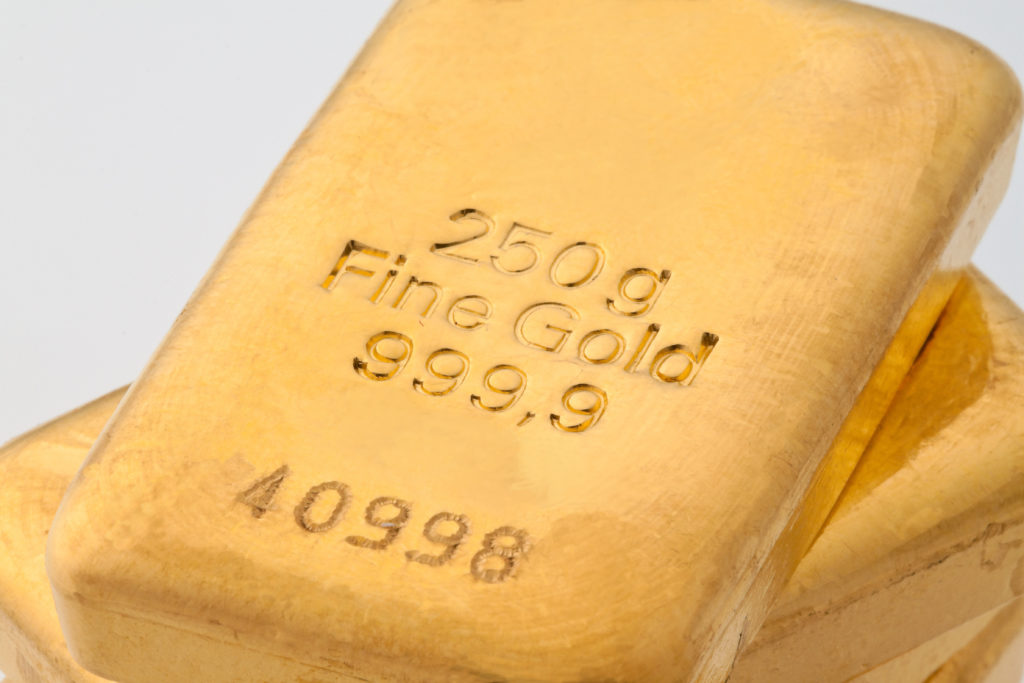
Stock image.

Gold imports to Switzerland from the United States jumped to the highest monthly level since at least 2012 in April after the exclusion of precious metals from US import tariffs, Swiss customs data showed on Tuesday.

Switzerland, the world’s biggest bullion refining and transit hub, and Britain, home to the world’s largest over-the-counter gold trading hub, registered massive outflows to the US over December-March as traders sought to hedge against the possibility of broad US tariffs hitting bullion imports.

The Swiss data showed that gold imports from the US rose to 63.0 metric tons in April from 25.5 tons in March. It was the highest in monthly data going back to early 2012.

Switzerland’s total gold exports fell by 31% month on month in April with gold deliveries to the US dropping to 12.7 tons from 103.3 tons in March.

Exports to the UK rose, indicating that gold was also coming from the US back to London vaults via Swiss refineries.

Deliveries to traditional gold-consuming markets – India and China – rose month on month in April but remained below the level for April last year.

(By Polina Devitt; Editing by David Goodman)


Read More: Swiss gold trade should be excluded from trade balance with US — SNB study


Coal India to take first unit public with consultancy firm IPO

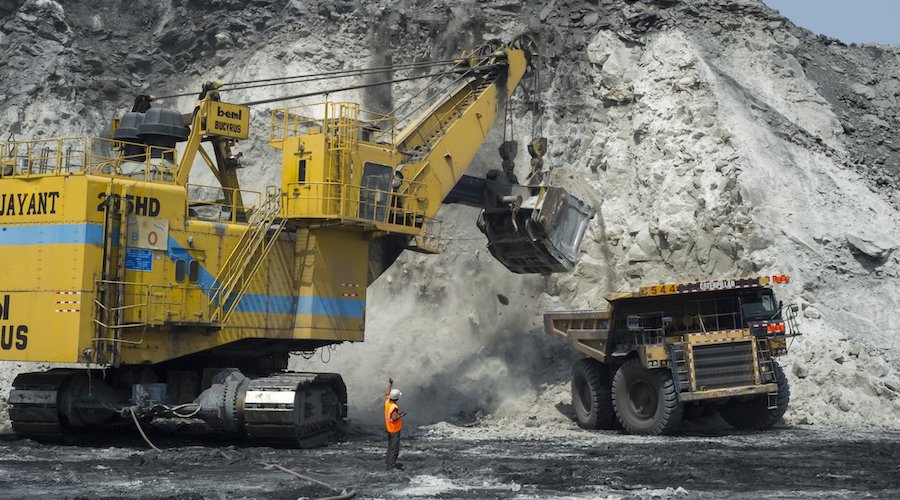
Coal India operation. (Image by Coal India).

Coal India Ltd. will sell as much as 10% of its holding in mining consultancy unit Central Mine Planning & Design Institute Ltd. (CMPDI) through an initial public offering.

The Ranchi-based unit of the world’s biggest coal miner filed draft prospectus for sale of as many as 71.4 million shares through the offering. CMPDI will be the first Coal India unit to go public as part of the state-owned company’s plan to separately list shares of its units on stock exchanges with an aim enhance competition and boost output.

Earlier this month Coal India said it has hired banks to manage the IPOs of units Bharat Coking Coal Ltd. and Central Mine Planning & Design Institute, and started “activities” including preparations of prospectuses. Updates on Bharat Coking’s IPO are still awaited.

Coal India will retain 90% holding in CMPDI, which provides consultancy and support services for mineral exploration, including mine planning and design. The company is not selling any new shares through the IPO.

The parent company and its other units accounted for more than two-third of CMPDI’s revenue in the year ended March, according to the prospectus. The company reported net income of 6.67 billion rupees in 2024-25 on sales of about 21 billion rupees.

IDBI Capital Markets and SBI Capital Markets will manage the share sale.

(By Harshita Swaminathan)


Guinea takes Endeavour gold permits in latest round of removals

Endeavour’s Agbaou Gold mine in Côte d’Ivoire. Image from Endeavour.

Guinea has revoked four gold exploration permits from Endeavour Mining Plc as it continues to reclaim inactive and non-compliant mining rights.

The four exploration licenses were granted in 2020 and have not been renewed since, Minister of Mines Bouna Sylla said in a statement read on state-broadcaster Radio Television Guineenne late Monday.

A spokesperson for Endeavour declined to comment.

The world’s top bauxite producer has been pressing mining companies to comply with the terms of their mining rights in order to harness the full potential for its economy. It has asked a unit of Emirates Global Aluminium to kick-start an alumina refinery or risk losing the bauxite mine to state management.

The junta also announced the revocation of 125 other exploration permits, covering bauxite, diamond, iron and gold, following the withdrawal of 51 mineral concession rights two weeks ago.

(By Ougna Camara)


Canadian aluminum trader blames its bankruptcy on trade war

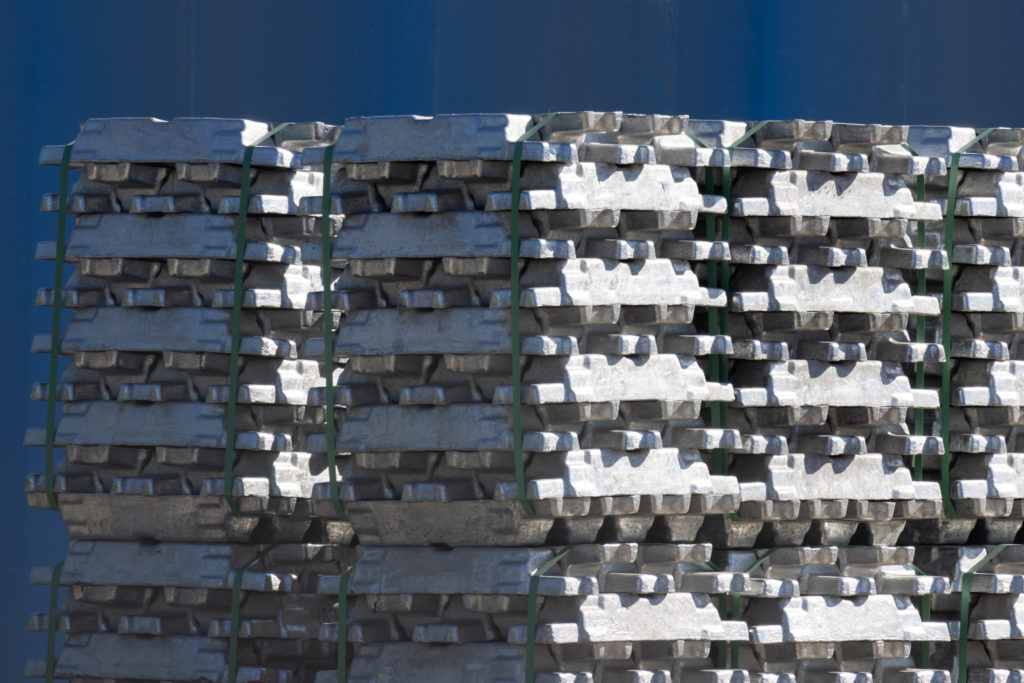
Aluminum ingots. Stock image.

A Canadian aluminum trader that had been struggling to restructure its debt has filed bankruptcy in the US and Canada, saying the American trade war helped push the company over the edge.

Sinobec Group Inc. arranges deals between sellers and buyers of aluminum ingots, as well as finished items like building products, shower doors and fences, the company said in court papers filed in federal court in Illinois on Tuesday.

For about two years, Sinobec had been working with lenders after defaulting on one of its loans, company owner and chief executive officer Zhong Li said in court papers. Sinobec eventually hired financial advisor Alvarez & Marsal to help refinance about $103 million of debt, and lenders agreed to avoid taking action against the company.

Tariffs imposed in recent months by President Donald Trump hit Sinobec hard, the company said.

“This has exposed the debtors to the full impact of the trade war,” company restructuring advisor Philippe Jordan, with PricewaterhouseCoopers, said in court papers. “Significant accounts receivable collections have halted, as the supply chain upon which the debtors rely for payment has ground to a halt.”

Sinobec is one of the first companies to directly blame Trump’s trade war for contributing to its bankruptcy. Experts have been predicting a wave of restructurings will hit the US later this year, especially among retailers and importers that rely on Chinese manufacturers.

In April, the president unilaterally imposed tariffs of 145% on goods from China. Although he later lowered the duties to 45%, the reduction did not help Sinobec because the cost “is still well above the market’s ability to absorb,” the company said in court papers.

Sinobec gets its aluminum from various countries, including China, Turkey and India. Most sales, however, are in North America, with more than 40% of the company’s customers in the US, the company said.

Before filing for court protection from creditors, the company had cut staff and reduced salaries. Sinobec employs 76 people at its headquarters in Montreal and in Florida. The company’s assets are worth about $232 million, according to court papers.

The company has between $600 million and $800 million in annual revenues, and carries about $170 million in debts, primarily owed to a banking syndicate led by Bank of Montreal, according to a person familiar with the matter.

While under court supervision, Sinobec will try to sell itself to help repay creditors, according to court papers. A representative of the company declined to comment.

The case is Sinobec Group Inc., 25-80689, US Bankruptcy Court for the Northern District of Illinois.

(By Steven Church)


Geopolitics to shape mining’s future: TNMG president

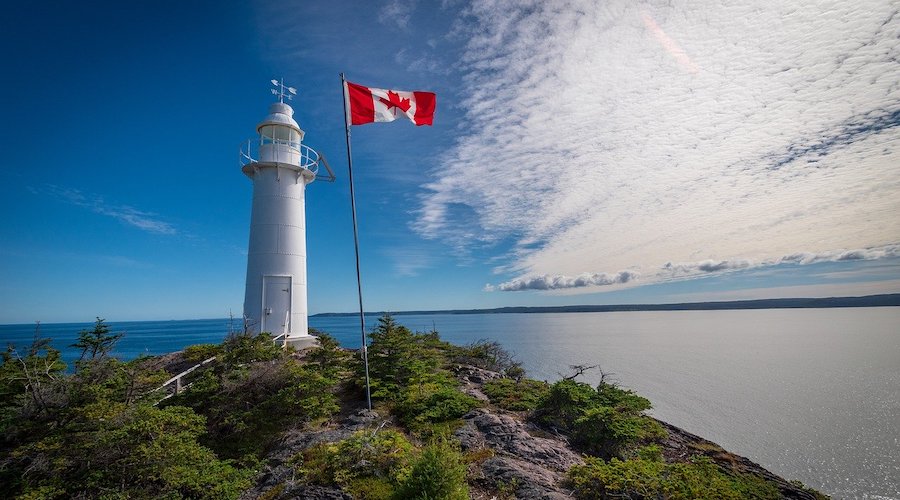
Newfoundland is viewed as a key player in Canada’s critical minerals supply chain. Stock image.

At the CentralMinEX conference held last week in Newfoundland, The Northern Miner Group (TNMG) president Anthony Vaccaro delivered a compelling address on the critical importance of geopolitics in shaping the future of mining, investment, and mineral extraction.

His talk urged industry stakeholders to view resource development through a global lens, emphasizing that shifting geopolitical dynamics will be a defining force in how metals are taken from the ground over the coming decades.

“We need to look at our industry through the lens of what’s going on in the world through geopolitics,” Vaccaro told attendees. “Then we’re going to bring it down into Canada, then into Newfoundland and Labrador, because that will be the most defining factor in investing and how we extract metals for many decades.”

Spheres of influence

In his opening remarks, the TNMG president outlined a world increasingly fractured into what he called not just “spheres of influence,” but more accurately “spheres of control” dominated by the US, China and Russia. These blocs are competing to secure control over global trade and, critically, the production and processing of strategic minerals.

In this landscape, countries such as Canada, Australia, Japan, South Korea, and Western Europe are emerging as a “coalition of the willing” that aim to pursue resource autonomy rather than fall under the dominion of authoritarian-aligned spheres.

“Why would we go along with that? We have the populations and the economies where we don’t have to,” Vaccaro said, referencing the recent Canadian federal election as evidence of public alignment with this view.

China’s dominance

Using copper as a case study, he noted about 50% of the world’s copper extraction takes place in jurisdictions aligned with the US sphere, thanks largely to South American producers like Chile and Peru. China, having recognized its own resource deficiencies, aggressively pursued Belt and Road investments in Africa, enabling it to secure roughly 30% of copper extraction through ties with Congo and Zambia.

However, the advantage shifts in the downstream. China currently dominates copper refining, processing over 50% of the world’s supply. In contrast, the US and allied nations lag behind, with North America having only nine copper refineries compared to China’s 60-plus.

“We’ve been a bit sleepy on this,” Vaccaro noted. “There’s going to have to be a government piece in this to get the capital flowing.”

This theme recurred as Vaccaro turned to rare earths. While the West may hold some resources, China controls over 90% of global refining capacity. He emphasized that Canada must work with governments to attract investment and build strategic capacity: “We need to get our act together… to shape the world or at least have a voice in it.”

Canadian opportunities

According to the TNMG president, Canada’s own copper production is showing signs of decline, with its global share falling from nearly 3% to 2%, and reserves not keeping pace with extraction. Nevertheless, he highlighted opportunities in Newfoundland and Labrador, particularly in new projects emerging alongside legacy producers like Voisey’s Bay.

Vaccaro also celebrated local achievements such as the Long Harbour Hydromet facility, calling it “a shining beacon” and an example of how North America can process critical minerals in a cleaner, more environmentally responsible way than China.

Strategic investments

However, the tide may be turning, said Vaccaro, as evident in the recent international funding flows, including US Department of Defense support for Canadian critical mineral projects. “Money is already flowing into Canada. These are Canadian assets receiving American money,” he said.

Vaccaro concluded with a warning and a call to action centered on the Beaver Brook antimony mine, a strategic asset currently owned by a Chinese company and held in care and maintenance. Antimony is critical to military applications, and Vaccaro urged scrutiny over foreign ownership.

“It might be a case study going forward,” he warned, citing previous Canadian government interventions to force Chinese divestments.

“The theme is set: geopolitical spheres,” Vaccaro said. “How do we in North America, how does the coalition of the willing, stay strong? What are the next strategic steps to do it?”