Au
Banks head for $5 billion gold trading windfall in record year

Precious metals traders at the world’s top banks made record profits in the first half of this year, putting them on track for their best-ever annual result as surging investor interest and sharp price swings generate huge opportunities for dealers.

Top player JPMorgan Chase & Co. earned about $700 million from trading and handling gold, silver and other precious metals in the first half of 2026, people familiar with the matter said, asking not to be identified discussing private information. The bank had its highest full-year gain from the business in 2020, making just over $1 billion.
Several other major banks have also made hundreds of millions of dollars from precious metals trading, other people said, bringing renewed competition to a market that’s long been dominated by JPMorgan. The desk at Deutsche Bank AG — which has made a high-profile push back into bullion trading — has brought in more than $200 million so far this year, according to a person familiar with its performance.
Globally, banks are set to make approximately $5 billion from the business this year, the most on record in a series compiled by financial services analytics provider Crisil Coalition Greenwich.
Energy and metals have become a major driver of earnings at Wall Street firms including Goldman Sachs Group Inc, Bank of America Corp. and Morgan Stanley as trading desks are able to profit from price swings and dislocations caused by global conflicts and trade tensions. Precious metals have been especially lucrative, with a frenzy of speculative buying sending gold and silver prices to all-time highs earlier this year.
Financial instruments such as short-dated options and leveraged exchange-traded funds surged in popularity during the rally, with investors seeking high-octane ways to boost returns. Trading desks also made huge profits flying bars around the globe, capitalizing on pricing disconnects that have emerged between global trading hubs.
“Most people I’ve spoken to here had a very good year, a record year” said Greg Frith, senior precious metals trader at Centalion Group, the global trading house previously known as Gunvor, during a panel discussion at the London Bullion Market Association conference in Italy this week.
To capitalize on the growing opportunities in the market, several banks are also looking to join the small group of firms providing the vaulting and clearing services that underpin the gold market in London, the world’s biggest bullion-trading center, people familiar with the matter said. Citigroup Inc. became the first new entrant in a decade earlier this year, joining JPMorgan, UBS Group AG, HSBC Holdings Plc and ICBC Standard Bank Plc.
Deutsche Bank is also seeking to join, according to people familiar with the matter, as is Morgan Stanley, Bloomberg has previously reported.
Spokespeople for JPMorgan and Deutsche Bank declined to comment.

Banks’ global revenue from precious metals trading had already reached an all-time high last year, and the gains have continued to climb, “supported by elevated volatility and strong investor participation across both gold and silver markets,” said Angad Chhatwal, head of fixed income, currencies and commodities at Coalition.
January was especially profitable for precious metals trading desks, as speculators around the world piled into gold and silver, propelling them to unprecedented levels. Prices have since eased, as the outbreak of war in the Middle East sent energy prices spiraling higher, and revived expectations for monetary tightening. But spot gold and silver remain at more than double their levels at the start of 2024.
To be sure, dramatic price dislocations and heightened volatility can cut both ways, creating the potential for greater losses when banks are caught on the wrong side of a trade.
At the LBMA’s gathering in Italy, the general mood among traders, refiners and executives was upbeat, following multiple years of double-digit price gains and a surge of interest in their markets. There’s also reason for caution though.
“It’s been a record year for us, and lots of other traders,” Centalion’s Frith said. “But it’s no time to be complacent because, you know, if you’re caught napping on the job, it’s all gone in a flash.”
(By Jack Ryan, Jack Farchy and Yihui Xie)
Ethiopia launches its first gold refinery, Prime Minister says
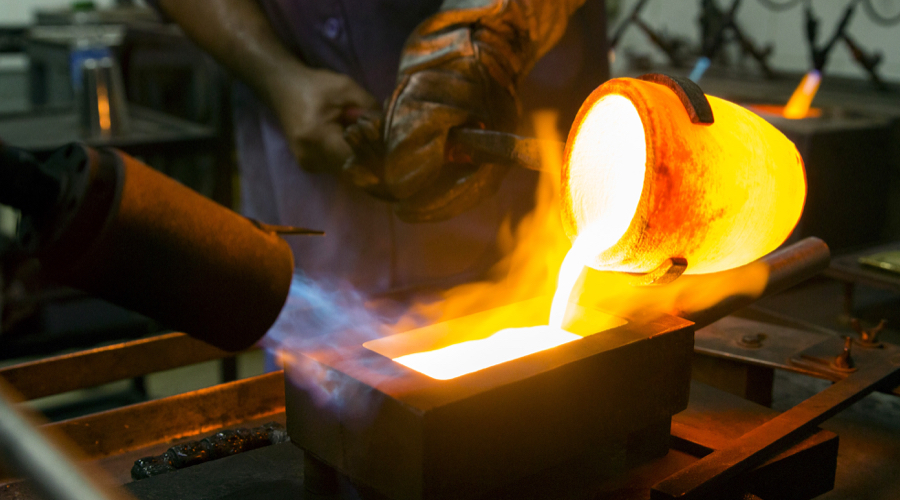
Ethiopia has launched its first gold refinery, a $50 million joint venture aimed at turning the East African nation into a regional processing hub for precious metals, Prime Minister Abiy Ahmed said over the weekend.
Gold exports are one of Ethiopia’s main sources of foreign exchange, earning the country $5.6 billion last year, according to government data.
Abiy said the new refinery would process gold from Ethiopia and elsewhere.
“It enables neighbouring countries and regional mining companies to bring their gold to Ethiopia for advanced refining, certification, value addition, and sale, eliminating the need to export it outside the continent,” Abiy Ahmed said in a post on social media platform X on Saturday.
The refinery will provide services including melting, testing, refining, casting, bar minting and die-making.
The initial investment in the refinery is $50 million, with state-owned Ethiopian Investment Holdings taking a majority stake, Abiy said.
(Reporting by Dawit Endeshaw; Editing by George Obulutsa, Kirsten Donovan)
SigraFi raises $35M to connect artisanal gold to institutional markets

UK-headquartered gold offtake company SigraFi said Thursday it has secured a $35 million credit facility to finance gold supply.
The facility is provided by a consortium of British and UAE investors led by UAE-based Ronin Commercial Brokers LLC and provides SigraFi with the capital to expand current operations with its contracted suppliers in the DRC, Zambia and South America, and to contract new cooperatives and aggregators.
SigraFi purchases gold under multi-year contracts from organised artisanal and small-scale gold mining (ASGM) cooperatives and is partnered with PeaceGold in the eastern DRC, working with 11 cooperatives representing 25,000 miners in Ituri Province.
PeaceGold was established in 2013 with the local nonprofit Conflict Resolution Center to help formalize artisanal mining and reintegrate former combatants into regulated work, including gold mining, as a way to reduce conflict.
Under the agreement, PeaceGold acts as an aggregator and export partner for its participating cooperatives, while SigraFi provides guaranteed offtake agreements at competitive pricing, giving cooperatives a greater share of the value of their gold.
The golden gap
Global mined gold production is likely to plateau over the next few years, according to the World Gold Council, while ASGM already accounts for at least 20% of newly mined gold. Its organised producers are held back by a lack of compliance capability and remain cut off from the capital, export corridors and offtakers that serve the rest of the industry. SigraFi was founded to help close this ‘Golden Gap’, it said.
“Artisanal miners produce one in every five ounces of new gold, yet most are shut out of the formal market, without the capital, compliance support or buyers that the rest of the industry takes for granted,” SigraFi executive chairman Stefan Allesch-Taylor said in a news release.
“That leaves the door open to illicit buyers and exploitative practices. This facility empowers cooperatives that have done the hard work of organising, and gives them a direct, traceable route to the world gold market,” Allesch-Taylor said. “We have moved fast because the demand is there on both sides: cooperatives want a legitimate route to market, and refiners want traceable supply.”
Hong Kong and Singapore pitch rival gold hubs to bullion market

Officials from Hong Kong and Singapore have used an annual industry gathering to pitch rival plans to create gold trading hubs in Asia, underscoring the fierce competition for new business and the race to capitalize on strong demand for the precious metal.
Both financial centers aim to plug into established bullion markets by offering new contracts and services, including hosting central bank reserves, and have already secured the participation of local and international banks. Hong Kong launched trial operations of a gold clearing system in July, along with a new price benchmark.
“We are positioning ourselves as a super-connector and also a super value-adder,” Christopher Hui, secretary for Financial Services and the Treasury for Hong Kong, said during a panel discussion at the London Bullion Market Association’s meeting in Sorrento, Italy.
The industry’s leading get-together — attended by more than 1,000 traders, investors and other delegates — offered a rare opportunity for representatives of both Asian centers to lay out their blueprints. Toward the end of the year, Hong Kong will unveil details of offshore-yuan gold futures and allow banks to settle physical trades in real time and in multiple currencies, Hui said.
Singapore’s ambitions are similar. “We are trying to connect different liquidity pools,” Lim Cheng Khai, executive director of the financial markets development department at the Monetary Authority of Singapore, said during the panel session, citing over-the-counter trading in London, the futures market in New York and producers in Asia.
Both cities are also courting central banks, whose reserves can provide crucial liquidity through lending to commercial financial institutions. Singapore plans to introduce gold vaulting services for central banks, while the People’s Bank of China has built up its reserves in Hong Kong in recent months.
Hong Kong and Singapore are tapping into a wider move toward diversification, which has already seen some monetary authorities repatriate gold in recent years, challenging the status of historic hubs such as London and New York. Even a small share of the 39,000 tons held by central banks globally would bolster either center’s influence.
Rising government debt levels are also strengthening the case for central banks to increase their gold holdings, Joachim Nagel, president of Germany’s Bundesbank, said at the same conference earlier this week. In a survey of 74 central banks published by the World Gold Council in June, 45% said they planned to buy in the coming year, the biggest-ever share since the survey began in 2018.
“What we are trying to do is not totally new,” Hui, the Hong Kong official, said on the sidelines of the conference. “Rather, we are really riding on this trend of the need to diversify.”
Some participants at the LBMA event said there was room for both centers potentially to thrive, given the deep liquidity of the global market. Perhaps the biggest challenge, however, may lie in persuading market participants of the need to switch their business away from more established locations.
“If you talk to anyone, anywhere on the planet, what do you benchmark the price against? It’s the LBMA fix,” Gregory Frith, senior precious metals trader at Centalion, said during a separate panel session. “How do you evolve from that? You have to try and get ahead of the curve.”
Hong Kong’s project has a strong political angle, with the city – already the world’s biggest market for offshore yuan – aiming to leverage gold to drive greater usage of the Chinese currency. It also has the advantage of potential collaboration with China-friendly gold-producing countries, such as Uzbekistan.
Proximity to China, however, might also be viewed as a risk. Centalion’s Frith said that — while he likes Hong Kong contracts — some traders might be more comfortable doing business in Singapore. “For companies and big traders, it all comes down to contracts — where do I feel the most comfortable?” he said.
(By Yihui Xie)

No comments:
Post a Comment