Li
UK scientists turn to biology to unlock cleaner lithium

Researchers at the University of Birmingham are leading a £6.2-million ($8.2-million) project to develop protein-based membranes that could make lithium extraction more selective and potentially less energy-intensive.

The three-year initiative, funded by the UK’s Advanced Research and Invention Agency (ARIA), will initially target one of the toughest challenges in direct lithium extraction (DLE): separating lithium from sodium to produce the high-purity lithium compounds required for battery manufacturing.
“Biology can construct ordered materials with precision that is extremely difficult to achieve using existing manufacturing methods. We aim to harness this to create membranes with uniform, programmable pores,” project lead Dr. Dominik Kubicki, from the University of Birmingham, said.
The technology could eventually extend beyond battery materials to critical-mineral recovery, water treatment and chemical and pharmaceutical manufacturing. Its success would depend on whether researchers can translate the precision of biological structures into durable membranes capable of operating at industrial scales.
Protein engineering
The consortium, which includes Aston University and three industrial partners, plans to use S-layer proteins, which naturally assemble into highly ordered two-dimensional lattices on the surfaces of many microorganisms.
Researchers aim to engineer these proteins into large-area membranes containing uniformly sized pores capable of distinguishing between lithium and sodium ions despite their similar chemical properties.
The project forms part of ARIA’s Universal Fabricators program, which seeks to use engineered proteins as programmable building blocks for manufacturing materials with exceptional control over their geometry.
“S-layer proteins offer an extraordinary starting point for materials engineering because they can spontaneously assemble into highly ordered structures,” project co-lead Professor Tim Knowles said.
“By combining computational design, structural biology, and experimental screening, we aim to reprogram these natural building blocks to perform demanding technological functions.”
Industrial partners will contribute expertise across the development process. Fold9’s Jude Wells will lead AI-guided protein design, while UK-based Evove will handle membrane manufacturing, scale-up and testing. Adaptyv Bio will provide high-throughput screening capabilities to evaluate thousands of protein variants.
The most promising candidates will undergo larger-scale production and integration into practical membrane systems.
Scaling challenges
The researchers will combine computational protein design, structural biology, and high-throughput screening with protein production, membrane production, and testing under realistic operating conditions.
“A key challenge will be translating molecular-level control into membranes that can be manufactured and operated at useful scales,” Professor Owen Thomas, from the University of Birmingham, said. “Close integration of biological design, materials characterisation, and chemical engineering gives us the opportunity to address that challenge from the outset.”
The programme will combine computational protein design, structural biology and experimental screening with membrane production and testing under realistic operating conditions.
Although the approach remains at the research stage, the consortium hopes to establish a manufacturing platform capable of producing highly selective separation materials for multiple industries.
For lithium producers, the critical test will be whether the engineered membranes can deliver reliable separation performance outside the laboratory while maintaining the durability and scalability needed for commercial use.
EnergyX inks 10-year, $2B lithium offtake deal with Trafigura

Energy Exploration Technologies (EnergyX) announced Monday it has signed a binding, definitive lithium offtake agreement with global commodities trading giant Trafigura, for the purchase of 100,000 metric tons of battery-grade lithium products over a 10-year term.
Based on current market prices of approximately $20,000 per metric ton, the agreement represents more than $2 billion in revenue for EnergyX over its term, the company said.
The deal covers lithium products from both of EnergyX’s first two flagship projects with lithium carbonate supplied from Black Giant in Chile and lithium hydroxide from project Lonestar in Hooks, Texas.
In March, EnergyX commissioned Lonestar, a demonstration plant capable of producing 250 metric tons per year of lithium carbonate equivalent (LCE), located in the Smackover formation — a lithium-rich brine resource that stretches from Florida to Texas— and the plant is the first DLE facility in the state to process locally sourced brine.
The facility is designed to demonstrate improvements in extraction efficiency, recovery rates and cost competitiveness — key factors that have historically limited the viability of lithium refining outside China.
Currently, China dominates an estimated 70–75% of global lithium chemical conversion capacity, creating a major bottleneck in the global battery supply chain. This concentration has left the US reliant on foreign processing.
In July, EnergyX secured a $225 million investment from Italian energy company Eni SpA for a minority stake in the Black Giant lithium project in Chile’s Antofagasta region. Black Giant has planned capacity to produce up to 52,500 metric tons of lithium carbonate per year across the first two phases. The company also received a $690 million Letter of Intent from the U.S. EXIM Bank to provide debt financing for the project.
A significant share of the lithium offtake will be directed to the US battery supply chain, CEO Teague Egan told MINING.COM in a call.
“Lonestar has been operating longer than Black Giant, however there’s been more engineering done towards a commercial plant at Black Giant, and has been funded by the EMI investments.”
“Target commercial Phase 1 production for Black Giant is 2028, where Lonestar is 2029,” Egan said.
“Offtake agreements are among the most important steps in taking a lithium project from development to production,” Egan said in Monday’s release.
“A long-term purchase commitment from a counterparty of Trafigura’s scale and credit quality shows that the market wants EnergyX’s product. It also gives lenders and investors the revenue visibility they need before committing capital to commercial construction.”
Production will be powered by its proprietary GET-Lit direct lithium DLE refining technology platform, which is covered by more than 150 patents.
“We are pleased to support EnergyX as it develops its lithium projects in Chile and the US. Long-term offtake is an important step in moving projects into production, and this agreement reflects our ability to help bring strategic critical minerals projects online and build secure, diversified supply chains,” Daniel von Arx, Head of Battery Metals at Trafigura, said in Monday’s release.
“Drawing on our logistics network and market expertise, we look forward to supplying these battery-grade lithium products to customers, supporting supply chains for the US automotive and energy storage industries.”
Zimbabwe says no justification to delay lithium export ban
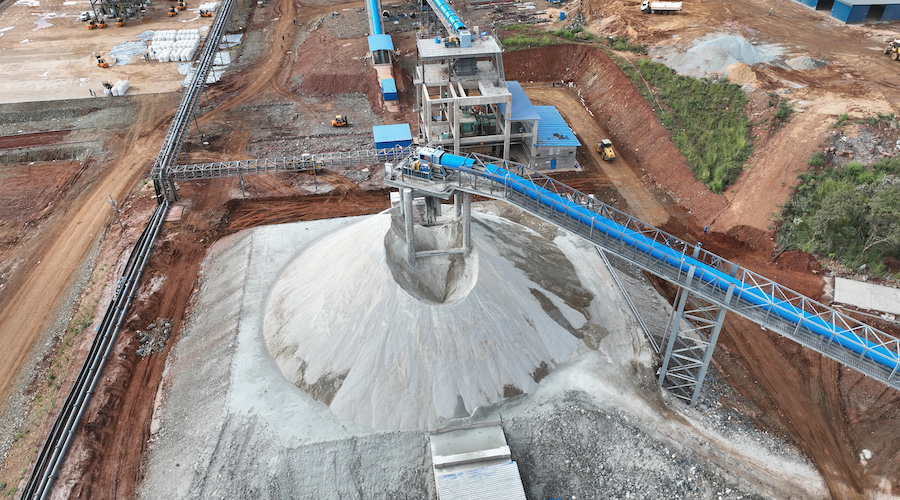
Zimbabwe said there’s no reason to delay a ban on exports of lithium concentrate that’s scheduled to come into effect in January.
The southern African nation halted shipments of lithium concentrate in February to promote domestic processing of higher value products and curb illegal shipments of the metal that’s used in the production of electric vehicle batteries. Zimbabwe relaxed the export restrictions in April and the ban is now due to be implemented at the start of 2027, though producers have asked for more time to prepare.
“Zimbabwe’s lithium producers have had ample time to prepare for the January 2027 beneficiation deadline,” Secretary for Information Nick Mangwana said Friday on his X account. “There is no justification for further extensions.”
Like other African countries, Zimbabwe is seeking to derive more value from its natural resources.
Zimbabwe’s supply outlook is being closely watched as it has become a major supplier of lithium feedstock following a surge of investment by Chinese companies. The southern African nation accounted for about 10% of global mined production last year, according to the US Geological Survey.
Chinese investors in Zimbabwe’s lithium sector include local units of Sinomine Resource Group Co., Chengxin Lithium Group Co. and Sichuan Yahua Industrial Group Co. Sinomine and Yahua are building facilities capable of making lithium sulfate, an intermediate material used to make battery-grade chemicals, while Huayou already commissioned its own plant.

(By Godfrey Marawanyika)
CleanTech Lithium expands foothold in Argentina

CleanTech Lithium (LON: CTL) has secured options to add two lithium brine properties in Argentina’s Salar de Antofalla, expanding its portfolio near its flagship Laguna Verde project.
The company signed agreements to acquire 100% of the Genoveva and Sal de Litio 1 properties, collectively known as the Antofalla project, about 80 km from Laguna Verde in Catamarca Province. The licences are adjacent to an exploration property held by Albemarle (NYSE: ALB), the world’s top lithium producer.
CleanTech shares rose 7.4% in London following the announcement, closing at 7.25 pence apiece and giving the developer a market value of £25.5 million ($34 million).
The acquisition gives CleanTech a foothold in what it describes as Argentina’s largest undeveloped salt flat, with potential to share infrastructure and processing facilities across its regional lithium projects.
The company plans to begin exploration at Antofalla in 2027, while keeping Laguna Verde as its development priority.
“We are excited by the addition of this project in Argentina,” CleanTech CEO Ignacio Mehech said. “We expect these three projects to have significant development synergies, as well as potentially benefitting from sharing a centralised conversion facility in Copiapó.”
Acquisition terms
CleanTech will pay the unnamed sellers $525,000 during the first year, followed by another $1.4 million in scheduled payments between October 2027 and May 2031. The company plans to fund the approximately $1.93-million acquisition through existing cash resources.
The agreements give CleanTech the option to acquire both properties outright, although their exploration potential has yet to be established.
Management sees opportunities to integrate Antofalla with Laguna Verde and its Viento Andino project, potentially reducing future development costs through shared infrastructure.
“The Laguna Verde project remains our main focus; however, the addition of the Antofalla project provides strong long-term value enhancement for our shareholders,” Mehech said.
The planned 2027 exploration program will be an early test of Antofalla’s resource potential and help determine how the properties could fit into CleanTech’s broader South American lithium development strategy.
Savannah Resources close to second offtake deal for Portugal lithium project

London-listed Savannah Resources (LON: SAV) is close to signing a key second offtake deal for future output from its flagship Barroso lithium project in northern Portugal, with an agreement expected this quarter, CEO Emanuel Proenca said on an analyst call on Wednesday.
The Barroso project hosts more than 39 million tonnes of spodumene resources, Europe’s largest deposit of the lithium-bearing mineral.
The company has said further exploration upside could lift resources above 100 million tonnes and extend the mine’s life beyond 50 years.
Proenca said Savannah was “quite advanced” in negotiations for a second offtake agreement, with a “very final shortlist of candidates, all of them very credible players in the global scene of lithium”, with a deal expected this quarter.
He gave no further details but said a second offtake agreement was a key step towards securing project financing, as lenders want 70%-75% of Barroso’s future output contracted through long-term supply deals.
Dutch miner and lithium supplier AMG Critical Materials (AMS: AMG) signed an offtake agreement in June 2024 to buy 45,000 tonnes of spodumene concentrate annually from the Barroso project for five years, equivalent to about 25% of the mine’s planned output.
As part of the deal, AMG Critical Materials became Savannah’s largest shareholder, with a 16% stake.
Savannah estimates construction of the Barroso mine will cost about $420 million. Banks are expected to provide 60%-65% of the funding, with the remainder coming from a Portuguese state grant of up to 110 million euros ($123.09 million), existing cash and new equity.
The project remains on track for construction in 2027 and first production in 2028, Proenca said.
($1 = 0.8937 euros)
(Reporting by Sergio Goncalves; Editing by Cynthia Osterman)

No comments:
Post a Comment