US agency to do more equity investing in Africa, official says
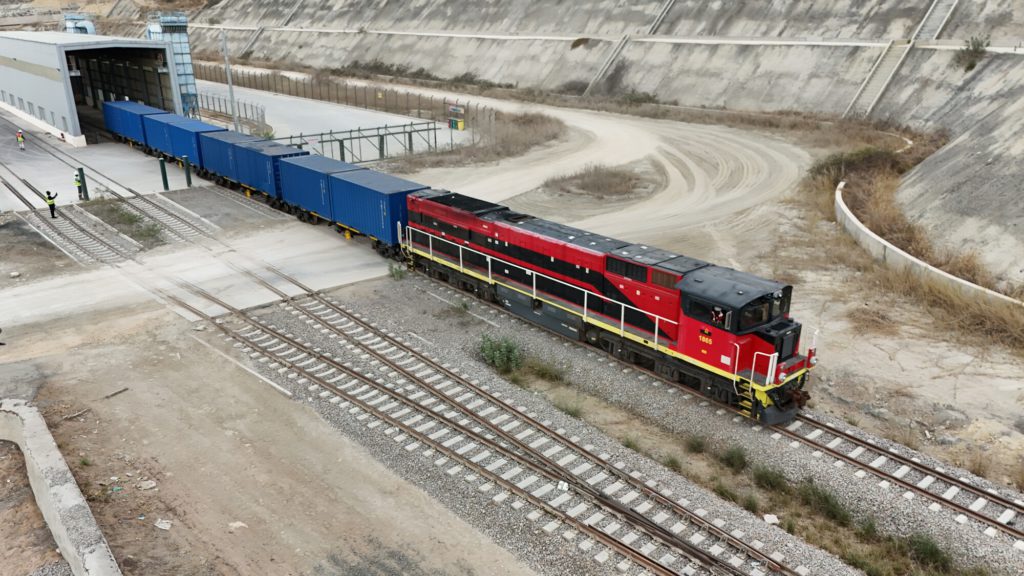 Lobito Atlantic Railway. (Credit: Trafigura)
The US International Development Finance Corp plans to increase direct equity investments, including in Africa and the critical minerals sector, the agency’s Africa head said, as the US steps up efforts to counter China’s dominance of key supply chains.

Critical minerals have become a focal point of global competition, with the US and other major economies seeking to secure supply chains for electric vehicles and renewable energy, while reducing dependence on China.
The DFC, the US government’s main investment arm, said in September it would invest up to $155 million in African digital infrastructure provider WIOCC, its largest ever equity commitment.
DFC Regional Managing Director for Africa Vibhuti Jain told Reuters that, where strategically significant, “you will see us deploy equity in addition to or in place of other instruments”.
“There are a number of projects in our equity pipeline right now, including in Africa, (and) including in the critical minerals sector,” said Jain, without providing details.
She said the DFC would continue to provide more debt financing, credit guarantees and political risk insurance than equity investments for the foreseeable future.
“But I think as the agency continues to grow, we will do more equity investments,” she added.
The US International Development Finance Corp plans to increase direct equity investments, including in Africa and the critical minerals sector, the agency’s Africa head said, as the US steps up efforts to counter China’s dominance of key supply chains.
Critical minerals have become a focal point of global competition, with the US and other major economies seeking to secure supply chains for electric vehicles and renewable energy, while reducing dependence on China.
The DFC, the US government’s main investment arm, said in September it would invest up to $155 million in African digital infrastructure provider WIOCC, its largest ever equity commitment.
DFC Regional Managing Director for Africa Vibhuti Jain told Reuters that, where strategically significant, “you will see us deploy equity in addition to or in place of other instruments”.
“There are a number of projects in our equity pipeline right now, including in Africa, (and) including in the critical minerals sector,” said Jain, without providing details.
She said the DFC would continue to provide more debt financing, credit guarantees and political risk insurance than equity investments for the foreseeable future.
“But I think as the agency continues to grow, we will do more equity investments,” she added.
Attention on critical minerals sector
Jain said the DFC has more than $14 billion of investment commitments across Africa and that critical minerals projects, or projects linked to the sector, are a major driver of new investments.
More than $3 billion of those commitments are in critical minerals, the DFC said.
“So really, this is a sector to which we’re paying close attention,” Jain said.
In addition to financing a pipeline of African critical minerals projects, including rare earths developments and a graphite mine in Mozambique, the DFC is backing the rehabilitation of the Lobito minerals transport corridor linking African copper and cobalt mines to the Atlantic coast.
(Reporting by Olivia Kumwenda-Mtambo. Editing by Mark Potter)
Jain said the DFC has more than $14 billion of investment commitments across Africa and that critical minerals projects, or projects linked to the sector, are a major driver of new investments.
More than $3 billion of those commitments are in critical minerals, the DFC said.
“So really, this is a sector to which we’re paying close attention,” Jain said.
In addition to financing a pipeline of African critical minerals projects, including rare earths developments and a graphite mine in Mozambique, the DFC is backing the rehabilitation of the Lobito minerals transport corridor linking African copper and cobalt mines to the Atlantic coast.
(Reporting by Olivia Kumwenda-Mtambo. Editing by Mark Potter)
Zambia says it is negotiating US minerals deal after ‘decoupling’ from health pact
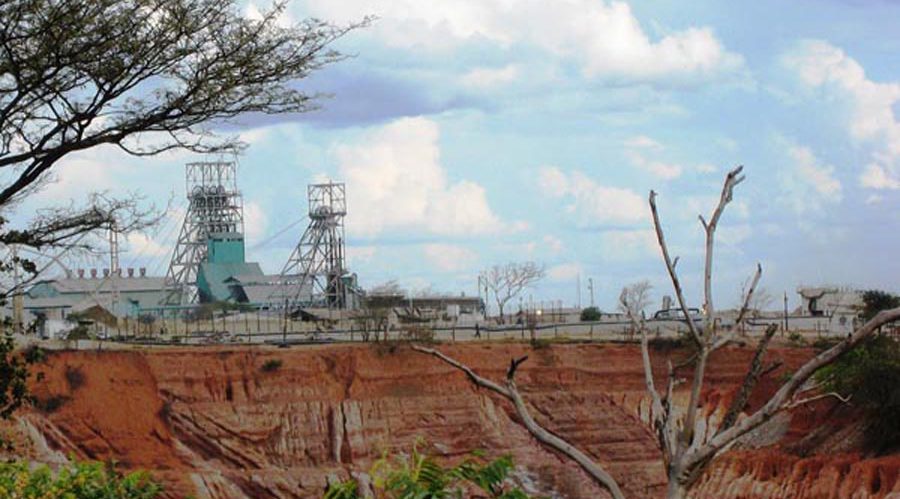 Mopani complex. Image by Arne Wilson | WikiMedia.
Zambia is negotiating a critical minerals deal with the US government after “decoupling” it from a separate health funding agreement it signed on Thursday, its foreign minister said.
“There was this (Memorandum of Understanding) on health and another on critical minerals, and we were saying that these need to be decoupled, and this has been done,” Mulambo Haimbe said at a signing ceremony for the health pact, which will see the US provide $1.5 billion in funding.
Asked for more details about the minerals deal, the minister said it was “still being negotiated” but declined to elaborate.
Zambia had resisted an agreement with the United States that would directly link funding for its health sector with allowing greater US access to minerals.
The minister did not specify which minerals Zambia is considering granting the US access to.
The Southern African country is the second-largest copper producer in Sub-Saharan Africa after the Democratic Republic of Congo.
(Reporting by Chris Mfula; Additional reporting by Anathi Madubela in Johannesburg; Writing by Sfundo Parakozov; Editing by Alexander Winning)
Zambia is negotiating a critical minerals deal with the US government after “decoupling” it from a separate health funding agreement it signed on Thursday, its foreign minister said.
“There was this (Memorandum of Understanding) on health and another on critical minerals, and we were saying that these need to be decoupled, and this has been done,” Mulambo Haimbe said at a signing ceremony for the health pact, which will see the US provide $1.5 billion in funding.
Asked for more details about the minerals deal, the minister said it was “still being negotiated” but declined to elaborate.
Zambia had resisted an agreement with the United States that would directly link funding for its health sector with allowing greater US access to minerals.
The minister did not specify which minerals Zambia is considering granting the US access to.
The Southern African country is the second-largest copper producer in Sub-Saharan Africa after the Democratic Republic of Congo.
(Reporting by Chris Mfula; Additional reporting by Anathi Madubela in Johannesburg; Writing by Sfundo Parakozov; Editing by Alexander Winning)
Ghana to replace draft mining bill with revised version, sources say
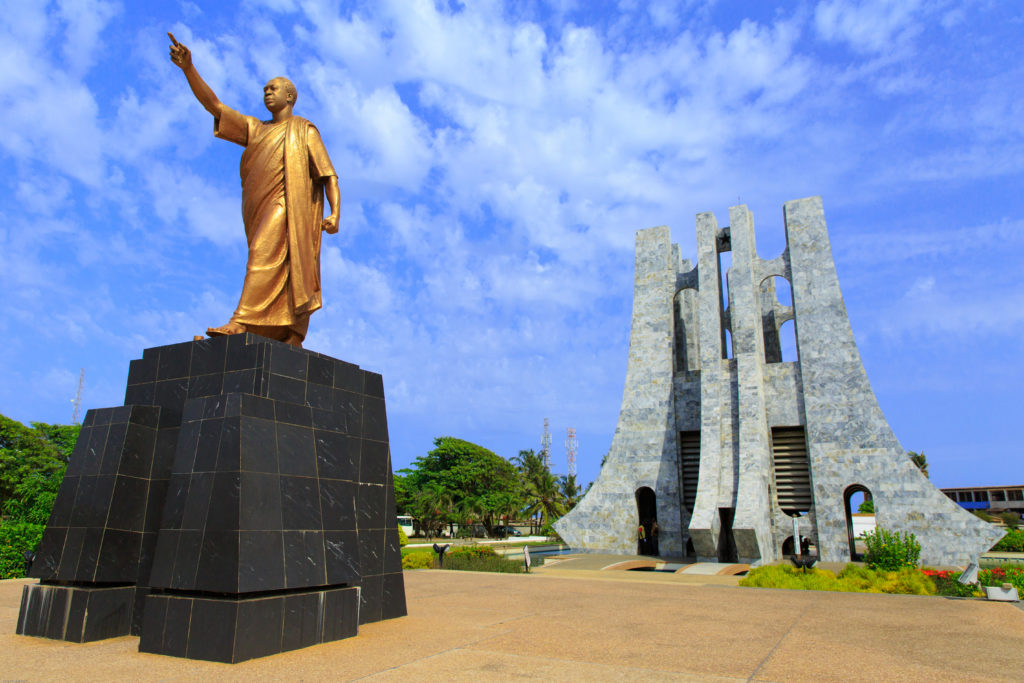 Kwame Nkrumah Memorial Park, Accra, Ghana. Stock image.
Ghana is expected to replace a draft mining bill before Parliament with a revised version that restores a maximum 20-year mining lease term and clarifies provisions that have raised concerns among miners, three people familiar with the matter said.
Reuters reported last month that the Minerals and Mining Bill, 2026, published by Parliament would limit new mining leases to 15 years, or the projected life of the mine, whichever is shorter, compared with up to 30 years under current law. It would also give the minister power to require mining companies to issue the state a special share.
Two senior government officials and a mining executive told Reuters that a revised bill is expected to replace the lease provision with a maximum 20-year term, in line with a policy position outlined by the mines minister in July.
“There was a mistake with the document that eventually went to Parliament and that will be corrected,” a mines ministry official said, speaking on condition of anonymity because he was not authorised to comment publicly. The sources did not say when the revised bill would be reintroduced.
The expected changes follow concerns raised by industry. The Ghana Chamber of Mines said on Thursday that the minister’s power to require a mining company to issue the state a special share already exists under the Minerals and Mining Act, 2006, and is largely being carried over into the draft bill, albeit with tougher penalties for non-compliance.
Ken Ashigbey, chief executive of the chamber, said discussions with the authorities had produced “good compromise positions,” including the proposed 20-year lease term. He said the remaining issues would be taken up with Parliament.
The mines ministry and the Minerals Commission did not immediately respond to requests for comment.
(Reporting by Christian Akorlie and Maxwell Akalaare Adombila. Editing by Mark Potter)
Ghana is expected to replace a draft mining bill before Parliament with a revised version that restores a maximum 20-year mining lease term and clarifies provisions that have raised concerns among miners, three people familiar with the matter said.
Reuters reported last month that the Minerals and Mining Bill, 2026, published by Parliament would limit new mining leases to 15 years, or the projected life of the mine, whichever is shorter, compared with up to 30 years under current law. It would also give the minister power to require mining companies to issue the state a special share.
Two senior government officials and a mining executive told Reuters that a revised bill is expected to replace the lease provision with a maximum 20-year term, in line with a policy position outlined by the mines minister in July.
“There was a mistake with the document that eventually went to Parliament and that will be corrected,” a mines ministry official said, speaking on condition of anonymity because he was not authorised to comment publicly. The sources did not say when the revised bill would be reintroduced.
The expected changes follow concerns raised by industry. The Ghana Chamber of Mines said on Thursday that the minister’s power to require a mining company to issue the state a special share already exists under the Minerals and Mining Act, 2006, and is largely being carried over into the draft bill, albeit with tougher penalties for non-compliance.
Ken Ashigbey, chief executive of the chamber, said discussions with the authorities had produced “good compromise positions,” including the proposed 20-year lease term. He said the remaining issues would be taken up with Parliament.
The mines ministry and the Minerals Commission did not immediately respond to requests for comment.
(Reporting by Christian Akorlie and Maxwell Akalaare Adombila. Editing by Mark Potter)


No comments:
Post a Comment