Pipeline deal subverting EU energy diversification policy.
Sep 19, 2025

Despite EU efforts to wean itself off Russian energy, Druzhba remains a vital supply conduit for both Hungary and Slovakia, but Ukraine’s leadership suggested that it might target the pipeline. (Photo: gov.ua)
Serbia is a candidate for European Union membership and Hungary has been a full member since 2004, but that hasn’t prevented them from collaborating with Russia to undermine EU cohesion and meddle with efforts to break Europe’s dependency on Russian energy. Ukrainian drones, however, have succeeded in disrupting Belgrade’s and Budapest’s designs.
EU Commissioner for Energy Dan Jørgensen unveiled an ambitious plan in June to stop all Russian oil and natural gas exports to the European Union by 2027. A little over one month later, Hungary and Serbia announced a joint effort to build additional infrastructure that would enable Russian oil exports to reach Serbia via an extension of the Druzhba pipeline. Once built, the pipeline will be able to convey upwards of 5 million tons of oil annually to Serbia. The target completion date is 2027.
A recent analysis published by the Western Balkans Center at New Lines Institute explains how Serbia’s actions are “revealing broader inefficiencies in the EU’s strategy to mitigate external energy influences.”
The analysis states Serbia is pursuing a “deliberate strategy of maneuvering between Russia and China to maximize autonomy while extracting concessions from Brussels. The result is a dual challenge for the EU – Serbia’s continuation of Russian energy dependence that undermines sanctions unity, and resource politics that could anchor Chinese influence at the heart of the Union’s green transition.”
Given Serbia’s EU candidate status, Belgrade’s actions additionally highlight “a broader vulnerability in the EU’s enlargement policy – its inability to prevent candidate states from using external partnerships to evade reform demands necessary for accession.”
As the analysis notes, Serbia’s Druzhba extension plan complicates its negotiations with Brussels on Cluster 4 requirements, which oblige an aspiring member state to harmonize its policies with EU standards concerning the “green agenda and sustainable connectivity.” Among the specific topics that need to be settled are energy supply, infrastructure and the internal energy market. Although the EU opened negotiations with Serbia on Cluster 4 topics in 2021, none of the necessary provisions have been finalized to date.
“The planned pipeline deepens Serbia’s reliance on Russian oil and contradicts EU accession requirements outlined in Cluster 4,” the New Lines analysis states.
In August, Ukrainian drone attacks on the Druzhba pipeline on Russian territory raised questions about the utility of the Serbian pipeline extension plan. The damage done to the Unecha pumping station in one of those strikes caused a disruption to Europe-bound oil shipments, prompting complaints by Hungary and Slovakia. Despite EU efforts to wean itself off Russian energy, Druzhba remains a vital supply conduit for both Budapest and Bratislava.
In the aftermath of the August attacks, Ukraine’s president, Volodymyr Zelensky suggested that Kyiv might target Druzhba again, unless Hungary moderates its stance on hindering EU assistance to Ukraine, including a block on accession. “We have always supported friendship between Ukraine and Hungary. And now the existence of Druzhba [which means 'friendship’ in Ukrainian] depends on Hungary’s position,” Zelensky said. Hungarian leader Viktor Orban, in turn, warned Zelensky that further Ukrainian efforts disrupt the Hungary-bound flow of Russian oil would have big consequences for Kyiv.
Regardless of whether Ukraine mounts new strikes on Druzhba, the proposal of a Serbian pipeline extension presents a serious challenge to the EU’s cohesion, the New Lines analysis underscores.
“Serbian geopolitical maneuvering involving Russia is dangerous to European geopolitical stability and prosperity,” the analysis states. “Russia has historically capitalized on destabilization and conflict in the Western Balkans. This further diverts the region from EU democratic norms and allows Russia to extend its influence in Europe, despite EU sanctions.”
To read the full report, click here.
Eurasianet has an operating agreement with the New Lines Institute, a Washington, DC,-based think tank that fosters “principled and transformative” policy solutions “based on a deep understanding of regional geopolitics and the value systems of those regions.”
Serbia is a candidate for European Union membership and Hungary has been a full member since 2004, but that hasn’t prevented them from collaborating with Russia to undermine EU cohesion and meddle with efforts to break Europe’s dependency on Russian energy. Ukrainian drones, however, have succeeded in disrupting Belgrade’s and Budapest’s designs.
EU Commissioner for Energy Dan Jørgensen unveiled an ambitious plan in June to stop all Russian oil and natural gas exports to the European Union by 2027. A little over one month later, Hungary and Serbia announced a joint effort to build additional infrastructure that would enable Russian oil exports to reach Serbia via an extension of the Druzhba pipeline. Once built, the pipeline will be able to convey upwards of 5 million tons of oil annually to Serbia. The target completion date is 2027.
A recent analysis published by the Western Balkans Center at New Lines Institute explains how Serbia’s actions are “revealing broader inefficiencies in the EU’s strategy to mitigate external energy influences.”
The analysis states Serbia is pursuing a “deliberate strategy of maneuvering between Russia and China to maximize autonomy while extracting concessions from Brussels. The result is a dual challenge for the EU – Serbia’s continuation of Russian energy dependence that undermines sanctions unity, and resource politics that could anchor Chinese influence at the heart of the Union’s green transition.”
Given Serbia’s EU candidate status, Belgrade’s actions additionally highlight “a broader vulnerability in the EU’s enlargement policy – its inability to prevent candidate states from using external partnerships to evade reform demands necessary for accession.”
As the analysis notes, Serbia’s Druzhba extension plan complicates its negotiations with Brussels on Cluster 4 requirements, which oblige an aspiring member state to harmonize its policies with EU standards concerning the “green agenda and sustainable connectivity.” Among the specific topics that need to be settled are energy supply, infrastructure and the internal energy market. Although the EU opened negotiations with Serbia on Cluster 4 topics in 2021, none of the necessary provisions have been finalized to date.
“The planned pipeline deepens Serbia’s reliance on Russian oil and contradicts EU accession requirements outlined in Cluster 4,” the New Lines analysis states.
In August, Ukrainian drone attacks on the Druzhba pipeline on Russian territory raised questions about the utility of the Serbian pipeline extension plan. The damage done to the Unecha pumping station in one of those strikes caused a disruption to Europe-bound oil shipments, prompting complaints by Hungary and Slovakia. Despite EU efforts to wean itself off Russian energy, Druzhba remains a vital supply conduit for both Budapest and Bratislava.
In the aftermath of the August attacks, Ukraine’s president, Volodymyr Zelensky suggested that Kyiv might target Druzhba again, unless Hungary moderates its stance on hindering EU assistance to Ukraine, including a block on accession. “We have always supported friendship between Ukraine and Hungary. And now the existence of Druzhba [which means 'friendship’ in Ukrainian] depends on Hungary’s position,” Zelensky said. Hungarian leader Viktor Orban, in turn, warned Zelensky that further Ukrainian efforts disrupt the Hungary-bound flow of Russian oil would have big consequences for Kyiv.
Regardless of whether Ukraine mounts new strikes on Druzhba, the proposal of a Serbian pipeline extension presents a serious challenge to the EU’s cohesion, the New Lines analysis underscores.
“Serbian geopolitical maneuvering involving Russia is dangerous to European geopolitical stability and prosperity,” the analysis states. “Russia has historically capitalized on destabilization and conflict in the Western Balkans. This further diverts the region from EU democratic norms and allows Russia to extend its influence in Europe, despite EU sanctions.”
To read the full report, click here.
Eurasianet has an operating agreement with the New Lines Institute, a Washington, DC,-based think tank that fosters “principled and transformative” policy solutions “based on a deep understanding of regional geopolitics and the value systems of those regions.”
Ukraine has 'hit the nail on the head' with strikes on Russian oil industry, economist says
Copyright AP Photo
By Irina Sheludkova & Sasha Vakulina
Published on 19/09/2025 - EUR0NEWS
Fuel for Russia's war machine
The Russian government relies heavily on oil and gas revenue. Oil exports constitute about one-third of Russia's federal budget, making them a critical source of funding for the war in Ukraine.
Targeting Moscow's oil infrastructure was a logical next step for Kyiv, in what Ukrainian President Volodymyr Zelenskyy said was “the sanctions that work the fastest”.
Inozemtsev explained to Euronews that targeting oil refineries has a significantly bigger impact than targeting, for example, drone manufacturing sites.
According to Inozemtsev, it does not take much time to set up or repair a drone factory, which is not much more than “a large assembly shop where components are delivered, assembled, checked and tested.”
“Let’s say a drone attacks a factory like this – it would take three days to rebuild everything. But if you hit an oil refinery - the consequences are much more serious, it would burn for weeks," he told Euronews.
In turn, oil refinery equipment is not only costly, Inozemtsev said, but also almost irreplaceable, given that Moscow is under significant Western sanctions.
“In fact, it is European and American equipment. It is difficult to replace it with Chinese equipment," he explained.
Attacks on the big oil refineries cause a significant drop in production, including petrol.
“A 10% drop in petrol production is clearly a deficit for the economy as a whole, while a 30% drop in diesel is nothing at all," Inozemtsev pointed out.
"And the situation with petrol is noticeable. Everyone is talking about problems with petrol. And this is true, it exists, and Ukrainians have created it.”
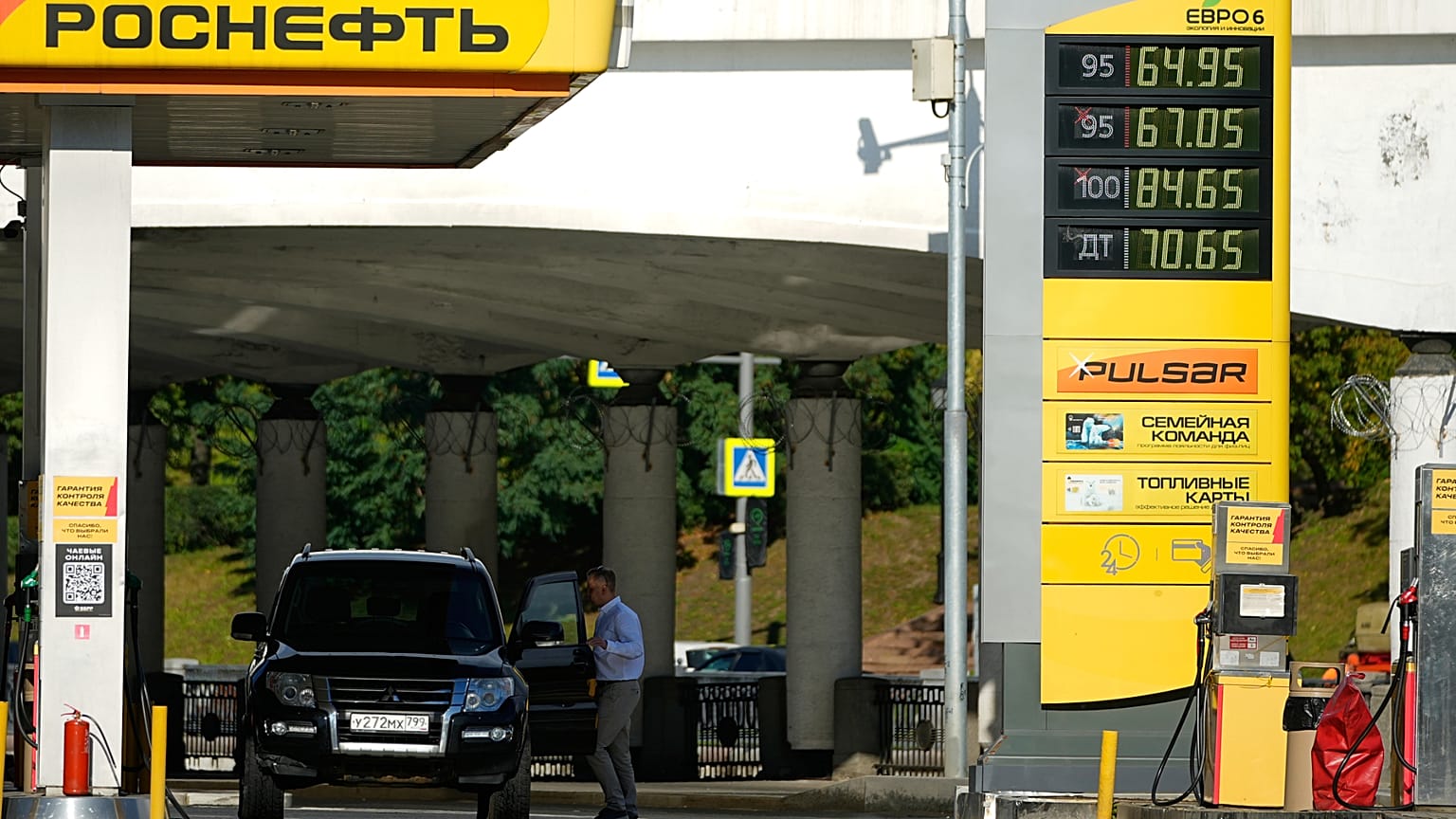
Gas stations have run dry in more regions of the country, with motorists waiting in long lines and officials resorting to rationing or cutting off sales altogether. The shortage has also been spreading to central regions of Russia as fuel prices hit record highs.
“Ukrainians have hit the nail on the head here," Inozemtsev emphasised.
The problem exists, and prices will rise. Supply disruptions are painful because car ownership is high, and practically everyone has a car."
"So when people see that there is nothing at the petrol station, this is one of the three most important irritating factors, in my opinion: lack of petrol, airport closures, and internet disruptions. These are three things that all Russians feel.”
Can Moscow fix it?
Russia remains the world’s second-largest oil exporter, but a seasonal rise in demand and sustained Ukrainian drone strikes have caused major trouble to its oil industry.
In order to ease the shortage, Russia has paused gasoline exports. A full ban has been declared until 30 September, and a partial ban affecting traders and intermediaries until 31 October.
Inozemtsev explained that, to find a more long-term solution, there is already a lot of talk about “the need to create a missile defence system, anti-drone protection around these enterprises, and so on, which would be very expensive.”
In other words, he said, resources will be diverted from the economy for this purpose.
Oil and gas revenues have accounted for between a third and a half of Russia's total federal budget proceeds over the past decade, making the sector the most critical source of financing for the government.
To tackle the current situation, the Russian government is reportedly considering raising the value-added tax (VAT) rate to keep the budget deficit under control and preserve its reserve.
Inozemtsev pointed out to Euronews that the Russian economy is being hit, but the Russian army and Russia’s war remain intact at this stage.
'Putin wants to press on'
Russia's economy has continued to grow despite tightening Western sanctions over Moscow’s war in Ukraine.
But GDP is expected to slow to around 1% from 4.3% last year, and inflation remains above 8% in a country where much of the workforce and 40% of revenues now go to defence and security.
“In principle, this is how we enter a state where, most likely, we will have zero growth in the coming years, but at the same time, there will always be enough for war,” Inozemtsev told Euronews, adding that Ukrainian strikes on the Russian oil industry have a more profound effect.
“If, let’s say, there is some kind of missile hit on - this, in general, only concerns the inhabitants of Voronezh," he explained.
"But Ukrainian strikes are now already happening all over the country. It makes people understand that things are not going ok and that the government cannot do anything about it.”
“Therefore, I believe that yes, there will be an effect. It will lead to an increase in transport costs and it will cause discontent among the population," he explained.
This will also require constant transfer of resources from region to region, Inozemtsev said, but “Putin is not concerned about this.”
"(Putin) is absolutely certain that in a year or two, the West and Ukraine will collapse. He wants to press on," Inozemtsev concluded.
Copyright AP Photo
By Irina Sheludkova & Sasha Vakulina
Published on 19/09/2025 - EUR0NEWS
Kyiv’s strategy to strike the Russian oil industry is “the most efficient thing Ukraine can do” to hurt Moscow's war machine. Still, it will not break the army and will not stop Moscow’s war, Russian economist Vladislav Inozemtsev told Euronews.
Overnight on Thursday, Ukraine struck one of Russia’s largest oil refineries and petrochemical plants in the Bashkortostan Republic, 1,300 kilometres from the front line in Ukraine.
In a separate parallel attack, the Ukrainian Special Operations Forces also reported a strike against an oil refinery in Russia’s Volgograd region.
The Volgograd refinery, about 450 km from the front, plays a key role in supplying fuel to the Russian military, Ukraine’s Special Operations Forces said.
It is the largest producer of petroleum products in Russia’s Southern Federal District and processes 15.7 million metric tons of crude oil annually, accounting for 5.6% of the country’s total refining capacity.
Ukraine has intensified precision strikes on Russia’s oil industry over the past weeks, forcing operational suspension and even triggering a nationwide fuel shortage.
Ukrainian attacks have shut down facilities accounting for at least 17% of Russia's oil processing capacity, or 1.1 million barrels per day (bpd), according to Reuters' calculations.
Russian economist Vladislav Inozemtsev told Euronews that Kyiv’s strategy to hit the Russian oil industry is “the most efficient thing Ukraine can do” to hurt Russia’s war machine.
Overnight on Thursday, Ukraine struck one of Russia’s largest oil refineries and petrochemical plants in the Bashkortostan Republic, 1,300 kilometres from the front line in Ukraine.
In a separate parallel attack, the Ukrainian Special Operations Forces also reported a strike against an oil refinery in Russia’s Volgograd region.
The Volgograd refinery, about 450 km from the front, plays a key role in supplying fuel to the Russian military, Ukraine’s Special Operations Forces said.
It is the largest producer of petroleum products in Russia’s Southern Federal District and processes 15.7 million metric tons of crude oil annually, accounting for 5.6% of the country’s total refining capacity.
Ukraine has intensified precision strikes on Russia’s oil industry over the past weeks, forcing operational suspension and even triggering a nationwide fuel shortage.
Ukrainian attacks have shut down facilities accounting for at least 17% of Russia's oil processing capacity, or 1.1 million barrels per day (bpd), according to Reuters' calculations.
Russian economist Vladislav Inozemtsev told Euronews that Kyiv’s strategy to hit the Russian oil industry is “the most efficient thing Ukraine can do” to hurt Russia’s war machine.
Fuel for Russia's war machine
The Russian government relies heavily on oil and gas revenue. Oil exports constitute about one-third of Russia's federal budget, making them a critical source of funding for the war in Ukraine.
Targeting Moscow's oil infrastructure was a logical next step for Kyiv, in what Ukrainian President Volodymyr Zelenskyy said was “the sanctions that work the fastest”.
Inozemtsev explained to Euronews that targeting oil refineries has a significantly bigger impact than targeting, for example, drone manufacturing sites.
According to Inozemtsev, it does not take much time to set up or repair a drone factory, which is not much more than “a large assembly shop where components are delivered, assembled, checked and tested.”
“Let’s say a drone attacks a factory like this – it would take three days to rebuild everything. But if you hit an oil refinery - the consequences are much more serious, it would burn for weeks," he told Euronews.
In turn, oil refinery equipment is not only costly, Inozemtsev said, but also almost irreplaceable, given that Moscow is under significant Western sanctions.
“In fact, it is European and American equipment. It is difficult to replace it with Chinese equipment," he explained.
Attacks on the big oil refineries cause a significant drop in production, including petrol.
“A 10% drop in petrol production is clearly a deficit for the economy as a whole, while a 30% drop in diesel is nothing at all," Inozemtsev pointed out.
"And the situation with petrol is noticeable. Everyone is talking about problems with petrol. And this is true, it exists, and Ukrainians have created it.”
Gas stations have run dry in more regions of the country, with motorists waiting in long lines and officials resorting to rationing or cutting off sales altogether. The shortage has also been spreading to central regions of Russia as fuel prices hit record highs.
“Ukrainians have hit the nail on the head here," Inozemtsev emphasised.
The problem exists, and prices will rise. Supply disruptions are painful because car ownership is high, and practically everyone has a car."
"So when people see that there is nothing at the petrol station, this is one of the three most important irritating factors, in my opinion: lack of petrol, airport closures, and internet disruptions. These are three things that all Russians feel.”
Can Moscow fix it?
Russia remains the world’s second-largest oil exporter, but a seasonal rise in demand and sustained Ukrainian drone strikes have caused major trouble to its oil industry.
In order to ease the shortage, Russia has paused gasoline exports. A full ban has been declared until 30 September, and a partial ban affecting traders and intermediaries until 31 October.
Inozemtsev explained that, to find a more long-term solution, there is already a lot of talk about “the need to create a missile defence system, anti-drone protection around these enterprises, and so on, which would be very expensive.”
In other words, he said, resources will be diverted from the economy for this purpose.
Oil and gas revenues have accounted for between a third and a half of Russia's total federal budget proceeds over the past decade, making the sector the most critical source of financing for the government.
To tackle the current situation, the Russian government is reportedly considering raising the value-added tax (VAT) rate to keep the budget deficit under control and preserve its reserve.
Inozemtsev pointed out to Euronews that the Russian economy is being hit, but the Russian army and Russia’s war remain intact at this stage.
'Putin wants to press on'
Russia's economy has continued to grow despite tightening Western sanctions over Moscow’s war in Ukraine.
But GDP is expected to slow to around 1% from 4.3% last year, and inflation remains above 8% in a country where much of the workforce and 40% of revenues now go to defence and security.
“In principle, this is how we enter a state where, most likely, we will have zero growth in the coming years, but at the same time, there will always be enough for war,” Inozemtsev told Euronews, adding that Ukrainian strikes on the Russian oil industry have a more profound effect.
“If, let’s say, there is some kind of missile hit on - this, in general, only concerns the inhabitants of Voronezh," he explained.
"But Ukrainian strikes are now already happening all over the country. It makes people understand that things are not going ok and that the government cannot do anything about it.”
“Therefore, I believe that yes, there will be an effect. It will lead to an increase in transport costs and it will cause discontent among the population," he explained.
This will also require constant transfer of resources from region to region, Inozemtsev said, but “Putin is not concerned about this.”
"(Putin) is absolutely certain that in a year or two, the West and Ukraine will collapse. He wants to press on," Inozemtsev concluded.
'We really need to act': EU breaks taboo with first-ever sanctions on Russian LNG
Copyright Dmitri Lovetsky/Copyright 2022 The AP. All rights reserved
By Jorge Liboreiro
Published on 19/09/2025 - Euronews.
The new package of EU sanctions on Russia contains the first-ever ban on imports of liquefied natural gas. "This will make this phase out of Russian gas in Europe much faster," Commissioner Dan Jørgensen told Euronews.
After more than three and a half years of brutal war in Ukraine, the European Union has broken a long-held taboo: sanctions on Russian gas.
The bloc has long applied sanctions, which require the unanimous approval of all 27 member states, to imports of Russian oil and coal, but has left Russian gas untouched, causing dismay among Kyiv and Eastern European countries.
The thinking changed on Friday, when the European Commission proposed, for the first time, applying sanctions on Russian gas, specifically liquefied natural gas (LNG), which today continues to flow into Belgium, the Netherlands, France, Spain and Portugal.
"So far we have not had sanctions on buying gas from Russia, and this will now change," Dan Jørgensen, the European Commissioner for Energy, told Euronews in an interview.
"The situation is so serious. Putin is refusing to go to the negotiation table. We have Russian drones over member state territory and this, of course, will not stand. It has to have consequences, and this is why we are taking this step."
The Commission previously presented an ambitious roadmap to eliminate all purchases of Russian fossil fuels by the end of 2027 at the latest.
But amid heavy pressure from Donald Trump, who has urged Europeans to cut all energy ties with Moscow, Brussels has taken a step to speed things up. If approved, the package will bring the end of Russian LNG one year earlier to 1 January 2027.
In parallel, Jørgensen explained, legislative work will continue to complete the phase-out, which will gradually remove all purchases of Russian pipeline gas and nuclear fuels.
Last year, the bloc spent an estimated €21.9 billion on Russian energy.
"The bottom line is this will make this phase out of Russian gas in Europe much faster," Jørgensen told Euronews.
While the roadmap, which is trade policy, requires a qualified majority to be approved, the new ban on Russian LNG, which is a sanction, needs unanimous support.
This means that individual governments will be able to derail the measures.
Tough negotiations
All eyes will be on Hungary and Slovakia, which have a long track record of vetoes. The two landlocked countries do not buy Russian LNG but still receive Russian oil through the Druzbha pipeline and Russian gas through the TurkStream pipeline.
Hungary and Slovakia have mounted an opposition campaign against the phase-out of Russian energy, claiming it would endanger national security, raise prices for consumers and prompt multi-billion-euro lawsuits in compensation.
Jørgensen, who has been in touch with both countries to address their concerns, expressed his hope that the ban on Russian LNG would go through.
"I very much hope that all countries in Europe will agree that the situation is even more serious than it has been before and that we really do need to act," he said.
"We've done a lot to make sure that no country, including Hungary or Slovakia, will face problems with security of supply or spikes in prices because we've diversified where we get our gas from, and we are ready and willing and able to do that even more so."
The Commissioner confirmed that the latest sanctions package would not revisit the legal carve-out that has allowed Hungary and Slovakia to obtain crude from the Druzbha pipeline, which Ukraine attacked in August to cripple the Kremlin's war chest.
Copyright Dmitri Lovetsky/Copyright 2022 The AP. All rights reserved
By Jorge Liboreiro
Published on 19/09/2025 - Euronews.
The new package of EU sanctions on Russia contains the first-ever ban on imports of liquefied natural gas. "This will make this phase out of Russian gas in Europe much faster," Commissioner Dan Jørgensen told Euronews.
After more than three and a half years of brutal war in Ukraine, the European Union has broken a long-held taboo: sanctions on Russian gas.
The bloc has long applied sanctions, which require the unanimous approval of all 27 member states, to imports of Russian oil and coal, but has left Russian gas untouched, causing dismay among Kyiv and Eastern European countries.
The thinking changed on Friday, when the European Commission proposed, for the first time, applying sanctions on Russian gas, specifically liquefied natural gas (LNG), which today continues to flow into Belgium, the Netherlands, France, Spain and Portugal.
"So far we have not had sanctions on buying gas from Russia, and this will now change," Dan Jørgensen, the European Commissioner for Energy, told Euronews in an interview.
"The situation is so serious. Putin is refusing to go to the negotiation table. We have Russian drones over member state territory and this, of course, will not stand. It has to have consequences, and this is why we are taking this step."
The Commission previously presented an ambitious roadmap to eliminate all purchases of Russian fossil fuels by the end of 2027 at the latest.
But amid heavy pressure from Donald Trump, who has urged Europeans to cut all energy ties with Moscow, Brussels has taken a step to speed things up. If approved, the package will bring the end of Russian LNG one year earlier to 1 January 2027.
In parallel, Jørgensen explained, legislative work will continue to complete the phase-out, which will gradually remove all purchases of Russian pipeline gas and nuclear fuels.
Last year, the bloc spent an estimated €21.9 billion on Russian energy.
"The bottom line is this will make this phase out of Russian gas in Europe much faster," Jørgensen told Euronews.
While the roadmap, which is trade policy, requires a qualified majority to be approved, the new ban on Russian LNG, which is a sanction, needs unanimous support.
This means that individual governments will be able to derail the measures.
Tough negotiations
All eyes will be on Hungary and Slovakia, which have a long track record of vetoes. The two landlocked countries do not buy Russian LNG but still receive Russian oil through the Druzbha pipeline and Russian gas through the TurkStream pipeline.
Hungary and Slovakia have mounted an opposition campaign against the phase-out of Russian energy, claiming it would endanger national security, raise prices for consumers and prompt multi-billion-euro lawsuits in compensation.
Jørgensen, who has been in touch with both countries to address their concerns, expressed his hope that the ban on Russian LNG would go through.
"I very much hope that all countries in Europe will agree that the situation is even more serious than it has been before and that we really do need to act," he said.
"We've done a lot to make sure that no country, including Hungary or Slovakia, will face problems with security of supply or spikes in prices because we've diversified where we get our gas from, and we are ready and willing and able to do that even more so."
The Commissioner confirmed that the latest sanctions package would not revisit the legal carve-out that has allowed Hungary and Slovakia to obtain crude from the Druzbha pipeline, which Ukraine attacked in August to cripple the Kremlin's war chest.
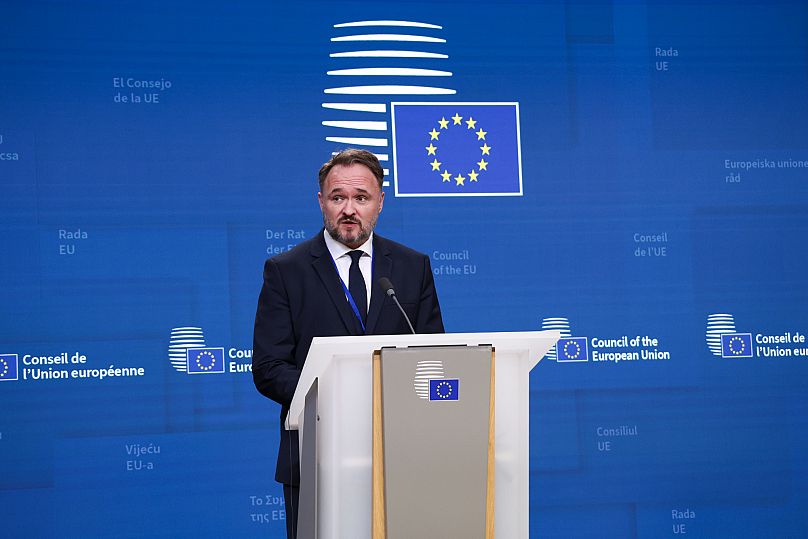
Dan Jørgensen, European Commissioner for Energy. European Union, 2025.
The exemption was granted in mid-2022 amid tense negotiations. Although leaders promised to take a second look down the road, it has remained untouched.
Jørgensen said the phase-out would eventually close the loophole.
"This package is a package that focuses on LNG. And this is new, this is a step forward and a bigger pressure that we put on Russia," he said.
"And with regards to the oil, we already do have sanctions. Two countries have derogations that will still be there," he added.
"But there's also a circumvention of the sanctions, unfortunately, taking place via the 'shadow fleet' of Russia. And the sanctions will also hit them much harder."
Last year, the bloc bought 20.05 billion cubic metres (bcm) of Russian LNG and 31.62 bcm of Russian pipeline gas, representing 19% of total gas consumption.
The bloc has shifted heavily to US-made LNG, leading critics to warn that the historic dependency on Russian energy is being replaced with an American version.
The exemption was granted in mid-2022 amid tense negotiations. Although leaders promised to take a second look down the road, it has remained untouched.
Jørgensen said the phase-out would eventually close the loophole.
"This package is a package that focuses on LNG. And this is new, this is a step forward and a bigger pressure that we put on Russia," he said.
"And with regards to the oil, we already do have sanctions. Two countries have derogations that will still be there," he added.
"But there's also a circumvention of the sanctions, unfortunately, taking place via the 'shadow fleet' of Russia. And the sanctions will also hit them much harder."
Last year, the bloc bought 20.05 billion cubic metres (bcm) of Russian LNG and 31.62 bcm of Russian pipeline gas, representing 19% of total gas consumption.
The bloc has shifted heavily to US-made LNG, leading critics to warn that the historic dependency on Russian energy is being replaced with an American version.

No comments:
Post a Comment