The BRICS are the new defenders of free trade, the WTO, the IMF and the World Bank
First published at CADTM.
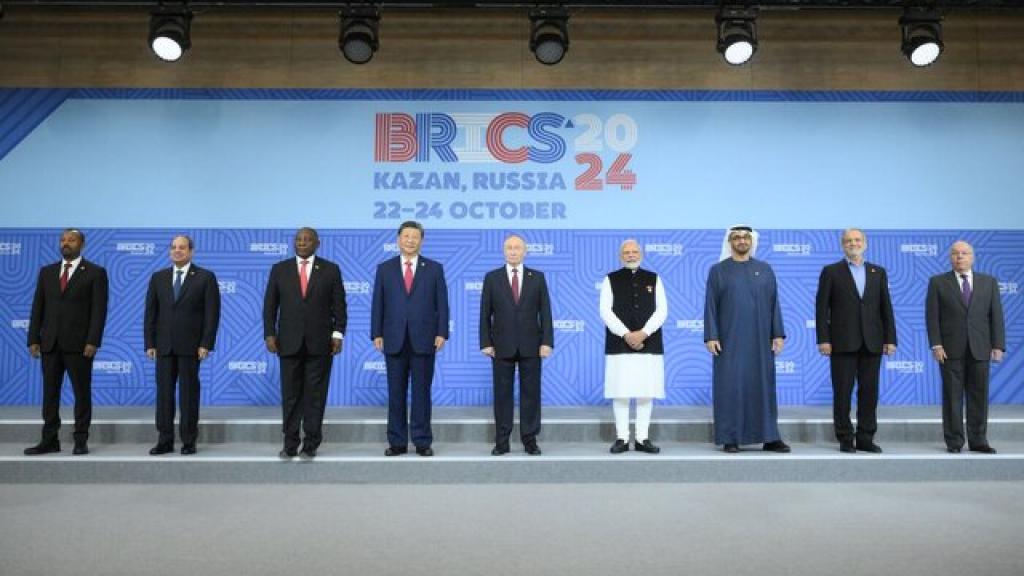
BRICS+ is a diverse coalition consisting of 10 countries (Brazil, Russia, India, China and South Africa, joined in 2024 by Egypt, the United Arab Emirates, Ethiopia, Indonesia and Iran). Notably some of these nations are direct allies of the United States.
Faced with Donald Trump’s aggressive stance on customs tariffs, the BRICS+ member countries are engaging in negotiations that lack cohesion. There is no evident effort on their part to form a unified bloc. In response to Trump’s attacks, China and India are strengthening their ties and maintaining significant trade relations with Russia, but these nations are not cooperating as a bloc, either with the other two founding members of BRICS, Brazil and South Africa, or collectively as BRICS+.
While the 10 BRICS+ member countries account for half of the world’s population, 40% of fossil energy resources, 30% of global GDP and 50% of economic growth, they do not propose a different development model.
BRICS leaders are deeply rooted in the capitalist mode of production, which has provoked to the current ecological crisis. The BRICS countries support the preservation of the existing international financial architecture (with the IMF and the World Bank at its core) and international trade system (WTO, free trade agreements, etc).
What do the BRICS countries propose in terms of the international financial system?
Although the 10 BRICS+ member countries represent half of the world’s population, 40% of fossil energy resources, 30% of global domestic product and 50% of growth, they do not propose to implement a different development model.
The BRICS+ countries assert that the IMF should continue to be the cornerstone of the international financial system.
In the final declaration of the BRICS+ summit held in Rio de Janeiro (Brazil) in early July 2025, the following is stated in point 11:
"The International Monetary Fund (IMF) must remain adequately resourced and agile, at the centre of the global financial safety net (GFSN), to effectively support its members, particularly the most vulnerable countries.”
They also express their support for the World Bank. In point 12 of their declaration, they indicate a desire to enhance the legitimacy of this institution. However, since their inception, both the World Bank and the IMF have implemented policies that contradict the interests of people and ecological balance.
The BRICS+ have stated their intention to bolster the financial capacities of the IMF and enhance the legitimacy of the World Bank.
The BRICS countries express a desire for improved representation of so-called developing countries within the IMF and the World Bank. That is all. Numerous authors, along with the CADTM have illustrated that both the World Bank, and the IMF perpetuate an anti-democratic under-representation of these developing nations. Moreover, their governance structures tend to favour the interests of the major economic powers and large private corporations.
In their final declaration, the BRICS countries fails to critique the neoliberal policies that the two Bretton Woods institutions actively promote. At no point do they question the debts that these institutions are demanding repayment from indebted countries.
This stance taken by BRICS in support of the IMF and the WB contradicts the interests of the people and the positions held social and/or anti-globalisation movements.
What is the BRICS+ position on the World Trade Organisation (WTO)?
The BRICS countries have emerged as the principal advocates of the WTO, which has been effectively paralysed by President Trump’s actions during his first term in office. In 2017, the Trump administration declined to appoint new judges to the WTO’s Appellate Body which acts as the “supreme court” of international trade, resolving disputes between states following an initial panel’s ruling. As this body has remained blocked since 2017, the WTO has been rendered inoperable.
In point 13 of the Rio Declaration of July 2025, the BRICS+ countries affirm their support for WTO rules and assert that the WTO must be at the heart of the global trading system. The BRICS+ countries state:
“We emphasise that the WTO, on its 30th anniversary, remains the only multilateral institution with the necessary mandate, expertise, universal reach and capacity to lead on the multiple dimensions of international trade discussions, including the negotiation of new trade rules.”
It should be remembered that social movements, La Via Campesina and the anti-globalisation movement (the movement against neoliberal capitalist globalisation) have systematically criticised and condemned the WTO for its detrimental role, as its actions run counter to the interests of workers, farmers, local economies and nature (see box on the WTO at the end).
In the final declaration of the BRICS+ summit in Rio 2025, which spans approximately 40 pages and consists of 126 points, there is no reference to the suspension of patents on vaccine production. These patents, however, serve the specific interests of large private pharmaceutical companies, whose main motivation is the pursuit of maximum profits.
To understand the BRICS+ position, it is essential to recognise that China has secured an advantage over the United States and Europe regarding production and trade, both in terms of costs and productivity, and technological advantages in a number of important sectors. China has emerged as a staunch proponent of free trade, free trade agreements, WTO rules and free competition, while the United States, the EU, the UK and Canada have become increasingly protectionist.1
In the name of compliance with WTO rules, the BRICS+ countries denounce the protectionist measures and trade sanctions imposed by the United States and the European powers. Of course, Russia and Iran, which are directly affected by the sanctions, strongly advocate for free trade, oppose protectionism, and criticise them (refer to point 14 of the final declaration).
In addition, the governments of North America and Western Europe have abandoned the rhetoric and actions that once favoured globalisation — rhetoric they had previously championed as a path to prosperity from the 1990s to the mid-2010s, while engaging in a trade war with China. During this period, from 1997 to 2013, Russia was invited to attend meetings of the G7 (comprising the United States, Canada, Japan, Germany, France, Great Britain, and Italy). Consequently, the G7 was referred to as the G8 during this timeframe. Meanwhile, the United States regarded China as an intriguing economic and trading partner (Refer to Benjamin Bürbaumer, Chine/États-Unis, le capitalisme contre la mondialisation, La Découverte, Paris, 2024, 302 pages).
Now, the BRICS have emerged as the main advocates of capitalist globalisation, which is itself in crisis. In point 8 of the final declaration of the Rio 2025 summit, they state:
“We acknowledge that multipolarity can expand opportunities for EMDCs to develop their constructive potential and enjoy universally beneficial, inclusive and equitable economic globalization and cooperation.”
Point 43 of the declaration reads:
“We reiterate the importance of ensuring that trade and sustainable development policies are mutually supportive, and aligned with WTO rules.”
Conclusions
The expansion of the BRICS in 2024, now referred to as BRICS+, has generated expectations regarding their potential to provide an alternative to the global economic system largely dominated by traditional imperialist powers, particularly the United States. However, despite their significant demographic and economic influence — comprising nearly half of the world’s population, 40% of fossil fuel resources, 30% of global GDP, and 50% of economic growth — the BRICS+ nations do not appear to seek a departure from the existing international neoliberal framework.
On the financial front; the final declaration of the Rio summit (July 2025) reaffirms the central role of the IMF and the World Bank. The BRICS+ nations restrict themselves to advocating for better representation of developing countries without challenging the structural adjustment policies, imposed debts, or the neoliberal orientation of these institutions. Regarding trade, BRICS+ members support the World Trade Organisation (WTO), which has been effectively paralysed since the US blockade initiated by Donald Trump in 2017. They underscore its legitimacy and aim to position it at the core of the global trading system, yet fail to address its detrimental effects on local economies, social rights or the environment.
In practice, China, supported by other members, is multiplying free trade agreements and promoting capitalist globalisation based on free trade, even as the former powers of the North are now turning towards protectionism. Thus, far from representing a counter-model, the BRICS+ countries present themselves as the new defenders of a globalised capitalist system in crisis, to the detriment of social movements and alternatives based on social justice, economic sovereignty and environmental protection.
By supporting the IMF, the World Bank and the WTO, they perpetuate globalised neoliberalism instead of presenting a viable alternative. This stance illustrates their intention to enhance their influence within these dominant institutions, all the while remaining aligned, with a destructive logic detrimental to both peoples and the planet.
Far from serving as a means of emancipation for the countries of the South, the BRICS+ seem to act as collaborators in managing a crisis-ridden capitalism that has steered the planet towards ecological disaster, an escalation in armed conflicts, and a significant deterioration of crimes against humanity crimes against humanity. In light of this, it falls upon social and anti-globalisation movements to persist in advocating for alternative proposals: protection of common goods, solidarity between peoples, economic sovereignty, ecological bifurcation — a decisive break with the current destructive model — and social justice.
The author would like to thank Omar Aziki, Sushovan Dhar, Jawad Moustakbal and Maxime Perriot for their proofreading and inputs. The author is solely responsible for the opinions expressed in this text and any errors it may contain.
Why is the WTO’s action negative? Why should we oppose it?
The World Trade Organisation (WTO) comprises 166 member countries and commenced operations in 1995. It seeks to eliminate all barriers that nations implement to safeguard their local producers.
However, contrary to the aims of WTO, customs barriers should be employed, for example, to protect small farms, small and medium-sized enterprises and/or public enterprises, which for various reasons are unable to compete with products exported by more technologically advanced economies. Customs protections can also safeguard local businesses from competition posed by imports from economies that benefit from lower wages due to labour exploitation. Furthermore, these protections can be used to shield so-called developing economies from an influx of goods from countries that heavily subsidise their domestic production, particularly that which is intended for export. It is well-documented that major economic powers, such as those in North America and Western Europe, often resort to substantial subsidies for their large companies, frequently circumventing WTO rules, despite having played a key role in establishing them.
The WTO, through the General Agreement on Trade in Services, the strongly promotes the privatisation of essential public services (water, health, education, transport, etc.). This approach tends to enhance the dominance of multinational corporations while marginalising smaller local entities. Additionally, the WTO plays a significant role in defending intellectual property rights through the Agreement on Trade-Related Aspects of Intellectual Property Rights (TRIPS), encompassing sensitive areas such as medicines, seeds and technology. For instance, during the Covid pandemic, the WTO, facing pressure from powerful nations and multinational pharmaceutical companies, declined to suspend these intellectual property rules, thereby hindering access to vaccines for poorer countries. In terms of plant varieties, the WTO has been instrumental in enforcing stringent intellectual property rights standards, which has led to the global privatization of agricultural life, adversely affecting the rights of small farmers and undermining seed sovereignty in various nations. Furthermore, the WTO collaborates with the IMF and the World Bank, forming a trio that promotes policies beneficial to multinationals and enforces a shift in the economies of developing countries towards greater integration into the global market, resulting in increased economic, financial, and food dependency.
From the perspective of people’s interests, countries (or groups of countries) should adopt policies that contravene WTO rules to bolster local production and cater to domestic market. This entails addressing the needs of their populations, particularly, by subsidising local producers. Contrary to WTO rules, countries ought to be able to protect their public services and public enterprises from foreign competition. Historically, all economies that have successfully achieved industrial diversification and food sovereignty have done so by protecting their domestic markets from competition.
It is important to note that Great Britain only adopted free trade in the second half of the 19th century, having reached a sufficient level of technological advancement to withstand competition. Prior to this, Great Britain was highly protectionist, systematically safeguarding its local industry (refer to the works of Paul Bairoch2 and many other authors). This trend was also evident in the United States, which only cautiously embraced free trade after the Second World War, once its industries had achieved significant technological advances. The same was true of South Korea in the 1960s and 1970s (see: Éric Toussaint, South Korean miracle is exposed). Japan followed a similar path from the 19th century until the latter half of the 20th century. China, too, strongly protected its market and supported its industries until it achieved a competitive advantage, which has now positioned it as a major proponent of free trade.
Trump’s protectionist and aggressive stance on customs duties stems from a significant loss of competitiveness within the US economy, rendering local industries unable to compete with products from China and other countries in both global and domestic markets. This situation is hampering the functionality of the WTO, especially given that, during his first term — followed by Biden — Trump did not appoint any US judges to fill the vacancies on the WTO tribunal, thereby obstructing its operations.
It is a mistake for the left to assume that reviving the WTO, in the name of multilateralism, would be beneficial. We should not endorse the BRICS+ countries’ pro-WTO position. This perspective, particularly supported by China, Brazil, and the United Arab Emirates, aligns with a push to increase the number of free trade agreements that undermine local producers while favouring the interests of large transnational corporations, predominantly from the North, though some from the South are also involved. China is increasingly signing free trade agreements, and Brazil is keen to ratify the MERCOSUR-European Union free trade agreement. However, social movements in both Europe and MERCOSUR are opposing this initiative.
As opposed to free trade agreements, should advocate for agreements between groups of countries that collaborate to implement economic, social, and cultural policies aimed at promoting human rights while respecting the environment, prioritising social and environmental justice. These agreements ought to encompass trade within a broader framework grounded in the principles of solidarity and complementarity. Increasing trade should not be viewed as an end in itself; far from it. Instead, prioritising non-commercial exchanges is essential, including the sharing of knowledge, free transfer of technology and know-how, reparations, restitution of ill-gotten gains, etc.
Countries should be empowered to safeguard the environment and biodiversity by enacting stringent regulations to prevent the overexploitation of natural resources and the destruction of ecosystems.
It is important to note that in 2022, the World Trade Organization (WTO) declined to support a proposal endorsed by over a hundred countries in the Global South, which sought to lift patent restrictions on vaccines. The objective of this proposal was to facilitate large-scale production to protect populations affected by the pandemic.
- 1
There are, of course, exceptions, particularly when the EU maintains its advantage in its relations with less advanced trading partners, for example with African countries, where it remains in favour of free trade agreements.
- 2
Paul Bairoch: Economics and World History. Myths and Paradoxes, Nueva York, Harvester Wheatsheaf, 1993, índice, 182 pp.
Dispelling the multipolar myth
First published at Rosa-Luxemburg-Stiftung.
If the Western liberal political empire has been shamed beyond repair by the genocide in Palestine and the neoliberal project cannot be recovered (despite claims to inequality reduction, food security, or “climate action”, as proposed for the Johannesburg G20 summit in November) — what’s next?
Expectations have recently risen for a revived “multipolarism”, partly because the BRICS bloc (Brazil-Russia-India-China-South Africa) continues to grow in terms of population, GDP, and geopolitical gravity, having added new members Egypt, Ethiopia, Iran, and the United Arab Emirates at the Johannesburg Summit in 2023. Saudi Arabia is often also included as an imminent member, while Indonesia joined earlier this year. There are also ten new “partners” with observer status: Belarus, Bolivia, Cuba, Kazakhstan, Malaysia, Nigeria, Thailand, Uganda, Uzbekistan, and Vietnam. They exhibit a wide variety of political persuasions and one, Bolivia, just took a sharp rightward turn (although, unlike Argentina in 2023, that may not prevent it from retaining a BRICS alignment).
The bloc’s July 2025 summit was hosted in Rio de Janeiro by centre-left Brazilian President (and Workers’ Party leader) Luiz Inácio Lula da Silva. In spite of the widely anticipated failure to address the range of issues that a serious multipolarista would insist upon in Rio, the subsequent weeks have shaken geopolitical certainties and given the BRICS a new aura. Russian dictator Vladimir Putin and Trump met in Alaska on 15 August with no change in the Ukraine war resulting, except Moscow’s more intensive bombing of civilians, leaving the US leader “very disappointed”. But because of fallout from the imposition of new US tariffs in August — especially against Brazil and India (Putin’s second main oil customer) — anger swelled and Deutsche Welle correctly asked, “Will BRICS boom under Trump's watch?”
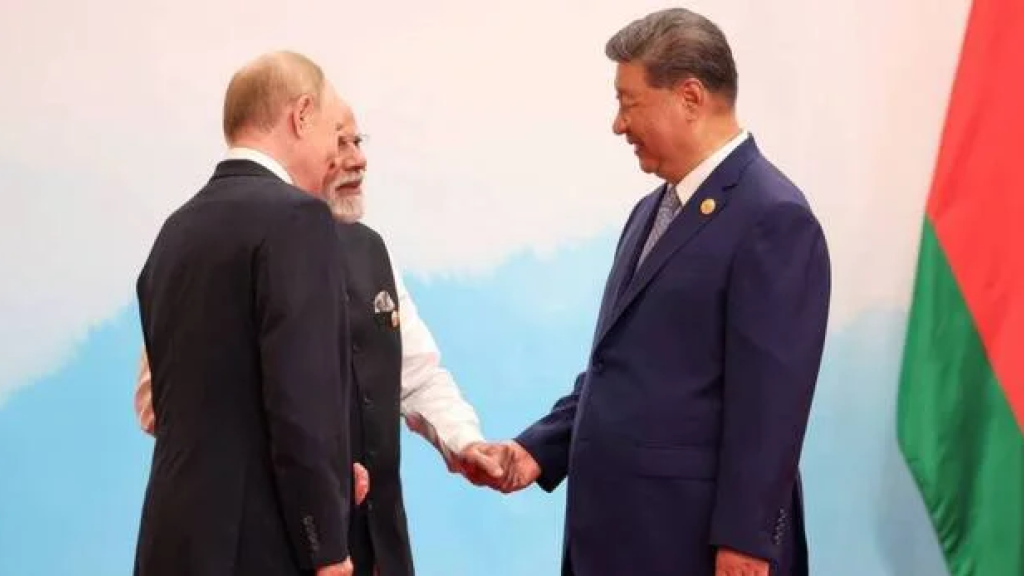
The traditionally security-oriented Shanghai Cooperation Organization’s gathering in Tianjin on 31 August–1 September included Putin’s high-profile role and at least temporary rapprochement between often-fractious Indian and Chinese leaders Narendra Modi and Xi Jinping. The latter will co-host the next two BRICS summits, respectively. But between the two over the past decade, durable tensions have risen from border conflicts — especially on Himalayan territory, e.g. adverse impacts anticipated from Chinese construction of the world’s largest dam there — plus Beijing’s close ties to Delhi’s enemies in Pakistan. In 2020, after dozens of soldiers died in mountain fighting, India imposed sanctions on Chinese technology and foreign direct investment, and even prohibited direct air flights — which now may be relaxed.
On 8 September, in an emergency online meeting called by Lula to discuss trade, the BRICS leaders will be put to an even more serious test: in the face of chaotic US tariff policies — e.g. very high against Brazil, India, China and South Africa, but only 10 percent against the UAE and Saudi Arabia — can they transcend their isolated, individualistic bilateral negotiations with Washington, and finally work collectively?
This may be impossible, for after all, scores of national leaders were “calling us up, kissing my ass”, as Trump bragged back in April, shortly after his initial “Liberation Day” round of irrational tariff increases. Of BRICS members and partners, only Vietnam has since succeeded in cutting a trade deal (others are South Korea, the United Kingdom, and the European Union). Lula called Trump’s politicking “unacceptable blackmail”.
Still, pessimism regarding a multipolar revolt against US trade politricks remains appropriate. As several Brasilia sources told Bloomberg on 1 September, the BRICS are again likely to fall short of systematic resistance: “Lula does not want the meeting to turn into an anti-US summit”, even though Trump levied a 50 percent tariff on Brazilian exports in retaliation for his government’s prosecution of predecessor Jair Bolsonaro following a failed January 2023 coup attempt.
Multipolar myths
Nevertheless, some on the international Left believe that there is now much greater potential for the BRICS to generate new power relations based on mutual respect and a fair global economic playing field. They would point out how the word “peace”’ appeared 41 times in the Rio Leaders Declaration. But to make this case plausible, the multipolar movement would need clear victories against the destructive hegemony of Western imperial interests, including the neoliberal World Trade Organization (WTO), International Monetary Fund (IMF), and World Bank. These interests are based on the expansion agenda of corporations — especially financiers, merchants, Big Data capitalists, Big Pharma, and the extractive industries — which have long dominated most Western multilateral institutions’ policies.
Yet in the current context, alleged reform at the Bretton Woods Institutions has now gone into reverse. WTO leader Ngozi Okonjo-Iweala admits that partly due to her institution’s disempowerment by Trump (dating to 2019), “the global trading system is today experiencing its worst disruptions since the Second World War. Multilateral cooperation itself is being called into question … WTO economists have downgraded expectations for merchandise trade volume growth by nearly three percentage points and now expect a 0.2 per cent contraction in 2025.”
Hence it is easy to slide down a slippery slope, from what can be termed “hype” or “hope” regarding BRICS multipolarism saving multilateralism, to a feeling of “helplessness” once the bloc’s limitations are revealed. The BRICS bloc’s multilateral institution reforms have failed in spite of ploughing vast sums into the IMF. The extremely conservative, corruption-riddled New Development Bank is still lending 75 percent in US dollars even for basic-needs development projects with no import requirements.
In contrast, critics from the independent Left are traditionally far more doubtful about multipolarity. One reason is their implicit analytical grounding within a broader theory of “subimperialism”, which locates BRICS economies not against but within world capitalism. The critics instead ally with progressive local opponents of BRICS regimes, especially against their ruling classes and big corporations. The result may be an “anti-polar” (or at minimum “non-polar”) version of internationalism, in explicit opposition to both imperialist unipolarity and subimperialist multipolarity.
Still, the BRICS’ prominence is amplified by Trump’s ill-informed hatred thereof (in which in January he falsely included Spain), his oft-repeated irrational fear of its “de-dollarization” potential (no matter how often that agenda is denied, even by main US sanctions victim Putin), and his self-harming wreckage of large aspects of multilateral governance and of US soft power (such as the 64-billion-dollar annual aid bureaucracy).
Situating BRICS elite interests
From the standpoint of the independent Left, it appears that the BRICS bloc degenerated into a fast-growing yet often-stumbling network of subimperial powers that have generally served the interests of international capital and mainly obeyed — and indeed legitimized — neoliberal multilateral institutions. This is especially true in the areas of international commerce, investment, finance, and climate management.
With a few exceptions, the BRICS aim is not to abolish or radically change international capitalist mechanisms — trade, debt, investment, and migrant labour — as much as it is to reduce US and more general Western domination of the processes. But against Trump, the BRICS have so far been divided-and-conquered, and in South Africa’s case, so obsequiously even in a humiliating Oval Office meeting on 21 May that a round of golf with that notorious cheater remains high on President Cyril Ramaphosa’s agenda. Grovelling, he unsuccessfully offered Trump a formal state visit in late November to attract him to the Johannesburg G20 summit. For 2026, Trump is scheduled to host the G20 at his own Miami golf course.
Fully conscious of the geopolitical imperative to oppose Western imperialism, many activists engaged in non-polar social struggles find themselves often arrayed against both major blocs within the G20: the G7 and the BRICS. Activists instead regularly demand the kinds of economic, social and environmentally just policies and practices associated with liberatory, post-capitalist, anti-racist, feminist, and ecologically sound left-wing values that tend to be either ignored or repressed in both the G7 and the BRICS. Critical voices about individual BRICS ruling classes as well as the bloc as a whole are based on a wide range of grievances. These are expressed in periodic “People’s BRICS” or “BRICS-from-below” counter-summits, or the 2018 and 2023 “ Break the BRICS” protests in Johannesburg, and coming up, the 2025 “We the 99 percent” People’s Summit.
The independent left’s conceptual critique
As for a more general concern about BRICS capitalism, in addition to criticism of China’s massive excess capacity creation — i.e., what Karl Marx considered the core contradiction of capitalism, namely “overaccumulation”, and its destructive displacement — the roles of BRICS corporations in extractive and productive circuits of capital are often the most neocolonial and exploitative.
This is true in terms not only of surplus-value appropriation, but also when BRICS firms engage in the extraction of what Marx termed the “free gift of nature” to capital — especially non-renewable mineral and fossil-fuel resources in the poorest countries — and take advantage of “super-exploitation” of labour: paying the worker below the costs of her or his lifetime reproduction. There are, thus, three groups of BRICS:
- those whose firms rely for cheap labour upon the very high poverty rates — for simplicity, using a 5.50 dollar/person/day measure — which characterise India (over 80 percent poverty), Indonesia (70 percent), South Africa (66 percent), Egypt (58 percent) and Ethiopia (50 percent);
- the economies where capital accumulation has not been quite as reliant on the world’s cheapest workers — such as Brazil after Lula first came to power and doubled the minimum wage (27 percent poverty), Iran (22 percent), and China (17 percent, although the hukou migrant labour system still affects a quarter of the workforce); and
- those which have boosted their economies through artificial fossil-fuel and military stimulants, namely Russia (4 percent poverty) and the UAE (whose ultra-cheap labour is nearly entirely immigrant, as is Saudi Arabia’s).
Partly based upon his observation of Brazil’s super-exploitative processes and partly on the role some economies played as regional agents of US imperialism, Marxist intellectual Ruy Mauro Marini introduced the concept of subimperialism in 1965. In exile in Chile and Mexico, he worked with scholar-activist comrades Andre Gunder Frank, Vania Bambirra, Theotonio dos Santos, Samir Amin, and Immanuel Wallerstein to establish a Marxist approach to dependency theory and world systems.
Subsequently, in 2001 David Harvey documented subimperialism emerging “in East and South-East Asia as each developing centre of capital accumulation sought out systematic spatio-temporal fixes for its own surplus capital by defining territorial spheres of influence”. The term re-emerged during the 2010s with agrarian scholars Sam Moyo, Paris Yeros, and Pravin Jha, while Amin used the concept (posthumously in his Long Revolution) against post-apartheid South Africa. In Brazil, Ana Garcia and Miguel Borba contributed to academic but highly political critiques of the subimperial layer of capitalism.
Economically, the subimperial powers generally share the following domestic characteristics: high levels of corporate concentration and financialization, a more rapid tendency to the over-accumulation of capital (the system’s central internal contradiction), an increasing dependency on commodity production and processing for export (“reprimarization”), and, driven by neoliberal public policy, the super-exploitation of labourand widespread ecological destruction. This often co-exists with an ossified class structure, high levels of social repression, and rising inequality — yet sometimes also provides space for the kind of talk-left, walk-right nationalism so familiar to southern Africans.
At the global or regional level, subimperial economies are central to contemporary global value chains, doing much of the extraction and processing of raw materials supplied by poorer countries as well as, since the 2000s in China, most manufacturing of inexpensive goods. In contrast, the imperialist core continues to benefit from most surplus extraction from both BRICS and poorer economies, via royalties for intellectual property and profits taken in the financial, marketing, and distributional circuits of capital. In this process, subimperial states exacerbate what is termed “ unequal ecological exchange”’ with poorer countries, especially in Africa: uncompensated extraction of non-renewable natural resources and associated ecological destruction.
Subimperial states also tend to suffer crises of overaccumulation in more intense forms, and therefore often seek to export surplus capital via FDI, loans and trade. The “dumping” — below-cost sales — of products is common, in order to undermine regional competitors. Many BRICS impose very severe tariffs on each other as a result; e.g. the South African International Trade Administration Commission imposing new tariffs on imports of Chinese steel, nuts and bolts, tyres, and washing machines this year. Politically, subimperial states generally cooperate with imperialist multilateralism, seeking to become increasingly incorporated into, and influential within, the essentially unreformed Washington-New York-Geneva multilateral institutions and G20.
Subimperialist multilateral ‘reform’
These features of contemporary subimperialism provide a level of generality that in turn requires more theoretical validation and much more empirical support. But already, they help explain why instead of following a multipolar agenda against the West, BRICS states generally operate within the core of imperialism.
The G20’s first heads-of-state meeting was held in October 2008 in Washington. This was an urgent gathering, as US President George W. Bush sought emerging-market allies — especially China and Saudi Arabia, which had the greatest financial reserves — to back the world’s greatest international banking bailout. But it was the West that benefited. That G20 meeting and a follow-up in London six months later had a simple emergency task: ensuring that extreme bank-centric policies — new “quantitative easing” money printing, low-interest loans, regulatory laxity, and IMF recapitalization — were coordinated in order to bail out Western financiers.
At the time, South African Finance Minister Trevor Manuel led a “Committee on IMF Governance Reform” whose report recommended giving the IMF nearly 1 trillion US dollars in additional financing powers, ensuring not only Western economic stability, but also that the IMF would then became a more useful tool for BRICS lenders which were also becoming increasingly exposed to the poorest countries. In Africa, this included South African banks across the continent, Russia’s corrupt VTB Bank in Mozambique, and Chinese state banks nearly everywhere.
The result was an April 2009 G20 leadership decision to back the IMF to the hilt by endorsing Manuel’s plan. The increasingly financialized class structures of the BRICS were now integrally intertwined in the Bretton Woods Institutions and New York credit rating agencies, leaving most of the BRICS as much greater investors in the IMF during its 2010–15 fund-raising: China’s share of ownership and voting rights rose by 37 percent, India’s by 23 percent, Brazil’s by 11 percent, and Russia’s by 8 percent.
This increase in BRICS-country ownership came at the expense of poorer states, which lost voting shares. Nigeria and Venezuela, for example, each lost 41 percent of their voting shares. Thus, via the G20 and IMF recapitalization, the BRICS leaders decided to join — not fight — the Bretton Woods Institutions and Western financial circuits. It is better considered multilateral deform, not reform.
Likewise, in terms of geopolitics, the main concern is that subimperial powers’ ruling classes “collaborate actively with imperialist expansion, assuming in this expansion the position of a key nation”, as explained in 1965 by Marini. Although he died in 1997, he would nod knowingly at how all the BRICS countries — aside from Iran — in 2024 increased their trade (especially energy and military) with arguably the most brutal subimperial power, Israel, during a genocide that, ironically, was called out by South African government at the International Court of Justice in late 2023. Nevertheless,
- Chinese and Indian corporations facilitate military imports to Israel through their management of (privatized) Haifa container terminals, including thousands of Chinese drones that hunt down Gazans;
- South Africa, Russia, and China provide the bulk of coal supporting the Israeli grid (now that Colombia has imposed sanctions), with the genocidaires’ oil supplies coming from Brazil (9 percent) and new BRICS partners Kazakhstan (22 percent) and Nigeria (9 percent);
- Brazilian, Indian, and South African firms maintain relations with Tel Aviv’s main arms corporation, Elbit, while the UAE, Saudi Arabia, and Egypt facilitate Israel’s military defence against Iran and Palestinians;
- Thousands of citizens of Russia, Ethiopia, India, and South Africa serve in the Israel Defense Forces, unhindered by BRICS home-state mercenary regulation.
Assimilation and collaboration
From these standpoints, BRICS unity is too often reflected in summit pronouncements and concrete multilateral engagements that reveal how (most) members and partners are not, in reality, opposing the unilateralism of Western capitalism, but instead reinforcing it. Since 2022, four BRICS countries — Indonesia, India, Brazil, and now South Africa — have enthusiastically hosted the overarching club of powerful countries that manage imperialism, the G20. Rather than challenging the imperialist status quo, BRICS countries typically defer to the G20, highlighting their own “key nation” responsibilities.
Typical of this collaboration was, for example, the BRICS Kazan Declaration of October 2024: “We reaffirm our commitment to maintaining a strong and effective Global Financial Safety Net with a quota-based and adequately resourced IMF at its center… We reaffirm our support for the rules-based, open, transparent, fair, predictable, inclusive, equitable, non-discriminatory, consensus-based multilateral trading system with the World Trade Organisation at its core.”
The BRICS Rio Leaders’ Declaration in July took this commitment even further by adding a generous monetary pledge: “Despite the absence of quota realignment, we have provided consent to the proposed quota increase under the 16th General Review of Quotas (GRQ) and urge IMF members that have not yet done so to provide their consent and give effect to the quota increases under the 16th GRQ with no further delay.”
That document was especially conscious of how imperialism’s “key nation” subimperial allies function within the G20: “We underscore the key role of the G20 as the premier global forum for international economic cooperation that provides a platform for dialogue of both developed and emerging economies on an equal and mutually beneficial footing for jointly seeking shared solutions to global challenges and fostering multipolar world.”
Trump’s inheritance of 2026 G20 hosting and his pledge to remove all consideration of global climate, public health, international trade, peace, and anti-inequality rhetoric inherited from Lula and Ramaphosa should have led the latter to arrange a “vote him off the island” exclusion in 2025 (the way the G8 tossed out Putin in 2014 after Russia invaded Crimea).
But notwithstanding multipolar rhetoric favouring “solidarity, equality, and sustainability” — Ramaphosa’s G20 buzzwords — the assimilation of the BRICS into Western-dominated political economy and global malgovernance will continue to exhibit all the features of subimperial alignment, rather than anti-imperial challenge. That will be to the detriment of everyone aside from G7 and BRICS elites, and hence will continue to reinforce the need for anti-polar political resistance.
Patrick Bond is based at the University of Johannesburg’s Centre for Social Change, a partner of Rosa Luxemburg Foundation’s Southern Africa Office.

No comments:
Post a Comment