US Coast Guard Reports Best Year Ever for Cocaine Interdiction
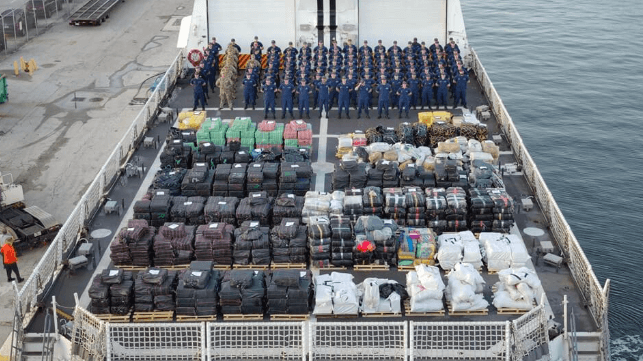
The U.S. Coast Guard has achieved a new record for cocaine seizures in a fiscal year, capturing more than 225 tonnes in the U.S. Southern Command area of operations between October 2024 and October 2025. The achievement is a testament to heightened patrol operations in the region, as well as the continued boom in cocaine production in Columbia and other countries of origin. Colombia alone manufactured an estimated 1,800 tonnes of cocaine in 2022, and output has been on a steep upward trajectory as the acreage covered by coca producers continues to rise.
"The Coast Guard’s top priority is to achieve complete operational control of the U.S. border and maritime approaches," said Adm. Kevin Lunday, acting commandant and commandant nominee of the Coast Guard. "We own the sea, and this historic amount of cocaine seized shows we are defeating narco-terrorist and cartel operations to protect our communities and keep dangerous drugs off our streets."
The FY2025 effort resulted in the seizure of more than three times the annual average, normally about 75 tonnes. In August through October, the service was seizing an average of more than 1,500 pounds per day.
The service's nonlethal interdiction operation runs in parallel with the military-led effort to destroy drug boats in transit in the Eastern Pacific and the Caribbean. Using airstrikes, the Trump Administration has eliminated 16 suspected smuggling craft, killed 67 suspects and rescued two known survivors. That campaign has drawn criticism from legal scholars and many judge advocates general, as well as a warning from UN High Commissioner for Human Rights Volker Türk. Last week, Türk called for an international investigation and described the strike campaign as a program of "extrajudicial killing" that "violate[s] international human rights law."
By contrast, the U.S. Coast Guard's drug boat intercepts have a long record of nonlethality, with few exceptions. One individual was accidentally shot and killed in January 2024 when a Coast Guard helicopter sniper team used force to disable his boat's engine off the Dominican Republic; the interdiction team made an effort to save his life, and he was flown to a shoreside hospital for treatment. An investigation followed to determine root causes and lessons-learned.
Portuguese Navy Carries Out Long Range Drug Bust in Mid-Atlantic
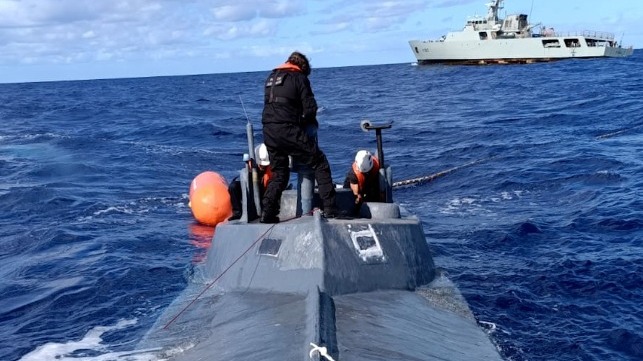
Portugal's navy has seized a drug trafficking semi-submersible in the mid-Atlantic, far off the coast of Lisbon.
The Portuguese Navy (Marinha) detected the suspect vessel using its surveillance assets and worked in conjunction with the Judicial Police to plan an intercept. In an example of the significant scale required to mount such an operation, it dispatched a patrol vessel with more than 70 military personnel and sailed a total distance of about 1,500 nautical miles.
Early in the morning of October 29, the team reached the intercept location and boarded the suspect vessel. They found more than 1,700 kilos of cocaine aboard, enough to fetch somewhere in the range of $30 million on the EU wholesale market. The semisubmersible itself - an improvised vessel intended for a one-way journey - was not robust enough to be towed back for investigation, and it sank.
It was the second interdiction of a semisubmersible drug boat that the Marinha has carried out this year. The first was another ultra-long-distance bust at a range of about 1,200 nautical miles off Lisbon's shores, and resulted in a major haul of six tonnes of cocaine.
European law enforcement may well see additional pressure from transatlantic cocaine traffickers due to the Trump administration's airstrike campaign, which has introduced the threat of lethal force into the calculations of cartels and drug vessel crewmembers. Organized crime experts predict that more volume will now be routed towards the EU via established routes, like the growing Brazil-West Africa-Europe trade lane. This may have the effect of further depressing already-declining cocaine prices in Europe, making the drug dangerously accessible to a broader range of users.
 Copyright EBUBy Sertac Aktan EURONEWS with EBU and AP 09/11/2025 -
 At the CELAC-EU summit in Colombia, leaders addressed US attacks on alleged drug-smuggling vessels. Mexico defended national sovereignty as the US strikes have reportedly killed 69 people.
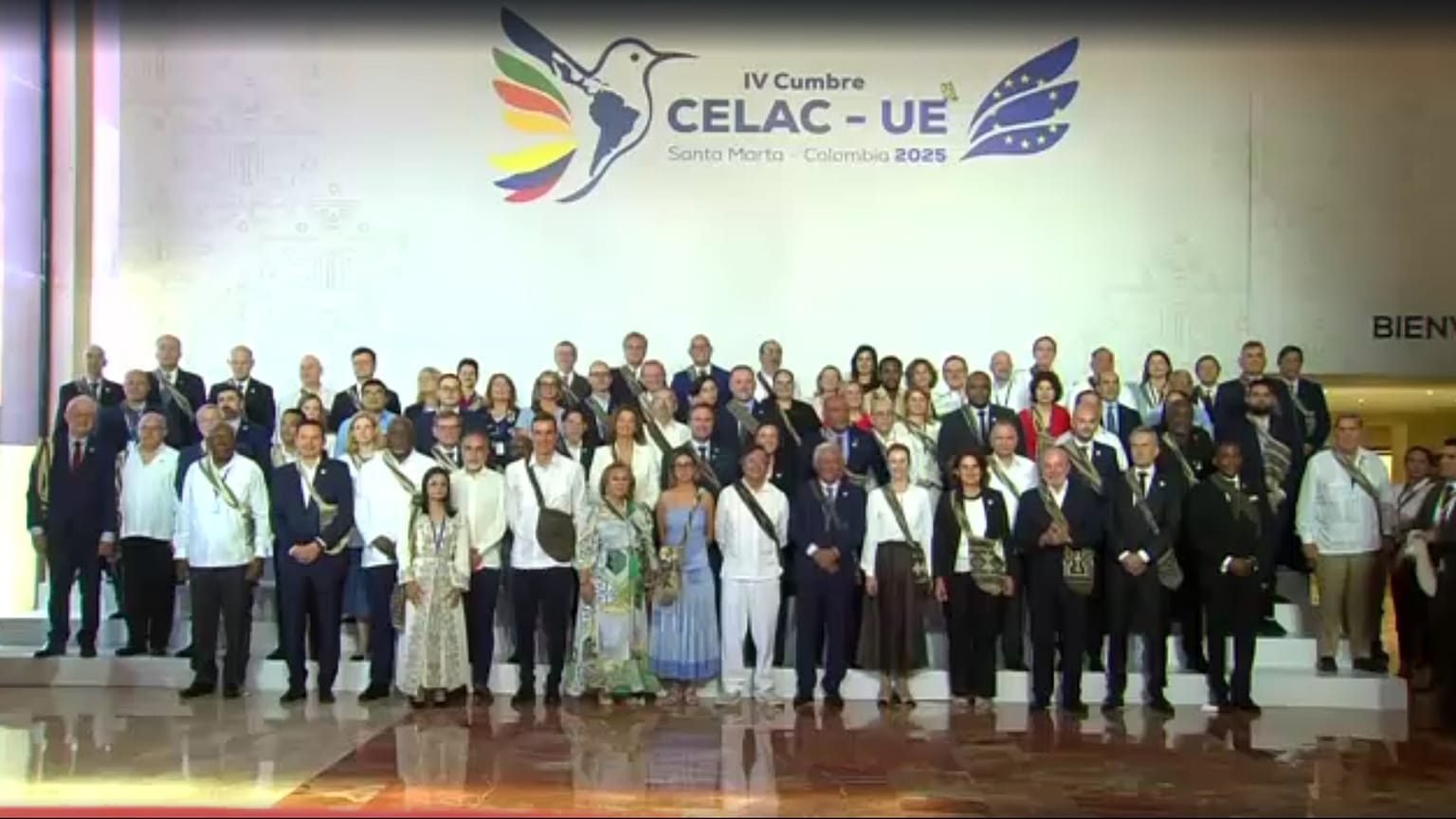
The fourth summit of the Community of Latin American and Caribbean States (CELAC) and the European Union (EU) has kicked off today in Santa Marta, Colombia.
The EU's foreign policy chief, Kaja Kallas, is among the bloc's leaders attending the meeting.
Speaking at the event upon her arrival, Kallas said the EU's position on the US attacks in the Caribbean and the Pacific is to uphold international law, meaning the use of force is justified only in self-defence or under a UN Security Council resolution.
The Dutch Prime Minister, Dick Schoof, said it is important to restore calm in the Caribbean Sea and urged leaders to work towards reducing tensions.
The Mexican Secretary of Foreign Affairs, Juan Ramon de la Fuente, also commented on the US attacks on vessels on the Caribbean Sea, saying Mexico's position seeks to respect the "sovereignty of peoples and their self-determination."
According to the US defence secretary, Pete Hegseth, the US has reported carrying out 14 strikes since September on boats near the Venezuelan coast and also in the eastern Pacific Ocean.
The sources stated that 69 people have been killed in these attacks on alleged drug-smuggling vessels.
Colombian President Gustavo Petro has called the deaths “extrajudicial executions” and has identified at least one of the killed as a Colombian citizen. One of two known survivors of the attacks is also Colombian.
Absence of senior names might have downgraded the effect
With this summit, representatives of European, Latin American and Caribbean nations try to strengthen ties amid divisions in the Western Hemisphere over the US military operation targeting alleged drug-carrying vessels.
But the relevance of the two-day summit of the Community of Latin American and Caribbean States and the European Union has come into question due to the absence of heads of state and senior officials, including European Commission President Ursula von der Leyen and German Chancellor Friedrich Merz.

No comments:
Post a Comment