Galveston Prepares for Cruise Growth Opening Fourth Terminal with MSC
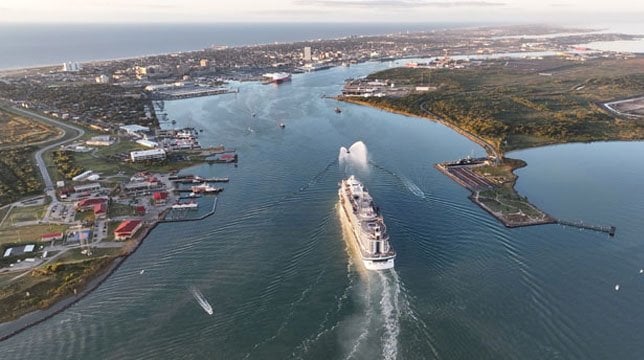
The Port of Galveston, which is preparing for its continued strong growth in the cruise segment, marked the opening of its fourth cruise terminal with the arrival of the MSC Seascape cruise ship. The port has entered into long-term contracts with MSC Cruises and Norwegian Cruise Line to homeport from the new terminal, Cruise Terminal 16.
Work on the new terminal began in 2024 on a project that entailed transforming two existing cargo buildings into a 160,00-square-foot cruise terminal. It included the construction of a two-story vertical core, elevators, escalators, stairs, and a passenger ramp. The terminal has two passenger boarding bridges.
As part of the project, the port added its first newly built, on-site parking garage. It is a seven-story facility that provides more than 1,600 spaces as well as ground transportation areas for buses, shuttles, ride share cars, and taxis. The project was designed by Bermello Ajamil and executed by contractors Hensel Phelps and Orion Marine Services.
During the dedication ceremonies on November 7, Galveston Wharves port director and CEO Rodger Rees called it is a tremendous milestone in the port’s history as a major U.S. cruise port. Galveston notes that in 2019 its board approved a long-term plan that did not envision adding the fourth cruise terminal till 2031.
The port said long-term contracts with both MSC and Norwegian Cruise Line Holdings made it possible to fund the $156 million project. It invested $55 million for the parking garage. The Port of Galveston provides strong access to the drive market from the mid-U.S. for cruises.
Galveston has already become the fourth-largest U.S. cruise home port and expects to see significant growth with the arrival of MSC and expanded homeporting from NCL. The port is scheduled for 445 sailings this season with a projected total of just under four million passenger movements (two million embarkations) in 2026. It now rivals Port Everglades in Florida, which last season handled just over four million passengers and has projected 4.4 million for the 2025-2026 season. PortMiami and Port Canaveral handle significantly larger numbers as the two largest cruise homeports.
MSC is positioning its MSC Seascape in Galveston to operate year-round 7-day cruises to the Western Caribbean. The company, which now has 23 cruise ships, highlights that Galveston becomes its fourth U.S. homeport as it expands its North American footprint. It is the first time the line has homeported from Texas, which joins its operations from PortMiami, Port Canaveral, and the Port of New York.
After limited sailings from Galveston in recent seasons, NCL will expand its homeporting in Texas using one of its newest ships. Norwegian Viva will arrive at the port in December and will sail seasonally from Galveston till April 2026 and return in October.
Norwegian Cruise Line Holdings has a 10-year contract with renewal options. It contemplates the company going to year-round homeporting in Galveston.
A busy commercial port for cargo, Galveston Harbor ranks among the top 40 busiest U.S. cargo waterways. The cruise segment has become an important economic contributor to the port and the Texas economy.
Ports of Indiana Secures Two FEMA Grants to Enhance Security Infrastructure

[By: Ports of Indiana]
Ports of Indiana has been awarded two federal grants from the Federal Emergency Management Agency (FEMA) to strengthen security infrastructure and assessment capabilities at its Burns Harbor and Jeffersonville ports.
The FEMA Port Security Grant Program provides funding to state and municipal entities to help protect critical port infrastructure from terrorism, enhance maritime domain awareness, improve port-wide maritime security risk management, and maintain or reestablish maritime security mitigation protocols that support port recovery and resiliency capabilities.
The grants made to Ports of Indiana, totaling more than $140,000, will support critical upgrades and evaluations that advance the safety and resilience of Indiana’s multimodal logistics network.
Burns Harbor – CCTV Infrastructure Upgrades
A $115,691 federal grant will fund the procurement and installation of advanced CCTV infrastructure at the Burns Harbor port. The project includes installation of new lighting and fiber – which will enhance surveillance capabilities. Ports of Indiana will contribute a $38,564 match to complete the project.
Jeffersonville – Comprehensive Security Assessment
A $25,000 federal grant will support a third-party security assessment at the Jeffersonville port. The assessment will evaluate all aspects of physical and cybersecurity, identify
“These grants reflect our ongoing commitment to proactive security investment and operational excellence across Indiana’s ports,” said Ports of Indiana COO David Parrott “We’re grateful for FEMA’s support in helping us strengthen infrastructure and safeguard critical assets that drive economic growth.”
Dan Henson, Security Manager at Ports of Indiana-Burns Harbor added, “Maintaining and improving the highest level of security at our ports is of utmost importance, given the significance of Ports of Indiana to this state’s economy. We are extremely appreciative of FEMA’s recognition of that fact and their assistance toward that goal.”
The products and services herein described in this press release are not endorsed by The Maritime Executive.
Poland Will Invest $2.3B for Container Terminal in the West Near Germany
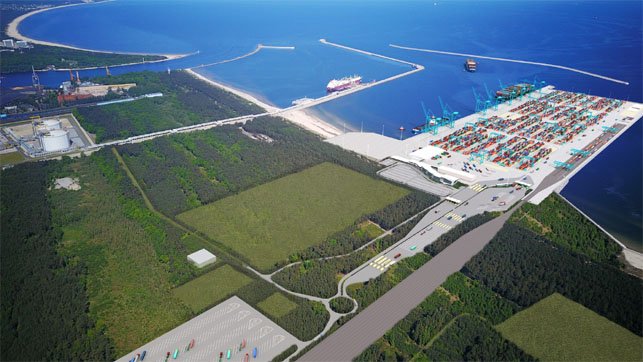
The Polish government mapped out a new plan for what it is calling the most ambitious project in the 75-year history of the Szczecin Swinoujscie Seaports Authority. It calls for an investment of approximately $2.3 billion to create a large container terminal on the Baltic near Germany that will be a regional center for distribution inland and to neighboring countries.
"We have developed a new development concept for the port of ?winouj?cie from scratch, because the previous one was flawed, lacked guaranteed funding, and was delayed,” said Deputy Minister of Infrastructure Arkadiusz Marchewka. “We will build the Pomeranian Cape, the most ambitious project in the 75-year history of the Szczecin-?winouj?cie Seaports Authority and one of the most spectacular investments in the Baltic Sea. The Deepwater Container Terminal will be the main, but not the only, part of this massive project.”
The project is part of the ongoing efforts to expand the port facilities in the region. The port authority has highlighted improvements at its facilities for breakbulk and designs for a massive staging area of the offshore wind industry.
Pomeranian Cape will entail 186 hectares of new land and provide three kilometers of new quay. It will have a 17-meter deep port basin. The Deepwater Container Terminal will be able to handle the largest containerships in the world with 1.3 km of quay and a transshipment capacity of two million TEU. The terminal will be able to handle three containerships simultaneously, including two 400-meter vessels and one 250-meter vessel. The port will be able to handle both commercial ships and naval vessels.
To support the new facility, the government is also planning a new road and rail system. They will also ensure that it is a green port with zero-emission transshipment technologies and a shore-based ship power supply system. The plan calls for connections to Central Europe, including Germany, the Czech Republic, Slovakia, Austria, and Hungary.
“The Deepwater Container Terminal will be the main, but not the only, part of this massive project,” said Arkadiusz Marchewka, Deputy Minister of Infrastructure, responsible for the Maritime Economy at the Ministry of Infrastructure. “The world's largest container ships will dock at the port, ensuring Poland's budget revenue for decades. This investment will strengthen our country's security and Poland's presence at sea.”
The budget for the development of the new facility estimates that the Seaport Authority will be responsible for $405 million in the construction costs. In addition, the state is committing $1.9 billion for the land and seaway improvements. This will include deepening of 70 kilometers of the port’s approach freeway, as well as creating a new port basin and the land infrastructure.

Stena Bulk Vessels Use Inmarsat Nexuswave As Part of Crew Welfare Strategy
[By: Inmarsat Maritime]
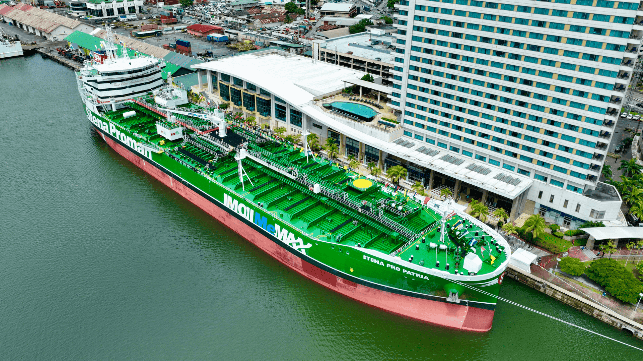
Inmarsat Maritime, a Viasat (NASDAQ:VSAT) company, is installing NexusWave on board selected Northern Marine Management Ltd (NMM) vessels operated by Stena Bulk and Proman Stena Bulk. This is part of their ongoing strategy to continually improve crew welfare through enhanced communications.
Building on existing onboard connectivity provisions, NMM recognises the growing importance of high-speed internet access in attracting and retaining talent and supporting operational performance. The implementation of NexusWave reflects NMM’s commitment to deliver even better, more homelike internet experiences for its personnel.
Inmarsat’s NexusWave is designed to deliver exceptional aggregated speeds, 99.9% availability, global coverage, secure-by-design infrastructure, and unlimited data to ensure seamless, uninterrupted crew communications wherever a ship is operating – whether in a busy shipping lane or a congested port.
The fully managed bonded connectivity solution enables seafarers to enjoy improved internet access while onboard, supporting activities such as staying in contact with family and friends, managing their finances, browsing and uploading to social media, streaming and downloading online entertainment, and undertaking remote learning courses.
This enhancement supports NMM’s commitment to promoting well-being, personal growth, and job satisfaction among its seagoing workforce, strengthening its reputation as an employer of choice.
John Cook, Ship Management Director, Northern Marine Group, said: “High-quality onboard connectivity has long been part of our approach to supporting crew welfare, recruitment, and retention. As expectations evolve, so too must our solutions. Northern Marine Management’s implementation of Inmarsat NexusWave on selected vessels represents a significant step forward for the Stena Bulk and Proman Stena Bulk vessels under our management.
“We continue to explore and implement a range of connectivity solutions across our entire managed fleet, with NexusWave forming a key part of the strategy for selected vessels.”
Robert Mathieson, Sales Manager, Inmarsat Maritime, said: "By integrating NexusWave into their connectivity strategy, Northern Marine Management and Stena Bulk and Proman Stena Bulk have confirmed their status as technologically progressive industry leaders who are committed to promoting the happiness and development of their seafarers. The move will have a positive impact not only on crew welfare but also, as a direct consequence, on the reputation and operational performance of both companies.”
The products and services herein described in this press release are not endorsed by The Maritime Executive.
Smart Analytics for Proactive Threat Detection in Ports and Harbors

An estimated 11 billion tons of cargo pass through global ports and harbors every year, illustrating the importance of maritime facilities to international trade. However, as with other examples of critical infrastructure, this importance can introduce unique security challenges.
Port security teams face continual threats of theft, unauthorized access, smuggling, and acts of sabotage that often require continuous observation to reliably address. In high-traffic and fast-paced maritime environments, these workflows can place significant strain on operators.
To help improve security outcomes and reduce operator fatigue, many facilities are exploring ways to integrate smart technologies into traditional security workflows. For maritime security personnel and facility operators interested in the practical benefits of such technologies, this article discusses how smart analytics support proactive threat detection in ports and harbors.
Common Security Challenges for Maritime Facilities
The fast-paced and complex nature of port operations can introduce unique challenges that hinder traditional security operations. When designing effective security installations, leaders must ensure hardware and related workflows are optimized to navigate the following challenges.
Inconsistent Visibility
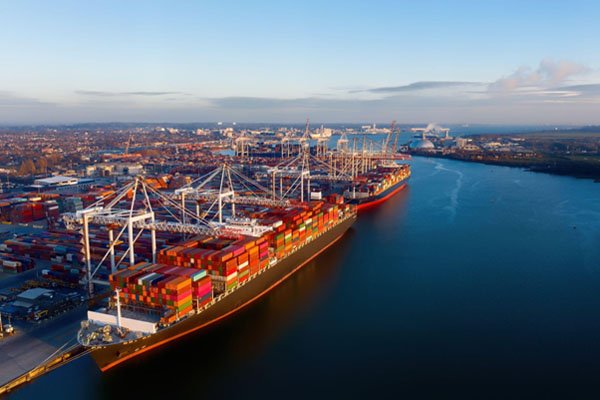
Securing and maintaining required visibility into port operations can be uniquely challenging due to the scope and complexity of maritime infrastructure. Moving containers, vehicles, and equipment can obscure security cameras accidentally or intentionally, creating blind spots that intruders can use to their advantage when attempting to cause damage or steal assets.
Unauthorized Access
Varying degrees of access must be provided to contractors, port authority staff, drivers, and visitors passing through maritime facilities every day. Safely and securely managing access requests manually can be resource-intensive and time-consuming, introducing the potential for operator fatigue or miscommunication to accidentally expose high-risk areas to intruders.
Environmental Hazards
Harsh weather conditions like heavy rain and fog can obscure camera feeds and negatively impact security operations, making it hard to reliably identify hazards and emerging threats. In addition, high winds and salt spray can damage physical hardware over time, introducing significant risks associated with cameras and sensors going offline at inopportune moments. Saltwater damage can impact the ROI of security devices, which is why most maritime ports opt for stainless steel cameras.
Operator Fatigue
A typical port or harbor can have hundreds of security cameras in operation at any one time, with camera feeds requiring constant observation to identify hazards and threats. Performing this task manually can place significant strain on human operators, raising the risk of subtle anomalies being overlooked and alerts being missed that could expose wider vulnerabilities.
How Smart Analytics Drive Proactive Port Security Operations
Smart analytics and AI-powered security cameras are showing promise in helping maritime security teams overcome industry-specific challenges. Modern coastal detection imbued with intelligent features can autonomously identify site-specific hazards and risks, allowing operators to proactively address threats without continuously observing feeds.
Intelligent Object Detection
Intelligent security cameras equipped with smart analytics tools can autonomously identify objects and persons of interest across complex areas of operation. Cameras can be programmed to immediately alert operators if an unknown object, person, or vehicle enters a target area, enabling teams to proactively combat emerging security threats. Additionally, cameras can be long-range for offshore detection, ensuring no one approaches unannounced.
Through deep learning, cameras equipped with smart analytics software can learn expected behavior over time, helping to ensure subtle and novel anomalies don’t go unnoticed. Smart analytics can help operators identify common issues like cameras being obscured by moving vehicles and equipment, to help proactively address common visibility challenges.
Occupancy Counting
Smart camera analytics can help ensure only select individuals and a number of persons can access high-risk areas. Cameras can be programmed to warn operators when occupancy levels surpass a predetermined threshold, with object classification features helping to ensure only authorized people can enter secure areas unimpeded.
Advanced smart analytics can also be configured to trigger responses when select objects and persons move into regions of interest. It can alert operators and activate wider security responses if a person, object, or vehicle enters a high-risk area or moves in a prohibited direction of travel to help address emerging security concerns swiftly.
Predictive Maintenance
Smart camera analytics software can be configured to identify signs of damage and wear to critical equipment and infrastructure. Pattern recognition and anomaly detection features can help facility managers spot subtle defects and operational issues associated with important equipment, helping staff to perform required maintenance before vulnerabilities are exposed.
Smart analytics can also analyze operational data associated with security cameras themselves to help ensure devices function optimally. Via automated health, tamper detection, and performance detection features, smart analytics software can warn operators of emerging issues that may impact camera functionality and suggest required maintenance.
Autonomous Threat Detection
Cameras equipped with smart analytics can autonomously identify and warn operators of suspicious activities and dangerous behaviors across complex target areas. On and off-site teams can be sent remote, real-time alerts containing links to relevant footage and camera feeds to support operators in planning and enacting informed responses to emerging threats.
By providing security staff with real-time, intelligent alerts that can be accessed via secure smart devices, leaders can remove the need for operators to continuously observe camera feeds. This workflow can help to reduce operator fatigue and enable security staff to focus on more complex aspects of their roles to help ensure threats are addressed appropriately.
Summary
Effectively and efficiently managing security operations across complex maritime facilities can be uniquely challenging, often requiring operators to continuously observe security feeds to manually identify anomalies, environmental hazards, and signs of emerging safety threats.
Traditional workflows can place significant strain on human teams and introduce risks related to operator fatigue, raising the risk of missed alerts resulting in significant security breaches.
By enhancing existing security with smart analytics, leaders can develop workflows whereby operators are warned of emerging risks in real-time. Cameras can provide detailed, data-rich insights into suspicious events and trigger automated security responses, enabling security teams to focus on matters of importance and proactively address identified threats.
About the author:
Jose Rojas is a sales engineering manager at Pelco with 25 years of experience supporting enterprise customers around the world. He focuses on delivering tailored technical solutions and leading an engineering team that meets the needs of mission-critical clients.
This article is provided by Pelco.
The opinions expressed herein are the author's and not necessarily those of The Maritime Executive.

No comments:
Post a Comment