Time is running out for Bosnia’s public broadcaster
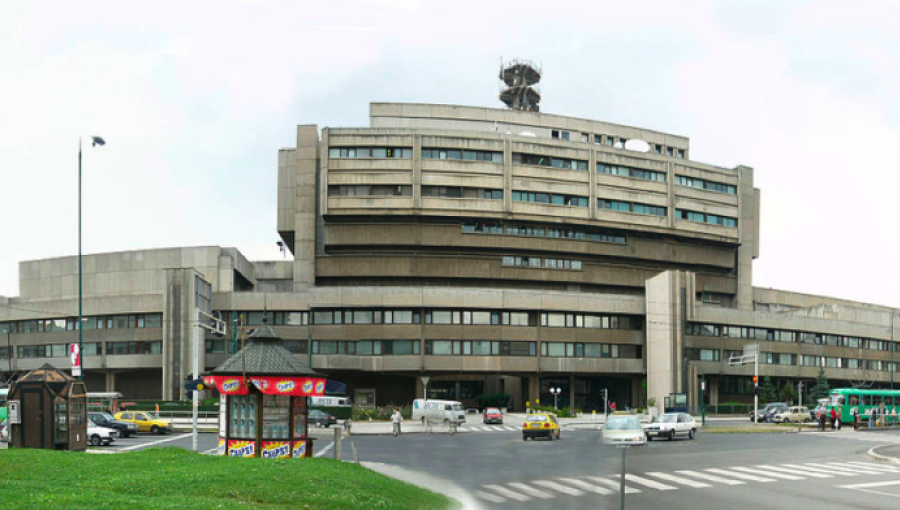
Bosnia & Herzegovina’s state-level public broadcaster, Radio and Television of Bosnia and Herzegovina (BHRT), faces the risk of collapse after nearly a decade of financial obstruction and political inaction. The broadcaster must settle a BAM22mn (€11mn) debt to the European Broadcasting Union (EBU) by the end of February. Failure to do so could result in the blocking of its accounts.
“If the accounts were blocked over the BAM22mn, it would mean that BHRT would be unable to operate for roughly two years,” said Lejla Babović,a senior BHRT executive, speaking to bne IntelliNews. “We earn about BAM1.2mn a month before taxes. A BAM22mn debt amounts to nearly 20 months of income. With blocked accounts, we simply wouldn’t be able to function.”
BHRT’s predicament is the result of years of political obstruction. Under the 2005 Law on the Public Broadcasting System, licence-fee revenues collected across the country are meant to be shared among the country’s three public broadcasters, with roughly half allocated to BHRT. However, since 2017, Radio Television of Republika Srpska (RTRS) — the official broadcaster for one of the country’s two regional entities — has refused to transfer its legally mandated share, depriving BHRT of an estimated €50mn.
In March 2025, the Constitutional Court of Bosnia and Herzegovina ruled that BHRT’s property rights had been violated. A few months later, in July, the Supreme Court of Republika Srpska also ruled in BHRT’s favour, overturning a previous decision and confirming the broadcaster’s entitlement to a share of the license fees collected in the entity.
Despite these rulings, the funds were not transferred, and in November 2025, protests were held outside the country’s parliament in Sarajevo, during which BHRT called on the Council of Ministers to enforce the public broadcasting law and urged the state to provide temporary financing to cover debts owed to BHRT by Republika Srpska.
Media observers and press freedom organisations argue that RTRS’s refusal reflects broader political pressure by Republika Srpska’s ruling party, the nationalist, separatist leaning Alliance of Independent Social Democrats (SNSD), to weaken and delegitimise state-level institutions.
A 2022 report by Reporters Without Borders noted that RTRS has long obstructed proposals to establish a unified national public broadcaster spanning both entities, arguing that “paying its share of revenues to BHRT would be tantamount to recognising the existence of such an institution.”
The prolonged shortfall has left BHRT struggling to cover staff salaries, pension contributions, and basic operating costs like electricity bills. Babović said the financial squeeze has hollowed out morale inside the broadcaster too. “People are demotivated, but they still come to work every day, as if everything is normal, as if we have money, like the BBC,” she said.
Babović also noted that last year’s hike in minimum wages has added extra financial pressure. According to the broadcaster, if no resolution is reached in settling the outstanding debt to the EBU, over 700 employees could be left without pay from March 1.
Calls are mounting for Bosnia & Herzegovina’s High Representative Christian Schmidt to intervene using his Bonn Powers, a set of extraordinary authorities that allow the high representative to override domestic institutions.
On December 1, in a letter addressed to the Office of the High Representative (OHR), the BH Journalists Association requested Schmidt’s intervention to secure a “temporary or permanent mechanism for financing BHRT”. The letter criticised the OHR for “silently observing, without any relevant or legitimate response, and without institutional interest” in the repeated violations of that law. The letter also cited the July 2025 Viaduct arbitration case as a precedent. In that case, Schmidt used his Bonn powers to allocate €50mn from the state budget to settle a debt dispute after Republika Srpska failed to pay the Slovenian construction firm Viaduct.
On January 20, the BHRT workers union also sent a letter to Schmidt’s office urging him to intervene and “end the agony of the public service media”.
However, despite these appeals, an intervention by Schmidt seems unlikely. In an interview with BHRT on January 20, he acknowledged the broadcaster’s financial distress but deflected responsibility, stating, “This is the responsibility of the parliament. I can provide support, but I should not be the one doing these jobs.”
Not everyone agrees with this stance. Babović argues that Schmidt should intervene, also citing the Viaduct case as precedent. She also noted that any intervention would largely circulate money within the state system. “Around 80% of BHRT’s debt is owed to local suppliers” such as taxes, VAT, utilities, she said. “We owe each other money, so taxes would be paid and the state would immediately benefit.”
The deteriorating situation of the public broadcaster has also drawn international attention. In a joint open letter to the European Commission, the European Broadcasting Union (EBU), Central and Eastern European public broadcasters, and media freedom groups, warned that “BHRT’s collapse would eliminate the only independent, state-level source of information deepen the influence of foreign-backed disinformation networks, and undermine Bosnia and Herzegovina’s EU accession process.”
On February 3, Luigi Soreca, head of the European Union Delegation to Bosnia and Herzegovina, issued a statement via X warning that BHRT’s potential collapse would represent a major setback for Sarajevo's EU goals, after the country formally opened accession negotiations in March 2024. “Every European Commission progress report on Bosnia and Herzegovina mentions BHRT in a dedicated chapter. In the last reform agenda report, the country’s authorities had promised that BHRT’s financing issues would be resolved by December 2025, but that has not happened,” Babović said,
Babović warned that due to the “various outside influences and ongoing hybrid wars”, the absence of BHRT would be a “media catastrophe, not just for Bosnia and Herzegovina, but for the entire Southeast Europe”. Babović also pointed out that a serious security situation could unfold “if BHRT’s infrastructure were shut down — first and foremost critical transmitters and connections, which many state agencies and the Ministry of Defence rely on”.
The upcoming general elections in October heighten the stakes. A joint letter to the OHR issued on January 21 by the Media Freedom Rapid Response and its partners, warned that the “disappearance of BHRT would mean the loss of an important source of reliable information at a critical moment for voters”.
Babović argued that, “RTRS is under complete control of the SNSD, and the federal broadcaster is under the control of the ruling coalition. Without BHRT, we would be left with two autocratic media systems, and two autocratic regimes, where there would be no objective access and no impartial information for the public.
“RTRS might even openly support the SNSD, making it harder for the opposition to get airtime. A similar situation could occur in the Federation. There would be war-mongering propaganda on the entity broadcasters, and I don’t know how far that could go.”
Babović said an urgent solution is needed. She added the Council of Ministers could still decide to allocate funds from the budget reserve, but political tensions make this near impossible. “All eyes are on Schmidt,” she said. “Even though he says this should be resolved by the country’s authorities, he needs to step in, especially in this election year, and prevent BHRT’s collapse.”

No comments:
Post a Comment