How exposed is China to the Hormuz crisis?
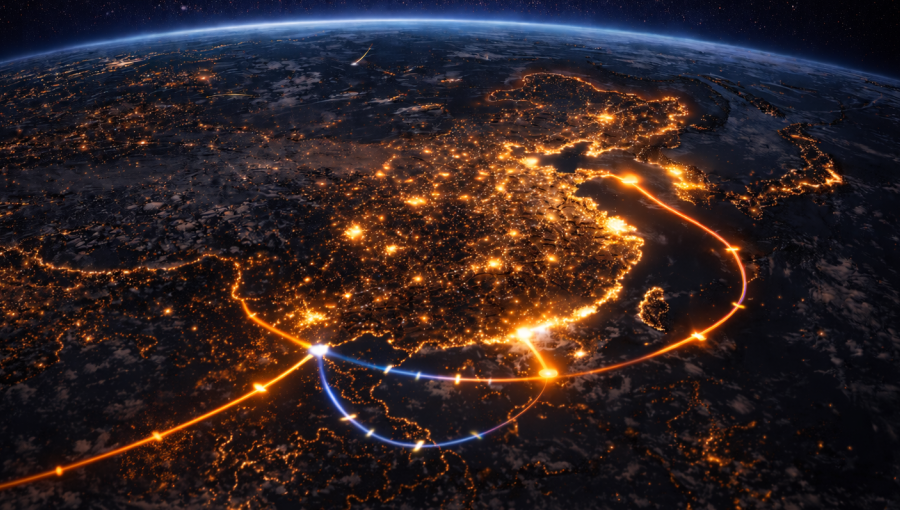
A prolonged closure of the Strait of Hormuz would hit China’s energy security hard, threatening to sever roughly half of its crude imports and a significant share of its LNG supply.
WHAT: China could lose access to about half of its oil imports and roughly 30% of its LNG if Hormuz remains blocked.
WHY: Much of China’s Gulf crude and discounted Iranian barrels transit the strait, and replacing them would mean fiercer competition, higher prices and pressure on refiners and economic growth.
WHAT NEXT: Beijing is likely to draw on strategic reserves, seek alternative suppliers and intensify diplomatic efforts to restore flows if the disruption persists.
China is acutely exposed to a prolonged closure of the Strait of Hormuz. It is the world’s largest oil importer and it is also the world’s largest LNG importer, with a particularly heavy reliance on Gulf supply – both directly via Qatari LNG and Saudi crude, and indirectly, via sanctioned Iranian barrels whose flow would also be disrupted by a lengthy blockage, as well as broader fallout from the US-Iran conflict.
Tehran has been clear. “The strait [of Hormuz] is closed. If anyone tries to pass, the heroes of the Revolutionary Guards and the regular navy will set those ships ablaze,” Ebrahim Jabari, a senior adviser to the Revolutionary Guards commander-in-chief, said, according to Iranian state media.
The waterway handles around a fifth of global oil and LNG supply. For China, its closure cuts the country off from around half of the crude supply it typically imports. It is also equivalent to around a third of the total oil that China consumes. China also receives roughly 30% of its LNG via the Strait of Hormuz from Qatar. No surprise then that Beijing is urging Tehran to lift its blockade.
Oil exposure
In 2025, Chinese oil imports hit a record high of 11.6mn barrels per day (bpd). Of that amount, Saudi Arabia delivered 1.62mn bpd, according to state customs data. It was the country’s second-largest supplier after Russia, which delivered 2.09mn bpd.
A further 1.3mn bpd came from Iraq – shipments which also go through the Strait of Hormuz and around 930,000 bpd from Brazil.
Also listed among the top suppliers in the customs data is Malaysia, which is recorded to have delivered 1.3mn bpd. But there is a catch. That is more than double the amount of oil that Malaysia actually produces. In reality, much of that amount is believed to be redirected sanctioned crude, primarily from Iran.
How does this opaque practice work? Iranian crude is typically loaded at terminals such as Kharg Island and transferred ship-to-ship in waters off Malaysia or in the wider South China Sea. During these transfers, tankers may disable or manipulate their automatic identification system transponders, obscure cargo origin in shipping documents, or change vessel names and flags. The cargo is then relabelled as Malaysian blend.
Tanker-fracking firms including Kpler, Vortexa and S&P Global Commodity Insights have repeatedly identified these “dark fleet” movements.
So how much Iranian oil does China in fact import? Though difficult to determine, Kpler estimates it amounted to 1.38mn bpd last year, which would put Iran in third place behind Russia and Saudi Arabia among China’s top suppliers.
First there is the obvious crisis that China will face in scrambling for alternatives to its loss of Gulf crude in the event of a lengthy Hormuz blockade, outbidding other buyers facing the same difficulty for cargoes. Higher prices will impact the economy, which is already on track to see a slowdown over the next two years, with the IMF predicting in mid-February GDP growth of 4.5% this year versus 5% in 2025.
Fortunately China has a buffer against supply shortages in the form of 900mn barrels of oil in storage, which is equivalent to about 78 days of consumption, which is not far below the 90 days recommended by the International Energy Agency (IEA) for major oil importers. Beijing made the stockpiling of oil a strategic priority over two decades ago, massively expanding its storage facilities as a hedge against any disruption in oil trade. In particular it was mindful of the risk of the US one day blockading the Malacca Strait – another marine chokepoint.
Losing discounts
The loss of Iranian crude is particularly painful, given the deep discounts at which those sanctioned barrels were being purchased. Recent estimates place the discount for Iranian Light at between $8-10 per barrel versus Brent. Smaller independent, so-called “teapot” refineries in China relied on that discount to make any money at all, as they traditionally operate on very slim margins versus their larger state-owned competitors.
This also follows China’s loss of discounted Venezuelan crude in January, following the US seizure of President Nicolas Maduro. Washington has lifted sanctions on the country’s oil, but with the caveat that those supplies can only be bought and sold by US companies, presumably no longer at a discounted price. China took around 390,000 bpd of sanctioned oil from Venezuela in 2025, according to Kpler.
If the US and its allies can succeed in better enforcing sanctions on Russian crude – through targeting an increasing number of shadow fleet tankers and in some cases even detaining vessels, China would lose a further 800,000 bpd of sanctioned crude from Russia, as estimated by Kpler.
Stronger on gas
In the case of gas, China’s situation is not so precarious, though it still presents challenges.
Firstly, China is not as exposed to international LNG markets as it is to international oil markets. The country relies on LNG imports only to cover around one-fifth of its gas demand, with the rest covered by either domestic production or stable pipeline supply primarily from Russia and Central Asia. Secondly, natural gas is a relatively small part of its energy mix — around 7-8% versus 18-20% for oil and oil products. Thirdly, its gas inventories are also fairly high though not as high as its oil stockpiles, at around 50 days. Fourthly, it can always fall back on domestic coal in power generation if global gas supply is scarce and exorbitantly expensive.
China also can fall back on its US LNG supply contracts to ease the loss of Qatari shipments. Although it has avoided direct US LNG imports since placing a tariff on those supplies amid trade tensions with Washington a year ago, Chinese companies still hold long-term US contracts totalling around 25mn tonnes per year, with a significant portion of these deliveries scheduled to begin this year. Any US imports China is currently contracted to receive it simply resells to Europe.
Secondly, China can tap increased supplies from Russia’s Arctic LNG-2 plant. Despite US sanctions on the project, it began taking cargoes last autumn. Limited by Arctic shipping constraints, it could ramp up those shipments to around 4mn tonnes.

No comments:
Post a Comment