New ASLEF general secretary Dave Calfe on strikes, Labour and the union’s future
After more than four decades in the rail industry, ASLEF’s new general secretary Dave Calfe made his final journey to London Euston, where he is a branch member, to the applause of colleagues and union activists.
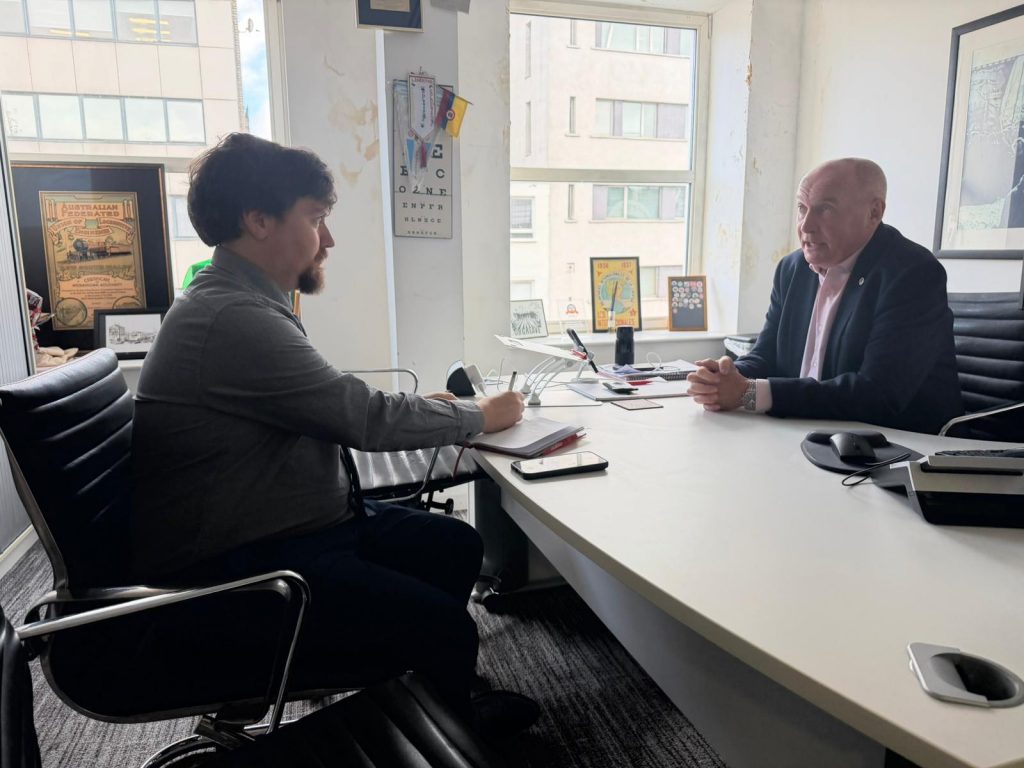
Just over two months into his term leading the train drivers’ union, Calfe spoke to LabourList in his first interview about his decades in the rail industry fighting for better conditions, debates in the union movement about disaffiliation from Labour and his reflections as ASLEF approaches its 150th anniversary.
‘The greatest honour you can have’
Calfe, marking just over two months in post, said he has found his first few weeks “a bit of a whirlwind”, with meetings with people across the industry and even with the Prime Minister.
“Everybody wants to meet you, wants to get to understand you and see your point of view on many different issues, so it’s been a very interesting time.
“Becoming a line manager as a trade unionist is different for me, but we’ve got a good group of staff here.
“I’m enjoying it to be honest. It’s probably the greatest honour you can have, certainly as a trade unionist.”
How Calfe began his 40 year long rail career
Calfe has more than 40 years of experience in the rail industry, but his first job wasn’t actually on the trains.
“My first job was an assistant gardener at the Middlesex Polytechnic on White Hart Lane, which I enjoyed.
“I found it very difficult to get into an apprenticeship back in 1983. I tried British Gas – these were all nationalised back then, British Telecom, the London Electricity Board and various others – there were literally one or two apprenticeships and hundreds of people applying.
“Eventually, I got a job at Middlesex Polytechnic and a friend of mine who’s still a train driver at Blackpool North, who I went to school with, said they’re taking on what was called traction trainees as part of the old system to become a driver’s assistant – was I interested? I said yeah, he gave me the address and I wrote off, and I heard nothing for months.
“I came in from work one evening and the phone rang – I lived at home with my mum and dad, and someone from British Rail asked whether I was still interested in being a driver’s assistant. I’d literally forgotten I’d applied, but I said yeah.”
Whelan’s legacy as general secretary
From there, Calfe went through the recruitment process and ended up as a driver’s assistant at Stanbridge Park, where his predecessor as general secretary Mick Whelan was also based.
While they crossed paths, it wasn’t until Whelan became a full time officer and Calfe became a company council rep for what was then Virgin Trains in 2000 that they began to form a deeper friendship.
Calfe said that Whelan’s legacy would be his work in TULO and on Labour’s NEC, as well as pushing for train drivers to be able to start training at 18 and, most importantly, the Employment Rights Act.
“Mick was heavily involved with that and certainly pushed the government and the Labour Party on that as well, making sure that many of the things that were put in the bill came to fruition.”
‘It’s quite a big part of your life to leave behind’
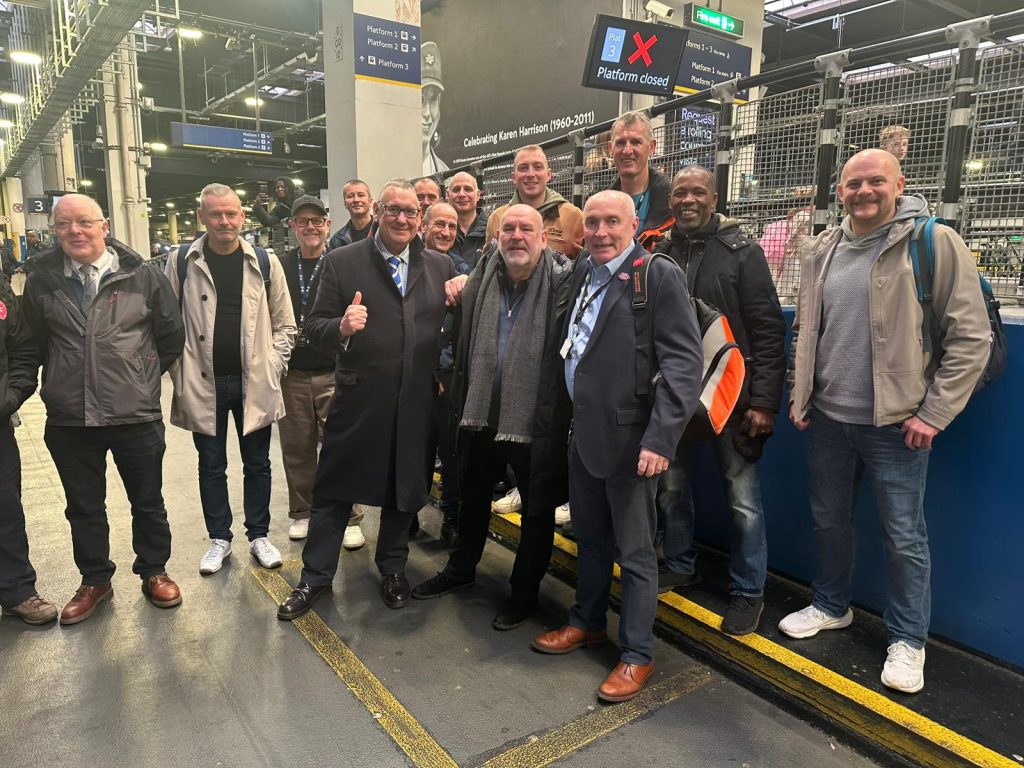 Ahead of becoming general secretary on January 5, Calfe had the bittersweet moment of driving his last train between Birmingham and London Euston on December 12, with dozens of ASLEF activists, including Mick Whelan, applauding him as he stepped off a train as a driver for the last time.
“I realised in the last half hour into Euston that that would be the last time I’d be doing the job, and when you’ve done something for 40 years, it’s quite a big part of your life to leave behind – but also recognising the challenge that I will have going into being the general secretary.
“I’ve always enjoyed driving trains, I’ve always enjoyed the job because you go to work, you get up the front on your own – it’s a job where you can see hundreds or thousands of people every day and not really speak to anybody, because you see them in passing as opposed to having conversations.”
‘What we’re doing today has happened because of those that have come before us’
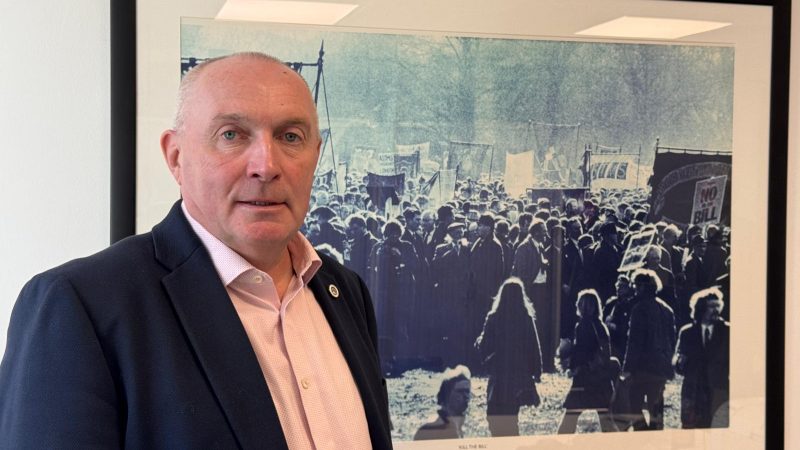
ASLEF’s offices near Farringdon feature an array of badges and memorabilia of the rail network and the union movement more broadly, as well as three murals depicting the history of the union, from the age of steam the Beeching cuts and pickets during the Thatcher years.
Calfe will be in post as general secretary as the union marks its historic 150th anniversary in 2030.
Reflecting on the rich history of the union, Calfe said: “What we’re doing today has happened because of those that have come before us, those that have fought for us.
“It’s those that have come before us that have made this trade union what it is and give us those solid foundations.”
Calfe said the union would continue to have a strong path ahead so long as it continues its proven track record of union density within the train driver profession and representing members.
‘I don’t think there are many trade unions where leaders are contactable by phone’
While other craft trade unions, like the Amalgamated Engineering Union and United Patternmakers’ Association, have been merged and folded into larger unions like Unite and Unison, Calfe said that remaining separate allows the union to maintain a focused remit – and a close relationship with its members.
“I don’t think there are many trade unions where most of the leaders at a higher level are contactable by our email or telephone. Quite often, I’ll get phoned up by our company reps or branch secretaries with questions or concerns.
“I think it’s that relationship that works for us as a trade union – and being as a single-job role, we all understand what we’re talking about.”
‘We didn’t take for granted our members losing pay during the strike’
 During his time within ASLEF, Calfe was part of the three-man negotiating team that negotiated the end to the union’s two-year pay dispute, the longest in ASLEF’s history.
Calfe is modest in his achievements and stressed: “I see myself as part of the collective and involving other people.”
On the strike action, Calfe said: “When the government brought in that minimum service levels legislation, I think it was probably some of the worst written legislation I think we’ve probably ever seen in the rail industry.”
Between 2022 and the time a deal was struck with the new Labour government in September 2024, ASLEF members had taken part in 18 days of strike action, with a near shutdown of English train lines.
“We didn’t take for granted our members losing pay, we didn’t take for granted the strike action, the members voting for it.
“The Tories were trying to attack us – actually they strengthened us through that dispute.”
‘Until you do the job, you probably don’t think about it’
However, it is Calfe’s work on the Dignity in Driving campaign that he sees as potentially having “one of the longest-lasting and most fundamental changes to working practices for train drivers”.
The campaign highlighted the lack of toilet access for drivers, with a 2024 report finding that almost a quarter (24 percent) of drivers worked up to six hours without proper access.
Last year, the rail industry agreed to ensure no driver works more than four hours without access to toilet facilities, as well as agreeing to a five point plan to improve drivers’ welfare.
“I think until you do the job or know someone who does the job, you probably don’t think about it. If you’re a train driver and you’re growing up with a young family, you’ll be working Christmas Eve, New Year’s Eve, New Year’s Day.”
Calfe also said that, when a train rolls up at a station for passengers at 7am, the driver would have started work several hours earlier.
“You can book on at 4am and then the next break you would have to access the toilet might be five and a half hours later. You can put your hand up like you’re sitting in a classroom, but the reality of that is your train will be stopped in a location where it wouldn’t necessarily be stopped for that amount of time, then every subsequent train after that is queued up waiting to get through that section as well.”
He expressed hope that the reforms for the welfare of drivers would bring about a “lasting, positive impact”.
‘I’m not considering disaffiliation’
Calfe has become general secretary amid speculation of some unions disaffiliating from the party and amid speculation of a potential leadership challenge.
For Calfe, though, the question of who is party leader is a matter for Labour.
“What is important is that whoever leads the Labour Party delivers on the manifesto that they were elected on and makes lives different for working people.
“They’ve delivered some good stuff for working people. I don’t think many working people are particularly bothered with who the leaders of the Labour Party is – what they want is to be able to heat and eat.
“Sometimes we in the trade union movement and those active within the party, we get caught up in a political bubble, and actually the people outside of that bubble are struggling day to day, so we need to see the changes for working people.”
On disaffiliation, Calfe is clear: “I’m not considering it, no. Affiliation is a matter for our conference. The last two times it has come up at conference, those in favour haven’t got into double figures.
“There’s no point in protesting on the street if you can be inside the room putting your case.”
Who is the figure that Calfe sees as most influential on his time in the union movement? He points to his former branch secretary, Cliff Holloway.
“He’s certainly someone who over the last 20 odd years I’ve been able to have many conversations with, sometimes about difficult issues, but has always been a very good counsel for me.”

No comments:
Post a Comment