It’s possible that I shall make an ass of myself. But in that case one can always get out of it with a little dialectic. I have, of course, so worded my proposition as to be right either way (K.Marx, Letter to F.Engels on the Indian Mutiny)
Tuesday, April 21, 2026
‘You Dirty Orange Maniac!’: The President of Ultimate Destruction
Sadly, as crazed as Donald Trump may be — and he clearly is a deeply disturbed (and, of course, disturbing) human being — when it comes to war and the burning of fossil fuels, he’s been anything but alone as president of the United States.
Orange blow-up garbagemen Donald Trump speaks at Green Bay airport (Photo by Chip Somodevilla/Getty Images)
When he’s on full blast, Donald Trump (not so long ago the “drill, baby, drill” candidate for president) is distinctly a furnace. And he seems intent on turning this planet, our only world, into a version of the same. But here’s the strange thing, when it comes to almost anything — from Iran to suddenly firing two key women, Pam Bondi and Kristi Noem, in his government (but certainly not the no-less-chaotic men) — there’s no minute, it seems, when he’s not flipping himself on his head and then spinning or stumbling or catapulting off in a new direction. There’s only one exception I’ve noticed and, all too sadly, that’s climate change, where everything he does — every single thing — is guaranteed to be a disaster for our children and grandchildren.
Recently, of course, he’s launched a nightmarish war, by definition a gigantic producer of greenhouse gases, that’s literally been all about oil and natural gas, thanks in part to the now chaotic, largely blocked Strait of Hormuz through which a quarter of humanity’s sea-borne oil and a fifth of its natural gas used to pass. And if you don’t believe me about it being a nightmare, just check out the most recent prices at your neighborhood gas station. Consider it an irony, then, that his disastrous Iranian war will undoubtedly lead in a direction — to the use of more green energy globally — that, if he ever thought about it, he would hate more than just about anything else. He has, of course, referred to environmentalists as “terrorists.” (“They are terrorists. I call them environmental terrorists.”) And in this country, over his two presidencies, he’s done his damnedest to attack and try to block wind and solar power projects in every imaginable way, even though, globally, green power is growing fast and getting ever cheaper.
And here’s the reality of our moment for which we do need to give Donald Trump credit: once upon a time, you couldn’t have made any of this up — or, of course, have made up Donald Trump as president of the United States (twice!). If you had, it would have seemed like the least believable science fiction novel ever written. Not that I drive a car in New York City (the subway and buses work fine for me), but as I was writing this piece, of course, the price of gas had also edged up in my city to almost four dollars a gallon and a (possibly global) recession is on the horizon. (Thank you, Donald Trump!)
Of course, in launching his recent war against Iran, however incoherently, “the PEACE PRESIDENT” (and yes, he’s into CAPS when it comes to himself) was, all too sadly, in good company, historically speaking. Since victory in World War II, from Korea to Vietnam to Afghanistan to Iraq and now to Iran (to mention only the big conflicts of that all-American era), our presidents have had quite a knack (if such a word can even be used) for starting wars, none (not a one!) of which has ended in anything faintly like victory. And it’s already obvious — you don’t need to have the slightest knack for seeing into the future to know this — that Donald Trump’s version of the same in Iran will prove to be a global disaster, made worse by the fact that, in the process, whether he faintly grasps it or not, he’s also launched another brutally losing war against Planet Earth.
And the worst thing is that I feel I’ve written all of this before. And before Trump — well, “leaves” is far too mild a word for it — abandons (??) the presidency, I could end up writing it again and again, and we would still be in the world — all too literally his world — from hell. Of course, for all we know, Donald J. Trump could decide to crown himself president and try to launch a third term in office that would, if successful, turn the constitution into an historical relic.
“The Only Orange Monarch I Want Is a Butterfly.”
The other week, feeling as I do about “our” president, I went to New York City’s “No Kings” rally. It was gigantic (though you wouldn’t have known that, had you read my hometown paper, the New York Times, in the days that followed). It started on 59th Street where Central Park ends, with masses of marchers on both Seventh and Eighth Avenue, heading for 34th Street. By getting there early, I made it to the front of the crowd on Seventh Avenue at the head of that vast mass of protesting humanity and, once it started, I wove my way in and out of the crowd, back and forth, downtown and uptown again, jotting in a little notebook some of the thousands of homemade signs people were carrying.
When I finally reached Broadway and 42nd Street, I stepped up on the sidewalk and looked back. To my amazement, I could see all the way to 57th Street where we had begun, and that significant-sized avenue was still totally — and I mean totally — packed right back to Central Park. And mind you, this old man was just one of an estimated more than eight million Americans who turned out at more than 3,000 rallies across the United States that day, in communities huge and microscopic, to protest the world Donald Trump has dumped on, spilled all over, and is continuing to roil and broil.
And, yes, it did seem like every third person (even the two demonstrators dressed as plastic tigers) was carrying a homemade sign. I doubt I had ever seen so many of them at any past demonstration. I was scrawling a number of them down in a little notebook, and they ranged from “Fight Truth Decay” and “Grandma says, ICE is not nice!” to “It’s a good thing Congress isn’t alive to see this” and “The only orange Monarch I want is a butterfly.”
And then there was the one carried by a bearded man that caught my attention: “You dirty ORANGE maniac! You blew it all up! Damn you to hell!” And I thought to myself, boy, is that painfully accurate. In his own fashion, among all the things he hasn’t succeeded in accomplishing, he has indeed been blowing it all up in a striking fashion and, unfortunately, potentially damning my children and grandchildren (and yours) to a literal planet from hell.
And sadly, as crazed as Donald Trump may be — and he clearly is a deeply disturbed (and, of course, disturbing) human being — when it comes to war and the burning of fossil fuels, he’s been anything but alone as president of the United States. After all, in these decades, war has been this country’s middle name and we’ve been burning fossil fuels to fight them as if… well, as if there would indeed be no tomorrow(s). And in his two terms in office, Trump and crew have gone with a passion after any form of clean, renewable energy that wouldn’t blister us all. Only recently, for instance, the Guardian (which is superb when it comes to climate-change coverage) was the only publication I saw that reported on new research in Nature magazine showing that this country has caused “an eye-watering $10tn [yes, that’s trillion!] in global damages to the world over the past three decades through its vast planet-heating emissions, with a quarter of this economic pain inflicted upon itself.”
Consider it something of an unintended irony, then, that the crew President Trump and his administration have put so much of themselves into goes by the acronym ICE. In fact, wouldn’t you have thought that “ICE” would be a curse word for President Trump and that, when it comes to creating an immigration hell on earth, his crew of manic enforcers would have been known as “HEAT”? Which reminds me that, at the No Kings rally, I noted an older woman carrying a homemade sign all too appropriately saying: “Deport Trump! Make ICE useful.”
And thanks to his brutal assault on Iran, this planet is only going to get hotter yet, as war releases staggering amounts of carbon dioxide into the atmosphere! Honestly, back in 2016, even if you had let your mind run in wild and unbelievably crazy directions, you simply couldn’t have made up Donald Trump’s planet as it is now, could you? Who could have imagined that the president of the United States, after launching a war with Iran in the Strait of Hormuz, would attack European countries for not joining him, saying, “You’ll have to start learning how to fight for yourself, the U.S.A. won’t be there to help you anymore, just like you weren’t there for us.”
And remind me, who has Donald Trump been there for, other than the major fossil fuel companies that backed him so radiantly in the 2024 election and are now getting a remarkable return on their investment?
Giving Decline New Meaning
Of course, to put all of this in some kind of perspective, sooner or later great imperial powers do go down and the United States has been the number one imperial power on this planet since the end of World War II, with its only true competitor (until China rose well into this century), the Soviet Union, which collapsed in a heap in 1991. So, it shouldn’t be surprising that this country, which, singularly in human history, once reigned more or less supreme on Planet Earth, should finally have begun its own decline, while turning over investment in present and future green energy to China.
But of course, there’s decline and then, in ICE terms, there’s DECLINE!!! And Donald Trump is threatening to turn imperial decline, something known throughout history, into a distinctly new phenomenon. Even declining imperial powers haven’t usually had such a mad ruler or leader. And he does seem remarkably intent, in his own increasingly confused way, on taking this country down with him. The difference, historically, is that until now no imperial ruler had the chance to take down not just his (almost never her) country, but (after a fashion) our planet (at least as a livable place for us), too. And he does seem remarkably intent on continuing to fossil-fuelize our world in a disastrous fashion.
Of course, at this very moment, we’re all watching his approval ratings generally (and particularly on the economy) begin to tank. (Oh wait, my mistake! A tank is a war vehicle, and right now that reference only applies to Israel, which recently lost a remarkable number of tanks in southern Lebanon.) But “our” president has also focused a significant part of his administration on ending anything that could benefit the climate, while burning fossil fuels in a fashion that should be considered beyond incendiary. That includes recently agreeing to offer almost a billion dollars to a French energy company to abandon a project to construct wind farms off the East Coast of this country (as long as it was willing to reinvest that sum in future oil and gas projects here instead).
Yes, someday he could well be seen not just as the president of decline but potentially of ultimate devastation and that flaming red tie of his could end up having a symbolic significance that, once upon a time, no one might have imagined. No wonder that sign I saw on the No King’s Day march — and let me repeat it here one more time: “You dirty ORANGE maniac! You blew it all up! Damn you to hell!” — sticks in my mind. It predicts the very future that, unbelievably enough, 49.8% of American voters tried to usher in again in 2024.
Once upon a time, who could ever have imagined either Donald Trump as president of these (increasingly dis-)United States or such a possible fate?
Tom Engelhardt, co-founder of the American Empire Project, runs the Type Media Center's TomDispatch.com. His books include: "A Nation Unmade by War" (2018, Dispatch Books), "Shadow Government: Surveillance, Secret Wars, and a Global Security State in a Single-Superpower World" (2014, with an introduction by Glenn Greenwald), "Terminator Planet: The First History of Drone Warfare, 2001-2050"(co-authored with Nick Turse), "The United States of Fear" (2011), "The American Way of War: How Bush's Wars Became Obama's" (2010), and "The End of Victory Culture: a History of the Cold War and Beyond" (2007). Full Bio >
Good Riddance to Trump’s Horrible, No Good Labor Secretary
The disgraced Lori Chavez-DeRemer is what you get when you have a president and White House staff who don’t give a rat’s ass about whom they appoint to positions of power except for their loyalty to Trump and how they look on television.
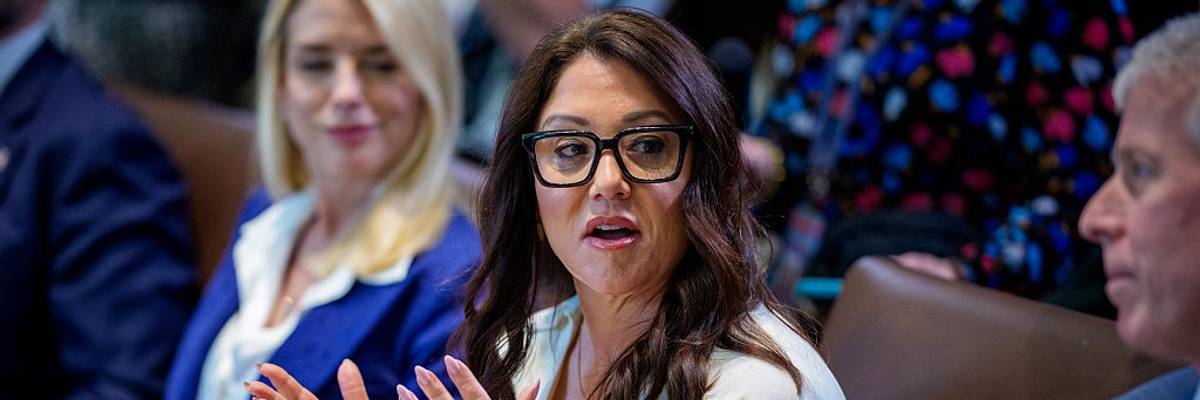
Labor Secretary Lori Chavez-DeRemer, who resigned from her post Monday, speaks during a Cabinet meeting at the White House on April 30, 2025 in Washington, DC. (Photo by Andrew Harnik/Getty Images)
Lori Chavez-DeRemer resigned Monday as secretary of labor [translated: she was told to resign by the White House], after facing investigations by the department’s inspector general into multiple allegations of misconduct.
She’s alleged to have been drinking during the workday from a “stash” of alcohol in her office, arranging official trips for herself that were extended vacations, taking subordinates to an Oregon strip club while on one such trip, showing no interest in the work of the department, and having an affair with a member of her security team.
Sources have described Chavez-DeRemer as the “boss from hell,” saying she demanded staffers run personal errands for her or perform other menial tasks unrelated to their government jobs. More than two dozen department employees from across the political spectrum described in interviews with The New York Times a toxic workplace characterized by an absentee secretary, hostile aides, and a deeply demoralized staff.
In other words, Chavez-DeRemer was turning the great department I once headed and loved into shit. And I hold Trump responsible because he appointed her.
As I shared with you a few weeks ago, I loved the Department of Labor from the moment I entered the Frances Perkins Building on Constitution Avenue as secretary of labor in January 1992. I loved its mission: to protect and raise the standard of living of working Americans.
I loved its history. The first secretary of labor, Frances Perkins — appointed by Franklin D. Roosevelt in 1933 — was also America’s first female Cabinet secretary. She was the guiding light behind the creation of Social Security, the 40-hour workweek, the National Labor Relations Act, and much more.
I hung the painting of Frances Perkins behind my desk in my huge second-floor office. Whenever I felt discouraged, I looked at her, and she bucked me up. (Although I’m Jewish, I called her Saint Frances.)
I admired the Department of Labor’s career staff, who were dedicated to helping American workers. I was deeply impressed by the assistant secretaries, the deputy secretary, the chief of staff, and other appointees with whom I toiled, often six or seven days a week from early morning to late at night.
Never before or since have I had the privilege of working with such talented people who cared so much about what they were accomplishing for the American people, and who made such a positive impact on so many lives.
We raised the minimum wage for the first time in many years, even under a Republican-controlled Congress. We implemented the Family and Medical Leave Act. We fought against sweatshops. We took on big corporations that were cheating their employees. We kept workers safe. We … well, I could go on and on. (And I have, in my book Locked in the Cabinet, which you can also find here, but please don’t order from here.)
But like so much else Trump has done, he’s turned what was once a great department into a fucking mess. And it frankly breaks my heart.
It’s what you get when you have a president and White House staff who don’t give a rat’s ass about whom they appoint to positions of power except for their loyalty to Trump and how they look on television.
Trump and his White House assistants don’t mind if his appointees wreck our government because they don’t care about government. Hell, they came to government to wreck it. If the public loses confidence in, say, the Department of Labor, that’s perfectly fine. If Congress slashes its funding, so much the better.
What they do mind is if a Cabinet member makes Trump look bad, which is why Kristi Noem and Pam Bondi are now history — along with Chavez-DeRemer.
It infuriates me, because I’ve seen government work for the people. I’ve witnessed public servants who care deeply and bust their asses in service to this country. I know how important government can be if it’s doing the job it should be doing.
I loved the Department of Labor because it has improved the lives of millions of Americans. I worked like hell as secretary of labor because I believed in what we were doing. That it’s been treated like crap is an insult to generations of hardworking DOL employees, to American workers, to America.
The least we can all do is flip Congress in November, so senators and representatives who care about this country can oversee the departments of the government and try to remedy some of the wreckage that Trump and his appointees have wreaked on America.
In the meantime, goodbye and good riddance to Madam Secretary Chavez-DeRemer.
Robert Reich is professor emeritus of public policy at Berkeley and former US secretary of labor. His latest book is the No. 1 New York Times best-seller, "Coming Up Short." Full Bio >
Trump’s Iran War: Anatomy of a Debacle
President Donald Trump’s persistent boasts about tactical victories against Iran’ s military ignore the fundamental strategic fact that Trump has lost the Iran war.
High gas prices are displayed at a gas station after Democratic gubernatorial candidate Tom Steyer spoke at a news conference outside the gas station amid the war in Iran on April 9, 2026 in Los Angeles, California. (Photo by Mario Tama/Getty Images)
When he declared war on Iran in violation of international law and the US Constitution, President Donald Trump announced several objectives. He claims to have won the war, but Iran is emerging as the long-term victor.
Let’s count the ways.
“Regime Change”
No one doubted the capacity of the US armed forces to decimate Iran’s far inferior military force. But to what end?
Israel Prime Minister Benjamin Netanyahuconvinced Trump that launching the attack would prompt a popular uprising that would lead to the overthrow of Iran’s theocracy. Listening to Netanyahu’s assertion, CIA Director John Ratcliffe called it “farcical.” Secretary of State and National Security Adviser Marco Rubio translated that word into language Trump would understand, “In other words, it’s bullshit.”
Trump’s bluster isn’t working with Iranian leaders. His threats to commit war crimes dominate news cycles, but they merely reveal to Iran Trump’s desperation to extricate himself from the mess he created.
Trump chose to believe Netanyahu. Announcing the US-Israeli assault, Trump told Iranians that this was their opportunity to reclaim their country. To win the war on Trump’s terms, the Iranian theocracy needed only to survive.
The attack killed the Supreme Leader of Iran and top members of the government. But immediately, the serpent grew another head—the Supreme Leader’s son, Mojtaba Khamenei, who had lost his wife and teenage son in the bombing. The new leader is known for deep, long-standing ties to the Iranian Revolutionary Guard Corps (IRGC) security establishment. His appointment signaled a transition to a more heavily militarized, hard-line, and anti-Western regime.
Trump calls this “regime change.” By his definition, Admiral Karl Dönitz succeeding Adolf Hitler as head of the German state near the end of World War II constituted regime change too.
The Iran theocracy survived in an even more militant form.
Score: Iran 1, Trump 0 “Contain Iran”
Trump boasted that the war would restrain Iran’s ability to project power:
“We are systematically dismantling the regime’s ability to threaten America or project power outside of their borders,” he said.
Trump then described the destruction of Iran’s navy, air force, missile facilities, and defense industrial base. Those were tactical successes, but the war itself has been a strategic failure.
Iran’s response included attacks on neighboring countries. Even more troubling, it discovered and deployed a powerful new weapon: blocking the Strait of Hormuz. Notwithstanding its decimated navy, Iran now has a choke hold on the global economy.
Netanyahu had assured Trump that the regime would be so weakened from the US-Israeli assault that it would be unable to block the waterway through which one-fifth of the world’s oil flowed. Chairman of the Joint Chiefs of Staff Dan Caine flagged the enormous difficulty of securing the strait and the risks of Iran blocking it. But Trump dismissed that possibility on the assumption that the regime would capitulate before that could happen.
With the price of oil skyrocketing, Trump has created a new problem for the entire world and powerful leverage for Iran.
Score: Iran 2, Trump 0 “No Nuclear Weapons”
In his June 2025 attack on Iran, Trump claimed to have “obliterated” its nuclear facilities. Secretary of Defense Pete Hegseth went further, saying that not only were the facilities obliterated, but so too were Iran’s nuclear ambitions.
Subsequently, Trump took repeated victory laps over the mission:“It knocked out their entire potential nuclear capacity.” (July 16) “It’s been obliterated.” (July 31) “We obliterated… the future nuclear capability of Iran.” (August 18) “But I also obliterated Iran’s nuclear hopes, by totally annihilating their enriched uranium.” (September 20) “Well, they don’t have a nuclear program. It was obliterated.” (October 13) “…completely obliterated Iran’s nuclear capability.” (November 11) “It was called Iran and its nuclear capability, and we obliterated that very quickly and strongly and powerfully.” (November 19) “We obliterated their nuclear capability.” (December 11) “We knocked out the Iran nuclear threat, and it was obliterated.” (January 8) “…obliterated Iran’s nuclear enrichment capability.” (January 20) “…achieving total obliteration of the Iran nuclear potential capability—totally obliterated.” (February 13)
In defending the launch of the war on February 28, 2026, Trump acknowledged that Iran’s nuclear program had not been obliterated after all. Rather, the country was now “right at the doorstep” of having a nuclear bomb. Trump has no strategy for solving that problem either.
Trump’s tactics—bombing—won’t work. Knowledgeable experts believe that a key Iranian nuclear facility is Pickaxe Mountain, where some of its uranium may be stored. That facility is so far below the ground that even America’s 30,000-pound bunker-buster bombs can’t reach its inner chamber.
Trump talks about “going in” and taking the nuclear material out. But a ground operation to retrieve the material or destroy the facility would entail tremendous risk to those attempting it while providing, at best, an uncertain outcome.
The threat of a nuclear Iran remains.
Score: Iran 3, Trump 0 False Declarations of Victory That Backfire
Trump’s bluster isn’t working with Iranian leaders. His threats to commit war crimes dominate news cycles, but they merely reveal to Iran Trump’s desperation to extricate himself from the mess he created. As a negotiating strategy, it’s counterproductive.
Trump’s persistent boasts about tactical victories against Iran’ s military ignore the fundamental strategic fact that Trump has lost the Iran war. If a deal emerges from discussions between Iran’s experienced negotiators and Trump’s collection of amateurs, America and the world will pay a big price for a long time.
‘I’m Just Asking You a Factual Question’: Warren Corners Trump’s Fed Chair Pick on 2020 Election
“American monetary and bank safety policy will now depend on a demented ventriloquist in the White House,” said one consumer watchdog.
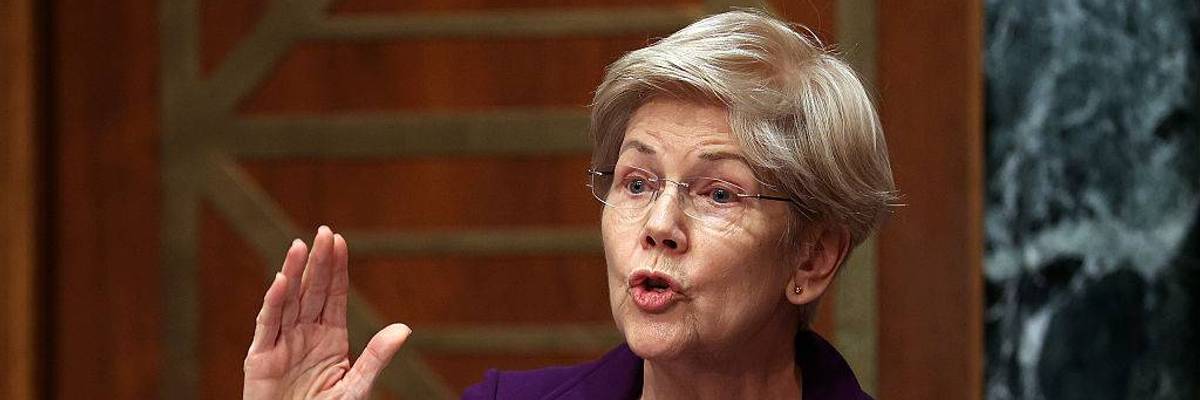
Sen. Elizabeth Warren (D-Mass.) questions US Treasury Secretary Scott Bessent during a hearing in the Dirksen Senate Office Building on February 5, 2026 in Washington, DC. (Photo by Kevin Dietsch/Getty Images)
Kevin Warsh, the financier picked by President Donald Trump to be the next chair of the US Federal Reserve, found himself tripped up by a seemingly simple question from Sen. Elizabeth Warren.
During a confirmation hearing before the Senate Banking Committee, Warren (D-Mass.) said she wanted Warsh to demonstrate he had the prerequisite independence to serve as chairman of America’s central bank.
“Independence takes courage,” Warren informed Warsh. “Let’s check out your independence and your courage.”
She then asked Warsh if Trump lost the 2020 election to former President Joe Biden—a question numerousappointees of Trump have failed to answer correctly during their confirmation hearings.
“We try to keep politics, if I’m confirmed, out of the Federal Reserve...” Warsh began.
At this point, Warren interjected.
“I’m just asking you a factual question,” she said. “I need to know, I need to measure your independence and your courage.”
“Senator, I believe that [the US Senate] certified that election many years ago,” said Warsh.
“That’s not the question I’m asking,” Warren shot back. “I’m asking, ‘Did Donald Trump lose in 2020?’”
Warsh refused to directly answer the question, insisting that asking about the outcome of the election was outside the realm of monetary policy.
University of Michigan economist Justin Wolfers took note of Warsh’s response to Warren, and wrote in a social media post that it “raises real questions about whether Warsh is independent of the president and if he has the courage to tell hard truths.”
Later in the hearing, Warren pressed Warsh on whether there was anything he would disagree with Trump about any aspect of his economic agenda, the financier responded with a joke about the president’s comment that Warsh was straight out of “central casting.”
“Quite adorable,” the senator said sarcastically. “But you know, we need a Fed chair who is independent.”
Warren wasn’t the only senator to probe Warsh’s ability to maintain his independence should he be confirmed as chairman of the Federal Reserve.
Sen. Raphael Warnock (D-Ga.) asked Warsh, who is a visiting scholar at the Stanford Graduate School of Business, to give a letter grade to the US economy.
Trump and top administration officials including Treasure Secretary Scott Bessent have insisted is strong and serving working families well even as the war in Iran has sent gas prices soaring and Trump’s tariff policy has cost households more than $2,500 on average.
Warsh joked that modern universities practically require all students to get “A” grades, but Warnock nonetheless pressed him to give his own evaluation of the economy under Trump’s stewardship.
“Well, if I gave a student anything other than an ‘A,’ the dean would summon me to his office because I would have hurt his self-image,” Warsh replied.
Warnock was not satisfied with Warsh’s answer.
“Well, the Americans that I talk to, particularly in the state of Georgia,” said Warnock, “who haven’t had the benefit of attending some of these elite institutions... they’re sitting around their kitchen tables trying to figure out how to put their kids through school.”
Warnock then added that “regardless of how the markets are doing, consumer confidence is at a record low.”
Bartlett Naylor, economist for Public Citizen, said on Tuesday that Warsh’s confirmation hearing showed how fundamentally unfit he is to be chair of the Federal Reserve.
“Trump named Kevin Warsh because he won the sycophancy contest, threatening the independence of the nation’s most important economic institution,” Naylor said. “At his nomination hearing, he failed to acknowledge that Trump lost the 2020 election, affirming that loyalty, not facts, will govern his policy choices.”
Naylor warned that, if Warsh is confirmed, then “American monetary and bank safety policy will now depend on a demented ventriloquist in the White House.”
$2 Billion Per Day Spent by US on Iran War Could Have Saved 87 Million Lives, Says UN Humanitarian Chief
A UN official said a proposal to provide food, water, medicine, and shelter to tens of millions of those facing war and poverty could have been funded “in less than a fortnight of this reckless war.”
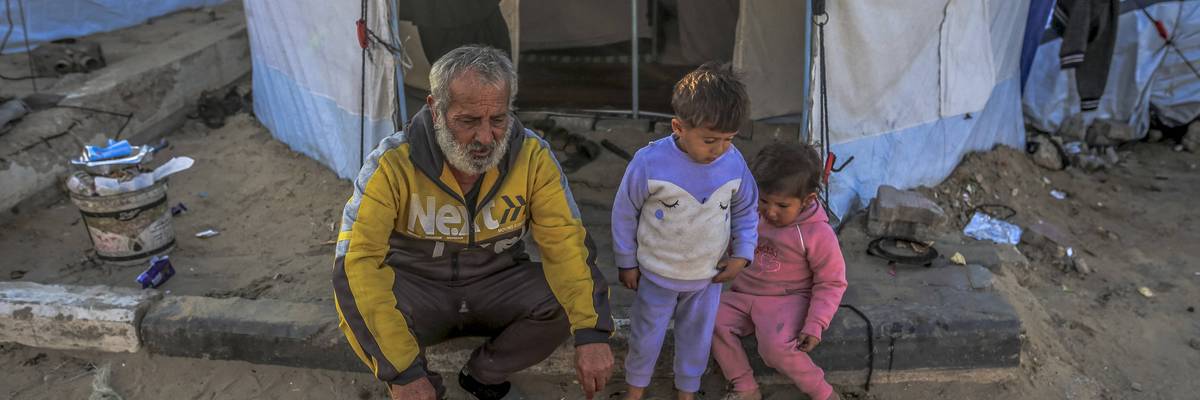
Displaced Palestinians gather around a fire to keep warm along the Gaza Port on January 16, 2026, after severe winter winds struck the enclave. (Photo by Saeed Jaras/Middle East Images/AFP via Getty Images)
US President Donald Trump’s war in Iran is costing nearly $2 billion per day, according to a Harvard analysis based on estimates from the Pentagon. The head of the United Nations’ humanitarian agency said the money could instead be used to save more than 87 million lives around the world.
Tom Fletcher, the undersecretary-general for humanitarian affairs and emergency relief coordinator at the UN Office for the Coordination of Humanitarian Affairs (OCHA), spoke at Chatham House on Monday about a “cataclysmic” funding crisis for the UN, in large part due to the terminationof billions of dollars in funding from the US and other major powers such as the UK. Fletcher said his agency has seen its budget cut by around 50%.
“We’re already overstretched, underresourced, and literally under attack,” Fletcher said, citing the more than 1,000 humanitarians who have been killed in conflicts around the world over the past three years.
The Iran war, launched at the end of February by the US and Israel, Fletcher said, has stretched UN budgets even further, both by causing chaos within Iran and Lebanon—where more than 5,000 people in total have been killed, including thousands of civilians, and more than 4 million displacedcollectively—but also by creating economic upheaval that has exacerbated crises elsewhere.
“You have the [Strait] of Hormuz—fuel prices up 20%, food prices up almost 20%, our humanitarian convoys blocked,” Fletcher said. “We’ve had to take those convoys by air and by land. And the impact, which I think we’ll be feeling for years, of those price rises on Sub-Saharan and East Africa, pushing way more people into poverty.”
Fletcher said that just a fraction of what the US has spent waging the war could have been used to provide a full year of funding for a plan he laid out in January to provide lifesaving food, water, medicine, and shelter to those in dozens of countries facing war and poverty.
“For every day of this conflict, $2 billion is being spent. My entire target for a hyper-prioritized plan to save 87 million lives is $23 billion,” he said. “We could have funded that in less than a fortnight of this reckless war. Now, of course, we cannot.”
Beyond the financial toll, he said, US actions may have done irreparable damage to the authority of international humanitarian law and to UN bodies tasked with enforcing it.
He noted the dramatic increase in the number of humanitarian workers killed around the world over the past three years. According to a UN report earlier this month, of the more than 1,010 of them who were killed in the line of duty, over half were killed during Israel’s genocide in Gaza and escalating attacks in the West Bank.
“A thousand dead humanitarians in three years,” Fletcher said. “When did that become normal?”
He called out the UN Security Council, where the US is one of the permanent members with veto power, for its weak responses to the killing of humanitarians and other flagrant violations of the laws of war.
“Don’t just give us a generic statement where you say humanitarian workers should be protected,” he said. “Make the phone call, call out the people killing us, stop arming those who are doing it.”
He said “big powers” view geopolitics in a highly “transactional” way and do not use the Security Council as a mechanism for defending international humanitarian law.
“I wouldn’t have thought I’d need to say that a couple of years ago, that the Security Council should be defending international humanitarian law, and yet here we are,” he said.
He said that Trump’s recent violent rhetoric toward Iran—which again verged into outright genocidal territory over the weekend when he pledged to “blow up the entire country” with overwhelming attacks on civilian infrastructure—has only further corroded international law.
But he said the aggression of the US and its allies has also made the world more warlike and less “generous,” leading countries to put more money into defense that could otherwise go toward alleviating global suffering.
“Whether you’re making the cuts [to UN funding] for ideological reasons or because you’re too busy bombing someone else or because now you feel more insecure at home and so you have to invest more of your money in defense and less in generosity,” he said, “all of that ultimately has an impact on the over 300 million people that we’re here to serve.”
Citing Child Cancer Risk, Lawsuit Targets Trump EPA Over Glyphosate
“The EPA’s silence leaves families in the dark and falls far short of its responsibility to protect public health,” said the Environmental Working Group’s president. An employee adjusts Roundup products on a shelf at a store in San Rafael, California (Photo by Josh Edelson/AFP via Getty Images)
Just days before the US Supreme Court is set to hear arguments related to glyphosate’s health risks, the Environmental Working Group on Tuesday sued the Trump administration for unlawfully delaying its response to an EWG petition seeking stronger restrictions on “the most widely used herbicide in the United States and globally.”
The filing at the US Court of Appeals for the District of Columbia Circuit calls out the US Environmental Protection Agency (EPA) for failing to act on evidence that glyphosate, the active ingredient in Monsanto’s Roundup, “is exposing infants and young children to harmful levels through everyday foods.”
EWG and its co-petitioners filed a formal administrative petition under the Federal Food, Drug, and Cosmetic Act in 2018, during President Donald Trump’s first term, and amended it the following year. They want the EPA to revoke or modify the glyphosate policy for oats, so it’s stricter, and restrict its use as a pre-harvest drying agent.
“Congress required EPA to ensure that pesticide residues in food are safe, with particular protection for children,” the new filing states. “Yet, more than seven years after being presented with substantial scientific evidence that the current tolerance for glyphosate in oats may not meet that standard, EPA has failed to make any final, reviewable determination.”
EWG president and co-founder Ken Cook declared in a Tuesday statement that “parents shouldn’t have to second-guess whether everyday foods like cereal and snack bars are putting their children at risk of cancer.”
“The EPA’s silence leaves families in the dark and falls far short of its responsibility to protect public health,” he continued. “It’s time for the agency to stop stalling and do its job.”
The World Health Organization’s International Agency for Research on Cancer classified glyphosate as “probably carcinogenic” to humanity over a decade ago, while the EPA has repeatedly claimed that it is not likely to cause cancer in humans despite mounting research, the recent retraction of a landmark study on the pesticide’s supposed safety, and legal battles between patients and Bayer, which boughtMonsanto in 2018.
Next week, the nation’s top court is set to hear arguments in a case that, as EWG warned Tuesday, “could have sweeping implications for whether farmers and consumers can keep pursuing lawsuits for harms linked to glyphosate, and whether states can require warning labels on glyphosate products.”
The Wall Street Journal noted Monday that while the company continues to insist on glyphosate’s safety, it “wants anyone with a claim to join the settlement” negotiated with a team of lawyers representing around 40,000 claimants that “would bring Bayer’s total price tag to resolve the Roundup litigation to roughly $22 billion.”
Despite Trump and Health and Human Services Secretary Robert F. Kennedy Jr.'s campaign promise to “Make America Healthy Again,” the administration has notably sided with Bayer in the case before the Supreme Court, and the president in February even issued an executive order mandating the production of glyphosate.
“If anyone still wondered whether ‘Make America Healthy Again’ was a genuine commitment to protecting public health or a scam concocted by President Trump and RFK Jr. to rally health-conscious voters in 2024, today’s decision answers that question,” Cook said at the time. “It’s a shocking betrayal to all of us but especially the people who live and work near farm fields where glyphosate is used.”
Still, EWG is plowing ahead with its legal action, arguing that “the EPA has a clear legal duty to act on this petition, and it has simply refused to do so,” as the group’s general counsel and COO, Caroline Leary, put it. “This kind of delay has real consequences for families who rely on the agency to ensure children are not exposed to toxic farm chemical residues like glyphosate.”
“This is exactly the kind of situation where courts are meant to step in,” Leary added. “The EPA cannot avoid its responsibilities simply by doing nothing.”
Why You Paid $29.99 for Those Levi’s, Not $25.47: Amazon Price-Fixing Scheme Exposed Evidence released by California’s attorney general shows “blatant price-fixing” by the retail giant, said one consumer advocate.
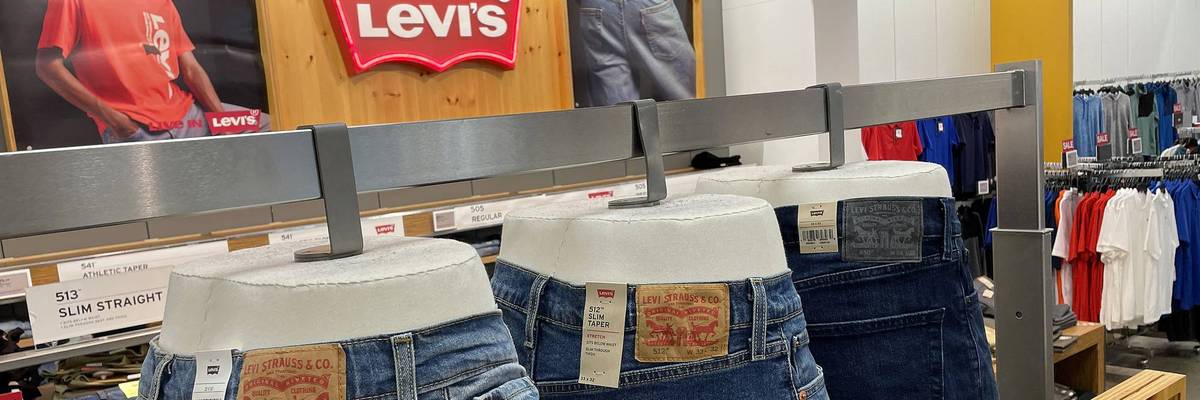
Levi’s clothing is displayed at a Kohl’s store in San Rafael, California. (Photo by Justin Sullivan/Getty Images)
California’s top law enforcement official on Monday released a legal filing packed with evidence that Amazon is leveraging its dominance of the online retail market to artificially drive up prices for a range of goods, fueling a nationwide affordability crisis while padding its profits.
The filing was first submitted to the San Francisco Superior Court in February as part of California Attorney General Rob Bonta’s broader legal effort to halt what he described as Amazon’s “illegal price-fixing scheme.” At the time, the filing was heavily redacted, obscuring specific examples of Amazon conspiring with vendors and competing retailers to drive up prices for apparel, pet treats, fertilizer, and other items. California’s case against Amazon is set to go to trial next year.
“The evidence we’ve uncovered is clear as day: Amazon is working to make your life more unaffordable,” Bonta said in a statement. “The company is price-fixing, colluding with vendors and other retailers to raise costs for Americans beyond what the market requires—beyond what is fair.”
“Amid a crisis of affordability,” Bonta added, “Amazon is illegally working to rake in profits by making sure consumers have nowhere else to turn to for lower prices. We’ll see them in court.”
The filing identifies three specific tactics Amazon uses to fix prices—“breaking the price match,” “increasing the competitor retail price,” and “removing the product”—and offers concrete examples, backed by email evidence, of the company deploying each method.
In one instance from 2021, Amazon alerted Levi’s that Walmart.com had some of the clothing company’s pants listed at a price of $25.47-$26.99—which Amazon indicated was too low for its liking. At Amazon’s request, Levi’s connected with Walmart, which agreed to price one of the identified products at $29.99. Amazon then matched that higher price for Levi’s Easy Khaki Classic fit on its platform, locking in the cost increase for online shoppers.
“This should make your blood boil. Amazon is using its market power to coerce major retailers to hike prices,” said Lee Hepner, senior counsel at the American Economic Liberties Project. “It is pouring kerosene on an affordability crisis. Forcing price hikes to preserve market share is illegal monopoly maintenance, clear as day.”
Bonta’s filing also details a case in which Amazon, the vendor GlobalOne, and the pet supplies company Chewy agreed to fix prices on more than 10 pet treat products.
As Bonta’s office summarized: The plan was written in an email between Amazon and its vendor, GlobalOne. For its part, Amazon would raise GlobalOne’s Canine Naturals pet treat prices to get Chewy to follow, then GlobalOne would “reach out to Chewy” to let them know that Amazon was increasing the pricing and “would ask that [Chewy] follow.” In other words, if Chewy agreed, Amazon would increase its retail pricing for the Canine Naturals pet treats and Chewy would match the price increase. The plan materialized. Amazon told GlobalOne that the pricematch override was in place, and to “let Chewy know to update [pricing] immediately.” That same day, GlobalOne confirmed the “ones that went up on Amazon immediately went up on Chewy [happy face emoji] … Overall this looks like it’s working!” The result of Amazon, Chewy and GlobalOne’s price fixing agreement was to increase the retail prices of over ten Canine Naturals pet treat products on Amazon and Chewy.
“The examples above are not outliers and are not exhaustive,” Bonta’s office stressed in a statement. “They are illustrative of countless interactions—spanning years and product lines—in which Amazon, vendors, and Amazon’s competitors agree to increase and fix the prices of products on other retail websites. As Amazon told one vendor explicitly: ‘I am very determined to help you hunt the disrupters in the market.’”
Stacy Mitchell, co-director of the Institute for Local Self-Reliance, said Bonta’s filing shows “blatant price-fixing” by Amazon that is “almost certainly the tip of a much bigger price-fixing operation.”
In a piece published at Washington Monthly on the same day that Bonta’s largely unredacted filing was released, Mitchell highlighted a Biden-era federal complaint accusing Amazon of using “sophisticated AI-driven pricing systems that draw on torrents of real-time data” to raise prices. (That case, backed by 17 states, is set to go to trial next March.)
“Here’s how it allegedly worked: Amazon’s anti-discounting algorithm immediately matched competitors’ price changes to the penny, but never undercut them,” Mitchell wrote. “When a rival offered a discount, Amazon’s algorithm matched it; when rivals raised prices, Amazon’s algorithm followed. This denied competing retailers a crucial tactic for luring customers from Amazon. If other retailers could never offer lower prices, Amazon’s roughly 200 million paying subscribers had little reason to shop elsewhere.”
“These allegations point to a novel form of monopoly power: The ability of a dominant platform to use algorithms to lift prices across an entire market,” Mitchell added.
Report Details Israeli Use of Sexual Violence to Force Palestinians From West Bank Homes “Sexual violence is not incidental to this crisis. It is one of the mechanisms driving people from their land,” said one contributor to the new report.
Israeli soldiers back up a masked Israeli armed with a slingshot during an attack on the Palestinian village of Beita, south of Nablus, in the illegally occupied West Bank, on October 10, 2025. (Photo by Jaafar Ashtiyeh/AFP via Getty Images)
A report published Tuesday by an international human rights consortium details how Israeli soldiers and settlers are weaponizing sexual violence to facilitate the forced expulsion of Palestinians from the illegally occupied West Bank.
The report, published by the West Bank Protection Consortium (WBPC)—which is led by the Norwegian Refugee Council (NRC) and funded by donors including 13 European nations—found that “more than 70% of displaced households interviewed identified threats to women and children, particularly sexualized violence, as the decisive reason for leaving” their homes in the West Bank of Palestine..
Palestinians interviewed for the report described “escalating patterns of sexual harassment in Area C”—the roughly 60% of the West Bank that, under the 1995 Oslo II Accord, is under full Israeli control—“including sexualized insults and gestures, indecent exposure, intimidation, threats of sexual violence, and surveillance of intimate spaces such as bedrooms.”
“Participants in multiple locations described settlers exposing themselves, making threats of rape, and stalking women as they walked to latrines,” the report continued.
“Men and boys also experience sexualized humiliation, forced nudity, and sexualized threats,” the publication notes. “In Wadi al-Seeq, after the community was forcibly displaced, three men reported that settlers detained them and attempted to sexually assault one man with a broomstick while he was blindfolded. They described forced stripping, beatings, burning and being urinated on, and said perpetrators circulated images of the abuse.”
“Similar abuses have also been reported elsewhere,” WBPC continued. “In the Bethlehem governorate, testimony collected during a key informant interview described two 15-year-old boys herding cattle whom settlers attacked, beat, blindfolded, and stripped. The account said one boy was urinated on and the other sustained a leg fracture.”
“In another Palestinian Bedouin community in the Jordan Valley... a violent settler raid was reported in which witnesses state that a Palestinian man was subjected to severe sexual assault in front of his family,” the report states. “Testimonies further indicate that women and girls were beaten, children were threatened with death, and threats of rape were made.”
Allegra Pacheco, WBPC’s chief of party, said in a statement Monday that “this is how communities are emptied: not in a single moment, but through repeated attacks, fear inside the home, and pressure that makes ordinary life impossible.”
In Khirbet Wadi al-Rakhim, one Palestinian reported that “an identified settler sexually harassed them and threatened them with reference to the Sde Teiman detention facility,” the notorious prison in the Negev Desert where former Palestinian prisoners, Israel Defense Forces (IDF) soldiers, and Israeli medical professionals have said they witnessed torture and other abuse of detainees ranging in age from children to the elderly.
These abuses include severe injuries caused by 24-hour shackling of hands and feet that sometimes required amputations, alleged rape and sexual assault by male and female soldiers, electrocution, mauling by dogs, denial of food and water, sleep deprivation, and other torture. The IDF is investigating the deaths of dozens of Palestinians at Sde Teiman, including one man who died after allegedly being sodomized with an electric baton.
NRC said Monday that in the West Bank, “displacement reshapes every aspect of life.”
“Households reported the impact of prolonged exposure to settler violence, including the sexualized abuse documented in the report,” the group noted, adding that “92% of affected households interviewed lost access to land, 88% lost their homes, and 84% lost essential assets.”
“More than half lost livelihoods, while 40% of children lost access to education,” NRC added. “Women report severe psychological distress at striking rates, alongside ongoing fear, instability, and exposure to further violence after relocation.”
Pacheco said that “sexual violence is not incidental to this crisis. It is one of the mechanisms driving people from their land.”
“The report documents how perpetrators target women, men, and children in ways that fracture families and deprive communities of the ability to remain,” she added. “When coercive conditions leave people with no genuine choice but to leave, this amounts to forcible transfer under international law.”
The WBPC report also highlights that “these abuses occur within a broader environment shaped by systematic discrimination and persistent impunity,” an observation underscored by the lack of punishment or slaps on the wrist for Israeli soldiers and settlers who harm Palestinians.
Previous reports by groups including United Nations agencies have detailed Israeli sexual violence against Palestinians, including a March 2025 UN publication that found “sexual and gender-based violence—which has risen in frequency and severity—is being perpetrated across the occupied Palestinian territory as a strategy of war for Israel to dominate and destroy the Palestinian people.”
An August 2025 investigation by the Australian Broadcasting Corporation featured Palestinian boys kidnapped by Israeli occupation forces in Gaza who said they suffered or witnessed sexual torture committed by their jailers.
Last year, Israel blocked a request from UN sex crimes experts to probe alleged sexual violence perpetrated by Hamas fighters during the October 7, 2023 attack, reportedly to avoid attendant scrutiny of rapes and other abuses allegedly committed by Israeli forces against imprisoned Palestinians.
Sexual violence committed by Israelis against Palestinians is as old as the modern state of Israel itself.
Israeli filmmaker Alon Schwarz’s 2022 documentary Tantura—which concerns the 1948 massacre and ethnic cleansing of Palestinian residents from the village after which the film is named—features interviews with Israeli veterans who described the rape of Palestinian women and children. One of the Israelis gleefully recounted the rape of a child.
When IDF reservists were arrested on suspicion of gang-raping of a Palestinian prisoner at Sde Teiman after video footage of the alleged assault went viral, a mob of right-wing Israelis whose members included senior government officials stormed the prison in a failed bid to free the suspects.
Others, including Finance Minister Bezalel Smotrich, demanded a probe—not to seek justice for the victim, but rather to find and punish whoever leaked the video. Meanwhile, Israelis advocating legalized torture and rape of Palestinian prisoners were given nationwide platforms to air their views during the Sde Teiman scandal.
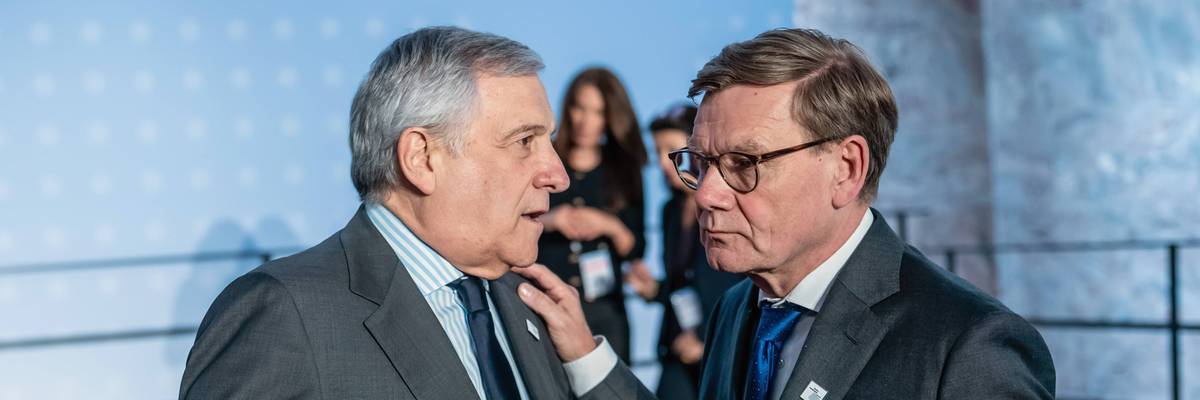
‘Shame!’: Germany, Italy Block Effort to Suspend EU-Israel Trade Pact Over Gaza Genocide, West Bank Attacks “The European Union can no longer remain on the sidelines,” said three foreign ministers who called for a suspension of the deal. German Foreign Minister Johann Wadephul (R) speaks with Antonio Tajani, foreign minister of Italy (L), at the International Sudan Conference in Berlin on April 15, 2026. (Photo by Michael Kappeler/picture alliance via Getty Images)
Calls have steadily intensified in recent weeks for the European Union to suspend a trade agreement with Israel as the country’s right-wing government has ignored growing condemnation over its anti-Palestinian policies and its assaults on Gaza, the West Bank, and Lebanon—but on Tuesday, German and Italian officials blocked an effort to pause the trade deal, with Germany’s foreign minister saying the move would be “inappropriate.”
The foreign minister, Johann Wadephul, suggested that world governments have not yet appealed enough to Israel in an attempt to stop it from attacking civilian infrastructure in Lebanon and Gaza; backing settlers who wage violence on Palestinians as Prime Minister Benjamin Netanyahu’s government seeks to illegally annex the territory; and passing a death penalty law that makes death by hanging the default punishment for Palestinians convicted of killing Israelis.
“We have to talk with Israel about the critical issues,” Wadephul said at a meeting of EU foreign ministers in Luxembourg, which was called by his counterparts from Ireland, Slovenia, and Spain. “That has to be done in a critical, constructive dialogue with Israel.”
Italian Foreign Minister Antonio Tajani added that “no decision will be taken today” and said that “other possible initiatives will be discussed at the next ministerial meeting on May 11.”
The Irish, Spanish, and Slovenian officials wrote to EU foreign affairs chief Kaja Kallas last week, saying that Israel has breached Article 2 of the EU-Israel Association Agreement, which stipulates that “relations between the parties, as well as all the provisions of the agreement itself, shall be based on respect for human rights and democratic principles.”
A European Commission review last year found “indications” that Israel is breaching its human rights obligations under the 1995 agreement.
The death penalty law, said the foreign ministers, is a “grave violation of fundamental human rights,” while settlers and Israel Defense Forces soldiers act “with absolute impunity” in the West Bank.
“The European Union can no longer remain on the sidelines,” they said.
Ahead of Tuesday’s meeting in Luxembourg, Spanish Foreign Minister Jose Manuel Albares called on every European country “to uphold what the International Court of Justice and the UN say on human rights and the defense of international law” and that failing to do so regarding Israel “would be a defeat for the European Union.”
Irish Foreign Minister Helen McEntee called on the EU to “move in unison” to pressure Israel to meet its human rights obligations. Suspending the trade agreement requires unanimous support from the bloc’s 27 member countries.
McEntee said that she was urging “all of our colleagues today to support our call for the suspension of the overall agreement but, at the very least, if we can’t reach that full agreement, that we would have suspension of the overall trade elements of it.”
But Germany and Italy’s refusal to back the suspension of the agreement, said Irish author Andrew Madden, suggested “a preference for the ongoing slaughter of innocent people” over angering Israel.