Friday, August 27, 2021

Germany's workforce in desperate need of skilled immigrants, warns labor agency

Europe's largest economy has an aging population and low birth rates, and the federal labor agency says Germany must attract at least 400,000 skilled immigrants annually to keep up with demand.


Demographic changes will force Germany to attract more skilled immigrants if it wants to remain the EU's top economy


Germany faces massive labor shortages unless it begins recruiting skilled immigrants to replace those retiring from the country's aging workforce, Federal Labor Agency Chairman Detlef Scheele told the daily Süddeutsche Zeitung (SZ) newspaper Tuesday.

Scheele said demographic changes mean Germany will have roughly 150,000 fewer working age residents this year alone, and warned, "It will be much more dramatic over the coming years."


"The fact is: Germany is running out of workers," he said.

"We need 400,000 immigrants per year, significantly more than in recent years," said Scheele. "From nursing care and climate technicians to logisticians and academics, there will be a shortage of skilled workers everywhere."

Cognizant of immigration issues in light of Germany's upcoming federal elections in late September, Social Democrat Scheele told the SZ: "This is not about asylum but targeted immigration to fill gaps in the labor market."

Watch video 06:51 The pandemic and migrant labor

How can Germany fix the problem of labor shortages?

Last year, the number of foreign nationals living in Germany — a country of 83 million — rose by 204,000, the smallest increase in a decade. The problem has been exacerbated by the coronavirus pandemic, which drastically reduced the number of immigrants entering the labor force.

Scheele said that beyond training low-skilled workers, retraining those whose professions have disappeared, or forcing people to work longer, the only way to master the situation will be to significantly increase immigration.

According to Germany's Federal Statistical Office, applications for recognition of foreign professional qualifications fell 3% last year, to 42,000.

Although the federal government reformed that process in March 2020, Johannes Vogel, labor policy spokesman for the neoliberal FDP's parliamentary caucus, criticized the current governing coalition of center-right CDU/CSU and social democratic SPD, saying their "paltry Skilled Immigration Act" has not come close to doing what it promised.

"We must finally become better in the global competition to attract talent — and to do so, we need a modern, points-based immigration system like Canada and New Zealand have long had."


Anti-immigrant attitudes won't work

The Federation of German Trade Unions (DGB) has also called on lawmakers to create faster and more reliable nationwide standards that will allow those immigrants with the legal status of "Dulding," or tolerated, as well as those in the country on humanitarian grounds, to enter the workforce and attain longterm employment perspectives.

The anti-immigrant, far-right Alternative for Germany (AfD) labeled the Labor Agency chairman's calls an "incomprehensible demand," accusing him of serving what it said were the interests of companies using immigration to drive down wages for German laborers.

Asked about political resistance to the idea of increasing the number of immigrants in Germany, Scheele told the SZ, "You can stand up and say, 'We don't want foreigners,' but that doesn't work."


js/wmr (AP, dpa)


Climate change is accelerating, according to comprehensive study

Climate change is accelerating, according to comprehensive study
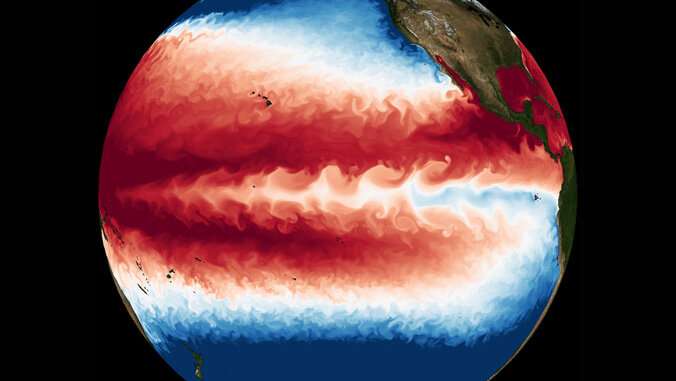
Ocean temperature (blue=cold, red=warm) simulated at ultra-high resolution. 
Credit: IBS/ICCP‘s Aleph

Climate change is happening and accelerating. Earth will continue to warm. And these changes are unequivocally caused by human activities. Those are among the conclusions of the report published by the International Panel on Climate Change (IPCC), with University of Hawaiʻi at Mānoa Assistant Professor of oceanography Malte Stuecker as a contributing author.

"The latest IPCC report shows clearly that if we do not drastically curb our emissions, we will head towards temperatures that Earth has not seen in millions of years," Stuecker summarizes. "Moreover, we can now say with certainty that all of the  that occurred since the mid-19th century is due to human activity. While these are sobering facts, we should certainly not despair. In fact, if societies choose a pathway of large reductions in greenhouse gas emissions now, the report also shows that we will avoid the worst possible future outcomes and Earth will experience only moderate additional warming over this century that we can likely adapt to."

In addition to global warming, regional climate in many parts of the world is impacted by the cycling between warm El Niño and cold La Niña conditions in the eastern Pacific Ocean—commonly referred to as the El Niño-Southern Oscillation (ENSO). ENSO—has persisted without major interruptions for thousands to millions of years. This may also change in a future warmer world, though the recent IPCC report highlights uncertainties in potential changes in ENSO.

Two additional studies

Continuing the long tradition of contributing to developing theories and advancing climate models around ENSO, researchers from the UH Mānoa School of Ocean and Earth Science and Technology (SOEST) recently published two additional studies addressing the complexity of this most important climate phenomenon.

SOEST atmospheric scientists, Associate Professor Christina Karamperidou and Professor Fei-Fei Jin, and Stuecker co-authored a review paper published in Nature Reviews Earth & Environment wherein they synthesized recent advancements in research on ENSO.

There is an emerging consensus among simulations of future climate under strong  with the most recent generation of  that the variability of future ENSO sea surface temperature may increase as the climate warms.

"There is however still much uncertainty on the degree to which ENSO may change and the time at which these potential changes will emerge from ENSO's natural variability," said Karamperidou. "This is partly due to incomplete understanding of the phenomenon, partly due to known limitations of models in representing and resolving relevant processes, and partly due to the inherent limitations on our understanding imposed by the short length of the instrumental record."

Additionally, led by researchers at the IBS Center for Climate Physics in Korea, Stuecker co-authored another study published in Nature Climate Change that produced a series of global climate model simulations with unprecedented spatial resolution. Boosted by the power of one of South Korea's fastest supercomputers (Aleph), the new ultra-high-resolution simulations realistically represented processes that are usually missing from other models, though they play fundamental roles in the generation and termination of El Niño and La Niña events.

"From this highest resolution future climate model simulation that has been done to date, we conclude that it's possible that ENSO variability could collapse under strong greenhouse warming in the future," said Stuecker.

Further investigation is needed

This apparent contradiction in findings raises many interesting questions and highlights the need for further investigation.

"Regardless of the details of how El Niño changes in the future, rainfall and drought will become more extreme in the future due to the fact that we will be living in a warmer world with a hydrological cycle on steroids," said Stuecker.

"Despite the spread of model projections on how ENSO may change under strong anthropogenic forcing, both the IPCC report and the Nature Reviews article demonstrate that its impacts on rainfall are very likely to be enhanced which has significant implications across the globe and the Pacific, including Hawaiʻi," said Karamperidou.Fewer El Niño and La Niña events in a warmer world

More information: Wenju Cai et al, Changing El Niño–Southern Oscillation in a warming climate, Nature Reviews Earth & Environment (2021). DOI: 10.1038/s43017-021-00199-z

Wengel, C et al. Future high-resolution El Niño/Southern Oscillation dynamics. Nat. Clim. Chang. (2021). doi.org/10.1038/s41558-021-01132-4

Journal information: Nature Climate Change 

Provided by University of Hawaii at Manoa 

New study shows rundown neighborhoods not slated to go into a steep decline


Revisiting the ‘broken windows’ theory in Detroit


Peer-Reviewed Publication

UNIVERSITY OF CALIFORNIA - DAVIS HEALTH

Abandoned house 

IMAGE: DETROIT WAS ONCE ONE OF AMERICA’S MOST PROSPEROUS CITIES, BUT OVER DECADES HAS FALLEN INTO A SEVERE DECLINE. view more 

CREDIT: ALAINA DE BIASI

Scholars and criminologists have examined the relationship between urban decay and violent crime for decades. A new study of Detroit from the University of California Firearm Violence Research Center at UC Davis Health shows that the transition from dilapidated buildings and unkempt lots to violent crime is not as inevitable as the landmark “broken windows” theory would suggest.

“My research suggests there are more opportunities to address neighborhood decline than what is suggested by the broken windows theory,” said Alaina De Biasi, a postdoctoral fellow and author of the study. The research was published in The British Journal of Criminology.

The broken windows theory proposes that unattended disorder — such as broken windows that are not replaced — lowers the benchmark for acceptable behaviors in a neighborhood and leads to more disorder and inevitably more serious crimes. The theory was introduced by James Q. Wilson and George L. Kelling in a 1982 article in The Atlantic.

Without early mitigation, the theory goes, these neighborhoods reach a tipping point, beyond which efforts to reduce violent crime are likely to fail without extensive resources. Wilson and Kelling felt the key was to dedicate resources to neighborhoods that were at the tipping point “where the public order is deteriorating but not unreclaimable.”

Wilson and Kelling’s landmark theory went on to have a tremendous impact on policing practices, including how and where crime prevention resources are allocated.

Broken windows in the Motor City

Detroit was once one of America’s most prosperous cities, but over decades has fallen into a severe decline, with large swaths of neighborhoods simply abandoned. In 1950 the city had a population of 1.8 million. By 2016, that number had plummeted to 680,000. Detroit is also ranked as America’s most dangerous city.

Wilson and Kelling’s theory stuck out to De Biasi, who grew up in the metropolitan Detroit area and studied at the nearby University of Michigan, Dearborn. “I saw these visible signs of deterioration and how it played into neighborhood decline and neighborhood violence. That’s how I became interested in doing the study.”

De Biasi focused on physical disorder using open source data from the Motor City Mapping Project to analyze the impact of Detroit’s deterioration and abandonment on violent crime. The project surveys every parcel in Detroit and collects information on the physical condition of that parcel.

“The data look at things like, is it abandoned property? Does the property have fire damage? Is the property a dumping ground for trash?” De Biasi said.

For her analysis, she used a statistical method that allowed her to compare physical disorder in neighborhoods with levels of violent crime.

According to Wilson and Kelling’s theory of a tipping point, De Biasi would expect to see a threshold effect between disorder and crime. Essentially, disorder and crime increasing at a certain rate and then reaching a tipping point, at which violent crime dramatically increases.

“But my study doesn’t find a huge jump — a tipping point. I found a slower increase than what’s expected based on Wilson and Kelling’s tipping point. I’m calling this an attenuated threshold effect,” De Biasi said.

She notes that in terms of reducing overall crime levels, a focus on crime hot spots is likely the superior policing approach for any given neighborhood. However, neighborhoods in which disorder and violence are growing issues shouldn’t be ignored.

“The significance for cities like Detroit experiencing urban decay is that there are likely more places beyond that midrange level of disorder in which traditional broken-windows strategies could be applied. For residents, what it means is that even if your neighborhood is challenged, it’s not slated to go into a steep decline,” De Biasi said.

De Biasi notes that the amount of devastation is pretty extreme in certain parts of Detroit, and that policing is an integral part of decreasing violence. But she adds that policing is part of a larger community effort.

“If communities know that there’s not an irrevocable ‘tipping point,’ into violence, it could lead to better outcomes for these areas and more opportunities for residents to work toward reducing disorder, fear and violent crime,” De Biasi said.

It also means that community-driven efforts to rebuild and remake rundown neighborhoods may be effective. She notes that things like community gardens often act as an anchor point in reestablishing neighborhoods and help to build informal social control and collective efficacy.

“Detroit is in the process of rebuilding. I think things have come a long, long way and ultimately, I think Detroit’s future is bright. It is undergoing a reinvention. We are trying to think of creative ways to solve some of these really complicated problems,” De Biasi said.

While her study focuses on Detroit, its findings may apply to other cities experiencing urban decay, including those in California. She is interested in conducting follow-up studies across a variety of neighborhood contexts to determine whether her Detroit findings hold up.


Disclaimer: AAAS and EurekAl

 Why the Dreaming Phase of Sleep Matters

August 26 2021 

| Original story from University of Tsukuba

Scientists have long wondered why almost all animals sleep, despite the disadvantages to survival of being unconscious. Now, researchers led by a team from the University of Tsukuba have found new evidence of brain refreshing that takes place during a specific phase of sleep: rapid eye movement (REM) sleep, which is when you tend to dream a lot.


Previous studies have measured differences in blood flow in the brain between REM sleep, non-REM sleep, and wakefulness using various methods, with conflicting results. In their latest work, the Tsukuba-led team used a technique to directly visualize the movement of red blood cells in the brain capillaries (where nutrients and waste products are exchanged between brain cells and blood) of mice during awake and asleep states.

“We used a dye to make the brain blood vessels visible under fluorescent light, using a technique known as two-photon microscopy,” says senior author of the study Professor Yu Hayashi. “In this way, we could directly observe the red blood cells in capillaries of the neocortex in non-anesthetized mice.”

The researchers also measured electrical activity in the brain to identify REM sleep, non-REM sleep, and wakefulness, and looked for differences in blood flow between these phases.

“We were surprised by the results,” explains Professor Hayashi. “There was a massive flow of red blood cells through the brain capillaries during REM sleep, but no difference between non-REM sleep and the awake state, showing that REM sleep is a unique state”

The research team then disrupted the mice’s sleep, resulting in “rebound” REM sleep—a stronger form of REM sleep to compensate for the earlier disruption. Blood flow in the brain was further increased during rebound REM sleep, suggesting an association between blood flow and REM sleep strength. However, when the researchers repeated the same experiments in mice without adenosine A2a receptors (the receptors whose blockade makes you feel more awake after drinking coffee), there was less of an increase in blood flow during REM sleep, even during rebound REM sleep.

“These results suggest that adenosine A2a receptors may be responsible for at least some of the changes in blood flow in the brain during REM sleep,” says Professor Hayashi.

Given that reduced blood flow in the brain and decreased REM sleep are correlated with the development of Alzheimer’s disease, which involves the buildup of waste products in the brain, it may be interesting to address whether increased blood flow in the brain capillaries during REM sleep is important for waste removal from the brain. This study lays preliminary groundwork for future investigations into the role of adenosine A2a receptors in this process, which could ultimately lead to the development of new treatments for conditions such as Alzheimer’s disease. 

Reference: Tsai C-J, Nagata T, Liu C-Y, et al. Cerebral capillary blood flow upsurge during REM sleep is mediated by A2a receptors. Cell Rep. 2021;36(7):109558. doi: 10.1016/j.celrep.2021.109558

This article has been republished from the following materials. Note: material may have been edited for length and content. For further information, please contact the cited source.


Seabed recovers more quickly following extreme storms than from the impacts of bottom-towed fishing


Peer-Reviewed Publication

UNIVERSITY OF PLYMOUTH

Seabed in Lyme Bay (UK) in 2013 

IMAGE: BY 2013 - FIVE YEARS AFTER THE DESIGNATION OF THE MARINE PROTECTED AREA - THE SEABED HAD SEEN THE RETURN OF PINK SEA FANS AND ROSS CORAL, WHILE FISH AND SHELLFISH STOCKS HAD SIGNIFICANTLY RECOVERED view more 

CREDIT: UNIVERSITY OF PLYMOUTH

Extreme storms can result in major damage to the seabed similar to that caused by prolonged periods of bottom-towed fishing, according to new research.

However, important seabed habitats and species recover more quickly following extreme storms than in the wake of such fishing activity.

That is one of the key findings of a first-of-its-kind study which examined the impact of the 2013/14 winter storms on the Lyme Bay Marine Protected Area (MPA), off the coast of southern England.

Academics from the University of Plymouth have been monitoring the area using underwater cameras and other techniques since 2008, when a ban on bottom towed fishing was introduced as part of a range of conservation measures.

They have previously demonstrated that several species have returned to the area since the MPA was introduced, resulting in the significant recovery of seabed life and fish and shellfish stocks.

However, there have been no previous studies looking at how extreme storms impact seabed habitats or the potential for MPAs to increase ecosystem resilience from storms.

To address that, researchers analysed the impacts of the 2013/14 series of storms, which separate studies by the University found to be the most energetic to hit western Europe since 1948.

Through annual surveys of seabed life in the MPA, they were able to see the immediate impact of the storms but also how the seabed was able to recover in subsequent years.

Writing in Frontiers in Marine Science, the researchers say that with extreme events likely to become more frequent and severe as a result of climate change, up to 29% of coastal reef MPAs around the UK may be similarly impacted by extreme storms.

Dr Emma Sheehan, Associate Professor of Marine Ecology at the University of Plymouth, is the study’s lead author. She said: “In our assessments in 2014, it appeared the previous winter’s storms had devastated the MPA. Loose sediments and other debris were prolific where life and biogenic reef habitat had been observed the year before. However, by 2016, large numbers of adult pink sea fans and other species were being observed once again with more juvenile pink sea fans than ever before. It showed the MPA’s recovery had begun almost immediately whereas, by contrast, it took more than three years for such patterns to be seen following its initial designation.”

The University’s work in Lyme Bay has been carried out in conjunction with local fishers and other community groups along the Dorset and Devon coastline.

In addition to assessing the effects of a ban on bottom-towed fishing, it has shown that limits on crab and lobster pot fishing could offer long-term benefits to fishermen and the environment.

Recommendations from this ongoing work have been included within the Government’s 25-year Environment Plan, and a major UK government report into Highly Protected Marine Areas (HPMAs), led by former Defra Fisheries Minister Richard Benyon.

Martin Attrill, Professor of Marine Ecology at the University and the current study’s senior author, added: “Given the sheer power of extreme storms, there is very little that can be done to prevent widespread damage being caused when they occur. However, as such storms are likely to become more frequent as a result of climate change, a large proportion of the UK’s coastline could experience extreme wave conditions similar to or greater than those seen in Lyme Bay in 2013/14. What we therefore need to do is expand protection measures which improve the general health of the seabed and enhance its powers of resilience and recovery.”

Seabed of Lyme Bay (UK) in 2014 (VIDEO)


Consequences of the loss of threatened vertebrates


Peer-Reviewed Publication

ESTONIAN RESEARCH COUNCIL

Threatened species 

IMAGE: TOUSSAINT ET AL 2021 - EXAMPLES OF THREATENED SPECIES SUPPORTING UNIQUE FUNCTIONAL TRAITS. view more 

CREDIT: WIKIMEDIA COMMONS

The number of vertebrate species inhabiting the different regions of the world is highly variable, as is the proportion of threatened species. Some regions, such as the tropics, have more threatened species than is expected given the total number of species. Yet the vulnerability of the ecosystems facing the ongoing loss of species does not depend only on the species number but also on their ecological role. These roles depend on the characteristics of the species; their size, weight, shape, reproductive capacity, or the food resource they use. If threatened species have similar characteristics to non-threatened species, the loss of functions due to the extinction of threatened species might be compensated by other species. In contrast, if threatened species have unique characteristics, their loss can have a dramatic effect on the functioning of ecosystems, and the services they provide to human well-being.


To understand how the different regions across the world could be functionally impacted by the loss of threatened vertebrates, a research group from the University of Tartu and the University Paul-Sabatier (Toulouse) compiled data of characteristics on 50,000 vertebrate species (about 70% of all vertebrates) and their spatial occurrences in the six main biogeographic realms. Then, they compared whether the loss of threatened species will have similar consequences on the functional diversity in each biogeographic realm for each group of vertebrates. The conclusions were just published in Nature Communications.


For the five groups of vertebrates (birds, mammals, reptiles, amphibians and freshwater fishes) the loss of species currently identified as threatened by extinction by the International Union for the Conservation of Nature (IUCN) would cause vastly different effects ranging from almost no decline to a loss of up to 30% of the realms’ functional diversity. The Indo-Malay realm would be the most impacted by the loss of threatened species for mammals and birds (up to 20% decrease of functional diversity), while the Palearctic realm would be the most affected for reptiles, amphibians, and freshwater fishes (up to 30% decrease). The leading author, Dr. Aurele Toussaint notes, “Our study will have important consequences in terms of conservation planning. The Indo-Malay realm does not only host the highest proportion of threatened vertebrates on Earth but also threatened species with unique functional traits. Their loss would strongly imperil those fragile ecosystems. This highlights the need for action required for the biodiversity conservation in Asia.”


In order to understand the current and future threat to functional diversity we first need to know the distribution of functional diversity across the realms. Due to the long evolutionary legacy of the different taxonomic groups, species have evolved differently in each biogeographic realm and hence might have explored different ecological strategies. The researchers found that for birds and mammals, which are less affected by geographical barriers across long distances, most of the world's ecological strategies are represented in each realm. Thus, the functional diversity in each realm is comparable to the global functional diversity, and the loss of threatened species will have similar consequences across the world, but with different intensities. For mammals, the loss in functional diversity is mainly linked to the loss of the more charismatic primate species, such as chimpanzees (Pan troglodytes), bonobos (Pan paniscus) and gorillas (Gorilla spp.) in Africa, or orangutans (Pongo spp.) in the Indo-Malay realm, along with some spider monkeys (Ateles spp.) and capuchin monkeys (Cebus spp.) in the South-American tropics. For birds, the loss of functional diversity in the Indo-Malay realm is mainly due to the loss of large birds such as the White-shouldered ibis (Pseudibis davisoni) or the Indian vulture (Gyps indicus) which are edging very close to extinction, mainly due to habitat loss and degradation.


Contrastingly, for the reptiles, amphibians, and freshwater fishes, their isolation between realms and their lack of mobility has led to different life strategies associated with different functions in the ecosystem. Thus, the current occupation of the functional space for amphibians and freshwater fishes is more uneven among biogeographic realms, reflecting a functional adaptation to local environmental conditions. This implies that the loss of threatened species will affect different ecological strategies and intensity across the world. For instance, many large-bodied freshwater fishes, such as sturgeons (Acipenser spp.), are threatened in the Palearctic, whereas many small-bodied species, such as suckermouth armored catfishes (Chaetostoma spp.), are threatened in the Neotropics. Some threatened amphibian species such as salamanders (Salamandra lanzai or S. algira) are functionally unique in the Palearctic, whereas similar traits are filled by other amphibian species in tropics, such as the caecilians in Afrotropical, Neotropical, and Indo-Malay. This highlights that while for birds and mammals, global measures to protect large species with a slow pace of life must be considered, strategies must be adapted to each region for other vertebrate groups, targeting the species with unique functional traits.


Currently, conservation plans often target species diversity, under the assumption that it can act as a surrogate of the overall biodiversity. “The conservation strategies should then go beyond the sole number of species and target the species with a unique ecological role which play a critical role in the ecosystem functioning. For example, there are around 300 amphibian species in the Palearctic realm compared to over 1000 species in the tropical realms, but almost 30% of functional diversity would be lost in the Palearctic compared to 6% in the tropics. This shows that the threatened species in the Palearctic have much more unique functional traits.”, says Dr. Toussaint. In the context of global changes and sixth mass extinction, the functional decline of vertebrates would imperil the ecosystem functioning differently across the world. The effort devoted to the conservation of threatened species should consider the role of the species within their ecosystems.


###


Palestinians in Gaza resume protests against Israeli blockade

Israeli forces fire live rounds, tear gas as hundreds of Palestinians demand Israel ease its crippling blockade of Gaza.

Palestinian demonstrators run from tear gas fired by Israeli 
forces during a protest in the southern Gaza Strip [Mahmud Hams/AFP]

25 Aug 2021

Hundreds of Palestinians have demonstrated near the Israeli fence in the besieged Gaza Strip, calling on Israel to ease a crippling blockade days after a similar weekend gathering ended in deadly confrontations with the Israeli army.

The Israeli military, which had beefed up its forces in advance of the demonstration on Wednesday, said it was using tear gas and live fire to disperse the crowd in southern Gaza. Palestinian medics reported at least nine people were wounded.

The Al Aqsa TV television network, which is run by Hamas, the Palestinian group that governs Gaza, showed crowds of people approaching the fence, then running away when an Israeli military vehicle arrived. Tear gas could be seen floating in the wind.

The military said it was using .22 calibre gunfire, a type of weapon that is meant to be less lethal than more powerful firearms but can be deadly.

Al Jazeera’s Youmna El Sayed, reporting from the protests in Gaza, said that dozens of tear gas canisters have been fired at protesters in the southern city of Khan Younis in the Gaza Strip.

“Today, already three Palestinians have been injured by live ammunition and dozens have suffocated from the gas canisters that have been fired on them,” El Sayed said.

Hundreds of Palestinians demonstrated on Saturday, resulting in violent confrontations.

More than 40 Palestinians were wounded by Israeli fire during Saturday’s demonstrations, including a 13-year-old youth who was shot in the head, the health ministry said.

One of the wounded, Osama Dueji, 32, died of a bullet wound in the leg Wednesday.

Hamas identified him as a member of its armed wing and mourned him as a “heroic martyr”.

An Israeli soldier who was critically wounded when a Palestinian shot him in the head through a hole in the wall at point-blank range remained in hospital on Wednesday.


After the shooting, Israel’s military bombed Hamas weapons sites in the Gaza Strip early on Sunday

.
Palestinian mourners carry the body of Osama Deeij during his funeral at Jabalia refugee camp in the northern Gaza Strip [Mohammed Abed/AFP]

Hamas has organised the protests in an attempt to put pressure on Israel to ease its blockade of Gaza.

Israel and Egypt have maintained the blockade since Hamas took control of Gaza in 2007, a year after winning the Palestinian election.

The blockade has devastated Gaza’s economy and fuelled an unemployment rate hovering around 50 percent. Israel has said the blockade, which tightly restricts the movement of goods and people in and out of Gaza, is intended to prevent Hamas from building up its military capabilities.

Israel and Hamas have fought four wars and numerous skirmishes since 2007, most recently an 11-day escalation in violence in May that killed 260 Palestinians and 13 people in Israel

.
An elderly Palestinian man raises a national flag as youth shout slogans during a protest [Mahmud Hams/AFP]

Hamas has accused Israel of violating the ceasefire that ended the fighting by tightening the blockade. In particular, it has restricted the entry of materials needed for reconstruction.

Israel has demanded the return of the remains of two soldiers killed in a 2014 war, as well as the return of two Israeli civilians believed to be in Hamas captivity.

Last week, Israel reached an agreement with Qatar to allow the Gulf country to resume aid payments to thousands of impoverished Gaza families.

Under the new system, the payments will be delivered by the United Nations directly to families that have been vetted by Israel. In the past, the aid was delivered as cash straight to Hamas.

The payments are expected to begin in the coming weeks, providing some relief in Gaza.

But tensions remain high. In addition to the demonstrations, Hamas has allowed its supporters to launch incendiary balloons across the border, setting off several wildfires in southern Israel. Israel has launched a series of air raids on Hamas targets in Gaza.

Egypt, which serves as a mediator between Israel and Hamas, has been working to broker a longer-term truce between the bitter enemies.

This week, Egypt closed its border crossing with Gaza, the main exit point for the territory’s people to travel abroad, in a show of frustration with Hamas.
MOE IN COVID DENIAL
Rob Vanstone: Saskatchewan Roughriders hung out to dry by provincial government

The Government of Saskatchewan passed the buck — and it was intercepted.

Author of the article: Rob Vanstone
Publishing date: Aug 26, 2021 • 
The Saskatchewan Roughriders welcomed nearly 3,000 fans for a controlled scrimmage July 24 at Mosaic Stadium. 
PHOTO BY BRANDON HARDER /Regina Leader-Post

The Government of Saskatchewan passed the buck — and it was intercepted.


The entire process, which is likely to culminate with the right decision being made outside of the Legislative Building, was handled in such slapstick fashion by six-figure earners who are elected to make tough calls and enact such policies that an ordinarily apolitical scribe could only wonder whether Moe was being advised by Larry and Curly.

Mind you, Premier Scott Moe was not front and centre Wednesday when Paul Merriman — the Minister of Health and someone who is ostensibly in a position of considerable power — was hardly a merry man as he met the media and, on behalf of the provincial government, abdicated and offloaded all responsibility with regard to a controversial public-health issue.

Merriman did not emerge from the shaky session with pie in the face, but eggshells — upon which the government and the Saskatchewan Roughriders have been walking in recent days — were everywhere

.
Saskatchewan Health Minister Paul Merriman, shown in this file photo, said Wednesday that it is up to the Saskatchewan Roughriders to decide whether fans must be doubly vaccinated or provide proof of a negative COVID-19 test. 
PHOTO BY BRANDON HARDER /Regina Leader-Post

It has been left to the Roughriders to decide whether fans must be doubly vaccinated or provide proof of a negative COVID-19 test in order to attend a CFL game at Mosaic Stadium.

The community-owned Roughriders had consistently and respectfully deferred to the provincial government while determining whether a Winnipeg Blue Bombers-style vaccine mandate would be required.

“We’ll follow the public-health guidelines,” Roughriders president-CEO Craig Reynolds told the Regina Leader-Post earlier this month, “so the only way we would do that is if we got guidance from the ministry or from public health.”

But when the going got tough, to the point where seven of the nine CFL teams were bound by a policy mirroring that which was introduced in Manitoba, principal figures within the Saskatchewan Party didn’t have a position on the issue — except to encourage people to get vaccinated.

“If (the Roughriders) want to make a choice, that’s up to them,” Merriman told reporters on Wednesday. “I know some other CFL teams have made their choice and we hope that the Riders will make a choice in the near future.”

The Roughriders DID make a choice.

They chose to honour the wishes of the mandate-averse provincial government, which sets public health policy, as opposed to going one step further and showing up Moe, et al.

But when the situation became more urgent due to ascending COVID numbers and the surging Delta variant, the government figuratively threw the Roughriders under the very same bus that some members of the team may find to be the only feasible mode of transportation to road games if unvaccinated players are not allowed on charter flights.

One is left to wish that every Roughrider was as sensible and socially conscious as Cody Fajardo, who was highly receptive to being vaccinated.

The Roughriders’ marquee quarterback, one should note, is typically unflappable in front of the media mob. He is cordial, honest and eminently likeable, on good days and bad. There are lessons to be learned here, and in other instances.

In the midst of a play that has been carefully choreographed, only to suddenly go awry, Fajardo has been known to nimbly change course and generate an outcome that is widely deemed to be applaudable.

If only our elected officials could pivot so effectively.

rvanstone@postmedia.com

twitter.com/robvanstone


Alberta Health Services, nurses' union seek mediation over collective agreement

If mediation fails, nurses could vote to strike, but only a third could stop working

Members of the United Nurses of Alberta participate in an Edmonton rally in July against possible health care cuts. The nurses' union is heading to mediation with AHS and other employers after failing to determine a new collective agreement. (Trevor Wilson/CBC)

Following unsuccessful negotiations over a new collective agreement, Alberta Health Services and the United Nurses of Alberta are applying for formal mediation, Finance Minister Travis Toews said in a news release Thursday.

Both parties have also agreed on which health-care services are essential in the event of a strike or lockout. 

In an interview with CBC News on Thursday, UNA labour relations director David Harrigan said the union agreed to employers' staffing proposals in order to proceed to mediation.

The union had submitted essential staffing plans of its own but withdrew them.

Pay dispute

UNA, which represents more than 30,000 nurses and other health-care workers, is asking for a two per cent wage increase per year in a two-year agreement. The union says nurses have not received a raise in five years, despite inflation rising by about two per cent a year. 

During collective bargaining with AHS and other health-care employers last month, the union said, employers offered a government-directed proposal that included a three per cent salary rollback.

Premier Jason Kenney has said nurses in Alberta earn more than their peers in other provinces and that his government would not punish people in the private sector by raising taxes.

Meanwhile, amid a surging fourth wave of COVID-19, the province is experiencing health-care staffing shortages.

AHS told the union last week it was invoking emergency work rules for nurses in order to address the problem.

Harrigan said that at a meeting yesterday, union leaders made it clear members feel fed up and frustrated.

"Any sensible organization, when they have a staffing shortage, doesn't say to the staff, 'I want to cut your pay and I want to make your terms and conditions of employment worse,' because that's just going to drive people away," he said.

In Thursday's news release, Toews said he was confident that mediation would be productive.

Right to strike

Fourteen days will be allotted for mediation, and if an agreement is not reached, following a 14-day cooling-off period, nurses could vote to strike.

"What we're hoping, of course, is that there won't be a need for job action," Harrigan said.

Prior to a 2015 Supreme Court decision, which ruled all workers have the constitutional right to strike, public-sector workers could not legally strike in Alberta.

Nurses now have that right — and UNA president Heather Smith has said support for a strike is growing.

If nurses do vote to strike, Harrigan said only-one third of UNA's workers could stop working, because of the essential services agreements with employers.

With files from Wallis Snowdon

Posthaste: The world's third biggest greenhouse gas villain isn't a country or a company — it's your kitchen

One third of all food produced in the world each year does not get consumed


Author of the article: Pamela Heaven
Publishing date:Aug 25, 2021  
One third of all food produced in the world each year
 does not get consumed, according to the UN. 
PHOTO BY GETTY IMAGES

Good Morning!

We waste a lot of food — a lot.


In fact, one third of all food produced in the world each year does not get consumed, according to the UN. Research has shown that high-income countries alone waste as much food as sub-Saharan Africa produces.

But throwing away that much food as many in the world go hungry is not the only problem, University of Bradford professors Kamran Mahroof and Sankar Sivarajah point out in a recent piece for the World Economic Forum.

When that discarded food ends up in landfill sites it rots and produces greenhouse gases. That combined with the energy it takes to produce, manufacture, transport and store the food contributes 3 billion tonnes of carbon dioxide to the environment.

“To put that in context, if food waste was a country, it would be the third highest emitter of greenhouse gases in the world, after the U.S. and China,” said the authors.

It takes a lot of energy to produce food, so when we waste food, we waste that energy too. For example, getting food on the table uses 10% of the U.S.’s total energy budget, 50% of its land and 80% of the fresh water consumed in the country.

Food production and disposal accounts for 14% of America’s greenhouse gas emissions and uneaten food in its landfill sites accounts for almost 25% of its methane emissions, which are much more harmful than CO2.

So how does such a shocking amount of food get wasted?


In high-income countries like Canada where consumers are picky about how food looks, produce that is too ripe, the wrong size or shape gets tossed. Arbitrary sell-by dates also lead to perfectly good food going to waste, said the authors.

Meanwhile, world food production is being stretched by growing population. It is estimated that the global food industry will need to grow by at least two-thirds by 2050 to ensure adequate nutrition for everyone on the planet.

“Yet, despite the dire need to become more resourceful, food waste and loss is at an all-time high. Making it clear that unless prompt action is taken, food shortages will soon become a long-term reality,” they said.

So what can we do about it
?

Mahroof and Sivarajah say a big part of the problem is how we shop and view food and what constitutes waste.

A study in London, Ontario, found that the best way to get consumers to reduce waste is not by stressing abstract benefits, but by appealing to their wallets.

“Survey respondents overwhelmingly selected ‘reduce amount of money wasted’ over reducing environmental and social impacts as the key motivator to reducing food waste,” said a report on the study.

Thus the two-week “intervention” called “reduce food waste, save money” gave participants information on the costs of wasting food, along with tips on efficient food planning, storage and preparation, such as how to use leftovers to create new meals. At the same time researchers measured how much tossed food was going to the curb.

By the end of the intervention, participants were throwing away 30% less food.

Mahroof and Sivarajah says the same incentive, basically self interest, is working for business too. New technology is helping commercial kitchens reduce food waste by connecting changes to increased profits. IKEA used this AI-powered system to cut food waste by 50% in 2020, saving 1.2 million meals.

Here are few other tidbits for you to chew on:

About two thirds of household waste is due to spoilage from food not being used in time; about one third is from people cooking too much

24% to 35% of school lunches are thrown away

Between 20% and 40% of UK fruit and vegetables are rejected before they even hit the shops, mostly because of cosmetic standards

It takes more than 12,000 gallons of water to produce one pound of beef and 33% of meat products in the U.S. end up in a landfill

It takes 45 gallons of water to make one glass of orange juice and in the U.S. 15% of wasted food is fruit