Tuesday, November 29, 2022

Solutions are Available to Save the Planet: How do we get the Public to Demand them?

November 27, 2022
By Nick Mandala

Some of the most effective climate tech is proven and ready to roll

George Monbiot, columnist for The Guardian, released an article with the eye-catching title “Embrace what may be the most important green technology ever. It could save us all”. The article goes into some interesting detail regarding precision fermentation as a way to grow staple foods. He goes on to point out that, by switching from animal or even soy protein as our worldwide source, we could increase efficiency by a factor of 17,000 (Soy) of 138,000 (Beef).

And, he goes on, in the process this would reduce greenhouse gas emissions and water use by significant amounts. The detail is well presented and, if true, does add up to a world changing, planet saving formula, or at least a major step toward rescue.

The problem? In a nutshell this idea, even if rock solid in the data, would require the entire world to not only change the production methods for food (protein) but we would have to banish centuries of eating customs and traditions.

Ultimately if we are to be saved by this solution, it would only happen when no other food is available. Not a pleasant thought.

Reading between the lines the piece underscores a real and important issue, that finding a planet saving solution for global warming is one thing, finding a way to achieve mass adoption is another.

The Tesla Example  

 
Tesla self driving sensors map photo: Tesla

EVs are the most obvious example of a technology, around since before the fossil fuel industry became dominant, that has finally reached a tipping point of eventual total adoption vs. internal combustion engine cars.

The transition, though perhaps inevitable, happend sooner, most would agree, because of Tesla and Elon Musk. And the difference was in the transformation of the concept and image from one of giving up pleasure for the good of the planet to “Have fun going 0 to 60 in 3.1 seconds while you save the planet”.

This formula, don’t sell the problem, sell the beauty, power and pleasure of the solution, is probably going to be the most important factor in deciding if the planet, and humanity, will survive.

Why make such a drastic claim? Because there are more solutions that are ready to be scaled up in a massive push worldwide, without any unproven or yet to be invented technology involved, if only the demand can be boosted with desire and excitement, not fear.

While precision fermentation might be too difficult to market at scale, there are other sectors ripe for positive disruption and change, that could save us all.

Unfortunately, not everything is as endorphin inducing as pounding the pedal to the metal in a Model S Plaid edition. Some things, like superior design, are only exciting when the results are felt over time.

The important thing is to make sure that attention is paid, not just to the climate benefits, but to the superior aesthetics and owner experience made possible by the new thing.
New built communities using hyper-efficient design and sustainable energy

Design technology that can reduce the energy required to heat and cool homes and buildings by up to 90% is available right now and proven. This method, combined with sustainable energy systems, including grid interactive generation and storage, could ultimately remove nearly 40% of worldwide emissions that can be traced back to to construction and buildings.

Not only would the new infrastructure in towns and cities eliminate greenhouse gas emissions but a host of other benefits for health, such as indoor air quality, would be automatically improved.

Further, climate adaptation, the ability to continue to live in maximum comfort even when the outdoor temperatures are at high or low extremes, would be built-in.

As if this is not enough, at scale, with some propagated construction and manufacturing intelligence added, the cost for all of this? Less than zero, in other words, the same or less than the current costs for obscenely inefficient “business as usual” homes and buildings.

So why is this not already a new standard, even mandatory?

For much the same reason it took more than a century for Tesla to come along and change the car industry. The challenge is to change the perception of the product. To build a focus on the beauty, power and excitement of a real life solution that does not trade fun and abundance for austerity and “do it because it’s right”.

There has to be so much momentum toward such an obviously superior concept that the public, the people that will live work and play in the structures, will demand nothing less.

This quote lays out one of the challenges, support and funding for efficiency, in a nutshell


“In our house we save 97% of the pumping energy by properly laying out some pipes. Well, if everyone in the world did that to their pipes and ducts, you would save about a fifth of the world’s electricity, or half the coal-fired electricity. And you get your money back instantly in new-build or in under a year typically in retrofits in buildings and industry. And yet, this sort of energy efficiency is not taught, and it’s certainly not in any government study or climate model. Why not? Because it’s not a technology. It’s a bloody design,”  
AMORY LOVINS, COFOUNDER (1982) AND CHAIRMAN EMERITUS OF RMI, INTEGRATIVE DESIGNER OF SUPER-EFFICIENT BUILDINGS, FACTORIES, AND VEHICLES

The challenges are layered but can be overcome

Tesla was subsidized, to the tune of $2.48 billion for ZEV credits alone, and more than $.3.2 billion in total from the State of California, but bear in mind that this is just one state, the total is far higher if all of the US is included.

The accomplishment, changing the perception of the EV and, ultimately, causing a worldwide shift toward sustainable transport to be accelerated, is no less remarkable, subsidies or not.

The point should be, that another mature design and technology, the hyper-efficient design system for homes and buildings as described above, needs both the genius marketing push and the financial support, both public and private that Tesla had.

It’s important to note, that Tesla did not invent the electric car. As a matter of fact, they were more than 100 years late to the party. Without Elon Musk as an early investor (with his own funds) the entire story might never have happened.

All of this just underscores the magnitude of the challenge. The perception of solutions like hyper-efficient building design as optional or unnecessary must be destroyed in favor of a focus on the excitement of a better built world and a more affordable magnificence and beauty, within reach now and will exist for all future generations.
PRISON NATION U$A
More People Die in Texas Prisons Without AC

Death rates among people in prisons without air conditioning are higher than those in climate-controlled institutions, according to a new study.


By Corrie Pikul-Brown

The US has the world’s largest population of prisoners, and Texas holds more incarcerated people than any other state. As climate change continues to increase the severity, frequency, and duration of heat waves, the approximately 160,000 individuals in Texas prisons—as well as the people who work in these settings—come under intense physical duress in prisons without climate controls

For the study, published in JAMA Network Open, researchers examined the relationship between heat exposure and mortality risks in Texas prisons, focusing on how these risks vary between prisons with air conditioning and those without it.

The researchers analyzed data gathered between 2001 and 2019 showing that 271 people died due to extreme heat exposure during that timeframe.

Even a 1 degree increase above 85 degrees Fahrenheit can elevate the daily risk of dying by 0.7%, the researchers say.

The researchers combined data from the US Bureau of Justice Statistics on mortality in Texas prisons with temperature data from NASA and used a novel epidemiologic analysis to arrive at its findings. The team reported that approximately 13% of mortality during warm months may be attributable to extreme heat in Texas prison facilities without air conditioning.

It is important to note that while an average of 14 people died each year from heat-related causes in Texas prisons without air conditioning, not a single heat-related death occurred in climate-controlled prisons, says lead study author Julie Skarha, who received her PhD in epidemiology from Brown University.

“The majority of Texas prisons do not have universal air conditioning,” Skarha says. “And in these settings, we found a 30-fold increase in heat-related mortality when compared to estimates of heat-related mortality in the general US population.”

Heat is often a silent killer, points out coauthor David Dosa, an associate professor of medicine, and health services, policy, and practice at Brown.

“We have seen similar situations in nursing homes, where heat isn’t reported on the death certificate,” says Dosa, a practicing geriatrician with dual appointments at the Providence V.A. Medical Center and Rhode Island Hospital. “It’s only after we run these analyses that we can determine how much of a role heat played in someone’s death.”

The findings, suggest that an air conditioning policy for Texas prisons may be an important part of protecting the health of people living and working in these facilities, the researchers say.

Additional coauthors are from Harvard University, Boston University, the organization Texas Prison Community Advocates, and Brown.

The National Institute on Minority Health and Health Disparities and the National Institute of Environmental Health Sciences supported the work.

Source: Brown University

Original Study DOI: 10.1001/jamanetworkopen.2022.39849
UK start-up behind algae-based packaging bids for Earthshot glory


Marie HEUCLIN
Sun, November 27, 2022 


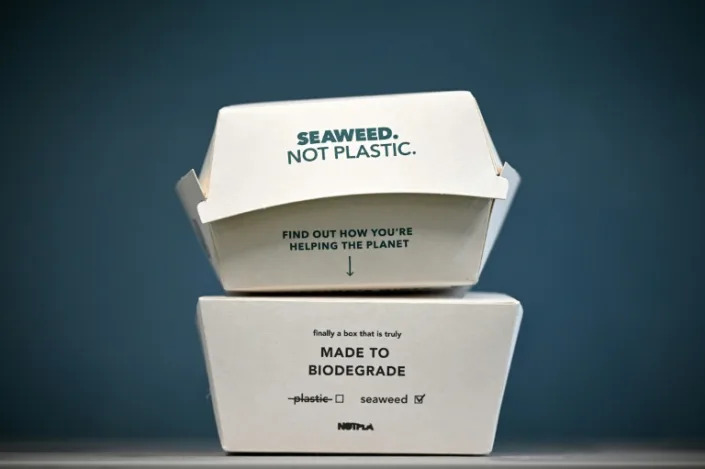
A British start-up founded by two ex-students from France and Spain, crafting biodegradable packaging from marine plants, is aiming to seal royal approval this week when Prince William unveils his latest Earthshot prizes.

Notpla -- whose mantra is "we make packaging disappear" -- is competing with 14 other firms for five prestigious awards, to be dished out by the prince and a star-studded cast at a ceremony in US city Boston on Friday.

In its second year, the initiative to reward innovative efforts to combat climate change will then be broadcast on UK and US television on Sunday and Monday, respectively, as well as online.

The five winners will each receive a £1 million ($1.2 million) grant.

The co-creator of Notpla, which rather than using environmentally damaging plastics makes various naturally degrading -- and even edible -- packaging from seaweed and other marine plants, says they have already felt the competition's benefits.

"Just being there is a massive boost to our visibility," French co-founder Pierre Paslier, 35, told AFP.

"So that's already a huge asset to be part of the finalists and I think that if we win, it's just going to be that on a much larger scale."

Together with fellow former Royal College of Art student and co-founder Rodrigo Garcia Gonzalez, 38, the duo began their eco-business adventure in a small London kitchen.

They were intent on finding natural alternatives to petrochemicals-based packaging, sampling a variety of materials from tapioca seeds to other starches.
- Seaweed 'family' -

"Eventually, we found seaweed," explained Paslier, a former packaging engineer at French cosmetics giant L'Oreal who created Notpla with Gonzalez in 2014.

"Now we have a flexible film, we make seaweed paper, we have rigid materials. So it's really the beginning of a family of seaweed-based technologies that hopefully can help us stop using so much plastic."

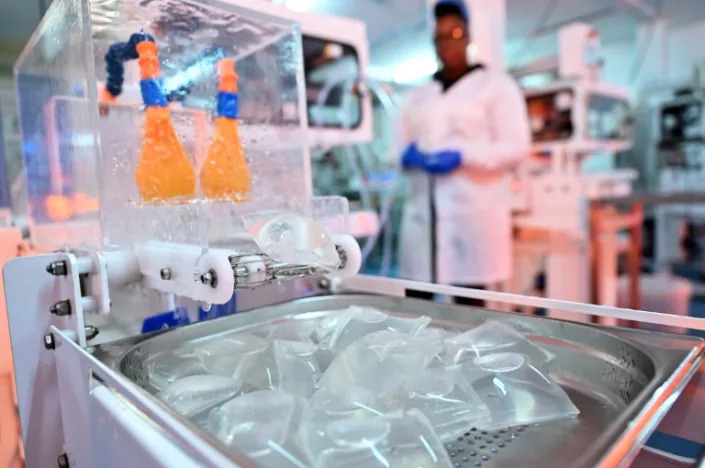
He said their early kitchen exploits had eventually led to the secretly-formulated "Ooho" creation.


An edible bubble membrane made from seaweed -- holding water, sports drinks or other flavoured liquids including cocktails and sauces -- it is marketed as a replacement for single-use plastic cups, bottles and sachets.

Tasting like a gelatinous candy, it can be consumed whole -- like a cherry tomato -- or from a larger sachet, making it ideal at sporting events and festivals.

It has been widely used at marathons across the UK, including the 2019 London run.

Viral online interest has helped attract the attention of investors, with Notpla expanding rapidly to boast more than 60 employees and finding itself on the verge of manufacturing its products on an industrial scale.

Production of "Ooho" takes place at the firm's offices in a large warehouse, a stone's throw from the Queen Elizabeth Olympic Park in east London.

Notpla's growing young team also has laboratories there as it continues to develop new algae-based products.
- 'Very renewable' -


Among the more recent results: a naturally biodegradable coating protecting takeaway food boxes from grease and liquids.

The company now supplies industry giant Just Eat in Britain and five other European countries.

It also provided the packaging for all the food sold during the final of the women's European football championships at London's Wembley Stadium in July.

Another of its new innovations is a transparent package for dry goods, such as pasta.

Paslier noted that although his products may currently cost more than plastic alternatives, the latter's sales price fails to account for "the impact on societal ecosystems, health for humans or for marine life".

"This is basically going to be paid for [by] the next generations and that doesn't come into the price of plastic that you buy on the market today," he added.

"So what we want is to be the most affordable, sustainable packaging solution that takes into account its whole lifetime costs."

Paslier believes seaweed can become the most affordable packaging option, in large part due to its fast growth rate which can top one metre (3.3 feet) a day in the lab.

"It's a very, very renewable resource," he added, noting it doesn't require any fresh water or fertilisers.

Its emergence is undoubtedly timely.

A recent OECD report found, at the current rate, worldwide plastic waste will triple by 2060 to one billion tonnes per year, much of which will pollute the oceans and threaten many species.

mhc/jj/kjm
'Let's Try Something New': Naomi Klein Calls for Boycott of Next COP Climate Summit

"Now is the time to decide not to do this all over again next year, when the summit will be in the UAE," argued the author and environmentalist.


Author and climate advocate Naomi Klein speaks to the media before an event on December 12, 2019 in Berlin, Germany. (Photo: Carsten Koall/Getty Images)

JAKE JOHNSON
November 22, 2022

Author and environmentalist Naomi Klein on Monday urged civil society organizations to boycott the 2023 COP climate summit in the United Arab Emirates—one of the world's largest oil producers—after this year's summit concluded without any concrete action to phase-out fossil fuels, despite the best efforts of campaigners from around the world.

Listing off some of the marked failures of COP27—from the host government of Egypt's refusal to release political prisoner Alaa Abd El-Fattah to the "weak climate agreement that protects polluters"—Klein argued in a series of tweets that "now is the time to decide not to do this all over again next year, when the summit will be in the UAE. Of all places."

"Civil society should announce a boycott + instead hold a true people's summit," Klein wrote. "One gathering per continent to limit flying. Links to the official summit by video."

"There can be lobbying sessions built into the COP28 program with governments who will obviously go to the UAE," she continued. "But why should civil society expend the carbon, money, and time to join them just to declare it a failure all over again? Let's try something new."


Klein's call for a new oppositional approach to the annual United Nations climate summit came in the wake of a gathering at which civil society was harassed, surveilled, and sidelined by Egypt's authoritarian government as lobbyists from Exxon, Chevron, and other fossil fuel giants responsible for record-high greenhouse gas emissions swarmed the summit, fighting off efforts to include a fossil fuel phase-out in the summit's final text.

As the Financial Times reported, "The final hours of the summit were marked by a push from dozens of countries to include a pledge to phase down all fossil fuels, which was ultimately unsuccessful."

Klein was hardly alone in lamenting the repeated failures of COP summits to directly confront the industry driving the climate crisis and stressing the urgent need to develop alternative avenues toward achieving ambitious climate action—particularly as COP28 in the UAE appears set to deliver more of the same.

"It is extraordinary that in 30 years of U.N. climate negotiations, eliminating the primary cause of global heating has never been mentioned in the decisions," Damian Carrington, The Guardian's environment editor, wrote Sunday in a postmortem on the Paris climate accord's critical 1.5°C warming target, which continues to slip further out of reach as fossil fuel extraction proceeds apace. "Given that next year's U.N. climate summit will be hosted by a petrostate, the United Arab Emirates, it is hard to see how a crackdown on fossil fuels will happen there either."

"It remains imperative to get off coal, oil, and gas as rapidly as possible. Every tonne of CO2 that remains in the ground means less harm to lives and livelihoods," Carrington added. "Can the U.N. climate talks deliver this at speed? It does not look that way. It is too easy for the fossil fuel states to hold the consensus-based negotiations to ransom, threatening to blow up the whole thing if their black gold is so much as mentioned by name. There were more fossil fuel lobbyists at Cop27 than delegates from the Pacific islands, which their industry is pushing below the waves."

Communist China’s vulnerabilities bubble to the surface

America’s chief geopolitical and ideological competitor suffers from inherent weaknesses


Brian Katulis
Nov 27, 2022


Protests against “COVID-zero” policies spread across China

Thousands of protestors took to the streets of Shanghai, China’s financial hub and largest city last weekend, chanting for China’s Communist leaders to step down. The immediate spark was growing public discontent with strict lockdowns as part of the communist government’s “zero-Covid” approach. These protests have reportedly spread to other cities, including the country’s capital, Beijing, where students chanted, “Freedom will prevail.”

China has witnessed previous protests over the government’s handling of the pandemic, and government authorities are now cracking down on these protests as they have in the past. Only time will tell if this round of demonstrations unfolds any differently, but the regular outbreak of protests inside of China in recent years shows an inherent vulnerability in a communist system that lacks basic freedoms.

Communist China’s three main vulnerabilities

1. China’s political system fails to respect basic freedoms. There’s nothing new here: Communist rulers in China have run roughshod over the basic rights and freedoms of its own people for decades. But as Freedom House noted in its most recent Freedom in the World report, “China’s authoritarian regime has become increasingly repressive in recent years.”

These stepped-up efforts to crack down on dissent reveal the sense of insecurity that China’s communist leaders feel from their own people. A ruling system that targets a 90-year-old Roman Catholic cardinal and puts its own people in forced labor camps is not one that is confident in its own legitimacy.

2. China’s rigid economic system stifles innovation and potential for growth. The “zero-Covid” approach is just the tip of the iceberg when it comes to China’s current economic model. The country faces major debt challenges in its real estate market, and the government recently stepped in with measures in an attempt to address the strains in that market.

But beyond this immediate crisis in the real estate market, China has larger, structural challenges with its economic model, including an aging population and growing restrictions on private enterprise. America’s private sector has continued to shift away from China, leading to an erosion of financial and economic ties between the world’s top two economies. Beijing’s growing international isolation caused by its own unforced errors has motivated some of the talent it needs to look elsewhere for opportunities.

3. China’s global engagement strategy has failed to win friends and overtake competitors. China hoped that its vaccine diplomacy in the wake of COVID-19 and its economic engagement with poorer countries would generate goodwill, but these efforts have largely backfired and failed to produce results.

The shortcomings in vaccines produced by China led countries to look elsewhere during the pandemic. China’s “Belt and Road Initiative” of trying to build a global economic network through infrastructure lending and investment has resulted in charges of predatory lending and debt-trap diplomacy against China. Communist China even tried to bully small countries like Lithuania when it spoke up for freedom.

The Chinese communist leaders’ decision to side with Russia in its war against Ukraine was also deeply unpopular in Europe, a key arena of competition for global influence.

As a result, global public opinion has shifted against China, as Peter Juul noted.

What America Should Do About China

The midterm elections earlier this month will usher in a new political landscape in America, but one that remains split along partisan lines. Depending on how leaders choose to work together in the next two years, a bigger lane for a moderate, balanced U.S. foreign policy approach may open up, and China is one of the issues where there is a fairly strong bipartisan consensus, especially when it comes to economic competition.

China’s vulnerabilities provide an opening for the United States to gain additional strategic advantage on several fronts.

First, the United States should continue to invest in America’s ability to compete in the world. One of the major success stories in America over the past few years have been measures the country has taken to develop a 21st century national industrial policy through a series of investments that are helping give an edge to America’s workers and companies. Fairly rapidly, the U.S. Commerce Department led by Secretary Gina Raimondo has become an important force in helping make investments in strategic industries such as microchips.

The United States should continue down this path but remain mindful that the strength of America’s economic system is something China’s communist system lacks – America has a vibrant private sector that deploys capital and resources more efficiently than China’s top-down model. Indeed, the differences between the American and Chinese political and economic systems are stark as ever as the implications of Beijing’s draconian zero-COVID have become clear.

Second, America should do more to define a new global economic engagement strategy that competes with China. As the world’s largest and most vibrant economy, America has no shortage of economic partners around the world, including in Asia. Nor does the current U.S. administration lack a set of policy frameworks for its global economic engagement, ranging from “Build Back Better World” (remember that?) to the Indo-Pacific Economic Framework announced earlier this spring.

What America currently lacks is a sharply focused global economic strategy that pulls the most compelling elements of the policy ideas together with the strengths of America’s political economy. This means developing a clearer game plan on building economic ties between the United States and its partners in Asia, countries that are looking for something better than what China has to offer these days.

Finally, the United States should continue to defend freedom in the world, especially against threats posed by China. The Biden administration performed strongly this past summer and fall when China threw a temper tantrum and threatened Taiwan, and the U.S. military sent a clear message to America’s partners in the region that it will remain engaged in efforts to defend themselves against threats. The Biden administration has also called out China’s human rights abuses including genocide, and it should continue to do so as it prepares for more direct diplomatic engagements with Beijing’s leaders.

The recent trends inside of China and the United States point to two countries headed on two different pathways. China may become inward-looking and more isolated globally, and this could result in a Chinese communist leadership that is less predictable and more confrontational with the rest of the world. The United States has an opportunity to take additional steps towards a more inclusive nationalism at home that invests in its ability to compete in the world while it builds ties with like-minded partners around the world.

The struggle for freedom in the world continues, and China remains a key front.

The Liberal Patriot!
Khamenei's Niece Arrested After Plea for Foreign Governments to Cut Ties with Iran

The niece of Iran's Supreme Leader Ayatollah Ali Khamenei, Farideh Moradkhani, was arrested after calling on foreign governments to cut ties with the Iranian government, CNN reported.

Authorities arrested Moradkhani on Wednesday when she went to the prosecutor's office in response to a court order.

But in a video statement shared by her brother before her arrest, Moradkhani called upon people across the globe to "stop any dealings with this regime."

"Oh, free people," she said, "be with us and tell your governments to stop supporting this murderous and child-killing regime. This regime is not loyal to any of its religious principles and does not know any laws or rules except force and maintaining its power in any possible way.

"Now in this critical moment in history, all of humanity is observing that Iranian people, with empty hands, with exemplary courage and bravery are fighting with the evil forces. At this point in time, the people of Iran are carrying the burden of this heavy responsibility alone by paying with their lives."

On Saturday, Khamenei praised the country's Basij paramilitary force, Basij is a wing of Iran's Revolutionary Guard, for cracking down, in deadly fashion, on anti-regime protesters. The protests were sparked following the death of 22-year-old Mahsa Amini, who was held in the custody of Iran's morality police in September.


ALBERTA
Health unions keep up call for 'collective' meeting with health minister

Story by Madeline Smith • Sunday, Nov. 27,2022 - 
Edmonton Journal

The president of the union representing Alberta nurses says despite speaking with government officials separately, labour groups for health workers have yet to have the “collective” meeting they want as the health-care system strains under pressure again.


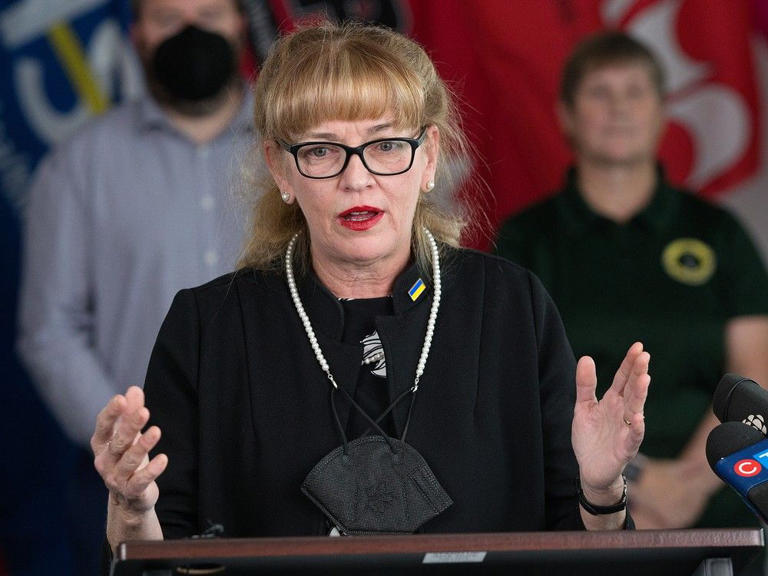
United Nurses of Alberta (UNA) president Heather Smith takes part in a news conference where Alberta's health-care unions advocated that the government take steps to fully address the staffing crisis in health care on Oct. 24, 2022.

Shortly after Premier Danielle Smith’s new cabinet was sworn in last month, the United Nurses of Alberta (UNA), Health Sciences Association of Alberta (HSAA), Alberta Union of Provincial Employees (AUPE) and Canadian Union of Public Employees (CUPE) came together to “insist” on meeting with the health minister to talk about improving the health-care system.

When the government announced just a few weeks later that the Alberta Health Services board would be dismantled and replaced with a single official administrator, Smith said she and Health Minister Jason Copping had just spoken with AUPE, HSAA and UNA leaders.

Related

AHS board dismantled as Dr. John Cowell named new administrator

The premier said the major shift in AHS management is aimed at accelerating change that will ease the current burden on the health system and help the burned-out front line.

“We’re doing all of this to be able to support them, create a better working environment to make sure that they feel valued,” she said.

“They know that we know what the solutions are. They want us to work on them,” she said, adding the province intends to take a consultative approach.

Related video: Provinces call on Ottawa for more health-care funding
Duration 8:31   View on Watch

UNA president Heather Smith confirmed she spoke with the premier and health minister ahead of the AHS administrator announcement, but said Saturday it wasn’t the type of meeting unions have requested.

She still thinks a broader discussion is warranted because “the deficits here in the province are clearly across the entire continuum of workers.”

The November meeting provided advance notice about the decision to change the AHS leadership structure, a move that the UNA leader said comes with its own challenges.

“The announcement of the elimination of the board and subsequent comments in terms of AHS and getting rid of managers — it’s rather unfortunate,” Smith said.

“It causes a great deal of uncertainty at higher levels of the organization, but uncertainty in terms of what that means on the ground as well.”

HSAA president Mike Parker, who represents numerous health workers including paramedics, issued his own statement raising concern about the possibility of “organizational chaos” in health care, while AUPE’s Guy Smith added workers need stability, “not the chaos that could result from a change in administration and direction.”

But the groups said they’re encouraged to hear the premier and health minister talk about the need to address staffing shortages. New administrator Dr. John Cowell has been told to focus on decreasing wait times in emergency rooms and for surgeries, improving EMS response times and consulting with front-line workers on reforms.

The HSAA’s Parker said his message to the premier was the need for direct support for health workers.

“The premier says we have entered the ‘action phase’ of reforming health care,” he said.

“That means overcoming staffing shortages and improving working conditions so we can care for Albertans.”


Asian American voters are flexing their political muscle in the Georgia Senate runoff

Story by insider@insider.com (John L. Dorman) • 

The Georgia State Capitol building in Atlanta, Ga., is seen behind a "Vote" sign on November 9, 2022, a day after the midterm elections.
 SETH HERALD/AFP via Getty Images

Asian Americans and Pacific Islanders represent one of the fastest-growing voting blocs in Georgia.
Both the Warnock and Walker campaigns have courted this crucial bloc ahead of the Senate runoff.
Democratic and GOP groups in recent years have stepped up their engagement efforts with AAPI voters.

In pivotal Georgia, where competitive statewide elections have become the norm in recent years, every vote matters.

For Asian American and Pacific Islander voters, whose political influence in Georgia has grown exponentially over the last decade, the December 6 Senate runoff between incumbent Democratic Sen. Raphael Warnock and Republican Herschel Walker is one more step in their community's transformation into a major electoral force in the Southern swing state.

In a Politico report detailing how Asian Americans are being courted intently by both the Warnock and Walker campaigns in advance of the runoff, AAPI Victory Fund founder and chairman Shekar Narasimhan emphasized that the community needed to hear appeals directly from the candidates, pointing to the need for strong voter engagement efforts.

"Our community needs to hear directly from leaders and from the candidate saying, 'We have a real message of change that's positive,'" Narasimhan told Politico. "And we think by doing what we're doing and continuously doing it, we're giving that message to them."

Related video: Asian American voters could play major role in midterms
Duration 4:28 View on Watch

Ballots cast by Asian American voters rose dramatically from 2016 to 2020, from 73,000 votes to 134,000 votes, respectively, according to the Democratic polling data firm TargetSmart.

The 61,000-vote increase is greater than the roughly 12,000-vote margin that allowed now-President Joe Biden to carry Georgia in the 2020 presidential election, which made him the first Democratic presidential nominee to win the state since 1992.


It is also greater than the roughly 37,000-vote lead that Warnock held over Walker in the November general election. (The Senate race is headed to a runoff as no candidate hit at least 50% of the vote as mandated by state law.)


Per CNN exit polling from the November general election, Warnock won Asian American voters by 20 points over Walker (59%-39%).

However, Republicans are not ceding any ground in their efforts to appeal to the fast-growing voting bloc.

The Republican National Committee last year opened an Asian Pacific American community center in Gwinnett County, a suburban Atlanta locality that boasts a large Asian community.

And newly-reelected Gov. Brian Kemp cultivated relationships with Asian American voters during his successful campaign. While Democrat Stacey Abrams won the group's vote, per CNN exit polling, she only outran Kemp by 8 points (54%-46%), posting a stronger showing than Walker in the general election contest.

"We're the only demographic group that keeps going up," Georgia state Sen.-elect Nabilah Islam told Politico. "So I'm confiden
Giant trees still fall amid old-growth funding lag for B.C. First Nations

British Columbia has asked First Nations if they want old-growth forests set aside from logging, allowing time for long-term planning of conservation and sustainable development, but it has yet to fund the process on a large scale, advocates say.


Giant trees still fall amid old-growth funding lag for B.C. First Nations
© Provided by The Canadian Press

In the meantime, some of the biggest and oldest trees are being cut down.

Several years before the B.C. government launched the process last November to defer logging in old-growth forests at risk of permanent biodiversity loss, Ahousaht First Nation was developing the land-use vision for its territory on Vancouver Island.

It was with careful analysis that Ahousaht decided how to balance environmental and economic outcomes, said Tyson Atleo, a hereditary leader of the nation whose territory spans Clayoquot Sound, a globally recognized biosphere reserve.

Ahousaht has largely done the work without major public funding, he said. Instead, the nation has secured grants and support from organizations including Nature United, the charity where Atleo works as natural climate solutions program director

"This is long and hard work that is a part of nation building," Atleo said.

"You need to have a vision, and in order to have a vision, you need to have the resources, and in order to implement the vision you need to have partnerships with Crown governments, likely corporations, as well as supporting (non-governmental) partners, and you need to have a vision for your economic future," he said.

The neighbouring Hesquiaht and Tla-o-qui-aht nations were working on similar plans in the fall of 2020, when the B.C. government issued an order to defer logging across more than 170,000 hectares of old-growth forests around Clayoquot Sound, while it works with the nations to establish permanently protected areas.

Ahousaht was in favour of deferral because the nation believes "very strongly (in) preservation of old-growth systems … not just for the potential economic benefits of protection, but for the ecological and cultural benefits," Atleo added.

A year ago, B.C. announced that an expert panel had mapped 2.6 million hectares of old-growth forests identified as "rare, at-risk, and irreplaceable."

At the same time, the province asked 204 First Nations to decide whether they supported the deferral of logging in those areas for an initial two-year period, allowing time for the province to develop "a new approach to sustainable forest management that prioritizes ecosystem health and community resiliency."

However, it has yet to announce significant funding to support the complex process for nations to consider how to preserve old growth while developing alternative sources of revenue and economic opportunities aligned with stewardship goals.

Conservation comes with economic costs, said Atleo, especially in communities that depend on forestry revenues. It must be paired with some kind of compensation or support for sustainable economic diversification, he said.

"The philanthropic community is stepping up and offering a stewardship endowment in the case of (Clayoquot Sound) because of the high biological diversity in the region, but it's a model that we should be looking at publicly," he said.

"The government might not have a long-term vision, which for me means there's space for nations to step up and define what that vision might be," he added.

In its most recent public update on deferral areas provided nearly eight months ago, the Forests Ministry said the province had received responses from 75 First Nations in support of deferrals across 1.05 million hectares of at-risk forests, while 60 had requested more time and seven had indicated they didn't support the plan.

In response to a request for the total area set aside in the first year of the deferral process, the ministry said it's working toward an update in the near future.

Unless a First Nation expresses support for deferrals in its territory, the areas remain open to potential logging and applications for new logging permits.


About 9,300 hectares of the proposed deferrals — an area 23 times the size of Vancouver's Stanley Park — have been logged over the last year, the ministry said.

The deferral areas contain some of the largest and most ecologically important old-growth forests left in B.C., saidTJ Watt, a photographer whose images of ancient trees before and after logging first captured global attention in 2020.

Watt's photos from the Caycuse watershed on southwestern Vancouver Island show massive trees, then their stumps after they were cut. Some were logged a few months before they were identified as part of the deferral process, he said.

About 15,000 hectares of the proposed deferral areas had already been logged in the year leading up to the announcement last November, the Forests Ministry said.

Another area in the Caycuse was logged a couple of months after the start of the deferral process, said Watt,who uses GPS, geo-tagging on his photos, publicly available data and satellite images to confirm the location and status of cut blocks.

The province's publicly available mapping shows cut blocks overlapping with proposed old-growth deferral areas in the Caycuse and other areas across B.C.

The Caycuse watershed is located in Ditidaht First Nation territory.

Reached by phone, Ditidaht Chief Councillor Brian Tate said he had a full schedule and couldn't comment on old-growth logging in the nation's territory.

Teal-Jones, the forestry company that holds the rights for cut blocks in the Caycuse watershed, said in a statement it is not harvesting in areas that have been deferred.

Watt said he feels B.C. is putting First Nations in an unfair position by asking them to choose between generating forestry revenue and pausing logging without compensation or support for sustainable economic and ecological development.

Conservation financing is the key element that enabled the large-scale protection of old-growth forests in the Great Bear Rainforest, said Watt, a National Geographic explorer whose work was funded by the Royal Canadian Geographic Society.

It could mean developing eco-tourism or sustainable fisheries, or expanding Indigenous Guardian programs, which support a variety of land-based jobs.

"None of this can happen for free," Watt said.

"It takes some leadership from the province to say, 'We've taken from you for more than a century, now we're asking you to protect these forests because it's an ecological emergency, here is how we're going to help make thatpossible'," said Watt, who works with the Ancient Forest Alliance, a B.C.-based advocacy group.

In an email, the Forests Ministry said B.C. is currently working to establish a new conservation financing mechanism to support permanent old-growth protection.

The B.C. government began sharing forestry revenues with First Nations in the early 2000s. Last spring, it more than doubled the amount it shares with eligible nations, leading to an estimated increase of $63 million this year, the ministry said.

In response to a series of questions, the ministry said the increase would "more than offset" any short-term revenue impacts arising from old-growth deferrals.

The province has not received any direct requests from First Nations for compensation as a condition for supporting the temporary deferrals, it said.

B.C. provided just shy of $12.7 million over three years to support First Nations through the deferral process, amounting to about $20,000 per year for each nation.

At the time, Grand Chief Steward Phillip with the B.C. Union of Indian Chiefs called that funding "totally insufficient to undertake the work."

The province's 2022 budget earmarked $185 million over three years to support the forest industry, its workers, and First Nations through the deferrals.

Watt noted the federal government committed up to $55.1 million over three years to establish a B.C. "Old Growth Nature Fund" in its budget earlier this year.

The money would be available in 2022-2023, but it's conditional — the B.C. government must match the federal investment in order to establish the fund.

B.C.'s Ministry of Land, Water and Resource Stewardship did not answer a question about whether the province plans to match Ottawa's pledge.

Dallas Smith, a member of Tlowitsis Nation on the east coast of Vancouver Island who helped negotiate the Great Bear Rainforest protection agreement, said the lack of funding is a gap in the deferral process, and B.C. has yet to communicate a clear plan to help First Nations with long-term planning.

"Even if nations wanted to protect more, (the province) didn't have capacity to sit down and deal with all those nations and actually have a planning process," said Smith.

This report by The Canadian Press was first published Nov. 27, 2022.

Brenna Owen, The Canadian Press
Canada's top five federal contaminated sites to cost taxpayers billions to clean up

Sunday, Nov. 27,2022

YELLOWKNIFE — With a cost estimate of $4.38 billion, remediation of the Giant Mine, one of the most contaminated sites in Canada, is also expected to be the most expensive federal environmental cleanupin the country's history.


Canada's top five federal contaminated sites to cost taxpayers billions to clean up© Provided by The Canadian Press

The figure, recently approved by the Treasury Board of Canada, spans costs from 2005 until 2038, when active remediation at the former Yellowknife gold mine is anticipated to end. That includes $710 million the federal government said has already been spent, but does not include costs forlong-term care and maintenance.

"It doesn't bother me so much that it's going to cost $4 billion to clean up Giant Mine. What really bothers me is that the taxpayer is covering that cost," said David Livingstone, chair of the Giant Mine Oversight Board.

It indicates the federal government failed to ensure private developers provided financial security to remediate sites. He said while that has improved over time, there will likely be more issues in the future.

"We as a society need to get a better handle on what it costs us to support mining industry and oil and gas industry," he said. "If the numbers suggest that it's going to cost more to clean up a site than that site generated in revenue to the Crown, we've got a problem."

There are more than 20,000 locations listedin the federal contaminated sites inventory, from dumps and abandoned mines to military operations on federal land.

Environment and Climate Change Canada says that after Giant Mine, the four most expensive cleanups are the Faro Mine in Yukon, the Port Hope Area Initiative in Ontario, Esquimalt Harbour in British Columbia and Yukon's United Keno Hill Mine.

More than $2 billion has been spent on the five sites so far, and it's anticipated they will cost taxpayers billions more in the coming years. Their final price tags are not yet known.

The most recent numbers from the Treasury Board of Canada indicate more than $707 million has been spent on remediation, care and maintenance at Faro Mine, a former open pit lead-zinc mine.Its remediation project is expected to take 15 years to complete and is currently estimated to cost $1 billion, plus $166 million for the first 10 years of long-term operation and maintenance.

Related video: The federal government has a 2030 goal of eliminating diesel-powered electricity in remote communities
Duration 2:55  View on Watch

Parsons Inc. was awarded a $108-million contract in February for construction, care and maintenance at Faro Mine until March 2026, with the option to extend the contract for the duration of active remediation. The company said the contract could ultimately span 20 years and exceed $2 billion.

In 2012, Ottawa committed $1.28 billion in funding over 10 years for the cleanup of historical low-level radioactive waste in the municipalities of Port Hope and Port Grandby, Ont. To date more than $722 million has been spent on assessment and remediation.

The Port Grandby Project was completed earlier this year and has moved into long-term monitoring for hundreds of years. The Port Hope cleanup, which started in 2018, will continue into 2030.

The cleanup in the Esquimalt Harbour seabed in Victoria currently has a budget of $162.5 million. Roughly $214 million has already been spent on remediation and assessment. The Department of National Defence said that may include costs before 2015, when the remediation project began.

Cleanup of United Keno Hill Mine, a historical silver, lead and zinc mining property near Yukon's Keno City, is estimated to cost $125 million, including $79 million during its active reclamation phase. That is expected to begin in 2023 and take five years, followed by a two-year transition phase then long-term monitoring and maintenance. More than $67 million has been spent on remediation, care and maintenance at the site so far.

Other costly federal sites that have been cleaned up include the Cape Dyer Dew-Line, 21 former radar stations across the Arctic, for $575 million, the Sydney tar ponds and coke ovens on Cape Breton Island, N.S., for nearly $398 million, and the 5 Wing Goose Bay air force base in Labrador, for $142.9 million.

The 2022 public accounts state the gross liability for the 2,524 federal contaminated sites where action is required is nearly $10 billion based on site assessments. Of the 3,079 unassessed sites, 1,330 are projected to proceed to remediation with an estimated liability of $256 million.

The federal contaminated sites action plan was established in 2005 with $4.54 billion in funding over 15 years. That was renewed for an additional 15 years, from 2020 to 2034, with a commitment of $1.16 billion for the first five years.

Jamie Kneen with MiningWatch Canada said the contamination from Giant Mine highlights the importance of the planning and assessment process for development projects.

"If you don't actually do any planning around something, you can end up with a pretty horrible mess," he said. "In this case, it killed people before they started even capturing the arsenic. We don't want that to happen anymore."

This report by The Canadian Press was first published Nov. 27, 2022.

___

This story was produced with the financial assistance of the Meta and Canadian Press News Fellowship.

Emily Blake, The Canadian Press