Wednesday, January 18, 2023

Canada Sees “Unprecedented” Number Of People Claiming EV Rebates

Federal electric vehicle rebates in Canada went 153% over their originally intended budgets, a new report out last week unveiled.

Ottawa had shelled out $759 million on EV rebates by March of last year, according to a report by True North. The "unprecedented" number of people claiming the rebates pushed Canada's government well over its allocated spending. 

Analysts in the Audit Of Incentives For Zero Emission Vehicles Program said: “The uptake of the program was higher than expected and funding was an ongoing concern.”

“The program’s main risk is not having sufficient funding to meet the demand,” they continued.

In Canada, beginning in 2019, anyone who bought an EV below the price of $45,000 is allowed to claim a rebate of up to $5,000. The government then moved that threshold up to $70,000. 

Liberals first claimed the program would cost $300 million, True North reported.

But an audit of the spending found far different results: “The program exhausted its original funding of $300 million and received two subsequent funding top-ups of $287 million and $172 million to continue the program until March 31, 2022 as planned."

136,940 buyers in total have claimed rebates and Canada has extended the budget for the program to $1.6 billion until March 2025. The country is trying to fulfill environment minister Steven Guilbeault's plan to make all vehicles sold by 2035 electric or hybrid.

The cost for such a program amounts to $100 billion a new analysis found. 

Venezuela’s Vast Oil Wealth Could Become The World’s Largest Stranded Asset

  • Venezuela’s petroleum output has collapsed due to political strife, sanctions, and corruption. 

  • Donald Trump’s 2019 sanctions cut Caracas off from global markets, nearly bankrupting the country.

  • Continuing challenges could lead to Venezuela’s vast oil reserves becoming the world’s largest stranded asset.

President Joe Biden’s decision to authorize U.S. supermajor Chevron to recommence lifting crude oil in Venezuela breathed hope into President Nicolas Maduro’s plans to rebuild the country’s shattered oil industry. The harsh January 2019 sanctions imposed by Biden’s predecessor Donald Trump cut Caracas off from global energy and financial markets, nearly bankrupting Venezuela. That caused petroleum production to spiral lower and Venezuela’s economic as well as humanitarian crisis to accelerate, further impacting Caracas’ finances. For these reasons, the national oil company PDVSA is incapable of mustering the immense amounts of capital required to rebuild Venezuela’s heavily corroded energy infrastructure. This will impede efforts to tap into the substantial wealth held by Venezuela’s vast petroleum reserves, which at 303.5 billion barrels are the world's largest, and rebuild a shattered economy. There are fears, as the devastating environmental catastrophe unfolds in Venezuela, those immense hydrocarbon reserves will become a costly stranded asset.

In as little as two decades, Venezuela’s petroleum output has collapsed. Political purges, an exodus of skilled labor, chronic malfeasance and corruption, harsh U.S. sanctions and a dire lack of capital are all responsible for Venezuela’s oil industry falling into wreck and ruin. After peaking at an annual record of 3.1 million barrels of oil per day for 1998, prior to Hugo Chavez’s presidency, the OPEC member’s petroleum output has plunged to levels not seen since before World War Two. Annual average production plummeted to an 80-year low of 569,000 barrels per day for 2020, while a year later, it only averaged 636,000 barrels daily and remains at around that level, with Caracas reporting 693,000 barrels per day for November 2022. This means Venezuela’s oil output is around a third of the 2.04 million barrels per day pumped during 2017, which was the last year where output exceeded that amount.

As a result, Venezuela’s oil exports, which are one of Caracas’ few sources of hard income, have foundered. This is because Trump’s 2019 sanctions prevent Venezuela from shipping petroleum to the U.S., a key market that was receiving over 40% of the OPEC member’s oil exports. By 2021, Venezuela’s oil exports had plummeted to a multi-decade low of 448,000 barrels per day, most of which, according to OPEC data, were shipped to Asia, where China is a key buyer regardless of U.S. sanctions. This brutally impacted Caracas’ fiscal income and further exacerbated Venezuela’s economic collapse because petroleum is responsible for 99% of export income and a quarter of gross domestic product. For 2019 alone gross domestic product contracted by a catastrophic 27.7% and then by a ruinous 30% during 2020.

This triggered a severe financial crisis for Caracas, causing any available capital for repairs to Venezuela’s heavily corroded infrastructure to all but dry up, further weighing on plans to expand oil production. That is not only responsible for weak production volumes but also PDVSA’s inability to hit the targets set by Maduro, thereby preventing Caracas from exploiting Venezuela’s tremendous oil reserves to generate the tremendous funds required to rebuild a shattered economy. Indeed, the condition of Venezuela’s petroleum infrastructure is so dire that pipelines, storage facilities and intermittently running refineries regularly spew oil and noxious fumes into the environment. Various sources claim PDVSA, due to a chronic lack of resources and malfeasant management, makes little effort to clean up spills, further aggravating the unfolding ecological disaster. The environmental harm is so severe it will take billions of dollars and years to clean up existing spills, with the damage in many places, such as Lake Maracaibo, considered irreversible.

These events are adding to the tremendous burden associated with rebuilding Venezuela’s energy infrastructure so that production can be restored, and the country can benefit from its vast petroleum reserves. Estimations vary, but external experts believe it will take $110 billion to $250 billion invested over a decade to rebuild Venezuela’s energy infrastructure and restore production to over 2 million barrels per day. Then there is the need for skilled labor and crucial parts that, along with that substantial capital, can only be provided by Western oil supermajors which, because of U.S. sanctions, are prevented from investing in Venezuela. Even Washington’s decision authorizing Chevron to restart lifting oil at its joint ventures with PDVSA will fail to lift production and generate the tremendous investment required. You see, there are strict conditions imposed on Chevron including banning payments to Caracas and expanding operations beyond those that existed in January 2019.

Plans to exploit Venezuela’s considerable oil wealth are further complicated by around three-quarters of the country’s reserves being predominantly comprised of very sour extra-heavy petroleum, which with an API gravity of 8.5 degrees, does not flow when extracted. This type of oil must be upgraded, where it is mixed with diluent, a form of ultra-light petroleum so that it can flow to be transported and processed. For these reasons, lifting extra-heavy oil consumes copious amounts of energy, making it highly carbon-intensive to extract. The Carnegie Endowment rates Venezuela’s Merey grade, which is the primary export blend, as one of the most carbon-intensive oil varieties produced globally, emitting 604 kilograms of greenhouse gases per barrel produced. Venezuela’s Tia Juana and Hamaca grades produce even more greenhouse gas emissions to extract, with only Canada’s oil sands ranked as more carbon-intensive.

Heavy sour crude oil blends like Merey, which has an API gravity of 16 degrees and 2.45% sulfur content, are costly, complex and carbon-intensive to refine into high-grade low emission fuels. Only refineries specifically configured to process those types of petroleum can accept its as feedstock, thereby limiting the market. As a result, heavy and extra-heavy sour crude oil is becoming increasingly unpopular in a world where governments are aggressively decarbonizing their economies and oil companies are seeking to become net-carbon neutral. It is for these reasons, along with strict U.S. sanctions, that energy supermajors TotalEnergies and Equinor chose to exit Venezuela during mid-2021 despite the decision incurring substantial losses for both companies. Those factors will deter foreign oil companies from considering whether to invest in Venezuela, which is already considered an extremely risky jurisdiction.

While there are signs that the Biden White House intends to take a more nuanced approach to a Maduro-led Venezuela, existing tough U.S. sanctions remain the key deterrent to foreign energy investment. No western petroleum company will risk the severe penalties which accompany those sanctions. That, along with existing geopolitical hazards, notably a corrupt autocratic regime with a history of nationalizing oil assets, essentially makes Venezuela uninvestable for foreign oil companies. This means the pariah state will not receive the hundreds of billions of dollars and technical expertise crucial to rebuilding a shattered hydrocarbon sector. PDVSA lacks to the capital needed to refit ramshackle industry infrastructure, making it near-impossible for a state-controlled oil company to grow petroleum output above current volumes. Any efforts to rebuild Venezuela’s petroleum operations are complicated by the immense environmental crisis unfolding in Venezuela and threatening an ecologically sensitive region. For these reasons, Venezuela’s substantial oil reserves could very well transition from a source of considerable wealth to become a costly stranded asset that will leave a legacy of environmental destruction for decades to come.

By Matthew Smith for Oilprice.com

BRAZIL
Vale expects to pay out $1.5 billion for Brumadinho reparations in 2023

Reuters | January 18, 2023 | 

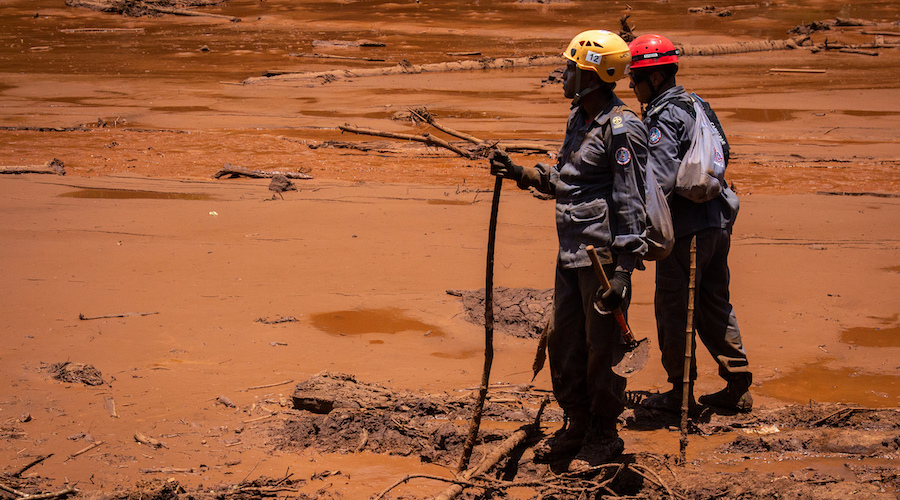
The aftermath of Vale’s tailings dam collapse near Brumadinho.
 (Photo by Romerito Pontes, Flickr)

Vale SA plans to pay out about 7.8 billion reais ($1.53 billion) in 2023 on reparations related to the collapse of a tailings dam in the mining town of Brumadinho, which happened four years ago at the end of this month, its director of Reparations and Territorial Development, Marcelo Klein, told Reuters.


The rupture of the structure unleashed a giant wave of mud that killed 270 people, most of them employees of the company, in addition to affecting communities, forests and rivers in the region. Three people are still missing, and the executive stressed that the search for them is a “top priority”.

Of the total amount planned for the year, 3.9 billion reais refers to the provision for an agreement reached with authorities, while 1.9 billion reais is related to Vale’s own projects. The remaining 2 billion reais will be invested in actions such as tailings management, dam monitoring, infrastructure renovation and maintenance, studies and project development, among others, Klein said.

“We can clearly see a slowdown in the payment of reparations, which is natural as four years went by, and an acceleration in the projects of the reparation agreement program,” he added.

Last year, the disbursements for Brumadinho were around 10.2 billion reais.

($1 = 5.0959 reais)

(Reporting by Marta Nogueira; Editing by Steven Grattan)


https://en.wikipedia.org/wiki/Brumadinho_dam_disaster

The Brumadinho dam disaster occurred on 25 January 2019 when Dam I, a tailings dam at the Córrego do Feijão iron ore mine, 9 kilometres (5.6 mi) east of ...

https://en.wikipedia.org/wiki/Brumadinho

Brumadinho is a Brazilian municipality in the state of Minas Gerais. The city belongs to the Belo Horizonte metropolitan mesoregion and to the microregion ...


https://www.business-humanrights.org/en/blog/o-rompimento-da-barragem-de-brumadinho-foi-causada-por-uma-normaliza%C3%A7%C3%A3o-das-diverg%C3%AAncias

Many experts have discussed the causes of the mining dam failure near Brumadinho, Brazil, in January 2019, which killed 272 people.


https://www.youtube.com/watch?v=he2fkMpJCYg

Aug 14, 2021 ... The Brumadinho dam disaster occurred on 25 January 2019 when a tailings dam at the Córrego do Feijão iron ore mine, 9 kilometres (5.6 mi) ...

https://www.nytimes.com/interactive/2019/02/09/world/americas/brazil-dam-collapse.html

Feb 9, 2019 ... Indeed, the structure at Brumadinho strained the very definition of “dam.” It had no separate concrete or metal wall to hold back its contents.


New solution aims to effectively monitor tailings facilities from space

Staff Writer | January 18, 2023 |

Satellite. (Image by Synspective).

A new solution that uses satellites and earth observation coupled with ground sensors to monitor mine tailings facilities was recently launched by a Tokyo-based company and a London-based startup.


The strategic partnership brings together Japan’s Synspective, a SAR (synthetic aperture radar) satellite data and solutions provider, and England’s Insight Terra, a cloud-based environmental and infrastructure risk management platform.

The firms are working together to provide an integrated product offering combining Insight Terra’s cloud-based IoT Insight Platform with Synspective’s analytical models of SAR data for the mining and other related industries. The joint solution allows for the fusion of near real-time ground truth and earth observation data for proactive monitoring and alerting.

“The Tailings Insight solution including new InSAR capabilities will be a leap forward for mining operators, investors and regulators seeking to monitor and mitigate potential mine-related disasters affecting people, communities and the environment,” the companies said in a media statement.

According to the firms, Insight Terra’s leading mining product, Tailings Insight, is currently deployed with a number of global companies for tailings dam monitoring.

On the other hand, Synspective develops and operates high-frequency, high-resolution SAR satellites called “StriX” to provide high-quality data sets and solution services. The company has already placed three satellites into targeted orbit while planning to establish a constellation of 30 satellites and an analytics platform by the late 2020s.

The integration of SAR data gathered by Synspective’s growing family of StriX series satellites will provide powerful earth observation capabilities to the Tailings Insight application. This technology can be utilized to monitor ground movement and land deformation which are risk indicators for potential failures of tailings facilities, mine walls, and water dams, among others.

“Space has been an important part of Insight Terra’s heritage. Inmarsat, the leading global mobile satellite company, is one of our founding shareholders and key partners, and we have delivered a number of innovative environmental monitoring projects together with Inmarsat and the European Space Agency (ESA),” Insight Terra co-founder and CEO, Alastair Bovim, said in the release. “Adding Synspective’s earth observation data bolsters our space-enabled data and monitoring capabilities and is integral to our mission of protecting people, and the environment, from potential disasters such as the mine tailings facilities collapse in South Africa just this September.”

Bovim also pointed out that the integrated mine monitoring solution that the companies will deliver should be an important step toward safety and conservation goals.
Chile rejects Andes Iron’s Dominga mining project

Reuters | January 18, 2023 | 

Dominga is located about 65 km (40 miles) north of the central city of La Serena.
 (Digital rendition of project, courtesy of Andes Iron)

Chile’s committee of ministers denied permits for Andes Iron’s controversial $2.5 billion Dominga copper and iron mining project, Environment Minister Maisa Rojas announced on Wednesday.


Speaking at a press conference at the environment ministry in Santiago, Rojas said the committee voted unanimously to reject the project after considering impacts on wildlife, water sources, air quality and marine-protected areas.

“The evaluation was made considering multiple aspects that had to be evaluated, multiple reports that had to be considered,” Rojas said. “It was a robust decision.”

The committee is headed by the environment minister, and includes the mining, agriculture, energy, economy and health ministers. It has the authority to rule on environmental issues.

Dozens of protesters, both in favor and against the project, had gathered outside the ministry early Wednesday in anticipation of the decision.

The mining project would have been located 500 kilometers (310 miles) north of Chile’s capital, near ecological reserves. Critics say its proximity to environmentally sensitive areas would cause undue damage. Andes Iron, a privately held Chilean company, has repeatedly rejected the claims.

Andes Iron was not immediately available for comment.

The years-long legal battle over Dominga has drawn criticism from the business community and conservative politicians, who say politics have played an oversized role in the process.

Dominga has become a symbol of the difficulties some major projects have had with permitting in recent years in mining powerhouse Chile.

The legal back-and-forth brought the case to Chile’s top court last May, with appeals filed by communities and environmentalists against the mining project. The court turned down the appeals, saying a final decision needed to be made by President Gabriel Boric’s administration.

(Reporting by Fabian Cambero. Editing by Sharon Singleton)

'No doubt' media is in an advertising recession: Corus CEO

CORUS ENTERTAINMENT INC-B SH (CJR/B:CT)

2.13 0.04 (1.62%)
As of: 01/18/23 12:11:17 pm
REAL-TIME QUOTE. Prices update every five seconds for TSX-listed stocks
Apr '22Jul '22Oct '22Jan '23123456
Chart Type - 1year
See Full Stock Page »
Canadian media company Corus Entertainment Inc. reported a lackluster first-quarter primarily dragged down by a dip in advertisement revenue. 
 
“We are in an advertising recession…no doubt,” Doug Murphy, the president and chief executive officer of Corus Entertainment, told BNN Bloomberg in an interview on Friday. 
 
The company said revenue fell to $431.2 million in the first quarter of 2023 compared to $463.9 million the year prior. The drop came from the decline in ad dollars within its television division, the company said. (On average, analysts had been expecting revenue of $431.8 million).
 
Net income was $31.4 million or 16 cents a share, compared with $76.2 million or 36 cents a share during the first quarter of last year. Analysts had been expecting earnings of 25 cents a share.
 
Murphy said that this trend is not only reflected in the company's most-recent quarters but is also prevalent throughout the entire media sector as the industry battles with recessionary conditions. 
 
“We've seen recessions before. The advertising sector or the media business gets hit first abruptly and we recover first when the economic contraction subsides,” he added. 
 
In order to steer the television and radio business through the challenging times, Murphy said he is focused on building new audiences through premium digital video platforms. He explained Corus is focused on digital expansion which has included a growing presence on streaming and digital services through Stack TV, Teletoon+ and it's global TV app. 
 
“The traditional (media) channels business is in a slow decline but we're able to offset those declines with increases on premium digital video,” he said. 
 
Murphy added that the TV business is no longer linear. 
 
A promising strategy to attract ad dollars is to show advertisers the digital footprint Corus is able reach, alongside selling in-house content to broadcasters and streaming services worldwide, he said. 
 
“That's the way of the future, and that's where all media businesses are transforming,” Murphy added. 
 
In the meantime, the company will still have to contend with economic headwinds and a changing media landscape. 
 
Murphy acknowledged that Corus is in for a bumpy ride in the public markets but remained optimistic in the company's future strategy for growth. 
 
“The message to investors is we're playing the long game,” he said.