Thursday, December 07, 2023

'Little ray of hope': Carbon hot spots discovered near California coast


Anthony De Leon
Tue, 5 December 2023 

Westport Headlands, north of Fort Bragg in Mendocino County. Researchers found hot spots of carbon on the seafloor that help explain how the ocean helps absorb carbon. (Christopher Reynolds / Los Angeles Times)

Scientists exploring the Northern California Coast have, for the first time, uncovered a treasure trove of carbon compacted on the seafloor — a discovery that may help unravel the ocean's power to combat climate change.

A reserve spanning 6,000 square miles of sanctuary from Point Arena in Mendocino County south to Point Año Nuevo in San Mateo County stores 9 million metric tons of carbon on the surface of the seafloor, according to a study released by the National Oceanic and Atmospheric Administration’s Office of National Marine Sanctuaries.

The amount of carbon found sitting on the seafloor’s first four inches equates to the CO² emissions generated by 7.3 million gas-powered vehicles driven for one year or expended to power 6.4 million homes for a year, according to the Environmental Protection Agencies’ greenhouse gas equivalencies calculator.

Researchers stressed that while this is a significant discovery, leaving it undisturbed is crucial in allowing further carbon accumulation.

“This isn't a resource to be utilized, but it's to be kept intact,” said Doug George, an ocean scientist at NOAA and the study’s co-author.

The findings confirm that the ocean becomes the final resting place for greenery and dead wildlife washed from rivers, as well as marine life that dies and sinks to the seafloor. That results in more carbon being locked away in the oceans, which helps correct the CO² imbalance in the atmosphere, according to the study.

Read more: Climate change is hastening the demise of Pacific Northwest forests

The study’s lead author, Sara Hutto, explained that Earth has a set amount of carbon. Since the Industrial Revolution, humans have dug up massive amounts of fossil fuels that took millenniums to form underground. By doing so, carbon is taken out of the planet and burned, releasing carbon dioxide into the atmosphere and changing the carbon-to-carbon-dioxide balance.

“We want to make sure that we are not contributing to the climate problem but that we are doing everything we can to enhance the ocean's natural sponge-like ability to absorb carbon dioxide,” Hutto said in an interview.

She believes her team’s study proves the ocean cannot be ignored when discussing climate solutions. She said the sea is vital, given its ability to hold most of the world’s carbon, absorb the heat created by emissions, and produce one-third of the world’s oxygen.

“The ocean is a victim of climate change, but it's also one of the many solutions we need to focus on to get ourselves out of this mess,” Hutto said.

Several years ago, Hutto and her team set out to better understand the role of what experts call "blue carbon" processing plays in addressing climate change, the first study of its kind in the U.S. “Blue carbon” refers to the carbon captured and stored by marine and coastal ecosystems.

Researchers sifted through data samples of seafloor sediment in protected waters dating back to the 1950s, mapping carbon hot spots. The report showed significant amounts of carbon, particularly in muddy deltas where the river and ocean connect.

Read more: Snowed in: Can the SoCal mountains survive climate change?

Although the study into carbon hot spots is limited to Northern California, the finding prompts speculation from researchers about the potential abundance of carbon stored in sediment-rich regions, like the Gulf Coast, influenced by the runoff from the Mississippi Delta.

“The Gulf Coast is a very muddy place, so understanding that all that mud might be trapping a lot of organic carbon is a valuable component of understanding how the ocean stabilizes our climate,” George said.

Hutto highlighted that scientists have just recently initiated a deeper exploration of seabed carbon, and researching seabed carbon within potential sanctuaries could lead to formulating regulations for safeguarding the seafloor’s ecosystem.

Hutto's team says blue carbon is often overlooked in climate mitigation policies because the science behind it is in its infancy and because nature-based solutions to climate change are much messier and less straightforward than technology-derived solutions.

“This information offers a little ray of hope that the ocean is playing this really vital role for us, and maybe we're underappreciating it, and there are opportunities to protect that role,” Hutto said.

While the discovery may lead some to suggest that the newly found carbon is ripe for extraction, Hutto, said the carbon-rich mud is only surface-level and is useless for burning the way that deeper level fossil fuels are because it hasn’t been compacted enough over time like large fossil fuel reservoirs.

As long as the carbon is untouched, it is stable, but if stirred up, there’s potential for it to react with oxygen, resurface, and interact with the atmosphere, causing a CO² emissions issue.
Oxford's maritime archaeology centre celebrates 20-year milestone


Jacob Manuschka
Wed, 6 December 2023 

Damian Robinson, the director of OCMA, inspecting a ship (Image: Christoph Gerigk Franck Goddio/Hilti Foundation)

The Oxford Centre for Maritime Archaeology (OCMA) is celebrating it 20 years since its formation.

Oxford University, paired with the European Institute for Underwater Archaeology (IEASM) and the Hilti foundation, formed OCMA in 2003.

The aim was to create a research hub for maritime archaeology.

Originating as a research centre, OCMA now has a staff body including doctoral students specialising in water-based archaeological topics.

Initially, it started teaching undergraduates within the school of archaeology and faculty of classics.

It then expanded to masters students, offering individual courses, or the option to focus on research training relating to maritime archaeology for the entirety of their degree.

Franck Goddio, the president of the IEASM and excavation director said: "Thanks to the Hilti Foundation, cooperating with OCMA is the perfect match for us.

"Welcoming scholars and PhD students from different backgrounds to our missions and study seasons has given us further insights into our very diverse material.

"We are also happy to be able to show them innovative developments in geophysical surveys and the latest results from our archaeological excavations."

OCMA worked with IEASM on projects in the submerged cities of Thonis-Heracleion and Canopus, including Alexandria's eastern harbour.

Oxford academics supervised doctoral students researching objects from these sites, gaining access to unique collections and experiences.

OCMA and the IEASM jointly promote research through international conferences and outreach events, engaging specialists and the public.

The Hilti Foundation has supported the archaeological expeditions since 1996.

Damian Robinson, the director of OCMA, said: "Between them, the Hilti Foundation and the IEASM have been fantastic supporters of maritime archaeology in Oxford.

"Their longstanding commitment has enabled generations of students to be introduced to the discipline, several of whom have gone on to academic positions and are now teaching students of their own: it’s exciting and enriching working with Franck and the Foundation."

They publish a peer-reviewed monograph series on specialist object analyses, excavation reports, and thematic volumes based on OCMA conferences.

Future publications will include reports on the IEASM’s excavations in Alexandria.

Michael Hilti, member of the board of the Hilti Foundation, said: "The momentum brought through the cooperation with the IEASM and the University of Oxford is exactly what we want to achieve with our commitment.

"It establishes long-term specialist networks in order to break new, successful ground in the study of past civilizations and to make the discoveries, knowledge, and lessons we can learn from them accessible to all."

More information can be found at the OCMA website.
UK
Revealed: Sellafield nuclear site has leak that could pose risk to public

Anna Isaac and Alex Lawson
Tue, 5 December 2023 

Composite: Guardian Design/Getty Images/Reuters

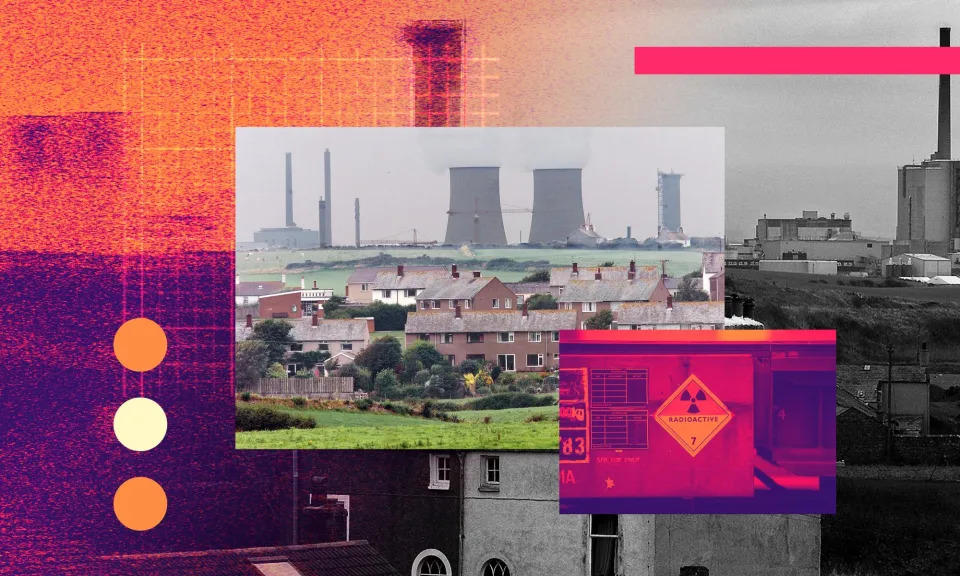
Sellafield, Europe’s most hazardous nuclear site, has a worsening leak from a huge silo of radioactive waste that could pose a risk to the public, the Guardian can reveal.

Concerns over safety at the crumbling building, as well as cracks in a reservoir of toxic sludge known as B30, have caused diplomatic tensions with countries including the US, Norway and Ireland, which fear Sellafield has failed to get a grip of the problems.

The leak of radioactive liquid from one of the “highest nuclear hazards in the UK” – a decaying building at the vast Cumbrian site known as the Magnox swarf storage Silo (MSSS) – is likely to continue to 2050. That could have “potentially significant consequences” if it gathers pace, risking contaminating groundwater, according to an official document.


Cracks have also developed in the concrete and asphalt skin covering the huge pond containing decades of nuclear sludge, part of a catalogue of safety problems at the site.

These concerns have emerged in Nuclear Leaks, a year-long Guardian investigation into problems spanning cyber hacking, radioactive contamination and toxic workplace culture at the vast nuclear dump.

Sellafield, a sprawling 6 sq km (2 sq mile) site on the Cumbrian coast employing 11,000 people, stores and treats nuclear waste from weapons programmes and nuclear power generation, and is the largest such facility in Europe.Interactive

A document sent to members of the Sellafield board in November 2022 and seen by the Guardian raised widespread concerns about a degradation of safety across the site, warning of the “cumulative risk” from failings ranging from nuclear safety to asbestos and fire standards.

A scientist on an expert panel that advises the UK government on the health impact of radiation told the Guardian that the risks posed by the leak and other chemical leaks at Sellafield have been “shoved firmly under the rug”.

A fire in 1957 at Windscale, as the site was formerly known, was the UK’s worst nuclear accident to date. An EU report in 2001 warned an accident at Sellafield could be worse than Chornobyl, the site of the 1986 disaster in Ukraine that exposed five million Europeans to radiation. Sellafield contains significantly more radioactive material than Chornobyl.Interactive

The report said events that could trigger an atmospheric release of radioactive waste at the plant included explosions and air crashes.

Such is the concern about its safety standards that US officials have warned of its creaking infrastructure in diplomatic cables seen by the Guardian. Among their concerns are leaks from cracks in concrete at toxic ponds and a lack of transparency from the UK authorities about issues at the site. The UK and the US have a decades-long relationship on nuclear technology.

Concerns about how Sellafield is run have also led to tensions with the Irish and Norwegian governments.

Norwegian officials are concerned that an accident at the site could lead to a plume of radioactive particles being carried by prevailing south-westerly winds across the North Sea, with potentially devastating consequences for Norway’s food production and wildlife. A senior Norwegian diplomat told the Guardian that they believed Oslo should offer to help fund the site so that it can be run more safely, rather than “run something so dangerous on a shoestring budget and without transparency”.Interactive

The Irish government tried to take action against Sellafield by referring it to a UN tribunal in 2006 over concerns about the site’s impact on the environment.

Scientists are trying to estimate the risk to the public from the leak from the MSSS through “ongoing radiological dose assessments”, using statistical modelling.

Sellafield is trying to extract decades of nuclear waste from MSSS, a facility dating back to the 1960s and described as “one of the highest-hazard nuclear facilities in the UK”, a task that it says could take at least 20 years. It has been leaking for more than three years.

A report in June from the Office for Nuclear Regulation (ONR) said while the current risk from the leak is deemed by Sellafield to be “as low as reasonably practicable”, scientists are increasingly concerned that the full scale of the leak, and the rate at which it may pollute the groundwater, is unclear. Sellafield is understood to argue that the leak poses “no additional risk” to staff and the public.

In 2019, Sellafield reported a leak from the storage unit to the ONR. The leak significantly worsened over the next two years, and a previously unreported document reveals that 2.3-2.5 cubic metres of radioactive “liquor” has been leaking from the facility every day. This liquid is a soup of radioactive magnesium alloy filings dissolved into water, from waste cladding that encased spent Magnox nuclear fuel.

The health implications of radiation exposure vary depending on the dosage, but can include nausea and vomiting, and long-term effects such as cardiovascular disease, cataracts, cancer to those who experience high levels of radiation. High doses can be lethal.Interactive

Inspectors said that it is not possible to work out how many cracks have formed in the silo so are using guesswork and modelling based on leaks from the facility to work out the risk posed to the public and workers at the site.

A committee of scientists, tasked with monitoring Sellafield and other nuclear sites, has warned that the silo needs much closer attention.

In July last year, the Committee on Medical Aspects of Radiation in the Environment noted in its public minutes that “the leak has been continuing at the same rate since October 2020, around 2.5m [cubic meters] per day …”.

However, the extent of the radioactive material lost to the ground from the leak was redacted from the meeting minutes.

A scientist on the committee told the Guardian: “It’s hard to know if transparency is put aside because no one’s brave enough to say ‘we simply don’t know how dangerous this is – other than certainly dangerous’.

“That’s incredibly serious in the context of a site full of horrors and the legacy of experiments no one properly documented.”

Sources have warned that the site’s basic safety requirements are increasingly wearing thin, and long-term dangers are being ignored or uncontained.

“They can’t handle fire or asbestos on site, let alone the crumbling of nuclear containment materials,” one senior Sellafield employee told the Guardian.

There are also grave concerns about B30, a pond containing nuclear sludge and described as one of the most dangerous industrial buildings in Europe.

Described by workers at Sellafield as “Dirty 30”, it contains radioactive sludge from corroded nuclear fuel rods used in old power stations, and its concrete and asphalt skin ribboned with cracks. These cracks have worsened in recent months, according to sources.

Sources familiar with risk reports say they show that more than 100 safety problems at the site are a matter of serious regulatory concern. Other concerns include fire safety problems such as a lack of functioning alarms within First Generation Magnox storage ponds, one of which is B30, daily work stoppages due to a lack of suitably qualified staff trained in nuclear safety, and increasing numbers of contamination and radiation protection incidents

The November 2022 document, seen by the Guardian and prepared by the then chief nuclear officer, Dr Paul Robson, who is tasked with overseeing nuclear safety at the site, revealed a “cumulative risk” posed by failings in a range of areas, from nuclear safety to managing risks from fire and asbestos. The document was sent to Euan Hutton, who at the time was interim site director and recently became Sellafield chief executive.

According to the same internal memo, workers tasked with oversight of safety at Sellafield have “observed evidence … which indicate an erosion of nuclear safety (conventional and environmental) barriers”.

It said this “reduces the effectiveness of the protection of the workforce, the public and the environment against significant events”.

The document confirms accounts from insiders, officials and diplomats that suggest significant safety shortfalls on site. It suggests these problems have worsened over the past decade, dramatically increasing the risk of a big incident at one of the most toxic nuclear sites in the world. It states there are “significant weaknesses” in the company’s safety capabilities.

The sensitivity of the site for the UK’s nuclear weapons programme and ongoing efforts to build and maintain nuclear infrastructure has led to allegations of cover-ups over Sellafield’s safety problems. The allegations of cover-ups were also related to the 1957 fire at the site, which was seen as one of the worst nuclear disasters in European history at the time.

Now, fire safety at Sellafield is a growing concern among insiders, and at the regulator.

The ONR warned in its latest review of the Sellafield site, published in March this year, that “regulatory intelligence indicates that improvements are required in conventional safety, fire safety, cybersecurity and progressing high-hazard risk reduction”.

A Sellafield spokesperson said: “We are proud of our safety record at Sellafield and we are always striving to improve.

“The nature of our site means that until we complete our mission, our highest hazard facilities will always pose a risk.

“We continuously measure and report on nuclear, radiological, and conventional safety.

“Employees are empowered to raise issues and challenge when things aren’t right.Interactive

“Any incidents, including those highlighted by the Guardian, are reported to our regulator, published on our website, and shared for scrutiny in public meetings.”

An ONR spokesperson said: “ONR and the Environment Agency have been holding Sellafield Ltd to account to ensure they are doing everything that is feasible to minimise the consequences of this leak.

“Safely removing the historic waste from this facility (MSSS) and placing it into modern storage facilities, which began in the summer of 2022, is both a national and an ONR priority.”
Sustainability

Can This Startup Revive Soviet-Era Hydrofoil Tech?

The aerospace engineer behind Regent Craft is developing a “seaglider” that could be classified as a boat and travel as fast as 180 mph over water.


A rendering of Regent’s 12-passenger seaglider.
Source: Regent

By Magdalena Del Valle
December 5, 2023 

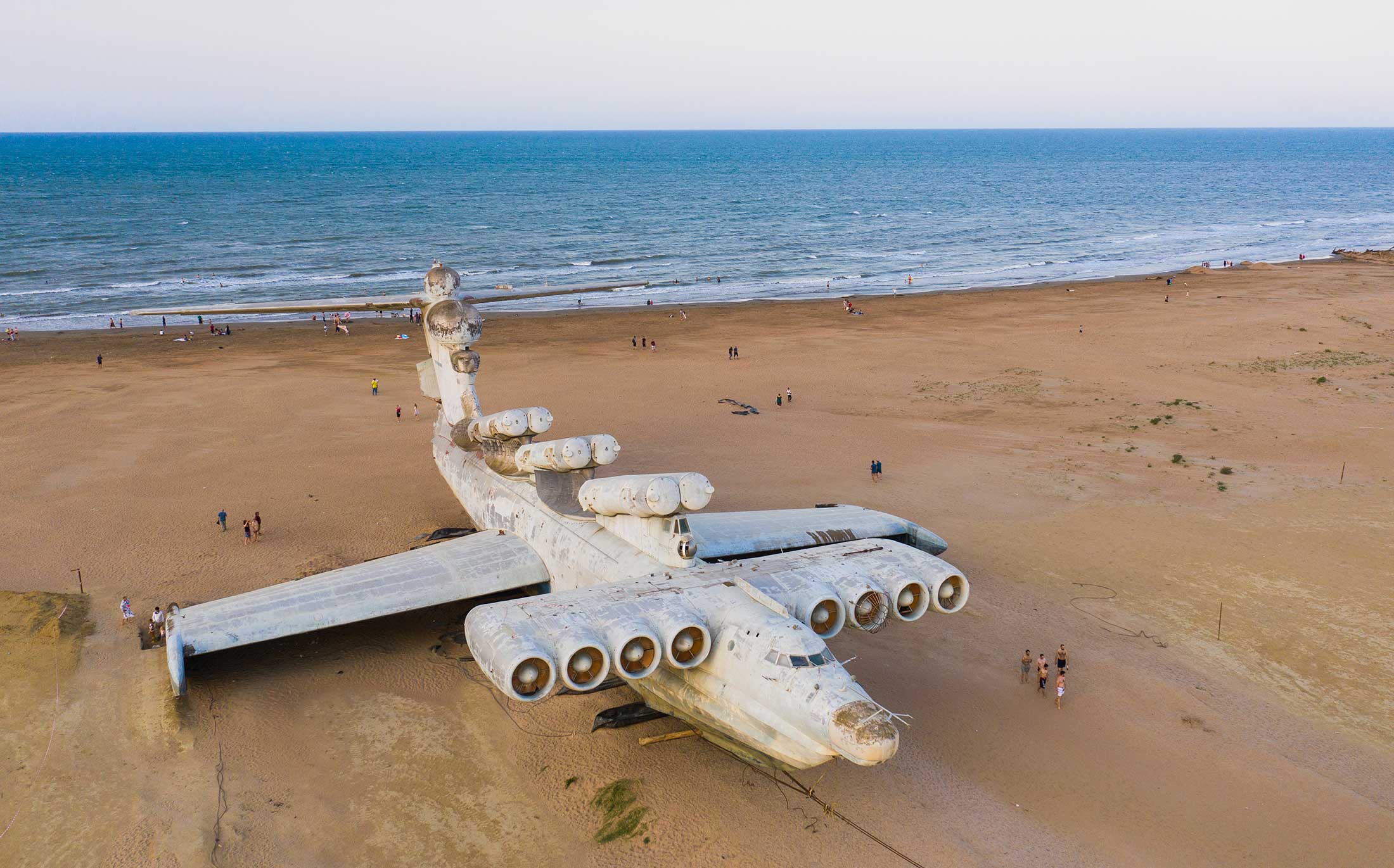
In the 1960s, Soviet engineers built a mashup of a plane and a boat that could fly a few feet above an ocean or lake at high speeds. The vehicle, which they called the ekranoplan, or screenplane, took advantage of a property of airflow that gives extra lift by pushing air down to the surface. But only a few dozen ekranoplans were produced—including one dubbed the Caspian Sea Monster—and the idea was largely forgotten.

Billy Thalheimer says it’s time for another look, at least when the idea is paired with hydrofoil technology. By adding electric propulsion and hydrofoils to improve balance, a revamped ekranoplan—he calls it a seaglider—can offer a carbon-free alternative for overwater routes such as New York to Boston, Los Angeles to San Diego, or Miami to the Bahamas. “There is something inherently novel about a seaglider,” says Thalheimer, an aerospace engineer from the Massachusetts Institute of Technology who in 2020 co-founded Regent Craft Inc., a Rhode Island company dedicated to reviving the idea.

An ekranoplan on the shore of the Caspian Sea in 2022.
Photographer: Alexander Manzyuk/Anadolu Agency/Getty Images

Regent says the hydrofoils—winglike structures under the hull—can solve the limitations the Soviets faced, such as instability, difficulty operating in rough seas and the high speeds needed for takeoff. And without kerosene-burning jet engines, Thalheimer says, seagliders will cost far less than commercial aircraft to operate and maintain.

Regent, an acronym for Regional Electric Ground Effect Nautical Transport, is backed by Silicon Valley heavyweights Peter Thiel and Mark Cuban, and in April it appointed Dennis Muilenburg, Boeing Co.’s former chief executive officer, to its advisory board. In October, Regent raised $60 million from investors including Japan Airlines, Lockheed Martin, and the UAE’s Strategic Development Fund.

The company says seagliders can be technically classified as boats even though they’re designed to fly about 30 feet above the water. Consequently, in most places, they would fall under maritime authority; In the US, that means regulation by the Coast Guard rather than the Federal Aviation Administration, which could make the route to market quicker. Thalheimer, though, insists Regent will adhere to all flight security guidelines. “There is an incredible amount of safety analysis and procedure that goes in,” he says.


Thalheimer says the company has completed successful tests of a remote-controlled prototype with an 18-foot wingspan. And it’s working on a full-scale version with a wingspan of 64 feet—slightly more than a plane of similar capacity—that it plans to test next year. Regent aims to begin commercial operations as early as 2025, offering a 12-passenger model with a range of 180 miles. Later in the decade, it aims to introduce a version that will carry up to 100 passengers.

A Regent prototype.Source: Regent

Richard Pat Anderson, an engineering professor at Embry-Riddle Aeronautical University in Florida questions Regent’s ability to deploy its seaglider as quickly as Thalheimer predicts. Although the science behind the idea is sound, he says, a battery-powered Cessna prototype that seats 12 people has a range of only about 25 miles. And he says Regent is overly optimistic in its predictions regarding FAA approval. “If they’re forced to be regulated under FAA rules,” he says, “it could be years before it wins certification.”

The goal is to make craft that can be recharged in as little as 15 minutes. Regent says its aircraft will depart from standard docks or piers, cruising the harbor at low speeds while floating on their hulls. Once in open water, they’ll rise onto hydrofoils at about 50 mph. Then taking advantage of what’s called the wing in ground effect, they’ll lift off from the hydrofoils and travel just above the surface at speeds up to 180 mph, meaning it might take just over an hour to reach downtown Boston from Manhattan.

France’s Brittany Ferries, Philippine air charter operator INAEC, and Hawaiian regional carrier Mokulele Airlines have placed nonbinding orders for the two models. “We believe they will be successful and that they will be timely,” says Stan Little, CEO of Surf Air Mobility, the parent of Mokulele. “The team they have assembled proved to us that they have the best shot at perfecting the technology.”
CRIMINAL CAPITALI$M
Hedge Fund Trader Shah Extradited to Denmark a Year After Arrest


Adveith Nair and Sanne Wass
Wed, 6 December 2023 

Sanjay Shah   Businessman


(Bloomberg) -- Sanjay Shah, a hedge-fund trader accused of defrauding the Danish state of $1.3 billion in the Cum-Ex trading scam, has been handed over to Denmark to face criminal charges just over a year after he was arrested in Dubai.

Shah was taken into custody by police on his arrival in Copenhagen on Wednesday, and will be taken to court for a bail hearing on Thursday morning, Danish police said in a statement.

Denmark’s foreign minister, Lars Lokke Rasmussen, said he was “more than satisfied” with the extradition and that it sends “an important signal that you cannot achieve impunity by staying abroad.”

Denmark and the United Arab Emirates signed an extradition deal in March last year, with Shah’s handover being one of the main purposes.

Danish prosecutors allege Shah oversaw the Cum-Ex trading scam involving a global network of bankers, lawyers and agents who earned vast sums of money from Denmark’s tax authority by using a loophole on dividend payouts to reap duplicate tax refunds. Shah has consistently maintained his innocence.

“The extradition process has been slow, opaque and haphazard,” Shah’s Danish defense lawyers, Kaare Pihlmann and Mikael Skjodt, said in a statement earlier on Wednesday. “We are relieved that the uncertainty is now over.”

Shah’s trial in Denmark has already been delayed three times because he hadn’t been extradited on time.

While the case is now scheduled to begin in January, it’s likely to be further postponed as his lawyers need three to six months to prepare, Pihlmann told Bloomberg by phone.

Denmark has brought criminal charges against a total of nine people related to the scandal, in which the state was defrauded of about 12.7 billion kroner ($1.9 billion). Shah will be tried with British hedge fund trader Anthony Patterson, who was extradited to Denmark in July and jailed pending trial.

The Nordic nation is also pursuing a civil lawsuit against Shah and his associates in London, where a trial is scheduled to go ahead in April after the UK’s top court rejected attempts by Shah’s lawyers to stop the case.

Chris Waters of London firm Meaby & Co Solicitors, coordinating the worldwide defense of Shah and his companies, said the trades undertaken by Shah were lawful and that he will “vigorously defend himself in both the Danish and London courts.”

“Mr. Shah continues to challenge whether he can receive a fair trial in Denmark and this matter is ongoing,” Waters said.

Gray List


UAE’s WAM news agency said the minister of justice had approved the extradition. The move “confirms the UAE’s determination to collaborate with international partners in the pursuit of international justice, and to strengthen the integrity of the international financial system,” WAM said.

The Gulf country is ramping up efforts to exit a global watchdog’s “gray list” of countries subject to greater oversight for shortcomings in tackling illicit finance. Last year, officials said they planned to sign multiple extradition agreements as part of efforts to cleanse its image.

That followed Shah’s arrest, and after authorities detained Atul and Rajesh Gupta — who’re wanted in South Africa on charges of money laundering and fraud. A local court this year denied the African nation’s plea to extradite the Gupta brothers.

--With assistance from Karin Matussek.

(Updates with details on Shah’s arrival in Copenhagen in second paragraph)

Most Read from Bloomberg Businessweek
TALIBAN'S BFF
China Says Taliban Government Must Reform to Get Recognized

Bloomberg News
Tue, 5 December 2023 


(Bloomberg) -- China said the Taliban government in Afghanistan should make major changes to its style of governance in order for Beijing to officially recognize it.

“We expect Afghanistan to respond to the expectations of the international community and apply moderate policy, have friendly exchanges and engagement with regional countries and other countries in the world, and return back to the big family of the world as soon as possible,” Foreign Ministry spokesman Wang Wenbin said at a regular briefing Tuesday in Beijing.

If those conditions were reached, “it would be natural for China to recognize the government of Afghanistan,” Wang said. “China always believes that Afghanistan should not be excluded from the international community.”

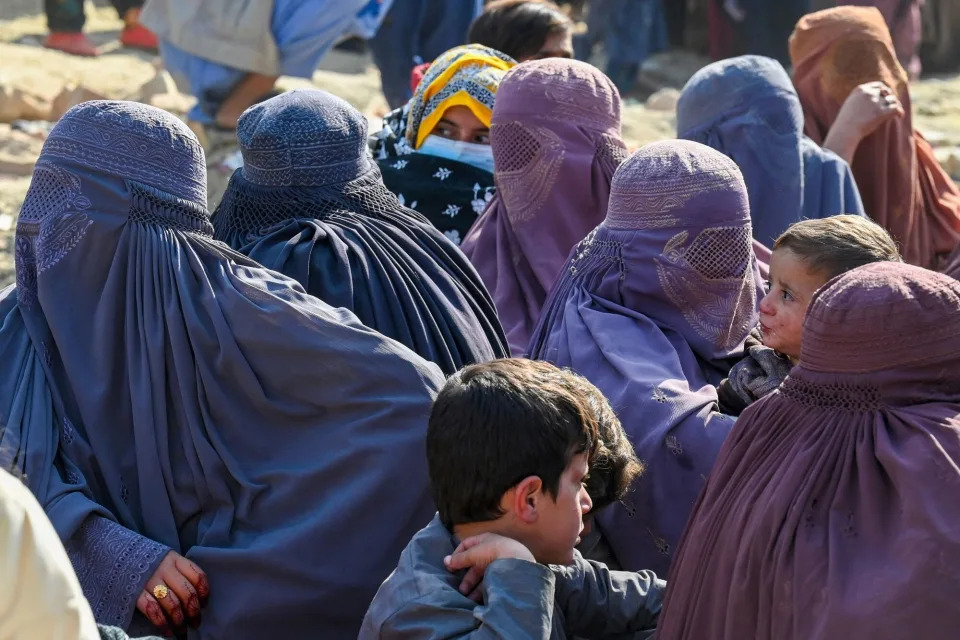
The comments mark a subtle shift in China’s stance toward the Taliban because Beijing has previously said it won’t interfere in Afghanistan’s affairs. Since ousting the US-backed government and taking power in 2021, Taliban-led Afghanistan has yet to gain full diplomatic recognition from any country largely because of its repressive policies toward women, including banning them from education and work.

A handful of nations, like China, Pakistan and Russia, have accepted Taliban diplomats in their countries even though they don’t formally recognize the government. The Taliban also took control of Afghan diplomatic missions in India late last month.

Read: Taliban Gets Diplomatic Lift as China Envoy Presents Credentials

Beijing is building closer ties with the Taliban as it seeks to gain influence in the South Asian country after the US withdrawal. In September, China became the first nation whose ambassador presented diplomatic credentials to the Taliban. A subsidiary of China National Petroleum Corp. also signed an agreement with the Taliban to extract oil from the northern Amu Darya basin.

Afghanistan sent Alhaj Nooruddin Azizi, the minister of industry and commerce, to the Belt and Road Forum in Beijing in October. Chinese leader Xi Jinping used the event to woo emerging economies known as the Global South to his infrastructure initiative — and also make his case for challenging the US-led world order.

Azizi said his government wanted to prioritize investment from China in agriculture, mining and energy.

More: How New Taliban Crackdown Fits in Afghan Women’s Saga: QuickTake

(Updates with more context.)
Opinion

Centrists are out of favour. But as the Netherlands is learning, the alternative is far worse


Arnon Grunberg
THE GUARDIAN
Wed, 6 December 2023

Photograph: Jeroen Jumelet/EPA

It has become something of a cliche to reflect on the state of your country after you have woken up to – putting it somewhat euphemistically – disappointing election results.

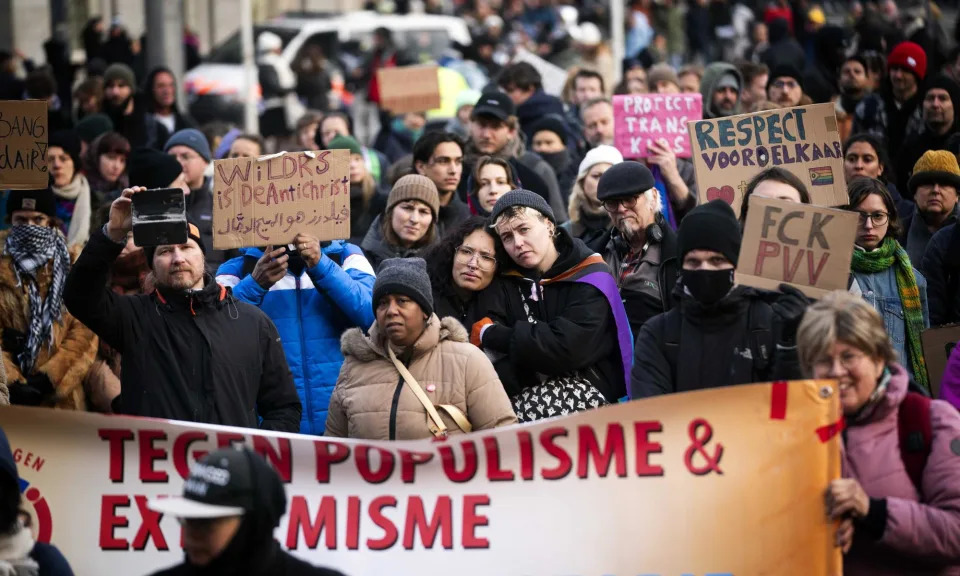
Be it the Brexit referendum in 2016, Donald Trump’s victory mere months after that, or the election victory of Geert Wilders and his Party for Freedom (PVV) in the Netherlands, the reactions were very similar. Analysts claimed that voters hadn’t been properly listened to and that neoliberalism had left a trail of destruction, and the failure of the left was pointed out. Then came the obligatory mention of the elite, who are said to have alienated part of the electorate. The citizen no longer recognises himself in the administrators. As if citizens would have done so a few decades ago.

To be fair, the Netherlands was once “pillarised”. Before being secularised, people were Catholic, Protestant, Reformed, socialist or liberal, and for as long as most citizens remained loyal to those pillars, they sought politicians for whom the same applied. Secularisation and depillarisation were considered a great liberation – the somewhat sentimental sense that something had been lost in that liberation only set in later. What was left of you without a pillar to cling to? “Dutch” turned out to be too feeble as an identity on its own. As Queen Máxima put it in 2007, when she was still a princess: “The Dutchman does not exist.”


And it is equally uncertain whether such a thing as Dutch politics even still exists. Since 2001, the year of the attacks in New York and Washington, so-called centrist parties have been steadily weakening in almost all countries in the west. In France, first Jean-Marie Le Pen and now Marine Le Pen, with her National Rally, hollowed out the electorate of both the socialists and the traditional right, and in Flanders the far-right Vlaams Belang proved particularly alluring to many voters – so alluring that many Flemish people wanted to liberate themselves not only from foreigners but from the Belgian state itself.

In the US, as Trump and then Trumpism took over the Republican party, some American evangelists probably saw and see in Trump the antichrist who brings the coming of the messiah closer. Some Americans appeared charmed by Trump’s uninhibited “honesty”; something that the Dutch populist Pim Fortuyn, who was murdered in 2002, also prided himself on: “I say what I think.

Although certain aspects of Wilders’ win particularly pertain to the Dutch context, it fits within a wider international development. The western nation state appears to be less unique than many of its residents had hoped, although many Dutch people like to look at their own country through a narrow lens, undoubtedly in the hope of preserving some of their uniqueness.

Larry Bartels, an American political scientist, has claimed that the pool of Europeans willing to vote for anti-democratic parties is stable, so that there is no question of a jerk to the right. But the results in the Netherlands still point towards a gradual erosion of the left, and towards the almost complete decimation of the centrist parties. The Christian Democratic CDA landed a historically poor result, with five seats (out of 150), and the merger of the social democratic PvdA and the liberal-ecological GroenLinks got less than half of what both parties tallied separately in the 1970s and 1980s. A large minority or a small majority of the Dutch electorate finds progressive ideals, to use a populist turn of phrase, zum kotzen.

After freeing themselves from the church, people want to liberate themselves from the secularised counterpart of Christianity, humanism, also called social democracy. It is not without reason that the right wing of the electorate likes to use the phrase, always with mild disgust, “leftist church” to refer to their opponents inside politics and beyond. Unlike in the US, many Dutch people believe that religion is something for the stupid, for people who are not yet enlightened.

This does not refute Bartels’ theory, but in the Netherlands the claim can be made: if the pool of antidemocratic or extreme rightwing voters is indeed stable and not growing, then this reservoir comprises at least 25% of the Dutch electorate. What matters is that this minority is so large that, for some time now, every election has contained the real risk of a pivotal disruption.

Bartels exonerates the people as a group; it is the politicians who must lead the sheep in the right direction. After all, the voter is being seduced. It is a sympathetic idea: people are susceptible to temptation, and perhaps it is a characteristic of an ageing democracy that there is never a shortage of people willing to seduce them. The era when politicians accepted that there were limits to how they could mobilise voters, that breaking taboos didn’t guarantee liberation, undoubtedly also upheld by the memory of the massacres of two world wars, is behind us.

The centre is drying up, in some countries faster than in others, but the trend is observable almost everywhere. That centre is all too easily portrayed as elitist, oblivious to the concerns of the so-called ordinary citizen, sometimes even as the corrupt extension of the business world or as a proxy for foreign powers. Some of these accusations are justified. The Netherlands has seen government officials leaving politics only to become lobbyists for the industry they were formerly supposed to regulate. Not good. But to dismiss the entire centre is an antidemocratic reflex that can only cause harm. That reflex is also present in the left knee: some progressive analysts, thinkers and politicians have seemed in recent years to have a keen desire to declare the Dutch universe the worst of all possible universes, undoubtedly in the hope of bringing about the desired revolution. They are unwilling to see that their rhetoric did not help the progressive cause, but provided antidemocratic and far-right forces with new ammunition and new impulses.

For this reason, in 2021, I spoke up for the Dutch prime minister, Mark Rutte, who was facing the prospect of resigning because he was accused of lying about the process of forming his government. I believed that Rutte was the katechon, a concept from the New Testament, the opposing force that delays the arrival of the antichrist (the far-right parties). In practice, Rutte was a relatively left-leaning rightwing politician who, in terms of pragmatism, prudence and strategic finesse, had much in common with Angela Merkel, still a hero for many progressive Dutch people. Where Rutte participated in elections, he kept the PVV reasonably small; that was his merit.

This summer, Rutte announced his departure, thereby bringing an end to the katechon in Dutch politics. Who should take his place in countering the antidemocratic forces in the Netherlands is unclear. Wilders’ party has grown so large that it will be difficult to govern without him.

Ironically, most electoral arsonists never intended to start a wildfire. They merely wanted to modestly express their understandable dissatisfaction, which also entails expectations no government will ever be able to meet. Perhaps only a god could. But in the Netherlands and its surroundings, God has finally been declared dead, for ever.

Arnon Grunberg is a Dutch novelist and essayist
Russia sees shrunken, neutral Ukraine as basis for peace 
SAME OLD, SAME OLD


AFP
Wed, 6 December 2023 

Maria Zakharova said for any peace deal to happen, Ukraine should have neutral status
 (Roman PILIPEY)

Russia believes a lasting peace with Ukraine can only happen if the West stops sending arms and if Kyiv accepts "new territorial realities", Russia's foreign ministry told AFP.

Ministry spokeswoman Maria Zakharova said in an interview that Moscow was open to negotiations but added: "At the moment, we do not see the political will for peace either in Kyiv or in the West".

She also said that, for any deal to happen, Ukraine should have neutral status and the rights of Russian-speaking residents should be protected.

"We will not allow the existence on our borders of an aggressive Nazi state from whose territory there is a danger for Russia and its neighbours," she said.

Russia has for years tried to paint the pro-Western Ukrainian government led by President Volodymyr Zelensky -- who is Jewish -- as neo-Nazi and used this as a pretext for its offensive in Ukraine.

Zakharova also dismissed the "peace formula" proposed by Zelensky which includes a stipulation that Russian troops must leave all of Ukraine.

She said Kyiv's proposal put forward last year "has nothing to do with peace and is an array of ultimatums for Russia to justify continued military action".

- Ukraine wants Russian 'capitulation' -


Zakharova accused Kyiv of not wanting to "take into account current realities and... pursuing a completely different aim -- the capitulation of our country with the help of the West".

"Of course, based on these conditions, we will not speak with anyone from the Ukraine leadership," she added.

Zakharova added however that Moscow could restore a grain deal that allowed Ukraine to export grain through the Black Sea, but only if Western sanctions on Russian agriculture companies were lifted.

"The possibility of reviving the Black Sea initiative remains," she said in a series of written answers to questions.

Russian President Vladimir Putin ordered troops into Ukraine in 2022, triggering unprecedented Western sanctions that have largely isolated Russia from the West.

Zakharova said that those sanctions had "boomeranged" on the West and had instead had the effect of "confirming the Russian state's international authority".

Moscow has since redirected much of its vital oil and gas exports to China and India, and imposed currency controls to prop up its volatile currency, the ruble.

- Western sanctions 'boomeranged' -

The Russian economy shrank in 2022, but started to grow again in the second quarter of this year despite rising inflation rates.

"The collective West's illegal restrictions have not diminished Russia's geopolitical influence," Zakharova said.

On the first anniversary of the conflict this year, the United Nations General Assembly adopted a resolution calling for a full Russian withdrawal from Ukraine.

The resolution was backed by 141 member states, with 32 countries including China and India abstaining, and seven countries including North Korea voting against.

But Zakharova pointed out that a large majority -- 80 percent -- of the world's population lived in countries that have not adopted any sanctions against Russia.

Instead, she said Moscow's ties with many countries in Asia, Africa, the Middle East and Latin America are developing "steadily" despite "desperate" efforts by the West to turn them against Russia.

She said new systems for interbank relations, international settlements and trade routes not tied to the West were "being actively developed and set up".

In Asia, she said China was "a like-minded partner" with whom Russia was pursuing ties based on "comprehensive partnership and strategic co-operation".

She said Russia was also strengthening relations with North Korea and accused the US of "pursuing a path of escalation of tensions on the Korean peninsula by increasing miliary activity".

"This US course is dangerous and fraught with serious consequences," she said.

During a visit to Seoul in November, US Secretary of State Antony Blinken warned that military ties between North Korea and Russia are "growing and dangerous", and urged China to restrain Pyongyang.

Zakharova said Russia would support any country with a foreign policy not aligned with the West, offering "honest and good-faith co-operation not based on diktat".

bur/rox
How Ukraine gave up its nuclear weapons in exchange for hollow security guarantees

The New Voice of Ukraine
Wed, 6 December 2023

DRAMATIS PERSONAE


Mikhail Gorbachev
Leader of the Soviet Union from 1985 to 1991

Leonid Kuchma
The second president of Ukraine


Bill Clinton
42nd President of the United States

Leonid Kravchuk
Ukrainian politician


George H. W. Bush
President of the United States from 1989 to 1993


LONG READ
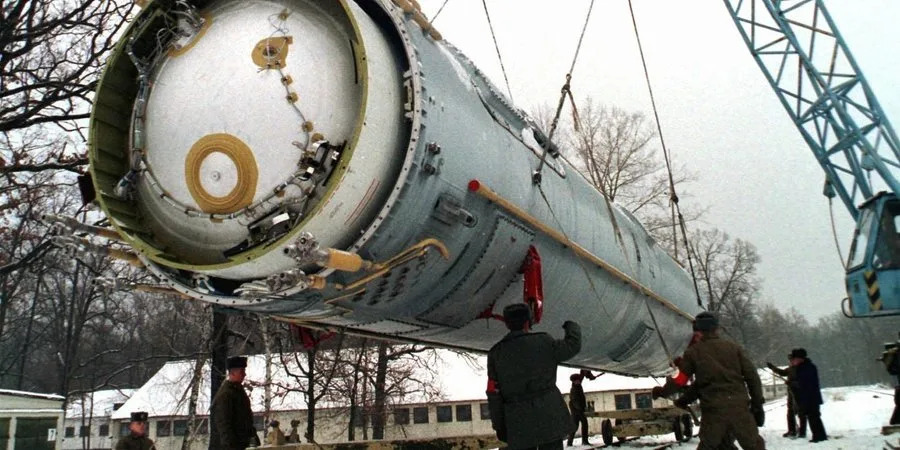


Preparation of the SS-19 ballistic missile for dismantling at the base in Vakulenchuk, Zhytomyr region


For three years in the early 1990s, Washington encouraged Kyiv to abandon its nuclear arsenal. In December 1994, having finally gotten the upper hand, the United States provided Ukraine with vague promises of assistance should the young country face military aggression.

On the occasion of the 29th anniversary of the Budapest Memorandum, NV is re-releasing material from its archives which was first published in Issue No. 4 of NV magazine dated February 2, 2018.

Under four hundred words was all that it took to decide the fate of the third-largest nuclear arsenal in the world, which Ukraine had inherited from the Soviet Union.


These words were packaged into six paragraphs, and the entire document, known as the Budapest Memorandum, took up only one and a half pages. It was signed on December 5, 1994, by the leaders of Ukraine, Russia, the United States, and the UK.

From that moment, Kyiv recognized its non-nuclear status and as such joined the Treaty on the Non-Proliferation of Nuclear Weapons (NPT).

In the memorandum signed by then-President Leonid Kuchma, the procedure for the protection of the country voluntarily renouncing its most powerful weapons was merely outlined. In addition, in the Ukrainian and Russian versions, the text was titled as Memorandum on Security Guarantees, whereas in English, it used the word “assurances.” And in the following five points of the document, the United States and the UK did not guarantee, but only confirmed their commitment to: 1) respect the independence of Ukraine within its existing borders; 2) never use any weapon against its territorial integrity; 3) refrain from economic pressure on Ukraine which would threaten its sovereignty; 4) to provide assistance to the country in case of aggression against it; 5) not use nuclear weapons against the country. The sixth and last commitment of the signatories was a promise to advise Ukraine if any of the above five situations arise.

Two days after the summit, the secretariat of the UN General Assembly registered a letter from the permanent representatives of the four signatory countries. "We would be grateful if you had the text of this letter and its appendix (in fact, the memorandum itself), accepted for circulation as a document of the General Assembly," the officials wrote in the message. From Russia, the letter was signed by Sergey Lavrov, the current head of the Russian Foreign Ministry, who recently assured: "We continue to respect the territorial integrity of Ukraine in those borders that were formed after the referendum in Crimea and after the reunification of Crimea with the Russian Federation."
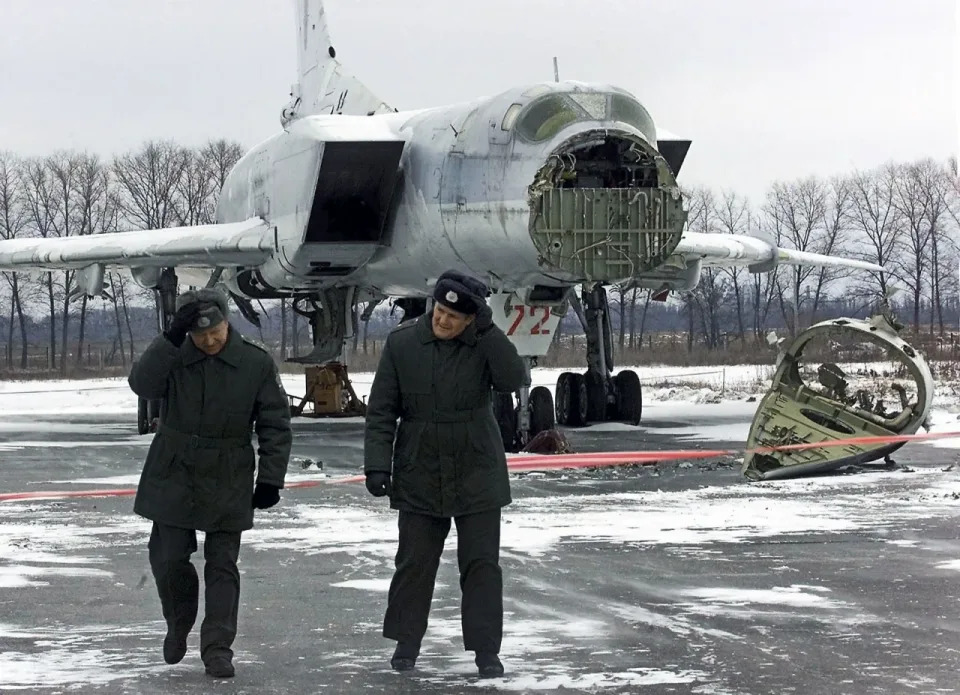
Ukrainian Tu-22 strategic bomber being dismantled AP

Catching the moment

On Sunday, February 12, 1989, three weeks after his inauguration, President George H. W. Bush gathered six leading experts on the Soviet Union at his home in Kennebunkport. They consulted in the bedroom — the only room that was heated in winter. "I am not very interested in political recommendations regarding the USSR. That can wait," Bush said. "First, we need to know what's going on there and what we're dealing with."

At that time, the Soviet Union was already crumbling before our eyes. Opposition movements had recently declared themselves in all the sister republics. The Kremlin suppressed their activity by force.

The January 1991 events in Lithuania were the most revealing. There was an uprising in Vilnius, during which Soviet paratroopers and the Alpha special forces unit stormed the opposition-held television center. Fifteen protestors were killed, the Kremlin blocked gas deliveries to the republic, and all of this was shown live by the Western media. Soviet leader Mikhail Gorbachev denied giving the order to fire on the protestors, but his worldwide popularity as a reformer suffered greatly because of the events.

On the eve of the London Summit of the Seven World Leaders (G-7) in May 1991, the world press trumpeted the economic collapse of the Soviet Union and its astronomical foreign debts. Gorbachev, who had been invited to attend, was called a "poor communist." Reluctantly, he went to London.

Ed Hewett, Bush's aide, then persuaded his Soviet colleague Andriy Kokoshin, with whom he was preparing a meeting: "For God's sake, just don't ask for money." But the Kremlin urgently needed financial assistance and debt restructuring to strengthen the ruble and to purchase consumer goods.

The humiliated Gorbachev hoped for at least a hint of possible membership in the G-7, but he was dismissed as a careless schoolboy. Then he started talking about reducing nuclear weapons with the confidence that this was his "trump card". Bush was waiting for exactly that, and on July 30, he was already in Moscow.

The first conversation with Gorbachev, already the president of the USSR, was spoiled by the news of the murder of six Lithuanian customs officers by a group of unknown persons. “Indignant at the fact that it was Bush who informed him about the violence committed on what was, in his opinion, still Soviet territory, Gorbachev declared: 'This is the first I've heard of this’ and ordered his subordinates to find out what happened,” writes Strobe Talbott (Bush's adviser on the USSR) in the book At the Highest Levels: The Story of the End of the Cold War.

In private conversations at Gorbachev's dacha, Bush gently insisted that Moscow recognize the independence of the three Baltic republics. The master of the Kremlin asked to give him one more day to think, but at the end of the visit, he did not budge on this issue.

However, the leaders of the two countries signed an agreement on the reduction of strategic offensive weapons (START-1) on 47 pages and 700 sheets of protocols. Both signed the document with fountain pens made of the same metal as the medium-range missiles banned by the treaty.

The next day, August 1, Bush left for Kyiv.
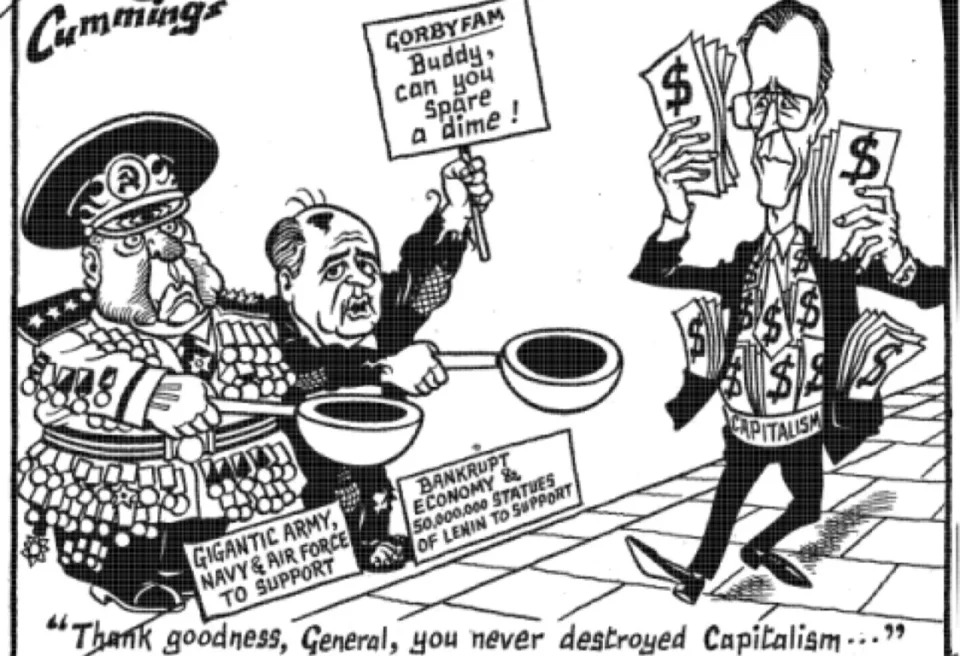

1990 cartoon depicting Gorbachev begging H.W. Bush for cash AP


Chicken Kyiv

In March 1991, nine republics of the USSR held a referendum on the renewal of the Union Treaty. The Baltic states, Georgia, Armenia, and Moldova did not participate. In the referendum, 70% of Ukrainians voted to preserve the Union.

But at the same time, in the Lviv, Ternopil, and Ivano-Frankivsk oblasts, the referendum also included the question, “Do you want Ukraine to become an independent state?” 88% of citizens answered "yes." In particular, and because of these sentiments, Kyiv was in no hurry to sign the updated union treaty.

Bush flew to the Ukrainian capital to calm these centrifugal forces, but in fact only intensified them. Gorbachev refused to fly with Bush so as not to be in his shadow. In his stead, he sent Vice President Gennady Yanaev, an old apparatchik. “The Ukrainians took advantage of his presence to show their guts to the Kremlin,” writes Talbott. Hewett noted that they treated him more like ‘the head of the All-Union Association of Lepers.’ During the breakfast held between the U.S. and Ukrainian delegations, the languages ​​of communication were English and Ukrainian. Yanaev did not speak either of them, and his face sometimes showed boredom, then irritation.”

Then came Bush's historic address to the Verkhovna Rada, the Ukrainian parliament. It had been prepared over the course of several weeks, and the final text was drawn up by Condoleezza Rice, then an assistant to the president. The head of the White House did not condemn Ukrainians’ desire for independence, but directly called on them to remain in union with Russia.

"Freedom is not the same as independence," said Bush. “Americans will not support those who seek independence to replace tyranny from the center with local despotism. They will not help those who promote suicidal nationalism based on ethnic hatred.”

Although the Rada responded to Bush's speech with applause, the last sentence angered many in the chamber. Ivan Drach, the leader of the People's Movement, the most powerful party which stood for Ukraine’s sovereign rights, declared, “Bush came here as an envoy of Gorbachev. He spoke about Ukrainian independence no less radically than our own communists!"

Soon, the New York Times published a column by William Safire, a speechwriter for former President Richard Nixon. He accused Bush of pandering to Moscow's hegemony against the course of history. As an illustration, Safire mentioned the president's speech in the Rada, calling it "stunning, in the style of Chicken Kiev speech.” This moniker soon became a meme and continued to affect the president greatly.

Just a few days later, on Aug. 18, 1991, Communist Party officials, led by the same Yanaev, tried to force Gorbachev out of office and curtail the perestroika. But by Aug. 22, the conspirators were in handcuffs, and one by one the Soviet republics declared independence.
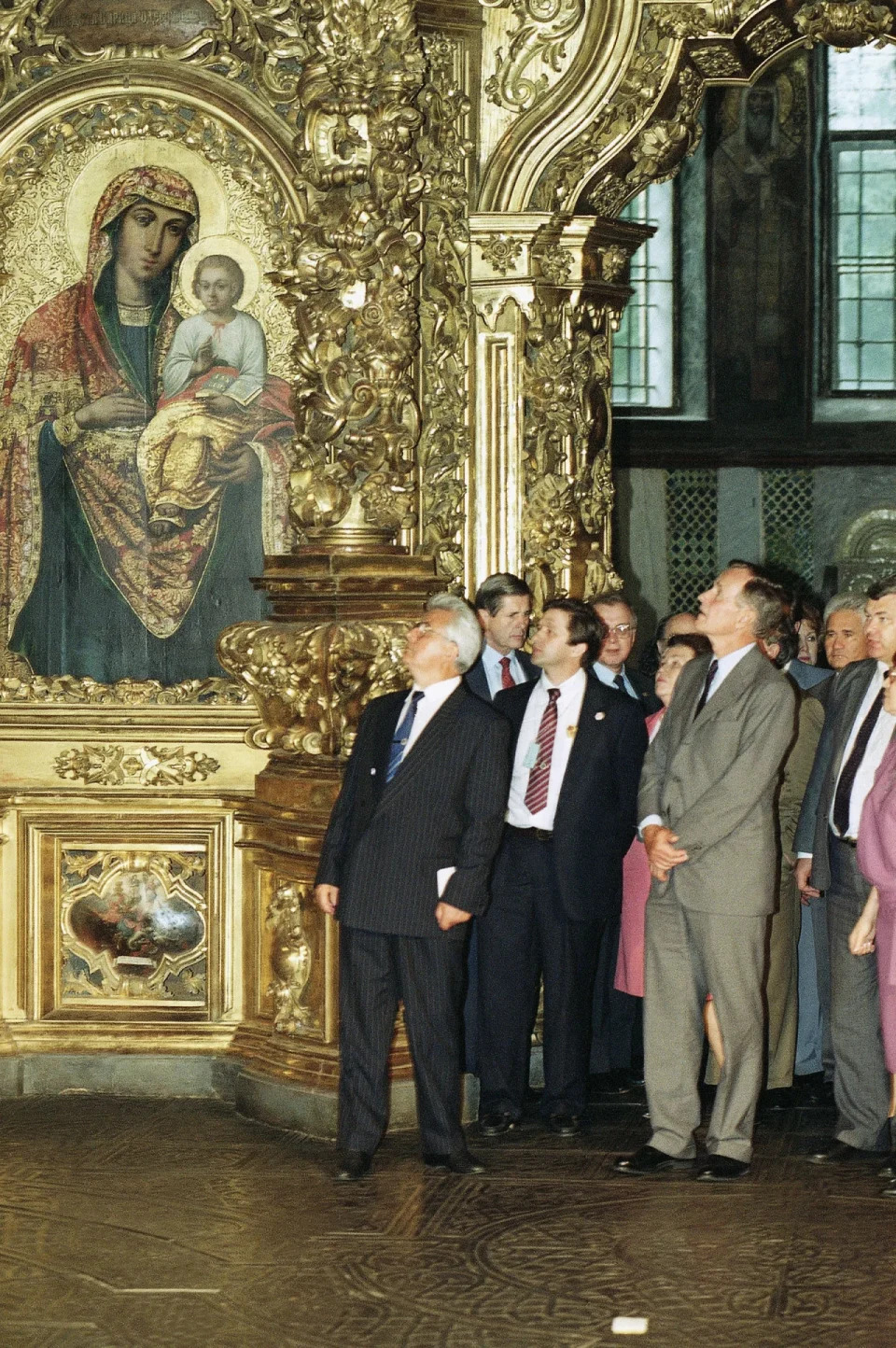

Kravchuk and H.W. Bush in Kyiv's St. Sophia Cathedral, 1991 AP


A difficult divorce

In December 1991, the leaders of Ukraine, Russia and Belarus reached an agreement on withdrawing from the USSR. Since Presidents Leonid Kravchuk, Boris Yeltsin, and the Chairman of the Parliament of the Belarusian SSR Stanislav Shushkevich signed the document late at night, they informed Bush about it immediately. While it was daytime in the United States, Gorbachev was asleep, and would have to wait until morning.

A couple of weeks later, the Soviet president resigned.

The West won the Cold War, but now, in addition to Russia, the successor of the USSR, independent Ukraine, Belarus, and Kazakhstan joined the ranks of nuclear powers.

As of the end of 1991, Kyiv inherited 176 intercontinental ballistic missiles: 130 liquid-fueled SS-19s with six warheads each and 46 solid-fueled SS-24s with ten warheads per missile. It also had about 40 strategic bombers, along with 1,514 to 2,156 strategic nuclear warheads and from 2,800 to 4,200 tactical ones.

With economic carrots and sticks, Washington led Ukraine, Kazakhstan, and Belarus to joining START-1 in Lisbon in May 1992. Alma-Ata and Minsk soon accepted the NPT, after which they immediately began to get rid of their nuclear arsenals. Kazakhstan even managed to sell 600 kg of uranium from dismantled warheads to the United States.

The Verkhovna Rada ratified the Lisbon Protocol only six months later, agreeing to surrender 42% of the nuclear arsenal with thirteen conditions on safety and financial compensation.

Russia has constantly provoked resistance to giving up nuclear weapons. In 1992, the Russian Supreme Soviet began to study whether Crimea was legally transferred to Ukraine. A year later, Moscow parliamentarians declared Sevastopol to be a Russian city. Boris Yeltsin, President of the Russian Federation, said that he was ashamed of this decision, but the confrontation only grew.

In November 1993 in the Crimean town of Massandra, the presidents of Russia and Ukraine agreed on a 50/50 division of the Black Sea Fleet. Kyiv did this in order to repay an $800 million natural gas debt to Moscow. However, 80% of the ships in the fleet raised Russian flags, and Yeltsin did not react to this in any way.

In March 1994, referenda were held simultaneously in Crimea and Donbas, despite Kyiv's declarations that they were illegal. More than 80% of the inhabitants of the peninsula demanded dual citizenship — Ukrainian and Russian — and wanted greater powers for the Crimean President. In February, Yurii Meshkov was elected to this post. Residents of Luhansk and Donetsk Oblasts voted in favor of a federal system and Russian as a second state language.
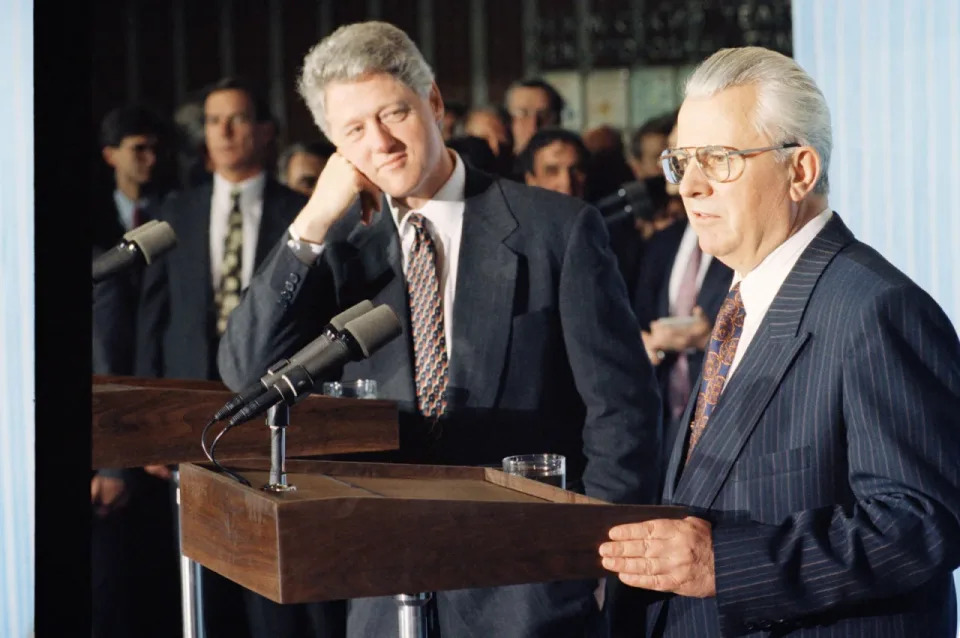

Bill Clinton and Leonid Kravchuk in 1994 AP


Vain hopes

Throughout 1992, Kyiv and Washington assessed the cost of disposing of Ukraine's nuclear arsenal. Kravchuk eventually put the sum at $174 million. Washington added another million. But the Kyiv soon realized that it had greatly underestimated the price.

With the inauguration of Bill Clinton in January 1993, Kyiv had hopes for Washington being more generous.

Roman Popadyuk, the first U.S. Ambassador to Ukraine, wrote in a report: on January 20, on the day of President Clinton’s inauguration, the ambassador was visited by Dmytro Pavlychko, the head of the international affairs committee of the Verkhovna Rada. He handed Popadyuk a draft treaty, according to which the United States would undertake to provide military aid to Ukraine in the event of an attack on it.

The ambassador also reported on Kravchuk's phone conversation with the White House on June 12, 1993: “[Clinton] expressed his willingness to extend food credits and grants. From the G-7, Kravchuk requested funding in the amount of $100 million for small businesses, a stabilization fund between $1 and $1.5 billion, and $300 million for privatization and solving problems with Chornobyl.”

But back in March, the head of the Ministry of Foreign Affairs, Anatolii Zlenko, called for an amount of $2.8 billion. His subordinate, Oleh Bilorus, who was Ukraine’s ambassador to the United States, had already announced $3 billion in compensation and the same amount for disposal costs.

Meanwhile, then Prime Minister Leonid Kuchma convinced the Rada to keep 46 solid-fuel missiles, which were the most effective ones.

The statement from Kuchma –the previous director of Pivdenmash, the missile factory at which the nuclear power of the USSR was forged – alarmed the West for good reason.
Stops on the way

Clinton paused until Kravchuk tried to take an even stronger position. On January 14, 1994, a summit of the leaders of Russia, Ukraine, and the United States on disarmament issues was scheduled in Moscow. But on the eve of the meeting, the press reported that Kravchuk was unlikely to take part in it, as he would be busy receiving the President of Kazakhstan.

Clinton apparently found out about this while already on the way to Russia on January 12. He dialed a Ukrainian colleague directly from aboard Air Force One, informing him that he would fly to Kyiv before Moscow. In Boryspil, Kravchuk waited half an hour in the cold for his guest to disembark his plane. They spoke for an hour and a half right there at the airport.

“Clinton and Christopher [Warren, the Secretary of State], who were not in the habit of reprimanding heads of state, made an exception this time,” They told Kravchuk as bluntly as possible that if he reneged on the agreement already reached, it would be a serious step backwards in Ukraine's relations with both Russia and the United States." Kravchuk, who, according to Talbott, was "shaking all over," promised Clinton not to throw out any tricks at the last minute.

Two days later, in the Russian capital, the three presidents signed a joint statement on the conditions for the accession of Russia and Ukraine to the NPT. Moscow received $60 billion for reducing its nuclear arsenal, while Kyiv agreed to completely dismantle its own in exchange for assurances of U.S. support and $900 million.

“I said that we should agree: the word guarantee in the English document will be understood as an assurance,” writes ex-U.S. ambassador to Ukraine Stephen Pifer, who was a member of the commission for the preparation of the statement. “It was important for us, as in our language, guarantees are like a commitment to NATO or Japan – it presupposes a response by U.S/ forces. We explained to the Ukrainians that in case of a violation of the memorandum, we are not ready to give Ukraine military guarantees. Kyiv understood this. It was their choice."

The statement fundamentally contradicted the Lisbon Treaty on the partial disarmament of Ukraine. The Verkhovna Rada accused Kravchuk of exceeding his powers, and he agreed to early presidential elections, which he lost to Leonid Kuchma.

The former Pivdenmash director quickly forgot about the 46 missiles. In November, four months after his election, new Ukrainian President Kuchma convinced the Rada to have Ukraine join the NPT as a non-nuclear country. For some reason, he spoke about the closed cycle of production of nuclear warheads, for which ten years and $200 billion would be needed. “Who will stand up and say to whom all the property of Ukraine should be pledged in order to make it happy with its own nuclear arsenal?” asked the new president.

On November 18, the Rada approved the decision to abandon the country’s nuclear weapons, but with the caveat that the NPT would be ratified only after clear security guarantees from the United States and Russia.
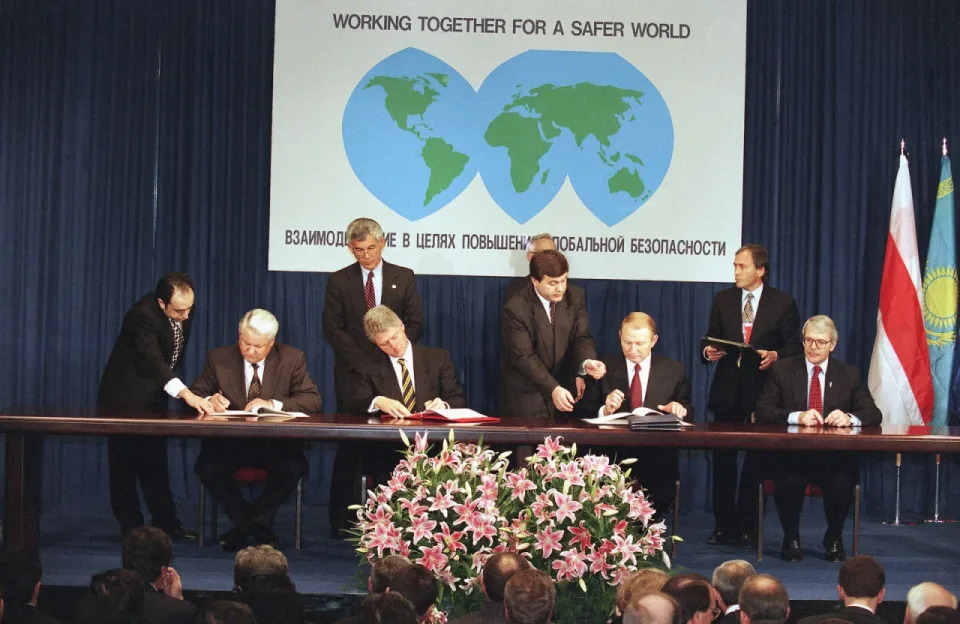

December 1994 summit where Ukraine agreed to dismantle its nuclear arsenal AP


Behind the scenes of the summit

At the beginning of December 1994, the heads of 53 states arrived in Budapest. Despite all the interest in the summit, its organization was not up to par. The negotiations took place in the four-star Novotel hotel, where there were only six rooms for official meetings.

Dmytro Tkach, the Ukrainian ambassador to Hungary, was responsible for arranging the Ukrainian delegation. The organizers provided only one car – just for the president. The Ukrainian Ministry of Foreign Affairs had no money, so the delegation was accommodated at the hotel itself. The head of Kuchma’s administration at the time, Dmytro Tabachnyk, ordered only the presidential suite in the old Gelert Hotel for Kuchma himself.

Tkach asked the Novotel's director for his office for meetings of the head of the Ukrainian delegation. In two days, Kuchma held 26 negotiations there.

On the eve of the signing of the memorandum, the Kazakh diplomats made a fuss, arguing that the United States should give guarantees to their country and Belarus, as well. Kyiv did not agree to accept Minsk and Alma-Ata into its company, since they had given up their weapons earlier. Tkach succeeded in persuading the Americans to have Clinton and Yeltsin separately sign security assurances with the Kazakhs and with the Belarusians. "[Alexander] Lukashenko and [Nursultan] Nazarbayev each owe us a bottle," Kuchma blurted out after learning about it.

But even so, one of the Ukrainian diplomats drank too much during the summit and fell asleep in the bathroom with the tap open, flooding the three lower floors. “The repairs cost a lot of money,” recalls Tkach. “I explained to the director that this diplomat will be fired from his job, and even if he sells an apartment in Kyiv, he won’t be able to settle the bill. It's good that we had a good relationship with the hotel, and that it was owned by the state at the time. The case was settled.”

After signing a memorandum that duplicated the Moscow statement, the different understanding of the guarantees was soon forgotten – first and foremost because none of the strategists of the signatory countries was able to aticipate possible threats to Ukraine at that time.
MAKING THE HEGEMON BLUSH
Putin seeks to humiliate Biden by showing him that attempts to isolate Russia have failed


Tom Porter
Updated Wed, 6 December 2023


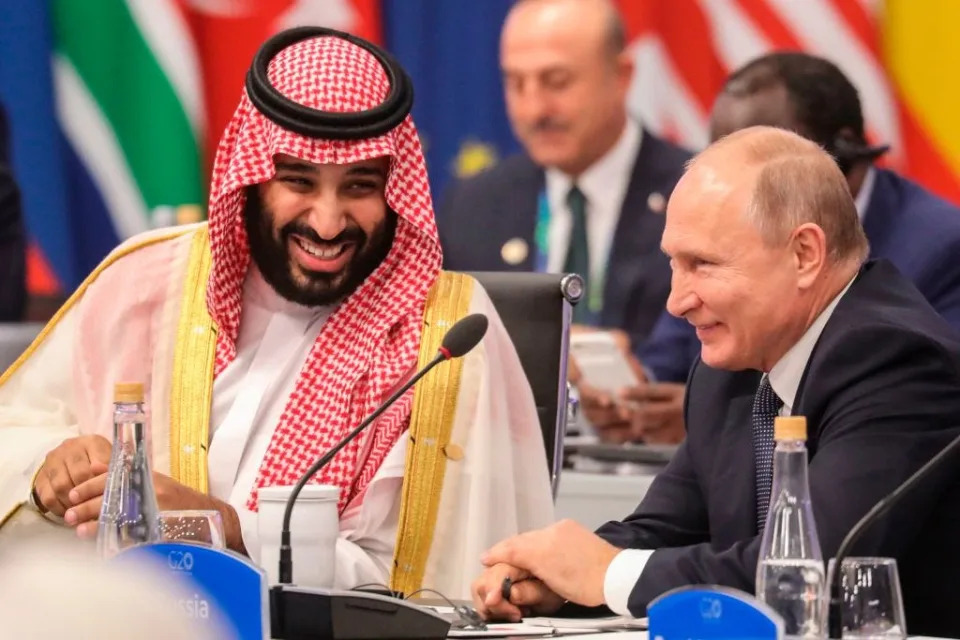
Russia's President Vladimir Putin (R) and Saudi Arabia's Crown Prince Mohammed bin Salman attend the G20 Leaders' Summit in Buenos Aires, on November 30, 2018
.LUDOVIC MARIN/AFP via Getty Images

Russian President Vladimir Putin is making a rare trip to the Middle East.


He'll visit the UAE and Saudi Arabia, traditionally US allies.


Putin is seeking to show attempts to isolate him over Ukraine have failed.


Only months ago, Russian President Vladimir Putin's grip on power appeared to be loosening.

The Russian president faced a coup from the Wagner mercenary force in Ukraine. At the same time, he was battling spiraling domestic economic woes caused by sanctions imposed in punishment for the Ukraine invasion and was the subject of an international arrest warrant over alleged war crimes committed by his forces.

It appeared that President Joe Biden's bid to weaken Putin and make him a global pariah over the Ukraine war was beginning to work.

But the Russian president is clawing back the initiative. He is making a rare trip to the Middle East today as he seeks to embarrass Biden by showing him that attempts to isolate Russia have failed.

Putin is visiting the United Arab Emirates and Saudi Arabia, traditionally two of the US' closest allies in the Middle East.

It's among the first trips Putin has made abroad since the International Criminal Court issued the arrest warrant in March, with neither of the Gulf states signatories of the Rome convention.

Analysts told Business Insider that he will use the visit to try and drive a wedge between Washington and the Arab states, and expose the limits of US power.

Putin exploits Arab rage over US support for Israel


Near the top of the agenda will likely be the Israel-Hamas war, where Putin has sought to exploit rage in the Arab world over Biden's support for Israel's bombing of Gaza in response to Hamas' terrorist attacks.

Hamas' attacks on October 7th killed 1,200 people, according to Israeli authorities. Gazan health authorities say Israel's subsequent strikes killed more than 16,000 people.

Putin has said the West's support for Israel exposes its hypocrisy, with the US having sought to rally global support for isolating Russia by citing the Russian massacre of civilians in Ukraine.

He has even sought to compare Russia's unprovoked invasion of Ukraine to the Palestinian fight against Israel's US-backed government, as part of a battle against broader US global dominance.

"Putin's government has reacted to the carnage in Gaza in ways that serve to boost Russia's soft power influence in the wider Arab-Islamic world, while also taking advantage of an opportunity to have international attention shift away from the Russian invasion and occupation of parts of Ukraine," explained Giorgio Cafiero, CEO of Washington, DC, consultancy Gulf State Analytics.

Putin will also be seeking to expose how Western attempts to isolate Russia economically have failed.

Despite Western attempts to cut off Russia's oil exports, Russia is recording record oil profits, as nations including India and Brazil — which have refused to take part in the Western embargo of Russia — buy up cheap Siberian oil.

The Kremlin has worked closely with Gulf states to control oil production and keep prices competitive. The Saudis even got into a diplomatic spat with the White House last year when they rejected demands to increase production and instead sided with the Kremlin to reduce it.

Arab states defy the US


The wealthy Gulf states, and much of the so-called "global south" of poorer developing nations, have largely rejected US appeals for them to isolate Russia.

Instead, the UAE and Saudis have sought to use the conflict to assert their independence on the global stage. By hosting the West's arch-enemy Putin in Abu Dhabi and Riyadh, they are sending a very clear message.

"They are not taking orders from the United States, and the UAE and Saudi Arabia working very closely with Russia sends a message to Washington about the ways in which Abu Dhabi and Riyadh are conducting foreign policy in a less West-centric and much more multipolar world," said Cafiero.

But they are treading a fine line. While keen to assert their independence, they're wary of aggravating the US, whose military and economic might they depend on.

"Countries like Saudi Arabia and the UAE will maintain opportunistic relations with Russia but will be careful that their economic ties with Moscow don't cross US sanctions, given how important their ties with Washington remain," said Graeme Thompson, an analyst with the Eurasia Group.

Saudi Arabia's ruler, Mohammed bin Salman, has also sought to act as a mediator between Ukraine and Russia, securing prisoner exchange deals, and even hosting peace talks last year which Russia did not attend.

It's an issue the crown prince will likely raise with Putin during the visit, as he seeks to burnish his reputation as a champion of nations with little interest in either US or Russian views of Ukraine.

"Most countries in the 'global south' are more interested in a peaceful resolution to the war, given its negative effects on food and energy prices, than on buying a particular narrative – either from Russia or the West," said Thompson.