Monday, December 11, 2023

Anti-Palestinian Racism in Canada

After months of research and analysis, CJPME published a landmark study highlighting the widespread problem of anti-Palestinian racism (APR) in Canada.  Entitled, “Anti-Palestinian Racism in Canada: CJPME’s 2022 Report,” the report constitutes the first-ever, non-exhaustive study of APR in Canada, and exposes more than 500 examples of this form of racism in online written content from 2022.

Although the study focused exclusively on examples from 2022, the report acknowledges the huge uptick in incidents of anti-Palestinian racism in 2023. Since Oct. 7, countless people in Canada have been warned, suspended, investigated, or fired by their employers or academic institutions due to the expression of their views on Palestine. CJPME looks forward to publishing a study on anti-Palestinian racism in 2023 soon.

The full report can be accessed here (in pdf.)  The key findings and recommendations are presented below.  If you appreciate this type of work from CJPME, please consider supporting our work financially.

Key Findings

CJPME’s study identified examples of APR based on the ground-breaking description published in May 2022 by the Arab Canadian Lawyers Association (ACLA). The 507 examples identified were drawn exclusively from online written content from 2022, 67 percent coming from non-profit organizations, and 33 percent from media organizations.

Importantly, 70 percent of the examples were defamatory in nature, slandering Palestinians and their supporters as antisemitic, terrorist-sympathizers, and anti-democratic. CJPME also identified many examples of sources denying the indigeneity of Palestinians and justifying violence against Palestinians.

“Palestinians in Canada face a form of racism tied to their very existence, yet it is rarely recognized as such. On the contrary, anti-Palestinian racism is interwoven into the political and media landscape of Canadian society,” said Thomas Woodley, President of CJPME. “While the current events in Gaza have brought more media attention to the issue of anti-Palestinian racism, this study shows how pervasive the problem is.”

Of the examples of anti-Palestinian racism where Palestinians were slandered as antisemitic, it was most common for this to be justified based on their 1) criticism of Israel, 2) being ‘anti-Israel’, or 3) being anti-Zionist. These results suggest that the conflation of antisemitism with criticism of Israel is a driving force behind anti-Palestinian racism. Definitions of antisemitism which engender this conflation, such as the International Holocaust Remembrance Alliance working definition (IHRA), should be recognized as purveyors of APR.

“Pro-Israel groups and right-wing media routinely engage in racist, anti-Palestinian tropes, seeking to build support for Israel by painting Palestinians and their supporters as antisemitic, antidemocratic, and as supporters of terrorism. This contributes to a climate of intolerance and violence towards Palestinians in Canada, and seeks to justify Israel’s acts of violence and annexation in Palestine,” explained Woodley.

Key Recommendations for the Public

The report urges all levels of government to take urgent action to address anti-Palestinian racism. Among other things, CJPME recommends that:

  • The federal government incorporate the problem of anti-Palestinian racism into its federal Anti-Racism Strategy;
  • Institutions at all levels replace IHRA with a definition that does not promote anti-Palestinian racism, such as the Jerusalem Declaration on antisemitism;
  • Institutions incorporate the issue of anti-Palestinian racism into anti-racism awareness programs.

Key Recommendations for Palestine Solidarity Activists

  • Don’t be silent, don’t submit; get the necessary help when victimized by APR.  Anyone who is a victim of APR must rally the support of their community to oppose it publicly and vigorously. Such individuals should also engage support from organizations like CJPME, and get legal help when necessary.
  • Prioritize the campaign against APR. For the Palestinian solidarity movement, there are campaigns that may garner more immediate attention (like BDS, or divestment campaigns), but a successful APR campaign will pay huge dividends in the long-term. For example, Palestinians and their allies should work to have APR incorporated into their institutional EDI frameworks. When employees are successful in having APR recognized by their employer, this could help to protect them from being wrongfully dismissed based on social media posts in support of Palestine.
  • Promote and participate in events and activities around APR. Palestine solidarity activists should make sure they and their network have the knowledge and training they need to identify and self-report APR.
  • Centralize and normalize the reporting of APR incidents.  The self-reporting of anti-Palestinian racism should be consolidated in one well-known and well-publicized Website.
  • Develop a Canadian APR task force.  There are many organizations and individuals which have an interest in fighting APR.  Organizations should communicate and share ideas on combatting APR, and one or two key organizations with the capacity and expertise to lead on the issue should be endorsed.
CJPME’s mission is to enable Canadians of all backgrounds to promote justice, development and peace in the Middle East, and here at home in Canada. Read other articles by Canadians for Justice and Peace in the Middle East, or visit Canadians for Justice and Peace in the Middle East's website.


What Sort of “Caring” Do Zionist Medical Faculty at U of T Teach?

An exaggerated sense of self-importance and entitlement, hubris, chutzpah, racism while claiming victimhood and massively flawed thinking are the descriptors that come to mind when considering the 555 doctors at the U of T who signed an Open Statement to the University of Toronto Faculty of Medicine (TFOM) from Jewish Physician Faculty.

The statement is an endorsement of Israel’s genocidal war against Palestinians in Gaza, which has been “catastrophic”, according to the WHO, for its healthcare system and killed 200 medical workers.

The opening declaration is: “We affirm the right of TFOM faculty to be openly Zionist and to support the right of Israel to exist and defend itself as a Jewish state and for those faculty to be free of public ostracism, recrimination, exclusion, and discrimination in the TFOM.”

In plain language, the doctors want to promote Israel’s slaughter in Gaza and not be challenged by (disproportionately) racialized and younger students and colleagues.

The statement effectively brands all criticism of Israel as antisemitic. It declares “that accusations against Israel as ‘apartheid’, ‘colonialist’, or ‘white supremacist’ or committing genocide are mendacious and aim to promote the argument that Israel should be dismantled as a Jewish state, making such accusations themselves antisemitic.” Amnesty International, Human Rights Watch, Al Haq, B’tselem and the UN Special Rapporteur on Palestinians have all labeled Israel an apartheid state. Many Zionist pioneers described their aims as “colonial” and hundreds of experts in the field believe Israel is currently committing genocide in Gaza.

While framing themselves as victims, the letter threatens colleagues. “We believe that academic freedom is not absolute. In particular, leaders in academic medicine with power over learners and faculty, who in some cases are the sole leader responsible for thousands of learners and faculty, should not be issuing statements which collide with equity, diversity and inclusion for Jews or which make Jews feel unsafe and unwelcome in the TFOM and which are unrelated or unessential to their core academic role, research, and publishing of results.”

But it’s the many openly racist signatories who have authority over students, as Ghada Sasa’s followers showed on X. The new medical collective Combat Online Harassment concluded, “1 in 5 signatories to the University of Toronto medical school’s proud Zionist letter with active Twitter accounts have posted racist, hateful, or harmful materials!”

This includes Sandy Buchman justifying massacres against Palestinians since Gaza is a “sociopathic society full of murderers”. Another Zionist letter signatory Gideon Hirschfield liked a tweet threatening all Palestinians in Gaza with “immediate and complete destruction” and Dr. Leslie Shulman called for deporting darker skinned teenagers who protested against genocide in Toronto. “Expel. Them. Now. Reason…failure to show evidence of being human.”

Combat Online Harassment, a group of North American healthcare workers, says it was formed in response to “increasing amounts of racist anti-Palestinian, anti-Arab, and Islamophobic behavior from our colleagues. Simultaneously, we’ve observed an unsettling trend where physicians expressing pro-Palestinian views find themselves unjustly targeted with baseless accusations of antisemitism, resulting in detrimental consequences for their careers. Our work aims to highlight the double standard in the policing of voices; clearly racist and hateful views (ones we post), if coming from Zionists, face little to no repercussions.”

Jewish Zionist doctors have succeeded in punishing anti-genocide voices for making them “feel” uncomfortable. The most high-profile and egregious case is University of Ottawa doctor Yoni Freedhoff who targeted resident Yipeng Ge, leading to his suspension. Over 95,000 people have signed a petition calling for Ge to be reinstated. Toronto Star columnist Shree Paradkar noted, “Several Ontario doctors tell me they are being hauled up for supporting Palestinian rights including for signing a ‘don’t bomb hospitals’ petition. Higher-ups have told them there were complaints and accused them of making Jewish colleagues feel unsafe.”

The Zionist letter highlights the power dynamic in medicine and TFOM. A year ago I wrote about a big Israel lobby and media brouhaha over a ‘report’ on purported antisemitism at TFOM. It concluded: “As Black and Indigenous — and to a lesser extent Latin American, South Asian and Arab — communities struggle for positions within the elite institution, many Jewish and politically Zionist faculty members complain that expressing solidarity with Palestinians discriminates against them. Their pressure led to the appointment of a Special Adviser on Anti-Semitism who published a spurious ‘report’, which outside groups amplified and the dominant media covered widely. This reflects power, not oppression.”

When 555 Jewish doctors openly support Israel’s killing of 17,000 Palestinians this confirms that analysis.

And it makes one wonder what sort of education the ‘caring professions’ at U of T are receiving.

Yves Engler is the author of 12 books. His latest book is Stand on Guard for Whom?: A People's History of the Canadian Military . Read other articles by Yves.
 

On this Human Rights Day, Let Us Remember that the U.S. is the Greatest Violator of Human Rights in the World


As the international community celebrates December 10th as International Human Rights Day, it is imperative that the world also affirm that violators of the fundamental human rights of peoples and nations will be held accountable.

From the war in Ukraine to mass incarceration of Black, Latino and Native Peoples in the U.S. to Obama’s ongoing war in Yemen to murderous economic sanctions, coups, assassinations, war and abandonment of Afghanistan, international arms sales, commodification of COVID vaccines, illegal military occupations in Syria and Iraq, the pending invasion of Haiti and the resource wars in the Democratic Republic of the Congo that have cost over six million lives. The one force behind all of this death and destruction is the United States’ culture of death. This culture is the same one that allowed millions – disproportionately working class, African, and racialized peoples – to die from COVID-19 with little support, and that fuels the wider U.S./EU/NATO Axis of Domination globally, fundamentally opposed to the fulfillment of true democracy and human rights.

The current genocide in Gaza and the destruction of Palestinian society and culture perpetuated by the Zionist state of Israel – in full view of the world – with the full support of the United States of America, demonstrates once again what Dr. Martin Luther King pointed out more than fifty years ago:  the U.S. continues to be the greatest purveyor of violence on the planet. The racist right-wing government of Benjamin Netanyahu could not carry out its genocidal policies in Gaza without the material and political support from the U.S.

Therefore, the Black Alliance for Peace (BAP) calls on the international community to demonstrate that it will not allow the normalization of fascist genocidal violence that systematically destroys the credibility of the human rights idea, as well as the structures that are, theoretically, supposed to protect fundamental human rights.

The United Nations Security Council passed Resolution 1674 on April 28, 2006 that “reaffirmed” decisions from the World Summit of the previous year, where the concept of humanitarian intervention and the responsibility to protect populations from genocide, war crimes, ethnic cleansing and crimes against humanity was adopted. This resolution was framed as a strengthening of international mechanisms for ensuring that the interlinking principles of the United Nations Charter, peace, security, international development – but especially human rights – would be protected.

The resolution commits the Security Council to act when civilian populations are being subjected to acts that constitute genocide, war crimes, ethnic cleansing, and crimes against humanity.

The U.S. veto of the December 8, 2023 UNSC resolution calling for a ceasefire in order to address the humanitarian crisis impacting the occupied Palestinian population being subjected to ethnic cleansing and genocide, placed the U.S. in opposition to the very principles of the UN Charter and the international consensus on human rights.

The people of the world are asking: where is the “humanitarian intervention” and “responsibility to protect” for Palestinians? The sacrifice of the people of Gaza dramatically exposes the cynicism, opportunism, and vacuousness of the Western human rights rhetoric. It is now absolutely clear that so-called humanitarian intervention to protect human rights only occurs when it is in the interests of white Western imperialism.

The egregious crimes in Gaza should result in the U.S. and Israel being expelled from the United Nations at minimum. But beyond that, charges should be brought against the Israeli Prime Minister and Defense Minister and U.S. President Joe Biden along with his Secretary of State Antony Blinken, with immediate sanctions imposed on other Israeli and U.S. officials involved in war crimes, crimes against humanity, and genocide in Gaza. As a peace and human rights organization, we further call on all states to exercise the concept of Universal Jurisdiction to arrest and prosecute those named individuals.

Yet, we do not see that kind of definitive action being executed by the states that make up the United Nations.

This is also why on this Human Rights Day, the Black Alliance for Peace (BAP) reasserts its commitment to the Black radical People(s)-Centered Human Rights (PCHRs) framework as an alternative to the individualistic, legalistic, conservative and state-centered liberal framework. For BAP, human rights are political, emanating from the demands of the people, collectively committed to social justice, authentic democracy, and self-determination.

As Ajamu Baraka, BAP’s Coordinating Committee Chairperson and leading theorist on PCHRs points out:

The idea that Western colonial/capitalist states were defenders of human rights struck many in the colonized South as either delusional or an affirmation that in the eyes of the West they were not human. For the colonized and racialized who were burned alive, tortured, and murdered by these champions of human rights, it was understood that whatever human rights were supposed to be they did not include the racialized and colonized peoples of the world.

And what are People(s)-Centered Human Rights?

PCHRs proceeds from the assumption that the genesis of the assaults on human dignity at the core of human-rights violations is located in the ongoing structural relationships of colonial-capitalist oppression. Therefore, the PCHRs framework does not pretend to be non-political. It is a political project in the service of Africans, as well as the colonized working classes, peasants, and socially oppressed. It names the enemies of freedom: the Western white-supremacist, colonial-capitalist patriarchy.

This conception and practice of human rights is the only way for the human rights idea to have any relevance to oppressed nations, peoples, and even states victimized by the globalized colonial/capitalist world order.

From this approach, human rights becomes a weapon for the oppressed and provides a vision of the new societies that must be constructed in order for fundamental human rights – the right to food, housing, health, education, the means to earn a living, leisure, and the rights of mother-earth – to be realized.

A fundamental right within the People(s)-Centered Human Rights framework is the collective right of the oppressed to fight their oppressor. This is the right being exercised by the Palestinian resistance against the illegitimate Israeli fascist apartheid occupation state.

Peace is also a fundamental PCHR. BAP’s call to support the demand to make the “Americas” a Zone of Peace was launched with this in mind. On this Human Rights Day, we say that the right of peoples and nations to self-determination in our region must be absolute to counter the hegemonic plans of the human rights monstrosity to the North – the United States of America where one of its military leaders, SOUTHCOM commander, Laura Richardson argues with a straight face why the racist, imperialist Monroe Doctrine is still applicable.

As a strategic priority, BAP will launch its “North-South Project for People(s)-Centered Human Rights” under the direction of Ajamu Baraka on the commemoration of the assassination  of Malcolm X on February 21, 2024. The objective of the project is to liberate and decolonize human rights, grounding its creation, protections and implementation within the peoples of the world struggling for radical social change. In the meantime, BAP will continue to demand that the state-centered human rights regime take seriously its own mechanisms and principles and end the impunity for outlaw states like the U.S. and Israel.

The Black Alliance for Peace (BAP) seeks to recapture and redevelop the historic anti-war, anti-imperialist, and pro-peace positions of the radical black movement. Read other articles by Black Alliance for Peace, or visit Black Alliance for Peace's website.

 CRIMINAL CAPTALI$M

Confronting Fraudulent Practices Within the Maritime Sector

Oberheiden P.C.

PUBLISHED NOV 21, 2023 12:03 PM BY OBERHEIDEN P.C.


Fraudulent activities are not just confined to financial institutions and corporate settings. They can affect a wide range of industries, including the maritime sector. According to recent reports, maritime fraud appears to be rising, causing significant disruptions to supply chains and resulting in unwanted costs.

There are many ways that fraudulent behavior can arise in the shipping world, including document fraud, smuggling, bunkering fraud, cargo fraud, and cyber fraud. While many incidents of maritime fraud involve external third parties who seek to profit from defrauding the maritime industry, in some cases the fraud may also be carried out, or assisted from, within. This article will take a closer look at maritime fraud and common techniques used to carry out illicit activities within this industry.

Cargo and Document Fraud

This type of fraud can manifest in various ways. These can include the following:

  • The sale of non-existent cargo
  • Using fraudulent cargo documents
  • Cargo theft
  • Illicitly attempting to make claims on Letters of Credit
  • Misrepresenting the quantity, quality, or condition of the cargo

In many cases, cargo and document fraud will require some “inside help” as those carrying out the fraud will require certain information in order to create or alter documents to achieve the outcome they desire.

If you believe you have information that could warrant federal enforcement action and are considering filing a whistleblower claim, it is advisable to seek specialist legal help from whistleblower lawyers like Oberheiden who can advise you further.

Under-Invoicing

This is where the importer of certain goods asks that their value be reduced on the invoice. By declaring a lower amount than the true sale price the importer seeks to benefit from lower customs taxes and duties.

An exporter who issues a false invoice if requested in this way could find themselves in violation of the Foreign Corrupt Practices Act (FCPA) as well as the rules relating to Trade Based Money Laundering (TBML) which refers to the disguising of the proceeds of crime. TBML can take place in many ways with over and under-invoicing of goods and the misclassification of goods to avoid customs duties being common examples.

Bribery

On a daily basis, large numbers of ships and their cargoes arrive at ports and go through customs clearance. These activities involve many people across various levels of the supply chain as well as various jurisdictions. As a result, there are also many opportunities for corrupt practices to take place such as bribery.

One example of such behavior involves marine surveyors. These professionals are responsible for surveying, inspecting, and examining the condition of ships and their cargo to ensure they comply with certain safety regulations and remain seaworthy. The outcome of their reports can impact the decision of insurers, shipowners, and other stakeholders within the maritime industry.

In some cases, marine surveyors have been known to issue biased or false assessments in exchange for bribes. This practice enables the other party to obtain a favorable assessment, potentially putting vessels and cargo at risk.

These are just some of the unethical and illicit practices that taint the maritime sector. Being aware of them and bringing them to the attention of the relevant authorities can ensure the continued safety and integrity within the sector as a whole.

This article is sponsored by Oberheiden P.C. For additional information visit Oberheiden online.


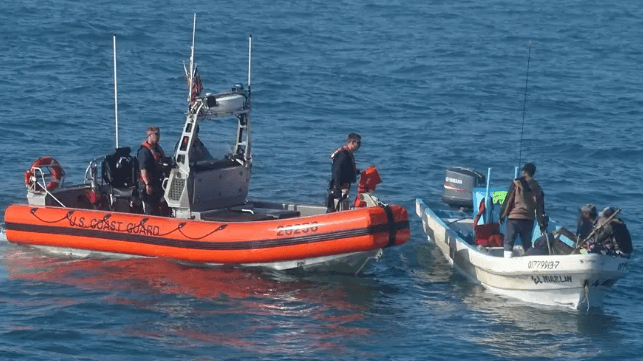
U.S. Coast Guard Seizes Five Illegal Fishing Boats in One Day off Texas

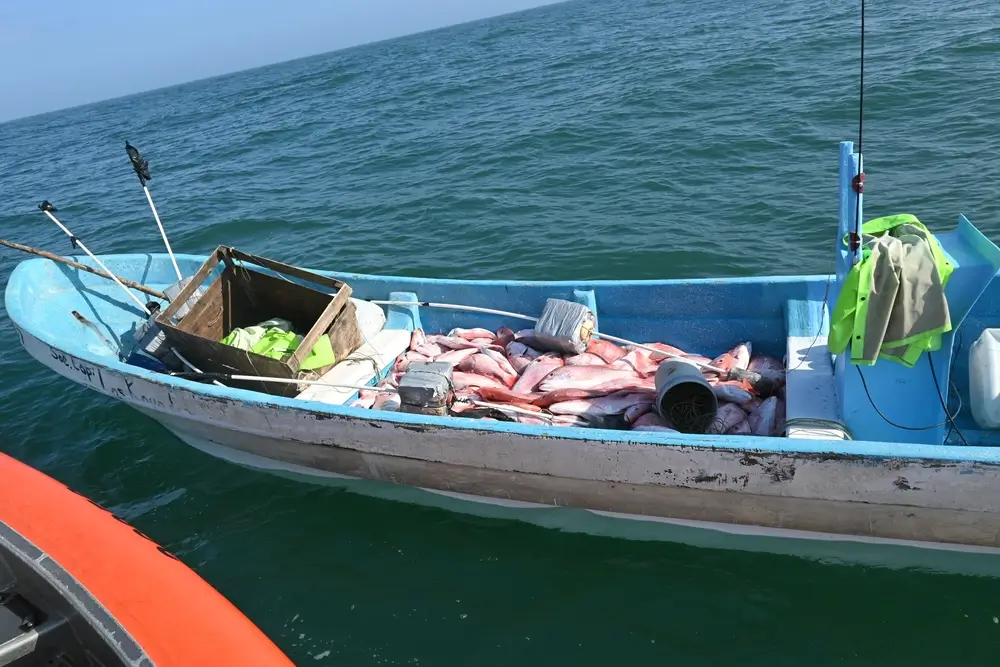
Lancha bust
Image courtesy USCG

PUBLISHED DEC 10, 2023 5:10 PM BY THE MARITIME EXECUTIVE


The U.S. Coast Guard regularly intercepts Mexican fishermen operating illegally in American waters off the coast of Texas, but a series of busts on Saturday was more serious than usual. Working together with the Texas Parks & Wildlife Department (TPWD), the service intercepted five lanchas and seized more than a ton of illegal catch. 

“Illegal, unreported, and unregulated fishing depletes our precious natural resources, disrupts our economy and threatens the marine environment,” said Coast Guard Capt. Hans Govertsen, commanding officer, Air Station Corpus Christi. “We are blessed to work alongside our local, state, federal, and international partners and are fiercely committed to stopping these illegal operations.”

On Saturday, Coast Guard boat crews from Station South Padre Island busted four lanchas and 16 fishermen just north of the demarcation line for the U.S. exclusive economic zone. The fishermen were detained and their catch confiscated, and the suspects were transferred to U.S. Customs and Border Protection for processing.

Image courtesy USCG

Air Station Corpus Christi had an aircrew working with the Coast Guard boat team, and the aircrew spotted another boat operating illegally. They passed the location to a Texas Parks & Wildlife boat crew, who intercepted it and brought the total to five boats for the day. 

Between the game wardens and the Coast Guard, the total captured catch came to 2,640 pounds of illegal red snapper. 

The lanchas that cross over the boundary line to fish in U.S. waters are generally about 30 feet long, have one outboard motor, and can make a speed of about 25 knots. They often serve a dual purpose transporting narcotics across the border, and their operations are believed to be supported by the Gulf Cartel, which can afford to underwrite the expense of seized boats and outboards. 


Stronger Than Expected Volumes Prompt Increase in Forecast for U.S. Imports

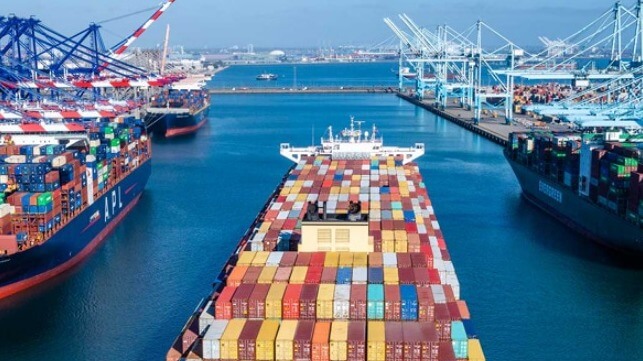
container imports
Container import volumes continue to grow in the fall leading to forecasts of an increased outlook (file photo)

PUBLISHED DEC 8, 2023 2:11 PM BY THE MARITIME EXECUTIVE


Container import volumes at the main U.S. ports containers ports continued to grow into the fall leading to a later than expected peak this year and prompting forecasts for continuing year-over-year growth in 2024. With the U.S. economy appearing to be on a sustainable growth path, the National Retail Federation is projecting record total sales volumes for the 2023 holiday season and strong growth in import volumes in the first quarter of 2024 compared to weak volumes early in 2023.

Import volumes surprised the retail trade group which had last month lowered its forecast for container volume in its monthly Global Port Tracker report. The group reported that it believed most imported holiday season merchandise had already arrived by September and that inbound cargo volume at the nation’s major container ports was expected to slow during the remainder of 2023.

“We originally thought peak season would come in August but imports kept growing in September and again in October,” said Jonathan Gold, Vice President for Supply Chain and Customs Policy at the NRF. “Whether it was merchandise for retailers or cargo for other businesses, that’s a good sign for the economy and for the holiday shopping season.”

The report highlights that October’s import volume was a higher than expected 2.05 million TEUs at the major U.S. ports topping September’s 2.03 million TEU and marking the fifth consecutive month of month-over-month gains. October was also the first month to show year-over-year gains in volume since June 2022.

As a result, the National Retail Federation is raising its outlook for fourth-quarter import volumes by over five percent compared to a reduced forecast issued last month. While they still project that the year’s import volumes will be down 12.4 percent versus 2022, they believe the strength of the economy will lead to continued gains going forward.

The retail group also raised its forecast for the first quarter of 2024 by 2.4 percent versus last month now calling for import volume of 5.45 million TEU between January and March 2024. That represents monthly gains versus 2023 of between nearly seven percent and more than 14 percent in February which was slowed in 2023 by the Lunar New Year and an extended holiday period in Asia.

The retailers highlight that in seven of the past 10 years, import volumes have peaked in October. They believe shippers accelerated shipments in 2021 and 2022 due to the fears of port congestion and last year’s threats of labor problems after the union contract expired on the West Coast. 

Figures from Descartes Systems Group confirmed the anticipated slowing of volumes in November. They calculated a nine percent decline in volumes from October to November 2023 at U.S. ports, noting that while it was consistent with historical performance, it reflects a continuing decline in volumes from China. 

“November has traditionally been a weaker month than October and while the decline is steep, it is consistent with other years’ performance,” commented Chris Jones, EVP Industry at Descartes.

They calculate that November’s volumes came in at just under 2.1 million TEU. It however was 7.4 percent higher than November 2022 and more than 10 percent higher than pre-pandemic November 2019.


EU Offers $4B in Support for French Offshore Wind Development

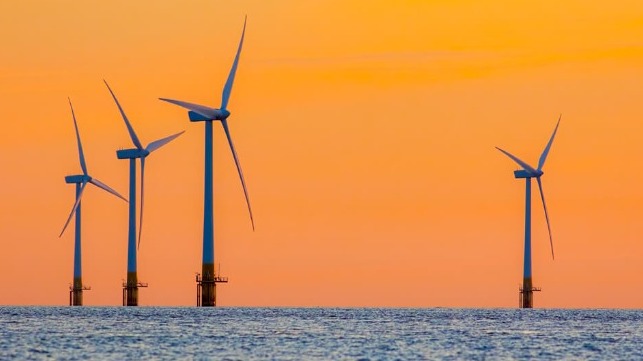
Offshore wind turbines
iStock

PUBLISHED DEC 10, 2023 1:31 PM BY THE MARITIME EXECUTIVE


Last week, the European Commission (EC) approved the release of $4.4 billion to support rollout of offshore wind energy in France. The scheme was approved under the State aid Temporary Crisis and Transition Framework, adopted by the EC to accelerate green transition.

The funding will be used to support construction and operation of two floating offshore wind farms in the Golfe du Lion. The aid will be granted before December 31, 2025. It will run for a period of 20 years, with the two beneficiaries set to be identified through a tender process by the French government scheduled for next year. Each wind farm is expected to have a capacity of 230 to 280 MW, and could generate 1.1TWh of electricity per year.

This aid will take the form of a monthly variable premium under a two-way contract for difference (CfD), which will be calculated by comparing a refence price with the market price for electricity. When the market price is above the reference price, the developer will have to pay the difference between the two prices to the French authorities.

“This [$4.4 billion] scheme will allow France to accelerate deployment of renewable offshore wind capacities, in line with the EU’s Offshore Renewable Energy Strategy. The scheme will also help France reduce its dependence on Russian fossil fuels, in line with REPowerEU Plan, while ensuring that any potential competition distortions are kept to the minimum,” said Didier Reynders, EU Commissioner in Charge of Competition Policy.

Despite having abundant wind resources and a long coastline, France has been lagging behind its European neighbors in offshore wind energy. However, this is changing, as France enacted Renewable Energy Acceleration Law early this year, which is expected to boost progress in the country’s offshore wind sector. France aims to have a total offshore wind capacity of 2 GW by 2025, 7.8 GW by 2030 and 40 GW by 2050.


Japanese Research Studies Wake Effect’s Impact on Floating Wind Farms

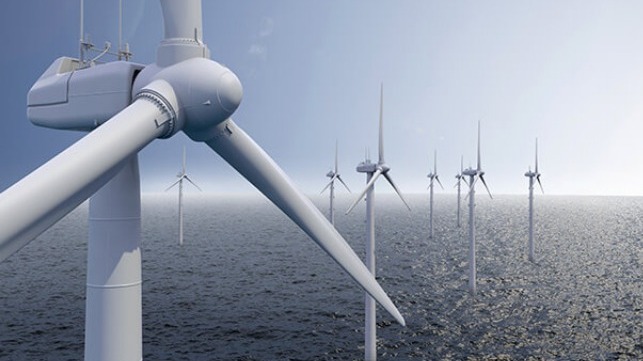
offshore wind farm
Researchers are studying wake effect which occurs in offshore floating wind farms

PUBLISHED DEC 8, 2023 8:47 PM BY THE MARITIME EXECUTIVE


The Japanese Government's New Energy and Industrial Technology Development Organization (NEDO) is funding a research project to enable large-scale deployment of floating offshore wind turbines. Japan expects to become one of the leaders in the deployment of floating offshore wind turbines and this project is the latest step to focus on the optimal design methods based on the geographical challenges of Japan.

The project focuses on the research required to develop technology that will evaluate a phenomenon known as wake effect that is unique to floating wind turbines. It is one of the major challenges to be overcome in the development and deployment of floating wind turbines and this project seeks to comprehend the challenges.

Wake effect occurs downwind of turbines during blade rotation. According to the project organizers, in large wind farms comprised of a large number of turbines, wake effect results in several negative outcomes. One of the challenges is greater turbulence around the wind farm. In addition, there is a reduction in the electricity generation on the downwind side of the wind farm and an increase in the load acting on the turbines.

Project organizers report that the wake effect is mostly understudied to date. The research team believes their work will solve the technical issues for large floating offshore wind farms and make a significant contribution to enabling the introduction of the technology at scale.

The researchers will be working to develop a greater comprehension of the wake effect and the mutual interference phenomenon. They will be working to develop technology for the prediction and evaluation which they believe will provide the basis for further academic-industry collaboration.

NEDO selected the partners for the project in June 2023 and the research will be taking place in a large wind tunnel facility at Kyushu University in Japan. Other participants in the project include Toshiba Energy Systems and Hitachi Zosen, as well as NSK, a Japanese bearing company.

As part of the project's research, NSK will be working to enhance the reliability of bearings for wind turbines. One of the challenges of wake effect is load changes acting on the turbines and NSK will be working to understand the attributes that result from the wake effect. Understanding the impact on the turbines will enable the company to enhance the reliability of the bearings which in turn they believe will support more widespread adoption of floating wind for power generation.


Op-Ed: Offshore Wind in Asia Pacific: A Global Approach to a Local Issue

offshore wind farm
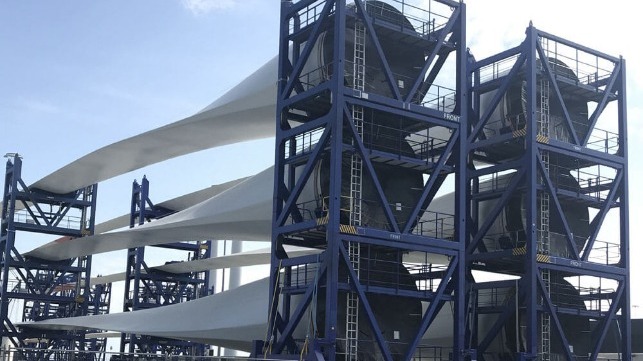
Blades for offshore wind turbines staged for future installation onshore

PUBLISHED DEC 8, 2023 4:05 PM BY GARTH HARRISON


The Asia-Pacific region boasts substantial potential for offshore wind energy as a clean and renewable power source, with extensive coastlines and favorable wind conditions. 

China, Japan, South Korea, Taiwan, the Philippines, and Vietnam have kick-started their offshore development projects, while India, Malaysia, and Australia are looking to develop their offshore capabilities by the late 2020s.

The growing significance of offshore wind underscores the prediction made by the International Renewable Energy Agency in a recent report that Asia-Pacific is “poised for a remarkable offshore wind energy expansion, with planned installations in China, Taiwan, South Korea, Japan, and Vietnam expected to reach a combined capacity of over 60 GW by 2030.” 

Even now, the region already boasts more than half of the 260 offshore wind farms in operation worldwide as of January 2023, according to a Statista report that tracked data from Global Energy Monitor. 

But, it is not a united bloc of nations with simplified, streamlined customs and regulations. My decade of experience in the region has demonstrated that no two countries have the same risk profile during project planning, contracting (budgeting), and execution. 

The greatest risks to any project are assumptions wrongly made during the planning phase based on previous experience elsewhere, with project managers all too often left to “make it work” with strained time and budget constraints.

Collaboration between the various parties involved in offshore installations, from project managers and developers to logistics and energy support service providers and shipping lines providing offshore supply and installation vessels, is now more vital than ever. Transparency and longevity must be at the heart of such collaboration. 

That need for openness is a must in tackling the regulatory minefield of offshore wind farm development in the region. 

Partners also need to brace themselves for the regulatory headwinds that can make developing an offshore wind farm truly viable. Inadequate policy frameworks, delays in issuing permits, and lack of government support slow offshore wind project development, limiting opportunities to reduce project costs. Asia-Pacific can learn some valuable lessons from the experience of Europe in this respect. 

Local experience and expertise will be key in identifying and overcoming the unique challenges in each specific location during the planning stage. While offshore development projects are coming thick and fast, we have seen that Asia lacks the necessary experience and supply chain capacity. Potentially, that could hinder project execution, particularly outside of China. Vessels flying the flag of a major Asia-Pacific nation often require a minimum number of local crew members, so developing and harnessing local talent is crucial. 

It’s no surprise, therefore, that considerable resources are now being plowed into developing the capacity to stimulate local industries and boost the competitiveness of its energy capabilities. Ports with land space, storage, facilities and deepwater berths to support offshore wind farm development continue to come online but, for now, they are few and far between.

There are players in the region that can help fill that gap until Asia fully establishes its own capabilities, including those with a proven track record in Europe. By working with such proven partners Asia-Pacific will go some way to reaching its lofty offshore wind energy targets.  

For now, however, the region must continue to look overseas to understand how to best realize its renewable ambitions and tailor its plans effectively. If the Asia-Pacific region is to realize its potential in developing crucial offshore and renewable energy infrastructure, then remaining flexible, bearing the brunt of regulatory risks, and taking a global approach to a local issue will be vital steps.


About the author: Garth Harrison is Business Development Manager – Asia Pacific & Indian Subcontinent, for the GAC Group.

Second U.S. Offshore Wind Farm Will Generate First Power Before Year’s End

Massachusetts offshore wind farm
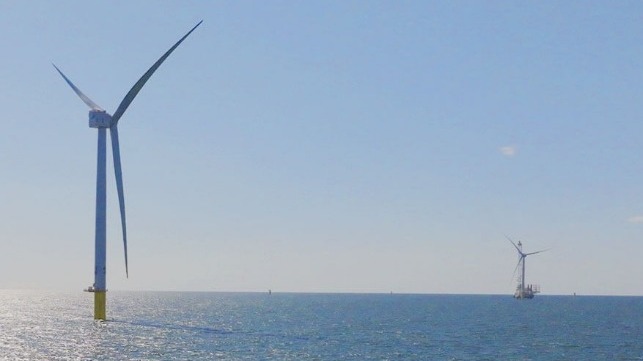
The first five turbines have been installed and are preparing to generate power at Vineyard Wind 1 (Avangrid)

PUBLISHED DEC 8, 2023 4:20 PM BY THE MARITIME EXECUTIVE


The second, large offshore wind farm in the United States is expected to produce its first power before the end of the year as momentum continues to build for the industry. Developer Avangrid, which is part of the Iberdrola Group, reports it has installed the first five wind turbines at Vineyard Wind 1, a project located south of Martha’s Vineyard, and is set to begin supplying power to Massachusetts.

Before generating first power, Avangrid reports it must complete several critical tests and technical milestones, including final testing of the array and export cables, and energization of the offshore substation. However, the first five GE Haliade-X turbines have been installed at the project as work construction continues. Once energized in the coming weeks, Vineyard Wind 1, will deliver approximately 65 MW of energy from the five turbines, enough to power 30,000 homes and businesses in Massachusetts. The company expects it will happen within the next three weeks, before the end of 2023.

“We have fully installed the first five turbines of this historic project, representing a new frontier for climate action and the clean energy revolution in the United States,” said Avangrid CEO Pedro Azagra. “We look forward to working through the final technical requirements and flipping the switch to deliver these first green electrons to 30,000 homes and businesses in Massachusetts.”

Vineyard Wind 1 will become the second wind farm in the United States to begin generating power this month. South Fork Wind, a project being developed by Ørsted and Eversource located approximately 35 miles offshore from Montauk, New York, energized its first turbine on December 6. While consisting of only 12 turbines to provide approximately 130 MW, South Fork is considered to be the first commercial-scale wind farm in the United States.

Vineyard Wind located 15 miles off the coast of Martha’s Vineyard, however, is a much larger project. When installation is completed in 2024 it will consist of 62 wind turbines able to generate up to 806 MW, which will be enough to power more than 400,000 homes and businesses. Power will come ashore and be transmitted by underground cables to a substation on Cape Cod near Banstable.
 
Offshore construction for Vineyard Wind began in late 2022. Materials are being staged at the New Bedford Marine Commerce Terminal with Foss Maritime, a U.S. service contractor operating specially designed US-flagged barges to transport the components to the lease area. The loads, which consist of tower sections reaching more than 200 feet in height, 321-foot-long blades, and the nacelle pods, each weigh more than 1,700 tons. DEME Group’s Sea Installer vessel is stationed at the site receiving the components and completing the installations.

The project achieved steel-in-the-water in June and completed the installation of its offshore substation in July. The first GE Haliade-X Wind Turbine Generator, which at 13 MW is among the largest turbines in the western world, was installed in mid-October.

Other U.S. projects are also moving toward the construction phase. The Bureau of Ocean Energy Management granted permissions to Ørsted and Eversource’s next project Revolution Wind, which will provide power to Connecticut and Rhode Island, as well as to Dominion Energy’s wind farm to be located off Virginia Beach, Virginia. The U.S. Federal Permitting Improvement Steering Council yesterday, December 7, also granted approval for Revolution Wind’s construction. 

Addressing the financial and supply chain challenges that emerged for the industry, several Northeast states have announced plans to revise and accelerate their programs. Connecticut, Rhode Island, and Massachusetts are coordinating their next round of solicitations planned for 2024, while both New York and New Jersey sped up their timetables launching solicitations for the first quarter of 2024.


Offshore Wind Survey Turns Up Unknown Shipwreck off Lithuania

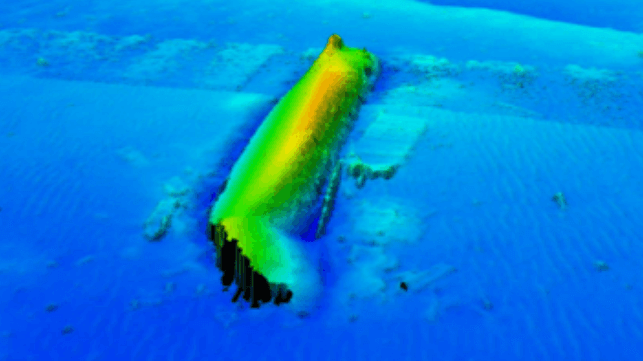
Sonar survey rendering of shipwreck
Courtesy Ignitis Renewables

PUBLISHED DEC 8, 2023 8:48 AM BY THE MARITIME EXECUTIVE


A renewable-power company has discovered a previously-unknown shipwreck during a sonar survey in the Baltic Sea. 

Ignitis Renewables hired Fugro to carry out a bottom survey over about 120 square kilometers of the Baltic off Lithuania, with plans to use the data for siting future offshore wind developments. The area had never been surveyed in detail, and Fugro's vessel detected a 70-meter-long wreck that had never been spotted before. 

Ignitis has turned over the data to Lithuanian authorities and researchers for further investigation. There are only 19 wrecks in the register kept by the Lithuanian Ministry of Culture, and this one may be the 20th (if the ministry decides it is valuable enough for inclusion). 

The survey data will be used for the development of Lithuania's first-ever offshore wind farm, which was awarded in August. It will have a capacity of 700 MW, enough to power about a quarter of the small nation's energy needs. The project is expected to begin generating power in 2030 and is permitted to continue operations through 2071. 

Lithuania plans to use a different format for its next offshore wind tender, scheduled for January 2024. Ignitis and its consortium partner paid for the right to develop the lease; the new tender will follow the "contract for difference" model, which subsidizes energy production.