Tuesday, January 09, 2024

Avino gets community Ok to develop La Preciosa

Canada’s Avino Silver & Gold Mines (NYSE, TSX: ASM) has signed a long-term land-use agreement with a local community surrounding La Preciosa mine in Durango, Mexico.

President and CEO David Wolfin said the community development agreement was a “fantastic achievement” as the company can now begin hauling old surface stockpiles to its mill for processing It can also file for an environmental permit for underground extraction. 

Pending regulatory approval, the Vancouver-based silver producer will start developing the ramp down to its initial target of the high-grade Gloria vein.

La Preciosa hosts one of the largest undeveloped primary silver resources in Mexico and is located approximately 19km from the current Avino mine, which has an operating 2,500 tpd mill processing facility and all the necessary infrastructure to allow for mineral processing from the mine.

Avino finalized the acquisition of the property rom Coeur Mining (NYSE: CDE) in March 2022 and has been working since on bringing La Preciosa into production.

Its flagship mine, Avino, began commercial production in 2016 and produced around 591,208 silver equivalent ounces in the third quarter of 2023, bringing the 12-month trailing total to 2.63 million silver equivalent ounces.

US Supreme Court rejects Alaska’s Pebble mine revival bid

The US Environmental Protection Agency (EPA) used a pre-emptive veto against the Pebble mine on the grounds that it poses a potential risk to the salmon population in Bristol Bay.

January 9, 2024

Last year in January, the EPA used its veto against the Pebble mine project. 
Credit: Emil O/Shutterstock.com.

The US Supreme Court has declined to review the challenge by Alaska against the EPA’s rejection of the Pebble mine project.

The decision effectively upholds the ruling by the EPA, which had previously issued a pre-emptive veto against the proposed mine, citing environmental concerns.

The Pebble Mine, owned by Northern Dynasty Minerals, has been touted as the world’s largest undeveloped copper, gold and molybdenum project.

Despite having the support of the Alaskan State Government, the project faced significant opposition.

It is located in the Bristol Bay watershed, home to the world’s largest sockeye salmon fishery and 25 federally recognised indigenous communities, CNN reported.

The EPA’s final determination in January 2023 to prohibit the mine’s construction was based on the potential risks it posed to the Bristol Bay salmon population.

The agency’s decision to restrict the disposal of construction and mine waste within the watershed was seen as a decisive move to protect the environment and the subsistence needs of the local communities.

Alaska’s attempt to overturn the EPA’s decision reached the Supreme Court after the state argued that the nation’s highest court had the jurisdiction to review the case before it was considered by lower courts.

However, with the Supreme Court’s refusal to hear the challenge, the EPA’s ruling stands, effectively vetoing the Pebble Mine project.

The controversy surrounding the Pebble Mine has spanned approximately two decades, with widespread criticism from various interest groups across Alaska and other states, as well as opposition from many Alaskans themselves.

Northern Dynasty’s Pebble Limited Partnership CEO John Shively said: “While it is a disappointing decision, it is important to note that this is not a comment on the arguments put forward by the state.

“We have long stated our belief that the EPA has acted outside of its regulatory authority and that remains our position today. The legal issues raised by the state will now work their way through the federal courts.

“We will also evaluate our legal options in contesting the extraordinary steps the EPA has taken to pre-emptively stop the Pebble Project. Pebble is an important project for Alaska and the nation.

“It could create jobs for Alaskans, provide an economic catalyst for the state and provide a much-needed source of critical minerals for the long-term safety and security of the United States.”


Union members stage demonstration at First Quantum’s Panama mine

Bloomberg News | January 9, 2024 |

Demonstrations against the contract have turned into an anti-government, 
end-to-all-mining movement. (Image: Screenshot of stock video.)

Hundreds of Panamanian construction workers staged a demonstration at a shuttered copper mine that has become the subject of nationalistic sentiment in the Central American nation.


Members of the Suntracs union waved flags at the entrance to the mine operated by Canada’s First Quantum Minerals Ltd. and hung a giant sign across the main gate that read: “This is sovereign territory” on Tuesday.

Suntracs, which played a key role in protests that led to the mine’s closure late last year, planned the demonstration to coincide with Martyrs’ Day, which commemorates anti-US riots in 1964 over sovereignty of the Panama Canal.

While the objectives of the demonstration were unclear, it’s the latest sign of the role played by resource nationalism in the shutdown of the Cobre Panama mine. A process to extend its operating contract sparked street protests, a withdrawal of government support and a Supreme Court ban — all in the lead-up to general elections in May.

Both First Quantum and a separate union of mine workers have called on security forces to prevent unrest at the mine site, where the Vancouver-based company still has some workers and installations.

Separately, Suntracs is staging protests in Panama’s capital city and several provinces over the closing of union bank accounts. The union didn’t immediately respond to a request for comment.

(By James Attwood and Michael McDonald)
AUSTRALIA


Alcoa to cut Kwinana refinery production in phased-out shutdown

Cecilia Jamasmie | January 9, 2024 | 

The Wagerup alumina refinery is another of Alcoa’s facilities in Western Australia. (Image courtesy of Alcoa.)

Aluminum producer Alcoa (NYSE: AA) confirmed on Tuesday that it plans to stop production at its loss-making Kwinana refinery in Western Australia after more than 60 years of operations.


The company cited challenging market conditions and the facility’s age as the main reasons behind the decision, which will leave more than 750 people out of work.

The refinery will cease in the third quarter of this year, at which time its workforce would be cut from about 800 to about 250. An additional 200 contractors are expected to be affected.

Alcoa said that staff numbers would be further reduced to 50 in 2025.


Executive vice president Matt Reed said the decision reflected the 60-year-old plant’s age, scale and cost to operate as well as current market conditions.

“Today’s curtailment decision comes only after thorough and careful deliberation, and we acknowledge that this action will impact workers, business partners, and the community,” Reed said.

Western Australia Premier Roger Cook and Federal Resources Minister Madeleine King said the outcome was “disappointing.”

“Today will be a difficult day for workers in my local community of Kwinana,” Cook said. “My government will step up to provide supports for local workers to retrain, reskill and look for new career opportunities in the local area.”

The plant was the first of Alcoa’s three Western Australia alumina refineries and it had the capacity to produce about 2.2 million tonnes of the raw material used to make aluminum.

Kwinana has been operating well below nameplate capacity for the past year owing to operational issues, falling grades of bauxite and permitting setbacks. It accounts for 1.2% of global output of alumina, according to figures from the London-based International Aluminium Institute.

BMO analysts noted the refinery has historically been a relatively major supplier of merchant alumina to the Middle East, so a closure announcement at a time of high alumina prices in China following bauxite availability challenges may see upward pressure on the international spot price.

“With Rio Tinto also writing down the value of its Yarwun refinery last year, we see potential that future years will see higher volumes of bauxite exported from Australia and lower volumes of alumina,” BMO Colin Hamilton, head of Global Commodities, said in a note on Monday.

The US-based company said it now plans to mine lower-grade bauxite in Western Australia until it gets to its next mining phase, expected to be around 2027.

The announcement follows Alcoa’s recent change in leadership. The Pittsburgh-based company shocked the markets in September with the sudden news of William Oplinger replacing Roy Harvey as its chief executive officer.

Alcoa’s alumina business segment accounts for about 28% of total revenue. The division was described as “marginal” by Oplinger after assuming the top post.

 Norway approves deep sea mining in Arctic Ocean


Cecilia Jamasmie | January 9, 2024 | 

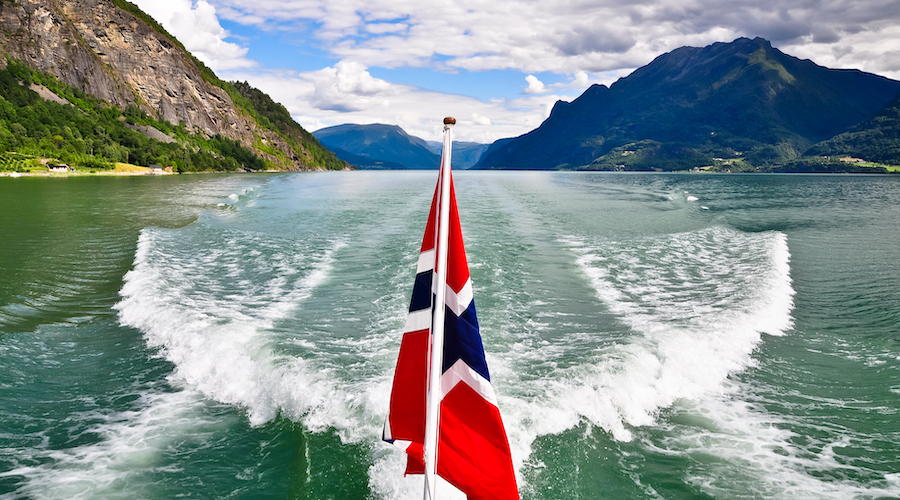
The area opened to exploration covers about 280,000 square kilometres (108,000 sq. miles), about the size of Ecuador or the state of Nevada. (Image courtesy of Empetre | Flickr Commons.)

Norway’s parliament approved on Tuesday commercial plans to open the Arctic Ocean to seabed mineral exploration, despite environmental groups and the fishing industry’s warnings that the move would put the biodiversity of vulnerable ecosystems at risk.


The bill, voted in 80-20 by lawmakers
, allows the exploration of around 280,000 sq km (108,000 sq m) of Arctic seabed, an area bigger than the size of the United Kingdom, between Norway and Greenland.

It is anticipated that an agreement on deep-sea mining in international waters could follow later in the year.

The move by the European country, where vast oil and gas reserves have made it one of the world’s wealthiest nations, aims to diversify its economy away from fossil fuels.

But it puts the country at odds with the EU and the UK, which have called for a temporary ban on the practice because of concerns about environmental effects.

“We’ve mapped vast areas in the northern Norwegian Sea since 2017. We’ve taken samples and collected data about minerals and metals found on the seabed,” the government said in a statement. “We’ve done this by means of our own expeditions, and also in cooperation with expert communities from universities.”

The Norwegian continental shelf contains sulfide crusts, which may hold as much as 45 million tonnes of zinc. Manganese crusts, also present, may have around 3 million metric tonnes of cobalt, according to a white paper released by the government last June.

Critics were quick to react. Greenpeace called it “a shameful day” for Norway. “It is embarrassing to watch Norway positioning itself as an ocean leader while giving the green light to ocean destruction in Arctic waters,” said Frode Pleym, head of Greenpeace Norway. “But this doesn’t end here. The wave of protests against deep sea mining has only begun.”

“Black mark” on Norway’s reputation

Kaja Lønne Fjærtoft, global policy lead for WWF’s No Deep Seabed Mining Initiative, said the organization was drawing a “small glimmer of hope” from the fact that extraction licences would still need parliamentary approval, an amendment added after strong international pushback.

The Environmental Justice Foundation (EJF) said the decision, would act as “an irrevocable black mark on Norway’s reputation as a responsible ocean state”.

Analysts highlight the risk of geopolitical tension in Europe’s northern and baltic regions. The area Norway has opened up to exploration, in the Barents Sea and Greenland Sea, is near the Arctic islands of the Svalbard archipelago. Oslo claims it has the sole right to mine in this area, but Russia and the European Union dispute this claim.

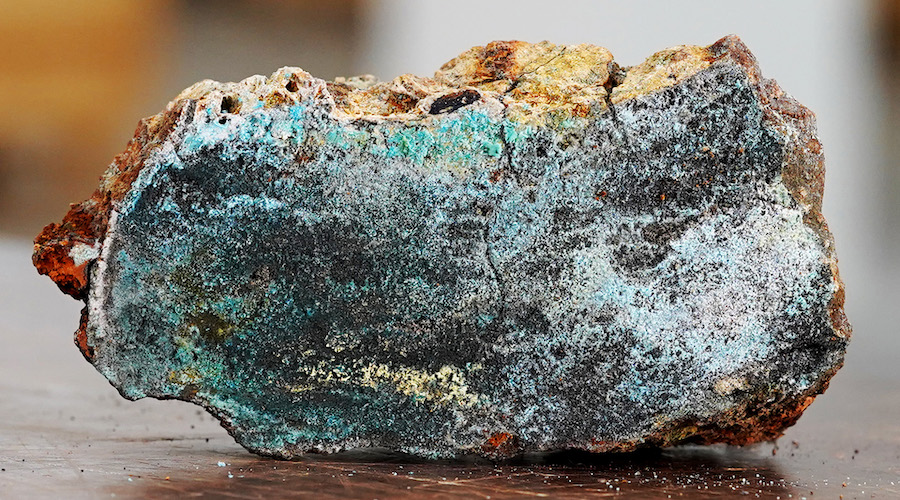
A section of a sulphide sample, obtained during the Norwegian Offshore Directorate’s expedition to the Mohns Ridge in the Norwegian Sea in 2020.
 (Image: Øystein Leiknes Nag, Norwegian Offshore Directorate.)

According to the nation’s Ministry of Petroleum and Energy, the 280,000km2 (108,000 sq miles) along the mid-Atlantic Ridge, contains volcanic springs that surge from the Earth’s crust. They are believed to host an estimated 38 million tonnes of copper—more than the world’s approximate annual copper production.

A government-sponsored survey also found rare earth elements in polymetallic sulphides, or so-called “black smokers”, nearly 3,000 metres (9,842 feet) deep.

While international rules for seabed mineral extraction are yet to be set, Norway doesn’t need to wait, because it plans to search for minerals on its extended continental shelf.

Proponents of deep sea mining argue that extracting raw materials from the seafloor will enable a faster transition to a low-carbon economy and could come at a lower environmental cost than terrestrial mining.

Scientists say very little is still known about the depths of the world’s oceans — only a small fraction of which humans have explored — and many are concerned about the impacts on these ecosystems already affected by pollution, trawling and the climate
 crisis.

Norway's Turn Towards Deep-Sea Mining Dismays Experts

The country has been hailed as an ocean champion in recent years, but its turn towards seabed mining raises concerns for life in its waters

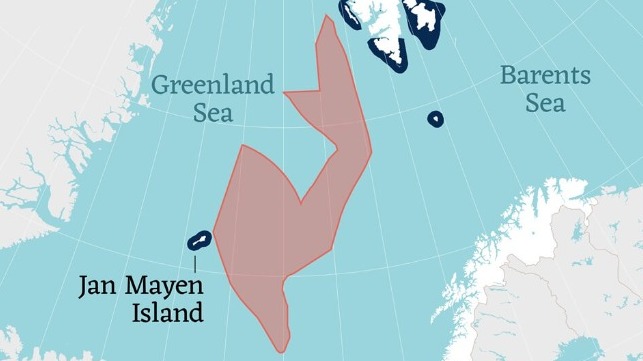
Proposed mining lease areas between Jan Mayen, Svalbard and Norwegian mainland. Lease areas in red, MPAs in blue (China Dialogue Ocean)

PUBLISHED JAN 7, 2024 1:46 PM BY CHINA DIALOGUE OCEAN


 [By Olive Heffernan]

Norway, renowned for its substantial offshore oil and gas reserves, made a surprise move in 2021 to rebrand itself as an ocean champion. However, this environmental turn is being reversed as the government pursues commercial mining in the country’s extended seabed shelf along with new oil and gas exploration.

When it pledged to sustainably manage 100% of its coastal waters by 2025, Norway encouraged other nations to do the same, through a global initiative it co-chairs called the High-Level Panel for a Sustainable Ocean Economy. By 2022, 17 nations covering 46% of the world’s coastal waters had signed the pact.

Their ambition, to chart a course toward better ocean stewardship, was informed by a two-year scientific review from 250 global experts. The panel also sought advice from more than 135 organisations across industry, finance and civil society.

In a 2020 report, expert advisors to the panel concluded that certain activities, specifically oil and gas exploration and deep-sea mining, were “difficult to align with the definition of a sustainable ocean economy”. They encouraged huge investments in sustainable industries, such as carbon storage and renewable ocean-based energy production.

But, in a departure from this expert advice, Norway is pursuing a strategy of intensified seabed extraction for mineral, oil and gas reserves. In June, the nation approved new permits, worth US$18.5 billion, to expand offshore oil and gas drilling.

In the same month, it also proposed opening up 280,000 square kilometres of its seafloor – an area the size of Ireland and the UK combined – to deep-sea mining, a nascent industry with unknown and potentially disastrous impacts for marine ecosystems. 

Six months later, the proposal to progress deep-sea mining was met with cross-party support in the parliament, making Norway the nation most likely to begin commercial extraction of rare metals from the ocean.

Mining the deep

Up until now, no body has succeeded in commercially exploiting deep-sea minerals at scale.

A parliamentary debate on 4 January, followed by a vote, will decide the fate of Norway’s plan. If met with approval, the government will announce specific areas available for exploration for commercial grade ores in 2024. The sites will be scattered in the Barents, Norwegian and Greenland seas.

According to the Ministry of Petroleum and Energy, several Norwegian companies – mostly with expertise in offshore oil and gas exploration – have shown an interest in seabed mining and are likely to apply for exploration licences. The March acquisition by Norwegian start-up Loke Marine Minerals of UK Seabed Resources, a deep-sea mining subsidiary of the US weapons manufacturer Lockheed Martin, makes it another likely applicant for a licence under Norway’s Seabed Minerals Act.

The majority of the proposed mining area is in Arctic waters, where Norway has an extended continental seabed, giving it jurisdiction over these resources, according to Fredrik Myhre, head of oceans for WWF Norway.

Recent surveys carried out by the Norwegian Offshore Directorate revealed substantial quantities of copper, cobalt, magnesium and rare earth minerals at these locations, in two forms: manganese crusts and inactive hydrothermal vents.

The mineral-rich crusts cover rock formations and accrete over long time periods, while the vent deposits are formed when hot springs rise up through the seafloor and precipitate leached metals and minerals.  

Although deep-sea mining technology is still under development in Norway, companies elsewhere have designed mammoth excavators – each around 15 metres long, 4 metres wide, and 270 tonnes – to cut and grind mineral-laden rocks from the seabed. 

By mining these resources, the Norwegian government hopes to secure its own supply of the ores needed to build green energy technologies, such as EV batteries, wind turbines and solar panels.

In an email, Norway’s Ministry of Petroleum and Energy said: “Seabed mineral activities must take place in a prudent and safe manner and in due consideration of the environment”.

But conservationists say that many of the earmarked sites contain vulnerable ecosystems and species that are likely to be negatively impacted by mining. Daniel Bengtsson for Greenpeace Nordic says that one area, close to Jan Mayen Island in the Arctic, is a well-known biodiversity hotspot. “This is an area where whales migrate, it’s a feeding ground for large marine mammals, it is important for seabirds”, he says. “There’s no doubt that these are sensitive areas”, says Bengtsson, adding that there’s also a growing concern that mining could impact the ocean’s ability to store carbon.

The Norwegian government is currently assessing the sites earmarked for mining to determine whether they contain vulnerable marine ecosystems, a term describing areas of seafloor covered in underwater forests formed by animals such as deep-sea sponges and cold-water corals.

An anemone on the seabed around the island of Svalbard, Norway. The deep sea is believed to be home to hundreds, maybe thousands, of animal and plant species that we know little about. (Image © Gavin Newman / Greenpeace)

If sites earmarked for mining are found to contain such ecosystems – a decision that could be made before the summer – then environmentalists will campaign to have them protected on the basis of their ecological importance.

Myhre of WWF Norway cautions that not enough is known about these areas to even assess the likely damage from mining. “This opening, of such a huge area without knowledge of the deep sea and the ecosystem functions of the deep sea … is the biggest disgrace I’ve seen in Norwegian ocean management in modern times,” he says.

Globally, opposition to deep-sea mining is also mounting. More than 750 scientists, from 44 countries, have voiced their concerns about the environmental impacts, which could include irreversible habitat loss, local extinctions and noise pollution. Sediment kicked up by mining could also enter the water column and negatively impact wildlife and commercial fisheries. At least 20 governments, including Brazil, Canada, the UK, France and Sweden, have called for a global pause in seabed mineral exploitation until further research is carried out, to assess the potential damage to marine life. Several large companies, including BMW, Google and Samsung, have vowed not to use materials sourced from deep-sea mining in their products.

Scientists and policymakers voice dismay

Including the deep-sea mining proposal, Norway’s recent policies on ocean resource exploitation have dismayed the experts who spent months advising the High-Level Panel for a Sustainable Ocean Economy on how to create a sustainable ocean economy.

“I’m pretty angry,” says Henrik Österblom, an environmental scientist at the Stockholm Resilience Centre in Sweden, an expert advisor to the panel. “We were super excited by this opportunity”, he says, but now with “one country working against all the advice they received … it feels like a total waste of time, like we are pawns in somebody else’s political game”.

Vidar Helgesen, who was Norway’s special envoy to the panel and one of its architects, alongside former Norwegian Prime Minister Erna Solberg, says there should have been a formal mechanism to track commitments.

Helgesen, who now works as executive director for the Nobel Foundation, says that he proposed having an independent body make regular assessments of national progress toward the 2025 goal. That suggestion wasn’t taken up by signatory states as some wanted a “softer” approach. A 2022 progress report entitled Tracking Blue reported few tangible outcomes for Norway. The next progress report is due in 2024. 

Others share Österblom’s dismay. “The response, unfortunately, has not been at all what I expected,” says Rashid Sumaila, director of the fisheries economics research unit at the University of British Columbia in Vancouver. “There was no commitment to follow through on the science”.

Peter Haugan, a fisheries scientist at the University of Bergen who chaired the panel’s expert group and co-authored the 2020 report, says he “shares the sense of disillusionment” especially with Norway’s recent decisions on oil, gas and mineral extraction.

The nation also falls short on taking steps to protect its own waters. “We really are a massive ocean nation,” says Myhre, referring to the fact that Norway’s ocean area is six times that of its landmass. However, less than 1% of its national waters are highly protected from industrial fishing and other extractive industries.

Elsewhere, Norway has been criticised by environmental groups for continuing to allow ocean dumping of mine waste – a practice outlawed in most other coastal states – and for its planned five-fold increase in salmon farming, an industry accused of high fish mortality and coastal pollution.

Overseas, Norway’s reputation has fared better. In September, it signed the High Seas Treaty, a new UN agreement to protect marine life in waters beyond national control.

Colette Wabniz, an expert adviser to the high-level ocean panel and a marine ecologist at Stanford University, says that Norway should also be commended for funding efforts to improve governance and equity of small-scale fisheries in Tanzania.

Sumaila shares this observation and says that Norway has invested in training many fisheries scientists in Africa. But, says Wabnitz, “Leadership is about walking the talk. It’s unfortunate that Norway is exemplary in some ways elsewhere, but it’s not more exemplary with its own policies at home.”

When asked about the discrepancy between Norway’s commitments as an ocean leader and its current policies, a spokesperson for the Ministry of Foreign Affairs said, by email: “Norway has a long tradition for prudent, responsible, and sustainable resource management”, which it intends to apply to both future oil and gas and mineral extraction.

The spokesperson said: “There will of course be challenges implementing the Ocean Panel’s ambitious agenda, and these challenges will vary between countries”, but added that Norway is fully committed to implementing the panel commitments, and to continuing its leadership role.

Not everyone is convinced, however, that Norway can marry these ambitions. “The things that we are doing now, especially opening the seabed to mining, is really putting the nail in the coffin for Norway as a responsible ocean nation,” says Myhre. “We have to change course, if we are to have sustainable ocean management.”

Olive Heffernan is a freelance science journalist who covers oceans and climate change. You can tweet her at @O_Heffernan and read her latest stories at www.oliveheffernan.com.

This article appears courtesy of China Dialogue Ocean and may be found in its original form here

The opinions expressed herein are the author's and not necessarily those of The Maritime Executive.

WINTER SPORTS UNSUSTAINABLE

Let it snow: Ski industry to increasingly rely on artificial powder as climate warms

At Cypress Mountain ski resort, director of operations Jeremy Wentzel has been eagerly waiting for a chance to fire up the snow guns.

The Vancouver ski destination has manufactured more than 81 acres of artificial snow for skiers and boarders to enjoy since opening for the season Dec. 7, but much of that was lost to rainfall and warm temperatures later in the month.

With cooler weather in the forecast, however, Wentzel said a prime opportunity to pump out fresh powder could be just around the corner.

"We're just waiting for temperatures to fall slightly, because we're getting very, very close to a pretty significant snow-making window," Wentzel said.

"It has been a challenge this Christmas period. But temperatures do generally get there eventually, and then you get to put on display what having a robust snow-making system can do for you."


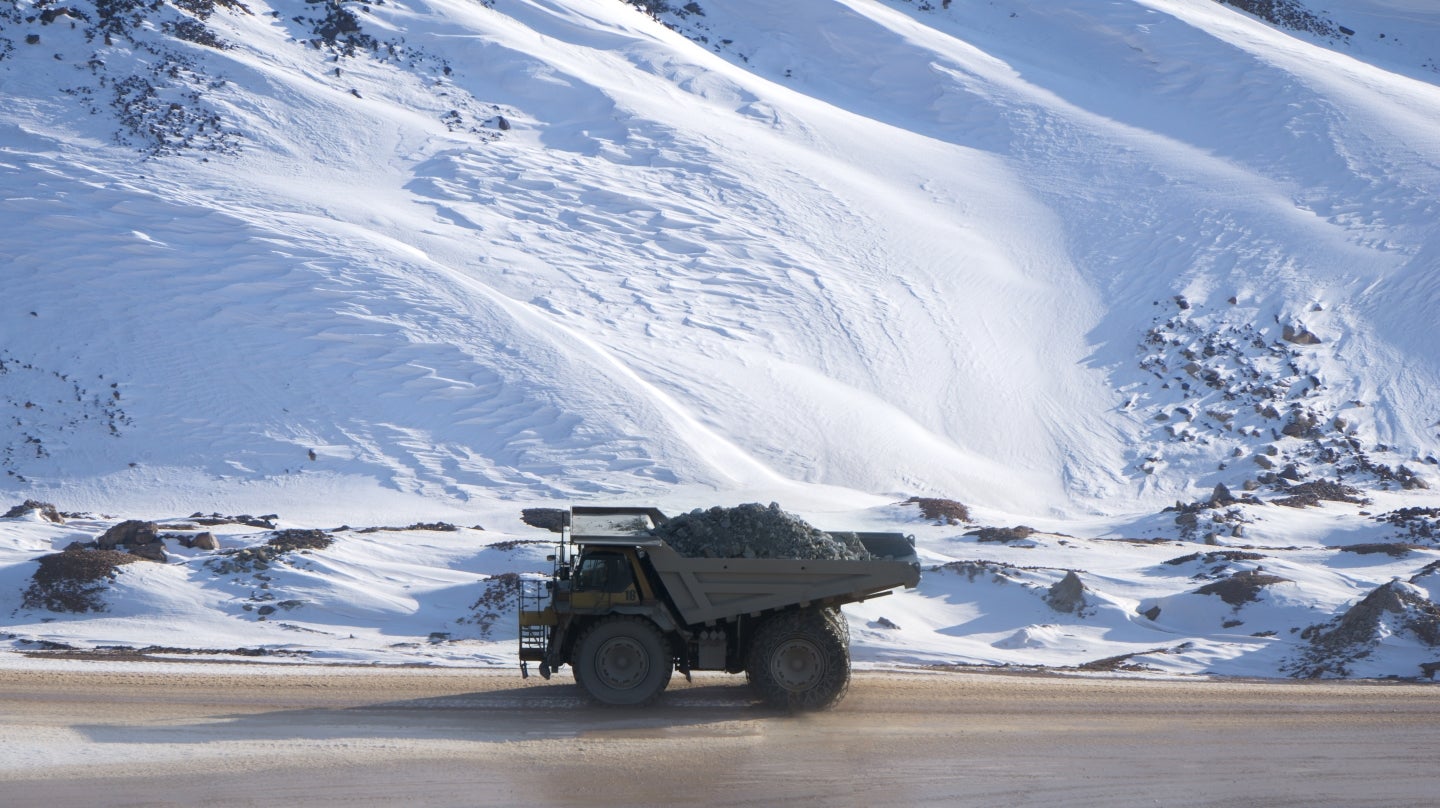
Artificial snow-making — which involves using machines, or "guns," to spray a mixture of water and compressed air that then freezes into snowflakes — has been used by the Canadian ski industry since its development in the 1950s.

But with climate change now posing an existential threat to an industry that depends on winter weather, snow-making is expected to become more important than ever.

A study by the University of Waterloo in partnership with the University of Innsbruck in Austria suggests snow-making production requirements by the Canadian ski industry will increase between 55 and 97 per cent by 2050, as climate change brings warmer winters and less natural snowfall.

In Ontario alone, for example, changing weather patterns due to climate change could shorten the average length of the ski season by up to 60 per cent.

Already, in an average winter, Canadian ski resorts produce an estimated 42 million cubic metres of machine-made snow.

But making snow is not as simple as hitting a switch and blasting flakes wherever and whenever you want them. For one, the weather must be cold enough for water to freeze, so all the snow-making capability in the world won't help in an extended plus-zero-degrees streak.

"There is a bit of a conundrum there," said Tara Lovell, spokeswoman for Ontario's Blue Mountain Resort, where an exceptionally mild December meant a very limited number of runs were open over the holiday season.

"I would say that our (snow-making) system hasn't been able to get up and running as much as we would have liked."

Snow-making is also expensive. It requires the installation of water pipes and pumphouses, hydrants and snow guns across significant swaths of terrain. This year, Blue Mountain committed to a "multi-year, multi-million-dollar" investment in snow-making infrastructure improvements that includes enhancing the system's automation capabilities, Lovell said.

These kinds of investments are meant to help the resort navigate increasingly erratic weather patterns, she added.

"Decades ago, you could kind of guarantee that winter will eventually come and we can make snow when it's here. But now, those snow-making windows can come in the middle of the night for just an hour here, an hour there," she said.

"So the more efficient our system is, the better off we are at making sure we're maximizing what we can, despite the volatility of Mother Nature."

But while snow-making may be the ski industry's answer to climate change, it has also been criticized by activists for contributing to it. The University of Waterloo study found artificial snow production at Canadian ski resorts consumes 478,000 megawatt-hours of electricity annually and an estimated 43.4 million cubic metres of water.

And as the demand for artificial snow grows, so too will ski resorts' demand for water and power. 

Waterloo professor Daniel Scott said the sustainability of snow-making varies greatly from location to location, depending on the source of the water and how green the local electricity grid is. 

He said the ski industry will need to ensure snow-making is being done in a responsible way — in particular, limiting negative impacts on downstream watersheds and conflict with other water users.

"(Snow-making) can be very unsustainable, or it can be very sustainable," Scott said. 

For her part, Lovell said she believes there are few industries more concerned about sustainability than the ski industry.

"I can’t forecast what is yet to come when it comes to climate change, but we do see those changes happening," she said.

"For our business to be sustainable, we need to make sure that we can continue to provide a snow-related product to our guests, despite what we're seeing and the trends that may be coming."

Back at Cypress Mountain in Vancouver, Wentzel said the resort likely would not have been open at all over the holidays if it didn't have its snow-making system. He said making snow is a way for the ski industry to take back some control from Mother Nature.

"Snow-making has been a huge investment priority for us," he said.

"It's a pretty big insurance policy for the mountain, because it allows you to manage your own fate, if you will."

This report by The Canadian Press was first published Jan. 5, 2024.


Unionized Indigo and Chapters workers facing uphill battles: union

A few years after several Indigo and Chapters stores unionized, one location is set to close as its union says the retailer has made things increasingly difficult for workers. 

Employees have picketed on multiple weekends outside the Chapters store at Kennedy Commons in Scarborough, Ont., after being told the location will close later this month.

The store is one of four Ontario locations that unionized with the 1006A chapter of the United Food and Commercial Workers union between September 2020 and August 2021. 

When the closure was announced in December, the employees were told they couldn’t transfer to other stores, even though that’s what has happened when other stores have closed, said Victoria Popov, an employee and union steward. 

"We were told none of us would be transferred, and that we could apply to any open position, like a member of the public," she said. 

“People were very upset."

The employees are being offered the legal minimum in terms of severance, said Popov. Some have been with the company for more than two decades and are nearing retirement age.

“It just seems so patently unfair to me," she said. 

In Ontario, employees qualify for severance pay if they’ve worked for an employer for five or more years, among other criteria. Those who qualify are entitled to payment based on their regular weekly wages and the number of years they’ve been employed. 

The union is asking Indigo to extend employee benefits for the workers, as well as improve severance payments and offer transfers, said Lesley Prince, director of organizing at UFCW Local 1006A. 

In an emailed statement responding to questions about the Scarborough closure and other unionized stores, Indigo spokesperson Melissa Perri said the company respects employees’ rights to seek representation but prefers to have a direct dialogue with workers. 

“Where employees are represented, we strive to establish a constructive and open dialogue with the union. Indigo always bargains in good faith with its unions and is committed to complying with the terms of the collective agreements,” she said. 

The lease at the Scarborough store expires at the end of February. As part of a regular review of the company’s real estate portfolio and after negotiations over the lease, Indigo decided to close the store due to poor financial performance, said Perri. 

Prince said the Scarborough store isn’t the only unionized location facing difficulties.

The Indigo store at Square One in Mississauga, Ont., has been in bargaining since May, but the company hasn’t responded meaningfully to workers’ main concerns, said Prince. The union in December held a strike vote that was 97 per cent in favour, she said. Another store, at Toronto's Yorkdale mall, is set to start bargaining this year. 

In May 2023, an application to decertify the Woodbridge, Ont., Chapters store was filed with the Ontario Labour Relations Board. An employee vote was held later the same month, but the ballot box has been sealed, said Prince, because the union is accusing Indigo of an employer-led decertification. 

Outside of Ontario, two stores unionized in October 2020 -- one in Montreal with a different union, while a Chapters store in Coquitlam, B.C., unionized with UFCW Local 247. 

In late 2021, the Coquitlam workers ratified their first contract after a challenging period of bargaining, said Charles Pratt, secretary treasurer of Local 247. 

Indigo then went on a hiring spree, bringing on a significant increase in workers at the store, he said. With a wider pool of workers, all employees, even the most senior, were getting far fewer hours. 

Over time, the employees who had fought for a union or voted for one left for jobs with better hours, said Pratt, and union support was watered down as more new workers were brought on. In September 2022, the store decertified.

In Indigo’s annual report for the 2023 financial year ended April 1, the company said most of its approximately 5,000 employees are not covered by a collective bargaining agreement.

If a significant number of employees were to become unionized, this could “have adverse consequences for the operational or financial conditions” at the unionized stores, the report states. 

UFCW has been seeing increasing interest from Indigo employees since 2020, when the pandemic turned many retail and service workers into essential workers but also raised concerns about safety on the front lines, said Debora De Angelis, Ontario regional director for UFCW and the co-ordinator for national strategic campaigns. 

But it’s difficult to organize in retail, she said. 

According to Statistics Canada, in November 2023, just over 12 per cent of workers in the wholesale and retail trade sector were covered by a union, barely higher than the same month pre-pandemic. 

“Unions in Canada have been trying to break into the low-wage retail sector for decades without much success,” said Brock University labour professor Larry Savage. 

“They need to contend with high turnover, workers being spread out over many workplaces, and retail employers who are committed to doing everything possible to keep unions out.” 

There are a number of legislative changes that could make it easier for workers to unionize or to bargain their first contract, said De Angelis, noting that some provinces, such as B.C., have better provisions than others. 

The impending closure of the Scarborough Chapters is disheartening, said Popov, but she’s proud of what she and her colleagues have done. She feels it’s part of a much bigger fight that’s playing out across North America at companies like Starbucks. 

“I think that the solution to this is unionizing more stores. It is very easy to target one, two or three stores. It is much harder to target 10 or 12 or 13 or an entire company,” she said. 

“I hope that this fight will continue. And I hope, ultimately, that in the future, people will look back at our tiny efforts, and they will have produced ripples that will have resulted in greater change.” 

This report by The Canadian Press was first published Jan. 9, 2024.


BlackRock cuts 3% of global workforce, citing dramatic industry shifts

BlackRock headquarters in New York.

BlackRock Inc. will dismiss about 600 employees, or roughly 3 per cent of its global workforce, as it seeks to reallocate resources amid rapid changes in asset management. 

“We see our industry changing faster than at any time since the founding of BlackRock,” Chief Executive Officer Larry Fink and President Rob Kapito wrote Tuesday in a memo to staff.

The executives said that ETFs have become the preferred vehicle for both index- and active-investment strategies, and that the firm is growing across the globe — including in Europe and Asia.

“And, perhaps most profound, new technologies are poised to transform our industry – and every other industry,” Fink and Kapito said in the memo.

The world’s largest asset manager said it still expects to have a larger staff by the end of the year, even with the cuts, as it expands certain parts of the business.

The asset-management industry has been buffeted over the past two years, first by declines in stock and bond markets in 2022 and then by investors who grew skittish over higher interest rates. 

BlackRock is among big money managers, including Wellington Management and T. Rowe Price Group Inc., that have recently cut jobs and redirected budgets in response. 

BlackRock increasingly seeks to position itself as a one-stop shop for investors offering equity, bond and money-market funds and strategies for private assets, as well providing tech, data, analytics and financial markets advice to clients. 

The company also aims to expand into the growing market for alternative investments, with the goal of doubling revenue from private markets over the next five years. 

PRIOR CUTS

BlackRock said last January that it would dismiss about 2.5 per cent, or 500 employees, and then announced further cuts in June, amounting to less than 1 per cent of staff. The firm, which had US$9.1 trillion of client assets as of Sept. 30, reports fourth-quarter earnings on Friday.

Shares of BlackRock dropped 1.8 per cent this year through Monday, after rising 15 per cent in 2023. Much of that gain came later in the year after investors began to wager that the Federal Reserve had stopped increasing interest rates and would begin cutting this year.

In October, BlackRock reported its first quarterly outflows since the onset of the pandemic in 2020. BlackRock clients pulled $13 billion from long-term investment funds, including from actively managed products that typically charge higher fees than index strategies. 

The firm said it took in more than $186 billion in new ETF assets and $16 billion in index mutual fund assets last year.


Amazon attacks EU privacy watchdog it claims was out to get it

AMAZON USES THE TRUMP TACTIC

Amazon.com Inc. hit back at regulators who slapped it with a then-record European Union privacy fine of US$814 million, claiming their aim was punishment rather than protecting people’s data.

The e-commerce giant told a local court in Luxembourg —  where the firm has its regional hub — that watchdogs went on the attack rather than seek an amicable solution and fired off unfounded accusations that the firm trampled on the privacy rights of customers.

Amazon lawyer Thomas Berger said the Luxembourg regulator’s approach left the company “without a chance to change its practices” before issuing the penalty under the EU’s General Data Protection Regulation, or GDPR, in 2021.

The landmark privacy legislation had taken effect three years earlier, giving the EU’s previously toothless data authorities the powers to levy fines of as much as 4 per cent of a firm’s annual sales. It also made Luxembourg’s data watchdog the lead privacy regulator for Amazon, because of its base in the Grand-Duchy. Amazon’s fine was topped last year with a new record of €1.2 billion against Meta Platforms Inc. by Ireland’s Data Protection Commission, which is the lead regulator for several other big tech firms.

The Amazon dispute was triggered by a 2018 complaint from French privacy rights group La Quadrature du Net, which challenged Amazon for processing user data for its targeted adverts without seeking people’s consent first.

Vincent Wellens, a lawyer for the Luxembourg data commission, rejected claims that the regulator acted too fast, saying GDPR is clear and it was up to the firms concerned “to behave like big boys and not wait for the authority to provide guidance on what they need to do exactly.”

Amazon has drawn scrutiny over the years for the vast trove of data it has amassed on a range of customers and partners, including independent merchants who sell on its retail marketplace, users of its Alexa digital assistant, and shoppers whose browsing and purchase history inform what Amazon shows them on its website.

At the end of 2022 it settled an EU antitrust probe into how it allegedly abused rivals’ sales data to unfairly favor it own products and squeeze out other traders on its platform.

Canada Post selling third-party logistics business SCI Group to Metro Supply Chain

Canada Post Corp. has signed a deal to sell SCI Group Inc., its third-party logistics business, to Metro Supply Chain Inc. 

Financial terms of the agreement were not immediately available.

Montreal-based Metro Supply Chain calls the deal a transformational acquisition that will strengthen its position in strategic contract logistics services.

SCI has more than 75 locations and employs about 3,000 people.

The deal comes after a detailed review and assessment of Canada Post's long-term strategic plan. 


The transaction is expected to close in the first quarter of 2024, subject to customary closing conditions.

This report by The Canadian Press was first published Jan. 9, 2024.