Wednesday, January 10, 2024

COP29 HOST

Azerbaijan Doubles Down on Its Domestic Oil Potential

  • Equinor divests its 7.27% stake in the ACG oil field and 50% in the Karabakh oil field, as well as an 8.71% stake in the BTC pipeline.

  • The sale strengthens SOCAR's control over Azerbaijan's key oil assets and export routes.

  • This move aligns with Azerbaijan’s strategy to boost its influence in the international oil and gas business.

Norway's national oil company Equinor has announced that it has sold its shares in two Azerbaijani oil fields and the Baku Tbilisi Ceyhan oil pipeline to Azerbaijan's state oil company SOCAR and will exit from Azerbaijan after 30 years in the country.

"Equinor is in the process of reshaping its international oil and gas business, and the divestments in Azerbaijan are in line with our strategy to focus our international portfolio," said Philippe Mathieu, Equinor's executive vice-president for international exploration and production in a statement released on December 22.

In its statement on the purchase of Equinor's assets SOCAR confirmed only that it had signed an agreement to buy Equinor's assets in Azerbaijan and that "the transaction will be completed following compliance with all regulatory requirements and contractual obligations."

The oil field assets consist of a 7.27 percent stake in Azerbaijan's giant Azeri-Chirag-Guneshli (ACG) oil field which produces the bulk of Azerbaijan's oil exports, and a 50 percent stake in the much smaller Karabakh oil field which has yet to start production. (Both oil fields are in the Caspian Sea.)

In addition, Equinor is selling its 8.71 percent stake in the Baku-Tbilisi-Ceyhan (BTC) oil pipeline which runs from the Caspian through Azerbaijan and Georgia to Turkey's Mediterranean oil hub at Ceyhan,  through which most of Azerbaijan's oil exports are made.

The purchase by SOCAR takes the state-owned company's stake in ACG to 32.27 percent, in the BTC pipeline to 33.71 percent and gives it complete ownership of the Karabakh field. 

Neither company stated the price being paid for Equinor's assets.

However, the timing of the sale suggests that Equinor is selling at a point when it believes it can get the best price from the sale.

Crude oil prices are still higher than they have been for most of the past decade thanks to the disruption to global oil markets caused first by Russia's full-scale invasion of Ukraine two years ago, and more recently by Israel's invasion of Gaza and the attacks on international shipping in the Red Sea.

Similarly, security concerns for the safety of shipping in the Black Sea in the wake of the Russia-Ukraine conflict have disrupted the flow of crude oil through the three pipelines which carry crude oil from the Caspian to the Black Sea.

BP last year halted exports of crude from Azerbaijan via its Baku-Supsa pipeline, exporting the oil via the BTC pipeline instead.

Similarly, Kazakhstan has reduced the volume of oil it sends by pipeline to Russia's Black Sea port of Novorossiysk, signing an agreement to send 1.5 million tons a year via the BTC pipeline instead, a volume which may well be increased if the war in Ukraine further threatens the safety of Black Sea shipping. 

It also comes ahead of an anticipated boost in oil production from the ACG field thanks to the drilling of new wells, and with further new wells suggesting that the field could also produce natural gas.

The decision by SOCAR to purchase all of Equinor's assets suggests Baku is intent both on maximizing its returns from its main export revenue earner, and keeping close control on its main oil export route.

Azerbaijan's crude oil and natural gas exports are the country's main source of revenue, accounting for around 90 percent of export revenue and funding as much as 60 percent of the state's annual budget.

Hydrocarbons also supply 98 percent of the country's primary energy usage and generate around 90 percent of its electricity.

That dependence on fossil fuels is something Baku would like to change, with ambitious plans to develop its renewable energy resources both to meet growing domestic power demand and to export any excess power to Europe.

It's debatable whether Baku's commitment to renewables is primarily due to its Paris Agreement commitment to reduce greenhouse gas emissions by 35 percent from 1990 by 2030, or more to a desire to free up extra volumes of oil and gas for export.

Either way Azerbaijan will host the UN Climate Change Conference (COP29) in November this year and has been concluding agreements with a host of international players aiming at tapping their experience of wind, solar and hydropower development.

The latest of these being Equinor itself, which as a parting gesture to Baku has signed a Memorandum of Understanding agreeing to "share experience and best practice on low carbon solutions, reducing greenhouse gas emissions and carbon management."

SOCAR also interested in Lukoil refinery in Bulgaria

In addition to increasing its stake in Azerbaijan's ACG oil field, SOCAR is also showing interest in further expanding its operations "downstream."  

According to Azerbaijan's ambassador in Bulgaria, SOCAR may be interested in purchasing the Neftohim Burgas oil refinery near the Bulgarian port of Burgas, owned by Russia's Lukoil since 1999.

Lukoil announced on December 5 that it was thinking of selling the 9.5 million tons/year refinery and its other assets in Bulgaria.

The announcement was in response to the cancelation of a European Union waiver that allowed it to continue to refine Russian crude oil despite the ban on imports of Russian crude into the EU, following Russia's invasion of Ukraine.

Lukoil's Bulgarian operations also include a chain of over 200 gas stations, nine fuel depots and businesses supplying marine and aviation fuels and lubricants.

SOCAR opened an office in the Bulgarian capital Sofia in April last year which currently only conducts natural gas trading. 

If it was to purchase Lukoil's refinery, SOCAR would be able to supply it with crude oil from Azerbaijan which it exports to the Black Sea via the Baku-Novorossiysk pipeline.

By David O’Byrne via Eurasianet.org

First Oil Extracted From Krishna Godavari Basin in India

DY365
Published: January 9,2024 


STORY HIGHLIGHTS

The news about the oil extraction was announced by the Union Minister for Petroleum and Natural Gas, Hardeep Singh Puri on Monday

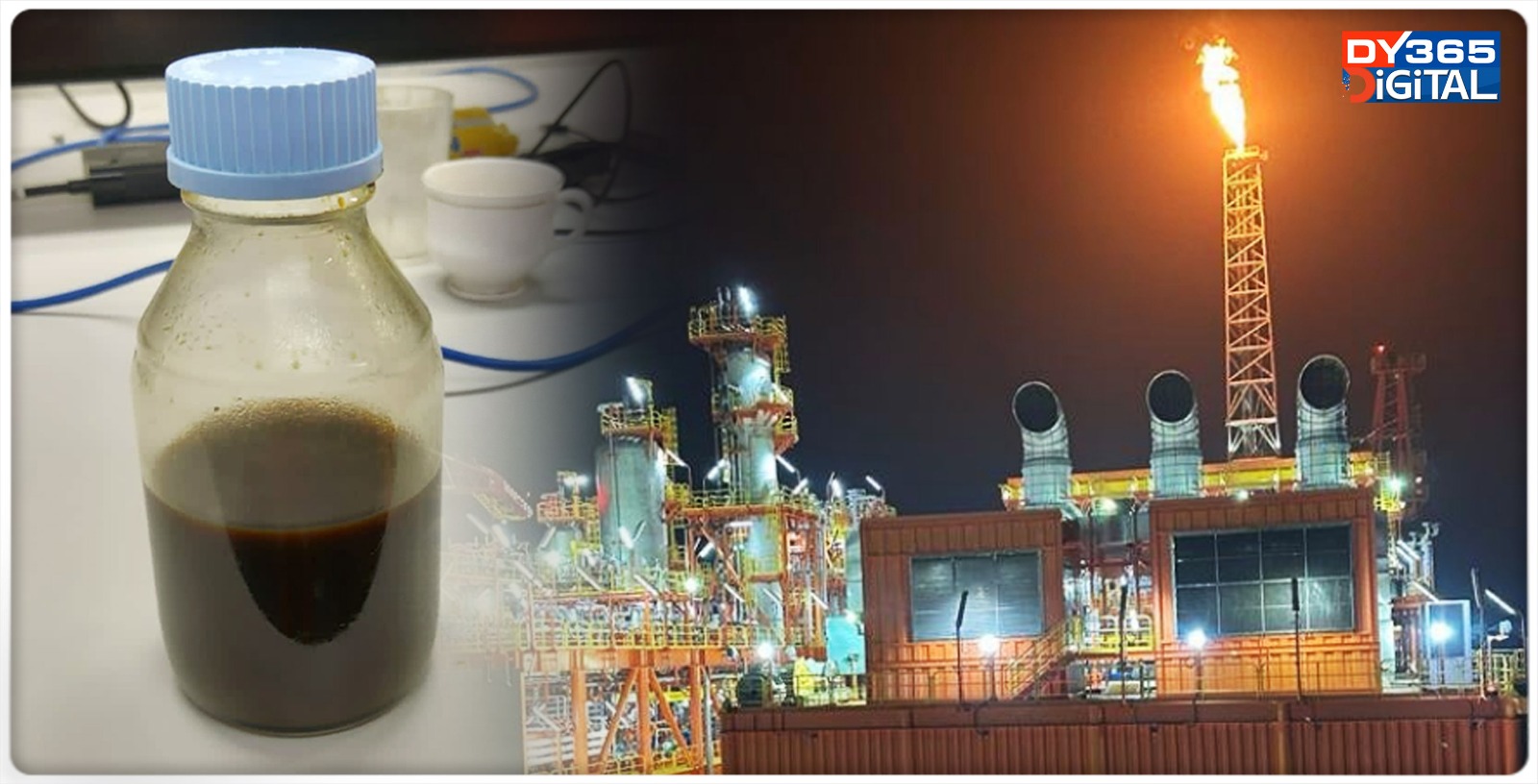
January 9, 2024: India announced its first oil extraction from new discovery in the Krishna Godavari Basin, starting with 4 wells and targeting 45,000 barrels per day by June. This will contribute 7% to both crude oil and gas production.

The news about the oil extraction was announced by the Union Minister for Petroleum and Natural Gas, Hardeep Singh Puri on Monday. He also added, “Production is expected to be 45,000 barrels per day and over 10 million cubic metres of gas per day, contributing towards an energy Aatmanirbhar Bharat”.

Taking to X, the twitter handle of Oil and Natural Gas Corporation Limited (ONGC) has also shared a post on the oil extraction.


India Hails First Oil Production from Long-Delayed Deepwater Project

Indian state-run Oil and Natural Gas Corporation (ONGC) began this week oil production at a major deepwater oil and gas project, which is expected to boost domestic oil and gas production and help reduce India’s dependence on energy imports.     

ONGC said it had launched first oil production from deepwater block KG-DWN-98/2 in the Krishna Godavari basin in the Bay of Bengal, which would raise the company’s oil and gas production by 11% and 15%, respectively. The start-up of the deepwater project was also hailed as a “transformative path for economic development” in India and the state of Andhra Pradesh, off the coast of which the field is located.

The project, estimated to be worth $5 billion, has seen more than three years of delays. It has been delayed several times, and at the end of 2023 it was running three and a half years behind the original schedule for start-up in March 2020, after it was delayed by the pandemic.  

KG-DWN-98/2, or the KG-D5 block, sits next to the KG-D6 block of India’s private conglomerate Reliance Industries in the Krishna Godavari (KG) basin.

ONGC initially expected to begin oil production in the block in March 2020. The deadline has been further extended several times. Early in 2023, an ONGC official said crude oil production could begin by June. The timeline was subsequently pushed back to August 2023, then to September 2023, to October 2023, and finally, to November.

Now that the “first oil” milestone has been achieved, India bets on the deepwater project to reduce its reliance on imports, which make up around 85% of the oil India consumes.

India’s energy production is set to rise from the deepest frontiers of the Krishna Godavari basin, Oil Minister Hardeep Singh Puri said.

Production at the field is expected to be 45,000 barrels per day (bpd) and more than 10 million cubic meters of gas per day, the minister added, noting that the project will raise India’s oil and gas production by 7%.   

Barclays slashes 5,000 jobs in 2023 in reshaping and efficiency bid


Barclays is estimated to have reduced about 5,000 jobs throughout the world in 2023, as part of its cost-cutting initiative which started late last year. The figure is around 5% of its total workforce at the moment.

The job cuts are expected to be a combination of actual redundancies and vacancies which will not be filled after all. The full details are expected to be revealed along with the bank’s earnings release on 20 February, but this cost-cutting plan is expected to be valued at about £1 billion (€1.16 billion).

The move has mainly impacted the Barclays UK chief operating officer function, as well as Barclays Execution Services (BX), as the group veers towards becoming less top-heavy.

A spokesperson for the investment bank highlighted that Barclays was doing this as "part of its ongoing efficiency programme designed to simplify and reshape the business, improve service, and deliver higher returns."

Barclays looks towards more attractive opportunities

Barclays has been struggling for years with how its investment banking division has been doing, even leading to speculations of the group dropping thousands of investment banking clients. Doing so is expected to provide more capital for more profit-generating ventures.

The group has also faced a number of scandals entangling past CEOs in the past few years. Jes Staley, who was Barclays CEO for six years, faced allegations of a closer relationship with convicted paedophile Jeffrey Epstein, than previously revealed. 

This led to a long and contentious battle with City regulators, ultimately leading to Staley stepping down in November 2021. In October, the UK Financial Conduct Authority banned Staley from holding any senior City role and fined him £1.8 million for failing to reveal the extent of his close relationship with Epstein.

In 2012, then-CEO Bob Diamond had also been accused of Libor rate-rigging, as well as criticised for his failure to make a name for Barclays amongst major Wall Street investment banks.

Barclays also failed to hold on to its post-COVID April 2022 peak, with share prices dropping as much as 35% by the end of 2023. This has led to a cost-cutting drive becoming especially necessary right now, which the lender hopes will also create more room to hire more front-office personnel across its most important divisions.

More focus is also expected to be put on automation and technology in the coming year.

According to current CEO C.S. Venkatakrishnan, "We always modulate the size of our workforce everywhere in the world in which we are, and that’s what we will continue to do."

Clients now want specialised - not universal - banking

Barclays is already on the lower end of valuations, compared to both major UK banks such as NatWest, as well as other Wall Street mammoths such as Morgan Stanley, Goldman Sachs and JP Morgan.

This is largely due to the majority of clients and investors no longer being attracted to universal banking, instead preferring much more specialised banks offering just one or two kinds of services, such as commercial or retail banking.

Furthermore, Barclays has also been criticised in the UK for failing to evolve or tailor its services to the economic conditions of the country, such as recession, or the post-financial crisis environment. These criticisms have mainly hit the bank's credit card and fixed-income trading branches.


SCI: green locomotive fleet in Europe slow and expensive

Karel Novak, 08/01/2024
SCI: green locomotive fleet in Europe slow and expensive
© SCI Verkehr

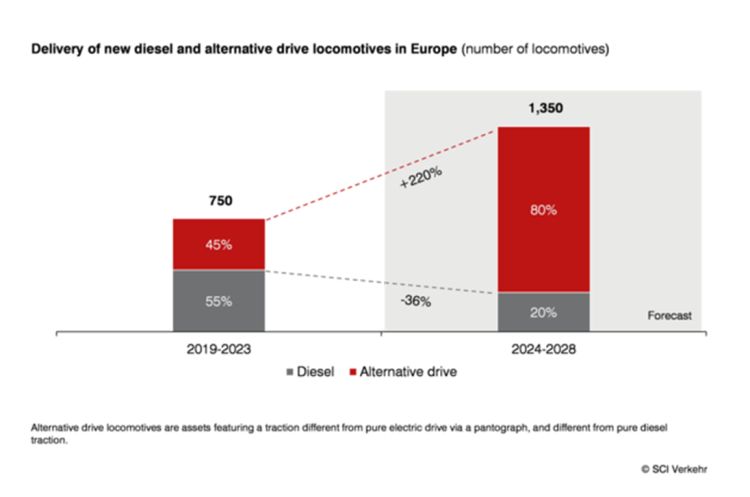
Initial optimism about a green locomotive fleet in Europe is giving way to the realisation that the transition will be slow and expensive, according to a new study on diesel and alternative drive locomotives by SCI Verkehr.


In 2023, the global market for new diesel and alternative drive locomotives will be small, with a value of around EUR 2.62 billion. For many years, the market for new diesel locomotives has been under enormous pressure for a variety of reasons. In countries with large fleets, such as China (rapidly increasing electrification of the network - no deliveries from 2019) and the USA (the new operating concept of rail freight operators allows for fleet reductions - recently the focus has been on modernising existing fleets), deliveries of new locomotives have collapsed.

However, starting from the current low level, SCI Verkehr expects a significant increase in new vehicle business to EUR 3.97 billion in 2028. Many alternative drive locomotive types have come out of the testing phase and will gain significant market share. The regions under the greatest pressure to reduce fleet emissions are also the regions with the largest volumes of new vehicles: Europe and North America.

In Europe, the last major deliveries of diesel locomotive fleets are taking place and alternative drive locomotives are already driving the new vehicle business. It is mainly national railways and leasing companies that are making major investments in alternative drive locomotives. At the same time, the first high-performance battery locomotives are being launched in the USA. In combination with diesel locomotives, these are expected to reduce emissions in rail freight transport. Overall, however, there is no discernible shift away from diesel traction in rail freight in most of the world's market regions. In many regions with low levels of electrification, such as Australia/Pacific and Africa, rail freight operators are opting for diesel traction with modern (or more modern) technology. With a global electrification rate of only 33%, catenary independent traction will remain essential for rail freight in many regions for the long term.

Between 2019 and 2023, around 4,100 diesel locomotives and almost 500 alternative drive locomotives will be delivered worldwide. The North American manufacturer Wabtec is the market leader with a 28% share, followed by Russia's TMH (27%). SCI Verkehr is currently observing high price levels in many regions, driven by high inflation rates and stricter emission standards.

Germany: Another major strike hits rail transport

Germany: Another major strike hits rail transport
© mirokola on Pixabay

The strike, driven by demands for reduced working hours and higher wages amid rising inflation, is expected to cause widespread travel disruption across the country.


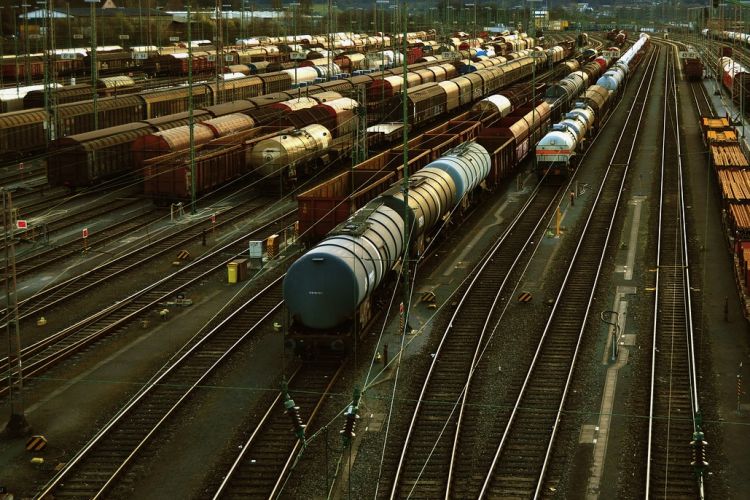
Germany is bracing for another mass strike by railway workers. Negotiations between the German Locomotive Drivers' Union (GDL) and Deutsche Bahn (DB) have been marked by several significant developments and strikes.

Last year, the GDL called several strikes, including a notable 20-hour strike in November. The upcoming rail strike in Germany, which started on 9 January and will last for three days, is primarily the result of a pay dispute between the German Locomotive Drivers' Union (GDL) and Deutsche Bahn (DB), the main national rail operator. At the heart of the dispute is the union's demand that shift workers' working hours be reduced from 38 to 35 hours a week without a pay cut. The union is also demanding a pay rise of €555 per month, plus a one-off payment of up to €3,000 to counter inflation. In response, Deutsche Bahn has offered an 11 percent pay rise over 32 months, which the union has rejected.

The strike is expected to have a significant impact on both freight and passenger rail services across Germany. Freight trains are not running from the evening of 9 January to the evening of 12 January, causing significant disruption to the movement of goods. Passenger services will be affected from the early hours of 10 January, with Deutsche Bahn planning to run trains on an emergency timetable, using longer trains on available journeys to accommodate as many people as possible. Previous strikes have caused significant disruption to the network, with only a fraction of scheduled services running.

Tuesday, January 09, 2024

India’s plans to double coal production ignore climate threat

Bloomberg News | January 9, 2024 

Stock image.

As climate diplomats at COP28 in Dubai debated an agreement to transition away from fossil fuels last December, India was facing another energy conundrum: It needed to build more power capacity, fast.


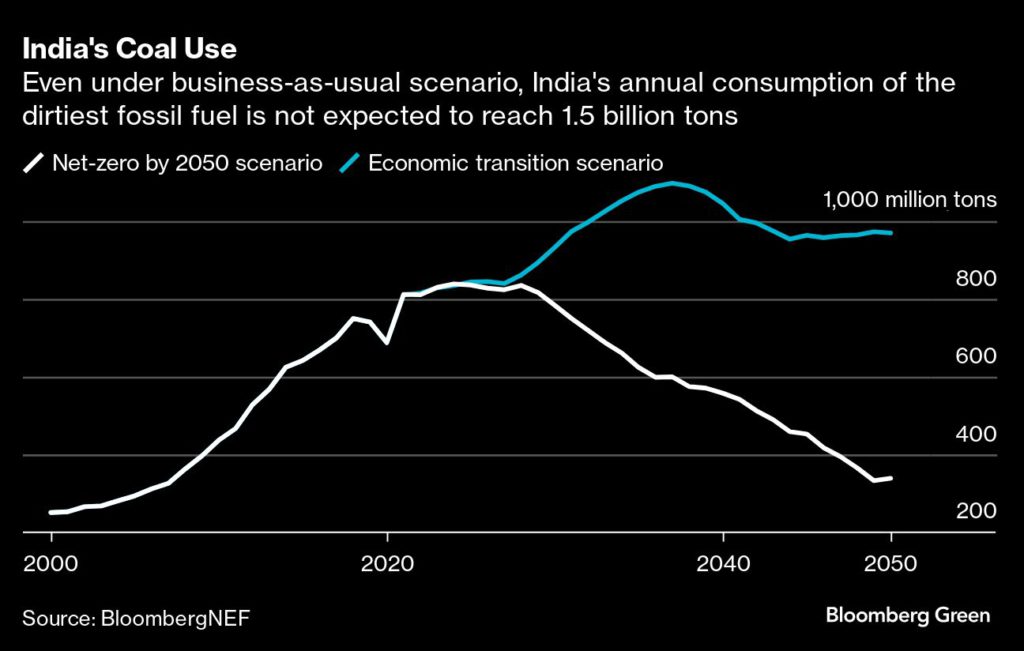
“To meet growing demand,” the Indian government said on Dec. 11 it expects to roughly double coal production, reaching 1.5 billion tons by 2030. Later, the power minister Raj Kumar Singh set out plans on Dec. 22 to add 88 gigawatts of thermal power plants by 2032. The vast majority of which will burn coal.

The move to invest more in the world’s dirtiest fuel – one of the biggest contributors to global warming – may seem counterintuitive for the South Asian country, which is highly vulnerable to climate impacts. Yet, as the country heads into elections during April and May, Prime Minister Narendra Modi is keen to avoid any risks of power shortages. Along with record heat waves India has seen big spikes in peak demand for electricity over two successive years.

“India’s policy is to build everything. Push for renewables, but also push for coal and other fossil fuels,” said Sandeep Pai, director of the climate-focused organization Swaniti Global. “The justification is an increase in power demand.”

When it comes to renewable energy, however, India is failing to build enough to meet its ambitious goal of 500 gigawatts of clean-energy capacity by 2030. The rates at which solar and wind power was installed over the past few years is about a third of what’s needed, according to BloombergNEF.

There is a combination of factors affecting the renewables roll out. The top reasons, says Rohit Gadre of BNEF, are the misaligned incentives of state-owned electricity retailers, difficulty of acquiring the land necessary and lack of consistent policies at federal and state levels. As a result, even as the demand for power is rising, there’s not enough appetite among private investors to speed up renewable investments.

That is not to say things will be smooth for coal either, which is facing similar challenges in attracting new investment. “Solar and wind power plants can be built quickly, whereas coal power plants will take much longer and at higher costs,” said Vibhuti Garg, South Asia director for the non-profit Institute for Energy Economics and Financial Analysis.

Neither Pai nor Gadre expect India to reach the coal targets it has set. BNEF’s economic-transition scenario sees India’s coal use topping out at 1.1 billion tons before 2040.


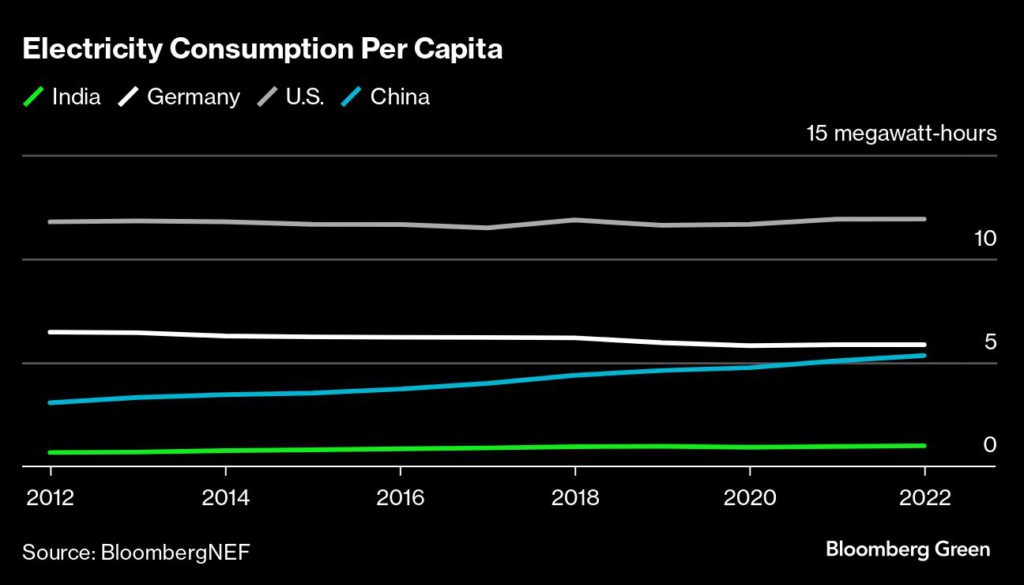
Ultimately, India needs investment in its energy infrastructure as the lower middle-income country seeks economic growth. Per capita electricity consumption for India is far below those of developed countries or even China. And India is still far from using up its fair-share of the global carbon budget.

India, as well as other big developing countries, also need more incentives to choose a greener path. Over the last three years, the Group of Seven nations have designed the Just Energy Transition Partnership to help South Africa, Vietnam and Indonesia to reduce coal use. Those deals have been messy and yet to show results.


While the world may have agreed to transition away from fossil fuels at COP28, it hasn’t found effective ways to help countries like India replace coal, environment minister Bhupendra Yadav suggested this week at a launch for the book titled Modi Energising A Green Future. That doesn’t have to be simply about rich countries handing out cash, he said at the event, but better policies, technology transfer and skills training are also needed.

Pai echoed this view. “The world needs to offer something to India to not carbonize,” he said. “The main challenge is the world really doesn’t offer much to India or to any developing country.”

(By Akshat Rathi)
US seeks to jumpstart production of higher-energy uranium now made in Russia

Reuters | January 9, 2024 |


Credit: Centrus Energy

The US is seeking bids from contractors to help establish a domestic supply of a uranium fuel enriched to higher levels for use in a next generation of reactors, a fuel currently only available in commercial levels from Russia, the Department of Energy said on Tuesday.


The DOE is seeking contracts for a maximum of 10 years from enrichment service companies to produce so-called high assay low enriched, or HALEU, uranium fuel that is enriched up to 20%, compared with traditional uranium fuel used in today’s reactors of about 5%.

The department has about $500 million in funding for HALEU production from the 2022 Inflation Reduction Act, and sought proposals late last year for additional HALEU production services. The program could be expanded in coming years, depending on congressional appropriations.

Uranium price hits new post-Fukushima high

HALEU is expected to be needed for a planned generation of reactors in the works by companies including X-energy and TerraPower, but output has been delayed as the reactors are not yet built.

“It’s a chicken-or-egg sort of process,” Jon Carmack, the department’s deputy assistant secretary for nuclear fuel cycle, said in an interview. Carmack said the government needs to invest enough money to show initial demand for producers, so they will build capacity, apply for licenses and get HALEU plant design and construction projects underway.

President Joe Biden’s administration sees the new reactors and maintaining the current fleet of nuclear plants as critical for its climate change agenda. Ali Zaidi, Biden’s national climate adviser, said boosting domestic uranium supply will increase energy security, generate high-paying union jobs, and boost economic competitiveness.

Nuclear proliferation experts warn that an increased dependency on HALEU around the world could increase proliferation risks because the fuel is closer to fissile material for nuclear weapons than traditional fuel.

The only company currently selling commercial shipments of HALEU is TENEX, part of Russia’s state-owned energy company Rosatom.

Centrus Energy, the only US company with a license to produce HALEU, and which is supplying the DOE with a small amount of the fuel for demonstration purposes, was encouraged that the request for proposals could lead to more production at its plant in Ohio. Centrus “looks forward to the opportunity to compete for the funding necessary to expand our production,” said spokesperson Lindsey Geisler.

European uranium enrichment company Urenco could also eventually produce US HALEU but does not yet have a license to do so. Urenco did not immediately respond to a request for comment.

(By Timothy Gardner; Editing by Jonathan Oatis and Andrea Ricci)


UK aims to break Russia’s stranglehold on nuclear fuel market with £300m uranium programme

Story by Rhodri Morgan • 

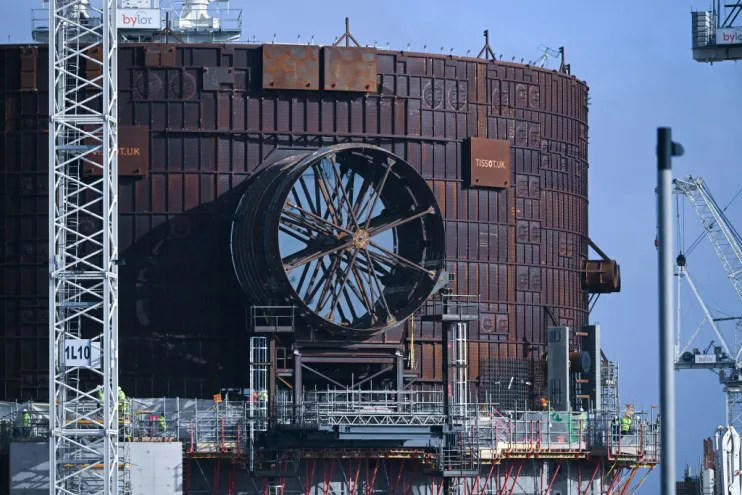
Hinkley Point C is one of the government's flagship nuclear reactor programmes© Provided by City AM

The UK has announced a £300m commitment to developing its nuclear fuel program to move away from dependence on Russia.

This past weekend, the government said it aims to end what they say is Russia’s reign as the only commercial producer of high-assay low-enriched uranium (HALEU); a type of enriched uranium needed for the next generation of reactors.

The investment is part of plans to help deliver up to 24GW of clean, reliable nuclear power by 2050 – a quarter of the UK’s electricity needs.

“The UK will become the first country in Europe to launch a high-tech Haleu nuclear fuel programme, strengthening supply for new nuclear projects and driving Vladimir Putin further out of global energy markets,” the Department of Energy Security and Net Zero said in a statement.

Secretary of State for Energy Security and Net Zero, Claire Coutinho, said:

“We stood up to Putin on oil and gas and financial markets; we won’t let him hold us to ransom on nuclear fuel.

“We will be the first nation in Europe outside of Russia to produce advanced nuclear fuel.”

The news comes on the eve of a week when the government is expected to publish its long-awaited and several times delayed nuclear strategy.

An industry source told City A.M.: “Britain is good at nuclear fuel in the way that we are not in other areas of the nuclear sector.

“The West has always waited around for Russia who have the facilities set up to do so but this announcement is no substitute for a wider strategy for the sector.”

A new vision for advanced modular reactors, of which Hinkley Point C is one, is expected to be laid out, as well as a roadmap for small module reactors (SMRs), developers of which have been increasingly calling for government guidance over recent years.

HALEU is the primary fuel used for SMRs and to this end, Robert Crayfourd, co-founder of Jersey-based Nuclear-focused investment company Geiger Counter, said the investment news can only come as a positive.

“It’s not entirely clear exactly how this money will be allocated at this stage, but directionally it is clearly positive as the expected growth in SMR’s globally from late this decade will require more mining of uranium, as well as enrichment and fabrication into fuel rods,” he told City A.M.

Utilities across the world have been running down natural uranium stockpiles since 2018, when a glut of oversupply dominated the market, buying and selling at multi-decade lows as and when needed.

But as fears of under-supply circulate, panic buying ensues and this will likely ride out for the next year or two, driving the price higher.

Research published last week showed that the portion of UK power produced from nuclear stations sank to below 40-terawatt hours in 2023 – a 40-year low.

The UK generates around 15 per cent of its electricity from about 6.5 GW of nuclear capacity, spread across five active plants.

However, 85 per cent of its nuclear power-producing stock is due to come offline within the next four years.


Iceland Plans To Drill Into a Volcano's Magma Chamber for Geothermal Energy Extraction in 2026

Iceland is a nation adorned with numerous boreholes strategically drilled into its rock, serving the purpose of extracting geothermal energy. Adding to this landscape of seemingly mundane features, another borehole is set to join the ranks, promising a venture far from dull and routine.

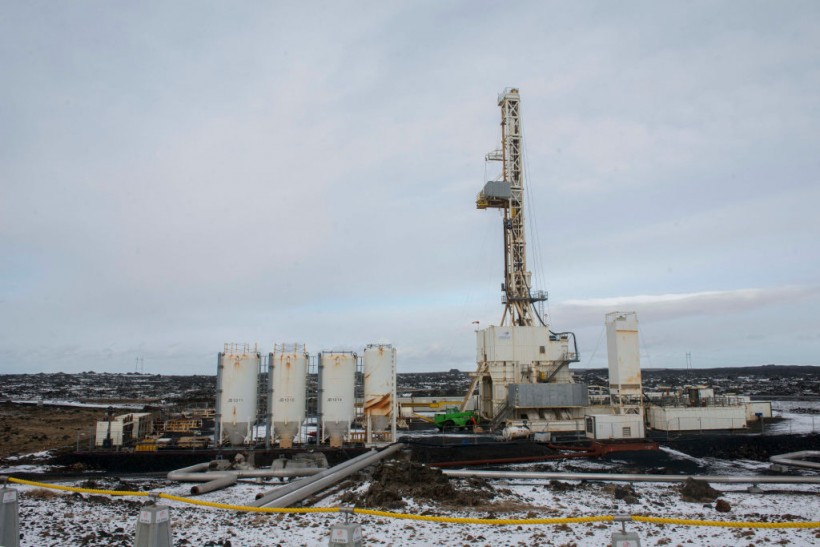
ICELAND-ENVIRONMENT-POLLUTION-LEISURE-ENERGY
(Photo : HALLDOR KOLBEINS/AFP via Getty Images)
The Reykjanes geothermal power station is pictured on March 23, 2017 in Reykjanes at the southwestern tip of Iceland.

Iceland's Magma Drilling Project for Super-Hot Geothermal Power

Iceland is on the brink of scientific history as it endeavors to become the first nation to drill into a volcano's magma chamber, marking an ambitious project known as the Krafla Magma Testbed (KMT) set to commence in 2026.

The initiative aims to construct a borehole in the magma chamber of Krafla, a volcano situated in Iceland's northeastern region, positioned between one and two miles below the Earth's surface. This innovative approach is anticipated to unlock an abundant source of geothermal energy, propelling Iceland's homes and buildings into a new era of sustainable power.

Iceland has long been a pioneer in harnessing geothermal energy generated within the Earth, employing turbines to convert this heat into electricity. Presently, geothermal power plants in Iceland drill wells exceeding a mile in depth to extract hot water vapor, which is then separated into liquid water and steam.

However, University of Alaska Fairbanks volcanologist John Eichelberg said that the current geothermal energy extracted is relatively cool compared to steam at fossil fuel power plants. This inefficiency at lower temperatures has spurred interest in exploring super-hot geothermal sources.

The Krafla Magma Testbed project holds the promise of revolutionizing Iceland's energy landscape by tapping into the higher temperatures emanating from the magma chamber.

By doing so, the endeavor could yield a more potent and efficient energy supply, as these wells, drawing from near-magma super-hot geothermal sources, are anticipated to be up to ten times more powerful than conventional wells. This advancement could potentially enable the production of equivalent power output with fewer wells, presenting a significant leap in geothermal energy efficiency.

READ ALSO: Geothermal Energy Reaches a Milestone With Texas-Based Startup's Breakthrough Technology, Making Large-Scale Adoption Feasible

Safety Concerns on the KMT Project

From 1975 to 1984, Krafla, among the world's most active volcanoes, underwent a series of eruptions. Using seismometers, scientists were able to precisely locate its magma chamber approximately 1.2 miles beneath the caldera.

Landsvirkjun, Iceland's primary power company, has been operating a geothermal plant at Krafla since the late 1970s, featuring 33 boreholes tapping into on-site geothermal energy, yet none extending to the actual magma chamber.

Although drilling to such depths presents a challenge, experts affirm the process's safety despite the magma's extreme temperatures, reaching up to 2,372°F (1,300°C).

In 2009, the unintentional drilling into Krafla's magma reservoir during the Iceland Deep Drilling Project demonstrated the safety of drilling into magma without inducing an eruption, provided the right tools are utilized. Project manager Björn Þór Guðmundsson emphasizes the KMT project's goal of developing materials capable of withstanding the extreme conditions of the magma chamber.

Commencing in 2026, KMT embarks on a journey to the magma chamber, planning to use sensors and fluid injection experiments for global insights. The ambitious project anticipates breaking ground near the initial borehole for a two-month journey, potentially revolutionizing volcanic activity forecasts worldwide with advancements like magma-resistant sensors.


RELATED ARTICLE: Startup Energy Company Plans to Drill the Deepest Hole Into Earth's Crust to Unleash Limitless Power


Mammalian Brain Cells Found to Contain High Mercury Levels; How Do Wild Terrestrial Species Adapt From Neurotoxins?


According to the US Environmental Protection Agency (EPA), human activities emit 4.9 million pounds (2,220 metric tons) of mercury compounds every year. Several studies have focused on the exposure and effects of mercury in predatory fish and marine mammals.

Mammalian Brain Cells Found To Contain High Mercury Levels; How Do Wild Terrestrial Species Adapt From Neurotoxins?
(Photo: Wikimedia Commons/ BartBotje )

It is well-known that people should limit the consumption of certain types of fish, like tuna, due to mercury biomagnification. However, little is known about mercury accumulation in the brains of wild terrestrial species.


Presence of Neurotoxins in Mammalian Brain

Dr. Yulia Pushkar from Purdue University's College of Science has maintained a brain imaging program with her group, showing expertise in sample preparation and data analysis. Her research team was tasked with checking for mercury in the brains of mongooses collected on Okinawa Island in Japan.

At first, Pushkar was skeptical whether mercury could be detected since neurotoxic elements are present in ultra-low concentrations even if they get into the brain. Her team took the specimens to the Advanced Photon Source at Argonne National Laboratory, where the brains were exposed to intense X-rays. Surprisingly, brain scans revealed the presence of mercury in these invasive animals.

The mystery of how mercury enters the brain of mongoose remains unresolved. Experts blame the water they drink, the bird eggs they consume, exposure to minerals, or even the air they breathe. Regardless of the cause, scientists know this is a terrible sign.

According to Pushkar, mercury is very toxic at low concentrations since it can bind and affect the function of essential biomolecules. The impact of detoxification will depend on the uptake and binding constant inside the detected accumulations and potential leakage if brain cells die. Currently, there is no possible way to dissolve these aggregates safely from tissue, and there are no reports of reversing mercury poisoning of the neural system. The main approach that can be taken is to avoid any exposures.

After refining the scans, the researchers achieved a resolution of a few tens of nanometers to observe the affected cells of the brain. Their collaborative findings were discussed in the paper "High-resolution imaging of Hg/Se aggregates in the brain of small Indian mongoose, a wild terrestrial species: insights into intracellular Hg detoxification."

READ ALSO: Marine Fog Endangers Mountain Lions with High Concentration of Mercury

Filtration Mechanism of Mammals

As the researchers scanned brain samples, they traced areas of the brawl with higher mercury content. They identified that cells of the choroid plexus and astrocytes of the subventricular zone contain mercury-rich puncta (approximately 0.5 to 2 microns in size).

The team believes these cells help filter mercury from the blood and brain tissue. This mechanism is carried out with the help of selenium, although the particular selenium-containing biomolecules where mercury binds remains to be discovered.

Researchers expect the human brain to similarly react to mercury through interactions with choroid plexus cells and astrocytes. However, they cannot confirm yet if the human brain has enough selenium-containing biomolecules to bind to mercury.

New critical mineral mines in British Columbia could generate nearly $600 billion, says MABC

In the province of British Columbia, 16 proposed critical mineral mines, worth C$36 billion in near-term investment, 300,000 person-years of employment 

 January 9, 2024

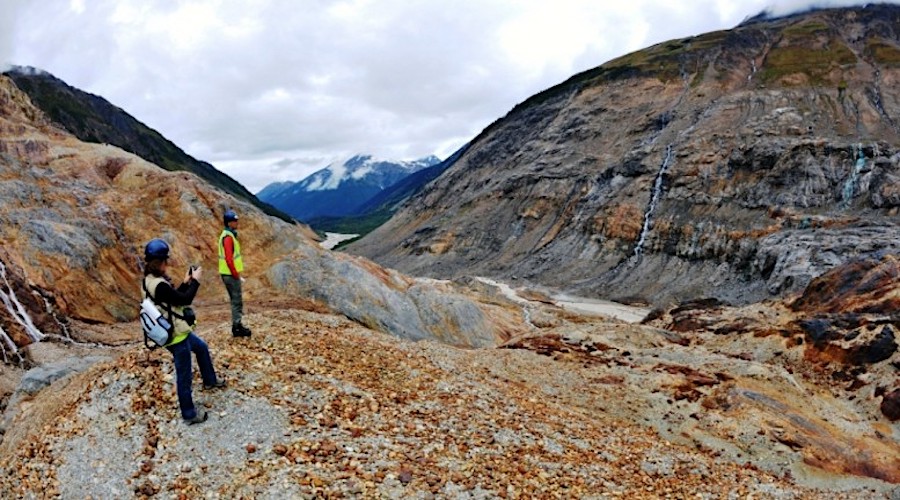
The KSM gold-copper project, 70 km north of Stewart, B.C. Credit: Seabridge Gold

COMPANIES Mining Association of British Columbia


In the province of British Columbia, 16 proposed critical mineral mines, worth C$36 billion in near-term investment, 300,000 person-years of employment and C$11 billion in tax revenues, are at a critical juncture, a new independent economic impact analysis conducted for the Mining Association of British Columbia (MABC) has found.

There are currently 10 metal mines, seven steelmaking coal mines and two smelters operating in BC, which is regarded as a key global mining jurisdiction. B.C. is Canada’s leading producer of copper and steelmaking coal, second largest producer of silver, and only producer of molybdenum, MABC said.

The study by Mansfield Consulting examined 14 potential critical mineral mines and two mine extensions, and found the long-term economic impact of operating these mines over several decades could be nearly C$800 billion (US$599 billion).

While Canada is aiming to become a bigger player on the world stage in terms of critical minerals supply, the mining permitting process in British Columbia is known for its lengthy delays, and finding solutions are a priority, the provincial government has said.

“The realization of benefits from these critical mineral projects is dependent on BC having competitive fiscal and regulatory policies that will attract the investment necessary to grow and sustain the sector. The provincial government’s forthcoming critical minerals strategy is fundamental to these efforts,” MABC CEO Michael Goehring said in a statement on Monday.

“This is a generational opportunity which must be seized and could position BC as a leading global supplier of responsibly-produced critical minerals. We want to move forward with the Governments of Canada and British Columbia, First Nations, local governments, and labour, to unlock critical mineral developments for the benefit of all British Columbians,” Goehring said, adding that the proposed critical mineral projects create opportunities for First Nations partnerships to advance economic reconciliation and self determination.

The study also assessed the economic benefits of advancing five proposed precious metal mines, including gold. The long-term combined impact of the proposed precious metals mines over their lifespan exceeds C$29.5 billion, creating over 96,000 person-years of employment and generating C$5.3 billion in tax revenue.

Seabridge Gold’s Kerr-Sulphurets Mitchell (KSM) project in British Columbia’s famed Golden Triangle is the world's top ranked gold project, but the last new gold mine – the Brucejack one of the highest grade gold mines in the world – went into production seven years ago.

“With the right government policy, these critical and precious mineral projects would further advance the mining and smelting sector’s foundational role in BC’s economy which includes well-paid family-supporting jobs and opportunities for service and supply businesses in both rural and urban communities,” Goehring said.