Monday, November 18, 2024


Plastic bag bans have lingering impacts, even after repeals


Banning free plastic bags for groceries in Texas resulted in customers purchasing more plastic bags, study finds


University of California - Riverside

Hai Che 

image: 

Hai Che

view more 

Credit: UC Riverside


Regulations imposed to protect the environment may continue to have impacts even after they are repealed. And those lingering impacts include some that run contrary to the goals of the policies.

Such are te findings of a study published in the Journal of Marketing Research co-authored by UC Riverside marketing professor Hai Che that examined policies to curtail the use of single-use plastic bags in grocery stores and other retail outlets in Austin and Dallas, Texas—policies that were later repealed.

Significantly, the behaviors spurred by the plastic bag rules continued after the rules were no longer in place. And some impacts were not beneficial to the environment.

Che and his coauthors found an increase in sales of plastic bags after the cities prohibited stores from giving away free plastic bags for carrying home groceries. They quantified plastic bag sales by analyzing barcode scanner data on consumer purchases.

“We were hoping for positive spillover effects, like customers will be more environmentally conscious and consume less one-time use plastic or paper products,” said Che, an associate professor at UCR’s School of Business. “But that’s not what happened in the data. People wound up buying more plastic.”

Che added store customer had been repurposing the free grocery bags al as liners for household trash bins.”

The bag rules, however,  most likely changed consumer behavior in positive ways as well, such as people getting in the habit of using reusable canvas or burlap bags for everyday shopping, although such data wasn’t available to the researchers, Che said.

The study found that the longer a policy is in place, the longer the behaviors spurred by the policy lingered on.

The Dallas City Council had imposed a 5-cent fee for single-use bags for five months in 2015 before repealing the fee when the city faced lawsuits from plastic bag manufacturers. When free bags became available again, plastic bag sales initially declined sharply and returned to pre-policy levels after 13 months.

The Austin City Council banned single-use carryout bags in 2013, and the policy remained in place for five years until 2018 when the Texas Supreme Court struck down such bans statewide when it ruled on a case about a similar bag ban in Lerado. After the repeal, the carryover effect of plastic bag purchases declined gradually and did not revert to the pre-policy baseline after 18 months, which was the end of the researchers’ analysis time frame. In fact, the carryover effect remained 38.6% above the baseline even at the end of the analysis

To assess the net environmental impact, the research team conducted a “break-even analysis” to determine if the plastic bag policy, despite the negative spillover effects, ultimately reduced plastic waste. They calculated how many fewer single-use grocery bags consumers would need to use to offset the additional trash bags purchased due to the policy. In Dallas, consumers would need to use one less grocery bag every seven trips, while in Austin, it would be one less bag every five trips to break even in terms of environmental impact.

burlap bag
Bans on free plastic bags for groceries are designed to encourage use of  reusable canvas or burlap bags which reduce plastic waste in the environment.  (Photo by Fiona Goodall/Getty Images)
“Interestingly, even a slight reduction in grocery bag use can offset the increased plastic consumption from trash bags,” Che said. “This suggests that these policies might still benefit the environment overall, even when repealed.”

The study’s title is “Are We Worse Off After Policy Repeals? Evidence from Two Green Policies.” In addition to Che, the authors are Dinesh Puranam of the Marshall School of Business at the University of Southern California, Sungjin Kim of Rutgers Business School at Rutgers University, and Jihoon Hong at W.P. Carey School of Business at Arizona State University.

The study contributes to a growing body of knowledge on the unintended consequences of environmental policies and offers insights applicable beyond plastic bag usage, Che said.

“While our study focused on plastic bags, similar spillover effects have been documented in policies targeting sugary drinks, energy efficiency, and health incentives,” Che said. “In each case, behaviors that weren’t directly targeted by the policy—like purchasing more sugary snacks when soda is taxed—can offset or even undermine the policy’s primary goals.”

Which EU country is the biggest consumer of lightweight plastic bags?


The number of lightweight plastic bags purchased across the EU is staggering – nearly 30 billion in 2022 alone. However, their usage rate is declining rapidly. Which countries use the most, and which are the most eco-friendly?

EU member states have taken progressive steps over the past decade to reduce the use of lightweight plastic bags, including imposing additional charges or levies and promoting the adoption of compostable and biodegradable alternatives.

Although these measures have not fully resolved the issue, they have proven effective: Today, EU citizens purchase about 30% fewer lightweight plastic bags compared to 2018, according to a Eurostat report published on Tuesday.

However, the overall consumption remains significantly high.

In 2022 alone, nearly 30 billion lightweight plastic bags were bought across the EU, averaging more than 66 bags per person.

Lithuanians buy nearly a bag a day, Belgians almost none in a year

Lithuania recorded the highest use per capita, with 249, followed by Latvia (193) and the Czech Republic (185).

With only four bags per capita, Belgium reported the lowest consumption rate, followed by Poland (7) and Portugal (13).
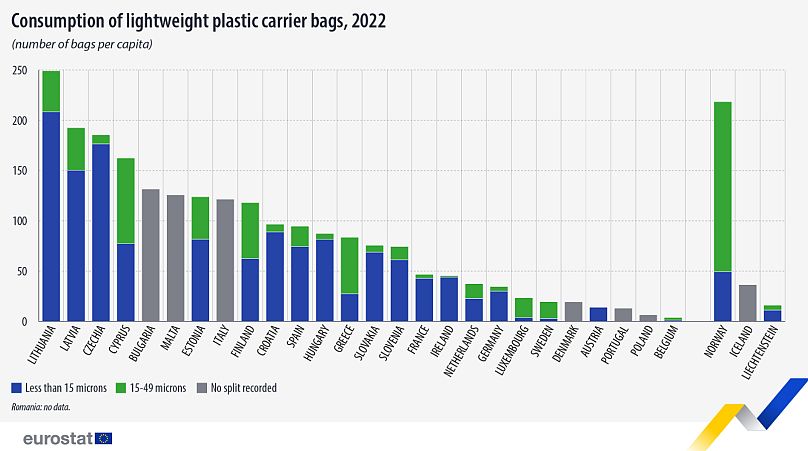
Consumption of lighweight plastic carrier bags, 2022
Consumption of lighweight plastic carrier bags, 2022Eurostat

What are lightweight plastic bags, and what impact do they have?

Lightweight plastic bags are less than 50 microns thick and are normally used for carrying small amounts of groceries.

They have a devastating impact on the environment.

Not only do they take centuries to decompose, but they also break up into microplastics, ending up in the human and animal food chain.

Study finds 'safe' BPA alternatives pose health risks

A virtual simulation of the interaction between complex biological membranes and alternative bisphenols suggests that BPF and BPS also accumulate in biological membranes.


Universidad Miguel Hernandez de Elche

Comparisson of bisphenol molecules 

image: 

Bisphenols are a group of endocrine-disrupting chemicals used worldwide for the production of plastics and resins. Bisphenol A (BPA), the main bisphenol, exhibits many unwanted effects. BPA has, currently, been replaced with bisphenol F (BPF) and bisphenol S (BPS) in many applications in the hope that these molecules have a lesser effect on metabolism than BPA. After conducting molecular dynamics simulations to compare the localization and interactions of BPA, BPF, and BPS in a complex membrane, the ata support that both BPF and BPS, behaving in the same way in the membrane as BPA and with the same capacity to accumulate in the biological membrane, are not safe alternatives to BPA.

view more 

Credit: Villalaín, J. IDiBE UMH


A study by Professor José Villalaín of the Miguel Hernández University of Elche (UMH) in Spain, published in the Journal of Xenobiotics, reveals that bisphenol analogs BPF and BPS, used as safer alternatives to BPA, may still pose health risks. Using high-resolution computer simulations, the research shows these compounds accumulate in complex biological membranes, potentially disrupting endocrine function and causing diseases like obesity and diabetes.

While European health authorities have warned about the adverse effects of bisphenol A in plastic production and have imposed legal restrictions on its use, similar compounds used in the plastics industry are suspected of causing the same health issues. This new study adds to the growing body of scientific evidence pointing to the dangers of these compounds.

Using computer simulations, the expert from the UMH’s Institute of Research, Development, and Innovation in Healthcare Biotechnology analyzed the interactions between human cell membranes and the molecules of bisphenol A (BPA), bisphenol F (BPF), and bisphenol S (BPS). BPF and BPS are being marketed as safer alternatives. The results show that these compounds are so similar to bisphenol A that they accumulate in cells and affect membrane lipids, making them potentially harmful and capable of causing diseases.

Some synthetic and natural chemical compounds can interfere with the normal functioning of the endocrine system, which regulates many vital functions. These substances are known as “endocrine disruptors.” These chemicals are present in everyday items, including plastic bottles, food containers, metal coatings, detergents, flame retardants, foods, toys, cosmetics, and pesticides. Some, such as DDT, have already been banned. Others are under ongoing review, with increasing regulation, as is the case with bisphenol A, which has been identified by the European Food Safety Authority (EFSA) as a “health concern for consumers across all age groups.”

Bisphenols are endocrine disruptors used globally in the production of plastics and resins. Bisphenol A, the most common bisphenol, has been linked to numerous adverse health effects in both humans and animals. As a result, BPA is being replaced with Bisphenol F (BPF) and Bisphenol S (BPS) in the hope that these compounds will have less of an impact on metabolism.

However, studies conducted over the past decade have found elevated concentrations of these BPA analogs in urine samples from European adults. At the same time, BPS and BPF have been associated with an increased risk of cardiovascular diseasecancer, and other health problems. The scientific community is still investigating the full extent of the risks posed by these supposedly ‘safe’ bisphenols.

To better understand these compounds, Professor Villalaín conducted virtual simulations to compare how BPA, BPF, and BPS interact with cell membranes — the layers that separate cells from their surrounding environment. The technique, known as molecular dynamics, allows the creation of complex biomembranes that closely resemble those found in human cells.

The UMH study shows that bisphenols tend to accumulate at the membrane's interface without a preferred orientation and may exist in either monomeric or aggregated states. They also affect the biophysical properties of the membrane's lipid components. The properties of bisphenols can be partially attributed to their membrane-affecting behavior and their ability to alter the membrane’s physical characteristics.

These findings suggest that BPF and BPS, which behave similarly to BPA in the membrane and share its ability to accumulate in biological membranes, are not safer alternatives to BPA. "Given the environmental and health importance of these molecules, the use of these bisphenols should be discontinued due to the risks they may pose to human and animal health," concludes the expert.

The study, published in one of the leading journals in this field, supports the growing scientific evidence that BPF and BPS also act as endocrine disruptors in the human body. “Since bisphenols tend to accumulate in the lipid phase [the part of the cell membrane where molecules responsible for transporting substances and chemical signals into and out of cells are located], the concentration of bisphenols found in biological membranes can be significant,” says Professor Villalaín. Bisphenols interfere with the chemical messages within the cell by adhering to it, which leads to negative health effects, including diabetes, obesity, and infertility.


Remembrance and reflection: Exhibition "ÜberLeben erzählen" in Stuttgart


80 years ago, Waffen-SS soldiers carried out a massacre in the Italian mountain village of Sant'Anna di Stazzema, leaving hundreds dead.


University of Konstanz


On 12 August 1944, soldiers of the Waffen-SS invaded the Italian mountain village of Sant'Anna di Stazzema and killed around 560 people, including 130 children. For decades, officials avoided talking about what had happened. It was not until April 2004 that the military court in La Spezia started a trial of several perpetrators who were still alive, and the following year ten former SS members were sentenced to life imprisonment. However, they were neither extradited nor convicted in Germany, as the Stuttgart public prosecutor's office discontinued its own proceedings in 2012.

"We see the 'ÜberLeben erzählen' exhibition as a contribution to the examination of these crimes, which, at least from a judicial perspective, the Stuttgart public prosecutor had suspended in 2012," says anthropologist Maria Lidola, who led the exhibition project along with cultural scholar Sarah Seidel. "Our choice of location was thus very intentional". From 20 November to 5 December 2024, the exhibition will be on display at the StadtPalais in Stuttgart, within sight of the Ministry of Justice and Migration.

A bridge connecting then and now
"ÜberLeben erzählen. Sant’Anna di Stazzema 1944/2024" was developed in the context of an interdisciplinary exhibition and teaching project at the University of Konstanz – with funding from forum.konstanz, the Centre for Cultural Inquiry (ZKF) and the Teaching Innovation Fund. 80 years after the massacre, university teachers Maria Lidola and Sarah Seidel visited the site along with students and Petra Quintini, a co-initiator of the project. While there, they made audio, photo and video recordings documenting the stories of eye witnesses and their descendants as well as legal and political actors. In seminars back in Konstanz, they dug into issues of remembrance – for example, the role of memorial sites – as well as silence and reflection on the past in the form of art, music and literature.

"The aim of this student project was not to just retell the events of the massacre, but rather to try to grasp what happened from today's perspective. Our goal was to tell a story, of the massacre that took place, of survival, and how the survivors have lived on until the present day", explains Sarah Seidel. "The special thing about the project was the connections that were made between eye witnesses and students, who otherwise often only learn about the Nazi period in textbooks. Because of the eye witnesses' advanced age, this is an opportunity that will not be around much longer". They describe all of the encounters teachers and their students had as being very personal and touching. "For us, this was the strength of the project. Getting to know individual people and their experiences is much more moving than simply learning facts and figures", Maria Lidola says.

The sisters Siria and Adele Pardini accompanied a group of students to their childhood home where almost 30 people were shot and killed, including their mother and two sisters. Minutes before entering the house, Siria talked about caring for the flowers on the memorial plaques, which she has been doing every week for decades. Then, in the kitchen, she pulls a tin from the shelf, which had been preserved for her father. Suddenly the past becomes very present. Today, the glass preserves memories.

On 20 November 2024 at 18:30, the doors will open to the exhibition "ÜberLeben erzählen. Sant'Anna di Stazzema 1944/2024" at the StadtPalais in Stuttgart. It can be viewed there daily during normal opening hours until 5 December 2024. In May 2025, the exhibition will be on show in Konstanz.

Student Amélie Kroneis reports in the University of Konstanz's online magazine campus.kn how she experienced the exhibition project and the excursion to Sant'Anna, where the exhibition opened in August 2024 on the 80th anniversary of the massacre.


Key facts:


  • Exhibition "ÜberLeben erzählen" (stories of survivors) from 20 November to 5 December 2024 at StadtPalais in Stuttgart


  • Project leaders: Sarah Seidel, literary scholar at the University of Konstanz, and Maria Lidola, anthropologist at the University of Konstanz, in collaboration with Petra Quintini, co-initiator of "Campo della Pace" and ambassador for remembrance work.
  • Funded by forum.konstanz, the Centre for Cultural Inquiry (ZKF) and the Teaching Innovation Fund of the University of Konstanz
  • Aims of the projectExploring the possibilities of storytelling, remembrance and commemoration with a focus on survivors' stories and reflection of the events
  • Project activitiesSeminar "Erinnern und Gedenken. Das Unbeschreibliche erzählen" (Narrating the indescribable) (Sarah Seidel) and seminar "Narrative Anthropology" (Maria Lidola); excursions to Sant'Anna di Stazzema from 10 to 17 May 2024, and on the occasion of the 80th anniversary of the massacre for the installation of the exhibition "Raccontare la sopravvivenza", which took place from 11 to 25 August 2024, and for the study of contemporary witnesses' reports as well as of legal and political reappraisals.


New study investigates insecticide contamination in Minnesota’s water


Research reveals high concentrations in natural springs and possible impacts on drinking water


University of Minnesota

Water Quality Research 

image: 

The DNR conducted field samples in both urban and rural areas that were used to complete the study. 

view more 

Credit: Minnesota Department of Natural Resources


MINNEAPOLIS / ST. PAUL (11/18/2024) — A new study by researchers at the University of Minnesota Twin Cities in collaboration with the Minnesota Department of Natural Resources (DNR) found that specific insecticides, called neonicotinoids, were found at high concentrations in some ground and surface water sources that could affect drinking water.

Individuals relying on shallow groundwater or natural springs for drinking water have a higher risk of contamination from these insecticides compared to those getting their drinking water from deep groundwater wells. They also found that these insecticides could affect organisms in the streams that are fed by those springs.

The research was recently published in Science of the Total Environment, a peer-reviewed scientific journal.

With the increased use of insecticides for agriculture and insect control in the past few decades, research has shown that consistent application of them can lead to contamination in water. This can have a negative impact on human health and pollinator insect species, such as bees and butterflies. 

A large portion of Minnesota’s drinking water comes from groundwater. Looking at the levels of these specific insecticides can help water treatment plants determine what to monitor and filter.

In this study, researchers looked at the levels of neonicotinoids in surface and groundwater across Minnesota, identifying factors that may affect the extent of contamination. The DNR was able to collect water samples from 15 springs and 75 unique wells from 13 counties in Minnesota over four years (2019–2022) allowing comparisons between urban and rural areas. 

The researchers not only collected an extensive amount of geographic locations, they also looked at the chemical levels at various depths. In testing the water samples, they found that natural springs are very susceptible to contamination from neonicotinoid insecticides. 

“Oftentimes people think a natural spring has water that is safe to drink,” said Bill Arnold, Distinguished McKnight University Professor & Joseph T. and Rose S. Ling Professor in the University of Minnesota’s Department of Civil, Environmental, and Geo- Engineering. “That's not necessarily true, it depends on how deep that water is sourced.” 

There are multiple ways these types of chemicals can get into the environment. In addition to direct application, stormwater runoff and snow melt can contribute to these chemicals in ground and surface water. The researchers were able to map different classes of the insecticides across the state. 

“This study is a key first step in identifying pollutants in the water, even in some unexpected places like natural springs,” said Arnold. “We use so many of these insecticides in Minnesota—basically every corn and soybean seed is treated before planting—and many of these chemicals can be purchased at a local hardware store for spraying fruit trees, flea and tick control for your pets, and eliminating bedbugs.”

While the researchers knew they would find traces of the insecticide in water, some of their study results were unexpected.

“We were surprised by the high levels of the chemical detected in the natural springs and in some cases the chemicals were observed at much deeper levels in wells than we expected going into this project," Arnold added.

As a follow-up to the study, researchers are collaborating with county and state agencies to include these chemicals on water treatment monitoring lists and want to continue to educate watershed districts about these insecticides. The researchers will also work with the University of Minnesota’s St. Anthony Falls Laboratory to improve stormwater treatment methods for urban environments, including the use of biofiltration to remove pollutants.  

In addition to Arnold, the team included University of Minnesota Department of Civil, Environmental, and Geo- Engineering retired adjunct associate professor Paul Capel, former research assistant Grant Goedjen, and John Barry from the DNR’s Division of Ecological and Water Resources.

This work was funded by the Minnesota Environment and Natural Resources Trust Fund (ENTRF) as recommended by the Legislative Citizen Commission on Minnesota Resources (LCCMR). The ENRTF is a permanent fund in Minnesota that provides funding for the protection and conservation of Minnesota's natural resources. 

Read the entire research paper titled, “Occurrence and distribution of neonicotinoids and fiproles within groundwater in Minnesota: Effects of lithology, land use and geography,” visit the Science Direct website.

Robotics and the sense of self in humans

Three scientists discuss the concept of “sense of self” in humans and explore how robots can be used to better understand the phenomenon. The review paper has been published in Science Robotics


 News Release 

Istituto Italiano di Tecnologia - IIT


Genova (Italy), 18 November 2024 - In a review paper published recently in Science Robotics a cognitive roboticist, cognitive psychologist and a psychiatrist discuss the concept of “sense of self” in humans, and they explore how robots can be used to better understand the phenomenon.

The experience of being, or having, a self—contained within our bodies and able to act in the world—comes naturally to all of us as human beings, along with a feeling of being the same self from day-to-day and of seeing others as also being selves. Robots could be used either as embodied models of the self (and its sub-components) or as testing platforms for psychological experiments. The authors suggest the possibility of generating in robots some of the processes which contribute to the “sense of self” in humans.

The authors are Agnieszka Wykowska, head of Social Cognition in Human-Robot Interaction unit at the Istituto Italiano di Tecnologia (IIT-Italian Institute of Technology) in Italy, Tony Prescott, Professor of Cognitive Robotics at University of Sheffield in UK and Kai Vogeley, Professor at the Department of Psychiatry and Psychotherapy at University of Cologne in Germany.

The inquiry originates from the idea that the sense of self in humans is intrinsically tied to having a body, feeling it, and experiencing actions and interactions. A key idea emerging from current research studies in human cognition is that the human sense of self is not just one thing but is made up of many ongoing processes, such as the sense of “owning” a body and the sense of having “agency”, that is the feeling of control over one’s actions. Today roboticists are aiming to construct robots that could reliably distinguish their own bodies (the self-other distinction) and detect the consequences of their own actions (agency). From this perspective, robots can serve as embodied models of the human cognitive processes underlying the sense of self. However, robots can also be used experimental probes for exploring the sense of self, as they possess bodies and can interact with both humans and their environment.

The three authors explore using robots in these two specific ways.

The first is programming robots to simulate processes within the human mind and brain that relate to the experience of self, as understood through psychology and neuroscience. Current research studies suggest that in humans a sense of self develops as the brain’s best explanation of its sensory experience, and its own role in generating those sensory signals.  A robot, being a physically embodied actor, is a suitable platform to test those theories.

The second approach is using robots in psychological experiments where humans interact with them while the robots display social capacities, such as communication through language or joint attention. These experiments could allow for an analysis whether people experience these robots as social others and whether the mental states they have about robots are similar to those they have when interacting with other people. Some experiments conducted by Wykowska’s group at IIT have already shown that sometimes, humans develop sense of joint agency with robots, when they act together as a team and when the robot is perceived as an intentional agent.

The authors also draw a connection between the development of the sense of self in humans over the course of life and the possibility of transferring some of its features to robots. For instance, by age 4, children have a sense of themselves as existing through time, and of other people as also having selves. These aspects of self are beginning to be investigated in robots by creating memory systems for robots that are similar to human autobiographical memory.  However, this work is at an early stage; current robots do not have awareness of themselves as persisting from day to day, nor are they aware of others (humans or robots) as being selves. 

The article also highlights future directions and open challenges in understanding the sense of self through robotics, especially when it is compromised in people due to specific conditions, such as schizophrenia or autism.  By understanding such diversity, authors hope that scientists may be able to gain new insights into the building blocks of the experience of self.


Why substitute sugar with maple syrup?


First human clinical trial explores how replacing refined sugars with pure maple syrup can help in preventing metabolic disease


Ellen LaNicca Fearless PR

Dr. Andre Marette, PhD 

image: 

Dr. Andre Marette, PhD, was the lead scientist for first human trial substituting refined sugars with pure maple syrup. The study found significant improvement in multiple cardiometabolic risk factors.   

view more 

Credit: Maple From Canada


Quebec, CA, November 18, 2024 – A new study published in the The Journal of Nutrition, found that substituting two tablespoons of pure maple syrup for refined sugars reduced several cardiometabolic risk factors in humans.  It was the first placebo-controlled clinical trial exploring potential health benefits of maple syrup in humans.

“We know from decades of research that maple syrup is more than just sugar. It contains over 100 natural compounds, including polyphenols, that are known to prevent disease in part through their anti-inflammatory effects,” remarked Dr. André Marette, PhD, and lead scientist on the study.  “Because the fundamental chemistry of maple syrup is unique, I wondered if ingesting maple syrup instead of an equivalent amount of refined sugar would differently impact the cardiometabolic health and the intestinal microbiota in humans.  The results were extremely encouraging. I did not expect to see so many improvements of risk factors within a relatively short treatment period.”   

The study was conducted by a Laval University team led by Dr. André Marette, PhD, at the Quebec Heart and Lung Institute and Dr. Marie-Claude Vohl, PhD, at the Institute of Nutrition and Functional Foods.

Study Protocol

Forty-two volunteers from the greater Québec city area, between the ages of 18-75 in good health, and with a BMI of 23-40, participated in the study. Participants substituted 5% of their daily caloric intake (corresponding to 2 tablespoons) from refined sugars with either Canadian maple syrup or an artificially flavored sucrose syrup. Each phase lasted 8 weeks with participants switching between maple syrup and sucrose syrup groups after a four-week washout period. The cross-over design ensured that the same test subject was his or her own control, consuming both placebo and maple syrup. Primary outcomes focused on the oral glucose tolerance test, the OGTT.  Secondary outcomes included changes in blood lipid profile, blood pressure, body fat composition (measured by DEXA scan) and changes in gut microbiota composition.  

Maple, the Smarter Sweetener, Improves Multiple Cardiometabolic Risk Factors

Blood Sugar Lowered

Study participants who consumed pure maple syrup had an improved response to the oral glucose tolerance test (OGTT) than those who received a flavored syrup of refined sugar. Their bodies managed blood sugar levels better after eating (-50.59 vs. +29.93).

Blood Pressure Lowered

Blood pressure was also lowered in the subjects who consumed maple syrup during the trial.  Systolic blood pressure decreased significantly in the maple syrup group (-2.72 mm Hg) while it increased slightly in the sucrose group (+0.87 mm Hg). “Lowering blood pressure continues to be an important factor in lessening the risk of cardiovascular disease,” Dr. Marette commented. “Natural sweeteners, such as pure maple syrup, when substituted for refined sugars, can be part of an overall solution in helping to prevent metabolic diseases.”

Abdominal Fat Reduced

Visceral fat is the deep fat that wraps around the internal organs in your belly.  It can increase an individual’s risk of serious health problems such as heart disease, diabetes and stroke. The maple syrup trial showed that android fat mass, the fat in the abdominal region, significantly decreased in the maple syrup group as compared to an increase in the group consuming the sucrose solution (-7.83 g vs. +67.61 g).

Healthier Gut

An unexpected discovery was the improved levels of potentially beneficial gut bacteria and a decrease in levels of potentially harmful gut bacteria in the maple syrup participants. The study showed a reduction in Klebsiella species and Bacteroides pectinophilus, which are linked to inflammation and metabolic disorders, and the increased growth of beneficial bacteria like Lactocaseibacillus casei and Clostridium beijerinckii.

“Both individually and collectively, the study findings are quite significant,” Dr. Marette noted.  “The combined decrease of such key risk factors may help to reduce the risk of diabetes and cardiovascular disease. Making a commitment to lifestyle changes and small adjustments to our everyday diets is important and can be a powerful tool in preventing future diseases.”

According to one participant: “Before the study, I would consume pure maple products regularly but not consistently. I have always enjoyed it. Today my routine is to replace refined sugars with 2 tablespoons of pure Canadian maple syrup daily.”

First Human Trial Builds Upon American Researcher’s Cellular and Animal Studies

Dr. Marette’s clinical study builds upon his own work in animal models of diabetes and previous work on maple syrup and its bioactives by  American scientist Navindra P. Seeram, PhD, of the University of Rhode Island, College of Pharmacy. Dr. Seeram’s extensive foundational work with maple syrup set the stage for this first human clinical trial. “With each new study, we learn more benefits that natural products from medicinal plants and functional foods, like maple syrup, provide.” noted Dr. Seeram. “The significant promising results of this first human trial provide more reasons for us to educate consumers about maple syrup’s many health benefits. It is truly a ‘smarter sweetener’ and a healthier alternative to refined sugar.”

“While this study was limited to a relatively small sample size (42 men and women) and took place during a relatively short duration of time, the results are still significant,” Dr. Marette remarked.  “We now have human evidence to support replacing refined sugars with maple syrup, a natural sweetener, for preventing metabolic diseases.  Our next goal is to conduct larger studies with other populations to explore how replacing refined sugars with maple syrup might impact their unique health conditions.”     

General nutrition claims for 2 tablespoons of maple syrup:

  • Excellent source of manganese (35%).
  • Good source of riboflavin (15%).
  • Source of calcium (2%), thiamin (2%), potassium (2%) and copper (8%).
  • It contains 12% fewer calories than in light corn syrup.
  • By comparison, refined sugar requires a large amount of processing and therefore lacks any real nutritional value. 

The study was jointly funded by Québec Maple Syrup Producers and the Québec Department of Agriculture, Fisheries and Food (MAPAQ) through its healthy food production initiative, the Programme Alimentation santé.

To find out more about  this and other clinical studies about maple syrup, please visit ppaq.ca/en/medias/clinical-study.

The Québec Maple Syrup Producers (QMSP) represent over 13,500 maple producers and 8,400 maple enterprises. Québec produces 72% of the world’s maple syrup and exports it to over 70 countries. 


In the first ever human clinical study, replacing refined sugars with the same amount of pure maple syrup for 5% of daily energy intake resulted in improved glycemic response, lower systolic blood pressure and reduced abdominal fat.  

Maple syrup provides functional food benefits for cardiometabolic health, when replacing refined sugars.  

Maple Syrup from Canada (IMAGE)

Ellen LaNicca Fearless PR