Saturday, February 01, 2025


Video: Massive Fire Damages Shipyard in Egypt

shipyard fire
Egyptian shipyard was damaged by an intensive fire (YouTube)

Published Jan 31, 2025 1:17 PM by The Maritime Executive


[Brief]  A massive fire broke out overnight in one of the Egyptian shipyards south of the Suez Canal. According to local media reports the yard area that was damaged by the fire was used for fishing boats and pleasure craft.

The fire began late on Thursday, January 30, and burned for approximately six hours. Teams from the Suez Governorate responded but according to the reports, the efforts were hampered by the flammable materials used in the shipyard.


Pictures and videos show intense flames in the yard area destroying multiple boats. The shipyard is located in the Adabiya area near the southern entrance of the Suez Canal. 

Authorities are reporting that there were no facilities but three people were taken to the hospital for treatment. At least 10 fishing boats and pleasure craft were destroyed in the fire.

Teams were continuing to search the area and working to determine the cause of the fire and why it spread so quickly.


Fire Cleanup Underway as Blaze Continues to Smolder in Bulker’s Cargo Hold

bulker
Blaze was reproted bruning in one of the bulker's cargo holds

Published Jan 31, 2025 6:53 PM by The Maritime Executive


Fire crews at the Port of Aberdeen in Scotland have spent several days battling a cargo hold fire aboard a Panama-flagged bulker docked in the port. The ship and the port are reported to be in no immediate danger as several fire departments and specialist teams worked to extinguish the blaze.

The Japanese-owned bulker Lowlands Diamond, a Handymax bulker (39,996 dwt) reported the fire to the local authorities on Monday, January 27, as the ship was making its way to the South Harbor at the Port of Aberdeen. Local media showed pictures of multiple fire engines alongside on the dock assisting with the stubborn fire.

A spokesperson for the fire department said the blaze was contained to a cargo hold on the vessel which was built in 2023. She is approximately 600 feet (183 meters) in length and was reported operating under a time charter to Coblefret.


Fire officials did not report what was burning but said it was a “complex and unusual” operation that they expected would last for days. They later said it would require removing the burning cargo from the hold. 

The local Press & Journal newspaper today published pictures of boxes or bales saying it was “charred cargo” from the vessel. It was cordoned off by a ring of shipping containers. Another report said there were “heaps of burnt cargo being removed from the vessel.”

The Port of Aberdeen issued a statement saying it was coordinating with the fire teams and thanked them for their effort. They reported operations at the South Harbor had not been disrupted by the fire.


Canada Aims to Restore Reliable Ferry Service on Critical Route to PEI

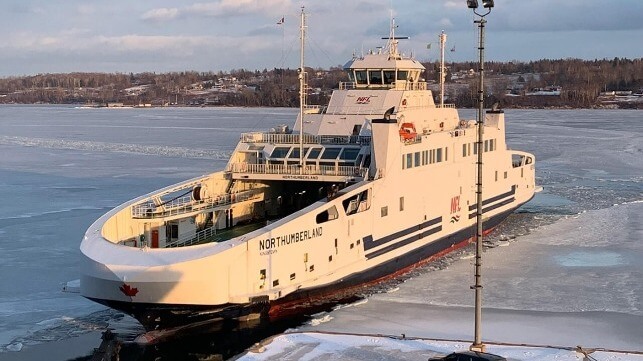
Canadian ferry Northumberland
Northumberland reached Nova Scotia this week promising better service for the 2025 ferry season (Transport Canada)

Published Jan 31, 2025 8:02 PM by The Maritime Executive


Canada is hoping to restore reliable ferry transport on the critical Prince Edward Island (PEI) and Nova Scotia route following the arrival of ro/pax ferry MV Northumberland. The government acquired the ferry in November 2023 as an interim replacement for the former MV Holiday Island which was taken out of service after a fire in July 2022.

The 130-meter (426-foot) Northumberland, formerly MV Fanafjord, arrived in Pictou, Canada on the north shore of Nova Scotia on January 26 after a 5-week trip from Norway.  The Canadian Coast Guard sent a notice that it would be conducting ice-breaking operations around Pictou to make it possible for the ferry to complete the last miles of its trip.

The vessel is expected to undergo final refit work before commencing service at the beginning of the 2025 operating season. The 2007-built ferry with a capacity of 600 passengers and 180 vehicles will serve on the critical route that has been experiencing challenges since the Holiday Island engine room fire.

The federal government purchased Fanafjord for C$38.6 million (US$27 million) after it faced strong pressure to restore reliability on the PEI and Nova Scotia route. The ferry, which will be operated by Northumberland Ferries Limited, will serve on the route until a successor for Holiday Island is built and ready to enter service in 2028. Holiday Island was one of two vessels used to provide service on the route, the second ferry being MV Confederation.

Confederation plowed into a pier on Prince Edward Island in September 2024 causing a dent and structural damage. The operator Northumberland Ferries later blamed a mechanical failure reporting the visor needed repairs that would require several months. It was hoping to place the vessel back in service by December before the route closed for the winter. After the accident with Confederation, the company was down to just one ferry running four trips a day but then in September MV Saaremaa, leased from Quebec's ferry service, started having unending engine problems. 

The PEI and Nova Scotia ferry route is considered an essential transportation link that supports the regional economy and provides employment for approximately 200 people. The route contributes about C$39 million (US$27 million) to the regional economy annually. During the summer months, both are popular tourist destinations.

“After an extremely disappointing season, I’m so pleased to see the MV Northumberland arrive in Canadian waters,” said Lawrence MacAulay, Minister of Agriculture. “Our government fully understands the importance of a safe, reliable two-vessel ferry service, and we are committed to restoring this vital transportation link for all of the families, local businesses, and tourism operators who depend on it.”

The government’s acquisition of Northumberland falls under its Ferry Services Contribution program which ensures that federally-owned ferry assets are part of a safe, reliable, and affordable transportation system. Through the program, the government provides funding to private operators for ferry operations and maintenance. Currently, the government owns four ferry vessels and six shore facilities that are leased to operators.   

After the repeated mishaps, the federal government called Northumberland’s frequent service problems unacceptable. The day after the new ferry arrived in Canada, the press reported the government had ordered an audit of the company. Transport Canada has published a request for an independent company to commence the audit.

The company was established in 1941 to provide the critical ferry service. The route to Prince Edward Island is due to resume in May 2025 for the summer season. The company with its sister brand Bay Ferries also maintains service from Nova Scotia to New Brunswick and to Maine.


New diagnostic tool will help LIGO hunt gravitational waves


Machine learning tool developed by UCR researchers will help answer fundamental questions about the universe


University of California - Riverside


RIVERSIDE, Calif. -- Finding patterns and reducing noise in large, complex datasets generated by the gravitational wave-detecting LIGO facility just got easier, thanks to the work of scientists at the University of California, Riverside. 

The UCR researchers presented a paper at a recent IEEE big-data workshop, demonstrating a new, unsupervised machine learning approach to find new patterns in the auxiliary channel data of the Laser Interferometer Gravitational-Wave Observatory, or LIGO. The technology is also potentially applicable to large scale particle accelerator experiments and large complex industrial systems.

LIGO is a facility that detects gravitational waves — transient disturbances in the fabric of spacetime itself, generated by the acceleration of massive bodies. It was the first to detect such waves from merging black holes, confirming a key part of Einstein’s Theory of Relativity. LIGO has two widely-separated 4-km-long interferometers — in Hanford, Washington, and Livingston, Louisiana — that work together to detect gravitational waves by employing high-power laser beams. The discoveries these detectors make offer a new way to observe the universe and address questions about the nature of black holes, cosmology, and the densest states of matter in the universe.

Each of the two LIGO detectors records thousands of data streams, or channels, which make up the output of environmental sensors located at the detector sites. 

“The machine learning approach we developed in close collaboration with LIGO commissioners and stakeholders identifies patterns in data entirely on its own,” said Jonathan Richardson, an assistant professor of physics and astronomy who leads the UCR LIGO group. “We find that it recovers the environmental ‘states’ known to the operators at the LIGO detector sites extremely well, with no human input at all. This opens the door to a powerful new experimental tool we can use to help localize noise couplings and directly guide future improvements to the detectors.”

Richardson explained that the LIGO detectors are extremely sensitive to any type of external disturbance. Ground motion and any type of vibrational motion — from the wind to ocean waves striking the coast of Greenland or the Pacific — can affect the sensitivity of the experiment and the data quality, resulting in “glitches” or periods of increased noise bursts, he said. 

“Monitoring the environmental conditions is continuously done at the sites,” he said. “LIGO has more than 100,000 auxiliary channels with seismometers and accelerometers sensing the environment where the interferometers are located. The tool we developed can identify different environmental states of interest, such as earthquakes, microseisms, and anthropogenic noise, across a number of carefully selected and curated sensing channels.”

Vagelis Papalexakis, an associate professor of computer science and engineering who holds the Ross Family Chair in Computer Science, presented the team’s paper, titled “Multivariate Time Series Clustering for Environmental State Characterization of Ground-Based Gravitational-Wave Detectors,” at the IEEE's 5th International Workshop on Big Data & AI Tools, Models, and Use Cases for Innovative Scientific Discovery that took place last month in Washington, D.C.

“The way our machine learning approach works is that we take a model tasked with identifying patterns in a dataset and we let the model find patterns on its own,” Papalexakis said. “The tool was able to identify the same patterns that very closely correspond to the physically meaningful environmental states that are already known to human operators and commissioners at the LIGO sites.”

Papalexakis added that the team had worked with the LIGO Scientific Collaboration to secure the release of a very large dataset that pertains to the analysis reported in the research paper. This data release allows the research community to not only validate the team’s results but also develop new algorithms that seek to identify patterns in the data.

“We have identified a fascinating link between external environmental noise and the presence of certain types of glitches that corrupt the quality of the data,” Papalexakis said. “This discovery has the potential to help eliminate or prevent the occurrence of such noise.”

The team organized and worked through all the LIGO channels for about a year. Richardson noted that the data release was a major undertaking. 

“Our team spearheaded this release on behalf of the whole LIGO Scientific Collaboration, which has about 3,200 members,” he said. “This is the first of these particular types of datasets and we think it’s going to have a large impact in the machine learning and the computer science community.”

Richardson explained that the tool the team developed can take information from signals from numerous heterogeneous sensors that are measuring different disturbances around the LIGO sites. The tool can distill the information into a single state, he said, that can then be used to search for time series associations of when noise problems occurred in the LIGO detectors and correlate them with the sites’ environmental states at those times.

“If you can identify the patterns, you can make physical changes to the detector — replace components, for example,” he said. “The hope is that our tool can shed light on physical noise coupling pathways that allow for actionable experimental changes to be made to the LIGO detectors. Our long-term goal is for this tool to be used to detect new associations and new forms of environmental states associated with unknown noise problems in the interferometers.”

Pooyan Goodarzi, a doctoral student working with Richardson and a coauthor on the paper, emphasized the importance of releasing the dataset publicly. 

“Typically, such data tend to be proprietary,” he said. “We managed, nonetheless, to release a large-scale dataset that we hope results in more interdisciplinary research in data science and machine learning.”

The team’s research was supported by a grant from the National Science Foundation awarded through a special program, Advancing Discovery with AI-Powered Tools, focused on applying artificial intelligence/machine learning to address problems in the physical sciences. 

Richardson, Papalexakis, and Goodarzi were joined in the research by Rutuja Gurav, a doctoral student working with Papalexakis; Isaac Kelly, a summer undergraduate REU student; Anamaria Effler of the LIGO Livingston Observatory; and Barry Barish, a UCR distinguished professor in physics and astronomy.

The University of California, Riverside is a doctoral research university, a living laboratory for groundbreaking exploration of issues critical to Inland Southern California, the state and communities around the world. Reflecting California's diverse culture, UCR's enrollment is more than 26,000 students. The campus opened a medical school in 2013 and has reached the heart of the Coachella Valley by way of the UCR Palm Desert Center. The campus has an annual impact of more than $2.7 billion on the U.S. economy. To learn more, visit www.ucr.edu.

AUTOBOTS AND DECEPTICONS

Life as a multiscale cascade of machines making machines


Ulsan National Institute of Science and Technology(UNIST)
Distinguished Professor Tsvi Tlusty 

image: 

Distinguished Professor Tsvi Tlusty from the Department of Physics at UNIST

view more 

Credit: UNIST


What is life?–This remains the quintessential puzzle of biological sciences, a question that embodies the intricate complexity and stunning diversity of life forms. This study suggests that one viable approach to address this extreme complexity is to conceptualize living matter as a cascade of machines producing machines. This cascade illustrates how cells are composed of smaller submachines, reaching down to the atomic level where molecular machines, such as ion pumps and enzymes, operate. In the other direction, it explains how cells self-organize into larger systems, such as tissues, organs, and populations, cumulating into the biosphere. 

This new conceptual framework is a fruit of collaboration between Professors Tsvi Tlusty from the Department of Physics at Ulsan National Institute of Science and Technology (UNIST), South Korea, and Albert Libchaber from the Center for Physics and Biology at Rockefeller University, New York. The study was inspired by the seventeenth-century polymath Gottfried Leibniz, who noted that “the machines of nature, that is living bodies, are still machines in their smallest parts, to infinity”. 

Tlusty and Libchaber constructed a simplified language that characterizes living matter as an (almost) infinite, double cascade, spanning eighteen orders of magnitude in space and thirty in time. The large-scale and small-scale branches of this cascade converge at a critical point of 1,000 seconds and 1 micron, corresponding to the typical temporal and spatial scales of microbial life. This paper explains the origins of the critical point based on fundamental physical and logical principles, identifying it as the minimum conditions necessary for a self-reproducing machine to interface with salty water. 
 
This critical point marks the evolution from the construction of minimal self-replicating machines to the emergence of societies of such machines, ultimately leading to the formation of whole biospheres. 

"This work lays the conceptual groundwork for developing mathematical languages that encapsulate the hallmarks of life " said Professor Tlusty. “Such formalisms are essential for constructing a theory of life.”

The findings of this research have been published in the Proceedings National Academy of Sciences USA (PNAS) , on January 20, 2025. 


Story Source
Materials provided by Ulsan National Institute of Science and Technology (UNIST)

Note for Editors
This press release is made available courtesy of UNIST Public Relations Team.

Journal Reference
Tsvi Tlusty and Albert Libchaber, “Life sets off a cascade of machines," Proc. Nat. Sci. USA., (2025).


Ancient agricultural strategies revealed: how pre-industrial communities adapted to climate changes


Vilnius University
Bread wheat field 

image: 

Bread wheat field

view more 

Credit: Photo credit: Giedre Motuzaite Matuzeviciute


The study provides insights into the resilience and ingenuity of ancient agricultural systems, emphasizing the dynamic interplay between environmental challenges and human innovation. By analyzing archaeological evidence and historical records, the researchers reconstructed past crop repertoires, shedding light on how communities diversified their agriculture to ensure food security amidst changing conditions.

This research enhances our understanding of historical agricultural practices and offers valuable lessons for modern agriculture. As contemporary societies face greater climate variability and socioeconomic uncertainties, the adaptive strategies of the past may inform sustainable agricultural practices and policies today.

“Recent drying-up processes and increased risk of prolonged heatwaves and subsequent droughts are challenging our socio-political resilience, and demand a rethinking of global food production strategies. Reconsidering drought tolerant species, therefore, can help mitigate the long-term effects of current global warming,” says environmental scientist Dr. Michael Kempf.

“It is due to the Little Ice Age that the staple foods such as rye bread and buckwheat porridge came to dominate the cuisine of northeastern Europeans. Warming climates might  lead us back to forgotten millet crops,” says Prof. Motuzaite Matuzeviciute.

Situated at the intersection of different climatic zones, northeastern Europe represents a marginal agricultural region where buffer crops play a crucial role in ensuring food security amidst shifting environmental conditions.

“Natural conditions, agriculture, and gastronomic culture have always been closely interconnected. Gastronomic culture is more inert, meaning that environmental changes first affected agriculture and only later became apparent in the kitchen. Therefore, studying these processes is essential for understanding both past and contemporary societies.” noted Prof. Rimvydas Laužikas.

The historical records indicate a southward shift of millet agriculture during the onset of the Little Ice Age. The Vilnius University PhD candidate Meiirzhan Abdrakhmanov concludes that “this study emphasizes the dynamic nature of agricultural adaptation and underscores the resilience of past communities in responding to climatic 

For more details, see the full study: "The Shifting of Buffer Crop Repertoires in Pre-Industrial North-Eastern Europe" at Nature Scientific Reports.

This research was funded by the European Union with a Consolidator Grant awarded to Giedre Motuzaite Matuzeviciute (ERC-CoG, MILWAYS, 101087964)


Detections of poliovirus in sewage samples require enhanced routine and catch-up vaccination and increased surveillance, according to ECDC report


European Centre for Disease Prevention and Control (ECDC)


Between September and December 2024, four countries in the EU/EEA (Finland, Germany, Poland, Spain) and the United Kingdom reported detections of circulating vaccine-derived poliovirus type 2 (cVDPV2) in sewage samples. This is the first time cVDPV2 has been detected in EU/EEA countries from environmental surveillance.

To date, no human polio cases have been reported and the EU/EEA continues to be polio-free, but such findings call for increased vigilance.

Laboratory analyses likely indicate that the virus has been repeatedly introduced from an unknown area where that specific form of the virus is still in circulation. These recent importations may pose a threat to public health in the EU/EEA and should be monitored closely according to a Rapid Risk Assessment published today by ECDC on this topic.

“Europe has been polio-free for more than 20 years. We have to remain vigilant, maintain high vaccination rates and close any vaccination gaps that exist to prevent any return of this serious disease,” said Pamela Rendi-Wagner, ECDC Director.

Poliovirus is highly infectious and can be transmitted easily and silently across wide geographical areas. Therefore, while the EU/EEA continues to remain polio-free, it is vital to maintain adequate vaccine-induced immunity. Polio is a potentially debilitating disease and no specific therapy is available against the virus. Vaccination is the only effective method of protecting against severe disease caused by poliovirus.

Although the majority of EU/EEA countries report vaccination coverage above 90% at the national level, subnational data reveal a much more heterogeneous picture, with only 39% of reporting districts reaching 90% vaccination coverage, which requires constant assessment of vaccination strategies and vaccination coverage from both national and sub-national perspectives. Additionally, according to ECDC estimates, around 600 000 children aged 12–23 months may not have received a full primary polio vaccination course in 2022 and 2023.

The overall risk among vaccinated populations is assessed to be very low, irrespective of the extent of vaccination coverage. The overall risk among under or unvaccinated populations is assessed to be low in areas with high vaccination coverage and moderate in areas with low vaccination coverage.

If polio cases occur, Member States should activate national poliomyelitis response plan; clinicians, particularly paediatricians, should be made aware regarding the possibility of acute flaccid paralysis (AFP) cases caused by poliovirus.

Based on the assessment, ECDC recommends public health authorities reinforce routine childhood vaccination programmes to achieve and maintain at least 90% coverage across all levels of society. It also calls for timely immunisation catch-up campaigns targeting individuals with incomplete or unknown vaccination status, particularly in areas of suboptimal coverage or where environmental sampling has detected the virus.

Additionally, authorities are advised to maintain adequate stocks of inactivated polio vaccine (IPV) and to ensure that all populations with unknown polio vaccination history, receive the vaccine.

Countries are also encouraged to strengthen environmental surveillance to quickly detect any further introductions or circulation of the virus. By improving data collection and surveillance systems, EU/EEA countries can better identify gaps in vaccination, adapt response strategies, and communicate effectively with the public.

Furthermore, public health authorities should develop tailored, context-specific, culturally sensitive interventions to increase vaccination uptake and conduct risk communication activities to highlight the importance of ensuring timely routine vaccination.

ECDC will continue to work closely with national authorities and international partners to monitor the situation, provide guidance, and support efforts to maintain high vaccination levels. Through these collective measures, the EU/EEA aims to prevent poliovirus from returning to communities and safeguard them against an entirely preventable disease.