Saturday, February 01, 2025

Gulf States Go Big on Solar

By Tsvetana Paraskova - Jan 30, 2025

By expanding renewables domestically, these petrostates are freeing up more of their oil and gas for export instead of burning it for power.

Chinese manufacturers are supplying most of the clean technology for the giant projects in the Middle East.

Rystad Energy: The region is expected to see exponential growth in renewable energy capacity, especially of solar plus battery storage.


The biggest and most influential Middle Eastern oil producers in OPEC are making headlines for a rather surprising reason—their giant renewable energy projects.

Saudi Arabia and the United Arab Emirates (UAE) have recently announced gigawatt-scale solar plus battery developments, which are set to boost the share of renewables in their electricity mix.

The Middle Eastern petrostates are not pivoting from oil and gas—on the contrary. By expanding renewables domestically, these petrostates are freeing up more of their oil and gas for export instead of burning it for power.

The Middle East region added record renewables capacity in 2023. Although the nominal capacity commissioned, 5.1 gigawatts (GW), was much lower than the capacity connected to the grid in the EU and the U.S., the Middle East’s growth from a low base, at 16.6%, was the second highest growth in the world after China, according to the International Renewable Energy Agency (IRENA).

Since the end of 2023, the Middle East has seen announcements of mega solar projects, which are the largest single developments in the world and will provide clean energy to hundreds of thousands of homes.


Saudi Arabia has just announced connecting a 500 MW/2000 MWh solar and battery energy storage plant in Bisha to the grid. This is now the world’s biggest single-phase energy storage project in operation.Related: Buyers Flock to Negotiate U.S. LNG Deals Amid Trump’s Tariff Threat

But the Saudi announcement was eclipsed by the UAE, which earlier this month announced plans to launch the world’s first large-scale ‘round the clock’ gigascale project, combining solar power and battery storage in Abu Dhabi.

Masdar, the UAE’s state-held clean energy giant, said it would build the project to deliver up to 1 GW of daily baseload power from renewable energy. The project will feature a 5.2 GW (DC) solar photovoltaic (PV) plant, coupled with a 19 gigawatt-hour (GWh) BESS, which would provide 24/7 electricity to around 700,000 homes in the country.

“For the first time ever, this will transform renewable energy into a world-leading 1GW of reliable baseload energy every day on an unprecedented scale – a first step that could become a giant leap for the world,” said Sultan Al Jaber, UAE Minister of Industry and Advanced Technology and Chairman of Masdar.

China-based Contemporary Amperex Technology (CATL) will provide the energy storage technology for the $6-billion project in the UAE.

Another Chinese giant, battery and EV manufacturer BYD, provided the batteries for the already operational BESS facility Bisha in Saudi Arabia.

“Our batteries can withstand temperatures of over 60C, and they are sand, water and wind resistant,” Yong Liu, a marketing executive at BYD, told the Financial Times, commenting on the advantages of the Chinese solar and battery products for the Middle Eastern market.

Chinese manufacturers are supplying most of the clean technology for the giant projects in the Middle East.

The region is expected to see exponential growth in renewable energy capacity, especially of solar plus battery storage, analysts say.

Renewables capacity is set to outpace fossil fuel usage in the power sector by 2040, consultancy Rystad Energy said last year. Solar PV is expected to emerge as the predominant source, accounting for more than half of the region’s power supply by 2050, up from just 2% in 2023.

Renewable energy sources, including hydropower, are set to account for 70% of the Middle East’s power generation mix by 2050, according to Rystad.

Solar power capacity in the Middle East is set to surge to 160 GWdc by 2033, an eightfold increase from 2023, Wood Mackenzie analysts said last month, noting that the region “is solidifying its position as a solar energy hub, driven by ambitious national targets and record-low tariffs achieved in competitive auctions.”

In addition to solar, the Middle Eastern petrostates are looking to become leaders in green and low-carbon hydrogen and green ammonia production with the help of electrolysis from renewable power sources.

Moreover, Saudi oil giant Aramco, the world’s biggest oil firm, has just announced plans to set up a joint venture with Maaden to extract lithium from high-concentration deposits and advance cost-effective direct lithium extraction (DLE) technologies.

The Middle East is embracing clean energy technologies to diversify its fossil-fuel-reliant power mix, free up oil and gas for exports, and remain relevant in the energy transition. It’s not surprising that the world’s biggest solar and battery projects are in the Middle East—Saudi Arabia and the UAE have been raking in billions of U.S. dollars of oil money for decades.

By Tsvetana Paraskova for Oilprice.com

China’s Boldest Oil Hunt Yet

By Irina Slav - Jan 30, 2025


CNOOC and CNPC are leading major drilling projects, including the Deep Sea #1 offshore field and the Shendi Take 1 well in the Tarim Basin.

Ultra-deepwater drilling in the Tarim Basin is reaching record depths to unlock new hydrocarbon resources.

The Chinese Academy of Geological Sciences is developing a next-generation 15,000-meter smart drilling rig.


In October last year, China’s CNOOC reported record oil and gas production from a field called Deep Sea #1. The field was the company’s first ultra-deep project, an example of the pursuit of new, untapped resources that lie deeper under the sea. Yet it’s not only ultradeep offshore drilling that the Chinese are focusing on. Right now, China is building a new rig that should be able to drill much deeper than any other rig—onshore.

Led by the Chinese Academy of Geological Sciences, the project involves a number of research institutions and companies. Its purpose: to develop a smart drilling rig that could reach depths of 15,000 meters, or about 50,000 feet. “The Deep Earth National Science and Technology Megaproject is a forward-looking strategy that aligns with global scientific frontiers while ensuring national energy and resource security,” state news outlet Xinhua said, as quoted by the South China Morning Post.

Scientific frontiers aside, it’s all about the oil and gas and other mineral resources. That was the purpose of a CNPC project in the Tarim Basin in Northwestern China, where the state oil major experimented with drilling depths of up to 11,000 meters. The drilling began in 2023. Last year, after 279 days of drilling, the drill broke the 10,000-meter mark, per Chinese media reports, making the well the deepest ever drilled in the country. It was also the deepest well drilled in Asia—and the fastest drilled well of over 10,000 meters. The well was completed in March last year.

Related: Chevron and GE Vernova Partner to Power Data Centers with Natural Gas

Drilling ultra-deep wells is certainly a challenging endeavor. The deeper you go, the hotter it gets, and this can interfere with the process, which is why ultradeep drilling is not yet standard practice. However, the fact that Chinese energy companies and researchers teamed up on the subject is telling—and it tells us that China is prepared to go to these lengths to increase the degree of self-sufficiency in the energy space.

The Shendi Take 1 well—the one that CNPC drilled in the Tarim Basin—cuts through 13 layers of rock, reaching formations that are 500 million years old. The new drill that the Chinese Academy of Geological Sciences-led team is developing will make it possible to cut even deeper into the Earth’s crust and tap new oil and gas. And there is lots of these at such depths.

The Shendi Take 1 well is certainly an achievement. But it is not the deepest well drilled in the world. That honor falls to the Chayvo well, drilled offshore Russia’s Sakhalin island by a local subsidiary of Exxon—the operator of the Sakhalin-1 project. The Chayvo well exceeds 12,000 meters in depth, which makes it 15 times longer than the world’s tallest building, Dubai’s Burj Khalifa. The deposit, which the well was drilled into, holds an estimated 2.3 billion barrels of crude oil and 480 billion cu m of natural gas.

This is the ultimate reason for the ultra-deep drilling exercises: finding new hydrocarbon resources. Because the biggest energy challenge that human civilization faces—as articulated by “Landman” protagonist Tommy Norris—is whether we would find an alternative before it runs out. There are schools of thought that argue there is in fact an unending supply of hydrocarbons in the Earth’s crust. While that remains debatable, it is a fact that the world’s undiscovered oil and gas resources lie in greater depths than previously considered standard. Researching ultra-deep drilling is an example of adaptation to the changing realities of energy supply.

China is the most obvious candidate for such research and experiments. The largest crude oil and gas importer in the world has substantial local reserves of hydrocarbons, but reaching them is more challenging than it is, say, in the Permian. Hence the concerted investment in ultra-deep drilling and the pursuit of “leading-edge scientific breakthroughs as soon as possible” – even as China cements its dominance in the wind and solar sector.

By Irina Slav for Oilprice.com


Trump Envoy Pressures Maduro as U.S. Weighs Cutting Venezuelan Crude


By Julianne Geiger - Jan 31, 2025


Richard Grenell, one of Donald Trump’s closest advisors, is set to meet with Venezuelan President Nicolás Maduro this Friday. Yes, that Maduro—the same one Trump spent years sanctioning, isolating, and calling illegitimate.

This meeting isn’t being framed as a grand negotiation—at least not officially. Instead, it seems like a blunt demand from Team Trump: take back your criminals. The U.S. wants Maduro to accept the deportation of Venezuelan gang members, particularly those tied to the notorious Tren de Aragua. And they aren’t asking nicely. According to U.S. Special Envoy Mauricio Claver-Carone, this is “non-negotiable.”

Of course, there’s more at play here than just a one-way extradition demand. There’s Chevron’s continued operation in Venezuela, American detainees stuck in Venezuelan prisons, and Trump’s fresh talk about cutting off Venezuelan oil imports.

Just a few years ago, Trump’s White House refused to recognize Maduro’s government at all. Now, his team is dealing with him directly. That’s a major shift, and whether it leads to a thaw in U.S.-Venezuela relations or just another political standoff remains to be seen.

One thing is certain: Grenell isn’t flying to Caracas just to have a polite chat. The stakes are high, and Maduro knows it. How he responds could have big implications for Venezuela’s economy, U.S. foreign policy, the global crude oil markets, and the fate of the Americans still detained there.

Venezuela boasts the largest proven oil reserves in the world, and US refiners are chewing through Venezuela’s heavy crude at an increasing pace, reaching a six-year high in December to 300,000 bpd. Venezuela’s oil is critical for US refiners such as Chevron and Valero.

President Trump’s move here may just be to exert leverage over Canada well, with Canadian Foreign Minister Melanie Joly telling the FT earlier this week that Trump’s threat on Canadian imports could leave the US reliant on Venezuelan crude.


By Julianne Geiger for Oilprice.com


Trump Understands That the US Needs Venezuelan Oil


By Cyril Widdershoven - Jan 29, 2025

The US Gulf Coast heavily relies on Venezuelan crude, with imports hitting a six-year high.
While Trump has left room for maneuvering on Venezuela, he is unlikely to cut off imports entirely.

Disruptions to this supply would force refiners to seek lower-quality alternatives, threatening energy stability.

Venezuela has the largest proven oil reserves on Earth, but its energy prowess is as much about quality as quantity. Refineries on the US Gulf Coast process Venezuelan crude by the hundreds of thousands of barrels per day. Volumes hit a six-year high in December, according to Kpler, reaching approximately 300 kbd – a 150 kbd year-on-year increase.

The Gulf Coast, or PADD 3, is crucial to the United States’ energy supremacy. If flows of Venezuelan crude to the region were disrupted, refiners like Chevron and Valero would have to shift to lower-quality, less reliable suppliers—an undesirable prospect.

Indeed, production in Mexico remains lackluster, while the erection of trade barriers in North America would curtail Canadian imports. Confirming the point, Kpler predicts that the Gulf would face severe shortages if Venezuelan crude imports fell by 200 kbd this year. These metrics support the case for a US-Venezuela détente.

While relations between President Nicolás Maduro and the Republican Party have historically been strained, each side is ultimately motivated by the economic necessity of the northward flow of Venezuelan crude. The inauguration and spate of Executive Orders that followed have consumed the US media cycle, but the prospects of détente have not been completely dimmed. President Trump certainly gave himself plenty of room to push back against the hawks in his party when he quipped that his administration would “probably” halt the import of Venezuelan crude.

As with prospective tariffs on the United States’ trade partners near and far, the new President is not allowing himself to be hemmed in by precise policy prescriptions. Trump’s mission objective, as often stated, is a new golden age; he knows disrupting America’s energy ecosystem would be prohibitive.

The administration is also cautious of any association with former President Biden’s failed Latin America policy. Biden was credited for freezing sanctions on Venezuela’s energy sector in October 2023 under the Barbados Agreement, only to reimpose them in April of last year, succumbing to proponents of regime change. With Maduro as powerful as ever, this proved an illusion.

Imports from Venezuela have at least continued under special license agreements secured by majors like Chevron, but the South American nation’s extraordinary potential remains untapped. President Trump is said to fully recognize this potential. Ever interested in confounding elite expectations with a grand bargain, he will surely be tempted to lock in crucial supplies to the Gulf.

The alternative—a halt on Venezuelan imports—would be a blow to US economic stability and the broader well-being of the Western Hemisphere.

Cast out, Maduro would have every incentive to further deepen his ties with the United States’ antagonists.

Cheap Venezuelan crude would bolster the economic performance of BRICS, the non-aligned bloc. And if Venezuela could no longer import refined products from the United States, then it too would turn to new suppliers.

Iran, a leading producer of condensates, would be more than willing.

Such an outcome would surely be viewed by Trump and those in his circle as an unacceptable violation of the Monroe Doctrine, which demands that outside powers must not interfere in the Western Hemisphere.

Trump’s recent statements on the sovereign status of Greenland and the management of the Panama Canal are very much in line with this standpoint.

As such, the new President will be wary of hamstringing the US energy industry to the benefit of Russia, China, and Iran, regardless of anti-Venezuelan sentiment in his cabinet.


Re-engagement with Venezuela based on mutually beneficial trade terms—specifically, the exchange of much-needed crude oil for much-needed US dollars—is surely the best path forward.

By Cyril Widdershoven for Oilprice.com
Kazakhstan's Ambitious Nuclear Energy Plans Face Public Scrutiny

By Eurasianet - Jan 31, 2025


Kazakhstan is accelerating its nuclear power program, with plans for at least two nuclear power plants to support economic growth and address energy shortages.

The government aims to create a "nuclear cluster" in the country, but public concerns remain about the potential involvement of Russia's Rosatom and safety standards.

Alongside nuclear power development, Kazakhstan is also launching a fracking project to extract shale oil, expecting to produce its first shale oil this year.


Following up on last year’s referendum that endorsed the pursuit of nuclear energy in Kazakhstan, the government is moving quickly to lay the groundwork for at least two reactors. President Kassym-Jomart Tokayev has expressed a desire to eventually construct a “nuclear cluster” in the country to power economic growth.

The government is working to finalize an agreement on the construction of an initial nuclear plant in the Almaty region “in the near future,” according to a report published by the Kazakh news outlet Vlast.kz, citing Prime Minister Olzhas Bektenov. Preliminary work is being performed to identify a second site for a nuclear plant, Bektenov added during a January 28 government session.

In a major policy speech on January 28, Tokayev indicated that Kazakhstan’s ability to sustain economic growth depends on the construction of even more plants.

“Our strategic course on achieving carbon neutrality remains unchanged. However, its implementation should be approached more rationally. We need to effectively use our natural wealth and natural advantages,” Tokayev stated, adding that at present the country is heavily dependent on coal-fired power plants.

“Against the background of a growing energy deficit, the construction of the first nuclear power plant should be accelerated and, in general, the creation of a nuclear cluster in the country should be started. This is an important task to ensure the progress of our country,” Tokayev stated.

A majority of Kazakhs approved a referendum question last autumn on the construction of a nuclear power plant. The question that remains open is who will build the plants envisioned by the government. There is widespread public concern that Russia’s nuclear agency, Rosatom, will get the construction contracts, despite worries about the Russian firm’s spotty record of adherence to safety standards.

Although Kazakhstan may be embracing nuclear energy, the country is not de-emphasizing natural resource extraction: Bektenov announced January 28 that the country will launch a fracking project to extract shale oil.

“This year, the first Kazakh shale oil is expected to be produced. This will create additional incentives to attract investments to the oil and gas industry,” Bektenov announced. Initial estimates peg the potential fracking production total at roughly 800 million tons in oil equivalent.

By Eurasianet.org
IRAQI  KURDISTAN

BP’s High-Stakes Return to Kirkuk


By Shahriar Sheikhlar - Jan 31, 2025


bp is set to return to Kirkuk’s oil sector in February 2025.

This deal could strengthen both bp’s position in Iraq and Prime Minister Al-Sudani’s political standing.

Challenges remain, including security threats, export infrastructure uncertainties, and regional geopolitical tensions.


The history of the British Petroleum Company (bp) in Kirkuk and Iraq can be traced back to the 1920s, when the company—later named BP—spearheaded the operations of locating, exploring, producing, and exporting crude oil from Baba Gurgur in Kirkuk, which was considered the world's largest oilfield at the time. The exploitation of Kirkuk's oil lasted until the early 1970s, when the then-Iraqi government nationalized the crude oil industry after a decade of challenges.

Following the 2003 invasion of Iraq by U.S. alliances, bp's presence in Iraq resumed with a major stake in the Rumaila oilfield contract. Subsequently, the company signed a $100 million agreement with Iraq's North Oil Company (NOC) to study Kirkuk's oil fields. However, this agreement was not renewed beyond 2019 due to what bp claimed was "below expectations ... at least for us." This perspective was linked at the time to the lack of export opportunities for Kirkuk's oil, particularly in light of the 2017 conflict between Iraq and the Iraqi-Kurdish region. This conflict stemmed from the Kurdish Regional Government's (KRG) push for independence, which led to the Iraqi military's intervention to reclaim control of Kirkuk and other disputed areas from the Kurdish Peshmerga forces.

In a recent update, it was revealed that bp will officially sign a deal for its third involvement in Kirkuk's oil sector in the first week of February 2025. Meanwhile, Kurdistan's oil exports remain halted due to a ruling by the Paris Arbitration Court of the International Chamber of Commerce (ICC) in March 2023. Responsibility for the Kurdish region’s oil exports is now under the control of Iraq's state-owned company SOMO, which supports the previous argument about bp's withdrawal from Kirkuk in 2020.

Even though bp had previously downplayed Kirkuk's oil reserves in 2020, its decision to return could face geopolitical and geo-strategic challenges.

Kirkuk: A Disputed Area with Huge Oil Reserves

Kirkuk is one of Iraq’s disputed regions, beyond the control of the Kurdistan Regional Government (KRG) and subject to Article 140 of the Iraqi Constitution, a claim consistently asserted by Kurdish leaders over the past two decades.

The governance of Kirkuk province has also been a point of internal Kurdish conflicts, particularly between the KDP and PUK. At times, securing control over Kirkuk has required alliances with non-Kurdish entities, as seen in the 2024 power shift when the PUK reclaimed the governorship after a seven-year tenure.

Furthermore, Kirkuk holds one of Iraq's largest oil and gas reserves, estimated at over 9 billion barrels of oil and billions of cubic feet of associated and natural gas. The province also boasts a refining capacity of approximately 200,000 barrels per day.

These resources, combined with its diverse demographics, underscore Kirkuk’s strategic importance in Iraq’s modern history, dating back to the 1920s.
bp in Kirkuk: Impacts, Internally and Regionally

bp's return to Kirkuk through a new contract with the Iraqi government could bring mutual benefits. The deal is expected to be profitable for the oil company while also carrying geopolitical significance for the government.


A reliable source familiar with the negotiations stated that the agreement includes profit-sharing provisions if production reaches 1 million barrels per day (bpd). Given that Kirkuk’s production capacity was around 1.5 million bpd in the 1970s, this goal seems achievable—though damages caused by reinjecting excess fuel oil and sediments into Kirkuk's wells could lead to serious operational challenges and increased extraction costs.

The new contract structure appears more attractive to major technology companies like bp, as opposed to the Technical Service Agreement (TSA) previously used by the Iraqi government.

Both parties stand to strategically benefit from this deal.

The giant oil company bp will regain access to the Kirkuk oil fields after years of absence, while the Iraqi federal government and Prime Minister Al-Sudani will leverage this deal to strengthen their political standing ahead of elections.

This agreement, alongside Al-Sudani’s recent deals with U.S. and Western companies, suggests that he may have secured Western support for his political future, despite lacking the religious influence of some competitors.


Additionally, achieving over 1 million bpd in Kirkuk could strengthen Iraq’s position in negotiations with the KRG, particularly regarding oil exports and federal budget allocations.

From a regional perspective, expanding Iraq’s northern and western oil production could enhance its export capacity through routes such as:The Kirkuk-Ceyhan pipeline (Turkey)
A potential restoration of the Kirkuk-Syrian Banias pipeline
The Iraqi-Jordanian Aqaba pipeline

This could further boost Iraq’s geopolitical leverage and reinforce its role in OPEC and OPEC+, particularly in addressing global energy security challenges affecting Western nations and China.

In conclusion, bp's reemergence in Kirkuk, as part of Al-Sudani's ambitious agenda for his upcoming tenure in governing the Iraqi cabinet, could present significant challenges to both the oil company and Al-Sudani's belief in the future of the country's political environment. The forthcoming months are likely to offer greater clarity on the power struggles among Shiaa parties in anticipation of the upcoming elections, the dynamics within Kurdish factions, and the regional reactions to the developments surrounding bp's contract and Al-Sudani's positioning within the Iraqi government.

By Shahriar Sheikhlar for Oilprice.com
JPMorgan plans $4 billion gold delivery in US amid tariff fears


Bloomberg News | January 31, 2025 


JPMorgan headquarter in Canary Wharf in London. Stock image.

JPMorgan Chase & Co. will deliver gold bullion valued at more than $4 billion against futures contracts in New York in February, at a time when surging prices and the threat of import tariffs are fueling a worldwide dash to ship metal to the US.


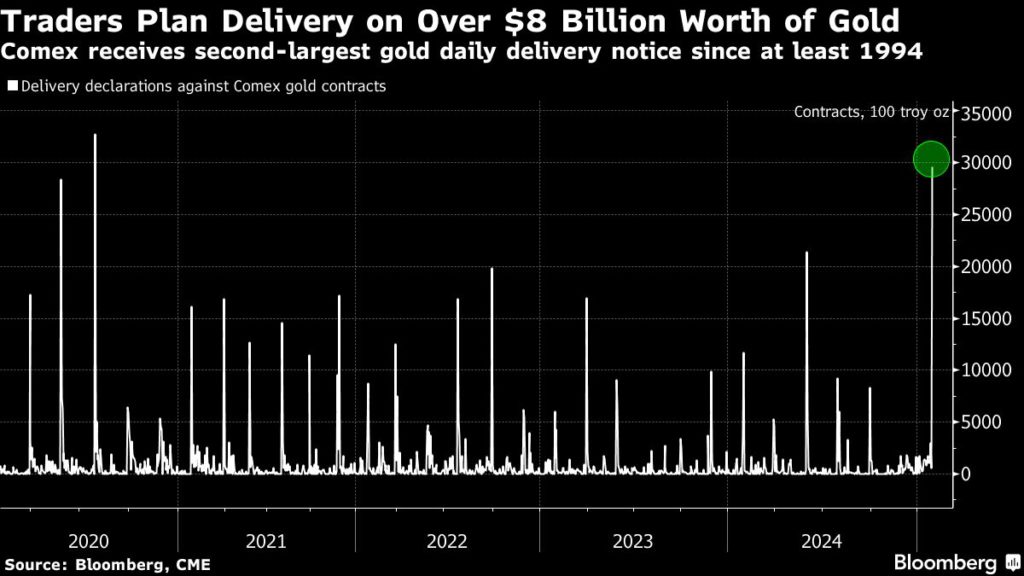
The bank, which is by far the world’s biggest bullion dealer, was one of several institutions to declare plans on Thursday to deliver bullion against contracts traded on CME Group’s Comex that will expire in February. The delivery notices — which total 30 million troy ounces of gold — were the second largest ever in bourse data going back to 1994.


Fears of imminent tariffs on imports following the election of US President Donald Trump have caused prices for gold futures on Comex to surge over spot prices in London. Spot prices shot to record highs this week, but the additional premium on Comex has created a lucrative arbitrage opportunity for the handful of banks that can quickly fly bullion between key trading hubs.

Similar pricing dynamics have emerged in other Comex contracts too, and the disparity has become so large that traders have started flying silver into the country. The precious metal is usually too cheap and bulky to justify the cost of airfreight, and one industry veteran says it’s the first time they’ve seen it happen.

While millions of ounces of gold trade on Comex every day, typically only a small fraction of that goes to physical delivery, with most long positions being rolled over or closed out before they expire.

The exchange is often used to hedge positions in London, the largest trading hub, with banks offsetting longs with paper short positions in New York. Since the day of the US election though, physical inventories in the exchange’s depositories have swelled by 13 million ounces, around $38 billion of gold.


It is unclear whether JPMorgan or the other banks were delivering bullion physically to take advantage of an arbitrage opportunity, or were simply using the deliveries to exit existing short positions. JPMorgan and exchange owner CME Group Inc. declined to comment.

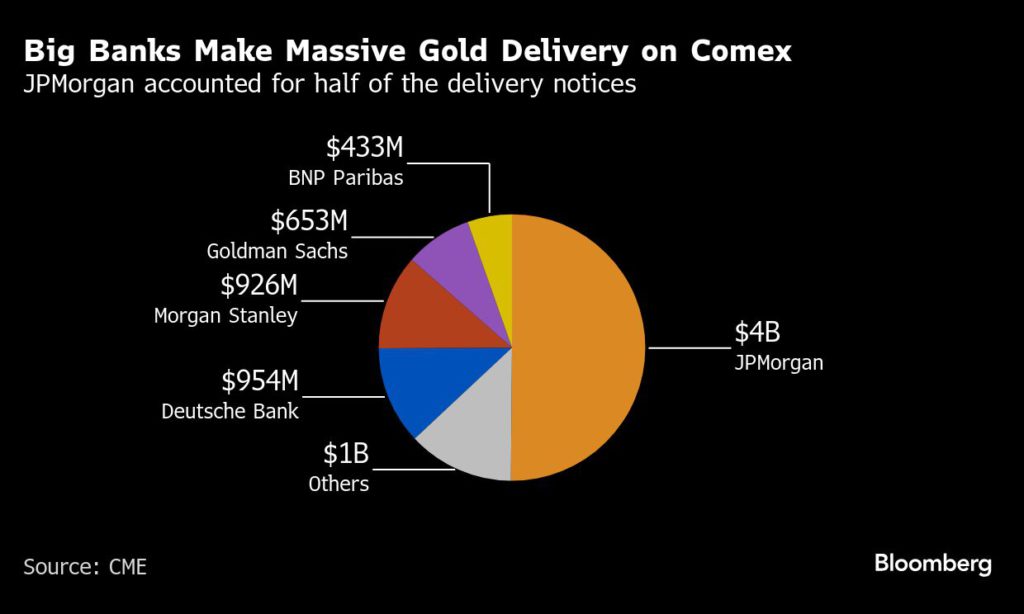
JPMorgan issued delivery notices for 1.485 million ounces of gold to meet physical delivery for the February gold 100-ounce contract, with deliveries on Feb 3. That accounted for roughly half the total to be delivered, with Deutsche Bank AG, Morgan Stanley and Goldman Sachs Group Inc making up the bulk of the rest.

Deutsche Bank, Morgan Stanley and Goldman declined to comment.

(By Jack Ryan and Jack Farchy)

Gemfields halts emerald sales over Zambia export tax

Cecilia Jamasmie | January 31, 2025 |


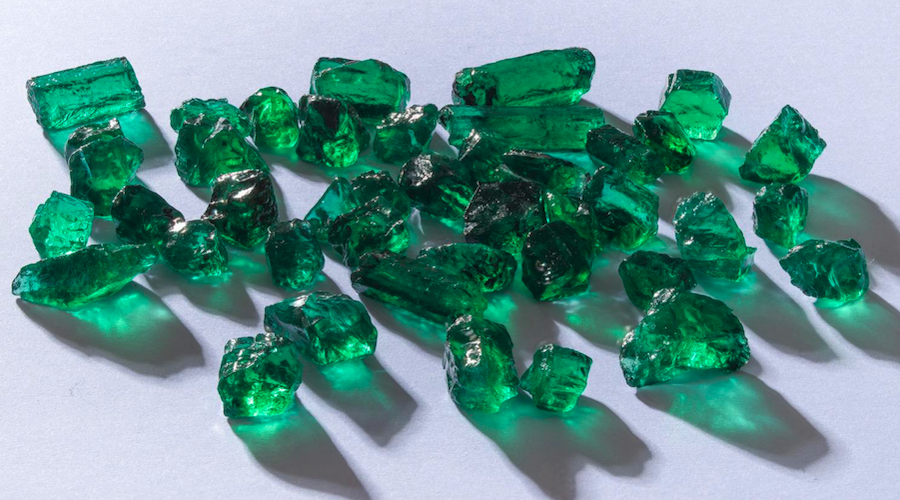
Emeralds from the Kagem mine in Zambia. (Image courtesy of Gemfields.)

Coloured precious stones miner Gemfields (LON: GEM) (JSE: GML) has paused the sale of emeralds from its Kagem mine in Zambia, but hopes the government will soon reverse a 15% export tariff reintroduced earlier this month.


Zambia, the world’s second largest emerald producer after Colombia, first implemented the 15% export duty in early 2019. It was later scrapped on January 1, 2020, following industry pressure.

Before the recent reintroduction, Gemfields had already suspended production at Kagem, citing market saturation caused by an influx of heavily discounted emeralds.

“Kagem anticipates that the duty may be revoked and allow a commercial-quality emerald auction to go ahead in Q1 2025”, the company said.

If the tariff remains in place, Gemfields’ 75%-owned local subsidiary, Kagem Mining, will face an effective revenue tax of 21%, which includes the existing 6% mineral royalty tax. This would force the company to lay off employees, chief executive Sean Gilbertson said earlier this month.

Zambia’s government is targeting a gross domestic product (GDP) growth rate of 6.6%, an inflation rate between 6% and 8%, and a budget deficit of 3.1% of GDP, according to data from PwC. Revenue projections include a 26% increase in domestic revenues and grants, with tax revenues anticipated to rise by 20%.

Gemfields also said on Friday that production at its Montepuez ruby mine in Mozambique had resumed. Operations were halted in December following violent post-Presidential elections incidents that resulted in two deaths.

Despite the disruption, the company confirmed that construction of a second processing plant at the mine remains on schedule and within budget, with completion expected by the end of the first half of 2025.

Gemfields said it would release its annual financial results on March 27.
Chile orders definitive closure of Lundin’s Alcaparrosa mine

Cecilia Jamasmie | January 30, 2025 | 


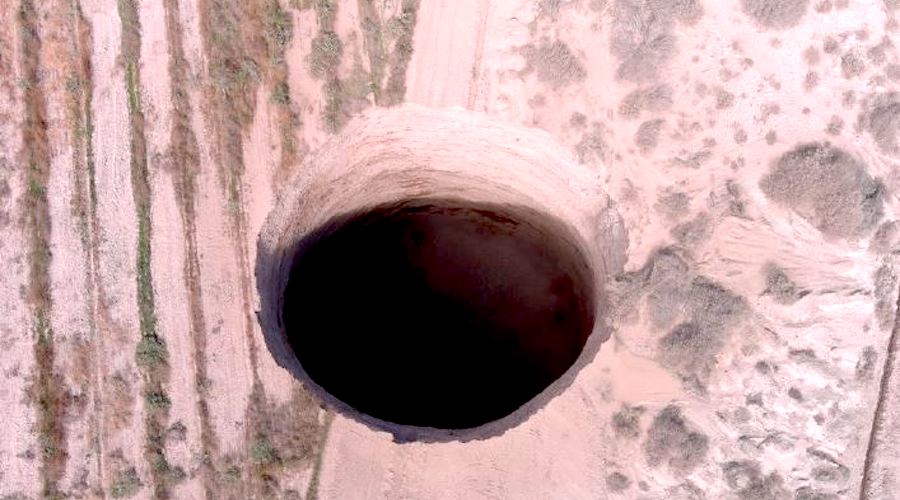
Sinkhole at the Alcaparrosa mine in 2022. (Source: SMA.)


Chile’s environmental authority SMA ordered on Thursday the “total and definitive” closure of Lundin Mining’s (TSX: LUN) Alcaparrosa mine, as a result of an almost three-year long probe into a massive sinkhole that emerged near the operation in 2022.


The huge 36-metre-diameter sinkhole more than 60 meters deep that appeared close to the Alcaparrosa mine in northern Chile drew widespread global attention and saw Lundin being charged by authorities.


SMA officials said at the time that preliminary investigations linked the sinkhole on the mine’s property to the over extraction of ore.

On Thursday, the watchdog confirmed four environmental violations, including over-extraction of minerals, unauthorized infrastructure modifications, and other breaches of the project’s environmental permits. In addition to the permanent closure of mining operations, the company faces a fine of $3.41 million.

The regulator’s head, Marie Claude Plumer, said that Lundin operated in unauthorized sectors up until the Copiapo River aquifer, which allowed more water to infiltrate in and subsequently weaken the rock mass.

“The company caused irreparable environmental damage,” she said.

Plumer emphasized the importance of adhering to environmental permits. “The rules are clear and must be followed. Companies are fully aware of the conditions under which they are allowed to operate,” she said.

The SMA said the company has 10 business days to pay or 15 days to appeal the decision before the Environmental Tribunal.

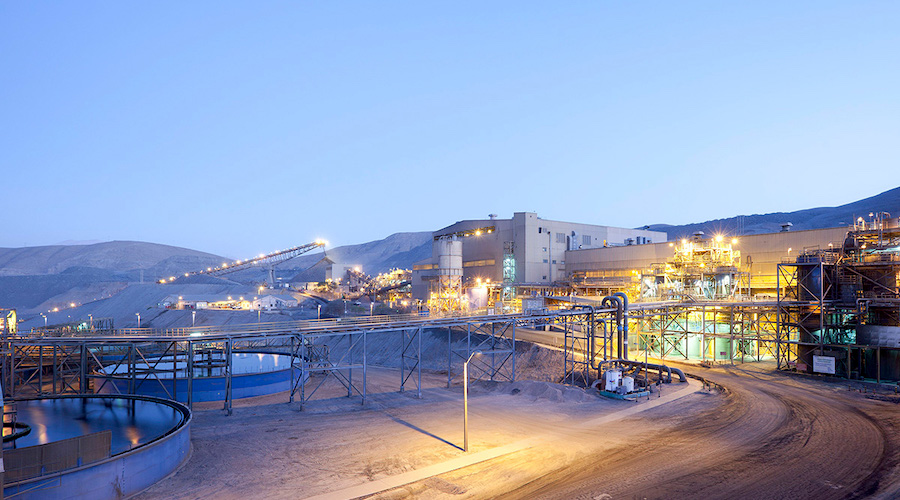
Alcaparrosa is one of two underground mines that make up the Ojos del Salado operation, within the Candelaria complex (pictured here).
 (Image courtesy of Minera Candelaria.)

Lundin’s local unit, Ojos del Salado, said in a statement that it would review the ruling and determine its next steps.

The Toronto-based miner owns 80% of the Ojos del Salado complex, which holds two underground mines: Santos and Alcaparrosa. The remaining 20% is held by Japan’s Sumitomo Metal Mining and Sumitomo Corporation.

Sinkholes are pits that form over areas where water gathers underground without external drainage, causing the water to carve out subterranean caverns.

These cavities also form regularly near old and active mines, where large amounts of rock and ore have been extracted, studies have shown.

Sinkholes often form gradually over many years, but can also open quite suddenly, taking cars, homes and streets down with them.
World’s longest cargo sail ship launched in Turkey


By AFP
January 31, 2025


The Neoliner Origin, with its massive masts as yet unfurled
 - Copyright AFP CHARLY TRIBALLEAU

The world’s longest wind-powered cargo ship was launched Friday in Turkey, offering a promising way to slash carbon emissions from merchandise trade.

The 136-metre (450-foot) Neoliner Origin was floated at the Turkish port of Tuzla, and will now undergo six months of fitting-out.

Designed by French company Neoline and built by Turkish shipyard RMK Marine, the ship can carry 5,300 tonnes of freight over long distances thanks to its two masts and 3,000 square metres of sails.

“Thanks to the wind, and by reducing speed from 15 knots (about 30 kilometres or 18 miles an hour) to 11 knots, we can cut fuel consumption and therefore emissions by a factor of five compared with a conventional ship,” Jean Zanuttini, president of Nantes-based Neoline, told AFP.

With about 90 percent of world trade going by sea, the maritime transport sector is responsible for about three percent of greenhouse gas emissions, according to the International Maritime Organization.

The ship will leave Turkey during the summer of 2025 for the French Atlantic port of Saint-Nazaire, then will begin its first rotation toward North America, serving the French island of Saint-Pierre-et-Miquelon, the US port of Baltimore and Halifax in Canada.

The project received support from France’s public investment bank (BPI) and the French shipping company CMA-CGM.

Zanuttini said the shipyard would soon begin work on a second similar ship.


Two Men Get Three Years for Smuggling Drugs Inside Buses on a Ro/Ro

ROLL ON/ROLL OFF 

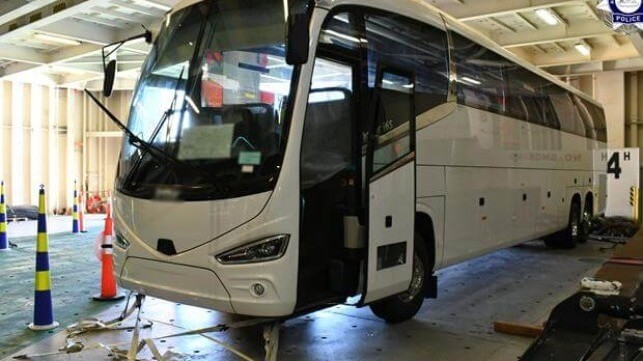
ABF suspect luxury bus
Image courtesy ABF

Published Jan 30, 2025 6:58 PM by The Maritime Executive


Two men have been sentenced to three years each for their roles in a plot to import nearly 140 kilos of cocaine into Australia, hidden inside a shipment of 13 luxury buses. At a street-level retail value of $200,000 per kilo on the Australian market, the value of the cocaine shipment likely exceeded the value of the motor coaches. 

In January 2024, Australian police intelligence identified an inbound shipment of cocaine hidden aboard a ro/ro bound for Adelaide. When the ship called at Fremantle, Western Australia, Australian Border Force officers boarded it and searched a consignment of 13 luxury buses on board. In four of the buses, they found packages of cocaine totaling 139 kilos. It was the second-largest bust ever for a shipment headed for South Australia. 

The police allowed the buses to stay on board the ro/ro and continue on to the destination port, Adelaide, under close monitoring. On February 3, after the vessel arrived and offloaded its vehicles, the two men broke into the buses at the port and retrieved the shipment of cocaine. 

Police followed them to a hotel in Adelaide, then arrested them. The two young men - now aged 20 and 23 - were charged with attempting to possess a commercial quantity of cocaine, an offense with maximum sentence of life in prison. They pleaded guilty late last year. 

On Wednesday, they were each sentenced to three years in prison, including at least 18 months without parole. 

The Australian Federal Police said the cocaine could have been divided up and sold as nearly 700,000 doses at retail level, generating about $30 million in revenue for dealers. 

"Organized crime groups are seeking to import illicit drugs into Australia on an industrial scale," ABF acting Superintendent Prue Otto said. "Drawn by the high street prices, criminals seek profits to fund lavish lifestyles and other criminal activities and the cost of this greed is paid by the Australian community."