Thursday, February 13, 2025


SUBMARINERS

U.S. Coast Guard Releases Audio of Lost Submersible's Implosion
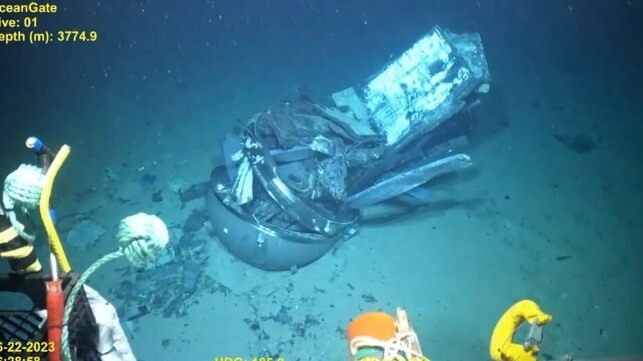
Wreckage of the Titan, June 2023 (Pelagic Research Services / USCG)

Published Feb 12, 2025 10:51 PM by The Maritime Executive


For the first time, the U.S. Coast Guard has released audio from the implosion of the submersible Titan, which was lost during a dive at the Titanic wreck site in the North Atlantic in 2023. Four paying "mission specialists" and the operating company's CEO died in the implosion, making it the first fatal accident in five decades in a deep-diving manned submersible. 

The Coast Guard believes that the craft's experimental carbon hull imploded rapidly, with little or no warning. A NOAA acoustic buoy captured the sound of the underwater blast from miles away - one of the first hints that the dive had ended in tragedy. 

According to evidence uncovered by an ongoing Marine Board of Investigation inquiry, the Titan accumulated a long list of safety issues in the years leading up to the casualty. The sub (and an earlier prototype hull) partially sank at the pier, ran out of battery power while submerged, lost its forward dome during a recovery, and failed to drop weights on multiple occasions. 

Former Oceangate employees testified that co-founder and CEO Richard Stockton Rush III chose not to pursue classification or a Coast Guard Certificate of Inspection (COI) for the novel design, despite repeated warnings from third-party engineering consultants and his own staff. Rush was aware of the experimental nature of Oceangate's commercially-operated vessel: before the disaster that claimed his life, he told a conference audience that "when you're outside the box, it's hard to tell how really far outside the box you are," adding that Oceangate was "pretty far out there."

"These [conventional] research subs that are out there, they were never meant to make money. They were meant to get out there and do cool stuff," Rush told the audience. "[Sub certification programs] are over the top in their rules and regulations."


Singapore's "Invincible" New Submarine Force
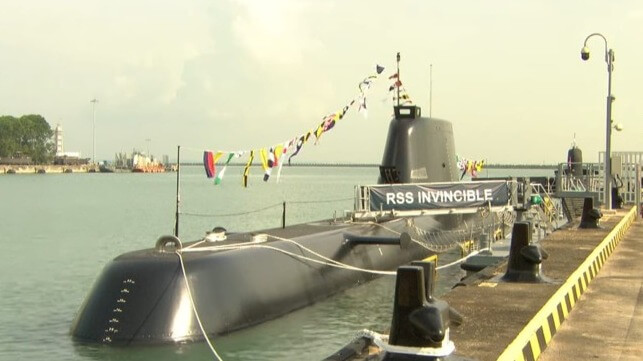
RSS Invincible at her commissioning ceremony at Changi Naval Base (Singapore Navy)

Published Feb 12, 2025 9:22 PM by The Maritime Executive


Singapore’s introduction into operational service of its new Invincible class of submarines appears to be an extraordinary success, offering valuable lessons for its former colonial master - the United Kingdom, which is now grappling with crew retention issues and its own challenging submarine expansion program under the aegis of AUKUS.

The first two Type 218SG submarines of the Invincible-class, RSS Invincible and RSS Impeccable, were commissioned into operational service on September 24, 2024 at Changi Naval Base.  In his commissioning speech, Prime Minister Lawrence Wong described the program as critical to Singapore’s survival and prosperity as a maritime nation, and one which also lacks strategic depth. 

The boats were built by ThyssenKrupp Marine Systems in Germany, but were heavily customized to meet Singapore’s particular needs.  The submarines are designed ergonomically to suit Singaporean national servicemen, both from a physical and tech-savvy perspective. The well-planned working environment will help attract and retain high-caliber crews, both male and female, drawn from a nation committed to its national service program. Sensors, navigation and weapons systems are optimized for operations in congested and shallow waters, as found in the Malacca Straits and the South China Sea. 

Diesel-powered, the Invincible submarines can travel at 10 knots surfaced, 15 knots underwater. With an air independent propulsion system for battery charging, the submarines can remain submerged for an estimated 45 days without snorkeling. Cruise endurance is unknown. With a total of ten 21- and 26-inch torpedo tubes, the submarines should be able to launch heavy torpedoes, anti-ship missiles and mines, and to deliver special force teams underwater through an airlock.

The submarines have been brought into service relatively quickly because the Singaporean Navy’s 7th Flotilla has built up a cadre of experienced crews through its previous operation of smaller Swedish Archer-class submarines, which will now begin to be retired from service.

In service, Singapore will face significant operational challenges.  As a small island state, deployed submarines underwater will provide a valuable hinterland; but conversely, the boats will be particularly vulnerable while in port, even if a protection-from-view shed has been built wharfside to hide their presence or absence.

Two further submarines in the class, RSS Illustrious and RSS Inimitable, are due in service by the end of 2025. The overall cost of the program has been estimated as $1.8 billion. A fifth boat may also have been ordered. Other nearby nations may well be tempted to replicate Singapore’s submarine development programme, but Singapore has a 25-year head start.


Iran Releases Footage of "World's First" Sub-Launched Suicide Drone

Sub launched drone
Courtesy Iranian Ministry of Defense

Published Feb 12, 2025 3:20 PM by The Maritime Executive


Iran's defense ministry has released footage of what it claims to be the world's first submarine-launched loitering munition (suicide drone). A brief video run by state news shows a delivery device emerging from below the water, then blowing off its nosecone and ejecting a folding-wing drone into the air. 

The ministry said that - unlike most drones - this munition is autonomous. Once launched, it operates without a man in the loop or human remote control, and finds and destroys its target using AI. This eliminates the need for a radio link to a control station, reducing vulnerability to electronic countermeasures. 

For Western operators, AI-controlled lethal munitions are a matter of ethical concern, but the U.S. and many other nations are moving ahead rapidly in developing the technology - led by Ukraine and Russia. Both militaries have thousands of hours of combat video feed from drone operators on the front line in Ukraine, and that footage is key for training AI models how to identify real military targets.

Iran has an active and well-developed drone program, and has previously used long-range loitering munitions to attack shipping. It has even converted a small boxship into a "drone carrier" specifically for this purpose. its proxy force in Yemen - the Houthi rebel group - has used hundreds of shore-launched drones to attack Western merchant vessels and warships in the Red Sea. If practical in real-world use, Iran's new submarine-launched drone could begin its flight from a position closer to the target vessel, reducing the time available to detect and defeat it.  

Iran's ministry of defense claims that the new AI-driven drone can be launched from an autonomous underwater vehicle (AUV), increasing stealth and lowering risk to Iranian personnel. The underwater delivery device portrayed in Wednesday's video bears visual similarity to Iran's small torpedo-shaped AUV, evidence of which has been captured by U.S. forces in the Houthi conflict. 


 BOMB SHIP

Ship Laden With Ballistic Missile Propellant Nears Iran

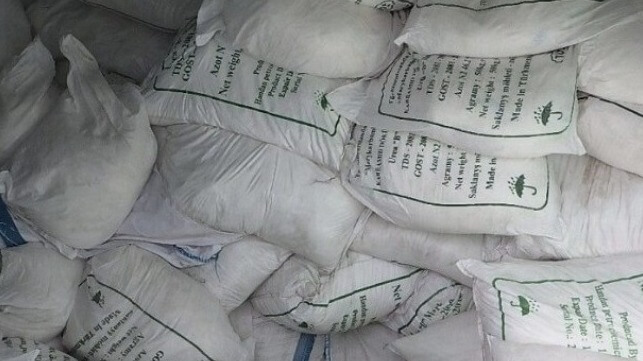
A cargo of explosive ingredients seized from a dhow in the Gulf of Oman in 2022. Ammonium perchlorate was part of the cargo (USCG file image)

Published Feb 10, 2025 1:41 PM by The Maritime Executive


One of two Iranian cargo vessels believed to be carrying sodium perchlorate, the primary ingredient of ammonium perchlorate which is used by Iranian solid-fuelled ballistic missiles, has passed the southern tip of India and is now four days out from Bandar Abbas. It is due to arrive on February 14.

The 28,000-tonne MV Golbon was reported by the Financial Times to be laden with 34 20-foot containers packed with sodium perchlorate in pellet form. Its sister ship MV Jairan is still currently holding its position in the Xiushan Island anchorage 100 miles East of Shanghai, and may not have yet taken on its expected consignment of 24 containers. Usefully, both ships are sailing with their AIS automatic identification systems switched on, and Jairan's declared draft suggests she is in ballast. Both ships are registered to Islamic Republic of Iran Shipping Lines (IRISL), and are subject to secondary US Treasury sanctions.

UN Security Resolution 1929 adopted in 2010 specifically cautions States to be aware of IRISL’s sanctions-breaking activities in its curbs on the export to Iran of, amongst other equipment, ‘missiles or missile systems … including the provision of technical or financial assistance for such systems, or spare parts’.

Sodium perchlorate is processed at the Iranian facility at Parchin south of Tehran into ammonium perchlorate, which makes up 70% of the standard fuel load of most of Iran’s solid-fueled ballistic missiles. 

Iranian ballistic missiles which use ammonium perchlorate include medium range Khybar-Shikan and Fattah missiles, and the shorter range Fateh-110 and Zolfaghar missiles.  In original and variant form, these have been widely exported to Russia and Axis of Resistance allies, and have been used to attack shipping at sea and targets in Saudi Arabia, the UAE, Israel and Ukraine, as well as in the attacks causing injuries to American service personnel at Al Asad in Iraq.

Iran is likely to be short of ammonium perchlorate at present.  Its own ballistic missile domestic fuel production facilities have been damaged in Israeli attacks, and output demands are high because of the need to replace stocks expended in attacks on Israel and to meet increased exports to Russia.

For those hoping to spot these Iranian ships, the vessels are no longer painted with large IRISL lettering amidships.


WAR AT SEA

Ambrey: Tanker at Ust-Luga May Have Been Hit With Limpet Mines

Russian salvors and officials inspect the damaged tanker Koala at Ust-Luga 
(courtesy Morspas)

Published Feb 12, 2025 8:28 PM by The Maritime Executive

According to maritime security consultancy Ambrey Intelligence, the tanker that suffered three blasts in its engine room at the port of Ust-Luga last weekend was likely hit by limpet mines - and it was probably not the only one to have sustained similar damage.

In the early hours of Sunday morning, the Suezmax tanker Koala suffered a series of three explosions in or near the engine room. The 24 crewmembers abandoned ship onto the pier, and the vessel's stern settled until it made contact with the bottom, Morspas said. No leaks of oil have been reported, and the cargo tanks are all believed to be intact.

Ambrey reports that the blast holes in Koala's hull are substantial, measuring up to 12 feet by six feet. The damage "strongly suggests that the explosions were caused by limpet mines," the consultancy said in a statement.

Ambrey added that other vessels with "a similar trading profile" have also been damaged by explosions - a previously unreported detail of the challenges facing Russia's "shadow fleet" of sanctions-skirting tankers.

Koala is a 22-year-old Suezmax tanker owned by a Turkish firm and managed by a company in Cyprus. At the time of the casualty, she was in Ust-Luga loading a cargo of mazut - a Russian grade of heavy fuel oil, which is not covered by the G7's calibrated sanctions on Russian energy exports.

Limpet mines are just one of the challenges Russia faces in exporting its petroleum to global markets. According to Reuters, persistent Ukrainian attacks on refineries and the growing impact of U.S. sanctions on the "shadow fleet" have curtailed Russia's ability to process or ship out its oil production. An estimated 12-14 percent of Russian refining capacity is offline because of Ukrainian drone attacks, and about a third of all Russia-linked tankers have been blacklisted by EU and U.S. sanctions. Without the means to either use or move their oil, Russian energy firms may soon exhaust storage options and could begin shutting in production, three Russian oil executives told Reuters this week - the first time since the beginning of the invasion of Ukraine that this measure has been considered. Oil revenue accounts for 30-50 percent of the Kremlin's budget, and it is essential for financing the Russian military.

Indian refiners - Russia's biggest oil customers - are working hard to fill the gap by finding new, unsanctioned tankers and operating companies to enter the "shadow fleet" trade, according to Bloomberg. About 14 percent of India's monthly oil imports are riding on the effort; if replacement tankers can't be found by March, Indian refiners will have to make up the balance with more expensive oil from other suppliers, like Middle Eastern producers - leaving millions of barrels of Russian crude undelivered.


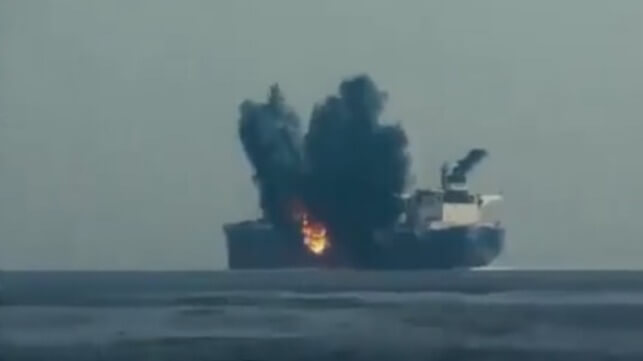
Russian Shadow Tanker Attacked by Houthis is Now Caught by Sanctions

tanker explosion
Cordelia Moon was hit by a Houthi attack and now finds itself caught in the sanctions on Russian oil (

Published Feb 12, 2025 3:07 PM by The Maritime Executive


The crude oil tanker Cordelia Moon (163,000 dwt) continues to have a string of bad luck. The vessel listed as owned by a company in the Seychelles and managed from India has been known to be in the Russian oil trade and that has put it in harm’s way more than once.

The tanker which was built in 2006 and is registered in Panama is now finding itself caught in the expanding reach of the U.S. sanctions imposed by the Biden administration against Russia. Bloomberg was first to report the tanker had arrived off India’s Vadinar Port on February 9 but was denied docking rights to unload. Four days later it is still sitting off India according to its AIS signal.

The vessel is laden with Russian oil loaded having departed Novorossiysk on January 10. According to the report on Bloomberg, there are approximately 1 million barrels aboard coming from one of the producers, Surgutneftegaz, which has been sanctioned by the United States. 

India has reportedly decided not to receive cargoes or ships that have been sanctioned. Bloomberg quotes India’s Oil Minister Pankaj Jain as saying the country had decided not to accept shipments from sanctioned companies if they were loaded after January 10. India had previously turned away Russian cargoes due to Western pressures and recently China’s Shandong Port Group also said it would not be accepting sanctioned tankers.

Being in the Russian oil trade has not been good for the Cordelia Moon. The tanker was bound for Suez after having offloaded in India when the Houthis targeted the vessel on October 1. The tanker’s captain told the authorities that in the first wave of attacks, they spotted several splashes. The Houthis claimed a launch of eight missiles and one drone against the tanker. During the second attack, the vessel’s port ballast tank was punctured. The Houthis released spectacular images showing the moment of explosion on the ship’s hull.

After completing repairs, the tanker was transiting the Bosphorus bound for Russia for its next cargo when it experienced engine troubles. The Bosporus was closed on December 26 by the disabled ship. The Turkish authorities stepped in and towed it to an anchorage.

It is unclear what is going to happen with the Cordelia Moon. The Indian Oil Minister told Bloomberg he was not aware of the case. 

Today, Reuters highlights that U.S. sanctions are beginning to have an increasing impact both on Russia and Iran. The sanctions they report are driving up costs. With fewer ships available Reuters says transport costs have risen for the oil. They report costs are being driven up for Indian and Chinese refineries which have been the largest customers for the oil.


Labor Slowdown Creates Long Delays at Rotterdam Container Terminal

Rotterdam container terminal
Hutchison's Delta II terminal reports it handles up to a quarter of the container volume in Rotterdam (Hutchison file photo)

Published Feb 11, 2025 3:13 PM by The Maritime Executive


The labor strife that has plagued ports around the world has spread to Rotterdam with reports of long delays and slowdowns due to a contract dispute at the Hutchison Delta II Terminal. Two labor unions have broken off negotiations and backed away from a tentative agreement threatening to continue their strikes until the operator meets the terms of the tentative agreement.

The terminal which was opened in Rotterdam in 2000 reports it handles up to a quarter of the container volume through the port, which is also the busiest container port in Europe. APM Terminals had owned the facility till selling it in 2021 to the Chinese Hutchison Ports. It is located adjacent to Hutchison’s other terminal and has an annual capacity of 3.3 million TEU.

Shortly after acquiring the terminal, Hutchison entered into a new partnership with MSC’s TIL group with a plan to develop a new automated container terminal. It would have five berths and be one of the most advanced operations in Europe. The companies reported they would open the new facility in 2027.

Workers at the Delta II terminal are represented by two union FNV Havens and CNV. Contract negotiations began in November 2024 and the unions set as one of their key conditions a generous severance package and financial guarantees from Hutchison for the package because according to the unions future employment is in doubt due to the plans for the new Omega terminal.

After months of contentious negotiations, CNV reported on January 20 that it was planning to withdraw from the negotiations. The unions issued an ultimatum and set a January 28 deadline. After a marathon negotiating session lasting 19 hours straight and 29 hours in total, a deal was reported on January 31. It is for a three-year contract running till 2028 with a one-time payment as well as annual 1 or 1.5 percent wage increases and automatic price compensation for inflation. Hutchison agreed to the severance package but the unions demanded written financial guarantees before a February 10-11 membership vote.

The unions contend Hutchison informed them late last week that it needed more time for the financial guarantee. Members rejected the proposed deal and the unions said they were withdrawing from the tentative contract without the guarantee.

Work stopped at the terminal on February 9 and remained suspended till this morning, February 11. Even after the workers went back and the gates were reopened, they were said to be staging slowdowns. Hutchison reported twice during the day it was closing the gates because of the crowds in the terminal. Hutchison confirmed it is experiencing delays in the handling of all modalities and long wait times.

Maersk issued a statement to customers reporting, “a reduced number of moves per hour conducted at the terminal for an unknown duration. Consequently, prolonging the time vessels are operated on and significantly disrupting their normal schedules. To minimize disruptions and protect overall reliability to your supply chains, contingent decisions will be made in the upcoming days.”

Both unions advised members today that they expect this will “be a long-term matter.” CNV said the unions have started preparing actions while FNV predicted there will be more strikes.

Hutchison apologized to shippers for the inconvenience while warning of long wait times at its terminal.


Climate Change in the British Mind


Yale University


A majority of Britons believe climate change is leading to worsening flooding, more severe storms, and rising seas, according to a new report by the Yale Program on Climate Change Communication (YPCCC). The nationally representative survey —  Climate Change on the British Mind —  found that 80% of the British public are at least “somewhat” worried about climate change, and most draw a link between climate change and extreme heat, water shortages, droughts, pests and wildfires. The number is higher than in the U.S., where just 64% of those surveyed by YPCCC said they are at least somewhat worried.

The findings indicate that a significant majority not only believe climate change is happening and is connected to intensifying extreme weather — they also support government action to address it, the authors said.

“Significantly more Britons than Americans understand that climate change is happening, are worried about it, and say they have personally experienced its effects,” said Anthony Leiserowitz, the JoshAni-TomKat Professor of Climate Communication and director of YPCCC. “This awareness and acceptance of the problem can create the social and political conditions supporting climate action in the U.K., from the individual to the local, national, and international level.”

While the U.K.’s carbon footprint is substantial, the country was the first member of the G7 to set a legally binding target of net-zero emissions by 2050, and last year it closed all of its coal-fired power plants.

The study, conducted in November 2024, surveyed 10,660 British residents across the country, aged 16 and older. Among its key findings was that 86% of people think climate change is happening, compared to 70% of Americans; 82% say that the issue is at least “somewhat” important to them personally; more than two-thirds think climate change should be a high, or very high, priority for the government; and a majority supports the use of renewable energy.

However, the survey also pointed to a “psychological distance” where even those who say they’ve experienced impacts from climate change still view it as an abstract problem. The proportion who believe climate change will harm them personally was noticeably smaller than the proportion who said they’ve experienced, or their local area, has experienced its effects. Likewise, the proportion who believe climate change will harm future generations was far larger than those who fear it will impact them.

“People everywhere tend to see climate change as a more distant problem, affecting people, places, and things relatively farther away in space and time. But these events are happening to billions of people right here, right now, so communication efforts that help people connect the dots between climate change and their lived experiences could help reduce this sense of distance and increase public risk perception and support for climate action,” Leiserowitz said.

YPCCC has conducted several studies and projects aimed at understanding awareness and perception of climate and environmental risks, including surveys in IndonesiaIrelandIndia, and the U.S.

WOKE U IS GOOD FOR YOU

Regular access to therapy dogs boosts first-year students’ mental health


THEY ARE STILL HIGH SCOOL AGE KIDS


Peer-Reviewed Publication

Washington State University

Suzie, cidar and student 

image: 

Suzie, cider and student: Susie and her dog Cider who have been long-term Palouse Paws handlers.

view more 

Credit: WSU


PULLMAN, Wash. — College students who spent a little bit of free time each week interacting with therapy dogs on campus during their first semester experienced fewer signs of stress and depression than those who did not.

That’s according to the PAWs4US study, a new paper published in Pets that examined how regular, long-term access to an animal-assisted drop-in program at Washington State University influenced first-year students’ mental health.

The study found that students who engaged with therapy dogs in repeated, unstructured sessions over several months not only reported lower stress and depression levels, but also showed increased self-compassion. The findings suggest that simply having the opportunity to regularly spend time with therapy dogs in an informal setting provides sustained mental health benefits.

“We know that structured programs help, but we wanted to see if giving students complete autonomy in how they interact with the dogs could be just as beneficial,” said Patricia Pendry, corresponding author of the study and a WSU professor of human development. “This mirrors real-life pet ownership more closely and may make it easier for universities to implement similar programs.”

For the study, Pendry and doctoral candidate Alexa Carr set out to build on Pendry’s earlier research showing that even brief physical interactions with therapy dogs can lower cortisol levels. Pendry’s prior work has also shown that highly structured programs that incorporated therapy animals into workshops focused on stress management techniques showed positive effects on students’ well-being and learning.

This latest work expands the scope by analyzing the effects of sustained access to unstructured programs with therapy animals and providing regular access over an entire semester. Additionally, instead of prescribed sessions, students were free to drop in, interact with therapy dogs as they pleased, and stay as long as they wanted for up to two hours.

The researchers recruited 145 first-year students who left a family pet behind at home to attend college for their analysis. Participants were randomly assigned to either a seven-session drop-in therapy dog program or a waitlisted control group. Those in the program could pet, sit with, or talk to the dogs in a relaxed, informal environment in a large conference room on the WSU Pullman campus comfortably arranged to include secluded seating areas. The canine companions featured in the study were provided by Palouse Paws, a local representative of a national organization called Pet Partners that specializes in providing teams to conduct animal assisted interventions.

By tracking participants’ wellbeing throughout the semester, researchers found that students in the therapy dog group had significantly lower rates of depression, stress and worry compared to those in the control group. They also reported increased self-compassion, which has been linked to better emotional regulation and overall well-being. Students experienced less decline in wellbeing and mental health symptoms, a phenomenon that is prevalent for incoming freshman. 

While therapy dogs played a central role, the researchers believe that the surrounding environment also contributed to students’ well-being. “It’s likely a combination of sitting quietly, petting the dog, talking to other students and engaging with the handlers that contributes to student well-being,” Pendry said.

Pendry’s team also tracked students’ participation patterns and found that those who attended multiple sessions saw the most benefit. “Regular, sustained interactions with therapy dogs seem to have a cumulative effect,” said Carr, who recently completed her dissertation featuring this research. “This suggests that universities may want to consider offering ongoing unstructured programs rather than one-time events.”

Implications for student mental health support

With college student mental health concerns on the rise, universities are increasingly turning to animal-assisted programs, according to Pendry, a former president of the International Society for Anthrozoology. She hopes WSU’s research will encourage more schools to offer similar drop-in therapy dog programs but stresses the need for careful, evidence-based application.

“This is a relatively easy, low-cost way to support student well-being,” Pendry said. “You don’t need a structured curriculum—just an inviting space where students can interact with the dogs and their handlers on their own terms in a way that ensures animal welfare and participant safety.”

Moving forward, Pendry and her collaborators plan to expand the scope of their research to examine whether students who did not leave childhood pets at home experience similar benefits.

 WHY DEI?!

New study uncovers hidden gender bias in workplace leadership programs


Why passion helps men get ahead and holds women back


Institute for Operations Research and the Management Sciences


New INFORMS Organization Science Study Key Takeaways:

  • Gender Disparity: Men are 20%-30% more likely than women to be labeled as “high potential” for leadership programs, a bias that persists even when passion and performance levels are similar.
  • Double Standard: Women are penalized for showing passion because it is perceived as less appropriate for leadership, putting them at a disadvantage.
  • Rewarding Passion for Men: Moderately high-performing men are rewarded for their passion, which is seen as a sign of diligence and commitment, significantly increasing their chances of being designated as “high potential.”

BALTIMORE, MD, February 12, 2025 – Passion is often touted as a hallmark of leadership potential, but a new study published in the INFORMS journal Organization Science reveals that it does not benefit everyone equally. Gender stereotypes, the study shows, skew perceptions of passion in ways that disadvantage women while rewarding men.

“Passion is one criterion that managers often use to evaluate leadership potential, but our findings show that gender stereotypes distort how passion is perceived,” says Joyce He, lead author and an assistant professor at the Anderson School of Management at UCLA. “This double standard unfairly disadvantages women and perpetuates workplace inequities.”

The study, “Passion Penalizes Women and Advantages Men in High-Potential Designations,” reveals that men are 20%-30% more likely than women to be labeled as “high-potential” employees – a designation that can fast-track careers – a bias that persists even when their passion and performance levels are comparable. This research sheds light on how gender stereotypes influence leadership evaluations, offering actionable insights for organizations seeking to build more inclusive and diverse leadership teams.

The Gendered Double Standard

The research highlights a troubling pattern: When men express passion for their work, they are perceived as more diligent and committed, increasing their likelihood of being seen as future leaders. In contrast, women displaying the same passion are often labeled as overly emotional, making them less likely to be deemed high potential.

“Men, especially those with solid but not exceptional performance, were more likely to be rewarded for their passion, as it made them seem more hardworking,” says He. “Women, on the other hand, faced skepticism, with their passion being interpreted as less professional.”

Using data from a major engineering firm and experiments involving more than 2,100 participants, the study demonstrates how subjective criteria like passion can unintentionally reinforce gender inequities, even in organizations committed to fairness.

“Organizations claim to value passion, but this research shows that it’s not evaluated equally for men and women,” says Jon Jachimowicz, co-author and assistant professor at Harvard Business School. “This passion double standard can hold women back and prevent workplaces from building truly gender-diverse leadership pipelines.”

What Organizations Can Do

To address these inequities, the researchers recommend that organizations:

  • Focus on measurable achievements and objective criteria in evaluations.
  • Train managers to recognize and counteract gender bias.
  • Anonymize parts of the evaluation process to ensure fairness.


Link to full study.


About INFORMS and Organization Science
INFORMS is the world’s largest association for professionals and students in operations research, AI, analytics, data science and related disciplines, serving as a global authority in advancing cutting-edge practices and fostering an interdisciplinary community of innovation.  Organization Science, a leading INFORMS journal, publishes innovative research on strategy, management and organizational theory. INFORMS empowers its community to enhance organizational performance and drive data-driven decision-making through its journals and resources. Learn more at www.informs.org or @informs.

###


Subscribe and stay up to date on the latest from INFORMS. 

Sign Up For Email Updates