Saturday, March 15, 2025


CERAWeek: Alaska LNG Pressing Full Steam Ahead

Alaska's LNG project is back in the spotlight with a new aggressive timeline: first exports by 2030. Bold? Absolutely. Realistic? Yes, according to Governor Mike Dunleavy speaking at CERAWeek.

The $44 billion venture would move 3.5 billion cubic feet per day from the North Slope down an 800-mile pipeline to an LNG terminal, shipping out to eager buyers in Asia. According to Dunleavy, interest is strong from Taiwan, South Korea, Japan, and Thailand—markets that have been hungry for stable, long-term LNG supply.

In February, for example, Taiwan expressed interest in buying Alaskan LNG as a way of avoiding tariffs—shortly after Japan—the world’s second-largest LNG importer—had done the same

For now, the project has Washington in its corner. It got the go-ahead in Trump’s first term, made it through the legal wringer, and now Trump’s back, bringing fresh support. Energy Secretary Chris Wright is even dropping hints about federal loan guarantees.

It is the only federally permitted LNG export facility on the U.S. West Coast, offering direct, canal-free shipping via uncontested waters to Asian markets, the Alaska Gasoline Development Corporation has said.

President Trump said of an executive order he signed on Day 1 that it would unleash “Alaska’s extraordinary resource potential,” which includes prioritizing “the development of Alaska’s LNG potential, including the permitting of all necessary pipeline and export infrastructure related to the Alaska LNG Project, giving due consideration to the economic and national security benefits associated with such development.”

But will investors bite? The LNG market has had its ups and downs, and while Asian demand is solid, developers still need to justify the sky-high capex. Dunleavy’s optimism is one thing, but until the dollars start flowing, the 2030 target remains just that—a target.

By Julianne Geiger for Oilprice.com


Harold Hamm Sounds the Alarm: Low Oil Prices Could Shut Down US Shale

Shale titan Harold Hamm isn’t mincing words—if oil prices stay this low, drilling in some of America’s prized shale fields could grind to a halt. Speaking at CERAWeek in Houston, the Continental Resources founder warned that with oil hovering near $65 a barrel, many U.S. fields are already on shaky ground. “When you get below the cost of supply, you can’t ‘drill, baby, drill,’” Hamm told Bloomberg. “That shuts you down.”

It’s not exactly the raucous celebration oil executives had in mind when they gathered in Houston under the banner of Trump’s second-term Energy Dominance agenda.

Yes, industry leaders were quick to cheer the rollback of Biden-era climate policies. But President Trump’s aggressive trade stance is giving some in the industry a case of the jitters. His latest tariff war with Canada has placed downward pressure on crude oil prices--a scenario that President Trump has referred to as “phenomenal news.”

And it is for some. The oil industry's mood, however, is just shy of celebratory.

It’s not just Hamm. ConocoPhillips CEO Ryan Lance warned that inflationary pressures are creeping back into the system, while investors are skittish about how Trump’s on-again, off-again trade policies will impact energy markets.

BlackRock’s Larry Fink put it bluntly: “The only way we can navigate this—it’s not by cutting because cutting is going to destroy the economy. We must grow the economy.”

Meanwhile, the U.S. is still the world’s largest oil producer. But industry leaders are suggesting there are limits. Occidental Petroleum CEO Vicki Hollub, for one, has predicted that American crude production will likely peak between 2027 and 2030 before beginning a slow decline.

For now, the low oil prices are great for consumers. It’s not so great for the companies pulling it out of the ground. If prices stay low, even with regulatory relief, the shale boom may finally hit a wall.

By Julianne Geiger for Oilprice.com


Drillers Brace for Fallout from Steel, Aluminum Tariffs


By Irina Slav - Mar 13, 2025


The latest targets of Trump’s tariff offensive were steel and aluminum—both critical metals for the oil and gas industry.

WoodMackenzie: U.S. drillers imported some 40% of the so-called oil country tubular goods they needed last year.

Enverus: “It's probably going to be harder for service companies in 2025 to maintain their activity levels and their pricing,”.


Oil and gas drillers are bracing for the effects of the latest round of tariffs that President Trump has adopted in his attempts to revive domestic industries and punish U.S. trade partners for what he sees as unfair treatment for years. Luckily, the effect is unlikely to be all that serious.

The latest targets of Trump’s tariff offensive were steel and aluminum—both critical metals for the oil and gas industry. The president slapped an import tariff of 25% on all steel and aluminum entering the United States, angering the European Union, which threatened counter-tariffs, saying that “Tariffs are taxes. They are bad for business, and even worse for consumers,” per European Commission President Ursula von der Leyen.

Many disagree with Trump’s approach to trade policy and many support it, sharing the perception that U.S. manufacturers have been short-changed by trade partners for decades. For oil and gas drillers, however, the new import tariffs on steel and aluminum would mean higher costs at a time when oil prices are depressed.

“About 14% of what we buy, it comes from countries that will be impacted by tariffs,” Andy Hendricks, the chief executive of Patterson-UTI, which is among the biggest providers of drilling equipment, told Reuters. “If you layer on tariffs, it could affect us in the low single digits in terms of our costs going up for what we do.”

Single-digit does not sound like a lot, and the effect of tariffs is further mitigated by the fact that U.S. drilling equipment and services providers do not import all of the hot-rolled steel and aluminum they need. Per Wood Mackenzie figures, U.S. drillers imported some 40% of the so-called oil country tubular goods they needed last year. This year, just 16% of that total imported volume came from Canada and Mexico as sector players anticipated the tariff offensive. As part of that anticipation, they stocked up on OCTG from Canada and Mexico ahead of the tariffs.

Opinions on the impact of tariffs differ, however. Rystad Energy, for instance, expects the import duties to have a double-digit effect on costs in the oil and gas industry, raising them by an estimated 15%, or $890 per ton of OCTG. S&P Global Commodity Insights agrees. “It's probably going to be harder for service companies in 2025 to maintain their activity levels and their pricing,” Enverus principal analyst for OFS Intelligence Mark Chapman told Reuters.

That, however, is a small part of drillers’ total costs, strengthening the perception that the ultimate impact of tariffs on the oilfield services industry will be manageable. “OCTGs represent about 8.5% of drilling and completion costs for onshore wells in the Lower 48 states. So if prices rose by 25%, about 2.1% would be added to well costs,” Wood Mackenzie analyst Nathan Nemeth told Reuters.

Yet American steel producers are set to benefit from the tariffs, which is what the purpose of the exercise is, after all. Ultimately, the idea is to become more self-reliant rather than reliant on external suppliers of key goods. Theoretically, protectionism makes sense. In practice, last time Trump imposed tariffs in steel and aluminum imports, so many exemptions followed after heavy lobbying from heavy steel users that the tariffs basically became useless. Interestingly, when President Biden took office after Trump’s first term, he did not cancel the tariffs. Instead, he set quotas for imports above which the tariffs would apply, demonstrating a milder version of Trump’s protectionism.

The oilfield services industry did not collapse in 2018 when Trump introduced his first tariffs on steel and aluminum, and chances are it will not collapse now, either. There will probably be exemptions from the current tariff regime, and there may be tweaks to it in order to shield domestic industries from the worst of the fallout until the market self-regulates.


By Irina Slav for Oilprice.com


WHITE MEN RAPE NATURE

Drill more, mine more on public lands, US interior secretary urges

Interior Secretary Doug Burgum congratulating Donald Trump. Credit: Doug Burgum’s archived Twitter account

US Interior Secretary Doug Burgum told a packed room of energy executives on Wednesday that he wants their industries to ramp up drilling and mining on America’s public lands, telling the crowd: “We love you!”.

Burgum’s comments to the CERAWeek energy conference in Houston underscored the agenda of President Donald Trump, a Republican, to unfetter fossil fuels and metals production by slashing as much red tape as possible.


“If we’re going to drill, baby, drill, then we’ve got to be asked to also mine, baby, mine,” Burgum, a former governor of the oil-producing state North Dakota, told the crowd.

He said royalty payments to the government from drillers and miners operating federal lands and in US waters will help pay down the national debt.

Oil and gas drillers operating on federal lands paid about $75 billion from 2012 to 2022, according to the Government Accountability Office. The national debt, by comparison, is now about $36.2 trillion.

US oil and gas production struck record highs under the administration of former President Joe Biden, a Democrat, and it was unclear if energy companies are keen to ramp up investment with oil prices plumbing three-year lows last week.

Burgum said he believes the Trump administration can unwind between 20% and 30% of the country’s regulations, and estimated that doing so could sharply cut the cost of producing oil.

He added that speeding up energy and mining project permitting would be a crucial focus of the administration’s National Energy Dominance Council, which he chairs and which is responsible for coordinating government policies to maximize production.

Burgum said boosting US electricity generation and transmission capacity is key to winning what he called the “AI arms race” with China.

Burgum added that he believes enforcing sanctions on Iran, which are designed to bring the OPEC member’s oil exports to zero, could end that country’s funding of “terror groups.”

Minerals

Burgum added that the council is focused on boosting US production of critical minerals, which include lithium and nickel. He said the council has “really big, really powerful” ideas to boost US mining, including using the planned US sovereign wealth fund and better coordinating with allies.

He did not directly say whether the wealth fund would invest in mines, although he underscored the country’s reliance on China, the dominant minerals processor globally.

“We put ourselves in a position of incredible risk, where we’ve allowed ourselves to have a major competitor control 80% of the processing for critical minerals,” said Burgum.

Reuters reported on Monday that Trump is considering an executive order that would build metals refining facilities on Pentagon military bases as part of his plan to boost domestic production.

(By Timothy Gardner and Ernest Scheyder; Editing by Leslie Adler and David Gregorio)


Tin price jumps after Alphamin temporarily ceases operations at Congo mine

Credit: Alphamin Resources Corp.

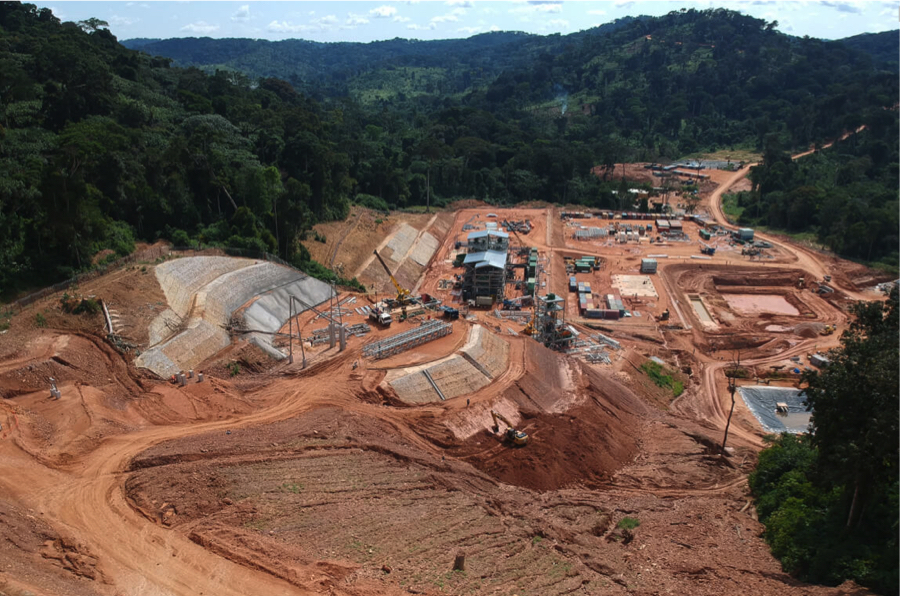
Tin prices jumped to eight-month highs on Thursday after Alphamin Resources said it would temporarily cease operations at its Bisie tin mine in the Democratic Republic of the Congo due to unrest in North Kivu province.

Prices of the soldering metal on the London Metal Exchange (LME) were up 3.3% at $34,530 a metric ton at 1401 GMT after touching $34,815 a ton, the highest since July.

Alphamin produced more than 17,000 tons of the metal used to make semiconductors last year or more than 4% of global total supplies estimated at around 380,000 tons.

“This decision was made after insurgent militant groups have recently advanced westward in the direction of the mines location in the DRC,” Alphamin said in a release.

“All operational mining personnel are being evacuated from the mine site with only essential personnel to remain for the care, maintenance and security of the property.”

Analysts at Macquarie in a note published this week estimated the global tin market was already set to see a shortfall of 13,000 tons this year.

(By Pratima Desai; Editing by Tomasz Janowski and Elaine Hardcastle)


Rusal posts near three-fold jump in annual profit on rising demand

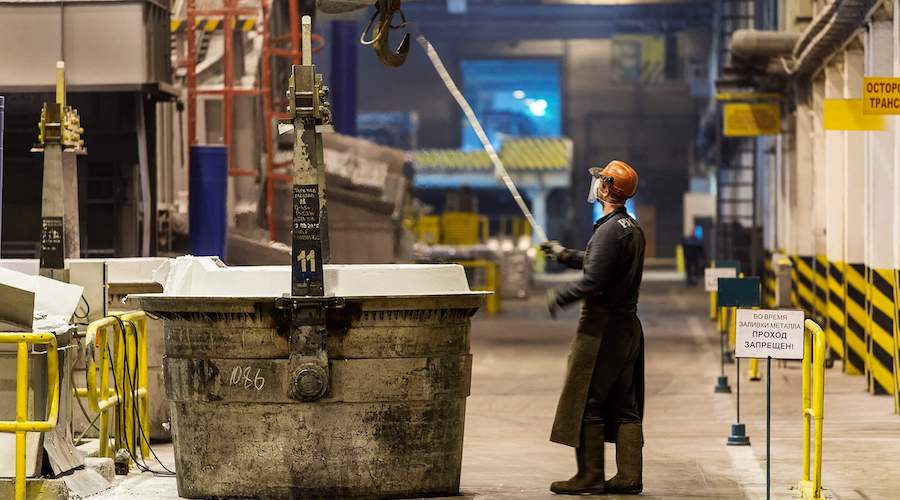
Rusal smelter. (Image by Rusal).

Russia’s Rusal on Friday reported a near-three fold jump in its annual earnings, reflecting higher prices for both aluminum and alumina owing to a rise in demand for the products, which are critical in the race for decarbonization.

Hong Kong-listed Rusal, the world’s largest aluminum producer outside China, posted a net profit of $803 million for the year ended December 31, 184.8% higher compared with the $282 million reported in the year-ago period.

Rusal flagged that the transition towards greener forms of energy accelerated in 2024 amid tighter global emission standards, growing consumer demand for sustainable products and the rising importance of environmental, social and governance (ESG) criteria.

Consumption of aluminum in the transportation industry remained the largest in 2024 and continued to gain pace despite a slip in overall vehicle production during the year.

“The EV market is expanding due to stricter emissions regulations, government incentives, and advancements in battery technology,” Rusal said in a filing to the Hong Kong exchange.

The company — one of the few Russian firms left on any of the world’s exchanges — noted that the development of charging infrastructure and an increase in consumer demand for sustainable transportation are fueling expansion in the EV market.

Rusal said its results were prepared assuming that it would continue as a going concern but warned that ongoing geopolitical uncertainty, including potential sanctions imposed by the United States, European Union and other countries, may result in “significant limitations”.

(By Rishav Chatterjee and Anastasia Lyrchikova; Editing by Alan Barona)


New Zealand seabed mining poses unprecedented challenge for offshore wind

Credit: Parkwind

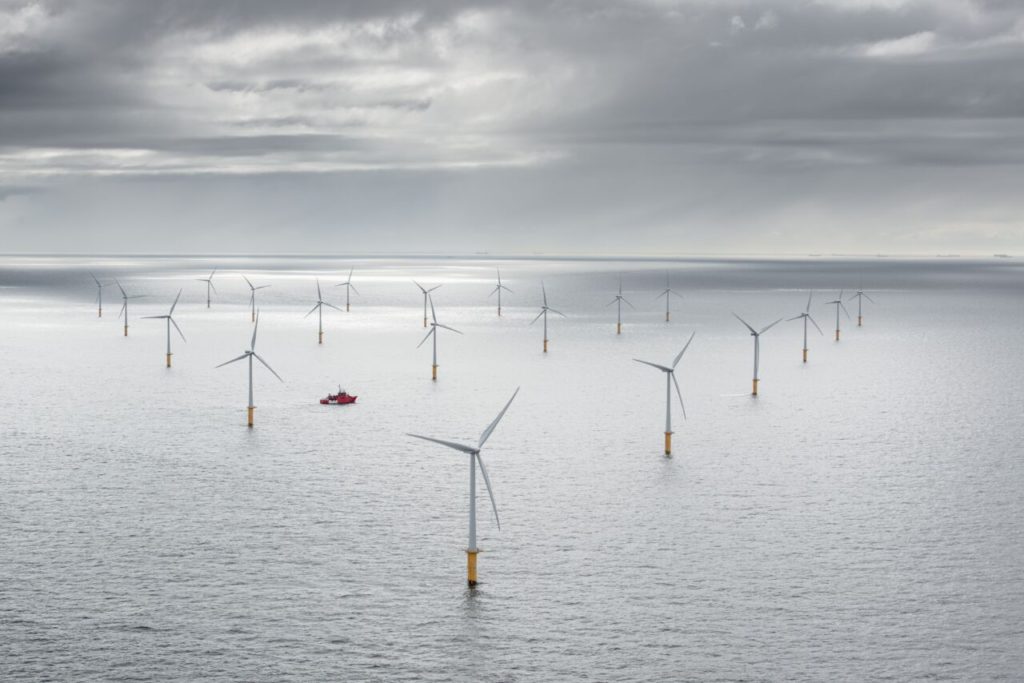
New Zealand’s willingness to encourage seabed mining in the same piece of ocean where offshore wind generation could be built is unprecedented, according to an international wind farm developer.

Parkwind is among several companies looking at the opportunity to build a wind farm off the south coast of Taranaki on New Zealand’s North Island. However, the same location offers potential for mining of iron sands and other minerals from the seabed.

“There’s no precedent for this,” Parkwind Country Manager Peter Spencer told a parliamentary committee Thursday in Wellington. “We don’t have examples of what exactly the effect of seabed mining will be next to an offshore wind farm.”

New Zealand wants to increase renewable electricity projects such as wind and solar to reduce thermal generation and help reach climate goals. However, the government also wants to re-invigorate mining and has passed fast-track legislation that may allow projects such as undersea mining to proceed.

The area off Taranaki has an excellent wind resource and favorable water depths for construction of turbines. But the seabed in the same area has iron sands that contain the mineral vanadium, and Trans Tasman Resources is chasing the consents it needs to mine there.

Parkwind, which is owned by Japan’s biggest generator Jera Co., has carried out its own assessments and is now consulting with outside experts, Spencer said. He didn’t disclose the preliminary findings.

“It takes time to do but it’s something that we’re spending money on doing,” he said. “Ideally we will get an idea of what kind of buffer zones we think will be necessary for our investors to be satisfied that the risk is not significant.”

Asked if New Zealand’s apparent support for undersea mining is problematic, Spencer said it had come as a surprise.

“Risks like that don’t really help instill confidence in a country, but we get that the future is hard to predict and political decisions do get made,” he said.

(By Tracy Withers)

Infographic: Tesla's wild ride from surge to slump


Glencore overhauls embattled Canadian smelters as margins plunge

Bloomberg News | March 14, 2025


Credit: Glencore Canada


Glencore Plc is doubling down on a cost-cutting drive at its Canadian copper and zinc plants following job cuts last year, in a further overhaul of its global smelting business following a collapse in processing margins.


The company’s copper plants in Quebec — as well as several recycling sites in the US — will be absorbed into the miner’s global zinc smelting division, with the aim of increasing business synergies and operational efficiency, according to internal memos seen by Bloomberg.

The consolidation comes as Glencore pushes ahead with a sweeping review of its global copper and zinc smelting assets, following an industrywide slump in profitability fueled by increased competition for mined ores. Glencore has already written down the value of several smelters and mothballed a copper plant in the Philippines, and is now pursuing major cost cuts at its assets in Canada.

“Our smelting and refining business continues to be under a high level of economic pressure due to challenging market conditions that have led to historically low treatment charges,” Suresh Vadnagra, Glencore’s head of zinc assets, said in an internal memo this week.

Xavier Wagner, Glencore’s chief operating officer, and Jon Evans, its head of industrial copper assets, are meeting locally with staff this week to “discuss the changes and importantly, the future of our Canadian copper and zinc metallurgical assets,” Vadnagra wrote.

The overhaul comes after Glencore in December let go about 85 of the roughly 100-strong team based in Montreal that was overseeing its Canadian copper and zinc assets, according to people familiar with the matter.

A Glencore spokesman declined to comment.

Glencore’s Canadian smelting assets comprise of Horne copper smelter in northern Quebec as well as Canadian Copper Refinery east of Montreal and CEZinc in southern Quebec. The operations collectively employ more than 2,300 people. CEZinc is North America’s second-largest zinc plant.

The Quebec smelters benefit from access to low energy costs, skilled labor and proximity to US consumers, but margins at the plants have come under threat after a massive expansion in global smelting capacity. The increased competition has made feedstock including copper and zinc ores and concentrates harder and pricier to get hold of, and soaring raw-material costs have strained smelters’ cashflows.


Last month, Glencore suspended operations at a copper smelter in the Philippines and took a $1.5 billion writedown on various smelting units. The company said it is strategically evaluating the longer-term business case for all of the assets, which also include plants in Spain, Italy, Germany and Australia.

Canadian metal producers are also contending with the threat of tariffs on shipments to its southern neighbor. US President Donald Trump already imposed a 25% tariff on global aluminum and steel imports, and he’s also exploring copper levies. Trump briefly imposed 25% duties on most Canadian and Mexican goods earlier this month, before giving a reprieve to April 2 by exempting goods covered by a North American free trade agreement.

Horne processes electronic scrap and concentrates to produce copper for the North American market, with an annual capacity to produce 210,000 metric tons of copper anodes. It is also the largest electronic-scrap processor on the continent, and is partly fed by collection plants run by Glencore in the US.

(By Julian Luk and Thomas Biesheuvel)
Tariffs, uncertainty, driving nations to tighten grip on critical minerals

Cecilia Jamasmie | March 14, 2025 | NORTHERN MINER


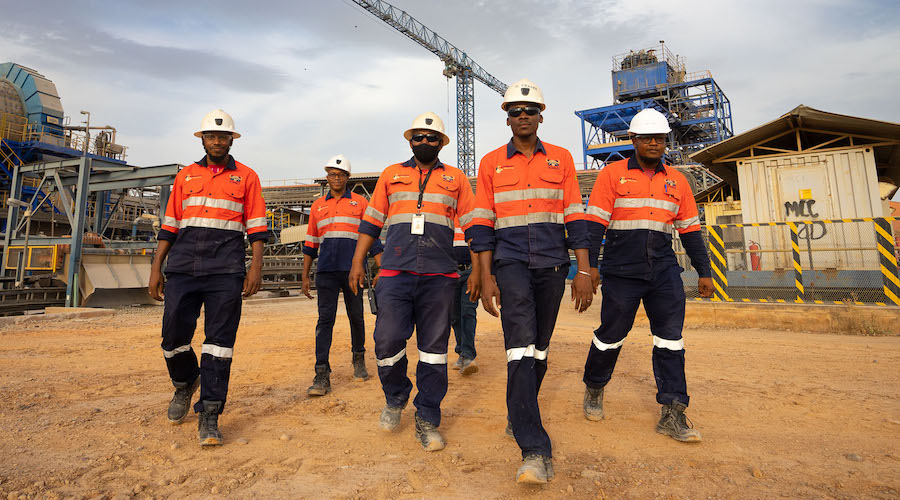
Mali’s government recently seized three tonnes of gold in a dispute with Barrick. (Image of the Loulo-Gounkoto gold mining complex. Courtesy of Barrick Gold.)


Tariffs and markets swings are pushing developing countries rich in critical minerals such as cobalt, copper, gold, and lithium, to tighten their grip on their resources more than ever before, a new analysis from risk intelligence firm Verisk Maplecroft shows.


This trend, which has accelerated over the past five years, poses major challenges for mining companies and coincides with intensifying geopolitical competition for raw materials essential to global industries.

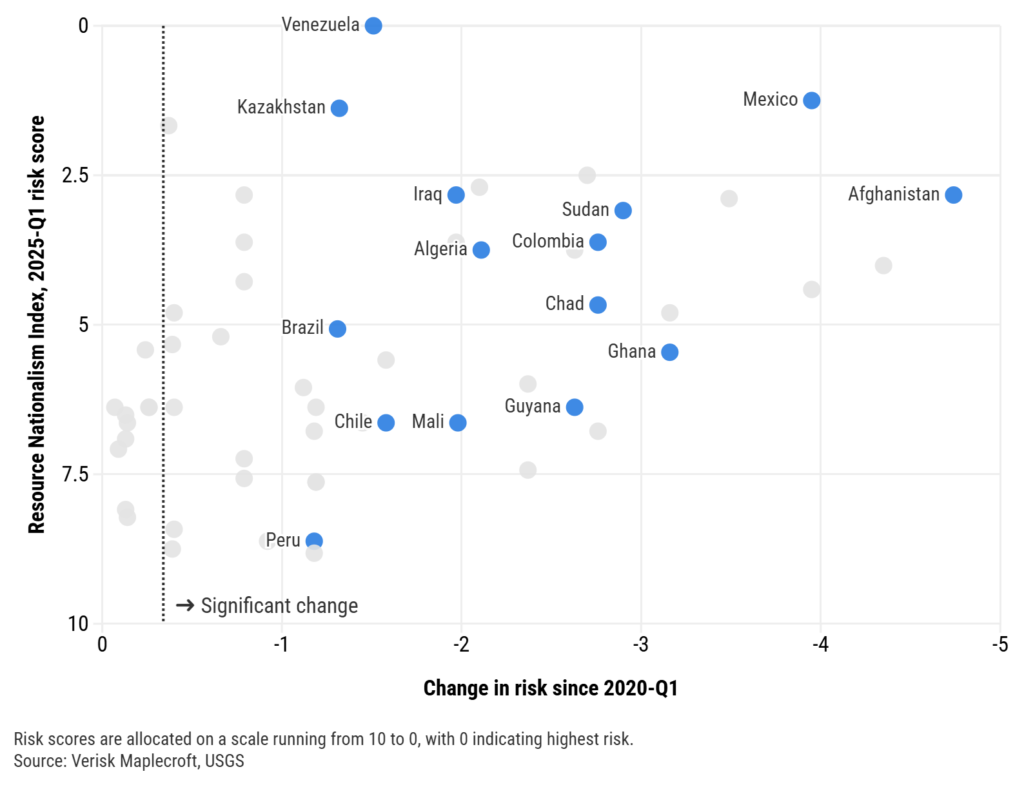
According to the Verisk Maplecroft’s annual Resource Nationalism Index (RNI), which measures government control of economic activity within the mining and energy sectors across the globe, 47 countries – including 17 major critical mineral producers – have seen a record increase in risk since 2020.

Among the 10 highest-risk jurisdictions are major oil and gas producers with a history of expropriations, nationalizations, and tax hikes. Venezuela, Russia, Mexico, Kazakhstan, and Iraq have all seen risk levels surge over the past five years.
Minerals geopolitics

Mineral-rich nations are using their leverage to secure greater economic benefits, a shift with far-reaching consequences.

“If this momentum continues, disruptions to the supply of critical minerals for renewables, technology, and defence industries are likely,” Jimena Blanco, chief analyst at Verisk Maplecroft, says. “Supply chain risks could drive up costs, slow innovation, and create vulnerabilities in national security and global competitiveness.”

As Western democracies work to secure mineral supplies, resource-rich developing nations are employing various strategies to maximize their bargaining power. Some are pursuing outright state control, while others are imposing tax hikes, stricter local content requirements, and policies aimed at expanding their economies beyond raw material exports.


Many are also adopting non-aligned strategies, avoiding alignment with major geopolitical blocs to maintain flexibility in negotiations.

This shift is expected to bring a wave of policy changes over the next year, affecting both producing nations and demand centres.
Copper risk

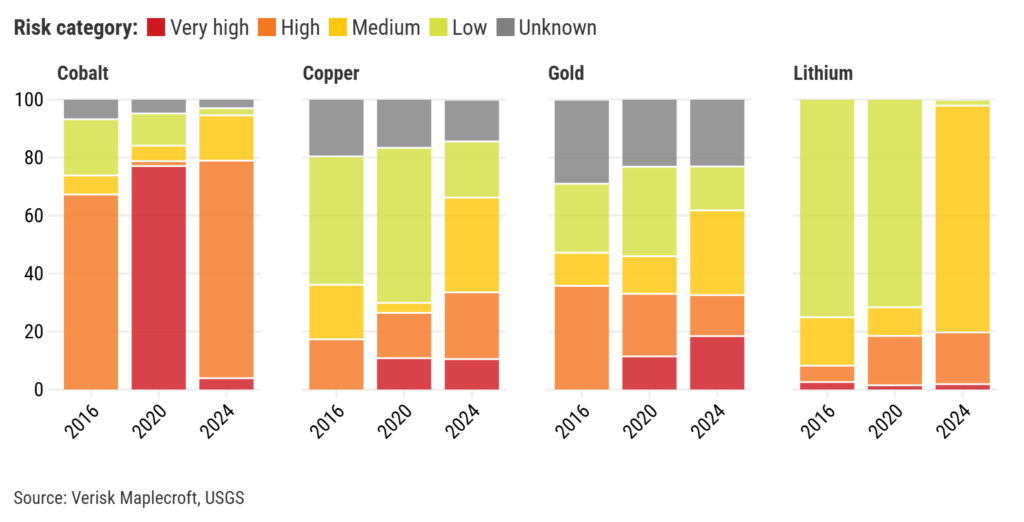
Verisk Maplecroft’s analysis integrates mineral production data with the RNI, revealing a sharp increase in risk exposure for key commodities. Over a third of global copper production now occurs in “high” or “very high” risk countries, up from just 17% in 2016.

Chile and Peru, the first and second largest copper producers, historically considered stable mining environments, have both increase state intervention in their resources.

Chile, which is also responsible for 24% of the world’s lithium production, announced in April 2023 that all lithium projects must be structured as public-private partnerships with the state holding a majority stake.

While the mining sector initially balked, companies have adapted, with more than 50 companies expressing interest in partnering with the Chilean government. Seven firms are now vying for a special contract, with final selections expected by the end of March.


Cobalt production, concentrated in the Democratic Republic of the Congo (DRC), has also seen shifting risk dynamics. While the DRC has improved in the RNI rankings, ongoing conflict threatens to reverse those gains.

Gold production, meanwhile, has become more exposed to resource nationalism, with 18% now coming from high-risk nations. In one sign of growing instability, the Malian government recently seized three tonnes of gold in a dispute with Canada’s Barrick Gold.
Trade wars

Resource nationalism is becoming a central issue in global trade tensions, particularly between the US and China. Beijing has restricted rare earth exports to the US, while Washington has responded by stockpiling critical minerals and incentivizing domestic production.

In Canada, shifting US tariffs under the Trump administration have revived calls for greater domestic investment in energy, power and mining infrastructure.

Thea Riofrancos, a political science professor and author of the forthcoming book Extraction: The Frontiers of Green Capitalism, says these developments are part of a broader trend.


Last year, the European Union signed a critical minerals deal with Rwanda, but the European Parliament later voted to suspend it. Lawmakers cited Rwanda’s support for a rebellion in the eastern Democratic Republic of Congo, where armed groups are seizing and exporting coltan, tin, tungsten, tantalum, and gold.

Meanwhile, Congolese President Félix Tshisekedi has proposed a critical minerals agreement with the US, modelled on the stalled deal with Ukraine.

“Importing countries are racing to secure minerals, using a mix of onshoring (encouraging mining within their borders) and bilateral trade agreements,” Riofrancos wrote in a Financial Times editorial.

“Producing countries are implementing export bans, establishing state-owned companies, and in some cases, nationalizing entire mineral sectors. Whether justified by the energy transition, tech industries, or military preparedness, countries everywhere want their piece of the critical mineral pie,” she concluded.

First Quantum’s Cobre Panama mine ready to suspend arbitration


Reuters | March 14, 2025

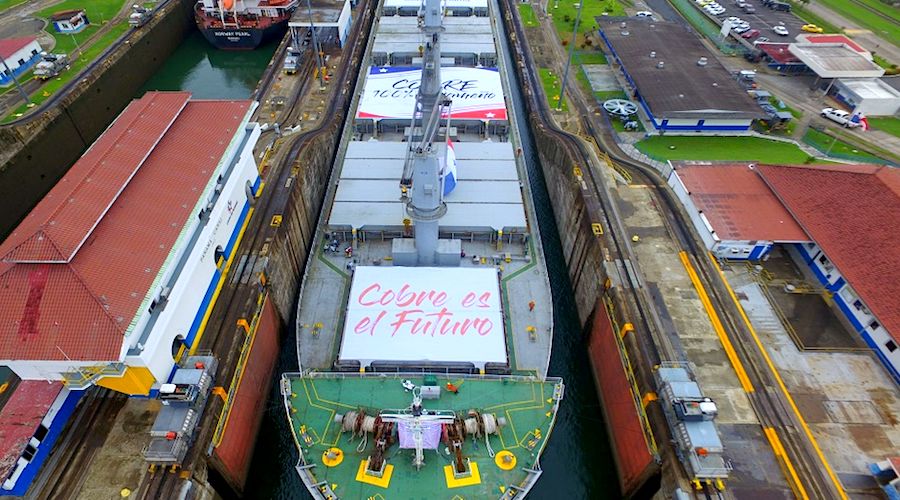
Copper shipments from Cobre Panama mine. (Image courtesy of Cobre Panama.)


First Quantum’s shuttered Cobre Panama mine has instructed its lawyers to start work to suspend arbitration against Panama, the company said in an internal memo on Friday.


On Thursday, Panama’s President said his government will allow the export of 120,000 metric tons of copper concentrate that has been stuck in the shuttered mine since November 2023 and also allow restart of the power plant used to run the mine.

Later, the country’s commerce ministry said any negotiations with the miner could only happen if the arbitration case against Panama was dropped.

“We have instructed our lawyers to meet with the government’s legal team to work on suspending the arbitrations … leading to a solution that benefits workers, communities, suppliers and all Panamanians,” Manuel Aizpurua, manager of Cobre Panama said in a memo viewed by Reuters.


First Quantum confirmed the authenticity of the memo.

Shares of the Canadian miner were up 1% on Friday afternoon at the Toronto Stock Exchange after hitting a two-month high on Thursday, up 15% after news of the authorization of copper export.

Panama’s government, under Mulino’s predecessor, ordered First Quantum to shut down the open-pit Cobre Panama mine in late 2023 following protests over environmental concerns. The move led to questions about maintenance of the massive site and 120,000 metric tons of stockpiled copper concentrate.

Before its shutdown, the mine was one of the world’s top sources of copper, accounting for 1% of global output.

Mulino told a weekly press conference on Thursday morning that he had authorized removing stranded copper products from the mine, arguing it was being wasted and that Panama would need to be reimbursed once the products are processed outside of the country.

The president said he would review the future of the mine more broadly as soon as next week.

“The issue of the mine will be approached with great responsibility and taking into account at all times the national interest,” Mulino said. “We’ll start as of next week.”

(By Divya Rajagopal and Elida Moreno; Editing by Anthony Esposito and David Gregorio)


Panama signals it’s ready to negotiate on shuttered copper mine

Bloomberg News | March 13, 2025 |


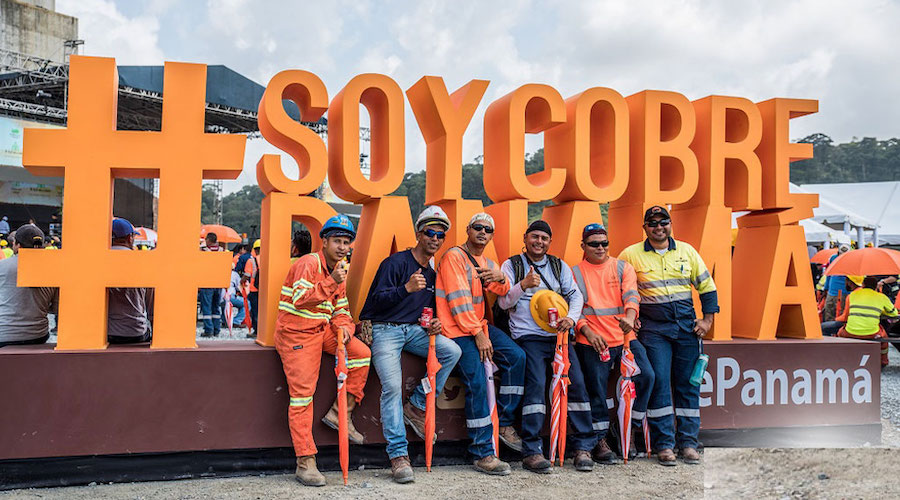
Cobre Panama was the biggest foreign investment in the Central American nation, supporting over 40,000 jobs. (Image courtesy of Minera Panama.)


First Quantum Minerals Ltd. was cleared to begin shipping out stockpiled copper in Panama, the latest sign authorities may be willing to negotiate a restart of the company’s giant shuttered mine.


Panama’s President Jose Raul Mulino said Thursday he has authorized the export of “ground material” from the Cobre Panama mine, referring to copper concentrate that the company has kept stockpiled at the site since it was ordered to close in 2023. He also said his government plans to start addressing the mine’s closure and its path forward next week, “God willing.”

Mulino’s comments come as Vancouver-based First Quantum campaigns to resuscitate its flagship mine, which was ordered to close in December 2023 amid anti-mining protests. The $10 billion operation accounted for about 5% of the country’s economy before its closure and generated about 40% of First Quantum’s revenue.

“What comes next — that’s exactly what we are going to start to deal with,” said Mulino in a press conference. “It’s a broad, thorny topic. The issue of the mine must be handled with great responsibility and taking into consideration national interests and protecting and benefitting Panama.”

Shares of First Quantum jumped as much as 12.6% Thursday in Toronto.


The Panamanian president spent recent weeks meeting with local businesses that relied on Cobre Panama and hearing from workers that were impacted by its closure. Some 54,000 people lost jobs, according to estimates by the National Council of Private Companies.

“It’s dramatic, what is happening,” Mulino said. “We are feeling it, in unemployment, lack of revenue for the state and in many other things like paying providers that haven’t been paid everything they are owed.”

Mulino had waited to turn his attention to the mine while completing controversial social security reforms that have now nearly passed Panama’s congress.

First Quantum on Thursday was also cleared to turn on its 300 megawatt thermal power plant in order to export the copper concentrate.

The 120,000 metric tons of idled material was “being wasted, and Panama has invested a barbarity of money into it,” Mulino said, adding that First Quantum has to reimburse Panama once the material is processed outside the country.

First Quantum, for its part, said the funds generated from the export of its copper concentrate will be used for preservation activities at the mine site.

“We reaffirm our willingness to discussions and finding the best solution together with the aim of contributing to the wellbeing of the country and all Panamanians,” the Canadian firm said in a statement posted to social media.

The prospect of a reopening remains highly uncertain. Mulino has yet to meet First Quantum’s executives, and has said he won’t negotiate with the company until it drops arbitration proceedings against Panama. The mine is also still unpopular among segments of the population due to pollution fears and the belief First Quantum got a sweetheart tax deal.

Mulino’s comments Thursday marked one of the first signs of a path forward for the embattled project.

“That 5% of GDP that we threw out the window in a single day — everyone thinks it’s a statistic,” said Mulino. “But we are feeling it.”

(By Michael McDonald and Jacob Lorinc)